宁德时代

Search documents
【新能源周报】新能源汽车行业信息周报(2026年2月2日-2月8日)
乘联分会· 2026-02-10 08:37
Industry Information - Beijing Economic and Technological Development Zone implements intelligent connected vehicle initiatives to enhance AI's role in data-driven technology [2] - Shenzhen releases a three-year consumption action plan focusing on green electricity consumption and charging infrastructure [2] - The largest high-speed supercharging station in China is operational in Hangzhou [2] - NIO achieves a milestone of 100 million battery swaps, with a network covering 8,627 stations nationwide [39] - CATL signs a comprehensive strategic agreement with Yunnan to promote green energy and transportation [10] Policy Information - The 2026 Central Document No. 1 emphasizes expanding rural consumption and supporting the adoption of new energy vehicles [26] - The Ministry of Transport plans to build over 10,000 charging guns in national highway service areas by 2026 [14] - The 2026 action plan for Beijing's traffic governance includes increasing the coverage of charging facilities [25] - Canada plans to abolish mandatory electric vehicle regulations and reintroduce consumer subsidies for electric vehicles [12] Company Information - BYD launches a new brand "Linghui" focused on the mobility market, aiming to provide affordable and advanced electric vehicles [33] - Xpeng Motors announces the launch of its AIOS 6.0 OTA update, featuring the industry's first proactive service cockpit [35] - Li Auto is set to open its 4,000th supercharging station, enhancing its charging network [39] - Xiaomi Motors updates its city driving assistance feature, lowering the mileage threshold for users [37] - NIO collaborates with a local company to enhance battery swapping services during the Spring Festival [39]




【快讯】每日快讯(2026年2月10日)
乘联分会· 2026-02-10 08:37
Domestic News - The Ministry of Commerce held a meeting with automotive companies to discuss measures to expand and improve automotive consumption, emphasizing the potential of China's large market and the need for policy support and innovation [7] - Shenzhen's strategic emerging industries, including integrated circuits and industrial robots, accounted for over 10% of the national output of 39 industrial products, with the added value of strategic emerging industries expected to rise from 1.03 trillion yuan in 2020 to 1.67 trillion yuan by 2025 [8] - Shanghai's South Port exported 82,000 vehicles in January, a year-on-year increase of 65.2%, with 61,000 of those being new energy vehicles, marking a 115.92% increase [9] - FAW Bestune announced its product plan for 2026, which includes five family models and two mobility models [10] - NIO plans to build 1,000 battery swap stations in 2026, expanding its charging network [11] - Lantu Motors will launch China's first mass-produced L3 level SUV, equipped with Huawei's advanced driving system [12] - Pony.ai, in collaboration with Toyota China and GAC Toyota, will deploy the Platinum Smart 4X Robotaxi in 2026 [13] - Horizon Robotics and a subsidiary of CATL signed a strategic cooperation agreement to enhance automotive intelligence [14] International News - India revised its fuel efficiency regulations, removing exemptions for small cars, which was previously seen as favoring a single company [15] - BMW and E.ON launched Germany's first commercial vehicle-to-grid service for new generation electric vehicles [16] - South Korea's automotive parts exports to the U.S. are projected to decline by 6.7% in 2025, marking the first annual drop since 2020 [17] - Mercedes-AMG plans to launch its third electric model in the second half of 2027, following two other electric models [18] Commercial Vehicles - The Ouman Galaxy pure electric heavy truck completed extreme cold testing at -35°C, demonstrating its performance in harsh conditions [19] - The Shandong Heavy Industry's Shandeka C5L cargo truck was officially launched, marking a new benchmark in the cargo transport industry [20] - The latest announcement from the Ministry of Industry and Information Technology revealed 181 new energy heavy truck models, with a 29.29% increase from the previous batch [22] - The Great Wall Cannon will be equipped with the Hi4-T plug-in hybrid system across its entire lineup, expanding consumer access to hybrid pickup trucks [25]

智通AH统计|2月10日
智通财经网· 2026-02-10 08:16
Core Viewpoint - The report highlights the AH premium rates of various companies, indicating significant discrepancies between their H-shares and A-shares, with some companies showing extremely high premiums while others exhibit negative premiums [1]. Group 1: Top AH Premium Rates - Northeast Electric (00042) has the highest AH premium rate at 831.03%, with H-share priced at 0.290 HKD and A-share at 2.25 CNY [1]. - Sinopec Oilfield Service (01033) follows with a premium rate of 296.70%, H-share at 0.910 HKD and A-share at 3.01 CNY [1]. - Beijing Jingcheng Machinery Electric (00187) ranks third with a premium of 285.05%, H-share at 4.280 HKD and A-share at 13.76 CNY [1]. Group 2: Lowest AH Premium Rates - Contemporary Amperex Technology (03750) has the lowest AH premium rate at -13.27%, with H-share priced at 511.000 HKD and A-share at 370 CNY [1]. - China Merchants Bank (03968) shows a premium of -4.06%, H-share at 49.300 HKD and A-share at 39.49 CNY [1]. - WuXi AppTec (02359) has a premium of -2.14%, with H-share at 120.800 HKD and A-share at 98.7 CNY [1]. Group 3: Top Deviation Values - Jinju Group (02009) has the highest deviation value at 24.42%, with a premium of 212.05% [1]. - Beijing Jingcheng Machinery Electric (00187) has a deviation value of 21.92%, with a premium of 285.05% [1]. - Longpan Technology (02465) ranks third with a deviation value of 19.68%, and a premium of 101.01% [1]. Group 4: Lowest Deviation Values - JunDa Co., Ltd. (02865) has the lowest deviation value at -70.56%, with a premium of 176.15% [2]. - Changfei Optical Fiber (06869) follows with a deviation of -45.38%, and a premium of 105.94% [2]. - Chenming Paper (01812) has a deviation of -26.81%, with a premium of 190.80% [2].


节前主力资金开启护盘模式!赚钱各凭本事,还有哪些投资机会?
Sou Hu Cai Jing· 2026-02-10 08:16
Group 1 - The article highlights investment opportunities in various sectors, including AI technology, innovative pharmaceuticals, energy storage, and solid-state batteries, which are entering a growth cycle [1] - It suggests focusing on industries with external demand, such as home appliances, engineering machinery, commercial vehicles, and non-ferrous metals, which are expected to benefit from global pricing [1] - The article emphasizes the importance of high-dividend stocks for long-term investment, recommending structural allocations to companies with strong cash flow and dividend certainty [1] Group 2 - Infineon Technologies announced a price increase for power switches and related chips starting April 1, 2026, due to ongoing supply shortages and rising costs [3] - The demand surge for Infineon's products is attributed to the extensive deployment of AI data centers, necessitating significant investments to expand wafer fabrication capacity [3] - The Central Government's No. 1 Document for 2026 focuses on enhancing agricultural production capacity and quality, implementing precise assistance measures, and promoting stable income growth for farmers [3] Group 3 - The article discusses the six main dry processing methods for solid-state batteries, highlighting polymer fiberization as the most widely used method, achieving energy density improvements of approximately 15% over traditional wet methods [5] - It notes that domestic companies are expected to establish pilot lines for solid-state batteries by 2025, with small-scale shipments anticipated by 2027 [5] - The development of two-dimensional semiconductors is identified as a key solution to challenges posed by the physical limits of Moore's Law, offering new pathways for chip development in the post-Moore era [5] Group 4 - The short-term market trend is described as weak, with limited inflow of new capital and a lack of significant profit-making opportunities [7] - The Shanghai Composite Index has shown a strong rebound this week, with market sentiment remaining high ahead of the holiday [9] - The article anticipates a rotation consolidation period in the A-share market leading up to February 2026, with a potential decrease in trading activity [9]

容百科技1200亿订单变950万罚单,信披失真董事长白厚善被罚300万
Chang Jiang Shang Bao· 2026-02-10 08:09
Core Viewpoint - Rongbai Technology (688005.SH) is facing significant penalties from the Ningbo Regulatory Bureau of the China Securities Regulatory Commission (CSRC) due to misleading disclosures related to a major contract with CATL, which could impact its financial performance and future operations [1][4][6]. Group 1: Regulatory Actions - The Ningbo Regulatory Bureau has issued a notice of administrative penalties against Rongbai Technology and its responsible individuals, including a proposed fine of 4.5 million yuan for the company and additional fines for executives [2][7]. - The chairman, Bai Houshan, is proposed to be fined 3 million yuan despite claiming he was unaware of the misleading announcement [2][7]. - The investigation revealed four major issues in the company's disclosures regarding the contract with CATL, including inaccuracies in the total sales amount and procurement quantities [6][7]. Group 2: Financial Performance - Rongbai Technology is projected to report a net loss of between 150 million to 190 million yuan in 2025, marking its first annual loss since its IPO in 2019 [2][8]. - The company's revenue has been declining, with expected revenues of 226.57 billion yuan in 2023 and 150.88 billion yuan in 2024, representing year-on-year decreases of 24.78% and 33.41%, respectively [9]. - Despite the downturn, the company anticipates a recovery in the fourth quarter of 2025, projecting a net profit of approximately 30 million yuan [10]. Group 3: Business Operations and Market Position - Rongbai Technology specializes in the research, production, and sales of lithium battery cathode materials and has established strong partnerships with major battery manufacturers [10]. - The company has maintained a leading position in the global market for ternary materials, achieving a market share of over 12% and a sales volume of 120,000 tons in 2024, despite overall market challenges [10]. - The company is planning to expand its operations by investing approximately 342 million yuan to acquire a stake in Guizhou Xinren, which has a production line for lithium iron phosphate [10][11].

换电模式能否走通?
Zhong Guo Qi Che Bao Wang· 2026-02-10 07:58
Core Viewpoint - The article discusses the challenges and potential of the battery swapping model in the electric vehicle (EV) industry, highlighting the investments made by companies like NIO and CATL, and the financial viability of this model. Investment and Cost Analysis - NIO's first-generation battery swapping station cost approximately 3 million yuan, while the second generation costs between 1.5 to 2 million yuan, with over 1,100 second-generation stations expected by December 2025 [3] - The initial investment for a battery swapping station includes equipment costs of 1.5 million yuan, line costs of 200,000 yuan, and battery costs of 620,000 yuan, with operational costs including a monthly salary of 5,000 yuan and annual rent and maintenance of 100,000 yuan [7] Profitability and Financial Outlook - NIO aims to achieve profitability by the end of 2025, with a forecasted adjusted operating profit of 700 million to 1.2 billion yuan for Q4 2025, marking its first quarterly adjusted operating profit since inception [3] - Long-term projections suggest that the battery swapping model could yield a return rate of 5.5%, potentially becoming a stable cash cow for companies once it reaches a steady state [6] Market Dynamics and Competitive Landscape - CATL has ambitious plans to establish 1,000 battery swapping stations by 2025, with a long-term goal of 30,000 stations, which would cover over 20 million vehicles [5] - The battery swapping model is closely related to the concept of battery separation, which can lower vehicle purchase costs and enhance battery longevity through standardized management [10] Industry Concerns and Challenges - Concerns exist regarding the high costs of building and operating battery swapping stations compared to charging stations, which may deter some automakers from adopting this model [13] - The rapid development of battery technology poses a risk that companies may become locked into outdated models if they heavily invest in battery swapping infrastructure [13] - The lack of standardized battery sizes and interfaces across different automakers complicates the implementation of a universal battery swapping system [13] Consumer Perception and Adoption - Some consumers express reluctance to accept used batteries from swapping stations, and the cost of battery swapping can be comparable to traditional fuel costs, which may hinder adoption [14] - The emergence of ultra-fast charging technologies is narrowing the performance gap between charging and swapping, potentially reducing the perceived value of battery swapping [14] Competitive Positioning - The report indicates that BYD is gaining market share in the 50,000 to 150,000 yuan segment, increasing from 25% in 2019-2020 to an expected 56-57% in 2023-2024, creating competitive pressure on other automakers [15] - For companies without in-house battery production, adopting the battery swapping model may be a viable strategy to remain competitive in the lower-priced vehicle market [16]

捷邦科技涨2.41%,成交额2.83亿元,后市是否有机会?
Xin Lang Cai Jing· 2026-02-10 07:56
Core Viewpoint - The company, Jieban Technology, has shown a significant increase in stock performance and is heavily reliant on major clients like Foxconn and Apple for its revenue streams [1][2][3]. Group 1: Company Overview - Jieban Technology is based in Dongguan, Guangdong, and was established on June 28, 2007, with its IPO on September 21, 2022 [7]. - The company specializes in customized precision components and structural parts, providing a range of services including product design, material selection, mold design, prototyping, testing, and mass production [7]. - The revenue composition of Jieban Technology is as follows: precision manufacturing products account for 92.70%, new materials for 5.79%, and other sources for 1.51% [7]. Group 2: Financial Performance - For the period from January to September 2025, Jieban Technology achieved a revenue of 962 million yuan, representing a year-on-year growth of 62.04% [7]. - The net profit attributable to the parent company was -12.58 million yuan, a significant decrease of 1762.51% compared to the previous year [7]. - The company has distributed a total of 43.24 million yuan in dividends since its A-share listing [8]. Group 3: Client and Market Dependency - The company's primary clients include Foxconn, Quanta Computer, Compal Electronics, Catcher Technology, and BYD, with sales to Foxconn constituting 35.58%, 36.85%, and 39.52% of total revenue in recent years [2]. - A significant portion of the company's products is used in Apple's laptops and tablets, with sales to Apple products accounting for 85.22%, 77.95%, and 81.27% of total revenue [2]. - The company is also involved in the carbon nanotube product market, primarily supplying conductive pastes for lithium batteries to major new energy manufacturers such as CATL and BYD [2]. Group 4: Market Trends and Stock Performance - On February 10, the stock price of Jieban Technology increased by 2.41%, with a trading volume of 283 million yuan and a turnover rate of 7.77%, leading to a total market capitalization of 9.878 billion yuan [1]. - The company has seen a net inflow of 20.89 million yuan from major investors, indicating a growing interest in the stock [4][5]. - The average trading cost of the stock is 120.90 yuan, with current price levels between resistance at 143.86 yuan and support at 130.39 yuan, suggesting potential for trading within this range [6].

货币基金纷纷限购,睿远、宝盈等主动基金却放开限购,传递什么信号?
Xin Lang Cai Jing· 2026-02-10 07:23
智通财经记者 | 杜萌 随着春节假期的临近,"假期如何赚利息"和"节后如何布局"成为投资者最关心的问题。智通财经记者统计发现,相比货币基金、同业存单基金、纯债基金的 相继限购,却有一些主动权益基金放开了限购。 仅2月9日当天,就有汇添富货币基金、易方达货币基金、江信增利货币、长城中证同业存单AAA指数7天持有等16只基金发布了节前限购的公告。公告显 示,上述基金均在2月12日暂停申购、转换转入,2月24日恢复。江信增利货币则自2月12日起将申购金额调整到500万元以内。 此外,汇添富短债基金宣布2月12日将大额申购金额调整至500万元,长城短债债券基金也从2月12日暂停申购和转换转入。 为何节前密集限制大额申购?智通财经记者了解到,这主要是为了防止大额资金流入摊薄假期收益。假期中债券也会有票息收入,如果出现大额资金流入但 基金经理却未能及时配置资产的情况,就会导致资金空转,摊薄原持有人的收益。 此外,还有防范流动性风险的考量。"节假日前后容易出现资金的'快进快出',很多资金只是想在假期赚个票息收益,节后就会转出。这样导致基金在节后 遭遇集中赎回,基金经理可能被迫抛售资产,影响收益,因此对可能进入的大额资金予以 ...





复盘锂电产业链涨价:当前时点类似20Q4,量利双升可期
Hua Er Jie Jian Wen· 2026-02-10 07:22
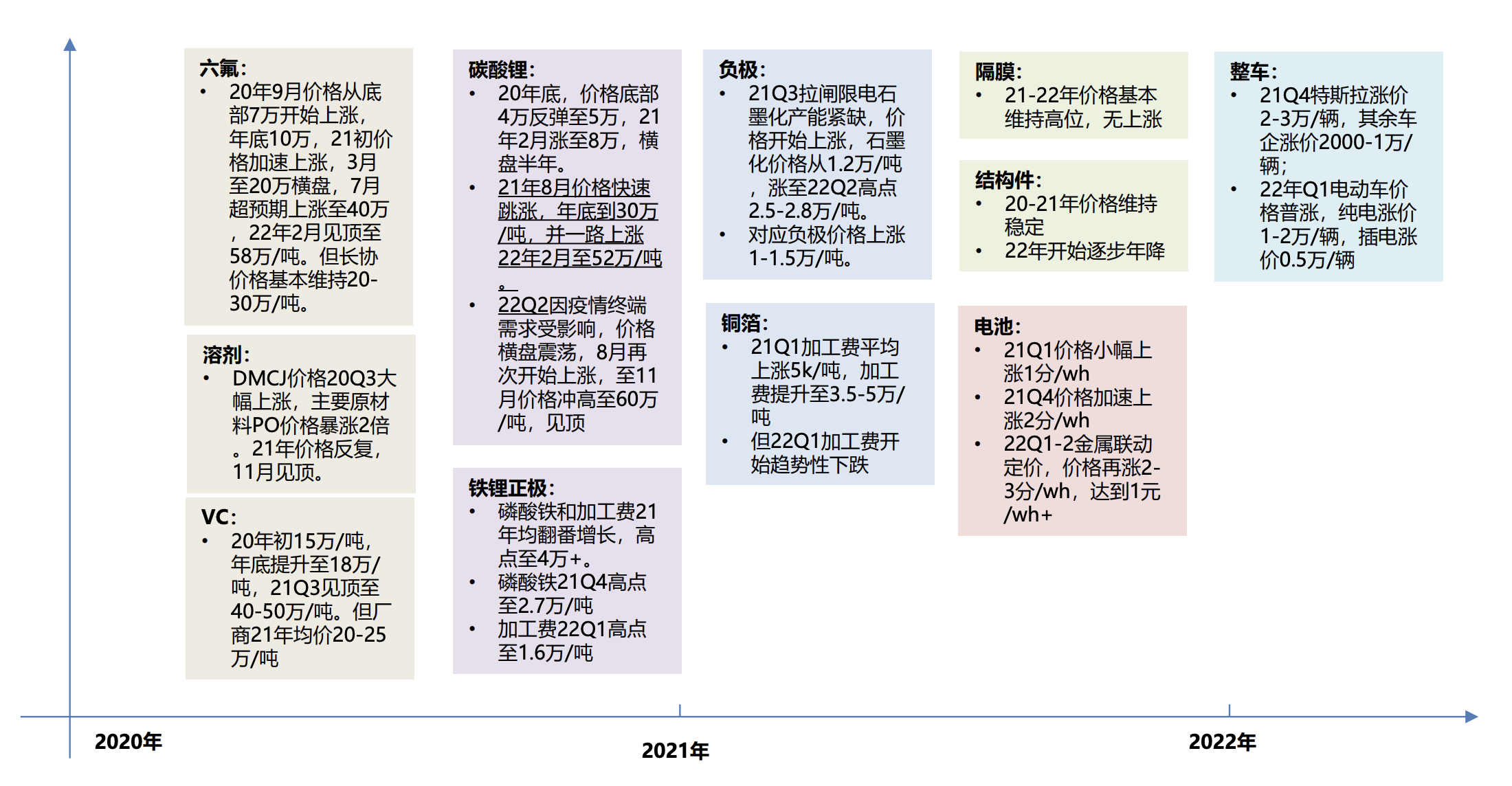
Core Viewpoint - The lithium battery industry chain is entering a critical time window after three years of price decline and profit squeeze, with conditions resembling those of Q4 2020, including unexpected demand growth, bottoming prices, and historically low corporate profits, but with a significant suppression of expansion willingness [1][5]. Group 1: Historical Review of Price Cycle - The previous lithium price cycle from 2020 to 2022 was driven by demand exceeding market expectations rather than supply shocks [2]. - Starting in the second half of 2020, domestic new energy vehicle sales rapidly recovered, with penetration rates increasing from 4%-5% to nearly 10% [2]. - Leading battery manufacturers, such as CATL, frequently revised their production guidance upwards, resulting in industry shipments significantly exceeding initial forecasts in 2021 and 2022 [2]. Group 2: Price Trends and Dynamics - The price of lithium hexafluorophosphate rose from 70,000 yuan/ton at the bottom in Q3 2020 to a peak of 580,000 yuan/ton in early 2022, while lithium carbonate prices surged to 600,000 yuan/ton due to supply-demand mismatches [4]. - The price transmission mechanism during the last cycle began with lithium hexafluorophosphate, followed by lithium carbonate, and subsequently led to increases in processing fees for cathodes and anodes, culminating in price hikes across batteries and vehicles [2][4]. Group 3: Current Industry Conditions - Current prices and profits are significantly lower than before the last cycle began, with companies expressing stronger price increase demands than in 2020 [5]. - Expansion willingness is notably weaker than in 2021, with new supply releases slowing down after experiencing overcapacity and reduced capital expenditures [5]. - Demand growth is being driven not just by new energy vehicles but increasingly by the continuous expansion of energy storage, which is more sensitive to price changes [5]. Group 4: Profitability and Valuation - The lithium battery sector has transitioned from a phase of "profit and valuation double rise" to a "double kill" phase, with most leading companies currently valued below 20 times earnings, despite a projected 20% growth potential in 2027 [7]. - The current state of the lithium battery sector is closer to a combination of "profit bottom + valuation bottom," suggesting a more favorable environment for long-term investment rather than short-term speculation [7]. Group 5: Future Outlook - The current lithium industry chain is not expected to experience an emotional rebound but is entering a mid-term upward window characterized by "volume and profit recovery" [9]. - Key factors to monitor include whether the profit curve has confirmed an upward turning point, rather than focusing solely on price levels replicating previous highs [9].
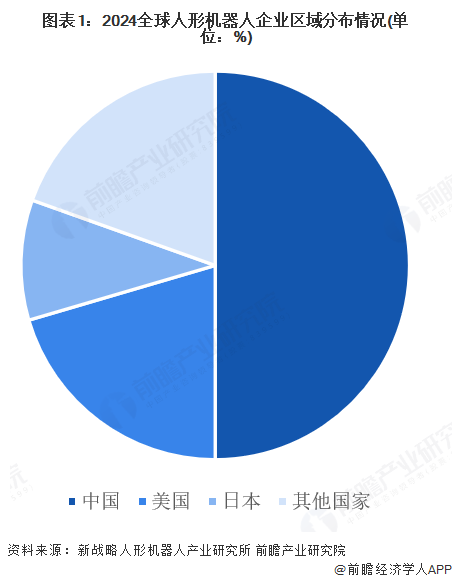
2025年全球人形机器人行业竞争分析 中国领跑硬件与集成端【组图】
Qian Zhan Wang· 2026-02-10 07:12
Core Insights - The global humanoid robot industry is predominantly led by China, which houses over 110 companies, accounting for more than 50% of the total 220 humanoid robot manufacturers worldwide [1] - China excels in hardware and integration segments, while the US leads in the "brain" segment, focusing on AI models and software [4][5] - China has filed approximately five times more humanoid robot patents than the US, with a total of 7,705 patents, indicating a strong emphasis on innovation and technology development [6] - The competition among China, the US, and Japan in the humanoid robot industry is characterized by distinct strategies and market focuses [9] Industry Overview - Major listed companies in China's humanoid robot sector include Huichuan Technology, Sanhua Intelligent Control, Lens Technology, Hengli Hydraulic, Top Group, Linying Intelligent Manufacturing, Zoomlion Heavy Industry, and Jinli Permanent Magnet [1] - The global humanoid robot industry is expected to reach a market size of 861 billion yuan by 2027, with China aiming for a fully controllable supply chain and over 70% localization of core components [9][11] Competitive Landscape - Chinese companies like Zhiyuan Robotics and UTree Technology are rapidly advancing in mass production and cost control, while US firms like Boston Dynamics and Tesla focus on core technology breakthroughs [11][12] - The strategic direction for Chinese firms includes low-cost strategies to expand into consumer and industrial markets, while US companies are investing heavily in AI and technology development [11] - Japan's approach is centered on precision manufacturing and specialized components, targeting healthcare and industrial applications [9][11] Patent and Innovation - China leads in humanoid robot patent applications, with 7,705 patents compared to the US's 1,561 and Japan's 1,102, showcasing its dominance in core technology areas [6] - The focus of Chinese patents includes body structure, intelligent perception, and drive control, indicating a comprehensive approach to technology development [6] Market Projections - By 2027, the humanoid robot market is projected to achieve significant growth, with China aiming for a market scale of 861 billion yuan and the US targeting over 40% of the global market share [9][11]