长安汽车

Search documents
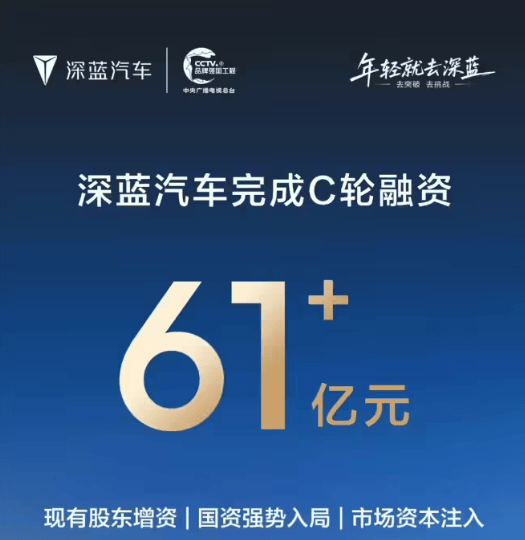
深蓝汽车完成C轮融资,总额达61.22亿元
Sou Hu Cai Jing· 2025-12-25 12:16
Group 1 - Changan's subsidiary Deep Blue Automotive has announced the completion of its Series C financing round, raising a total of 6.122 billion yuan [1] - The financing was contributed by Changan Automobile, Chongqing Yufu Holding Group Co., Ltd., and China Merchants Bank Financial Asset Investment Co., Ltd. [1] - The registered capital of Deep Blue Automotive increased from 328.108278 million yuan to 466.157065 million yuan, with an additional registered capital of 138.048787 million yuan [1] Group 2 - Changan Automobile contributed 3.122 billion yuan, which includes 2.079 billion yuan in cash and intangible assets valued at 1.043 billion yuan [1] - Yufu Group invested 2.5 billion yuan in cash from its own funds [1] - China Merchants Bank Investment contributed 500 million yuan in cash from its own funds [1] Group 3 - After the financing, Changan Automobile's shareholding remains unchanged at 50.9959%, while Yufu Group holds 12.0934% and China Merchants Bank Investment holds 2.4187% [1]


深蓝汽车61亿元增资落地,渝富集团、招银投资入局
Sou Hu Cai Jing· 2025-12-25 11:13
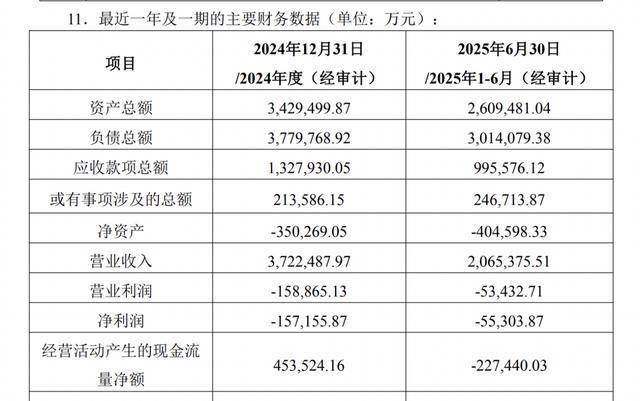
Group 1 - Changan Automobile announced the progress of capital increase and share expansion for Deep Blue Automobile through public listing, with the announcement period from November 26, 2025, to December 23, 2025 [1] - The total amount of capital increase is 6.122 billion yuan, with registered capital increasing from 328 million yuan to 466 million yuan [1] - Changan Automobile's capital increase amounts to 3.122 billion yuan, including 2.079 billion yuan in self-owned funds and intangible assets valued at 1.043 billion yuan [1] Group 2 - Deep Blue Automobile, established in May 2018, focuses on the research, production, processing, sales, and consulting of new energy vehicles and auto parts [2] - For the first half of 2025, Deep Blue Automobile reported an operating income of 206.54 million yuan and a net loss of 55.03 million yuan [2] - The total assets of Deep Blue Automobile as of June 30, 2025, were approximately 2.609 billion yuan, with total liabilities of about 3.014 billion yuan [3]
汽车与零部件行业周报:工信部发文许可深蓝和极狐两款L3级自动驾驶车型产品,一汽2027年量产固态电池首搭红旗旗舰车型-20251225
Shanghai Securities· 2025-12-25 11:10
Investment Rating - The industry investment rating is "Hold" [2] Core Insights - The automotive sector experienced a slight decline of -0.10% in the past week, with the automotive services sub-sector performing the best at +3.73% [5] - In November, the retail sales of passenger vehicles decreased by 7% year-on-year, while Tesla launched a budget version of Model 3 in Europe [5] - The Ministry of Industry and Information Technology approved two L3 level autonomous driving models, indicating advancements in smart vehicle technology [6] - China FAW plans to mass-produce solid-state batteries by 2027, which will be used in high-end Red Flag models [6] - The automotive market is currently adjusting due to the expiration of several consumer stimulus policies, with a projected retail market of approximately 2.3 million units in December [6] - The EU has proposed to relax the 2035 ban on new fuel vehicle sales, allowing for a 90% reduction in emissions compared to 2021 levels [7] Summary by Sections Market Review - The automotive sector's performance was ranked 21st among 31 first-level industries, with notable companies like Zhejiang Shibao and Weidi Co. showing significant gains [5] - The overall market sentiment reflects a mixed performance, with some companies experiencing substantial growth while others faced declines [5] Sales Data - From December 1 to 14, retail sales of passenger vehicles reached 764,000 units, a year-on-year decrease of 24% [6] - The wholesale volume for the same period was 734,000 units, down 31% year-on-year [6] - The new energy vehicle market showed resilience with retail sales of 476,000 units, only a 4% decline year-on-year [6] Investment Recommendations - Focus on companies involved in smart vehicle technology and those with potential for overseas sales [7] - Consider component manufacturers that can benefit from domestic substitution effects [7]
一周一刻钟,大事快评(W137):二手车出海——日本经验;零部件观点更新;岱美股份重申-20251225
Shenwan Hongyuan Securities· 2025-12-25 10:24
Investment Rating - The report maintains a positive investment rating for the automotive industry, specifically recommending companies with strong alpha potential and growth prospects [2][4][5]. Core Insights - The report highlights the challenges faced by the used car export market, particularly from Japan, emphasizing the need for standardized rating systems and trust-building measures between buyers and sellers [3]. - It suggests that companies with strong operational capabilities, such as large dealership groups and platforms like Uxin, are well-positioned to capitalize on the growth of used car exports [3]. - The report notes that the automotive parts sector is currently facing headwinds due to high inventory levels and the exhaustion of trade-in subsidies, but there is a cautious optimism for market recovery in the coming year [4]. - Companies like Daimay and Fuda are highlighted for their stable performance and growth potential, particularly in the robotics sector and their international market presence [5][6]. Summary by Sections Used Car Export Insights - The used car export market is hindered by trust issues and a complex transaction chain, with Japan's stringent vehicle inspection policies serving as a potential model for improvement [3]. - Uxin is identified as a key player with a growing inventory of nearly 7,000 used cars, making it a recommended investment for the next two to three years [3]. Automotive Parts Sector Update - The automotive industry did not experience the anticipated year-end surge, primarily due to the depletion of trade-in subsidies and consumer hesitance [4]. - Recommendations include companies with strong alpha characteristics such as Shuanghuan Transmission and Yinlun, which are expected to benefit from stable growth and high market ceilings [4]. Daimay and Robotics Sector - Daimay is recognized for its stable earnings, low valuation, and significant growth potential, particularly in automotive interior components and robotics [5][6]. - The company has made significant strides in expanding its client base, including partnerships with major electric vehicle manufacturers, and is positioned to support Tesla's localization efforts in North America [6].





汽车视点 | 政策开闸、车企抢跑,自动驾驶商业化“爬坡”进行时
Xin Hua Cai Jing· 2025-12-25 10:11
Group 1 - GAC Group's Haobo A800 has officially launched L3 conditional autonomous driving highway testing, with a maximum speed of 120 km/h, becoming one of the few projects in China approved for L3 highway testing [1] - The Ministry of Industry and Information Technology has announced the first batch of L3 autonomous driving models approved for testing in designated areas in Beijing and Chongqing, marking a significant policy milestone [2] - The first L3 autonomous driving license plate in China was issued in Chongqing, with vehicles already operating on the inner ring expressway [3] Group 2 - Companies like Xiaopeng Motors and Baidu Apollo are actively expanding their L3 autonomous driving capabilities, with Xiaopeng's L4 capable platform expected to achieve mass production by Q1 2026 [3] - The global Robotaxi market is characterized by a dual leadership from China and the U.S., with significant competition and collaboration among various companies [5] - The Middle East is emerging as a key growth market for autonomous driving, with high demand for cost-effective transportation solutions and supportive policies [6] Group 3 - The transition to L3 autonomous driving represents a shift in driving responsibility from human drivers to the system, indicating a new phase in the commercialization of autonomous vehicles [2] - Despite advancements, L3 autonomous driving is not yet available for general consumer purchase, and current trials are limited to specific scenarios [7] - Analysts suggest that many companies may skip L3 models and move directly to L4, as the commercial viability of L3 remains questionable [8]
保时捷中国回应“郑州中原保时捷中心疑似跑路”;深蓝董事长回应和小鹏对比丨汽车交通日报
创业邦· 2025-12-25 10:10
Group 1 - Porsche China responded to the situation regarding the "Zhengzhou Central Porsche Center" allegedly closing down, expressing sincere apologies to affected customers and stating that they are actively working with police and relevant departments to verify the facts [2] - Deep Blue's chairman commented on comparisons with Xiaopeng, thanking users for their recognition and emphasizing their focus on safety in intelligent driving technology development [2] - Avita addressed the controversy surrounding the Avita 12's Antarctic journey, confirming that the vehicle will remain in Antarctica until April 2027 for testing and technical validation alongside China's polar research team [2] - Elon Musk responded to a user's praise of Tesla's Full Self-Driving (FSD) capabilities, stating that the AI is designed to process inputs like a human, which he believes is a step towards Artificial General Intelligence (AGI) [2]

站在IPO门口的阿维塔,走到战略转段的关键时刻
Xin Lang Cai Jing· 2025-12-25 10:08
Core Viewpoint - Avita is at a critical strategic juncture as it prepares for its IPO, leveraging high growth, technological systems, and global layout to build competitive advantages in the increasingly competitive electric vehicle market [3][20]. Group 1: Market Context and Strategic Positioning - The electric vehicle industry is facing pressures such as subsidy reductions and slowing market growth, pushing companies into a "deep water zone" [3][20]. - Avita is proactively preparing for future competition through its IPO and ecosystem partnerships, aiming to align product, technology, organization, and capital [3][20]. - The company has consistently expanded its product layout at a rate above the industry average since its delivery began three years ago, demonstrating strong operational improvements [3][21]. Group 2: Sales and Financial Performance - Avita's sales have shown remarkable stability, achieving a historical peak of 14,057 vehicles in November 2025, with cumulative sales exceeding 220,000 since its establishment [6][24]. - The company's revenue reached 15.195 billion yuan in 2024, a year-on-year increase of 169.16%, and 12.208 billion yuan in the first half of 2025, up 98.52% year-on-year [6][25]. - Avita's gross margin turned positive in the year following its delivery and further improved to 10.1% in the first half of 2025, indicating strong cost optimization capabilities [6][25]. Group 3: Research and Development - Avita plans to invest over 1.2 billion yuan in R&D in 2024, a year-on-year increase of over 80%, and over 830 million yuan in the first half of 2025, up over 167% [7][25]. - The company has a workforce of 3,666 employees, with over 57.1% in R&D roles, and has accumulated 1,326 patents globally [7][25]. - Avita's strategic investment in Huawei, acquiring a 10% stake for 11.5 billion yuan, enhances its technological collaboration and capital ties [7][25]. Group 4: Business Model and Competitive Advantage - Avita's unique CHN technology collaborative framework, supported by Changan Automobile, Huawei, and CATL, forms a core advantage that is not merely resource binding but allows for continuous evolution [5][23]. - The company operates a light-asset model, reducing capital pressure and allowing more focus on product innovation and user value enhancement [9][27]. - Avita's organizational structure and governance model, combining state-owned enterprise backing with market-oriented governance, provide a unique trust level in the capital market [11][31]. Group 5: Future Growth and Global Expansion - The year 2026 is projected to be pivotal for Avita, with plans to launch four new models and enhance its technological capabilities [14][32]. - Avita aims for overseas sales to account for 10% of total sales by 2026, expanding to over 80 countries by 2030, with a target of 30% overseas sales by then [16][34]. - The company has set ambitious sales targets of 400,000 units by 2027, 800,000 by 2030, and 1.5 million by 2035, emphasizing the need for sustained stability in a competitive landscape [18][36].

中国智驾产业变迁:从封闭交付到普惠生态
雷峰网· 2025-12-25 09:24
Core Viewpoint - Over the past decade, China's intelligent driving industry has transitioned from a closed chain to an inclusive ecosystem, driven by technological advancements and collaborative efforts among local companies [1][36]. Group 1: Industry Evolution - In 2011, Tesla's CEO Elon Musk dismissed BYD as a competitor, highlighting the significant gap in technology and product appeal between Chinese automakers and Tesla at that time [2][3]. - By 2024, Chinese automakers like BYD and Geely have surpassed Tesla in sales, becoming part of the top ten global car manufacturers, showcasing the rapid evolution of the industry [4]. - The core of Tesla's sustained optimism lies in its self-developed chips and intelligent driving capabilities, which have spurred a wave of research and development in China's intelligent driving sector [4]. Group 2: Key Players and Partnerships - The critical turning point for China's intelligent driving industry occurred between 2019 and 2020, marked by the emergence of companies like Horizon Robotics and Momenta, which began to establish themselves in the market [6]. - The collaboration between Changan Automobile and Horizon Robotics exemplifies how local companies are building flexible and open supply chain systems, enhancing their control over core technologies [10][12]. - The partnership between Li Auto and Horizon Robotics allowed for rapid development and deployment of advanced driving features, demonstrating the importance of open collaboration in overcoming technological challenges [13][17]. Group 3: Technological Advancements - The shift from Mobileye's closed delivery model to more open and collaborative approaches has catalyzed the development of local intelligent driving technologies, enabling companies to gain autonomy over their systems [9][18]. - Horizon Robotics' introduction of the Journey 5 chip, which offers high performance and supports advanced driving needs, has positioned the company to compete in the high-end intelligent driving market [23][24]. - The "HSD Together" model proposed by Horizon Robotics aims to enhance collaboration across the supply chain, significantly reducing development costs and time to market for automotive companies [27][28]. Group 4: Market Accessibility and Inclusivity - The evolution of intelligent driving technology is making advanced features more accessible to a broader range of consumers, breaking down price barriers that previously limited adoption to high-end vehicles [30][31]. - BYD's upcoming "Heavenly Eye" system, powered by Horizon Robotics' Journey 6 chip, aims to provide advanced driving capabilities across its entire model range, including lower-priced vehicles [30]. - The introduction of Horizon Robotics' HSD full-scene driving assistance system is set to make high-level intelligent driving features available in mid-range vehicles, promoting inclusivity in the market [31][33].

日本经验,零部件观点更新,岱美股份重申-20251225
Shenwan Hongyuan Securities· 2025-12-25 09:14
Investment Rating - The report maintains a positive outlook on the automotive industry, specifically recommending companies like Uxin and Daimay as strong investment opportunities [2][5]. Core Insights - The second-hand car export market faces significant challenges, including the non-standard nature of vehicles and a complex transaction chain. Japan's experience in this sector offers valuable lessons, such as stringent vehicle inspection policies and the establishment of standardized auction platforms [3][4]. - The automotive parts sector has not seen the anticipated year-end surge due to exhausted subsidies and consumer hesitance. The report suggests focusing on companies with strong alpha, such as Shuanghuan Transmission and Yinlun, which have stable growth and high market ceilings [4]. - Daimay is highlighted as a stable, undervalued company with significant growth potential, particularly in the automotive interior and robotics sectors. The company has made substantial progress in expanding its client base, including partnerships with major players like Tesla [5][7]. Summary by Sections Second-Hand Car Export - The second-hand car export market is hindered by trust issues and a lack of standardized practices. Japan's strict vehicle inspection policies and auction platforms provide a model for improvement. Uxin, with a current inventory of nearly 7,000 vehicles, is positioned for growth in this market [2][3]. Automotive Parts Sector - The automotive industry did not experience the expected late-year demand surge due to depleted subsidies and cautious consumer behavior. The report emphasizes the need to monitor the continuation of trade-in policies and suggests focusing on companies with strong alpha characteristics, such as Shuanghuan Transmission and Yinlun [4]. Daimay - Daimay is recognized for its stable performance and low valuation, with 80% of its revenue coming from overseas markets. The company is well-positioned to withstand domestic market pressures and has made significant strides in the robotics field, particularly in electronic skin technology [5][7].

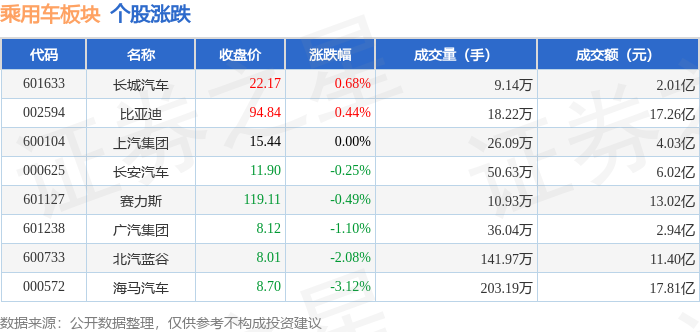
乘用车板块12月25日跌0.07%,海马汽车领跌,主力资金净流出5.36亿元
Zheng Xing Xing Ye Ri Bao· 2025-12-25 09:07
Core Insights - The passenger car sector experienced a slight decline of 0.07% on December 25, with Haima Automobile leading the drop [1] - The Shanghai Composite Index closed at 3959.62, up 0.47%, while the Shenzhen Component Index closed at 13531.41, up 0.33% [1] Market Performance - Great Wall Motors closed at 22.17, with an increase of 0.68%, trading volume of 91,400 shares, and a transaction value of 201 million yuan [1] - BYD closed at 94.84, up 0.44%, with a trading volume of 182,200 shares and a transaction value of 1.726 billion yuan [1] - SAIC Motor remained unchanged at 15.44, with a trading volume of 260,900 shares and a transaction value of 403 million yuan [1] - Changan Automobile closed at 11.90, down 0.25%, with a trading volume of 506,300 shares and a transaction value of 602 million yuan [1] - Seres closed at 119.11, down 0.49%, with a trading volume of 109,300 shares and a transaction value of 1.302 billion yuan [1] - GAC Group closed at 8.12, down 1.10%, with a trading volume of 360,400 shares and a transaction value of 294 million yuan [1] - BAIC Blue Valley closed at 8.01, down 2.08%, with a trading volume of 1,419,700 shares and a transaction value of 1.14 billion yuan [1] - Haima Automobile closed at 8.70, down 3.12%, with a trading volume of 2,031,900 shares and a transaction value of 1.781 billion yuan [1] Capital Flow - The passenger car sector saw a net outflow of 536 million yuan from institutional investors, while retail investors had a net inflow of 484 million yuan [1] - BYD had a net inflow of 171 million yuan from institutional investors, but a net outflow of 117 million yuan from retail investors [2] - Great Wall Motors experienced a net inflow of 22.71 million yuan from institutional investors, with a net outflow from retail investors [2] - GAC Group had a significant net outflow of 63.71 million yuan from institutional investors, while retail investors contributed a net inflow of 39.88 million yuan [2] - Changan Automobile faced a net outflow of 83.01 million yuan from institutional investors, with retail investors showing a net inflow of 75.99 million yuan [2] - BAIC Blue Valley had a net outflow of 126 million yuan from institutional investors, while retail investors contributed a net inflow of 81.98 million yuan [2] - Haima Automobile saw a net outflow of 186 million yuan from institutional investors, with retail investors showing a net inflow of 16.8 million yuan [2] - Seres experienced a net outflow of 27.37 million yuan from institutional investors, while retail investors had a net inflow of 18.41 million yuan [2]