
巨子生物

Search documents
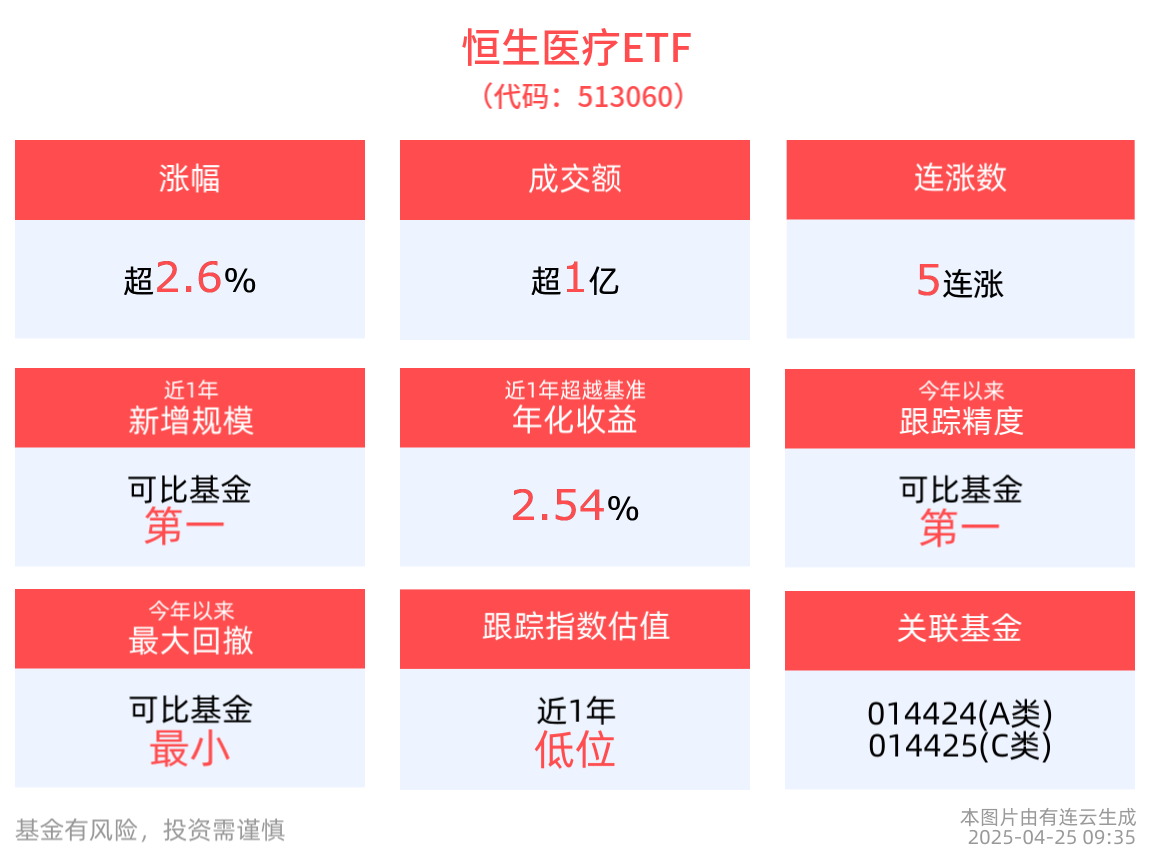
医药工业数智化转型实施方案落地,恒生医疗ETF(513060)高开高走上涨2.68%,医渡科技涨超10%
Sou Hu Cai Jing· 2025-04-25 01:52
Core Viewpoint - The Hang Seng Healthcare Index (HSHCI) has shown strong performance, with significant increases in constituent stocks and a notable rise in the Hang Seng Healthcare ETF, reflecting positive market sentiment and growth potential in the healthcare sector [3][4]. Group 1: Market Performance - As of April 25, 2025, the HSHCI rose by 1.77%, with notable gains from stocks such as Yidu Tech (10.15%) and WeDoctor (7.05%) [3]. - The Hang Seng Healthcare ETF (513060) opened high and increased by 2.68%, marking its fifth consecutive rise, with a latest price of 0.50 yuan [3]. - Over the past week, the Hang Seng Healthcare ETF has accumulated an 8.50% increase [3]. Group 2: Liquidity and Trading Volume - The Hang Seng Healthcare ETF had a turnover rate of 1.57% during the trading session, with a transaction volume of 183 million yuan [3]. - The ETF's average daily trading volume over the past month was 2.072 billion yuan, ranking first among comparable funds [3]. Group 3: Policy and Industry Outlook - On April 24, 2025, the Ministry of Industry and Information Technology and six other departments issued a notice on the "Implementation Plan for the Digital Transformation of the Pharmaceutical Industry (2025-2030)," aimed at enhancing the integration of AI and new information technologies within the pharmaceutical industry [3]. Group 4: Fund Performance and Metrics - The Hang Seng Healthcare ETF has seen a net asset growth of 715 million yuan over the past year, ranking in the top third among comparable funds [4]. - As of April 24, 2025, the ETF's net value increased by 41.16% over the past year, with a maximum monthly return of 28.34% since inception [4]. - The ETF's Sharpe ratio was reported at 1.34, indicating strong risk-adjusted returns [5]. Group 5: Valuation and Holdings - The latest price-to-earnings ratio (PE-TTM) for the HSHCI is 25.11, which is below 92.78% of the historical data over the past year, indicating a low valuation [5]. - The top ten weighted stocks in the HSHCI account for 57.54% of the index, with companies like BeiGene and WuXi Biologics being significant contributors [5].



智通港股解盘 | 关税战面临变数恒指调整 参会ASCO年会品种获得追捧
Zhi Tong Cai Jing· 2025-04-24 12:20
Market Overview - The US stock market experienced a pullback after a brief rally, with the Hong Kong stock market also declining by 0.74% [1] - President Trump indicated potential new tariffs on trade partners, including China, which has led to skepticism in the market regarding the actual implementation of these tariffs [1] - The White House's claims of progress in trade negotiations with allies have been denied by those countries, indicating a lack of consensus [1] Gold Market Activity - Gold prices have become active again, with Deutsche Bank attributing recent declines to a rebound in the US dollar and market overreaction to tariff news [2] - Despite the recent pullback, the outlook for gold remains positive due to ongoing uncertainties surrounding US tariffs [2] - Several gold mining companies, including Lingbao Gold and Shandong Gold, saw rebounds in their stock prices [2] Japanese Market Investment - Overseas investors have net purchased 9.64 trillion yen (approximately 675 billion) in Japanese bonds and stocks, marking the highest level since records began in 1996 [3] - A significant portion of this investment has flowed into the Japanese bond market, indicating a potential future interest in the Chinese market [3] Banking Sector Performance - A-share listed banks reported strong growth in revenue and net profit for Q1 2025, with steady credit expansion [3] - Major banks in China, including the "Big Four," have seen their stock prices reach historical highs, reflecting investor confidence [3] New Consumption Trends - Investment is shifting towards new consumption sectors such as personal care, cosmetics, and jewelry, with companies like Shangmei and Juzhong Biotech showing strong performance [4] - Shangmei's recent partnership and its leading position in the beauty market highlight the growth potential in this sector [4] Oncology Sector Developments - The upcoming ASCO 2025 conference will showcase significant clinical advancements from companies like Rongchang Biotech and Ascentage Pharma, with multiple projects selected for presentation [5][6] - Rongchang Biotech's stock surged over 17% following the announcement of its clinical progress [5] Wind Power Industry Insights - Wind power companies have reported strong Q1 results, with expectations for increased demand and improved operational efficiency in the coming years [7] - The domestic wind power installation forecast for 2025 and 2026 shows significant growth, particularly in offshore wind projects [7] Individual Company Highlights - TCL Electronics announced a new stock incentive plan aimed at boosting employee confidence and aligning with its global growth strategy [9] - The company reported a projected revenue increase of 25.7% for 2024, with significant growth in its innovative business segments, including solar energy [10]
净利润下滑、遭遇“背刺”,敷尔佳的“医美面膜生意”不灵了?
Bei Ke Cai Jing· 2025-04-24 11:26
Core Viewpoint - Harbin Fulejia Technology Co., Ltd. reported a revenue increase in 2024 but a decline in net profit, indicating challenges in maintaining profitability despite sales growth [1][2]. Financial Performance - In 2024, the company achieved a revenue of 2.017 billion yuan, a year-on-year increase of 4.32%, while net profit was 661 million yuan, a decrease of 11.77% [1]. - For Q1 2025, revenue fell to 301 million yuan, down 26.39% year-on-year, and net profit dropped to 91.38 million yuan, a decline of 39.77% [1]. - In 2023, revenue was 1.934 billion yuan, up 9.29%, but net profit decreased by 11.56% to 749 million yuan [2]. Sales and R&D Expenses - The company has faced criticism for high sales expenses and low R&D investment. In 2023, sales expenses reached 532 million yuan, accounting for 27.51% of total revenue, while R&D expenses were only 32.84 million yuan, or 1.70% of revenue [2]. - In 2024, sales expenses increased to approximately 748 million yuan, a 40.53% rise, making up 37.08% of total revenue, while R&D expenses grew to 34.82 million yuan, still only 1.73% of revenue [2]. - As of 2024, the company had 58 R&D personnel, representing 8.20% of total employees, indicating a gradual increase in R&D capacity [3]. Competitive Landscape - The company previously held a leading market share of 17.5% in medical dressings but has faced increased competition, particularly from Juzhi Biotechnology, which surpassed Fulejia in revenue for medical dressings in 2023 and 2024 [4]. - Former partner Harbin Sanlian Pharmaceutical has also entered the competitive landscape, launching similar products that overlap with Fulejia's offerings [5][6]. - The market for skin care products in China is projected to reach 518.5 billion yuan by 2026, with functional skin care and medical dressing products expected to grow significantly [8].
直播回放:港股指数基金投资指南
银行螺丝钉· 2025-04-23 13:40
文 | 银行螺丝钉 (转载请注明出处) 一、【直播回放】 港股指数基金的品种也越来越丰富。 常见的港股宽基指数,有恒生、H股、港股中小;策略指数,例如港股红利;行业主题指数,例如港股消费、恒生医疗、港股科技、恒生科技等。 这些指数分别有啥特点?影响港股涨跌走势的原因有哪些? 如何快速查询港股各个指数的估值数据? 在昨晚的直播课里,螺丝钉详细介绍了这些问题。 长按识别下面二维码,添加 @课程小助手 微信,回复「 0422 」即可观看直播回放。 (提示:回复后可以耐心等待几秒哦~) 策略指数丰富了我们投资的选项,满足了很多投资者个性化的需求。 第三类是行业指数。 也就是仅覆盖了某个行业的股票,例如消费、医药、金融等。 最常见的行业指数,是11个一级行业。 每个一级行业,其实都是社会不可或缺的一部分,长期也是跟着社会发展的。 第四类是主题指数。 二、【部分直播课内容如下】 1. 港股常见的四类指数 跟A股类似,港股常见的指数,主要也分为四类。 第一类是 宽基 指数。 通常是按照上市公司的市值规模来选股的,会包含各个行业的股票,覆盖范围很"宽"。 第二类是 策略指数 。 通常是在宽基指数的基础上,用了某一种投资策略, ...
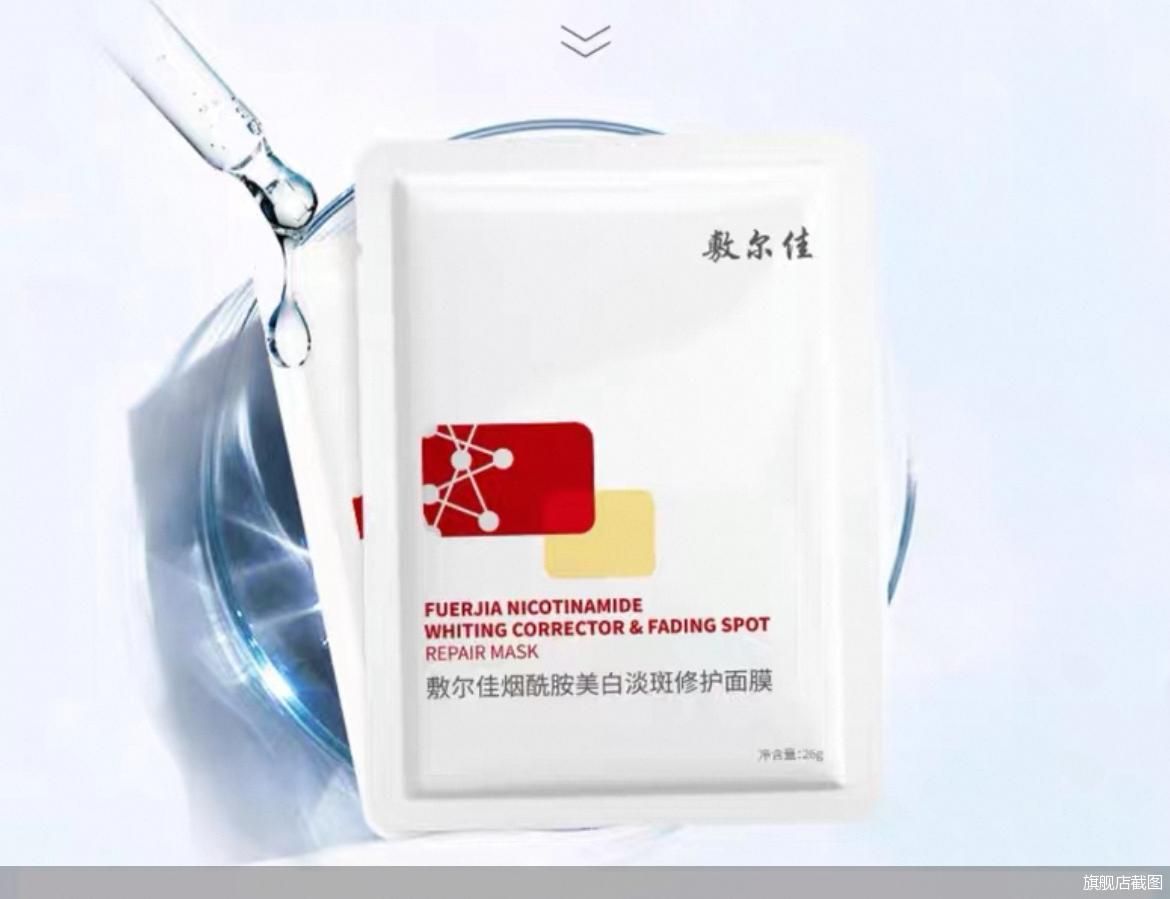
敷尔佳,正在消散的“医美面膜”神话
Bei Jing Shang Bao· 2025-04-23 13:01
Core Viewpoint - The company Fulejia continues to experience a decline in net profit for the second consecutive year, with a reported decrease of 11.77% in 2024, attributed primarily to increased marketing expenses and a competitive business environment [1][3][4]. Financial Performance - In 2024, Fulejia achieved operating revenue of 2.017 billion yuan, a year-on-year increase of 4.32%, while the net profit attributable to shareholders was 661 million yuan, reflecting a decrease of 11.77% [3]. - The company reported a net profit decline of 11.56% in 2023, despite a revenue growth of 9.29% during the same period [3]. - Marketing expenses have significantly increased, with 2024 sales expenses reaching 748 million yuan, up 40.53% from 2023, which had sales expenses of 532 million yuan, an increase of 36.44% [3]. Market Environment - The competitive landscape is characterized by reliance on traffic operations and price competition, leading to increased costs and reduced profit margins [4]. - Fulejia's financial report indicates a significant dependence on promotional events and influencer marketing, which, while effective for short-term sales, contribute to rising operational costs over time [4]. Historical Context - Founded in 2015, Fulejia quickly rose to prominence in the beauty industry, particularly in the medical dressing sector, with a substantial portion of its revenue derived from medical products [5][6]. - The company experienced rapid revenue growth from 374 million yuan in 2018 to 1.342 billion yuan in 2019, and further to 1.585 billion yuan in 2020 [6]. Research and Development - Fulejia's R&D expenses have seen significant growth, with 2023 expenditures reaching 32.84 million yuan, but the growth rate slowed to 6.04% in 2024 [9]. - The proportion of R&D expenses relative to total revenue remains low, at less than 2% in 2024, compared to over 5% for competitors like Huaxi Biology [9]. Future Outlook - The company plans to continue its dual-line R&D strategy focusing on both medical devices and cosmetics, aiming to enhance brand image and market share through refined operations and product quality [9]. - Industry experts suggest that Fulejia needs to differentiate itself and explore new avenues, such as beauty devices, to maintain its competitive edge as its initial advantages diminish [10].
锦波生物狂吃“独家”红利
Hua Er Jie Jian Wen· 2025-04-23 01:27
Core Viewpoint - The performance of Jinbo Biological, the first domestic "recombinant collagen" company, is experiencing significant growth, with revenue and net profit for 2024 projected to be 1.443 billion yuan and 732 million yuan, respectively, reflecting year-on-year increases of 84.92% and 144.27% [1][3]. Financial Performance - In Q1 2025, Jinbo Biological's revenue and net profit are expected to reach 366 million yuan and 169 million yuan, respectively, with both showing over 60% year-on-year growth [1]. - The product "Wei Yimei," which is based on recombinant type III human collagen, generated revenue of 1.128 billion yuan in 2024, marking a year-on-year growth of 99.69% [3][4]. Pricing and Market Pressure - The factory price of Wei Yimei has shown a slight decline, with a 2024 price of 910 yuan per unit, down nearly 7% year-on-year [8]. - The terminal price of Wei Yimei is also decreasing, with a price drop of over 10% observed on platforms like Meituan [10]. Competitive Landscape - Competitors such as Juzi Biological and Chuangjian Medical are making progress in the market, having submitted applications for the registration of similar products, although their approval processes have faced delays [11][12]. - Jinbo Biological's competitive edge lies in its exclusive medical device certification for its injection products, which has driven significant sales growth [3][4]. Product Development - Jinbo Biological is expanding its product range, with the recent approval of a new injectable recombinant collagen gel, which is expected to enhance its market position [14][18]. - The gel is designed for facial volume correction and does not rely on cross-linking agents, potentially increasing safety but limiting the duration of its effects [15][16]. Market Expectations - The strong growth in performance and the upcoming gel product have raised market expectations for Jinbo Biological, with its stock price increasing by nearly 40% since the end of March [19]. - The skincare line related to recombinant collagen also showed significant growth, with revenue of 142 million yuan in 2024, up over 80% year-on-year, although its overall contribution remains limited [21][22].
干货分享!2025年中国功能性护肤品行业发展概况及未来投资前景分析报告(智研咨询)
Sou Hu Cai Jing· 2025-04-23 00:06
Industry Overview - The functional skincare market has become a dominant segment within the broader skincare industry, driven by increasing consumer awareness of skin issues and ingredient research [3][5] - Functional skincare products are designed for individuals with specific skin concerns, including whitening, anti-aging, sun protection, and hydration, often containing medicinal ingredients [1][5] Market Growth - The global functional skincare market is projected to grow from $35.3 billion in 2016 to $168 billion by 2024, while the Chinese market is expected to increase from 7.42 billion yuan to 48 billion yuan in the same period [5] - The demand for functional skincare products is fueled by the rise of ingredient-conscious consumers, sensitive skin populations, and post-aesthetic treatment recovery needs [3][5] Product Categories - Functional skincare products encompass three main categories: dermatological skincare, efficacy-driven skincare, and medical-grade skincare, with "pharmaceutical cosmetics" falling under dermatological skincare [5] - Professional skincare products are further divided into patch-based and non-patch-based forms, with patch-based products, such as masks, projected to grow from 2.38 billion yuan in 2017 to 19.34 billion yuan by 2024 [5] Industry Leaders - Companies like Huaxi Biological, Beitaini, and Juzhi Biological are recognized as industry leaders, driving development through innovation [9] Consumer Trends - The evolution of functional skincare reflects a dual pursuit of beauty and health, highlighting a growing consumer awareness of personal skincare needs [11]

一片面膜40元,陕西女富豪年赚20亿
Sou Hu Cai Jing· 2025-04-22 10:06
Core Viewpoint - The article highlights the rapid growth and market dominance of the brand "可复美" (Kefumei) and its parent company, 巨子生物 (Juzi Bio), in the Chinese beauty industry, particularly focusing on their innovative use of recombinant collagen products and effective marketing strategies that have led to significant revenue increases and market share expansion [1][5]. Group 1: Company Performance - Juzi Bio's revenue increased from 9.57 billion yuan to 55.39 billion yuan over six years, representing a growth of more than five times [1][4]. - In 2024, Juzi Bio surpassed Proya to become the highest-valued domestic beauty company, with a net profit of 20.62 billion yuan, which is 12 times that of Huaxi Bio [5][12]. - The company's revenue growth rate in 2024 was 57.17%, maintaining double-digit growth for five consecutive years [5][12]. Group 2: Product Strategy - Juzi Bio employs a dual sales strategy targeting both medical institutions and general consumers, with products available in approximately 1,700 public hospitals and 3,000 private hospitals and clinics [3][4]. - The brand's focus on "recombinant collagen" has positioned it as a leader in the market, particularly for post-surgical recovery and skin barrier repair [4][10]. - The price point for products like the "recombinant collagen dressing" is significantly higher than competitors, with a single mask priced at around 40 yuan, reflecting the brand's premium positioning [6][9]. Group 3: Market Position and Competition - Juzi Bio has established a strong market presence by being the first to mass-produce recombinant collagen skincare products, holding 167 patents related to this technology [9][10]. - The company has maintained a gross margin above 80%, with a reported margin of 82.1% in 2024, significantly higher than competitors like Huaxi Bio [8][12]. - Despite its success, Juzi Bio faces challenges from increasing competition in the recombinant collagen market, as other brands begin to enter this space [17]. Group 4: Financial Management - Juzi Bio's sales and marketing expenses have surged, with expenditures rising from 1.58 billion yuan in 2019 to 20.08 billion yuan in 2024, outpacing revenue growth [13][14]. - The company's R&D spending remains low compared to competitors, with only 1.9% of total revenue allocated to R&D in 2024, raising concerns about its long-term competitive edge [16][17]. - Juzi Bio has recently announced plans to raise 2.33 billion HKD through stock issuance, adding to its cash reserves of 4.03 billion yuan as of the end of 2024 [17].

合成生物深度:以生物造万物,构建AI+新质生产力新业态
材料汇· 2025-04-21 14:28
一直在路上,所以停下脚步,只在于分享 包括: 新 材料/ 半导体 / 新能源/光伏/显示材料 等 添加 小编微信 ,遇见 志同道合 的你 写在前面 (文末有惊喜) 正文 = 在 1 is fo 基础化工 点击 最 下方 "在看"和" "并分享,"关注"材料汇 行业专题 以生物造万物. 构建 Al+新质生产力新业态 合成生物深度系列报告之一 主要观点: ● 合成生物学是生产力转型升级新方向 合成生物学是一门基于工程化的设计理念,结合生物学、化学、医 学、农学、工程学、计算机与数据科学等交叉学科技术,旨在设计 和构建新的生物系统,以实现特定的功能,其本质是让细胞为人类 工作生产想要的物质。合成生物学和发酵工程的区别在于是否对细 胞进行定向性干预,大幅提升微生物细胞工厂效率。目前合成生物 学可合成的大宗化学品仅几十种,在整体基础化学品中的占比还非 常有限,还无法颠覆性替代传统化工,但在部分领域有比较好的应 用场景,具有战略与商业角度的优势,生物制造未来提升空间巨 大。 ● Al 赋能上游+政策推动落地,合成生物学东风将至 当前,国际合成生物学优势力量主要分布在美、欧等地,其政策对 我国来说具备一定参考意义,国内也正 ...


深度 | 70万家药店,还能跑出多少个“薇诺娜”?
FBeauty未来迹· 2025-04-21 12:49
或许你已经发现,走进家里小区楼下的药店,第一眼看到的可能不是药品,而是薇诺娜、可复 美、绽妍等品牌的护肤产品,这一幕正悄然成为中国药店的"新常态"。 近日,福瑞达生物公布了年内覆盖1 0个千万级OTC连锁的大计划。无独有偶,百雀羚也于年 初宣布正式入驻北京同仁堂渠道。随着线上红利逐渐见顶,不少品牌开始瞄准线下OTC专业渠 道掘金。 《FBe a u t y未来迹》经过调研发现,美妆在OTC渠道的生意,比起未开发的蓝海,更像是一支 蓄势待发的弓箭。在已经跑出薇诺娜这个十亿级销售规模美妆品牌的情况下,依旧还有巨大的 想象空间。 OTC渠道可以说是目前在线下分布最广的一类渠道,正如居民楼附近不一定会有化妆品店,但 一定会有药店,而这不是错觉。 根据薇诺娜母公司贝泰妮集团发布的2 0 2 4年上半年财报,OTC分销渠道销售模式实现营业收 入人民币3 5 , 4 7 0 . 1 4万元,约占主营业务收入1 2 . 7 1%,同比增长约2 0 . 0 1%。 按照这一增速, 薇诺娜在OTC的年销售规模大概率已经迈过1 0亿门槛。 据公开资料,薇诺娜从2 0 1 6年开始与连锁药房合作,彼时市场体量只有5 0万左右;8年后 ...