宝马

Search documents
人形机器人泡沫破裂?独角兽达闼停摆,硅谷明星 Figure 陷“造假”风波
3 6 Ke· 2025-05-09 01:51
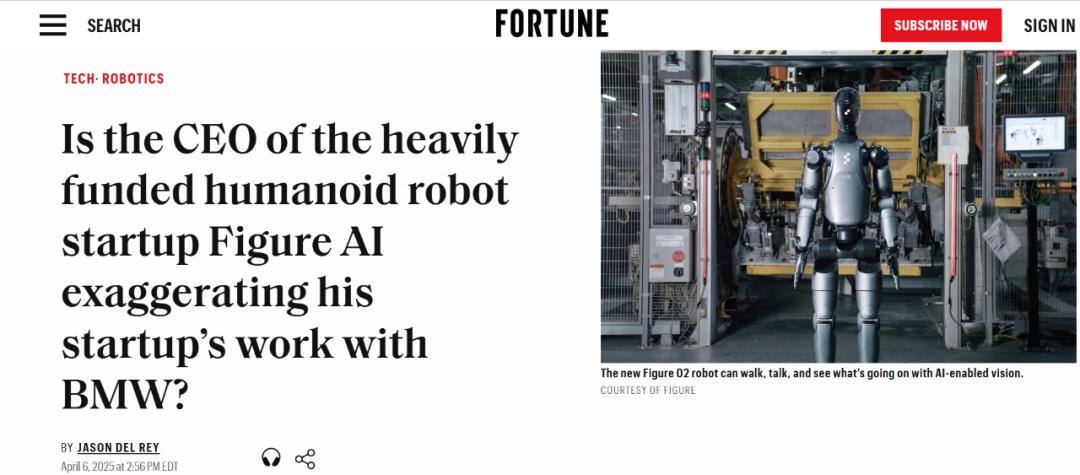
Core Insights - The competition in the humanoid robot industry is increasingly focused on the speed of B-end scenario implementation and C-end cost control capabilities [1][15] - Recent events indicate a bubble burst in the humanoid robot sector, highlighted by the operational crisis of the well-known unicorn, Dalu Robotics, and trust issues surrounding the high-valued company Figure in Silicon Valley [1][2] Company Analysis - Figure AI has faced scrutiny for allegedly exaggerating its partnership with BMW, raising questions about its product deployment capabilities [2][3] - The initial perception of Figure AI as a leader in the humanoid robot space was challenged by findings that only one Figure robot was operational at BMW's South Carolina plant, performing limited tasks [3][4] - Figure AI's CEO, Brett Adcock, has made bold claims about the company's capabilities, which have not been substantiated by BMW's statements, indicating a disconnect between marketing and actual operational progress [4][5] - Figure AI's strategy includes a focus on B-end markets, targeting industries such as manufacturing, logistics, and retail to provide flexible labor solutions [9][11] - The company aims to reduce the cost of humanoid robots to a few hundred dollars per month to enhance economic feasibility, although specific pricing details remain undisclosed [9][11] Industry Trends - The humanoid robot industry is at a critical stage of commercialization, with various companies adopting different business models, primarily focusing on B-end applications [9][12] - Companies like Tesla's Optimus are also pursuing B-end applications while exploring C-end markets, with a focus on reducing hardware costs and optimizing production strategies [12] - Local government initiatives are increasingly supporting the humanoid robot sector, with over 70 billion yuan in state funds being allocated to promote technology development and commercialization [15]


全网吐槽的反人类设计,车企这回听劝了
3 6 Ke· 2025-05-09 01:18
Core Viewpoint - The automotive industry is witnessing a resurgence of physical buttons in vehicle designs, indicating that manufacturers are beginning to listen to consumer feedback regarding usability and safety concerns associated with touchscreens [1][20][22]. Group 1: Industry Trends - The trend of replacing physical buttons with touchscreens has been prevalent, with manufacturers emphasizing digital cockpit designs and larger screens, which have increased from 12 inches to 17 inches [1][20]. - Major automakers, including Volkswagen, Porsche, and Hyundai, are now reintroducing physical buttons, acknowledging that the previous reliance on touchscreens was a significant mistake [1][20][22]. - The 2023 Shanghai Auto Show highlighted this shift, with various companies announcing their commitment to integrating physical controls back into their vehicles [1][20][22]. Group 2: Consumer Feedback and Safety Concerns - Consumers have consistently criticized the safety and practicality of touchscreen controls, with reports indicating that operations can take an average of 22 seconds and have high error rates [3][19]. - A study by the UK Transport Research Laboratory found that using touchscreen systems can increase driver reaction times by 53% to 57%, significantly more than the effects of driving under the influence [16][19]. - The National Highway Traffic Safety Administration (NHTSA) reported that 18.7% of distraction-related accidents were linked to touchscreen operations, emphasizing the need for physical controls [19]. Group 3: Cost and Design Considerations - The shift towards touchscreens was partly driven by cost reduction strategies, as integrating functions into a single touchscreen can lower manufacturing costs compared to traditional button designs [8][7]. - However, the perceived high-tech appeal of large screens often masks the underlying cost-saving motives, with screens being procured for as low as $50 [8][7]. - The automotive industry is now recognizing that a balance between physical buttons and touchscreens is essential for optimal user experience and safety [24][22].


关税重压下福特(F.US)率先调价!墨西哥产三车型最高涨2000美元
Zhi Tong Cai Jing· 2025-05-08 11:08
Group 1 - Ford Motor Company announced price increases for three models produced in Mexico, becoming one of the first major automakers to adjust prices following the implementation of tariffs by the Trump administration [1] - The price hikes for certain versions of the Mustang Mach-E electric SUV, Maverick pickup, and Bronco Sport can reach up to $2,000 [1] - Ford estimates that the trade war will increase its costs by approximately $2.5 billion by 2025, but plans to mitigate the impact to about $1 billion [1] Group 2 - The U.S. government has relaxed import tariffs on auto parts, providing tax credits for domestic production, but the 25% tariff on 8 million imported vehicles annually remains in place [2] - Analysts warn that if the tariff policy continues, annual U.S. auto sales could decline by over one million vehicles [3] - Ford has a competitive advantage with 79% of its vehicles sold in the U.S. being domestically assembled, compared to General Motors' 53% [3] Group 3 - Prior to Ford's actions, most automakers had not implemented price increases but had issued warnings [4] - Porsche has indicated it will pass on tariff costs, while Audi has hinted at potential price increases without providing details [4] - In contrast, BMW expects a reduction in auto tariffs starting in July based on communications with the U.S. government, which contrasts with the outlook of its competitors [4]

主流车企相继公布财报,从中能看出哪些门道? | 经济观察
Chang Sha Wan Bao· 2025-05-08 06:02
长沙晚报全媒体记者 曹开阳 近日,国内外主流车企纷纷发布2024年年报和2025年一季报。在这些财报中,营业收入、净利润等指标,公众关 注较多,而且也较为熟悉;而像负债率、负债结构、应收账款等重要指标,却较易被公众忽视。其实,正是在这 些指标中隐藏着企业经营的关键信息,若加以研判能看出不少门道,并据此厘清企业的经营状况和产业的未来发 展轨迹。 国外车企经营如何,国内车企发展怎样,让我们扒开财报中公众较少关注的数据一探究竟。 主流车企负债率普遍超60% 从财务角度出发,企业负债率(负债总额÷资产总额×100%)是一项重要指标。汽车是典型的资金密集型产业,其 发展离不开巨额投资与研发投入,同时汽车生产需要使用昂贵的设备及大片的土地,因此资金门槛极高,且随着 生产规模的扩大,资金需求还会水涨船高。所以,全球主流汽车企业负债经营成为常态。纵观国内外主流车企财 报,其总负债都处于较高水平,且企业规模越大、营收越高、总负债也越高。 分类别看,全球头部车企总负债普遍更高。截至2024年末,大众集团营收2.5万亿元,总负债达3.4万亿元,是同期 营收的136%;丰田营收2.2万亿元,总负债达2.7万亿元,是同期营收的123% ...


华尔街见闻早餐FM-Radio | 2025年5月8日
Hua Er Jie Jian Wen· 2025-05-07 23:10
Market Overview - The US Federal Reserve has decided to pause interest rate cuts, indicating increased uncertainty and warning of stagflation risks. Powell emphasized that the economy remains strong but uncertain, and he rejected calls for preemptive actions due to tariffs [3][11] - The chip sector saw a rally as reports emerged that the Trump administration plans to revoke AI chip restrictions imposed during Biden's presidency [3][9] - The Chinese central bank announced a package of financial policies, including a reduction in reserve requirements and interest rates, aimed at stabilizing the economy [11] - China's foreign exchange reserves increased by 1.27% in April, with the central bank continuing to accumulate gold [10] Company News - Apple is planning a major overhaul of its Safari browser, focusing on AI-driven search, which poses a significant challenge to Google's dominance in the search market [13] - Arm reported better-than-expected earnings and revenue but saw its stock drop over 11% after providing a disappointing guidance for the upcoming quarter [13] - Novo Nordisk's Q1 sales grew by 19% year-on-year but fell short of expectations, leading to a downward revision of its annual sales guidance [13] - Tesla's sales in China fell by 6% year-on-year in April, marking the seventh consecutive month of decline [15] Industry Insights - The military industry is showing signs of recovery, with increased defense budgets globally due to rising geopolitical tensions [20] - The domestic computing power market in China is expected to see significant investment growth from 2024 to 2028, benefiting from the domestic chip industry amid export restrictions [20] - AI is increasingly integrated into materials research, enhancing efficiency in material design and manufacturing processes [21] - The smart driving sector is expanding, with companies like BYD accelerating the adoption of intelligent driving technologies in lower-end models [21]


关键技术加速升级 合资合作持续深化 人工智能深度赋能 从上海车展看汽车业转型“中国速度”(产经观察)
Ren Min Ri Bao· 2025-05-06 21:37
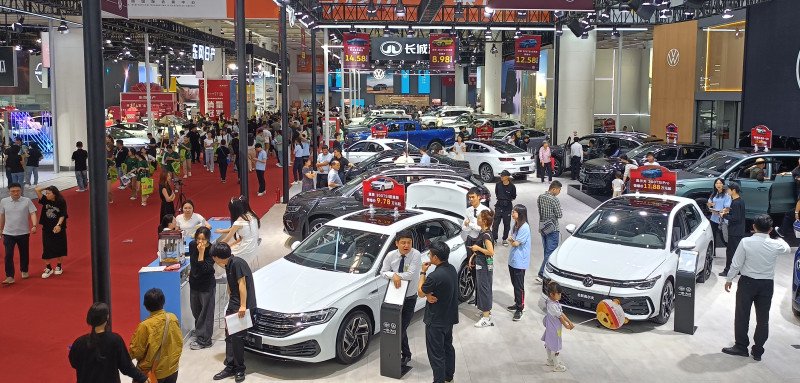
Core Insights - The 21st Shanghai International Automobile Industry Exhibition showcased nearly 1,000 domestic and foreign enterprises, highlighting bold explorations by Chinese new energy vehicle companies in product definition, pricing, and business models, as well as a high acceptance of digital and intelligent experiences among young consumers [1] Electric and Intelligent Technology Upgrades - Chinese smart electric vehicle companies and supply chain enterprises unveiled impressive new technologies, indicating that China's electrification and intelligentization are leading the global automotive industry's transformation [2] - CATL, a global leader in power battery shipments, introduced its sodium-ion battery, which reduces reliance on lithium resources and achieves an energy density of 175 Wh/kg, supporting a range of 500 kilometers [2] - The new dual-core battery architecture from CATL enhances energy density by 60% and weight energy density by 50%, significantly improving range [3] Advanced Driver Assistance Technologies - Major automakers presented advanced driver assistance technologies, including GAC Aion and Didi's L4 autonomous driving Robotaxi, set for delivery by the end of the year [4] - Huawei's ADS 4 system improves efficiency and reduces latency, with a flagship version designed for high-speed L3 applications [4] - Horizon Robotics showcased its high-performance chip with a processing power of 560 TOPS, marking a significant advancement in domestic L2 urban driving assistance systems [4] Global Collaboration and Innovation - Multinational companies are transitioning from "Made in China" to "Developed in China for the World," with significant R&D efforts localized in China [5][6] - Mercedes-Benz's new electric long-wheelbase CLA was developed entirely by a local team in just 18 months, reflecting the rapid innovation pace in the Chinese market [6] - GM's Buick brand introduced a new high-end electric sub-brand and plans to launch six new models based on a versatile architecture within the next 12 months [6] AI Integration in Automotive Development - AI technologies are increasingly integrated into vehicle development, with companies like Zhiji and Xpeng introducing AI-driven chassis systems that enhance safety and adaptability [8][9] - Geely has applied AI across various domains, including architecture, power, chassis, and driving assistance, achieving significant reductions in development cycles and costs [9] - The automotive industry is urged to adopt AI strategies to foster innovative organizational structures and accelerate transformation [10]
收回“对等关税”!特朗普遭“围攻”
第一财经· 2025-05-06 15:09
2025.05. 06 本文字数:2836,阅读时长大约5分钟 作者 | 第一财经 高雅 封图 | 新华社 特朗普政府的关税政策给美国大小企业带来了棘手的业务危机。 从对冲基金巨头阿克曼(Bill Ackman)、桥水基金创始人达利欧(Ray Dalio),到佛罗里达州的造 纸公司和纽约市的一家酒水零售商,美国企业家不得不使用诉讼、公开喊话以及私下游说等一切途径 劝阻特朗普收回"对等关税"。 目前,全美范围内至少有七起案件以《国际紧急经济权力法》(IEEPA)为依据挑战特朗普的关税措 施,旨在推翻特朗普的关税政策。 牛津经济研究院美国副经济学家兹维默(Grace Zwemmer)对第一财经记者表示,4月美国消费者信 心指数已降至2020年5月以来的最低水平,这主要源于对关税可能导致未来价格上涨的担忧。后续更 多负面影响需要一段时间才能显现,而供应链中断的不确定性将延长通胀高企的周期。 美关税政策遭遇多起诉讼 自特朗普政府提出所谓"对等关税"政策一个月以来,一场跨州、跨行业的法律合围正在形成。从州政 府到原住民部落,从造纸企业到桌游制造商,美国企业和律师开始挑战总统随意设定关税的权力合法 性。 在州层面,4月1 ...

反对特朗普关税成风潮:从华尔街大佬蔓延到原住民的“合围”
Di Yi Cai Jing· 2025-05-06 13:51
Core Viewpoint - The Trump administration's tariff policy has led to significant business crises for American companies, prompting various stakeholders to challenge the legality of these tariffs through lawsuits and lobbying efforts [1][3]. Group 1: Legal Challenges - At least seven lawsuits have been filed across the U.S. challenging Trump's tariff measures under the International Emergency Economic Powers Act (IEEPA), aiming to overturn the tariffs [1][3]. - California was the first state to file a lawsuit against the tariffs, claiming they severely harm the state's economy, followed by a coalition of 12 states alleging that the tariffs disrupt constitutional order and create economic chaos [3][4]. - Various businesses, including a Florida paper company and a Native American tribe, have also filed lawsuits, citing increased costs and violations of treaty rights due to the tariffs [3][4]. Group 2: Business Reactions - Executives from major companies, including Home Depot and German automakers, have engaged directly with the Trump administration to seek tariff exemptions, highlighting the tariffs' potential to disrupt supply chains and inflate prices [5][7]. - Influential business figures, such as Harold Hamm, have leveraged their connections to persuade Trump to reconsider certain tariffs, particularly those affecting energy imports from Canada [7][8]. Group 3: Economic Implications - Experts argue that the tariffs are unlikely to achieve their intended goal of bringing manufacturing back to the U.S., as established global supply chains cannot be easily reestablished domestically [10][11]. - The tariffs are expected to increase production costs in the U.S., potentially harming the international competitiveness of American manufacturing [10][11]. - Consumer confidence has dropped to its lowest level since May 2020, indicating that the tariffs may lead to a slowdown in consumer demand and economic growth [1][11].

全球车企“负债密码”:谁在负重前行,谁在轻装领跑?
经济观察报· 2025-05-06 12:53
Core Viewpoint - The financial status, particularly the debt ratio, is a critical factor determining the fate of automotive companies amid the global shift towards electrification and intelligence in the automotive industry [2][5]. Debt Situation of Global Automotive Companies - In 2024, the debt ratios of major global automotive companies generally exceed 60%, with some surpassing 80%. Ford leads with a debt ratio of 84.27%, followed by General Motors at 76.55% and Volkswagen at 68.92% [2][3]. - Among domestic companies, Chery has the highest debt ratio at 88.64%, followed by NIO at 87.45% and BYD at 74.64% [2][4]. Financial Metrics of Major Companies - The financial metrics for selected global automotive companies in 2024 include: - Toyota: Debt ratio 61.07%, total debt 273.09 billion, interest-bearing debt 186.95 billion [3]. - Ford: Debt ratio 84.27%, total debt 171.16 billion, interest-bearing debt 112.89 billion [4]. - BYD: Debt ratio 74.64%, total debt 58.47 billion, interest-bearing debt 0.286 billion [4]. High Debt Ratios and Industry Dynamics - The high debt ratios in the automotive industry are attributed to the capital-intensive nature of manufacturing, requiring significant investments in factories, equipment, and new technologies, especially during the transition to electrification and intelligence [5][6]. - Major international companies like Volkswagen and Ford are investing heavily in transformation, with Volkswagen planning to invest 170 billion euros from 2025 to 2029 for new product development and battery business [5][6]. Comparison of Debt Structures - The proportion of interest-bearing debt to total debt is a crucial indicator of financial health. Generally, a reasonable ratio is around 30%. However, many international companies exceed this, with Toyota at 68% and Ford at 66% [6][7]. - In contrast, domestic companies maintain lower interest-bearing debt ratios, with BYD at only 5%, indicating less repayment pressure compared to international peers [6][7]. Operational Health Indicators - BYD's operational health is reflected in its low accounts payable ratio, which stands at 31% of revenue, the lowest among domestic companies, indicating a strong position in supply chain management [9]. - The average payment cycle for BYD is 127 days, also among the shortest in the industry, suggesting efficient cash flow management [9]. Trends and Future Outlook - The overall debt ratio in the automotive industry is high compared to other manufacturing sectors, but recent reports indicate a downward trend in debt ratios among domestic companies, particularly BYD, which has seen a decrease of nearly seven percentage points in the last six months [9][10]. - The automotive industry is expected to undergo a new round of restructuring in asset and debt situations, with companies needing to balance scale expansion and financial health to thrive in a competitive environment [10].

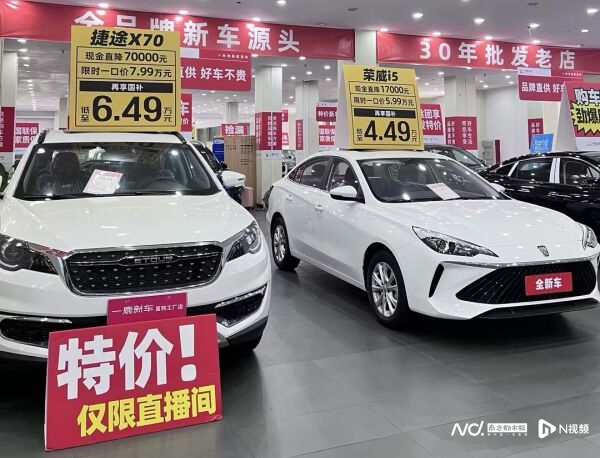
五一华南新车“放价”,送补贴送保险还0息!有车降7.5万
Nan Fang Du Shi Bao· 2025-05-06 08:26
Group 1: Core Insights - The five-day holiday has led to a surge in car purchases, with local auto shows crowded and various automakers increasing discounts to capture orders [1][2] - GAC Group's brands are heavily promoting during the holiday, offering extensive benefits such as lifetime free charging and maintenance, as well as attractive financing options [2][3] - The second-hand car market is facing increased pressure, prompting more second-hand car dealers to explore new car sales as a potential revenue stream [5][6] Group 2: Promotions and Discounts - GAC Aion is offering significant incentives, including up to 45,000 yuan in trade-in subsidies for certain models, and zero down payment options [3][4] - GAC Honda and GAC Toyota are also providing substantial discounts, with some models offering up to 67,000 yuan in comprehensive benefits during the holiday [3][4] - Chery Automobile is promoting attractive trade-in prices, allowing customers to save up to 40,000 yuan on new purchases [4] Group 3: Second-Hand Car Market Trends - The second-hand car market has seen a notable increase in transaction volume during the holiday, with a 23.6% year-on-year growth in vehicle sales [9] - The transaction value reached approximately 83 million yuan, marking a 28.7% increase compared to the previous year [9] - The market is expected to evolve with trends such as policy-driven growth, technological innovation, and consumer segmentation, particularly in the second-hand electric vehicle segment [10]