华硕

Search documents
【太平洋科技-每日观点&资讯】(2026-01-05)
远峰电子· 2026-01-04 13:26
Market Overview - The major indices showed mixed performance with the Shanghai Composite Index up by 0.09%, while the Shenzhen Component, North 50, Sci-Tech 50, and ChiNext Index decreased by 0.58%, 0.70%, 1.15%, and 1.23% respectively [1] - The TMT sector led the gains with SW Marketing Agency up by 7.84%, followed by SW Military Electronics III at 3.09% and SW Horizontal General Software at 2.18% [1] - Conversely, the TMT sector also saw declines, with SW Communication Network Equipment and Devices down by 2.35%, SW Digital Chip Design down by 2.03%, and SW Printed Circuit Board down by 1.80% [1] Domestic News - ASUS issued a price adjustment notice for certain product lines starting January 5, 2026, due to structural fluctuations in the global supply chain and rising costs of key components, particularly DRAM, NAND, and SSD [2] - Ankai Micro announced that its chips and solutions cover mainstream categories such as AI audio glasses, AI photography glasses, and AI display/projector glasses, supporting core functions like video, audio, and wireless connectivity [2] - Xitai Technology's 12-inch silicon-based OLED micro-display industrial park project has topped out, with a designed monthly capacity of 6K wafers, expected to achieve product lighting by the end of 2026 and mass production in Q2 2027 [2] - The Zhuzhou low and medium voltage power device industrialization project has officially commenced, with a total investment of 5.3 billion yuan, expected to add an annual production capacity of 360,000 silicon carbide power devices [2] Overseas News - AMS Osram announced the launch of the AS1181 LED driver chip solution, designed with human eye safety as a core principle, featuring eight independently configurable channels and programmable LED currents up to 66mA [3] - SK Hynix is discussing plans to build a 2.5D manufacturing line at its new packaging factory in Lafayette, Indiana, which will be its first production base in the U.S., aimed at becoming a cutting-edge packaging production base for AI memory by the second half of 2028 [3] - Infineon released the second generation of CoolSiC™ MOSFETs rated at 400V and 440V, targeting applications in AI server power supplies, switch-mode power supplies, motor control, renewable energy, and energy storage systems [3] - Due to limited economic recovery and conservative consumer behavior, the rising prices of memory are continuing to erode the profitability and pricing flexibility of laptop brands, leading to a downward revision of the global laptop shipment forecast for 2026 to a decrease of 5.4%, down to nearly 173 million units [3] AI News - Tencent's Mix Yuan has released an open-source model for 3D human motion generation with one billion parameters, significantly surpassing existing benchmarks in instruction-following capability and motion quality [4] - Fudan University revealed a mechanism aligning neural representations of large language models with human brain functions, predicting model performance in understanding and reasoning tasks [4] - The latest "AA Intelligence Index" ranked China's self-developed GLM-4.7 model first among open-source models with a score of 68, enhancing coding ability and long-range task planning [4] - Tencent's Mix Yuan has also released version 1.5 of its translation model, supporting direct deployment on consumer devices with only 1GB of memory required for smooth operation [4] Industry Tracking - The world's first small-sized humanoid robot with full-body force control, Qiyuan Q1, has been officially launched by Weiqi New Materials, standing at approximately 0.8 meters tall and capable of being stored in a backpack [5] - The Zhongtai Polyester Company has completed the main structure of its 250,000-ton direct-spun polyester filament project, which will significantly enhance its production capacity and market competitiveness [5] - The first domestically produced X-ray photoelectron spectrometer, the Jingwei 100 series, has been delivered, featuring an automated high-efficiency ion source for in-depth analysis [5] - The Anhui Quantum Information Engineering Technology Research Center announced the delivery of China's first superconducting quantum computing measurement and control system designed for a thousand-bit scale [5] High-Frequency Data Updates - The international DRAM spot prices as of December 31 showed various fluctuations, with DDR5 16G (2G×8) averaging $29.329, reflecting a 2.62% increase [6] - Semiconductor material prices from Baichuan Yingfu as of December 31 indicated stable pricing across various categories, with 4N zinc oxide powder priced at 1,445 yuan per kilogram [6]


Meta数十亿美元收购Manus;比亚迪超越特斯拉,拿下“全球第一”丨Going Global
创业邦· 2026-01-04 10:35
「Going Global 出海周报」 是创业邦推出的出海系列栏目,旨在为出海领域的创业者和投资人 精选出海大事件、海外大公司、投融资消息, 本篇 为栏目第 315 篇报道。 整理丨 Lucus 本周(1 2 月 29 日至1月 4 日)出海大事件包括: Temu针对特定品类提升保证金要求,最高10万元 ; 中国车畅销以色列市 场 ; 比亚迪超越特斯拉 , 拿下"全球第一" ; 华硕被传 将 进军DRAM制造 ; 宝马官宣Alpina成为旗下品牌;马斯克称2026 年将量产脑机接口设备; OpenAl加码音频AI研发 ; Meta数十亿美元收购Manus。 出海四小龙 在模式创新方面,Temu持续进行战略调整,从依赖中国直邮转向本地库存+本地配送的模式,有效提升了物流效率和用户体验。 大公司 中国车畅销以色列市场 1月2日 , 以色列汽车进口商协会公布数据显示,奇瑞生产的捷途7成为2025年以色列销量最高的车型。 数据显示,捷途7全年在以色列共售出约1.3万辆,韩国汽车品牌现代生产的科纳以约1.2万辆的销量位居第二。 中国品牌汽车2025年在以售出10.1万辆,销量位居第一。韩国品牌以5.2万辆位居第二,日本 ...




三星显示正式量产全球首款RGB条纹像素360Hz QD-OLED面板
WitsView睿智显示· 2026-01-04 08:58
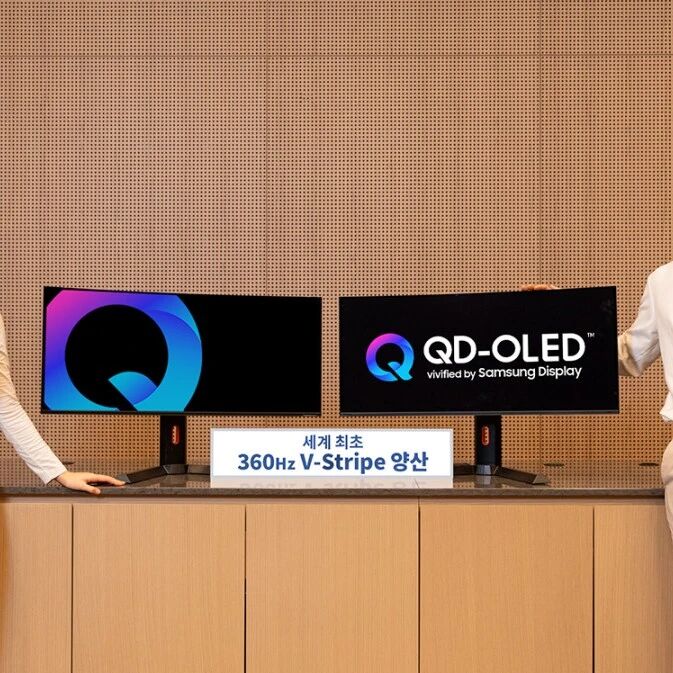
1月1日,三星显示宣布 正式量产全球首款采用"V-Stripe"(垂直条纹/RGB条纹)像素结构 的34英寸360Hz QD-OLED面板 ,并已供应给华硕、微星、技嘉等7家显示器制造商。 图片来源:三星显示 此次发布的核心亮点在于三星显示独立开发的"V-Stripe"像素结构,该技术摒弃了传统 QD- OLED 的三角形子像素排列,转而采用红、绿、蓝(RGB)子像素垂直排列方式。 三星显示表示,"采用V条纹结构后,文字边缘能够呈现更清晰的显示效果。" 对于需要长时间进 行文档编辑、代码编写或内容创作的用户而言,V-Stripe结构将大幅改善阅读体验,弥补了以往 OLED面板在文本显示上的短板。 在性能参数方面,这款面板具备21:9的超宽纵横比和最高360Hz的刷新率,同时拥有最高1300尼 特的峰值亮度。 针对量产难题,三星显示指出,高刷新率与新像素结构的结合曾面临有机材料寿命缩短、发热增 加及亮度衰减等挑战。公司通过优化 QD-OLED 的顶部发光结构(Top Emission)及提升材料 效率,成功攻克了这些技术壁垒。 Size Covered>15" and above . · Report form ...
消息指华硕将退出手机市场 手机部门人力裁撤同步启动
Xin Lang Cai Jing· 2026-01-04 03:31
华硕回应表示,既有手机产品的营运、维护、升级与保固仍持续,但2026年暂无新机型规划。2025年下 旬市场已多次传出华硕将结束手机事业,叠加2026年零组件价格暴涨、研调机构下修全球手机出货量, 终端需求疲软加速其退出决策。 免责声明:本文内容与数据由观点根据公开信息整理,不构成投资建议,使用前请核实。 观点网讯:1月4日,据市场消息,中国台湾品牌大厂华硕ASUS确认2026年无新手机推出计划,渠道商 已无法从代理商处拿货,手机部门人力裁撤同步启动,标志其将淡出手机市场。 ...
最高降30万!宝马中国回应30多款车型降价;比亚迪超越特斯拉!拿下纯电汽车全球第一;山姆被指多款商品货源与小象超市趋同,多方回应!
雷峰网· 2026-01-04 00:22
Group 1 - BMW China announced price adjustments for over 30 models, with some reductions exceeding 300,000 yuan, indicating a strategic response to market dynamics and performance pressures [4][5] - The most significant price drop was for the BMW iX1 eDrive25L, which decreased from 299,900 yuan to 228,000 yuan, a reduction of 24% [4] - BMW's sales in China have declined by 11.2% year-on-year, and the company does not expect rapid growth in the Chinese market in 2026 and 2027 [5] Group 2 - BYD is projected to sell 2.25 million pure electric vehicles in 2025, surpassing Tesla's expected deliveries of 1.64 million, marking a significant milestone in the electric vehicle market [7][8] - BYD's overall vehicle sales are expected to reach 4.6 million in 2025, with a year-on-year growth of approximately 8% [7] Group 3 - Wallmart's Sam's Club in China is expected to achieve sales of over 140 billion yuan in 2025, a 40% increase from the previous year, contributing to Walmart China's goal of reaching 200 billion yuan in sales by 2026 [23][24] - Sam's Club plans to open 10 new stores in 2025, bringing the total to 63, supporting its growth strategy through both same-store sales and new store openings [24] Group 4 - Wallmart's Sam's Club aims for a comparable store sales growth of 15% in 2026, driven by both existing store performance and new openings [23] - The strong performance of Sam's Club is expected to significantly enhance Walmart China's market position, making it a dominant player in the retail sector [23] Group 5 - Kimi, a Chinese AI startup, completed a $500 million Series C financing round, with a post-investment valuation of approximately $4.3 billion, indicating strong investor confidence [16] - The company reported a significant increase in overseas revenue, with a month-on-month growth of over 170% in paid users from September to November 2025 [16] Group 6 - Wallmart's Sam's Club in China achieved a record number of new store openings in 2025, contributing to its robust sales growth and market expansion strategy [24] - The company is leveraging its strong brand and operational efficiency to enhance its competitive position in the retail market [23]


穿戴设备市场研究报告!
Sou Hu Cai Jing· 2026-01-03 19:11
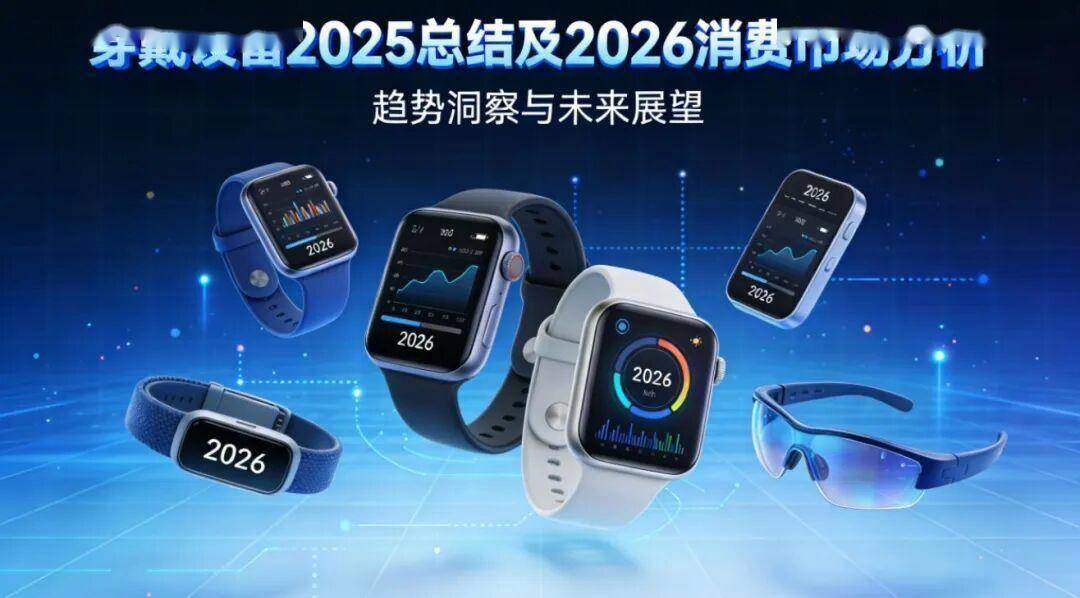
Group 1: Market Overview - The global wearable device market is expected to exceed $430 billion by 2025, with China leading the growth at over 20% [1][2] - The market is projected to reach a scale of over 600 billion yuan in China by 2026, with global shipments nearing 800 million units [1][2] - The growth is driven by health monitoring upgrades, 5G technology proliferation, and AI algorithm optimization [2] Group 2: Product Forms and Technological Innovations - Wearable devices are evolving from visible to "invisible" forms, with innovations in design and integration of health sensors [3] - The rise of smart rings, such as Samsung's Galaxy Ring, signifies a shift towards more discreet health monitoring solutions [3] - Flexible electronics technology is revolutionizing device forms, with companies like BOE producing ultra-thin flexible screens [6] Group 3: Application Scenarios and User Demands - The application scenarios for wearable devices are diversifying, expanding from health monitoring to medical intervention and smart home control [4] - Medical-grade features are becoming more prevalent, with a penetration rate exceeding 55% in health monitoring [16] - The demand for elderly care devices is increasing, with smart fall prevention products gaining traction in the market [17] Group 4: Competitive Landscape - The global wearable device market is characterized by a "three-legged" competition, with Chinese brands holding significant market shares [9] - Huawei leads the global market with a shipment of 28.6 million units, followed by Xiaomi and Apple [9][10] - In the Chinese market, Huawei, Xiaomi, and Little Genius dominate, with Huawei holding a 33.4% market share [10] Group 5: Future Market Trends - The global wearable device market is expected to continue growing, with shipments projected to exceed 850 million units by 2026 [12] - AI functionality penetration is anticipated to rise, with AI watches expected to exceed 25% market penetration by 2026 [12] - The Chinese wearable device market is forecasted to reach 600 billion yuan, with significant growth in medical-grade devices [13][14] Group 6: Key Brand Strategies - Huawei's strategy focuses on its HarmonyOS ecosystem and domestic chip breakthroughs, achieving significant market penetration [19] - Apple's differentiation lies in its high-end ecosystem and M-series chip advancements, maintaining a strong position in the premium market [20][21] - Xiaomi emphasizes high cost-performance and AIoT ecosystem integration, enhancing user experience through interconnected devices [23]

传退出手机市场。华硕:今年无推新机计划
Jing Ji Ri Bao· 2026-01-02 22:48
Group 1 - ASUS is reportedly exiting the smartphone market and laying off its mobile division staff, although it will continue to provide maintenance and warranty services for existing products [1] - The company confirmed that there are no plans to launch new smartphone models in 2026, following rumors that it would end its mobile business by late 2025 [1] - The smartphone business has been consistently unprofitable, leading to speculation about ASUS's exit from the market, with the Zenfone 10 potentially being the last model in that series [1] Group 2 - ASUS views smartphones as an entry point for AIoT and important terminals for AI applications, with the latest ROG Phone series set to launch in November 2024 and the Zenfone 12 Ultra in February 2025, focusing on AI features, photography, and high-resolution displays [2]
英伟达、AMD本月起或涨价,5090两千美元变五千
机器之心· 2026-01-01 03:42
Core Viewpoint - The price increase of GPUs by Nvidia and AMD is becoming a certainty, with expected adjustments starting in early 2026 [1][3]. Group 1: Price Increase Details - Nvidia and AMD plan to gradually raise prices for their GPUs in the coming months, with AMD starting in January and Nvidia in February [3]. - The price hike will initially affect consumer-grade GPUs, such as Nvidia's GeForce RTX 50 series and AMD's Radeon RX 9000 series, with the flagship RTX 5090 expected to rise from an official price of $1999 to around $5000 this year [4][6]. Group 2: Cost Structure and Drivers - The primary driver for the price increase is the rapid growth of memory costs within the GPU cost structure, with memory now accounting for over 80% of the overall manufacturing cost [7][8]. - The procurement cost of the 16GB GDDR7 memory used in the RTX 5070 Ti has surged from $65-80 in May 2025 to $210-260 by December 2025, complicating the maintenance of current GPU prices [8]. Group 3: Impact on AI and Other Products - The price increase will likely extend across all product lines, including GPUs used in AI data centers and servers, as new contracts signed in 2026 will reflect the increased memory prices [6][9]. - The flagship AI GPU H200 from Nvidia, priced between $30,000 and $40,000, is also expected to see further price increases this year due to rising memory costs [9]. Group 4: Market Reactions - Asus has announced a price increase for some products starting January 5, citing rising DRAM and storage costs driven by AI demand [10]. - Dell has previously indicated a price increase of 30%, reflecting similar market conditions [14].



IDC再下修全球PC出货预估
Jing Ji Ri Bao· 2025-12-31 23:47
Core Insights - IDC has revised its global PC shipment forecast for 2026 downwards for the second time, indicating a potential annual decline of 5% in a neutral scenario and up to 9% in a pessimistic scenario due to ongoing memory shortages and price increases [1] - The previous forecasts from November 2025 and December 2025 indicated smaller declines, showing a significant deterioration in expectations over a short period [1] - The memory shortage is characterized as a strategic reconfiguration of capacity rather than a typical cyclical fluctuation, which poses a long-term challenge for the PC industry [1] Industry Impact - The 9% decline, while not catastrophic, is significant, especially when compared to the 11.9% drop during the 2009 financial crisis and a nearly 15% decline post-pandemic due to market saturation [1] - The PC industry is facing critical challenges with the cessation of Windows 10 support and the promotion of AI PCs, further complicating the market outlook [1] Company Positioning - Major OEMs like Dell, HP, Lenovo, and ASUS are expected to better navigate the challenging environment due to their scale advantages, inventory leverage, and long-term supply agreements [2] - Smaller regional brands, white-label assemblers, and DIY system manufacturers are at a greater risk compared to larger players [2]
打工人刚需疯狂涨价,00后一点也不担心
3 6 Ke· 2025-12-31 09:38
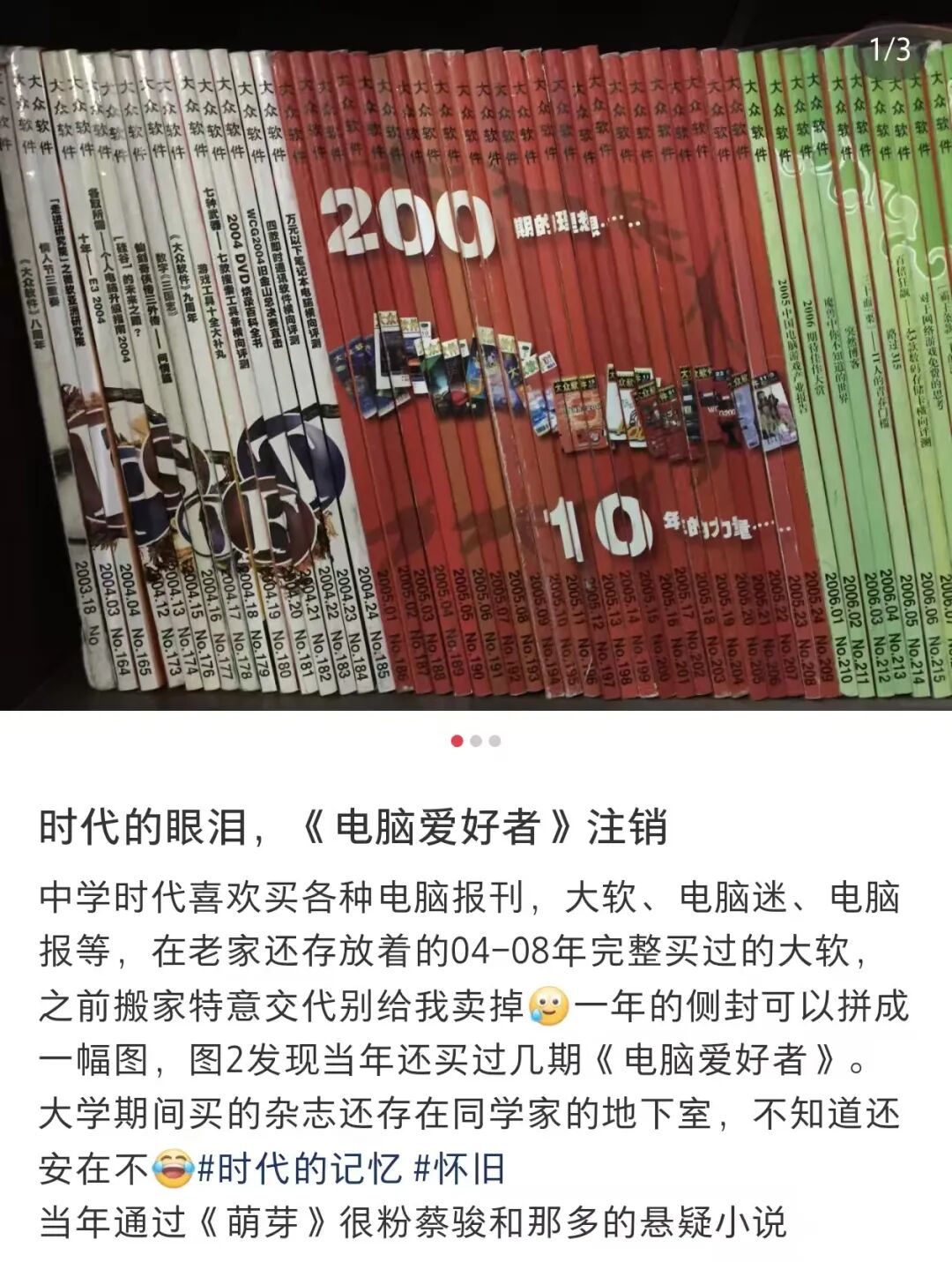
Core Viewpoint - The decline of traditional PC magazines like "Computer Enthusiast" reflects the broader trend of diminishing interest in personal computers among younger generations, who prefer mobile devices for internet access and daily tasks [1][3]. Group 1: Market Trends - Major PC manufacturers, including Dell, HP, Lenovo, Asus, and Acer, have announced price increases for computers starting in 2026, with Dell raising prices by 15% to 20% from December 17, 2025 [5][6]. - The global PC shipment volume is projected to decline by 4.9% in 2026, marking it as a challenging year for PC purchases [6][8]. - The global PC shipment volume saw a significant drop of 16.3% and 13.9% in the two years prior to 2024, with a slight recovery in 2024 showing a 1% increase to approximately 262.7 million units [8][10]. Group 2: Consumer Behavior - The increasing cost of PCs, exemplified by a 20% price hike on a mid-range laptop originally priced at 4000 yuan, raises concerns about the availability of affordable computers for consumers [6][10]. - The younger generation's reliance on smartphones and tablets has led to a perception that computers are no longer essential, with many young people lacking basic computer skills [15][17]. - As of June 2025, there were 1.123 billion internet users in China, with 1.116 billion accessing the internet via mobile devices, indicating a strong preference for mobile over traditional PCs [15][22]. Group 3: Industry Challenges - The rising prices of memory chips, driven by increased demand from AI developments, have significantly impacted the pricing of PCs and other electronic devices, with the memory shortage crisis expected to persist until at least the end of 2027 [11][24]. - The shift towards mobile devices has created a "de-computerization" trend in society, where the necessity of learning computer skills is diminishing, raising concerns about the future workforce's capabilities [22][24].