雀巢

Search documents
彻底卖光!又一国产品牌落入外资之手,创始人套现百亿潇洒离场
Sou Hu Cai Jing· 2026-01-11 01:45
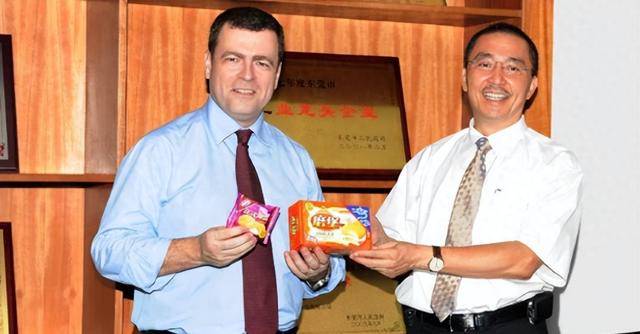
Core Viewpoint - Nestlé has acquired the remaining 40% stake in Xu Fu Ji, marking the complete transition of the once-local candy brand into foreign ownership, raising questions about the preservation of cultural significance in Chinese traditions [1] Group 1: Company History and Development - Xu Fu Ji started as a small workshop in Dongguan, founded by four brothers from Taiwan, who initially sold candy on the streets of Taipei in the 1980s [3] - The company transformed from a contract manufacturer to an industry leader by introducing gift box packaging in 1996, which was considered high-end at the time, priced at 20 yuan [5] - By 2011, Xu Fu Ji achieved annual revenue of 4.3 billion yuan, but faced challenges with the entry of international brands like Dove and Ferrero into the Chinese market [5][7] Group 2: Financial Performance and Strategic Changes - After a significant investment from Nestlé, which acquired 60% of the company for $1.7 billion, Xu Fu Ji aimed to enhance its technology and research capabilities [7] - The company struggled with declining sales due to the rise of e-commerce and health trends, leading to a drop in performance, with annual reports no longer listing Xu Fu Ji separately [7] - A turnaround occurred post-2020 with the introduction of live-stream selling and low-sugar products, projecting revenue to exceed 7 billion yuan in 2024 [9] Group 3: Market Position and Consumer Sentiment - The acquisition by Nestlé has raised concerns about the future of Xu Fu Ji, especially as younger consumers gravitate towards brands like Three Squirrels and Liangpin Shop [11] - Quality issues have been reported, including incidents of foreign objects found in products, which may affect consumer trust [11] - The sentiment among consumers may not focus on the ownership of the brand but rather on the quality and pricing of the products, especially during festive seasons [12][14]


“宠娃至上”的铲屎官,喂出山东百亿宠粮生意
Da Zhong Ri Bao· 2026-01-11 01:16
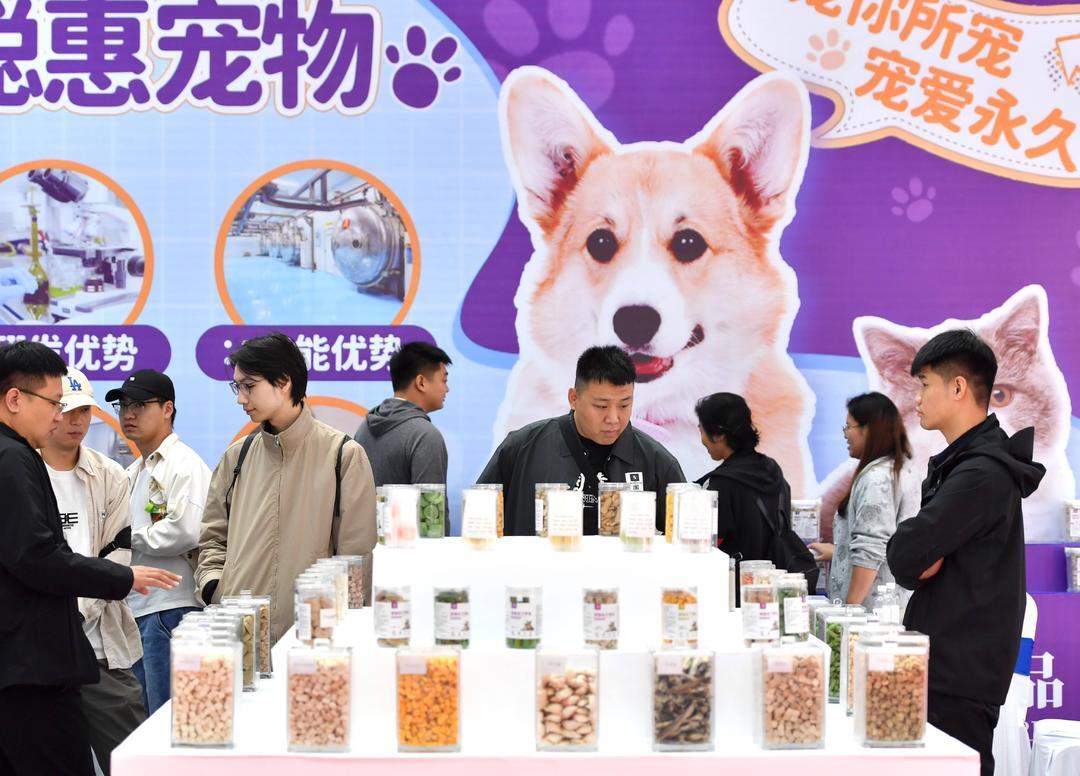
Core Insights - The pet food industry in China is experiencing significant growth, with a projected market size of 312.6 billion yuan by 2025, driven by an increase in pet ownership and spending on pet-related products [1][3][5]. Industry Overview - Shandong province is the leading producer of pet food in China, accounting for 35.41% of the national production with an output of 56.61 million tons in 2024, reflecting a year-on-year growth of 26.10% [7][10]. - The province has established itself as a key player in the pet food market, with major companies like Guobao Pet Food, Zhongchong Co., and Lusi Co. collectively generating over 9 billion yuan in revenue in the first three quarters of 2025 [6][8]. Market Dynamics - The pet food market is characterized by a high concentration of production in Shandong, where approximately 30% of pet food in China is produced [4][6]. - The export value of pet food from Shandong exceeded 9 billion yuan in the first eleven months of 2025, representing over 45% of the national total [8]. Competitive Landscape - Guobao Pet Food has emerged as the largest and highest-valued company in the domestic pet food sector, achieving a revenue of 4.737 billion yuan in the first three quarters of 2025, marking a year-on-year increase of 29.03% [6][12]. - The industry is witnessing increased competition as various sectors, including dairy and snack companies, are entering the pet food market, leading to challenges such as product homogenization and price wars [12][13]. Future Outlook - The global pet food market is expected to reach a size of 194.2 billion USD by 2029, with a compound annual growth rate of 5.7% from 2024 to 2029, indicating a lucrative opportunity for domestic companies to expand internationally [14][17]. - Companies are focusing on research and development to differentiate their products and enhance competitiveness, with Guobao Pet Food investing in a pet nutrition research center and increasing R&D spending by 33.39% to 531 million yuan [20][21].
Nestle faces new baby formula contamination crisis, challenging CEO’s revamp plan
MINT· 2026-01-10 14:26
Core Viewpoint - Nestlé is facing a significant infant formula contamination crisis, which has expanded to over 50 countries, impacting its operations and financial outlook shortly after the new CEO, Philipp Navratil, took charge [1][2]. Product Recall and Financial Impact - Numerous products under brands such as BEBA, SMA, and Alfamino are being recalled due to the detection of cereulide, a toxin linked to nausea and vomiting, in an ingredient from a supplier [2][3]. - Analysts at Jefferies estimate a potential sales impact of up to 1.2 billion Swiss francs ($1.5 billion) as shares of Nestlé have dropped more than 4% since the recall began [3][16]. - The recall is described as the largest in Nestlé's history, affecting multiple production sites and raising concerns about consumer trust [12][16]. CEO's Challenges and Response - CEO Philipp Navratil, who took office with a commitment to transparency, is now managing this operational crisis while also implementing a plan to cut 16,000 jobs and improve company performance [4][10]. - The company has received thousands of inquiries from concerned parents, indicating the high level of public concern regarding the safety of infant formula [6]. Contamination Detection and Safety Standards - The detection of cereulide is complex and costly, making it difficult to manage once found in products [7][8]. - Food safety regulations in many countries enforce a zero-tolerance policy for cereulide, emphasizing the seriousness of the contamination issue [9]. Operational Adjustments and Future Plans - Nestlé has initiated thorough cleaning of affected facilities and is working to maintain formula supply while identifying new suppliers for contaminated ingredients [10][17]. - The company aims to refocus on increasing product volumes and free cash flow, while also enhancing advertising efforts to regain customer trust [10][11]. Market Context - The U.S. market, a significant segment for Nestlé, is not involved in the recall, providing some relief amid the crisis [15]. - The scale of the recall and the financial implications are larger than initially communicated, prompting calls for greater transparency from the company [16][17].

我为什么劝你少喝9.9元的咖啡?
洞见· 2026-01-10 12:35
Core Viewpoint - The article emphasizes the quality and health benefits of coffee and milk products sourced from Yunnan and Xinjiang, highlighting their natural ingredients and production processes that ensure high standards of quality and taste [2][38]. Group 1: Coffee Insights - Yunnan coffee is currently in its golden flavor period, making it an ideal time for coffee enthusiasts to enjoy its rich aroma [6][9]. - The coffee beans from Yunnan, particularly the Arabica variety, are known for their balanced flavor and low caffeine content, making them gentler on the stomach [64][74]. - The freeze-dried coffee developed by the Yunnan Agricultural Academy retains the beans' freshness and aroma, providing a taste comparable to freshly ground coffee [19][78]. - The product is free from additives like sugar and cream, making it suitable for health-conscious consumers [66][70]. - The official price for the coffee is set at 59 yuan per can, with a promotional offer of 59.9 yuan for two cans [35][86]. Group 2: Milk Product Insights - The Xinjiang "土姥姥" milk is sourced from a pristine desert oasis, ensuring high-quality milk production [38][90]. - This milk contains 3.1g of protein and 100mg of calcium per 100ml, meeting both Chinese and EU safety standards [42][44]. - The milk is produced from high-quality Holstein cows, known for their high milk yield and protein content, raised in a controlled environment [98][104]. - The production process emphasizes strict quality control, ensuring that every drop of milk meets high standards [96][108]. - The pricing for the milk is competitive, with offers such as 89 yuan for three boxes [56].
2026年烘焙行业深度资讯全解析 | 第二期
东京烘焙职业人· 2026-01-10 08:32
Core Insights - The article emphasizes the importance of staying updated with the latest trends and developments in the baking industry, including supplier product information, service provider movements, training dynamics, and industry events [1] Equipment - Jin Cheng Refrigeration offers customized cylindrical display cabinets that fit pillar dimensions perfectly, enhancing store aesthetics and customer experience [8] - Hanbake Technology provides a BRESSO® solution designed for 90㎡ spaces, featuring a 3-layer 6-tray European oven, 5-tray hot air oven, 32-tray fermentation box, and 36-tray freezer [10] - San Neng's fermentation box features a rounded design and transparent visibility, making it convenient for storage [16] - Shanghai Taixin's Bertrand Puma fermentation machine can complete the entire cycle from mixing to cooling in as little as 4 hours [19] - Swiss Longdu's 5000 Basic multifunctional computer dough press machine is user-friendly and meets various bakery requirements [21] Raw Materials - Cargill's Bafou® fermented butter offers a rich aroma and balanced flavor profile, suitable for various applications [30] - Weiyi's mascarpone-flavored cream is a cost-effective alternative to traditional mascarpone cheese [32] - Nanshun's Yiweiduo butter is known for its pure flavor and high acceptance among consumers [35] - Ston’s clean-label bread improver enhances dough fermentation and volume without chemical additives [38] - Komei's strawberry jam contains over 56% fruit content, ideal for various baked goods [41] Packaging - Haihui Water provides a comprehensive food safety packaging solution for various baked goods [99] - Puluo's integrated cake box is made from food-grade white cardboard [101] - Blue View Packaging emphasizes the advantages of paper packaging in terms of protection and aesthetics [106] Service Provider Dynamics - Youzan's Xiaohongshu membership program enhances customer experience and operational efficiency across channels [110] Education and Training - Wang Sen Education offers a 24-day dessert course designed for beginners to successfully open their own stores [112] - Blue Ribbon's winter camp and weekend short courses focus on French pastry skills [115] - Shanghai Modern Food Vocational Skills Training Center is launching a beginner's course for Western pastry chefs [119] Industry Events/Activities - The Kiri Asian Cup Baking Competition has commenced, with the China selection officially recruiting participants [126] - The 11th World Bread Competition's China selection has officially started, aiming to showcase Chinese baking talent on a global stage [128]
业绩下滑困境未解,“召回危机”又来:雀巢大中华区遭遇双重挤压
Hua Xia Shi Bao· 2026-01-09 23:01
Core Viewpoint - Nestlé China faces a significant challenge as it initiates a global recall of infant formula due to contamination issues, which may impact its ongoing restructuring efforts in the nutrition segment amid declining performance in the Greater China region [2][3][8]. Group 1: Recall Incident - On January 6, 2026, Nestlé announced a preventive recall of infant formula products in multiple countries, including 71 batches in China, due to contamination of ARA (arachidonic acid) oil, which may contain harmful toxins [3][4]. - The recall was prompted by internal testing that revealed quality issues with the ARA oil supplied by vendors, posing health risks to infants [3][4]. - The recall's scope expanded rapidly, initially covering 31 countries and later reaching at least 50 countries within two days [3]. Group 2: Market Performance - Nestlé's performance in the Greater China region has been declining, with organic growth rates dropping to -10.4% in Q3 2025, indicating severe challenges in reversing the trend [2][9]. - The company's market share in the infant formula sector has significantly decreased, with Nestlé and Wyeth holding only 4.9% and 4.4% market shares respectively by 2024, down from 13.5% in 2019 [6][9]. - The decline is attributed to increased competition from domestic brands and foreign competitors who have effectively utilized emerging sales channels [6][9]. Group 3: Strategic Adjustments - In response to the declining performance, Nestlé merged its infant nutrition and Wyeth nutrition businesses in China, creating a new unit to enhance operational efficiency [5][10]. - The company is undergoing a strategic shift from a distribution-driven approach to one focused on consumer demand and market pull, with expectations that this transition will take about a year [9][10]. - The new management team faces the dual challenge of restoring brand trust while navigating the complexities of the merger and addressing the fallout from the recall incident [7][10]. Group 4: Future Outlook - The year 2026 is critical for Nestlé in Greater China, as it represents the first full fiscal year under the new management structure and will test the effectiveness of its strategic adjustments [10][11]. - Analysts suggest that the key to overcoming current challenges lies in supply chain transparency and quickly addressing consumer concerns to maintain market share in specialized segments [11].
彻底退出了中国!市值蒸发百亿,电商全关停,欧美人造肉败走中国
Sou Hu Cai Jing· 2026-01-09 21:28
Core Viewpoint - Beyond Meat, once hailed as the "savior of future food" and supported by celebrities, has faced a complete withdrawal from the Chinese market, with its flagship stores disappearing and production facilities shutting down [1][3]. Group 1: Company Performance - Beyond Meat's market value has plummeted from over $20 billion at its peak to a fraction of that, illustrating a dramatic decline in investor confidence [3][12]. - The company entered the Chinese market with high expectations, establishing two factories in Jiaxing and partnering with major brands like KFC and Starbucks, but ultimately failed to gain traction [10][12]. Group 2: Market Challenges - The pricing strategy of Beyond Meat was a significant barrier, with its plant-based chicken strips priced at 118 RMB for 225 grams, compared to 9.9 RMB for 450 grams of real chicken, creating a nearly 25-fold price difference [14][21]. - Sales figures were disappointing, with the best-selling plant-based burger patties on Tmall selling only about 400 units in a month, indicating low consumer interest and a lack of repeat purchases [16][18]. Group 3: Consumer Perception - The taste and texture of Beyond Meat products did not meet consumer expectations, leading to dissatisfaction among both meat-eaters and vegetarians [23][25]. - The perception of health benefits was undermined by the presence of numerous additives in the ingredient list, which contradicted consumer desires for natural and clean food options [25][29]. Group 4: Cultural Misalignment - Beyond Meat's products were not compatible with Chinese cooking methods, which often involve diverse preparation techniques that the plant-based meat could not withstand [27][46]. - The company failed to respect local dietary traditions and preferences, leading to a disconnect with Chinese consumers who prioritize taste, price, and health [46][50]. Group 5: Lessons Learned - The downfall of Beyond Meat serves as a cautionary tale about the importance of aligning product offerings with market demands and consumer preferences, rather than relying solely on marketing hype [39][50]. - Companies must focus on product quality and local market understanding to succeed, as ignoring these factors can lead to failure in new markets [44][48].

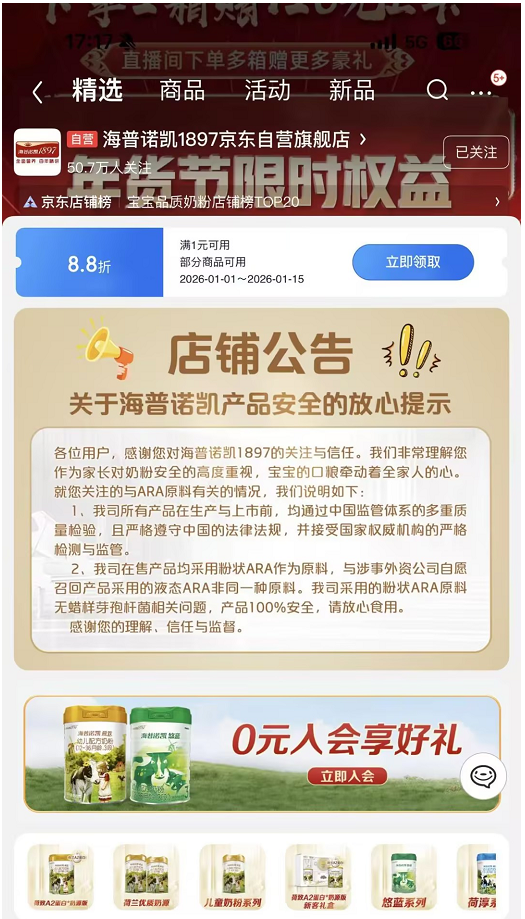
海普诺凯:目前公司在售产品未使用涉事奶粉企业所用ARA原料
Jin Rong Jie· 2026-01-09 10:43
Group 1 - The core issue involves Nestlé's recall of infant formula across multiple countries, which may affect the ARA raw material supplier involved [1] - The company, Hipro, reassured consumers through its JD.com flagship store that its products use powdered ARA as raw material, which is not associated with the Bacillus cereus issue linked to the recalled liquid ARA products [1] - Hipro emphasized that all its products undergo multiple quality inspections through the Chinese regulatory system and are subject to strict testing and supervision by national authorities, ensuring safety for consumers [1]
飞鹤、蒙牛、君乐宝、达能、Arla、喜宝等多家乳企回应:所有产品中ARA目前无任何问题
Di Yi Cai Jing· 2026-01-09 10:24
Core Viewpoint - Nestlé has initiated a global recall of infant formula products due to potential quality issues with ARA (Arachidonic Acid) sourced from suppliers, affecting over 50 countries and raising public concern about the safety of infant formula ingredients [1] Group 1: Company Responses - Mengniu stated that its ARA raw material suppliers are unrelated to the European recall incident, and all products undergo strict quality control [3] - Feihe confirmed that its ARA raw materials are not affected by any issues related to Bacillus cereus toxins, and the company adheres to stringent quality standards [3] - Junlebao mentioned that its ARA suppliers are Roget and Runke Bio, and the company follows internal control standards that exceed national regulations [3] - Danone emphasized that all its infant formula products are produced under high standards and do not use ARA from the suppliers involved in the recall [4] - Arla conducted a comprehensive review of its infant nutrition products and confirmed that its ARA suppliers are not linked to the recall issues [4] - HiPP stated that the ARA used in its products is sourced from suppliers not involved in the recall, ensuring safety and reliability [4] Group 2: Regulatory Oversight - The State Council's Food Safety Office and the Market Supervision Administration have urged Nestlé (China) to effectively manage the recall of affected products in China, ensuring consumer rights are protected [2] - The recall in the Chinese market includes four brands: Litojing, Platinum Enfamil, Shuyi Enfamil, and Wyeth's children's growth milk powder, totaling 30 batches [2]


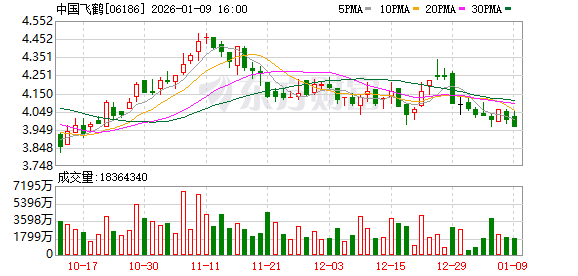
飞鹤回应:旗下产品ARA原料不受任何蜡样芽胞杆菌毒素相关问题的影响,可放心食用
Bei Jing Shang Bao· 2026-01-09 09:47
Core Viewpoint - Nestlé has initiated a precautionary recall of multiple batches of infant formula due to potential contamination of arachidonic acid (ARA) from suppliers with cereulide, a toxin produced by Bacillus cereus [2] Group 1: Company Responses - China Feihe stated that its ARA raw materials are not affected by any issues related to Bacillus cereus toxins and are safe for consumption [2] - Feihe emphasized that it uses powdered ARA as a raw material, which is different from the liquid ARA used by the foreign company involved in the recall [2] - The company adheres to internal quality standards that are stricter than EU standards, ensuring that all core raw materials undergo rigorous testing for microbial contamination, including Bacillus cereus, before production [2]