天弘基金

Search documents
基金回报榜:127只基金昨日回报超3%
Zheng Quan Shi Bao Wang· 2025-07-25 02:27
Group 1 - The core viewpoint of the articles highlights the performance of stock and mixed funds, with 88.44% achieving positive returns on July 24, 2023, and 127 funds reporting returns exceeding 3% [1][2] - The Shanghai Composite Index rose by 0.65% to close at 3605.73 points, while the Shenzhen Component Index increased by 1.21%, the ChiNext Index by 1.50%, and the STAR 50 Index by 1.17% [1] - Among the sectors, the top gainers included beauty care, non-ferrous metals, and steel, with increases of 3.10%, 2.78%, and 2.68% respectively [1] Group 2 - The top-performing fund, the Harvest CSI Rare Metals Theme ETF, achieved a net value growth rate of 6.07%, followed closely by other rare metals ETFs with growth rates of 6.04% [2][3] - In terms of fund types, 76 of the funds with growth rates exceeding 3% were index equity funds, 29 were equity-oriented funds, and 18 were flexible allocation funds [2] - The funds with the largest net value drawdowns included the Caifutong Value Momentum Mixed C fund, which saw a decline of 2.53% [4] Group 3 - The articles provide a detailed ranking of funds based on their net value growth rates and drawdowns, showcasing the performance of various funds and their respective companies [2][4][5] - The data indicates that the majority of the funds with significant drawdowns are from the Caifutong Fund Company, with multiple funds experiencing declines around 2% [4][5] - The performance of the funds is closely monitored, with a significant number of funds from Harvest Fund Company leading in positive returns [2][3]
流动性主导跷跷板行情
Zhong Guo Zheng Quan Bao· 2025-07-24 21:10
Core Viewpoint - The A-share market has been on the rise, with the Shanghai Composite Index closing above 3600 points on July 24, reflecting a rebound of over 16% since its year-to-date low in early April. In contrast, the bond market is experiencing significant adjustments, leading to a "stock-bond seesaw" effect driven by liquidity changes rather than traditional growth expectations [1][2]. Group 1: Stock Market Performance - The stock market has shown strong performance, with the Shanghai Composite Index reaching 3600 points, indicating a notable recovery since April [1]. - The rise in the stock market is attributed to strong performance in cyclical sectors, particularly driven by bank stocks and small-cap stocks [7]. Group 2: Bond Market Adjustments - The bond market has faced rare adjustments, with significant declines in various government bond futures, including a 0.92% drop in the 30-year bond contract [1]. - A large number of medium- and long-term pure bond funds have reported declines, with 2905 out of 3182 funds experiencing downturns during the week of July 21 to July 23 [2]. - The bond market's recent adjustments are linked to concerns over rising commodity prices and tightening short-term liquidity as the month-end approaches [2]. Group 3: Fund Redemption Trends - There has been a notable occurrence of large redemptions in bond funds, with over ten funds announcing significant redemptions to ensure net asset value accuracy [3][4]. - Despite the redemption trends, some fund managers indicate that the overall impact on the bond market is limited, as the majority of investors remain stable in their allocations [3]. Group 4: Liquidity and Market Dynamics - The current "stock-bond seesaw" is primarily driven by liquidity rather than economic growth expectations, suggesting a unique market dynamic compared to typical scenarios [6][7]. - The bond market is expected to see increased allocations from institutional investors following adjustments, indicating a potential for rebound opportunities [6][7].
上半年国内黄金ETF增仓量同比翻倍!8只主题基金规模超百亿元
Bei Jing Shang Bao· 2025-07-24 13:24
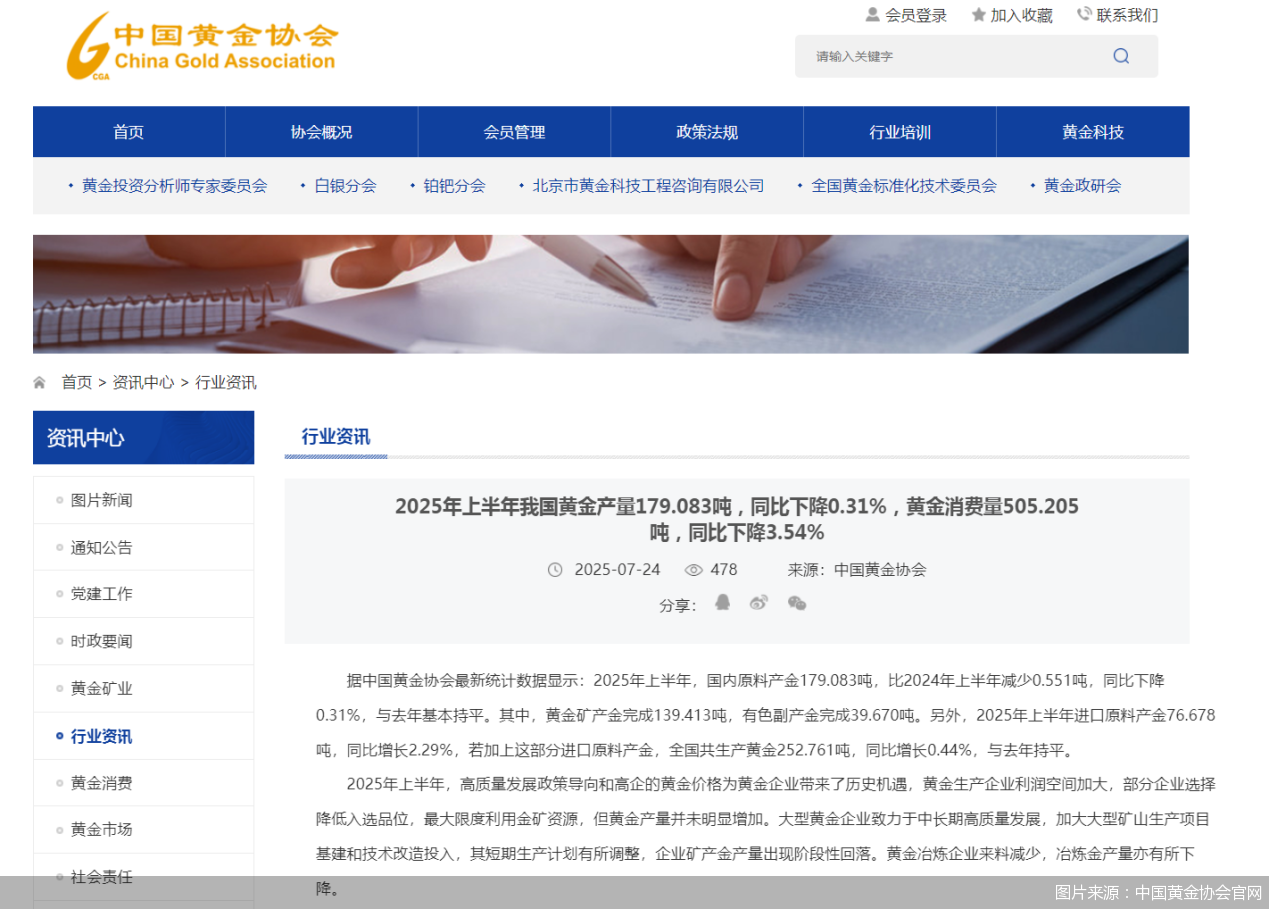
Core Insights - China's gold production in the first half of 2025 was 179.083 tons, a year-on-year decrease of 0.31%, while gold consumption was 505.205 tons, down 3.54% year-on-year [4][5] - The increase in gold prices is attributed to geopolitical tensions and inflationary pressures in the U.S., with the London spot gold price rising by 24.31% since the beginning of the year [4][5] - Despite high gold prices suppressing jewelry consumption, demand for gold bars and coins has surged, reflecting a shift in consumer preferences towards investment [5][6] Gold Production and Consumption - In the first half of 2025, gold production included 139.413 tons from mining and 39.670 tons from by-products, with total production reaching 252.761 tons, a slight increase of 0.44% year-on-year [3][4] - The decline in gold consumption is primarily due to a 26% drop in jewelry demand, while gold bars and coins saw a 23.69% increase [5][6] Market Trends and Investment - As of the end of Q2 2025, the total scale of gold ETFs and related funds reached 260.337 billion yuan, marking a 49.73% increase quarter-on-quarter [6][7] - The average return for gold funds in the first half of 2025 was 23.01%, with the highest return recorded at 24.14% [7] - The trend of central banks increasing gold reserves is expected to support long-term price increases, despite short-term uncertainties due to tariff policies [8]

共享基经丨同名ETF对比:生物疫苗ETF与生物医药ETF,跟踪的指数有何不同?
Mei Ri Jing Ji Xin Wen· 2025-07-24 11:48
Group 1: Biovaccine ETFs - There are two ETFs named Biovaccine ETF, one managed by Penghua Fund tracking the Guozhen Vaccine and Biotechnology Index, consisting of 50 companies with an average market capitalization of approximately 53.9 billion yuan [1][3] - The second Biovaccine ETF is managed by Harvest Fund, tracking the Zhongzheng Vaccine and Biotechnology Index, which includes up to 50 companies involved in vaccine research and production, with an average market capitalization of about 22 billion yuan [3][5] - The two indices share 19 overlapping constituent stocks, with the Guozhen index having 31 unique stocks and the Zhongzheng index having 24 unique stocks [5][6] - In terms of past performance, the Zhongzheng Vaccine and Biotechnology Index has outperformed the Guozhen index over one, three, and five years, with a notably higher increase in the past year [6][7] Group 2: Biopharmaceutical ETFs - There are two ETFs named Biopharmaceutical ETF, one managed by Tianhong Fund tracking the Guozhen Biopharmaceutical Index, which includes the top 30 companies based on market capitalization and liquidity, with an average market capitalization of around 45.2 billion yuan [11][13] - The second Biopharmaceutical ETF is managed by Guotai Fund, tracking the Zhongzheng Biopharmaceutical Index, which selects companies providing cell therapy, gene sequencing, and other biopharmaceutical services, with an average market capitalization of approximately 71.9 billion yuan [13][15] - The two indices have 18 overlapping constituent stocks, with each index having 12 unique stocks [15][16] - The Zhongzheng Biopharmaceutical Index has consistently outperformed the Guozhen index over one, three, and five years, while the Guozhen index exhibits higher annualized volatility [15][17]




公募基金2025Q2季报分析:抱团松动,头部持仓集中度回落
Xinda Securities· 2025-07-24 09:59
Fund Market Overview - The total scale of public funds exceeded 33.67 trillion yuan as of Q2 2025, with a quarter-on-quarter growth of 6.71% [6][11] - The growth structure indicates a clear preference for bond funds, money market funds, and passive index products, while actively managed equity funds continue to face net redemption pressure [6][11] - The number of newly established funds in Q2 2025 was 378, with a total fundraising scale of 286.12 billion yuan, marking an increase of approximately 29.2 billion yuan from Q1 [11][12] Fund Performance - The median return for various fund types was positive, with cross-border equity products performing particularly well; QDII mixed and QDII equity funds had median returns of 9.25% and 8.05%, respectively [2][6] - Active equity funds had a total scale of approximately 3.34 trillion yuan, remaining stable quarter-on-quarter but showing a continuous decline in share, reflecting cautious investor sentiment [2][15] Active Equity Fund Configuration - Active equity funds showed a clear trend of increasing positions, with the average stock position rising to 88.13%, indicating a rebound in risk appetite [2][6] - The allocation to Hong Kong stocks continued to rise, reaching 17.01%, while the concentration of holdings decreased for three consecutive quarters, indicating a weakening of the "hugging" effect [2][6] Heavyweight Stocks Analysis - As of the end of Q2 2025, the top five heavy holdings in active equity funds included Ningde Times, Kweichow Moutai, Midea Group, Zijin Mining, and Luxshare Precision [2][3] - The report highlighted a shift in holding structure towards technology growth, with significant increases in positions for stocks like Zhongji Xuchuang and Xinyi Sheng [3][26] Market Analysis and Outlook - Fund managers expressed structural optimism, noting that the macroeconomic environment is gradually improving, despite challenges such as weak domestic demand and external uncertainties [4][6] - The "barbell strategy" remains popular, focusing on high-dividend assets and technology growth sectors as key areas for excess returns [4][6]
能特科技(002102) - 2025年7月23日投资者关系活动记录表附件之与会清单
2025-07-24 08:58
| 序号 | | | | 机构名称 | | | 参会方式 | 姓名 | | | | | | 调研时间 | | | | | | | | | | | | | | | | | | | --- | --- | --- | --- | --- | --- | --- | --- | --- | --- | --- | --- | --- | --- | --- | --- | --- | --- | --- | --- | --- | --- | --- | --- | --- | --- | --- | --- | --- | --- | --- | --- | | 1 | | | | 中信资管 | | | 现场 | 魏来 | | | 2025 | 23 | 日 | 年 7 月 | | | | | | | | | | | | | | | | | | | 2 | | | | 中信资管 | | | 现场 | 任丹 | | | 2025 | 23 | 日 | 年 7 月 | | | | | | | | | | | | | | | | | | | 3 | | | | 中信证券 | | | 现场 | 王喆 | | | 2025 ...

公募基金管理规模再创新高 非货排位强者恒强
Cai Jing Wang· 2025-07-24 08:39
Core Insights - The public fund industry has achieved record highs in both overall scale and non-monetary scale as of the end of Q2 2025, reaching over 34 trillion yuan and 20 trillion yuan respectively [1][2] Group 1: Overall Fund Performance - A total of 162 public fund managers reported a combined scale of 34.05 trillion yuan, marking a 7.04% increase from Q1 2025 and a 10.76% increase year-on-year from Q2 2024 [2] - All eight major fund categories experienced quarter-on-quarter growth, with commodity funds and fund of funds (FOF) showing the highest increases of 47.79% and 10.28% respectively [2] - The total profit for all fund companies in Q2 exceeded 380 billion yuan, representing a more than 50% increase from the previous quarter [2] Group 2: Individual Fund Manager Performance - Among the 162 licensed public fund institutions, eight have assets under management (AUM) exceeding 1 trillion yuan, accounting for 4.94% of the total [3] - The top ten public fund managers collectively manage 13.33 trillion yuan, which is 40.13% of the total public fund scale, with E Fund leading at 2.04 trillion yuan [3] Group 3: Non-Monetary Fund Insights - The total non-monetary fund scale reached 20.11 trillion yuan, an increase of 1.29 trillion yuan from Q1 2025 [4] - Only two public institutions have non-monetary AUM exceeding 1 trillion yuan, while 43 institutions have AUM below 100 billion yuan [4] - The top ten non-monetary fund managers manage a combined 7.88 trillion yuan, representing 39.80% of the total non-monetary fund scale, with E Fund leading at 1.40 trillion yuan [4] Group 4: Equity Fund Contributions - Equity funds, particularly index funds, have made significant contributions, with E Fund showing the largest growth of 756.5 billion yuan in a single quarter [5] - ETFs have emerged as a major attraction, with major index ETFs like the SSE 50 ETF and CSI 300 ETF showing positive average returns in Q2 2025 [5] Group 5: Market Outlook - Multiple public funds express optimism for A-shares and Hong Kong stocks, highlighting structural opportunities in technology, consumption, and dividends [6] - The chief equity investment officer at Xinyuan Fund notes the resilience of the Chinese economy and the potential for new productivity driven by global technological revolutions [6] - Bosera Fund indicates that investor sentiment remains positive as the A-share market surpasses 3,500 points, with growth policies likely to slow but liquidity and risk appetite favoring the market [6]
海南自贸港即将全岛封关,美国与日本达成贸易协定 | 财经日日评
吴晓波频道· 2025-07-23 22:31
Group 1: Hainan Free Trade Port - Hainan Free Trade Port will officially start customs closure operations on December 18, 2025, allowing for a special customs supervision area across the entire island [1] - The customs closure will implement a policy characterized by "one line open, one line controlled, and free flow within the island," facilitating international trade and investment [1] - After customs closure, many overseas goods imported into Hainan will enjoy zero or low tariffs, with a 30% value-added processing requirement for zero tariffs when transported to the mainland [1] Group 2: US-Japan Trade Agreement - The US and Japan have reached a trade agreement, with a 15% tariff on Japanese imports, and Japan committing to invest $550 billion in the US [3] - The agreement includes a reduction of tariffs on Japanese cars from 25% to 15%, while maintaining existing tariffs on steel and aluminum [3] - This trade agreement is seen as a step forward in the US's negotiations with major trading partners, with potential long-term impacts on global trade dynamics [4] Group 3: Telecommunications Operators - China's three major telecom operators have committed to simplifying their service packages and enhancing transparency in consumer transactions [5] - Measures include requiring explicit customer consent for service changes and improving the process for unsubscribing from services [5] - Despite improvements, challenges remain in the ease of unsubscribing and accessing low-cost packages, indicating a need for further enhancement in customer service [6] Group 4: Wanda's Financial Asset Sale - Wanda Group plans to sell a 30% stake in Quick Money Financial for 240 million yuan, as part of its strategy to divest from non-core assets amid a challenging real estate market [7] - Quick Money Financial, which holds a third-party payment license, is expected to benefit from the growing digital currency and cross-border payment sectors [8] - The sale reflects Wanda's ongoing efforts to transition to a lighter asset model while navigating pressures in the commercial real estate sector [7] Group 5: JD's Acquisition of Hong Kong Retailer - JD.com is set to acquire Hong Kong-based supermarket chain Jia Bao for 4 billion HKD, aiming to expand its presence in the Hong Kong retail market [9] - The acquisition includes a transitional management period where Jia Bao's founders will continue to manage operations for three years [9] - This move is part of JD's strategy to enhance its supply chain capabilities and integrate online and offline retail operations [10] Group 6: Public Fund Growth - As of the end of Q2, China's public fund market reached a total scale of 33.73 trillion yuan, with a quarter-on-quarter increase of 6.69% [11] - Equity funds saw a total scale of 4.28 trillion yuan, while bond funds increased by 8.55% to 10.92 trillion yuan [11] - The competitive landscape among fund companies remains intense, with top firms maintaining their positions despite fluctuations in fund performance [12] Group 7: Commodity Market Trends - A rare surge in the domestic commodity market saw six major products, including glass and industrial silicon, hit their daily price limits [13] - This surge was driven by concerns over coal supply reductions, prompting a broader market reaction and price increases across various sectors [13] - Despite the initial price increases, downstream industries remain cautious, indicating a potential gap between quoted prices and actual transaction prices [14] Group 8: Stock Market Performance - The stock market experienced fluctuations, with the Shanghai Composite Index closing slightly up at 3582.3 points, while the Shenzhen Component Index fell by 0.37% [15] - Market activity was characterized by a mix of rising and falling stocks, with significant trading volume but a lack of clear direction [15] - The recent customs closure announcement for Hainan has led to declines in related sectors, reflecting market sensitivity to policy changes [16]

直冲3600点!牛市板块大爆发
格隆汇APP· 2025-07-23 10:14
Core Viewpoint - The A-share market is experiencing a strong bullish trend, with the Shanghai Composite Index breaking through the 3600-point mark, indicating a significant improvement in macroeconomic conditions, liquidity, and market expectations compared to the previous year [2][4]. Market Performance - The Shanghai Composite Index has reached 3600 points for the first time since last year's "924" event, and the ChiNext Index has also hit a new high for the year, with a 15% increase since June 23 [2][4]. - The market is expected to continue its upward trajectory, driven by multiple favorable factors, including the potential for increased capital inflow and positive feedback mechanisms [4][6]. Sector Analysis - The securities sector is showing strong performance, with an average net profit increase of 74% for 27 listed brokerages as of July 20, 2023. Notably, Guotai Junan and Haitong Securities are projected to see net profit increases of 205%-218% and 1183%, respectively [7]. - The technology innovation sector, represented by indices such as the ChiNext and STAR Market, is also gaining traction, with strong performances in sub-sectors like lithium batteries, semiconductors, and robotics [8][18]. Historical Context - Historical data shows that during previous bull markets, the ChiNext Index has outperformed, with increases of over 100% in past cycles. Currently, the ChiNext Index has risen over 50% since last year's "924" [9][10]. - The current valuation of the ChiNext Index is at a price-to-earnings ratio of 34.39, which is lower than 80% of its historical range, indicating potential for growth [9]. Future Outlook - The market is expected to maintain a positive trend, with the potential for new highs in the second half of the year. Investors are advised to focus on the upcoming earnings reports to identify companies with strong performance capabilities [24][25]. - The ongoing revaluation of technology assets in China is likely to continue, with significant investments in AI and other tech sectors expected to drive future growth [15][17].

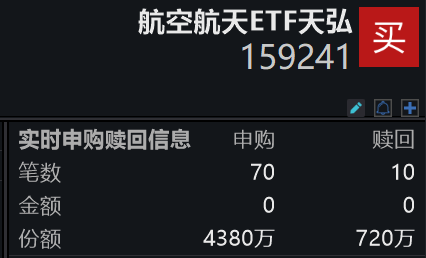
含军工量最高的航空航天ETF天弘(159241)跌逾2%,资金逆市布局,盘中净申购份额已超3600万份,国防军工板块或将迎来全面复苏景气拐点
Sou Hu Cai Jing· 2025-07-23 07:29
Core Viewpoint - The aerospace ETF Tianhong (159241) is experiencing active trading despite a decline, with significant net subscriptions indicating investor interest in the aerospace sector [1][2]. Group 1: Fund Performance - As of July 22, 2025, the aerospace ETF Tianhong (159241) has seen a weekly increase of 5.44%, ranking first among comparable funds [2]. - Over the past 10 trading days, the fund has attracted a total of 12.89 million yuan in inflows [2]. - Since June 23, 2025, the fund has appreciated over 12%, reflecting strong performance in the aerospace sector [2]. Group 2: Industry Outlook - The second half of 2025 is expected to witness a resonance between supply and demand in the aerospace industry, driven by increasing defense needs and military expenditure [3]. - China's defense budget has been growing at around 7%, with the defense spending as a percentage of GDP remaining below 1.5%, indicating potential for future growth [3]. - The year 2025 marks the end of the "14th Five-Year Plan," suggesting a recovery phase for the industry, with a focus on advanced aircraft, low-altitude economy, and satellite internet [3]. Group 3: ETF Characteristics - The aerospace ETF Tianhong (159241) closely tracks the National Aerospace Index, focusing on key areas such as fighter jets and satellite industries [4]. - The index has the highest military content among comparable indices, with 98.2% of its constituents belonging to the defense industry [5]. - The index also leads in drone content, featuring companies deeply involved in the drone sector [6][7]. Group 4: Performance Metrics - The National Aerospace Index has a strong technological component, aligning with the trend of high-end development in the aerospace sector [9]. - Revenue growth for the National Aerospace Index is projected to exceed that of traditional military indices in 2025 [10].