
格力电器

Search documents
科恒股份大股东2亿债转股背后:负债率103%面临退市风险 “格力系”折戟新能源赛道
Xin Lang Zheng Quan· 2025-11-10 09:53
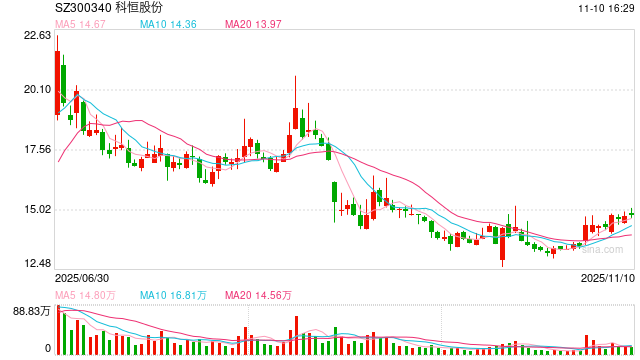
Core Viewpoint - The announcement from Keheng Co., Ltd. regarding the capital increase by its affiliate, Zhuhai Gree Supply Chain Management Co., Ltd., highlights the ongoing financial struggles of its subsidiary, Shenzhen Haoneng Technology Co., Ltd., which is heavily reliant on the troubled client, Zhuhai Yinlong New Energy Co., Ltd. [2][4][10] Group 1: Company Financials and Performance - Keheng Co., Ltd. has faced continuous losses since acquiring Haoneng Technology in 2016, with significant financial strain exacerbated by the downturn of its core client, Zhuhai Yinlong [6][7] - Haoneng Technology reported losses of 2.44 billion, 510 million, 1.33 billion, 2.50 billion, and 980 million from 2020 to 2024, with an additional loss of 810 million in the first half of this year [7] - Keheng Co., Ltd. is at risk of delisting due to negative net assets, with a debt ratio reaching 103% by the end of Q3 2025, indicating severe financial distress [12][15] Group 2: Strategic Moves and Investments - Gree Supply Chain plans to convert a 200 million debt into equity in Haoneng Technology, acquiring a 33.21% stake, as part of efforts to alleviate financial burdens on Keheng Co., Ltd. [2][4] - Gree Electric's acquisition of a stake in Zhuhai Yinlong for 1.828 billion in 2021 has not improved the financial situation of either company, with ongoing losses reported [10][11] - The Gree Group's strategy to inject capital into Keheng Co., Ltd. through various funding rounds has yet to yield positive operational results, raising questions about the effectiveness of these interventions [11][12]


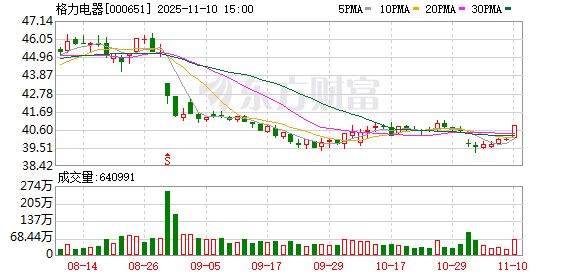
董明珠回应格力跨界做冰箱遭质疑
Zheng Quan Shi Bao· 2025-11-10 09:48
Core Viewpoint - Gree's decision to enter the refrigerator market is driven by a commitment to quality and innovation, as emphasized by its CEO Dong Mingzhu, who highlights the company's investment in fully automated manufacturing processes [2] Group 1: Company Strategy - Gree aims to differentiate its refrigerator products by developing a fully automated factory, which is designed entirely in-house to ensure advanced quality control [2] - The company is willing to invest more in production costs to guarantee the quality of its products across various categories, including air conditioners, refrigerators, and washing machines [2] Group 2: Market Response - There is skepticism among consumers regarding Gree's move into the refrigerator market, which Dong Mingzhu addresses by stating that simply following market trends would not lead to the creation of high-quality products [2]

4500亿国补落幕,谁是最大受益者?
商业洞察· 2025-11-10 09:36
Core Insights - The article discusses the impact of the "National Subsidy" program on consumer behavior and various industries, particularly focusing on the automotive, home appliance, and 3C (computer, communication, and consumer electronics) sectors [4][5][6]. Group 1: National Subsidy Overview - The National Subsidy program has allocated a total of 300 billion yuan in 2023, with the last batch of 69 billion yuan announced on September 30, marking the end of a two-year consumer stimulus initiative [4][5]. - The program has seen 330 million people apply for subsidies from January to August, driving sales of related products exceeding 2 trillion yuan, accounting for about 7% of total retail sales [5][6]. Group 2: Industry Impact - The automotive sector has been the largest beneficiary, with 4.12 million applications for vehicle trade-in subsidies, translating to approximately 618-824 billion yuan, making it the "black hole" for funding [14]. - Home appliance companies have also benefited, with major players like Midea, Haier, and Gree reporting significant profit increases, while the overall market is experiencing a shift towards smarter and more energy-efficient products [15][16]. Group 3: Company Performance - BYD has emerged as a significant winner in the automotive sector, reporting a revenue of 371.3 billion yuan in the first half of 2025, a 23.3% year-on-year increase, and a net profit of 15.5 billion yuan [8][10]. - Xiaomi has capitalized on the subsidy program, achieving a 47.4% revenue growth to 111.3 billion yuan in the first quarter of 2025, with a net profit increase of 64.5% [10][12]. Group 4: Market Dynamics - The subsidy program has intensified competition, leading to a price war among automotive manufacturers, with stronger companies gaining market share while weaker ones struggle to survive [8][12]. - The 3C product market has seen a shift towards higher-priced models, with sales of smartphones priced above 4,300 yuan increasing by 11% in the first half of 2025 [15][16]. Group 5: Regional Disparities - The implementation of the subsidy program has revealed significant regional disparities, with wealthier areas like Jiangsu effectively utilizing funds and achieving higher consumer engagement compared to less affluent regions [21][23]. - The program's design aims to balance support across regions, but actual execution varies widely based on local economic conditions and administrative capabilities [22][24].


董明珠回应格力跨界做冰箱遭质疑
证券时报· 2025-11-10 09:31
Core Viewpoint - Gree's decision to enter the refrigerator market is driven by a commitment to quality and innovation, rather than merely following market trends [1]. Group 1 - Gree's entry into the refrigerator market has faced skepticism from the public, which was addressed by Dong Mingzhu, emphasizing the importance of quality over mere market presence [1]. - The company is establishing a fully automated refrigerator factory, designed entirely in-house, which allows for advanced quality control throughout the production process [1]. - Gree is willing to invest more in production costs to ensure the quality of its products, whether they are air conditioners, refrigerators, or washing machines [1].

中证指数公司发布中证沪深港互联互通中国50指数等2条指数
智通财经网· 2025-11-10 09:17
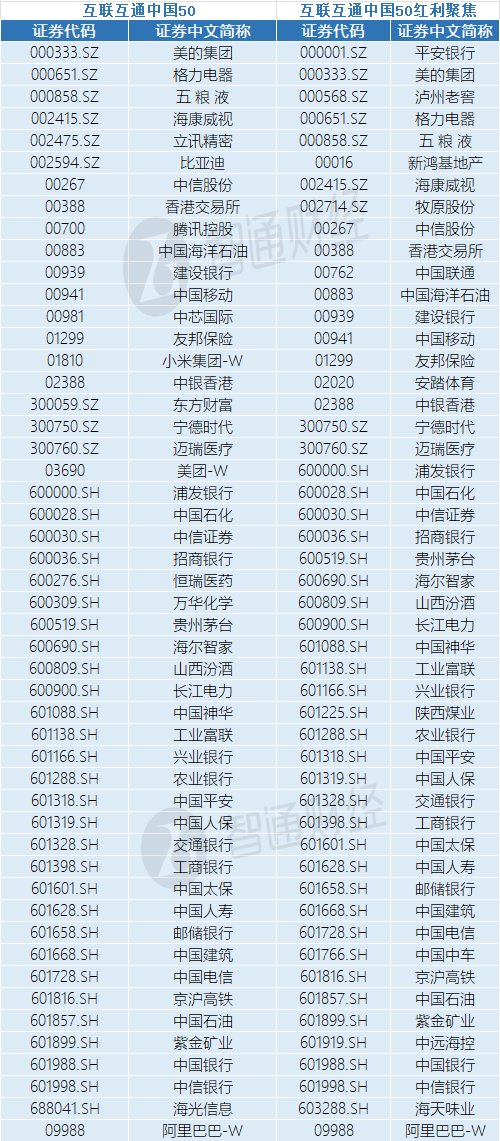
Core Insights - The China Securities Index Co., Ltd. will officially launch the CSI Hong Kong-Shenzhen Stock Connect China 50 Index and the CSI Hong Kong-Shenzhen Stock Connect China 50 Dividend Focus Index on November 11, 2025, providing more investment targets and performance benchmarks for the market [1] Index Details - The two indices will select sample stocks from the Shanghai Stock Connect, Shenzhen Stock Connect, and Hong Kong Stock Connect, with the China 50 Index comprising 50 large-cap Chinese listed companies and the Dividend Focus Index comprising 50 large-cap companies with high dividend yields [1] - The indices aim to reflect the overall performance of representative listed companies within the Hong Kong-Shenzhen Stock Connect framework [1] Sample Stocks - The China 50 Index includes major companies such as Midea Group, Gree Electric Appliances, and Wuliangye [2] - The Dividend Focus Index features companies like Ping An Bank, Luxshare Precision, and BYD [2][3]
预制菜概念上涨2.65%,8股主力资金净流入超5000万元
Zheng Quan Shi Bao Wang· 2025-11-10 08:30
截至11月10日收盘,预制菜概念上涨2.65%,位居概念板块涨幅第6,板块内,100股上涨,惠发食品、 巴比食品、浙江东日等涨停,盖世食品、君亭酒店、家家悦等涨幅居前,分别上涨8.78%、8.11%、 7.44%。跌幅居前的有大湖股份、百洋股份、千味央厨等,分别下跌0.49%、0.43%、0.07%。 今日涨跌幅居前的概念板块 | 概念 | 今日涨跌幅(%) | 概念 | 今日涨跌幅(%) | | --- | --- | --- | --- | | 乳业 | 4.36 | 同花顺果指数 | -1.56 | | 培育钻石 | 3.46 | 铜缆高速连接 | -1.50 | | 白酒概念 | 3.01 | 无线充电 | -1.26 | | 天津自贸区 | 2.97 | 超导概念 | -1.24 | | 免税店 | 2.76 | 汽车热管理 | -1.15 | | 预制菜 | 2.65 | PEEK材料 | -1.07 | | 金属铅 | 2.53 | 富士康概念 | -0.99 | | 磷化工 | 2.48 | 中船系 | -0.98 | | 啤酒概念 | 2.48 | 高压快充 | -0.97 | | 小红书概 ...
电商升级+免税新政!消费龙头ETF(516130)拉升2%!机构:AI融合与出海或成消费景气主线
Xin Lang Ji Jin· 2025-11-10 06:47
Group 1 - The core viewpoint of the articles highlights the performance of the Consumption Leader ETF (516130), which saw a 2.0% increase in price and a transaction volume of 13.71 million yuan, with a total fund size of 150 million yuan [1] - Key stocks within the ETF include China Duty Free, which hit the daily limit, and New Spring Co., which fell to the daily limit, while ShouLai Hotel and YanJin PuZi saw significant gains of 9.88% and 7.6% respectively [1] - The upcoming 2025 Double 11 shopping festival will incorporate instant retail as a core focus, enhancing "minute-level delivery" services, which is expected to benefit companies like Yili and Haier from increased demand for smart home appliances and fast-moving consumer goods [1] Group 2 - The Ministry of Finance and other departments have issued a notice to optimize duty-free shopping policies, which may provide policy benefits to companies like China Duty Free [1] - The consumption sector is under pressure, but four main trends are identified: (1) Brand expansion into emerging markets, (2) Emotional value sectors like trendy toys and pet products, (3) Growth in AI-driven consumer sectors, and (4) The rise of instant retail and cost-effective dining options [1] - The Consumption Leader ETF passively tracks the Consumption Leader Index, with top ten weighted stocks including Kweichow Moutai, Gree Electric, Yili, and others [2]





董明珠回应造冰箱质疑:我们是后来者,但不是跟随者!
Sou Hu Cai Jing· 2025-11-10 06:28
Core Viewpoint - Gree Electric Appliances is expanding into the refrigerator market and the electric vehicle sector, emphasizing quality and innovation in its products while maintaining a strategic focus on its core business of air conditioning [1][3]. Group 1: Refrigerator Business Expansion - Gree's entry into the refrigerator market is driven by a commitment to quality, with the establishment of a fully automated refrigerator factory designed entirely in-house [1]. - The company is willing to invest more in production costs to ensure high-quality products across its appliance range, including air conditioners, refrigerators, and washing machines [1]. Group 2: Electric Vehicle Development - Gree Electric is not pursuing the production of passenger cars but is focusing on commercial vehicles such as sanitation trucks, heavy-duty trucks, and buses, indicating a strategic choice rather than a withdrawal from the automotive sector [1]. - The establishment of Shanghai Gree Automotive Technology Co., Ltd. with a registered capital of 20 million RMB marks Gree's commitment to the electric vehicle market, focusing on automotive parts and industrial robotics [3]. Group 3: Leadership and Strategic Branding - Dong Mingzhu, the long-serving chairwoman of Gree, has been re-elected for another three years, reflecting her strong influence and leadership within the company [5]. - The rebranding of Gree's retail outlets to "Dong Mingzhu Health Home" aims to leverage her reputation, with 970 stores established nationwide and a reported retail total of approximately 390 million RMB from 293 stores operating for over 30 days [5].

董明珠回应格力跨界做冰箱遭质疑:愿付出更多投资、生产成本来保证产品的质量
Sou Hu Cai Jing· 2025-11-10 06:11
Group 1 - Gree Electric's expansion into the refrigerator market is driven by a commitment to quality and innovation, with the establishment of a fully automated refrigerator factory designed in-house [1] - The company emphasizes its willingness to invest more in production costs to ensure high-quality products across its appliance range, including air conditioners, refrigerators, and washing machines [1] - Gree's strategic choice to focus on commercial vehicles rather than passenger cars reflects its core competency in HVAC technology, which has led to the development of related industries such as new energy vehicles [3] Group 2 - The establishment of Shanghai Gree Automotive Technology Co., Ltd. with a registered capital of 20 million RMB indicates Gree's commitment to the new energy vehicle sector, focusing on automotive parts and industrial robotics [5] - Gree Electric's chairperson, Dong Mingzhu, has been re-elected to the board, ensuring her leadership for another three years, which may influence the company's strategic direction [7] - The rebranding of Gree's retail stores to "Dong Mingzhu Health Home" aims to leverage her personal reputation, with 970 stores established and a reported retail total of approximately 390 million RMB from 293 stores [8]

行业ETF配置模型2025年超额14.4%
GOLDEN SUN SECURITIES· 2025-11-10 03:43
Quantitative Models and Construction Methods 1. Model Name: Industry Mainline Model (Relative Strength Index, RSI) - **Model Construction Idea**: This model identifies leading industries by calculating their relative strength (RS) based on historical price performance. Industries with RS > 90% are considered potential leaders for the year [10] - **Model Construction Process**: 1. Use 29 first-level industry indices as the investment universe [10] 2. Calculate the price change over the past 20, 40, and 60 trading days for each industry index [10] 3. Rank the price changes for each period and normalize the rankings to obtain RS_20, RS_40, and RS_60 [10] 4. Compute the average of the three rankings to derive the final relative strength index: $ RS = (RS_{20} + RS_{40} + RS_{60}) / 3 $ where RS_20, RS_40, and RS_60 represent the normalized rankings of price changes over 20, 40, and 60 trading days, respectively [10] - **Model Evaluation**: The model successfully identified leading industries in 2024, such as coal, banking, and AI-related sectors, which showed strong performance during the year [10][12] 2. Model Name: Industry Rotation Model (Prosperity-Trend-Crowding Framework) - **Model Construction Idea**: This model combines three dimensions—prosperity, trend, and crowding—to recommend industry allocations. It includes two sub-strategies: "Strong Trend-Low Crowding" and "High Prosperity-Strong Trend" [7][15] - **Model Construction Process**: 1. Define prosperity as the core metric, supplemented by trend and crowding dimensions [15] 2. For the "High Prosperity-Strong Trend" strategy, focus on industries with high prosperity and strong trends while avoiding highly crowded industries [15] 3. For the "Strong Trend-Low Crowding" strategy, prioritize industries with strong trends and low crowding while avoiding low-prosperity industries [15] 4. Allocate weights to industries based on the framework, e.g., November 2025 allocation: Basic Chemicals (18%), Media (16%), Agriculture (12%), Light Manufacturing (12%), Computers (12%), Home Appliances (9%), Real Estate (9%), Retail (6%), New Energy (4%), Coal (3%) [7][15] - **Model Evaluation**: The model demonstrated strong performance, with an annualized excess return of 13.7% and an IR of 1.5. It also showed a high monthly win rate of 67% [15][22] 3. Model Name: Left-Side Inventory Reversal Model - **Model Construction Idea**: This model identifies industries in a recovery phase from distress by analyzing inventory levels and analyst expectations. It aims to capture reversal opportunities in industries with low inventory pressure and potential for restocking [29] - **Model Construction Process**: 1. Focus on industries experiencing current or past distress with signs of recovery [29] 2. Identify industries with low inventory pressure and restocking potential [29] 3. Incorporate analyst long-term positive outlooks for these industries [29] - **Model Evaluation**: The model achieved an absolute return of 27.9% and an excess return of 7.5% relative to equal-weighted industry benchmarks in 2025 (up to October) [29] --- Model Backtesting Results 1. Industry Mainline Model (RSI) - Annualized excess return: Not explicitly stated - IR: Not explicitly stated - Maximum drawdown: Not explicitly stated - Monthly win rate: Not explicitly stated - 2024 performance: Identified leading industries such as coal, banking, and AI, which showed strong performance during the year [10][12] 2. Industry Rotation Model (Prosperity-Trend-Crowding Framework) - Annualized excess return: 13.7% [15] - IR: 1.5 [15] - Maximum drawdown: -8.0% [15] - Monthly win rate: 67% [15] - 2023 excess return: 7.3% [15] - 2024 excess return: 5.7% [15] - 2025 excess return (up to October): 2.0% [15] 3. Left-Side Inventory Reversal Model - Annualized excess return: Not explicitly stated - IR: Not explicitly stated - Maximum drawdown: Not explicitly stated - Monthly win rate: Not explicitly stated - 2023 performance: Absolute return of 13.4%, excess return of 17.0% [29] - 2024 performance: Absolute return of 26.5%, excess return of 15.4% [29] - 2025 performance (up to October): Absolute return of 27.9%, excess return of 7.5% [29]