腾讯控股

Search documents
腾讯研究院2026年新春书单:值得读的10本书
腾讯研究院· 2026-02-13 07:03
Core Insights - The article emphasizes the transformative impact of artificial intelligence (AI) on daily life, highlighting its role in various creative and decision-making processes while also addressing the existential questions it raises for humanity [1] Group 1: Book Recommendations - The article presents a unique book recommendation format where AI characterizes five contemporary individuals and suggests books based on their identities and philosophical cores [2] - The recommended books include "要有光" by 梁鸿, which explores the psychological crises faced by youth in contemporary China, emphasizing the importance of understanding and listening to their struggles [4] - "文字的力量" by 马丁·普赫纳 examines the historical significance of literature and its role in shaping civilization, arguing that literature is a powerful tool for societal change [6][7] - "匠人" by 理查德·桑内特 redefines the concept of craftsmanship in the digital age, advocating for a return to the intrinsic joy of doing work well, beyond mere efficiency [9][10] - "系统之美" by 德内拉·梅多斯 offers insights into systems thinking, emphasizing the interconnectedness of events and the importance of understanding systemic structures to address complex issues [11][12] - "即使以最微弱的光" by 崔恩荣 delves into the emotional struggles of East Asian women, portraying their resilience in the face of societal pressures [13][15] - "生命3.0" by 迈克斯·泰格马克 discusses the implications of AI on human existence and the ethical considerations of its development [17][18] - "AI之镜" by 香农·瓦洛尔 critiques the limitations of AI as a reflection of past data, urging a reevaluation of how technology can enhance human values and growth [19][20] - "AI文明史·前史" by 张笑宇 presents a philosophical exploration of AI's evolution, warning against the potential dangers of unregulated technological advancement [23][24] - "苏格拉底的方法" by 沃德·法恩斯沃斯 revives the Socratic method as a means to combat cognitive closure in the age of AI [25][26] - "AI群星闪耀时" by 清华大学刘知远团队 provides a historical perspective on AI, emphasizing the philosophical and humanistic aspects of its development [27][28]



2026年度策略系列报告:中美AI产业或将再度向上
Huafu Securities· 2026-02-13 06:48
Group 1 - The core narrative of the report indicates that the AI industry in China and the US is in a transitional phase, moving from "upstream selling shovels" and "new technology demand" to "empowering the entire industry" [9][10] - Three types of companies are identified as potential beneficiaries of the technology revolution: 1) upstream core technology and equipment suppliers, 2) companies corresponding to new demands generated by new technologies, and 3) companies applying new technologies to existing industries for empowerment [2][30] - The report emphasizes that the current market for the AI industry in China is still primarily driven by valuation rather than performance, indicating that it has not yet entered the second phase of performance-driven growth [15][20] Group 2 - The report outlines a methodology based on three dimensions: macro narrative, stock price drivers, and financial screening, to identify companies that may benefit from the AI wave [21][24] - Revenue growth is highlighted as a leading indicator of whether a company is benefiting from the technology revolution, typically preceding profit jumps by about one quarter [74][77] - The report notes that two operational strategies can cause revenue signals to fail: transitioning to new technology businesses and making early investments, which may delay profit realization [82][86] Group 3 - Historical comparisons are made between the US internet revolution (1985-2005) and the mobile internet cycle in China (2007-2015), illustrating how valuation and profit transitions have occurred in past technology revolutions [32][43] - The report discusses the importance of cash flow and advance payments as more comprehensive and forward-looking indicators compared to revenue alone, aiding in the identification of companies with potential profit inflection points [74][80] - The analysis of representative companies from both the US and China during previous technology cycles shows that stock price movements often align with the phases of valuation expansion and profit realization [51][62]
腾讯重仓!燧原科技IPO推进
是说芯语· 2026-02-13 06:46
Core Viewpoint - Shanghai Suiruan Technology Co., Ltd. is focusing on cloud AI chip design and has recently changed its IPO review status to "inquired" on the Sci-Tech Innovation Board, aiming to raise approximately 6 billion yuan for the development and industrialization of its AI chip series products [1][6]. Group 1: Company Overview - Suiruan Technology was established in 2018 and is recognized as one of the leading domestic cloud AI chip companies, alongside other firms like Moore Threads and Biran Technology, collectively referred to as the "Four Little Dragons of Domestic GPUs" [1][2]. - The company has developed four generations of cloud AI chips and has built a complete product system including AI chips, AI accelerator cards, intelligent computing systems, and AI computing software platforms [2][3]. Group 2: Market Position and Competition - The domestic cloud AI chip industry is in its early stages, with international players like NVIDIA holding a significant market share, while local companies are gradually breaking through technological barriers [1][6]. - Suiruan Technology's latest fourth-generation cloud AI chip supports FP8 low-precision data and has performance metrics that can compete with international products, indicating that its core technology has reached a leading level domestically [3]. Group 3: Financial Performance - The company's revenue has shown rapid growth, with a compound annual growth rate of 183.15% from 2022 to 2024, although it has not yet achieved profitability [6]. - Revenue figures for the years 2022, 2023, 2024, and the first nine months of 2025 are 90.1 million yuan, 300 million yuan, 720 million yuan, and 540 million yuan respectively, with net losses of 1.15 billion yuan, 1.567 billion yuan, 1.503 billion yuan, and 912 million yuan [5][6]. Group 4: Investment and Future Plans - The IPO proceeds will primarily be invested in the research and industrialization of the fifth and sixth generation AI chip series, as well as advanced AI hardware and software projects, with total planned investments of 6 billion yuan [6]. - The company has established a strong partnership with major internet firms, which has led to widespread commercial applications of its products in various AI scenarios [5].

港股晨报-20260213
国投证券(香港)· 2026-02-13 06:44
美股昨晚遭遇显著抛售,三大指数全线下挫,其中,纳指跌逾 2%。市场核心逻 辑出现重大转折,投资者焦点从单纯追逐「AI 红利」急剧转向担忧「AI 反噬」, 叠加思科业绩指引不佳及苹果面临监管压力,科技股领跌,避险情绪急速升温。 近期市场对 AI 颠覆传统产业的焦虑感显著升级,引发「AI 恐慌交易(AI Scare Trade)」,资金开始计价 AI 普及可能导致的利润压缩与结构性失业,冲击从软 件金融扩散至实体服务业。物流巨头 C.H. Robinson CHRW.US 暴跌 14%,市场 忧虑 AI 精准调度将大幅提升效率,导致依赖「信息差」与人力协调的中介佣 金归零;世邦魏理仕 CBRE.US 重挫 13.5%,创疫情以来最大跌幅,逻辑在于 AI 工具如 Claude Cowork 若大量替代法务、金融等白领岗位,将导致办公楼长期 需求萎缩,虽然数据中心需求强劲,仍难抵销投资者对传统租赁业务崩塌的恐 惧。 港股晨报 2026 年 2 月 13 日 国投证券(香港)有限公司 • 研究部 1. 国投证券国际视点:AI 叙事反转引发恐慌抛售,市场 静待美国 CPI 公布 昨日,港股三大指数走弱,恒生指数跌 0.8 ...

开源量化评论(121):港股CCASS优选20组合的年度回顾及最新持仓
KAIYUAN SECURITIES· 2026-02-13 06:43
- The "Hong Kong CCASS Preferred 20 Portfolio" was constructed using a two-step screening method: "select brokers first, then select stocks"[3][4] - The first step involves selecting top-performing brokers by standardizing and equally weighting their excess Sharpe ratio and monthly win rate, then selecting the top 10 brokers[4][16] - The second step involves equally distributing funds to the 10 selected brokers, aggregating their latest holdings, and retaining the top 20 stocks by weight for equal allocation[5][17] - The portfolio has shown significant outperformance over the Hang Seng Index, with an annualized excess return rate of 19.3% and an excess Sharpe ratio of 2.45 over the period from 2020 to 2025[3][12][15] - The portfolio demonstrated defensive characteristics during market adjustments, achieving a positive return of 2.05% from October 8, 2025, to December 31, 2025, while the Hang Seng Index fell by 4.47% and the Hang Seng Technology Index dropped by 15.32%[3][12] - The latest holdings of the portfolio as of February 2026 include a low valuation and high dividend yield configuration, with the banking and non-bank financial sectors accounting for about 45%, the energy sector about 10%, and the technology and internet sectors about 20%[6][19][22] Portfolio Performance Metrics - Annualized return: 19.3%[15] - Annualized volatility: 7.9%[15] - Sharpe ratio: 2.45[15] - Maximum drawdown: -7.6%[15] - Monthly win rate: 75.3%[15]
海通国际研究:解读Seedance 2.0及对行业的影响
Xin Lang Cai Jing· 2026-02-13 06:32
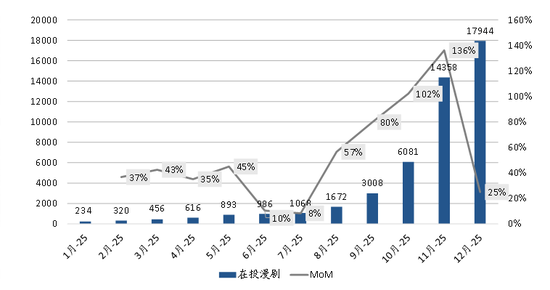
Core Insights - ByteDance has recently launched its latest video generation model, Seedance 2.0, which represents a significant advancement in AI video technology [1][23]. Group 1: Seedance 2.0 Features and Impact - Seedance 2.0 achieves a qualitative transformation of AI video from a "toy" to a "tool," addressing issues like character consistency and style shifts in long videos, ensuring high narrative coherence [3][24]. - The model supports multi-modal input (images, videos, audio, text) and allows precise control over each material's use, making the creative process more intuitive [3][24]. - Enhanced physical simulation reduces "AI twitching" phenomena, improving the fluidity and realism of generated actions, while achieving millisecond-level synchronization of audio and visuals [3][24]. Group 2: Cost Reduction and Market Opportunities - Seedance 2.0 is expected to significantly lower content production costs, particularly benefiting the short video and micro-drama sectors, with a projected increase in AIGC content market share [4][25]. - The AI-generated content market is anticipated to grow rapidly, with short videos and user-generated content (UGC) driving platform growth [4][25]. - AI short dramas are poised for explosive growth, with AI real-time commentary dramas expected to dominate, benefiting from high narrative efficiency and low production costs [5][26]. Group 3: Market Projections and Financial Implications - The Chinese animated drama market is projected to grow from 168 billion yuan in 2025 to 243.6 billion yuan in 2026, marking a 45% increase, with AI-generated dramas capturing a significant market share [6][27]. - AI drama production costs have been reduced from 1,500-4,000 yuan per minute to approximately 100-300 yuan per minute, with production cycles shortened from 30-45 days to 7-10 days [8][29]. - The profitability of AI dramas is confirmed, with net profits for high-viewership works reaching 200,000-300,000 yuan under paid models [8][29]. Group 4: Industry Dynamics and Competitive Landscape - The AI drama industry is expected to see a shift towards high-quality, serialized content, with Seedance 2.0 acting as a catalyst for this transformation [9][32]. - The industry value chain includes AI technology providers, content generation teams, and distribution platforms, with quality IP being crucial for competitive advantage [9][32]. - The global market for professional creators in video production is estimated at $120 billion, indicating substantial growth potential for companies like ByteDance and Kuaishou [17][43].
港股开盘:恒生指数跌1.45%,恒生科技指数跌1.59%
Xin Lang Cai Jing· 2026-02-13 06:31
2月13日,港股开盘,恒生指数跌1.45%,恒生科技指数跌1.59%。科网股多数低开,哔哩哔哩-W低开 3.66%,阿里巴巴-W低开2.9%,腾讯控股低开1.87%。 来源:智通财经 ...
计算机行业研究:再谈国内算力斜率陡峭
SINOLINK SECURITIES· 2026-02-13 06:08
Investment Rating - The report indicates a positive outlook for the industry, suggesting a potential for significant growth in the coming months [6][44]. Core Insights - The report highlights a rapid release of computing power demand driven by the dual forces of training and inference, with 2026 identified as a pivotal year for this transition [6]. - Major internet companies are intensifying their competition in AI, leading to a surge in demand for high-quality, multi-modal models, which in turn is expected to drive substantial growth in computing power requirements [11][25]. - The supply side is expected to improve structurally, with domestic computing power resources becoming more abundant, thus supporting the anticipated demand explosion [6][32]. Summary by Sections 1. Rapid Release of Computing Power Demand - The "arms race" in large models continues unabated, with leading internet firms like ByteDance, Alibaba, and Tencent releasing new models with trillions of parameters, enhancing their competitive edge [11][12]. - The demand for inference computing power is rising at an unexpected rate, with significant user growth reported for AI applications, particularly the Doubao app, which reached 226 million monthly active users by December 2025, marking a year-on-year increase of over 200% [6][25]. 2. Supply Side Improvements and Domestic Production Acceleration - The approval of NVIDIA's H200 AI chips for the Chinese market is expected to alleviate computing power shortages for major internet firms, facilitating faster model iterations [32]. - Domestic computing power chips have reached a performance level that is now considered "good enough," with significant advancements in local chip development and deployment [33]. 3. Full-Chain Inflation in Domestic Computing Power - The report predicts that the computing power industry will enter a "full-chain inflation" cycle in 2026, with growth expected across various segments including AIDC, cloud services, and supporting power equipment [38]. - Major tech companies are projected to increase their capital expenditures significantly, with estimates suggesting that the four largest tech firms in Silicon Valley will spend up to $650 billion in 2026 [40]. 4. Related Companies - The report lists several companies as relevant to the industry, including Dongyangguang, Hanwha, Haiguang Information, Wangsu Technology, and others, indicating a broad spectrum of potential investment opportunities [4][44].




2025年度“自媒体”治理与发展创新案例发布
Bei Jing Ri Bao Ke Hu Duan· 2026-02-13 05:37
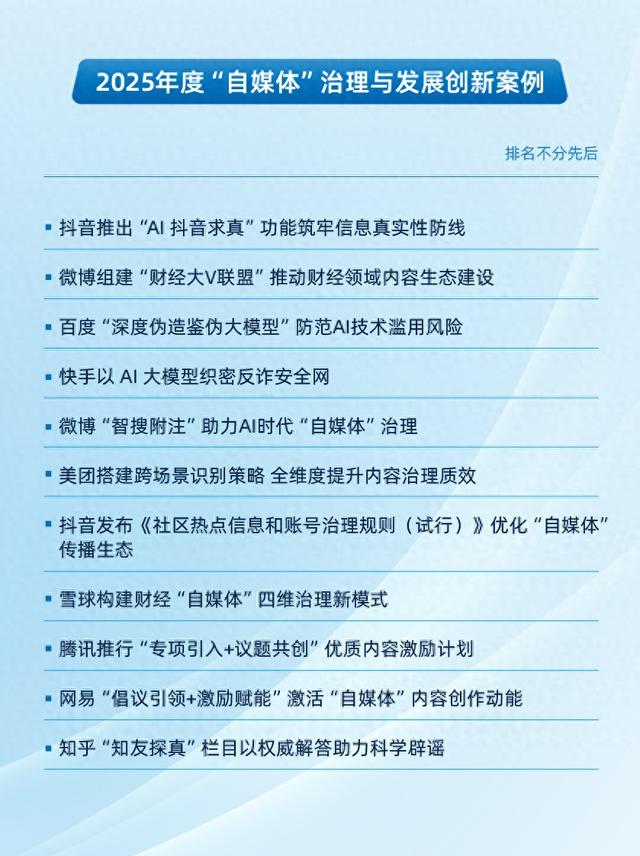
Core Insights - The 2025 Annual "Self-Media" Governance and Development Summary Evaluation Meeting was held to summarize industry self-regulation efforts and explore multi-party governance strategies in the self-media sector [1][2] - Key representatives from major self-media platforms shared innovative practices and highlighted the importance of using advanced technologies for governance [1][2] Group 1: Governance and Development Strategies - The meeting emphasized the establishment of a professional committee and focused governance in key areas to enhance self-regulation [1] - Platforms like Douyin, Weibo, Baidu, and Tencent News presented their innovative measures for managing misinformation and promoting quality content [1][2] - Douyin built a misinformation governance system through "AI Douyin Seeking Truth," focusing on content production tracing, interception during dissemination, and proactive fact-checking [1][2] Group 2: Innovative Case Studies - The 2025 Annual "Self-Media" Governance and Development Innovation Cases included 11 examples from 9 platforms, showcasing a broader range of governance methods compared to the previous year [2] - New characteristics in platform governance were identified, including the shift from case-based to scalable mechanisms, the use of AI for precise governance, and diverse incentives for quality content production [2] - Notable innovations included Weibo's "Finance Big V Alliance," Baidu's "Deep Forgery Detection Model," and Tencent's comprehensive training for self-media creators [2][4] Group 3: Future Directions - The Beijing Internet Administration emphasized the need for political guidance, industry self-regulation, innovative governance, and a focus on high-quality development to foster a healthy self-media ecosystem [2][3] - The association aims to create a governance model that promotes policy discussion, problem-solving, and ecological co-construction in the self-media sector [3]





腾讯看上了减肥药!又投公司又申请专利,意图何在?
GLP1减重宝典· 2026-02-13 05:28
Core Viewpoint - The article discusses Tencent's strategic investments in the GLP-1 weight loss drug sector, emphasizing a long-term vision that integrates health management, data processing, and service connectivity rather than focusing solely on individual drug performance [4][11]. Investment Strategy - Tencent's investment approach is structured in three phases: 1. Initial investments in near-commercial GLP-1 assets to secure stable cash flow from chronic disease management [6]. 2. Betting on next-generation technologies targeting multiple metabolic pathways to enhance weight loss effectiveness [6]. 3. Diversifying into various technological approaches to mitigate risks associated with GLP-1 competition [8]. Market Dynamics - The weight loss drug market is characterized by a large and growing user base, with significant potential for ongoing service engagement across multiple health management areas [9]. - There is a strong willingness to pay for weight loss solutions, transitioning from high-cost, niche markets to broader accessibility through various payment structures [10]. - Weight management is interconnected with chronic diseases, allowing for an expanded service offering that includes diagnostics, medication, and follow-up care [10]. Infrastructure Development - Tencent is not only investing in equity but also building foundational infrastructure through health-related patents, focusing on improving measurement accuracy and data integration for chronic disease management [12]. - Recent patent applications include innovations in GLP-1 receptor activation, aiming to create more effective and cost-efficient treatments [13][15]. Risk and Opportunity Assessment - Tencent's investments in companies like Xianweida and Minwei Biotech reflect a balanced risk preference, combining stable assets with high-potential, flexible opportunities in the next-generation drug space [16]. - The strategy aims to create a sustainable business model in weight management, leveraging technology and service integration to enhance commercial efficiency [17].