腾讯

Search documents
招银国际每日投资策略-20251028
Zhao Yin Guo Ji· 2025-10-28 03:17
Company Analysis - WuXi AppTec reported strong Q3 2025 financial results, with revenue increasing by 15.3% year-on-year, and adjusted Non-IFRS net profit rising significantly by 42.0% [2] - The company raised its full-year revenue guidance to a range of RMB 43.5 billion to RMB 44 billion, up from the previous guidance of RMB 42.5 billion to RMB 43.5 billion, indicating robust business execution despite macro uncertainties [2] - As of Q3 2025, the company's backlog for its small molecule D&M business reached RMB 59.88 billion, a year-on-year increase of 41.2%, highlighting its role as a key growth driver [6] Market Performance - The Hang Seng Index closed at 26,434, up 1.05% for the day and 31.77% year-to-date, reflecting positive market sentiment [3] - The Chinese stock market saw gains, with sectors such as materials, information technology, and consumer discretionary leading the way, while telecommunications, finance, and energy lagged [5] - The U.S. stock market also experienced upward momentum, with the S&P 500 and Nasdaq rising by 1.23% and 1.86% respectively, driven by improved risk appetite following U.S.-China trade negotiations [5] Industry Insights - The chemical segment of WuXi AppTec showed signs of recovery, with drug discovery services experiencing a slight revenue decline of 2.0% year-on-year, but the decline is narrowing [7] - The company is witnessing early signs of demand recovery in the industry, attributed to improvements in the macro environment, including a rebound in the domestic capital market and favorable global business development transactions [7] - The management anticipates that the revenue growth from the small molecule D&M segment will significantly impact overall revenue growth, as it constitutes 46% of total revenue in 2024 [6]


中泰国际每日晨讯-20251028
ZHONGTAI INTERNATIONAL SECURITIES· 2025-10-28 02:19
Market Overview - On October 27, the Hong Kong stock market improved due to preliminary consensus on trade issues between China and the U.S., with the Hang Seng Index closing at 26,433 points, up 273 points (1.05%) with a total turnover of HKD 267.1 billion[1] - The Hang Seng Tech Index rose by 111 points, closing at 6,171 points, supported by significant gains in tech stocks like Baidu, which surged 6.5%[1] Economic Indicators - In September, profits of large-scale industrial enterprises in China increased by 21.6% year-on-year, the highest growth since November 2023, with total profits for January to September reaching CNY 53,732 billion, a 3.2% year-on-year increase[3] - The real estate market showed a decline in new home sales, with a total of 1.97 million square meters sold in 30 major cities, down 22.1% year-on-year, although this was an improvement from the previous week's 24.4% decline[3] Sector Performance - The smart driving sector saw positive movement, with companies like Horizon Robotics and Hezhong Technology rising between 2% to 7%[4] - In the renewable energy and utilities sector, stocks like Dongfang Electric and Harbin Electric increased by 9.5% and 11.4%, respectively, reflecting a general upward trend in the sector[4] U.S. Market Insights - U.S. stock indices reached new highs, with the Dow Jones up 337 points to 47,544 points, the Nasdaq rising by 1.9%, and the S&P 500 increasing by 1.2%[2] - Market sentiment improved as geopolitical tensions eased, with expectations of a 0.25% interest rate cut by the Federal Reserve this week[2]
追平马云,钟睒睒第四次当选中国首富丨2025胡润百富榜同步首发
吴晓波频道· 2025-10-28 02:15
Group 1 - The core viewpoint of the article highlights the significant growth in wealth among Chinese entrepreneurs, with the total wealth of 1434 entrepreneurs exceeding 30 trillion RMB, marking a 42% increase from the previous year [2][3][4] - The top three wealthiest individuals are identified, with Zhong Shanshan regaining the title of China's richest person with a net worth of 530 billion RMB, followed by Zhang Yiming and Ma Huateng [5][7][9] - The number of billionaires has increased, with 41 individuals now classified as billionaires, representing 3% of the total list, while 92% of entrepreneurs have wealth between 50 million and 500 million RMB [10][11][13] Group 2 - The article discusses the dominance of new productivity entrepreneurs, who account for 60% of the top 100 list and 50% of the top 10, indicating a shift towards industries such as new energy and intelligent technology [33][34] - The industrial products sector remains the largest contributor to wealth, with 16.5% of entrepreneurs coming from this industry, followed by consumer goods at 10.3% [34] - The article notes a significant turnover in the list, with 376 new faces appearing this year, a sevenfold increase from the previous year, indicating a dynamic shift in the entrepreneurial landscape [39][40] Group 3 - The article emphasizes the importance of stock prices in determining the wealth of entrepreneurs, with major indices showing substantial increases, contributing to the overall wealth growth [17][18] - The performance of specific companies, such as Nongfu Spring and Xiaomi, is highlighted, with their stock prices significantly impacting the wealth of their founders [19][21] - The article also mentions the potential for future billionaires to emerge from the AI sector, with notable candidates like Liang Wenfeng, whose company has seen rapid growth in user engagement [28][30] Group 4 - The article discusses the geographical shift in wealth concentration, with Shanghai and Shenzhen surpassing Beijing in the number of billionaires, reflecting the growth of industries like semiconductors and biomedicine [44][45] - The trend of wealth inheritance is noted, with a record number of second-generation entrepreneurs appearing on the list, indicating a transition in wealth management and business leadership [47][49] - The article concludes by emphasizing the confidence in the Chinese economy, driven by the high growth rate of wealth and the emergence of new entrepreneurs in innovative sectors [56][57]


QuestMobile2025年三季度AI应用行业报告:移动端AI应用规模突破7亿大关,模型升级加速,MCP助推产业开放
QuestMobile· 2025-10-28 02:01
Core Insights - The AI application market is experiencing rapid growth, with mobile and PC active user counts reaching 729 million and 200 million respectively by September 2025 [3][4][20] - Major companies are shifting focus from parameter competition to ecosystem collaboration, optimizing models to meet customer needs and expand application scenarios [4][9] - The In-App AI plugin model has become the leading growth driver, with 31 out of the top 50 AI applications being plugins [4][5][24] Market Overview - By September 2025, the mobile AI application market has surpassed 700 million users, with native apps, In-App AI, and mobile manufacturer AI assistants reaching 287 million, 706 million, and 535 million users respectively [20][9] - The growth of mobile applications is supported by a stable head of native apps, while the PC web applications face challenges, with over 75% experiencing growth difficulties [5][60] User Engagement - The average usage time for native AI applications is 117.7 minutes, significantly higher than In-App AI plugins at 31 minutes and mobile manufacturer AI assistants at 5.3 minutes [6][24] - The top AI applications show a stable user base, with notable growth in vertical applications like AQ and Doubao, which have seen substantial increases in active users [6][38] Competitive Landscape - The competitive landscape is solidifying, with nearly 60% of native apps experiencing negative growth, indicating a narrowing window for new entrants [31][34] - Vertical applications are thriving, with AQ, Doubao, and Jimeng AI showing impressive growth rates of 83.4%, 15.7%, and 12.1% respectively [38][40] Ecosystem Development - The MCP services have reached 9,384, facilitating ecosystem collaboration and marking a new phase of commercialization in the AI industry [4][9][80] - Companies are focusing on integrating AI into business scenarios, enhancing user experience through seamless service delivery [70][72] Future Trends - The AI market is transitioning from a focus on broad capabilities to specialized, efficient solutions, with a significant increase in model updates and iterations [16][18] - The integration of payment capabilities is seen as a key milestone for the commercialization of AI applications, paving the way for an "AI as a service" economy [85][87]

通信行业周报-20251027
Guoxin Securities Co., Ltd· 2025-10-27 12:01
Investment Rating - The communication industry is rated as "Positive" with expectations that the industry index will outperform the market index by over 5% in the next six months [49]. Core Insights - The communication sector has shown robust growth, with a 11.56% increase from October 20 to October 24, 2025, outperforming the CSI 300 index by 8.31 percentage points [3][13]. - Year-to-date, the communication industry has risen by 70.42%, ranking second among major sectors [3][15]. - The current PE TTM for the communication sector is 25.93, which is at the 34.12 percentile, indicating a relatively low valuation level [15]. - The report highlights a significant internal performance and stock price divergence among listed companies, suggesting a cautious yet optimistic outlook for operators with sustained profit growth and enhanced network value [6][47]. Summary by Sections Market Review - The communication sector has outperformed the CSI 300 index, with 101 out of 120 listed companies experiencing stock price increases during the review period [14][15]. - The top three gainers were Zhongji Xuchuang, Online Offline, and Shijia Photon, while the top three decliners were Dongxin Peace, Zhongguang Lightning Protection, and Wanma Technology [17][14]. Industry News - The report discusses the strategic focus on emerging technologies such as quantum technology, embodied intelligence, and 6G, which are expected to create significant market opportunities over the next decade [18][19]. - Major telecommunications companies like China Mobile, China Telecom, and China Unicom reported steady revenue growth, with China Mobile achieving a revenue of 794.7 billion yuan and a net profit of 115.4 billion yuan, reflecting a 4% year-on-year increase [26][28][30]. Investment Recommendations - The report suggests maintaining a cautiously optimistic stance, focusing on operators with continuous profit growth, companies benefiting from traffic growth and computing networks, and high-quality firms with strong core competitiveness [6][47].



果然大涨!
中国基金报· 2025-10-27 10:14
Core Viewpoint - The Hong Kong stock market experienced a significant rise driven by dual positive factors, with technology stocks leading the gains and certain sectors like pharmaceuticals and finance boosted by better-than-expected earnings reports [2][4]. Market Performance - On October 27, the three major indices in Hong Kong all rose, with the Hang Seng Index increasing by 1.05% to close at 26,433.70 points, the Hang Seng Tech Index up by 1.83% to 6,171.08 points, and the Hang Seng China Enterprises Index rising by 1.10% to 9,467.22 points [4]. - Key sectors that performed well included technology, brokerage, insurance, semiconductors, and pharmaceuticals [4]. Technology Sector - The recent U.S.-China business negotiations reached a basic consensus, which may enhance market risk appetite [6]. - The "14th Five-Year Plan" emphasizes accelerating high-level technological self-reliance, providing policy support for AI and domestic computing power sectors [7]. - Major tech stocks saw significant increases, with Baidu rising by 6.20%, Alibaba by 3.15%, Tencent by 2.90%, and JD.com by 2.33% [7][8]. Financial Sector - The financial sector led the market gains, driven by better-than-expected earnings from several companies. Notably, China Life Insurance expects a year-on-year profit increase of approximately 50% to 70% for the first three quarters [10]. - Several brokerage firms reported strong third-quarter results, with Citic Securities showing a 37.9% year-on-year increase in net profit [10]. Semiconductor Sector - The semiconductor sector received positive news, with companies like Beike Micro, Huahong Semiconductor, and SMIC seeing stock price increases of 5.74%, 4.98%, and 3.50%, respectively [12][13]. - The National Development and Reform Commission emphasized the importance of technological self-reliance, indicating a strategic focus on the sector [12]. Pharmaceutical Sector - The pharmaceutical sector also saw gains, with companies like Rongchang Bio, SiHuan Pharmaceutical, and WuXi AppTec increasing by 5.20%, 4.93%, and 4.18%, respectively [14][15]. - WuXi AppTec reported a net profit increase of 84.84% year-on-year for the first three quarters [14]. Copper Sector - The copper sector led the non-ferrous metals market, with companies like China Daye Nonferrous Metals and Luoyang Molybdenum rising by 11.11% and 5.19%, respectively [16]. - Analysts predict that domestic copper demand will enter a peak season, with expectations of increased production and rising copper prices [16]. Future Outlook - Huatai Securities suggests that the inflow of southbound funds may slow down in the future, having already exceeded HKD 500 billion this half-year [17]. - The market sentiment is currently neutral, indicating balanced risks, while the long-term trend remains positive due to improving industry dynamics and funding conditions [17].
中国国际广告节:科技与文化交汇,“双主场”链接亚洲机遇
Xin Jing Bao· 2025-10-27 10:08
Core Insights - The 32nd China International Advertising Festival and the 34th Asian Advertising Congress successfully concluded in Beijing, focusing on the theme "Intelligent Advertising New Chapter: China as the Main Stage, Asia in Sync" [1][6] - The dual-event format marked a significant step in the integration of China's advertising industry with the international stage, attracting over 10,000 representatives from more than 30 countries and regions [2][7] Group 1: Event Highlights - The event was held in a "dual main stage" format, featuring over 220 international representatives, creating a comprehensive ecosystem for "display, communication, release, and cooperation" [2] - The event's content reached over 1 billion people through "all-media + outdoor advertising" strategies, significantly enhancing the international influence of China's advertising industry [2] - Key industry leaders from companies like WPP, Tencent, and Haier discussed topics such as AI-driven brand transformation, showcasing the cutting-edge achievements of China's advertising sector [3] Group 2: Technological and Cultural Integration - Experts from international organizations like Accenture and Dentsu shared insights on AI's role in advertising innovation, discussing topics such as AI payment reconstruction and intelligent applications [4] - The event included award ceremonies for the China Advertising Industry Awards and over 20 specialized forums covering various hot topics, including AI advertising development and brand innovation [4] - Three major exhibitions showcased the diverse ecosystem and innovative vitality of the advertising industry, featuring prominent media and companies [4] Group 3: Regional Impact - Haidian District, as the event's host, provided a rich cultural and technological foundation, aligning with the event's theme of "innovation-driven, technology-enabled" [5] - The advertising industry is seen as a pioneer in sensing AI transformations, with Haidian's research capabilities fueling advertising innovation [5] - The collaboration between the advertising industry and Haidian's tech firms is expected to enhance regional influence and market reputation [5] Group 4: Future Outlook - The successful hosting of the dual events solidifies Beijing's position as a hub for international exhibitions and technology integration, with expectations for deepened collaboration in the next five years [7] - The theme "China as the Main Stage, Asia in Sync" reflects the growing global presence of Chinese products and services, indicating a trend towards greater synergy in the advertising market [7] - The event fostered inspiration and resource expansion among participants, paving the way for future collaborations in AI, branding, and cross-industry integration [7]
港股速报|港股大反攻 这家公司却再遭重挫
Mei Ri Jing Ji Xin Wen· 2025-10-27 09:59
Market Overview - The Hong Kong stock market experienced a significant rebound, with the Hang Seng Index closing at 26,433.70 points, up 273.55 points, representing a 1.05% increase [1] - The Hang Seng Tech Index also saw gains, closing at 6,171.0 points, up 111.19 points, or 1.83% [3] Company Focus - Shandong Hi-Speed Holdings (00412.HK) faced a sharp decline, dropping over 18% to a price of 1.92 HKD. The company has seen a cumulative drop of over 56% in October and a staggering 74.79% in September. Its highest price this year reached 18.95 HKD [5] - The Shenzhen Stock Exchange announced that Shandong Hi-Speed Holdings will be removed from the Hong Kong Stock Connect eligible securities list effective October 27, 2025 [5] Sector Performance - The non-ferrous metals sector continued to strengthen, with notable gains from companies such as Luoyang Molybdenum (03993.HK) up over 5%, Jiangxi Copper (00358.HK) and Ganfeng Lithium (01772.HK) both up over 4%, and several others showing positive performance [7] - Nuclear power stocks led the gains, with China National Nuclear Power (02302.HK) rising over 10%, and other companies like Dongfang Electric (01072.HK) and China General Nuclear Power (00611.HK) also showing strong increases. The National Energy Administration reported that global nuclear power generation is expected to reach a near ten-year high in 2024, with continued strong growth forecasts [8] Brokerage Activity - Chinese brokerage stocks were active, with Xingsheng International rising over 8%, Guotai Junan International up over 3%, and others showing positive movement. Analysts noted that the brokerage sector is currently "relatively undervalued with high year-on-year growth in performance" [9] Future Outlook - Zheshang Securities suggested that the Hong Kong market may have entered a favorable zone, with expectations of a return to a depreciation trend for the US dollar, potentially triggering liquidity easing operations by the Hong Kong Monetary Authority. The Hang Seng Tech Index remains nearly 10% below its early October peak, indicating a potentially attractive valuation [11] - Huatai Securities highlighted that cyclical sectors (such as metals, materials, and energy) and technology sectors maintain high prosperity, while consumer sectors show signs of marginal improvement. The market sentiment has returned to neutral, with balanced risks [11]

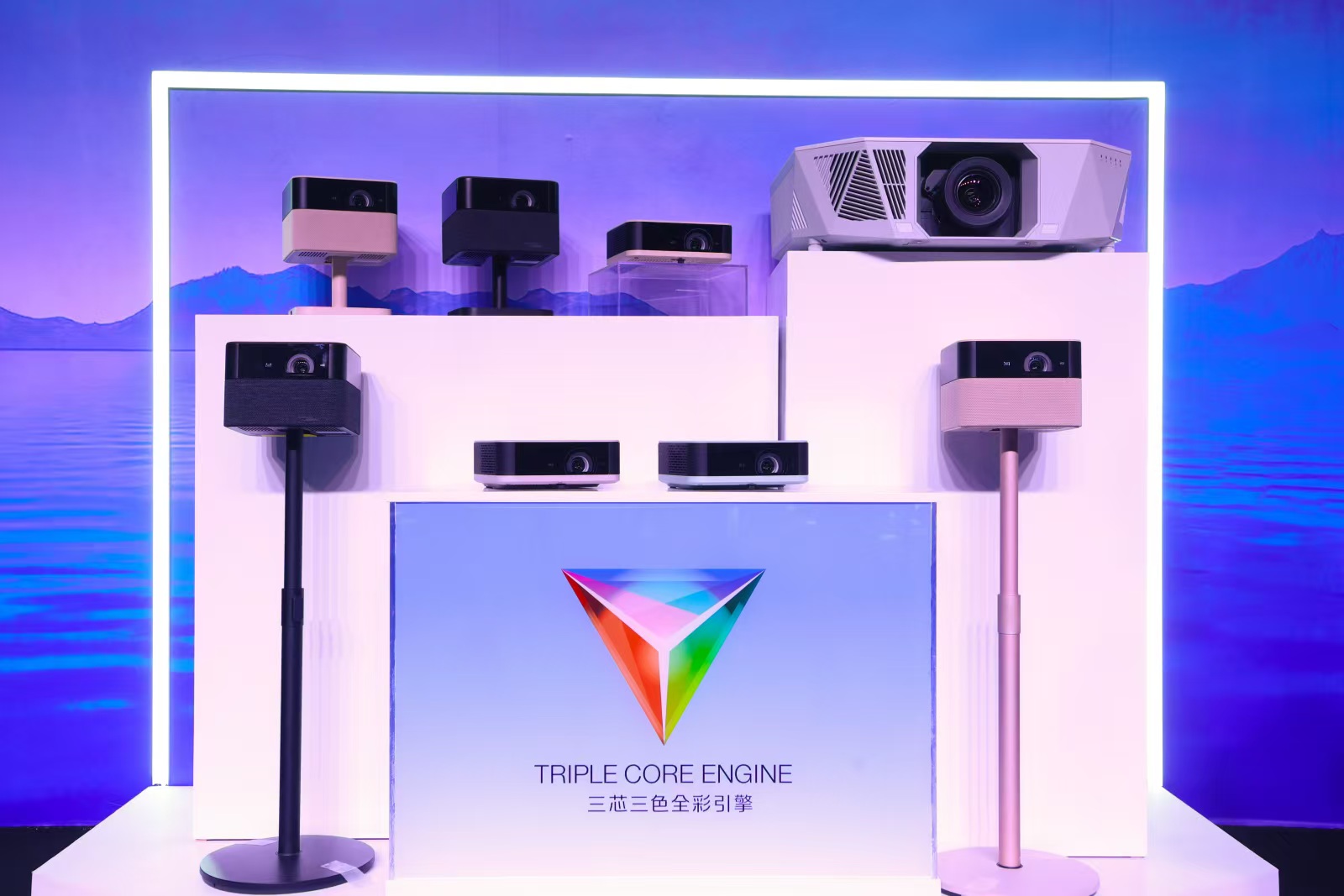
光影科技治愈“数字疲劳” 爱普生“三芯三色全彩引擎”开启家用投影新时代
Di Yi Cai Jing· 2025-10-27 07:11
Core Viewpoint - Epson's recent launch of the EF-52 and EF-50 series 4K smart projectors represents a significant shift in the home projector market, emphasizing a natural and immersive audiovisual experience through innovative technology [1][3]. Product Innovation - The introduction of the "three-chip three-color full-color engine" addresses the long-standing industry challenge of balancing brightness and color performance in projectors [4][6]. - This new technology utilizes a "three-chip + three-color light source" architecture, enhancing light energy utilization and maintaining excellent brightness even in high color gamut modes [6]. Market Strategy - Epson aims to upgrade its home market strategy by integrating advanced cinema technology into consumer products, responding to the growing demand for authentic sensory experiences [3][4]. - The company is shifting its role in China from merely introducing global technology to co-creating innovative products with local partners, marking a strategic repositioning in the market [11][13]. Ecosystem Collaboration - Epson has partnered with Bose to create the EF-52 series, the world's first smart projector featuring Sound by Bose, enhancing the auditory experience for users [7]. - The collaboration with Tencent aims to deepen smart interaction capabilities, introducing features like voice interaction and customized modes for different user demographics [9]. Industry Leadership - Epson is committed to addressing the issue of "parameter inflation" in the projector industry by advocating for a new industry standard focused on "color brightness" rather than traditional "white brightness" [13]. - The company emphasizes its role as a leader in the industry, promoting healthy competition based on real user experiences [13][14].
港股午评:恒指涨1%,科技股、金融股普涨,药明康德绩后涨6%,百度涨5.6%,阿里巴巴涨3%,京东、腾讯涨超2%
Ge Long Hui· 2025-10-27 05:11
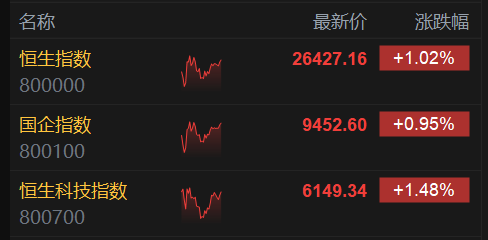
Group 1 - The core viewpoint of the news is that the Hong Kong stock market experienced a positive opening and continued to rise due to the preliminary consensus formed in Sino-U.S. economic and trade relations [1] - The Hang Seng Index rose by 1.02% to 26,427 points, the Hang Seng China Enterprises Index increased by 0.95% to 9,452 points, and the Hang Seng Tech Index climbed by 1.48% to 6,149 points, indicating a sustained recovery in market sentiment [2] - Major technology stocks, which serve as market indicators, collectively rose, with Baidu increasing by 5.6%, Alibaba rising over 3%, and JD.com and Tencent both gaining over 2% [2] Group 2 - Pharmaceutical outsourcing stocks showed strength, with WuXi AppTec (603259) leading the gains, rising approximately 6% and reporting a 53.27% year-on-year increase in Q3 net profit [2] - Cement stocks surged, with Huaxin Cement (600801) experiencing a nearly 12% increase post-earnings, while western cement stocks rose by 5.8% [2] - New consumption concept stocks declined, particularly in the sports goods, telecommunications, and restaurant sectors, with over 20 stocks experiencing declines of more than 8% [2]