
华为

Search documents
国补后性价比高的笔记本有哪些?华为PC稳价不涨更享多重优惠
Xin Lang Cai Jing· 2026-01-23 12:57
Core Viewpoint - The PC market at the beginning of 2026 is experiencing a "price increase wave," with mainstream laptop prices rising by 12%-16% due to tight supply of key components like storage chips and memory, leading many consumers to postpone their upgrade plans. However, a new round of government subsidies totaling 62.5 billion yuan is set to alleviate some of this pressure, particularly for energy-efficient computers [1][25][26]. Group 1: Market Dynamics - The price increase in the PC market is attributed to global supply chain issues affecting key components, resulting in a general price rise of 12%-16% for mainstream laptops [1][25]. - The government is introducing a subsidy program that offers a 15% rebate on the price of energy-efficient computers, with a maximum subsidy of 1,500 yuan per unit, which aims to counteract the price increases [26]. Group 2: Consumer Opportunities - Huawei is offering significant discounts and promotions on its laptops, including the MateBook series, which are designed to offset the price increases and provide consumers with attractive purchasing options [1][26]. - The Huawei MateBook 14, for example, has a final price reduction of 1,010 yuan compared to last year's Double 11 sales, making it a compelling option for consumers looking to take advantage of the current market conditions [26]. Group 3: Product Features and Benefits - The Huawei MateBook 14 is highlighted for its stylish design, balanced configuration, and advanced AI capabilities, making it a strong contender in its price range [2][29]. - The MateBook D 14 is positioned as a high-value entry-level option, featuring a lightweight metal body and eye-care display, suitable for students and entry-level professionals [8][32]. - The MateBook GT 14 is designed for high-performance users, featuring a powerful Intel Core Ultra processor and advanced cooling technology, catering to professionals in design, engineering, and gaming [19][45]. Group 4: Promotional Offers - Huawei's New Year promotions run until January 25, 2026, offering discounts on various models, including up to 400 yuan off the MateBook 14 and 200 yuan off the MateBook D 14, along with additional government subsidies [8][43]. - The MateBook Fold offers a unique three-in-one design, combining a laptop, tablet, and notebook, with significant promotional offers including a 1,400 yuan trade-in subsidy [24][47].

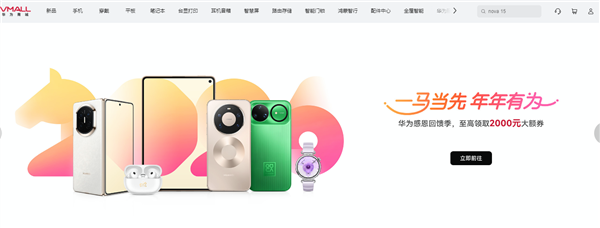
华为感恩回馈季开启:Mate 70、Pura80等系列降价 优惠最高达2000元
Xin Lang Cai Jing· 2026-01-23 12:57
Group 1 - Huawei has launched a promotional event called "Gratitude Season," offering significant discounts on its products, with the Mate 70 series seeing reductions of up to 1800 yuan [1][7] - The Pura80 series has discounts reaching 2000 yuan, with the Pura80 Ultra at 2000 yuan off, and both the Pura80 Pro+ and Pro versions at 1500 yuan off [1][7] - Multiple models, including the Mate 70 Pro+ and Mate 70 Pro, are discounted by 1800 yuan, and customers can also benefit from a 12-month interest-free installment plan, lowering the purchase barrier [1][7] Group 2 - Users can receive various high-value exclusive coupons for specific products, such as a 2000 yuan discount on the Vision 5 smart screen [3][9] - Discounts on laptops like the MateBook GT 14 and MateBook 14 range from 400 to 500 yuan [3][9] - Wearable audio products like the WATCH 5 and FreeClip headphones have discounts between 300 and 500 yuan, while MatePad tablets offer exclusive coupons ranging from 110 to 235 yuan [3][9]
行业老兵张兴海的十年高端路:与用户共创与伙伴跨界共强
Xin Lang Cai Jing· 2026-01-23 12:51
Core Insights - The milestone of producing the 1 millionth vehicle, the AITO Wenjie M9, signifies a successful cross-industry integration strategy by Seres Group, emphasizing high-end electric vehicles and collaboration with Huawei [1][7] - The average selling price of the vehicles exceeds 350,000 yuan, positioning Seres as one of the few profitable companies in the Chinese new energy vehicle sector [1][9] Group 1: Strategic Vision - Zhang Xinghai, the chairman of Seres, attributes the company's rapid growth to national industrial policies and identifies "high-end" and "cross-industry integration" as key components of their strategy [1][7] - The first five years focused on electric vehicle development, while the subsequent five years initiated a deep collaboration with Huawei, leveraging each other's strengths without forming a joint venture [2][9] Group 2: Market Performance - The company achieved the production of 1 million vehicles in just 46 months, with a significant average price point, demonstrating the effectiveness of their strategic approach [2][9] - The partnership with Huawei is characterized by a comprehensive integration of product definition, technology development, and brand marketing, moving beyond traditional supply chain cooperation [9] Group 3: User-Centric Approach - The core philosophy of the company revolves around delivering user value, with a commitment to continuous improvement based on user feedback [4][11] - Over the past two years, thousands of user suggestions have been collected and implemented, leading to high user satisfaction and a recommendation rate exceeding 40% [5][11] Group 4: Future Aspirations - The company aims to leverage AI to evolve vehicles into "emotional, smarter, safer, and more trustworthy mobile intelligent entities," indicating a shift towards emotional connection and intelligent coexistence [12] - Looking ahead, Seres plans to expand its global market presence, aspiring to position the Wenjie brand as a representative of Chinese high-end intelligent electric vehicles on the world stage [6][13]

通信行业2026年度投资策略:聚焦AI:算力降本向光而行,应用落地网络先行
Guolian Minsheng Securities· 2026-01-23 12:20
Group 1 - The core viewpoint of the report emphasizes that the demand for AI computing power will continue to grow and diversify in 2026, extending from data centers to network edges and even internal terminals [8][13][27] - The report highlights the significant capital expenditure (Capex) growth driven by business revenue, with major cloud service providers like Google, Microsoft, and Amazon showing consistent revenue growth exceeding 20% year-on-year [27][31][35] - The report identifies the increasing importance of silicon photonics technology, particularly the 1.6T optical module, which is expected to maintain accelerated growth and enhance the global market share of domestic optical chips and devices [7][54][70] Group 2 - The report discusses the emergence of new technologies such as Scale-UP supernodes and their impact on optical link demand, indicating that these technologies will drive additional link requirements in 2026 [7][9][66] - It notes that the AI infrastructure is experiencing a high level of prosperity, with significant investments in data centers and AI capabilities expected to continue, particularly in the U.S. [47][49][53] - The report anticipates that the integration of silicon photonics will significantly increase its market penetration, projecting that by 2026, over half of optical module sales will come from silicon photonics solutions [70][75]


市场洞察:苹果全线产品焕新,供应链是否被重塑、端侧AI进展如何?
Tou Bao Yan Jiu Yuan· 2026-01-23 12:18
Product Launch Highlights - The iPhone 17 series includes four models: iPhone 17, iPhone 17 Air, iPhone 17 Pro, and iPhone 17 Pro Max, covering a price range from 6000 to over 10,000 yuan[2] - iPhone 17 targets the mass market with a focus on cost-effectiveness, while iPhone 17 Air emphasizes its ultra-thin design at 5.6mm[2] - The Pro models focus on imaging and computational power upgrades, catering to professional creators and high-end consumers[2] Apple Watch Series Update - Apple launched three new models: Apple Watch SE3, Series 11, and Ultra 3, enhancing health management and fitness tracking capabilities[4] - SE3 is positioned as an entry-level model, Series 11 targets mainstream health management, and Ultra 3 is aimed at high-end outdoor and extreme sports users[4] AirPods Pro 3 Enhancements - The new AirPods Pro 3 features a 67% improvement in noise cancellation and adds heart rate monitoring and hearing detection capabilities[6] Supply Chain Diversification - Apple is shifting towards a global distributed manufacturing model, with the iPhone 17 series being produced in India for the first time, marking a significant change in its supply chain strategy[9] - In Q2 2025, 44% of smartphones assembled in India were for the U.S. market, up from 13% year-on-year, with nearly 80% of U.S. iPhones produced in India[11] Manufacturing Cost and Infrastructure - Manufacturing costs in India are 5%-10% higher than in China, and challenges remain in infrastructure and supply chain stability[11] - China is transitioning to a high-value manufacturing hub, focusing on core components while India handles mid-range assembly[14] AI Functionality and Competitive Landscape - Apple introduced the Apple Intelligence system, integrating AI features across multiple devices, but the rollout is cautious and limited to specific models and regions[20] - Compared to competitors like Samsung and Huawei, Apple lags in the breadth of AI applications and ecosystem integration, which may impact user engagement[26] Supply Chain Impact from AI - The push for AI functionality necessitates upgrades in chip performance, storage, and sensor quality, creating new opportunities for suppliers[28] - Suppliers must meet higher technical standards to secure contracts, emphasizing the importance of privacy and data security in component design[28]

新政下的港客们:享受以旧换新、离境退税双重红利
2 1 Shi Ji Jing Ji Bao Dao· 2026-01-23 12:01
21世纪经济报道记者李金萍 深圳报道 2026年以旧换新政策在深圳正式落地实施,叠加元旦假期效应,迅速带动当地消费市场升温。 "我本来想在线上购买一台笔记本,但名额不好抢,最后还是线下购买了。"深圳居民陈琦向21世纪经济报道记者表示。 除了深圳本地居民之外,港客们也是深圳以旧换新政策的获益者。记者走访了解到,在此轮消费热潮中,他们可同时享受以旧换新与离境退税双重政策优 惠,从而以更优惠的价格选购商品。 受政策推动,港客在深圳的消费清单正持续扩展,消费场景从餐饮娱乐延伸至实体购物,所购商品涵盖手机、电脑、无人机等数码产品,还包括小家电、智 能穿戴设备,乃至奢侈箱包与本土高端服饰等多项品类。 事实上,这种由政策带动的港客消费模式结构性转变,早在2025年便已初现端倪。 政策红利带动港人消费热 福田星河COCO Park紧邻福田口岸,该口岸日均通关人流量17.64万人次,常年位居深港陆路口岸第二位。据商场统计,港客约占商场总客流的20%,在复活 节等香港公共假期期间,港客客流会出现小幅攀升。作为福田区首个离境退税"即买即退"试点集中退付点,该商场的港客消费数量与退税政策关联紧密。 该商场相关负责人向记者透露,在无退 ...
赛意信息:公司是华为首批“盘古大模型”合作伙伴
Zheng Quan Ri Bao Wang· 2026-01-23 11:41
Group 1 - The company, Saiyi Information (300687), has established a deep cooperative relationship with Huawei, becoming one of the first partners for Huawei's "Pangu Model" [1] - The collaboration focuses on exploring the application of the Pangu Model in various scenarios, including quality inspection, production scheduling, and supply chain optimization within the manufacturing industry [1]
汽车产量“十强省”大变局:究竟谁是第一汽车大省?
Di Yi Cai Jing· 2026-01-23 11:26
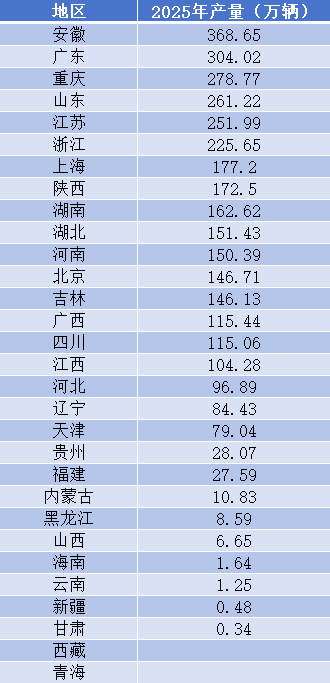
Core Insights - The automotive industry in China is undergoing a significant transformation, with a notable shift in regional production rankings expected by 2025, as new players rise and traditional powerhouses decline [1][7] Group 1: Production Rankings - In 2025, the top ten provinces for automotive production are expected to be Anhui, Guangdong, Chongqing, Shandong, Jiangsu, Zhejiang, Shanghai, Shaanxi, Hunan, and Hubei, with production figures of 3.6865 million, 3.0402 million, 2.7877 million, 2.6122 million, 2.5199 million, 2.2565 million, 1.772 million, 1.725 million, 1.6262 million, and 1.5143 million respectively [2][3] - Anhui has surpassed Guangdong to become the leading province in automotive production for the first time, marking a historic shift in the industry [4][5] Group 2: Factors Influencing Change - The change in rankings is attributed to three main factors: changes in statistical rules, accumulated industrial advantages in Anhui, and export growth [4][5] - The adjustment in statistical methods from "corporate registration location" to "production location" has significantly impacted the reported production figures, with major manufacturers like BYD and NIO contributing to Anhui's rise [4][5] Group 3: New Energy Vehicles - Anhui's rapid growth in automotive production is largely driven by a surge in new energy vehicle (NEV) production, with 1.794 million NEVs produced in 2025, accounting for 48.7% of its total output, significantly higher than Guangdong's 32% [5][6] - The province has also become the first to export over one million vehicles, with a total of 1.228 million vehicles exported in 2025, representing 18% of the national total and a 28.7% increase [5][6] Group 4: Competitive Landscape - Despite Anhui's rise, Guangdong still maintains a significant lead in terms of production value, with its automotive output value nearly double that of Anhui, and a higher average vehicle price [6] - The competitive landscape is characterized by a divergence in strengths, with Guangdong excelling in high-end elements and global branding, while Anhui focuses on manufacturing efficiency and supply chain integration [6][7] Group 5: Emerging Forces - The traditional automotive powerhouses are facing challenges from emerging provinces like Shandong, Jiangsu, and Zhejiang, which have all surpassed the two million vehicle mark for the first time [7][8] - The shift in rankings reflects a broader trend of new forces challenging established players, with provinces like Hunan and Henan also making significant gains in production [8][9] Group 6: Future Trends - The future of the automotive industry in China is expected to trend towards a more diversified and specialized production landscape, with production gaps among the top provinces narrowing [9] - Factors such as export capabilities and the ability to convert production volume into revenue will become increasingly critical in determining future success in the industry [9]
雷鸟、Rokid、阿里集体出击:中国AI眼镜天团决战放量前夜
3 6 Ke· 2026-01-23 11:12
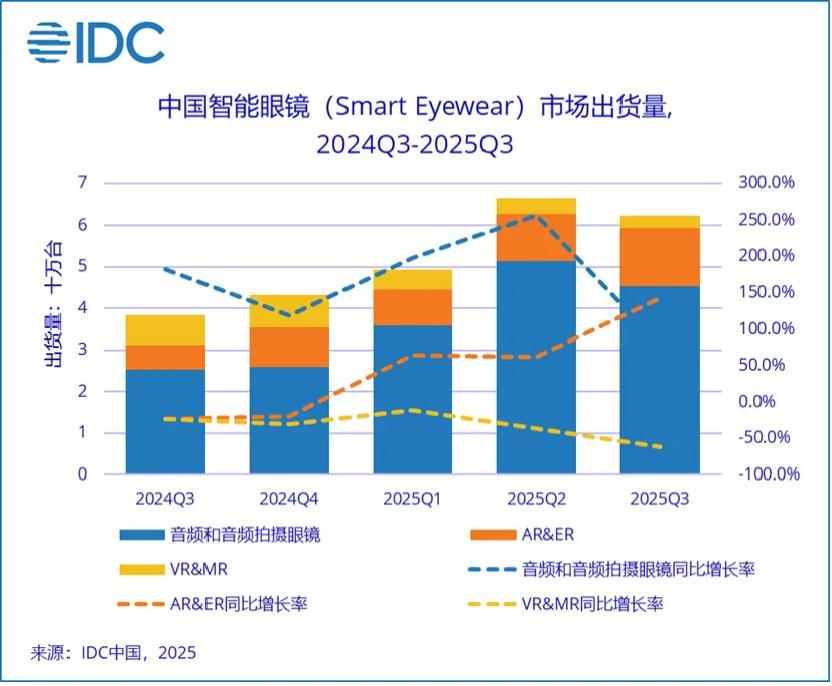
Core Insights - The AI glasses market is experiencing a significant transformation, similar to the early days of smartphones, with various Chinese manufacturers aiming to make AI glasses mainstream through diverse pricing and branding strategies [2][4][15]. Market Trends - According to IDC, global shipments of smart glasses are projected to reach 4.065 million units in the first half of 2025, marking a year-on-year growth of 64.2%, with China expected to surpass 1 million units, capturing 26.6% of the global market share [2][19]. - The AR smart glasses market is also growing, with China holding a 57.3% market share in the first half of 2025 [7]. Competitive Landscape - Meta currently dominates the smart glasses market with a 75.7% share, but Chinese companies like Xiaomi, RayBird, Xreal, and Viture are emerging as key players [5][19]. - The CES showcased numerous AI glasses from Chinese manufacturers, highlighting their technological advancements and market ambitions [9][12]. Technological Innovations - New AI glasses are focusing on lightweight designs and multi-modal AI interactions, with products like Rokid Style weighing only 38.5 grams and offering advanced features [9][10]. - Companies are developing products that integrate AR displays with AI assistants, aiming for a seamless user experience [14][15]. Industry Dynamics - The AI glasses sector is becoming a strategic battleground for various tech companies, with significant investments being made to capture market share [15][28]. - The supply chain for smart glasses is heavily concentrated in China, which produces about 80% of the necessary components, making it a critical hub for the industry [19][29]. Future Projections - The global smart glasses market is expected to see a compound annual growth rate (CAGR) of 55.6% in China, with projections of over 40 million units shipped by 2029 [31]. - By 2030, the AI glasses market could potentially reach 80 million units, representing a significant opportunity within the $150 billion traditional eyewear market [32][33].

科马材料打造国产摩擦材料核心竞争力
Zheng Quan Ri Bao Wang· 2026-01-23 10:48
Core Viewpoint - Zhejiang Kema Material Co., Ltd. has officially listed on the Beijing Stock Exchange, leveraging its leading T2 core technology and strong performance in the automotive parts sector, positioning itself as a high-quality investment target in the capital market [1] Group 1: Technology and Production - The T2 dry extrusion process is a key competitive advantage for Kema Materials, showcasing significant technological leadership globally [1] - The T2 process offers comprehensive breakthroughs in environmental protection, production efficiency, and product performance compared to the traditional T1 wet process, including reduced organic solvent usage and lower natural gas consumption [1] - Kema Materials is the first company in China to achieve large-scale industrial application of the T2 production process, establishing a strong industry barrier through its technical scarcity [1] Group 2: Market Demand and Growth - The market demand for dry friction plates is optimizing under the automotive industry upgrade, providing Kema Materials with substantial growth opportunities [2] - In the commercial vehicle sector, manual transmission vehicles dominate the domestic market, while AMT automatic transmissions are widely used in Europe and the U.S., supporting stable global demand for dry friction plates [2] - The rapid rise of new energy hybrid vehicles in the passenger car sector has become a new growth engine, with the proportion of vehicles requiring dry friction plates in the domestic market reaching 27.94% by 2024 [2] Group 3: Strategic Initiatives and Funding - Kema Materials is proactively entering the wet paper-based friction plate market to seize domestic opportunities, with a focus on increasing the localization rate [3] - The company plans to invest 73.32% of the 206 million yuan raised from its IPO into upgrading the T2 dry extrusion process, which will add an annual production capacity of 10 million plates [3] - Kema Materials holds 80 authorized patents and has participated in drafting 13 national and industry standards, establishing a closed-loop innovation mechanism through collaboration with academic institutions [3]