李宁

Search documents
综训鞋服市场再起混战,谁能从健身新格局中受益
3 6 Ke· 2025-08-04 01:41
Core Insights - The domestic fitness industry in 2025 shows positive signs of growth, with companies like LeKe proposing new strategies and expanding their store count to over 2000 [1] - The rise of comprehensive training methods is transforming the fitness landscape, moving from niche to mainstream, as evidenced by the growth of events like HYROX [1][2] - A significant shift in the exercise mindset among younger generations is driving this growth, with Gen Z showing a preference for competitive training and quantifiable performance [2] Group 1: Industry Trends - Comprehensive training is becoming a bridge between professional sports and everyday fitness, with brands like lululemon and alo blurring the lines between workout and casual wear [7] - Market segmentation is accelerating, with major brands targeting hardcore players through event IPs, while smaller brands focus on specific communities [7] - Brand competition is evolving beyond products to encompass the entire experience, including equipment, content, and community engagement [8] Group 2: Company Strategies - Adidas is actively engaging in the fitness market by partnering with major events and signing prominent athletes to establish authority in the professional domain [4] - Puma is focusing on the emerging HYROX event, planning to expand its presence in China and solidifying its position in the comprehensive training sector [4] - Nike maintains a subtle yet effective strategy, with its Mecton series products gaining traction in comprehensive training venues [4] Group 3: Market Dynamics - Li Ning reported that running, basketball, and comprehensive training contributed to 64% of its revenue, highlighting the importance of these categories [5] - Smaller brands are finding niches in the market, with collaborations and targeted products catering to specific audiences, indicating a diversification in the comprehensive training market [5] - The competitive landscape is characterized by a mix of established brands and emerging players, each vying for a share of the growing comprehensive training market [9]

智通港股沽空统计|8月4日
智通财经网· 2025-08-04 00:24
Summary of Key Points Core Viewpoint - The report highlights the top short-selling stocks in the market, indicating significant investor sentiment and potential volatility in these companies' stock prices [1][2][3]. Group 1: Top Short-Selling Ratios - The top three companies with the highest short-selling ratios are New World Development Co. Ltd. (80016), Anta Sports Products Limited (82020), and Li Ning Company Limited (82331), all at 100.00% [1][2]. - Other notable companies with high short-selling ratios include JD Health International Inc. (86618) at 99.99% and SenseTime Group Inc. (80020) at 98.17% [2][3]. Group 2: Top Short-Selling Amounts - Tencent Holdings Limited (00700) leads in short-selling amount with 1.948 billion, followed by Meituan (03690) at 1.889 billion and Xiaomi Corporation (01810) at 1.000 billion [3]. - Other significant short-selling amounts include China Ping An Insurance (02318) at 0.929 billion and China Construction Bank (00939) at 0.755 billion [3]. Group 3: Short-Selling Deviation Values - New World Development Co. Ltd. (80016) has the highest deviation value at 49.16%, indicating a significant difference from its average short-selling ratio over the past 30 days [1][3]. - SenseTime Group Inc. (80020) and JD Health International Inc. (86618) follow with deviation values of 44.28% and 39.76%, respectively [2][3].




可选消费W31周度趋势解析:欧美公司进入业绩密集披露期,特朗普政府关税不明确引发市场动荡-20250803
Haitong Securities International· 2025-08-03 14:35
Investment Rating - The report assigns an "Outperform" rating to multiple companies including Nike, Midea Group, JD Group, Gree Electric, Anta Sports, Haier Smart Home, and others, while Lulu Lemon is rated as "Neutral" [1]. Core Insights - The report highlights that the earnings season in Europe and America is causing market volatility, exacerbated by uncertainties surrounding tariffs from the Trump administration [4][6]. - The performance of various sectors shows that gambling, overseas cosmetics, and pet products are outperforming the MSCI China index, while sectors like luxury goods and overseas sportswear are experiencing significant declines [4][12]. Sector Performance Overview - Weekly performance: Gambling > Overseas Cosmetics > Pets > Gold and Jewelry > Snacks > Domestic Cosmetics > Domestic Sportswear > Credit Cards > US Hotels > Daily Necessities > Luxury Goods > Overseas Sportswear, with respective weekly changes of 0.6%, -0.6%, -1.6%, -2.2%, -2.2%, -2.5%, -2.7%, -4.5%, -5.5%, -6.6%, -7.6%, and -9.0% [5][15]. - Monthly performance: Gambling > Domestic Sportswear > Domestic Cosmetics > Credit Cards > Luxury Goods > Overseas Cosmetics > US Hotels > Snacks > Daily Necessities > Gold and Jewelry > Overseas Sportswear > Pets, with respective monthly changes of 4.3%, -0.3%, -3.1%, -4.2%, -4.5%, -5.1%, -5.7%, -8.1%, -8.4%, -11.7%, -12.4%, and -14.4% [12][15]. - Year-to-date performance: Gold and Jewelry > Domestic Cosmetics > Overseas Cosmetics > Pets > Snacks > Daily Necessities > Credit Cards > Gambling > Domestic Sportswear > US Hotels > Overseas Sportswear > Luxury Goods, with respective year-to-date changes of 142.3%, 49.4%, 35.6%, 34.8%, 20.9%, 20.7%, 7.4%, 3.3%, 2.4%, -1.5%, -11.0%, and -13.7% [12][15]. Valuation Analysis - The report indicates that most sectors are still undervalued compared to their average valuations over the past five years, with expected PE ratios for 2025 as follows: - Overseas Sportswear: 31.7x (51% of 5-year average) - Domestic Sportswear: 12.8x (74% of 5-year average) - Gold and Jewelry: 24.7x (43% of 5-year average) - Luxury Goods: 23.3x (41% of 5-year average) - Gambling: 17.4x (26% of 5-year average) - Overseas Cosmetics: 39.7x (62% of 5-year average) - Domestic Cosmetics: 30.9x (58% of 5-year average) - Pets: 41.7x (45% of 5-year average) - Snacks: 22.4x (37% of 5-year average) - Daily Necessities: 23.3x (71% of 5-year average) - US Hotels: 28.9x (18% of 5-year average) - Credit Cards: 29.7x (59% of 5-year average) [10][19].
纺织服装行业周报:无纺类清洁用品高成长赛道,重申推荐诺邦股份-20250803
Shenwan Hongyuan Securities· 2025-08-03 12:43
Investment Rating - The report maintains a "Buy" recommendation for Nobon Co., Ltd. in the non-woven cleaning products sector, highlighting its high growth potential [1]. Core Views - The textile and apparel sector has shown weaker performance compared to the market, with the SW textile and apparel index declining by 2.1% from July 28 to August 1, underperforming the SW All A index by 1.1 percentage points [4]. - The report emphasizes that domestic demand recovery is a crucial factor for investment in 2025, with quality domestic brands expected to reverse their current challenges [9][11]. Industry Data Summary - Retail sales for clothing, shoes, and textiles in China reached 742.6 billion yuan in the first half of 2025, reflecting a year-on-year growth of 3.1% [25]. - In terms of exports, China exported textiles and apparel worth 143.98 billion USD in the first half of 2025, a slight increase of 0.8% year-on-year, with textile yarns and fabrics contributing 70.52 billion USD, up 1.8%, while apparel exports decreased by 0.2% to 73.46 billion USD [30]. - Cotton prices have seen a decline, with the national cotton price B index reported at 15,221 yuan per ton, down 1.5% as of August 1, 2025 [36]. Company-Specific Insights - Nobon Co., Ltd. is positioned well in the non-woven cleaning products market, benefiting from partnerships with major clients like Sam's Club and Yonghui, which are expected to drive performance beyond expectations [9]. - Adidas reported a 2.2% year-on-year revenue increase to 5.95 billion euros in Q2 2025, with a notable 12% growth in the Adidas brand revenue when excluding currency effects and the Yeezy series [11]. - The report suggests that the textile manufacturing sector may see a recovery in expectations due to the ongoing U.S.-China trade negotiations and the potential for tariff adjustments [10].

纺织服饰周专题:伯希和招股书拆解
GOLDEN SUN SECURITIES· 2025-08-03 10:36
Investment Rating - The report maintains a "Buy" rating for key companies in the textile and apparel sector, including Anta Sports, Xtep International, and Li Ning, among others [12]. Core Insights - The report highlights the rapid expansion of the high-performance outdoor apparel market in China, with a projected market size growth from 53.9 billion yuan in 2019 to 102.7 billion yuan in 2024, representing a CAGR of 13.8% [22][25]. - The company Pelliot, established in 2012, has shown significant revenue growth, achieving 1.77 billion yuan in 2024, a 94% increase year-on-year, with a net profit of 280 million yuan, reflecting an 86% increase [1][17]. - The competitive landscape of the high-performance outdoor apparel market is relatively fragmented, with the top 10 brands holding a combined market share of 27.2% in 2024, and Pelliot being the fastest-growing brand with a retail CAGR of 127.4% from 2022 to 2024 [2][29]. Summary by Sections Company Overview - Pelliot focuses on high-performance outdoor apparel and equipment, offering a wide range of products suitable for various outdoor activities and urban commuting [1][17]. - The brand's revenue from the Pelliot brand accounted for 98% of total revenue in 2024, with the Excelsior brand contributing 33 million yuan [1][17]. Industry Overview - The high-performance outdoor apparel market in mainland China is expected to grow from 539 billion yuan in 2019 to 1,027 billion yuan in 2024, with a forecasted CAGR of 16% from 2024 to 2029 [2][22]. - The apparel segment is the largest within the high-performance outdoor apparel market, projected to reach 712 billion yuan in 2024, accounting for 69% of the total market [25]. Operational Highlights - Pelliot employs a Direct-to-Consumer (DTC) sales model, focusing on enhancing product quality and brand image through targeted marketing strategies [3][4]. - The company has invested significantly in R&D, with expenditures increasing from 13.6 million yuan in 2022 to 31.5 million yuan in 2024, representing a commitment to product innovation [3][30]. Financial Data Analysis - Pelliot's revenue and profit have shown rapid growth, with a projected revenue of 1.77 billion yuan and a net profit of 280 million yuan in 2024, indicating strong financial performance [1][21]. - The report emphasizes the importance of maintaining a healthy inventory turnover ratio, with the overall inventory situation being stable across the sector [5]. Market Trends - The report notes a healthy growth trajectory for the outdoor apparel sector, driven by increasing consumer participation in outdoor activities and a rising demand for multifunctional high-performance apparel [27][28]. - The report recommends focusing on brands with strong fundamentals and growth potential, particularly in the sportswear segment, which is expected to outperform the broader apparel market [5].
周观点:“反内卷”投流税、育儿补贴政策相关投资机会-20250803
Huafu Securities· 2025-08-03 05:55
Investment Rating - The report maintains an "Outperform" rating for the industry [8] Core Insights - The introduction of the "flow tax" is expected to improve the competitive landscape and profitability of sectors such as clean appliances, pet food, and kitchen small appliances [12][14] - The newly announced childcare subsidy policy will provide 3,600 yuan per year for each newborn until the age of three, which is anticipated to lower family birth costs and stimulate demand in the maternal and infant sectors [15][18] - The report highlights that the domestic demand is expected to recover due to policy support, with specific recommendations for major appliance companies benefiting from trade-in programs [19] Summary by Sections Investment Opportunities - The "flow tax" regulation limits tax deductions for advertising expenses to 15% of annual revenue, which may lead to a more sustainable competitive environment in e-commerce [12][14] - The childcare subsidy program is projected to create a market of approximately 100 billion yuan annually, benefiting maternal and infant products [15][18] Weekly Market Insights - The home appliance sector experienced a decline of 2.3% this week, with specific segments like white goods and kitchen appliances seeing drops of 2.6% and 3.2% respectively [24] - The textile and apparel sector also faced a decline of 2.14%, with cotton prices showing a decrease of 1.86% [26] Investment Recommendations - Major appliance companies such as Midea Group, Haier Smart Home, and Gree Electric are recommended due to expected benefits from trade-in policies [19] - The pet industry is highlighted as a resilient sector, with companies like Guibao Pet and Zhongchong Co. suggested for investment [19] - Small appliances and branded apparel are expected to see a recovery in demand, with recommendations for leading brands like Supor and Anta Sports [19] Global Expansion Themes - The report emphasizes the long-term theme of overseas expansion, recommending leading clean appliance brands like Roborock and Ecovacs for their global market potential [20] - The report also notes that Chinese manufacturers maintain a competitive edge in global markets, particularly in major appliances and tools [20]
李宁还能回到过去吗?
Guan Cha Zhe Wang· 2025-08-02 02:39
Core Insights - The local sports giants are at a critical juncture, with Li Ning showing signs of decline while Anta and Xtep demonstrate resilience and growth through strategic brand management and focus on specific market segments [1][4][6]. Group 1: Company Performance - Li Ning's retail revenue growth is projected to be low single digits by Q2 2025, with offline channels experiencing negative growth [1]. - Li Ning's net profit has declined for two consecutive years, with its market capitalization dropping from over HKD 260 billion in 2021 to around HKD 40 billion currently [1]. - In contrast, Anta's multi-brand strategy has led to significant growth, particularly in high-end brands like Descente and Kolon, which have seen growth rates of 50-55% [1][4]. Group 2: Strategic Moves - Li Ning's strategy of "single brand, multiple categories" is becoming ineffective, as it struggles to replicate the success of Anta's Amer Sports and Xtep's Saucony [4][6]. - The Swedish outdoor brand Haglöfs is entering the Chinese market, which may impact Li Ning's positioning in the outdoor segment [6][7]. - Li Ning is attempting to pivot towards the outdoor market by launching professional and lightweight outdoor product lines, although these currently contribute minimally to total revenue [37][40]. Group 3: Investment and Ownership Structure - LionRock Capital, which recently acquired Haglöfs, has a close relationship with Li Ning, as Li Ning's founder is a non-executive chairman of LionRock [15][11]. - Viva China, now known as Viva Goods, has shifted its focus towards multi-brand operations and has been involved in several acquisitions, including Clarks and Haglöfs [18][19]. - The operational model of Viva Goods under Li Ning's family structure aims to create a synergistic "capital + industry" ecosystem, although its effectiveness remains to be seen [18][19]. Group 4: Market Trends and Challenges - The rise of "Guochao" (national trend) significantly boosted Li Ning's market value until 2021, but the brand's appeal has since diminished as consumer preferences evolve [30][32]. - Li Ning's attempts to diversify with sub-brands like LI-NING 1990 have led to confusion among consumers, resulting in a lack of clear brand identity [32][35]. - The outdoor segment is seen as a growth area, but Li Ning's late entry and previous failures in managing international brands like Aigle and Danskin raise concerns about its future success in this market [37][48].

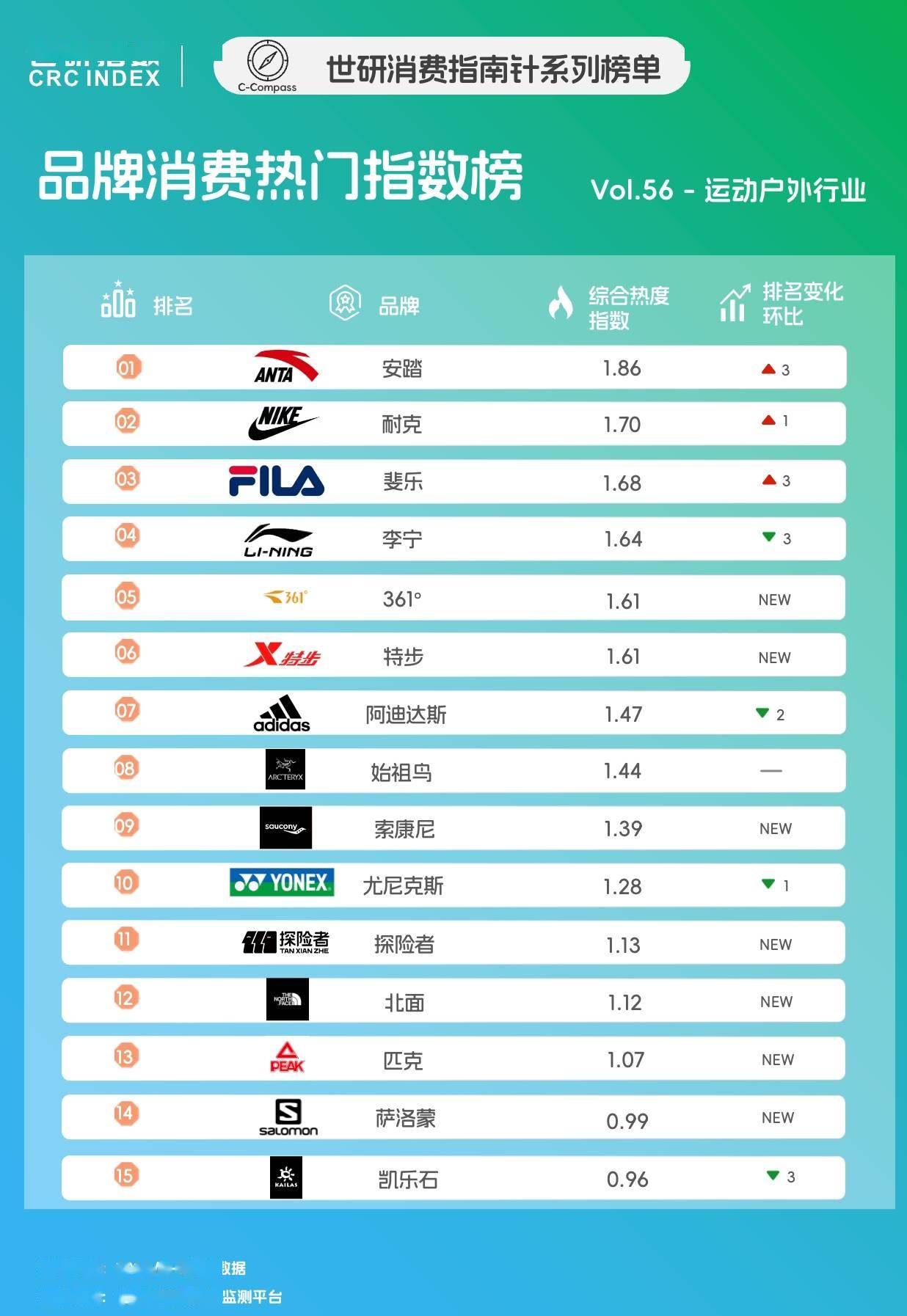
运动品牌营销细分,潮流基因强化圈层认同|世研消费指数品牌榜Vol.56
Sou Hu Cai Jing· 2025-08-01 11:51
Group 1: Domestic Sports Brands - Domestic sports brands such as Anta, Li Ning, 361°, and Xtep are utilizing a dual strategy of technological democratization and precise scene targeting to capture the segmented sports market [4] - Anta has introduced the Mach 5SE running shoes with advanced nitrogen technology and carbon tube anti-twist system at a price below 500 yuan, while Li Ning has implemented a full-sole heterogeneous carbon plate for professional scene configuration, breaking the monopoly of international brands on high-end technology [4] - Brands are addressing localized needs by dissecting sports scenarios; for instance, 361° developed a "wetland anti-slip" outsole for rainy regions, and Xtep's Hydrogen Wind 5.0 targets high-temperature training environments in southern China [4] Group 2: International Sports Brands - International brands like Nike, Adidas, Fila, Saucony, and Yonex are leveraging cutting-edge technology and precise marketing to establish a stronghold in the high-end market [5] - Nike has reinforced its dominance in the elite racing segment with the ZOOMX midsole in the Vaporfly Next% 3, while Saucony addresses marathon runners' core pain points with the Endorphin Pro4's carbon fiber structure [5] - Marketing strategies focus on deepening connections with specific consumer segments; for example, Nike's limited edition Kobe 8 "What The Kobe" has generated global collector interest, and Adidas has collaborated with Japanese street brand BAPE to create a new SUPERSTAR series [5]

始祖鸟平替们狂涨价,正在偷偷抛弃“穷鬼”
3 6 Ke· 2025-08-01 03:27
Core Viewpoint - Domestic outdoor brands are rapidly embracing the capital market, shifting from being affordable alternatives to high-end positioning, as evidenced by significant price increases and new product launches [1][10][11]. Group 1: Market Dynamics - In the first half of the year, domestic outdoor brand Berghaus submitted an IPO application, with Tencent investing 300 million yuan for a 10.7% stake, becoming the largest institutional shareholder [1]. - The outdoor equipment market in China has grown from 67.5 billion yuan in 2019 to 87.2 billion yuan in 2023, indicating a robust expansion [8]. - A significant portion of the younger demographic views outdoor activities as social currency, with 43.6% engaging in activities like camping and hiking for social interaction [9]. Group 2: Pricing Trends - Berghaus has seen a 38.59% increase in average product prices, reaching around 500 yuan, and is now launching mid-to-high-end products priced in the thousands [1][10]. - Consumer complaints about price hikes are prevalent, with some products increasing by nearly 1000 yuan within six months [2][4]. - The price of outdoor gear has reportedly risen nearly fivefold over three years, drawing comparisons to gold in terms of price stability [4]. Group 3: Brand Positioning and Strategy - Brands that were once seen as affordable alternatives are now distancing themselves from that image, focusing on high-end features and performance [1][6]. - Berghaus's revenue has surged from 379 million yuan to 1.766 billion yuan from 2022 to 2024, with a compound annual growth rate of 115.86% [12]. - The reliance on a single product category, such as jackets contributing over 80% of revenue, poses risks to brand stability [13]. Group 4: Financial Performance and Challenges - Berghaus's gross margin has increased from 54.3% in 2022 to 59.6% in 2024, reflecting a trend towards higher profitability [11]. - Despite the growth, the brand's high-end product lines are struggling to gain consumer acceptance, with many products frequently discounted [13]. - Marketing expenses for Berghaus have surged from 68.71 million yuan in 2022 to 359 million yuan in 2024, indicating a shift towards aggressive marketing strategies [14]. Group 5: Competitive Landscape - The pursuit of higher margins is evident in the strategies of leading companies, with brands like Anta achieving gross margins over 70% [10]. - Berghaus's patent portfolio is limited compared to competitors, with only 4 invention patents out of 45, highlighting a gap in technological innovation [13]. - The challenge for brands like Berghaus lies in balancing the need for premium pricing with the necessity of maintaining sales volume, as excessive reliance on marketing may undermine product value [16].

运动品牌该如何走出中年危机?
3 6 Ke· 2025-08-01 02:28
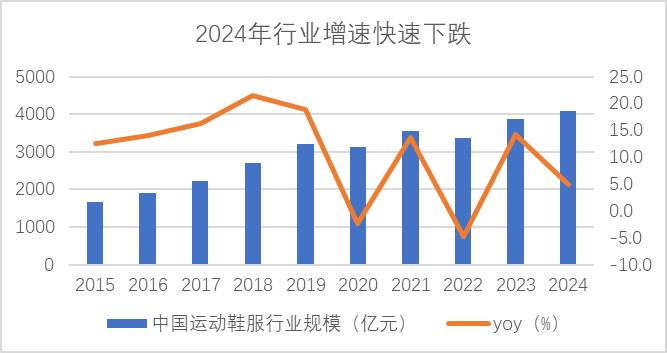
Core Insights - The Chinese sports brand industry is experiencing a collective slowdown, marking the end of the "national sports dividend" period, with market growth projected at only 5.9% in 2024, reaching 410 billion yuan [1][3] - Domestic brands have gained market share due to events like the Xinjiang cotton controversy, with Anta, Li Ning, and other brands collectively surpassing 50% market share, indicating a deepening of domestic replacement [1][3] - The concentration ratio (CR5) of domestic sports brands has reached 53%, making China the most concentrated market globally, leading to a shift where leading brands must transition from offensive to defensive strategies [1][3] Group 1: Industry Challenges - Major brands like Anta, Li Ning, and Xtep are facing a "mid-life crisis," with Anta and FILA experiencing six consecutive quarters of single-digit growth, and Li Ning reporting low single-digit growth for the first half of the year [3][4] - Increased discount rates and return rates have made consumers more price-sensitive, prompting Anta to lower its growth guidance to single digits and reassess its market share goals against Nike [3][4] - The industry is expected to face a turning point in 2024, with Euromonitor predicting a growth rate of only 5.8% over the next five years, indicating a decline in market share for leading brands [3][4] Group 2: Brand Positioning and Strategy - Despite being manufacturing powerhouses, domestic brands struggle with brand positioning and recognition, often relying on price competitiveness rather than brand strength [5][6] - The early success of brands like Anta and Li Ning was driven by domestic sports stars and events, but these strategies are no longer effective as market dynamics change [7][8] - The trend of acquiring overseas brands has been a successful strategy for companies like Anta, which acquired FILA and has since seen significant growth, but this approach may not be sustainable in the long term [10][12] Group 3: Consumer Trends and Market Dynamics - The rise of niche sports and changing consumer preferences present opportunities for domestic brands to strengthen their market position, as seen with successful products like Xtep's marathon shoes [13][14] - The shift towards direct-to-consumer (DTC) models is becoming essential for brands to connect with consumers more effectively and reduce reliance on traditional distribution channels [16][17] - The focus on "value for money" is becoming increasingly important, with brands needing to adapt to consumer demands for better pricing and quality, as evidenced by the success of companies like Uniqlo [21][22]