
华润置地

Search documents
南京狂揽480家首店:德基一骑绝尘,JLC、万象天地争第二
3 6 Ke· 2026-02-12 02:33
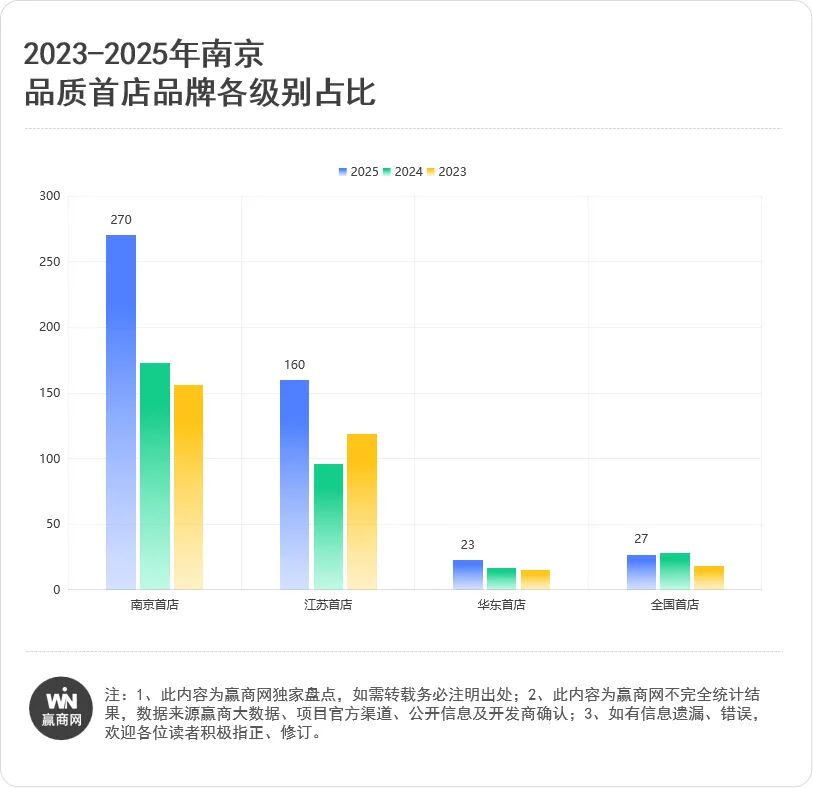
Core Insights - Nanjing has accelerated its "first store economy" in 2025, being selected for multiple national pilot projects and hosting over 1,700 consumer promotion events throughout the year, with the Xinjiekou business district maintaining its leading position in East China [1][3] - The city introduced a record 480 quality first stores, with significant growth in consumer experiences and international offerings, indicating a substantial uplift in urban consumption capabilities [1][3] Group 1: First Store Introduction - A total of 480 quality first stores were introduced in Nanjing, with 237 in dining and 199 in retail, accounting for over 90% of the total, reflecting a strong consumer demand for high-frequency and quality experiences [3][6] - The concentration of first stores in dining and retail indicates a solid local consumption base, supporting brands' entry and testing in the market [6][7] - Nanjing's Deji Plaza introduced 56 retail first stores, contributing nearly 30% of the city's retail first store resources, reinforcing its status as a key city for high-end retail brand launches [7][8] Group 2: Dining Sector Dynamics - The dining sector emerged as the most active area for first store competition in 2025, with JLC Nanjing introducing 28 dining first stores, leading in quantity [10][11] - The popularity of casual dining is evident, with 46 new beverage stores and 32 dessert stores introduced, showcasing a trend towards frequent product iteration and diverse consumer experiences [13][15] - Despite lower numbers, sectors like children's services and entertainment are increasingly valuable for enhancing consumer ecosystems and extending visit durations [15] Group 3: Commercial Ecosystem and Performance - Nanjing's first store economy not only increased in quantity but also in quality, with 27 national first stores and 23 East China first stores introduced, enriching the commercial ecosystem [16][19] - Deji Plaza achieved a sales figure of 26.24 billion yuan, a 7.1% increase year-on-year, maintaining its position as the top-performing shopping center in the country [21][23] - JLC Nanjing quickly became a cultural landmark, introducing 59 first stores, with over 40% of tenants being brands new to Nanjing, Jiangsu, or even nationwide [26] Group 4: Policy Support and Future Outlook - Nanjing has released new policies to support the development of the first store economy, offering financial incentives for high-quality brand introductions and events [37][39] - The policies aim to enhance service consumption quality and support the development of new consumption models, indicating a strategic focus on nurturing a vibrant consumer environment [39][41] - Looking ahead to 2026, Nanjing plans to continue implementing first store economy policies, aiming to establish itself as a leading international consumer city [41]

中银晨会聚焦-20260212-20260212
Bank of China Securities· 2026-02-12 01:01
Group 1: Macro Insights - January CPI growth rate year-on-year was lower than expected, while PPI growth rate was slightly higher than expected, influenced by the Spring Festival timing and base period rotation [4][5] - The average impact of the base period rotation on CPI and PPI year-on-year indices is estimated to be approximately 0.06 and 0.08 percentage points, respectively, which is relatively small [4][5] - CPI in January increased by 0.2% month-on-month and year-on-year, with core CPI rising by 0.8%, indicating a mixed inflationary environment influenced by seasonal factors and external inputs [5] Group 2: Real Estate Sector - The traditional residential development sector is contracting, while commercial real estate is entering a policy-driven growth phase, with a focus on creating new consumption scenarios to meet diverse consumer needs [12][13] - The shift from traditional commercial spaces to new consumption scenarios emphasizes emotional engagement and immersive experiences, moving beyond mere transactional spaces [14][20] - The rise of non-standard commercial projects, characterized by innovative space and operational models, is gaining traction, particularly in major cities like Shanghai and Beijing [16][17] Group 3: Chemical Industry - The dye industry is experiencing price increases due to rising costs of intermediate products, with significant price hikes observed in January, benefiting integrated companies with stable market shares [24][25] - The concentration of supply in the dye industry is improving due to stringent safety and environmental regulations, which may lead to a more favorable market environment for leading companies [26][27] Group 4: Electronics Sector - The demand for AI computing materials is expected to rise significantly as cloud service providers increase capital expenditures, leading to a supply-demand mismatch in the electronic fabric market [29][30] - Traditional electronic fabric production is transitioning to low-dielectric materials, with price increases anticipated across both traditional and low-dielectric electronic fabrics due to supply constraints [32][33]
智通港股通资金流向统计(T+2)|2月12日
智通财经网· 2026-02-11 23:32
Core Insights - Tencent Holdings (00700), Southern Hang Seng Technology (03033), and Xiaomi Group-W (01810) ranked as the top three in net inflow of southbound funds, with net inflows of 1.792 billion, 0.571 billion, and 0.412 billion respectively [1] - The top three in net outflow of southbound funds were Yingfu Fund (02800), Hang Seng China Enterprises (02828), and Kuaishou-W (01024), with net outflows of -4.553 billion, -1.380 billion, and -0.576 billion respectively [1] - In terms of net inflow ratio, Huaxia Hang Seng Technology (03088), Southern East Selection (03441), and Anhui Wantuo Expressway (00995) led the market with ratios of 90.53%, 74.02%, and 68.27% respectively [1] - The top three in net outflow ratio were Southern Hong Kong Stock Connect (03432), Fuyao Glass (06865), and Baize Medical (02609) with ratios of -100.00%, -59.27%, and -53.09% respectively [1] Net Inflow Rankings - Tencent Holdings (00700) had a net inflow of 1.792 billion, representing a 12.21% increase, closing at 560.000 (+2.28%) [2] - Southern Hang Seng Technology (03033) saw a net inflow of 0.571 billion, with a 6.77% increase, closing at 5.300 (+1.34%) [2] - Xiaomi Group-W (01810) recorded a net inflow of 0.412 billion, with a 9.45% increase, closing at 35.200 (+0.06%) [2] Net Outflow Rankings - Yingfu Fund (02800) experienced the highest net outflow of -4.553 billion, with a -22.13% decrease, closing at 27.220 (+1.72%) [2] - Hang Seng China Enterprises (02828) had a net outflow of -1.380 billion, representing an -11.37% decrease, closing at 93.940 (+1.56%) [2] - Kuaishou-W (01024) faced a net outflow of -0.576 billion, with a -10.25% decrease, closing at 69.300 (-2.74%) [2] Net Inflow Ratio Rankings - Huaxia Hang Seng Technology (03088) led with a net inflow ratio of 90.53%, with a net inflow of 47.6883 million, closing at 6.875 (+1.33%) [3] - Southern East Selection (03441) followed with a net inflow ratio of 74.02%, with a net inflow of 18.0421 million, closing at 11.600 (+1.13%) [3] - Anhui Wantuo Expressway (00995) had a net inflow ratio of 68.27%, with a net inflow of 5.6553 million, closing at 13.340 (-0.07%) [3]




周期专场-节后投资主线解读
2026-02-11 15:40
Summary of Key Points from Conference Call Records Industry Overview Commercial Aerospace - Shanghai Port Bay's perovskite technology in collaboration with Dongfang Risen is expected to benefit from the SpaceX supply chain. The increase in satellite launches will boost the demand for solar wings, positively impacting related companies [1][3]. Refractory Materials - Companies like Zhongsen Technology, Luyang Energy, and Zhonggang Nairuo are performing well through business extensions and are considered important targets for investment as the sector begins to rally [1][3]. AI+ Sector - Companies such as China National Materials, Honghe Technology, Feilihua, and China Jushi are benefiting from LDK demand, leading to significant profit increases. Attention is drawn to upstream raw materials like high-end electronic fabrics [1][3]. Construction and Building Materials - New business models in the construction and building materials industry focus on increasing market share and revenue scale, with a clear supply clearing and gradual industry improvement. Sanjias Tree's beautiful countryside business and community stores are rapidly developing, while Yuhong enhances competitiveness through service model innovation [1][4]. Real Estate Market Insights Recent Data and Trends - Recent data indicates a positive trend in the real estate market, particularly in first and second-tier cities where second-hand housing transaction volume has increased year-on-year, and price indices have turned positive. The listing volume has decreased, with demand driven by school district housing improving transaction structure. The new housing market is expected to rebound post-holiday due to supply constraints [1][5]. Investment Strategy - The current rally in real estate stocks is characterized by a mix of speculative and long-term capital, suggesting a more sustainable upward trend. The second quarter may present an opportunity to increase real estate positions, with recommended stocks including China Merchants Shekou, New City Holdings, Jindi Group, and Wo Ai Wo Jia [1][6][8]. Transportation and Logistics Sector Investment Themes - The transportation and logistics sector has four main investment themes: 1. Domestic express logistics is entering a critical consolidation phase, with a focus on leading companies like ZTO Express and YTO Express [2][9]. 2. Cross-border e-commerce and the Belt and Road Initiative, with key companies including SF Holding and JD Logistics [2][9]. 3. Platform transportation through internet platforms like Didi and Cao Cao Mobility, which are expected to enhance profits with the realization of autonomous driving and new energy vehicle replacements [2][10]. 4. Large cycle sectors, including aviation and shipping, are anticipated to see profit growth due to tight supply and recovering demand. Companies like China Merchants Energy and COSCO Shipping are recommended, with significant profit elasticity expected from VLCC operations [2][10]. Additional Considerations - The real estate market's upward speed is not expected to be as rapid as in previous cycles, with a potential long-term upward trend following policy implementation. The core cities' housing prices may stabilize by the end of the year, with real estate stocks likely leading the fundamental bottom by 2 to 3 quarters [1][8]. - Long-term capital movements should be closely monitored to adjust investment strategies accordingly [1][7].
克而瑞地产研究:1月新房市场整体进入淡季 百强房企单月业绩1654.5亿元
智通财经网· 2026-02-11 13:19
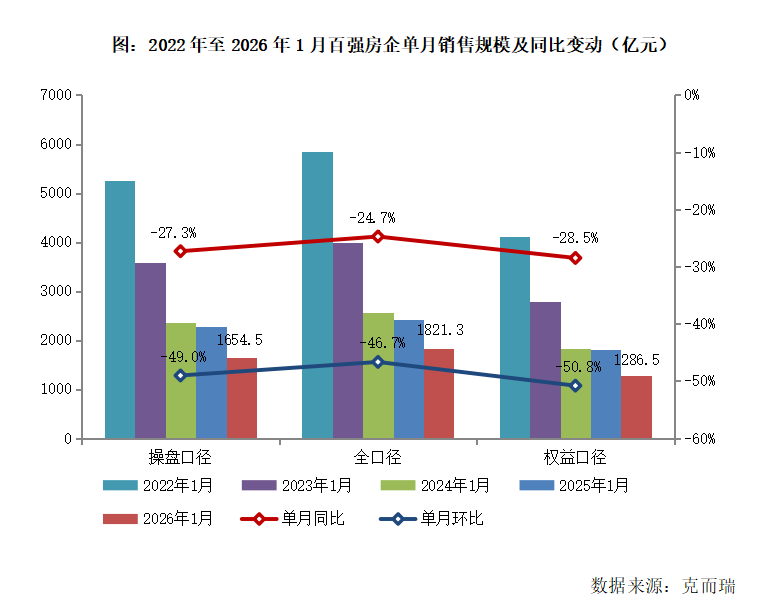
Core Viewpoint - The real estate market in China is experiencing a seasonal slowdown in January 2026, but there are signs of recovery in the second-hand housing market in key cities, which may stabilize market expectations and lead to a potential "small spring" after the Spring Festival, especially with supportive policies in place [1][12]. Group 1: Sales Performance - The top 100 real estate companies achieved a total sales amount of 165.45 billion yuan in January 2026 [2][8]. - 32 companies among the top 100 reported year-on-year sales growth, with 10 companies experiencing growth rates exceeding 100% [8][10]. - Notably, companies like Junyi Holdings and Bangtai Group saw significant increases in sales, with Junyi Holdings reporting a staggering growth of 757.4% [10]. Group 2: Market Dynamics - The new housing market showed weak performance with a transaction area of approximately 8.1 million square meters, while the second-hand housing market saw a 16% month-on-month increase and a 33% year-on-year increase in transaction area [12]. - The central government has introduced various supportive policies focusing on urban renewal, financing optimization, and tax incentives to stimulate the real estate market [12][13]. Group 3: New Entrants and Rankings - In January 2026, seven new companies entered the top 100 list, with CITIC City Opening making a notable entry into the top 30 [5][6]. - The sales performance of new entrants indicates that some small and medium-sized private enterprises are managing to maintain stable operations and achieve growth despite market challenges [5][8].




内房股“大翻身”?资金流入与股价共振,原因几何?
证券时报· 2026-02-11 13:16
内房股整体走强。 此前较长时间整体不受港股市场"待见"的内房股,2026年以来表现可圈可点,不仅股价明显跑赢了港股市场平均水平,还获得包括南向港股通等资金的青 睐。 上述现象背后的原因几何? 港股内房股受到资金追捧 尽管仍面临诸多不确定性,不少港股内房股已开始受到资金的追捧。这里面,2026年以来南向港股通资金对不少内房股加仓迹象比较明显,某种程度上折 射出二级市场上不少资金对于内房股的态度趋暖。 据Wind数据,2026年以来,在中华内房股指数30只成份股中,有18只成份股背后的港股通持股数量出现提升,占比达六成。 比如港股通2026年2月10日持有的华润置地股票数量为8.39亿股,较2025年底增长逾8000万股,其间港股通持股占比由10.52%提升至11.75%,港股通持股 占比累计提升超过1个百分点。 中国海外发展、新城发展等港股在上述期间也获得港股通加仓。数据显示,2025年底港股通持有的中国海外发展股票数量为6.02亿股,至2026年2月10日 达7.36亿股,其间持股量累计增长1.34亿股,持股比例则由5.49%提升至6.72%;2025年底港股通持有的新城发展股票数量为14.07亿股,至202 ...

哔哩哔哩、小米上涨,泡泡玛特、中芯国际、腾讯、阿里、京东下跌;香港证监会:警惕假冒股评人的“唱高散货”投资骗局|港股收盘
Mei Ri Jing Ji Xin Wen· 2026-02-11 09:25
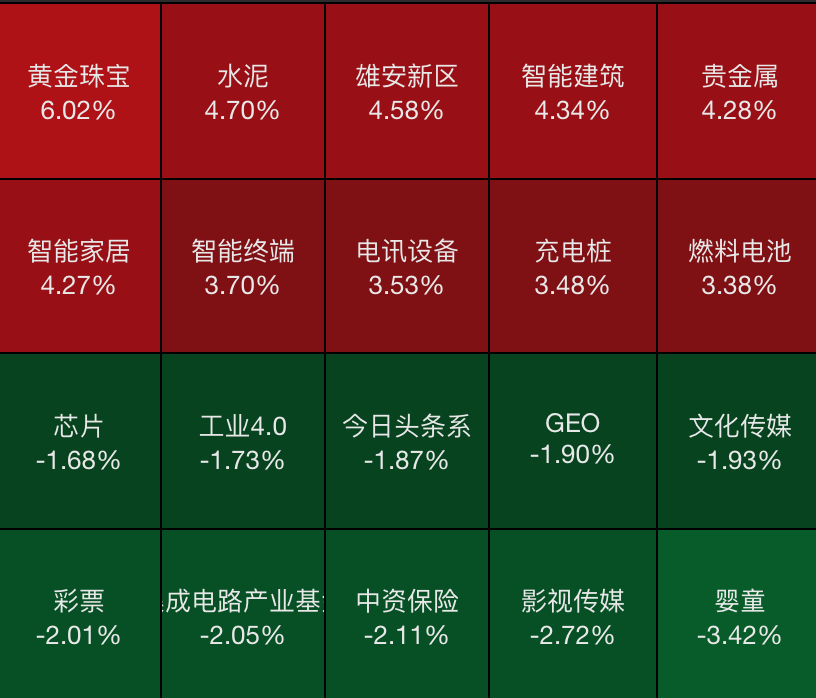
每经记者|马原 每经编辑|程鹏 记者|马原 编辑|程鹏 杜恒峰 校对|许绍航 2月11日,港股收盘, 恒生指数收涨0.31%,恒生科技指数收涨0.9%。 有色金属、稀土永磁板块上涨,赤峰黄金涨近6%,山东黄金涨4.4%,金力永磁涨5%,赣锋锂业涨5.5%。 | 黄金珠宝 | 水泥 | 雄安新区 | 智能建筑 | 贵金属 | | --- | --- | --- | --- | --- | | 6.02% | 4.70% | 4.58% | 4.34% | 4.28% | | 智能家居 | 智能终端 | 电讯设备 | 充电桩 | 燃料电池 | | 4.27% | 3.70% | 3.53% | 3.48% | 3.38% | | 芯片 | 工业4.0 | 令日头条系 | GEO | 文化传媒 | | -1.68% | -1.73% | -1.87% | -1.90% | -1.93% | | 彩票 | 成电路产业基 | 中资保险 | 影视传媒 | 恋宴 | | -2.01% | -2.05% | -2.11% | -2.72% | -3.42% | 光通信、cpo等板块回落,长飞光纤光缆跌近6%,剑桥科技跌5.7 ...

新消费时代下的大机遇系列报告一:从“场所”到“场景”,新消费时代下的商业地产迎来重大机遇
Bank of China Securities· 2026-02-11 08:04
Investment Rating - The report rates the real estate industry as "Outperforming the Market" [1] Core Insights - The traditional residential development sector is contracting, while commercial real estate is entering a policy-driven growth phase, with a focus on new consumption scenarios starting from 2024 [1][8] - The shift from traditional commercial spaces to immersive experience-driven scenarios is essential to meet the diverse needs of modern consumers [1][10] - The report emphasizes the importance of integrating "scene" and "consumption" to create unique consumer experiences, enhancing customer retention and engagement [1][10] Summary by Sections 1. Current State of Commercial Real Estate - The commercial real estate sector has entered a "stock era," with the number of new openings in 2025 reaching a ten-year low, with 369 new projects and a total area of approximately 27.41 million square meters, down 24% and 25% year-on-year respectively [15][19] - High vacancy rates and declining rents are significant challenges, with 2025 seeing a 20% share of new openings being stock renovation projects [14][15] - New market entrants include outlet malls and themed commercial spaces, which are becoming differentiated "new scenes" [14][15] 2. New Consumption Scenarios - The core of new scenarios lies in transitioning from merely providing sales spaces to creating emotionally resonant immersive experiences [1][10] - The rise of new consumption brands is reshaping the operational strategies of commercial real estate, focusing on customer flow and experience rather than just transactions [1][10] - Non-standard commercial projects, characterized by small-scale and open street designs, are gaining traction, with a 18.7% increase in foot traffic compared to traditional shopping centers [1][10] 3. Differentiated Commercial Spaces - The report categorizes non-standard commercial spaces into three types: fashion innovation, retro innovation, and ecological innovation, each targeting different consumer emotional needs [1][10] - Major cities like Shanghai, Beijing, Hangzhou, and Chengdu are leading in the development of non-standard commercial projects, with a significant focus on cultural and experiential elements [1][10] 4. Recommendations for Developers and Operators - Developers and operators are encouraged to innovate by creating differentiated offerings that resonate with specific consumer segments, emphasizing cultural integration and social spaces [1][10] - The report suggests that the focus should shift from traditional metrics like rental income to new indicators such as customer dwell time and engagement in experiential activities [1][10] - The commercial real estate sector is expected to benefit from favorable policies during the 14th Five-Year Plan, with opportunities for high-quality assets to thrive [1][10]
华润置地,任命新的集团营销负责人
Sou Hu Cai Jing· 2026-02-10 16:55
Core Viewpoint - Zhu Yong, a key figure in the recent executive adjustment at China Resources Land, has been appointed as the Deputy General Manager of the Group's Operations Management Department, overseeing the marketing of the entire development and sales business channel [1] Group 1: Background and Experience - Zhu Yong, born in the 1980s, currently serves as the Deputy General Manager of the Operations Management Department at China Resources Land, responsible for marketing [1] - He previously held marketing positions at Vanke in Southern Jiangsu and joined China Resources Land in 2014, where he has progressed through various roles including Assistant Manager of Marketing in East China and Deputy Director of the Regional Marketing Management Department [1] Group 2: Achievements - In 2025, Zhu led the Hangzhou marketing team to achieve a year-on-year increase in equity sales amount exceeding 100%, propelling the Hangzhou company from outside the top 20 to the 6th position in the market [1] - The project he spearheaded, Yunjing Wenhua Xuan, won three sales championships in the Xihu District [1] Group 3: Recent Developments - In February 2026, Zhu Yong was promoted to Deputy General Manager of the Group's Operations Management Department, marking him as a central figure in the recent executive restructuring [1]
——从2025Q4前五大持仓看债基信用策略:震荡行情中的债基超额收益由何主导?
Huachuang Securities· 2026-02-10 12:17
Core Insights - The report analyzes the factors influencing bond fund returns in Q4 2025, highlighting the impact of credit strategies on yields [7] - It identifies a recovery in credit bond allocation sentiment compared to Q3, with a notable preference for mid-term credit varieties [12][34] - The report emphasizes the importance of leveraging strategies and the contribution of credit downgrades to overall portfolio returns [23][27] Group 1: Performance of Bond Funds - The average return rate for bond funds in Q4 2025 was 0.55%, a significant improvement from -0.32% in Q3 [12] - Credit bond allocation's contribution to returns increased, with a correlation coefficient of 0.0027 in Q4, up from 0.0024 in Q3 [12] - Mid-term bonds (3-5 years) showed a strong contribution to portfolio returns, with a U-shaped relationship between return rates and the average remaining maturity of heavy holdings [17][20] Group 2: Bond Fund Holdings Overview - By the end of Q4 2025, the total scale of credit bonds held by bond funds reached 5.27 trillion yuan, an increase of 303.2 billion yuan from the previous quarter [34] - The proportion of credit bonds in bond fund holdings rose to 63.21%, up from 61.00% in the previous quarter [34] - The average yield of heavy holdings in various bond categories generally declined, indicating a shift in investment strategy towards more liquid varieties [2][3] Group 3: Credit Bond Strategy Analysis - The report notes an increase in the frequency of holdings in government and financial bonds, while credit bond holdings decreased, suggesting a strategy shift towards more liquid assets [2] - The average remaining maturity of heavy credit bond holdings slightly lengthened, indicating a flexible adjustment in duration structure [2] - The report categorizes heavy credit bond holdings by yield ranges, identifying specific opportunities for investment based on implied ratings [4][8]