腾讯

Search documents
Tips:财报里的“计提”是什么?通用汽车案例分析
3 6 Ke· 2025-10-16 10:03
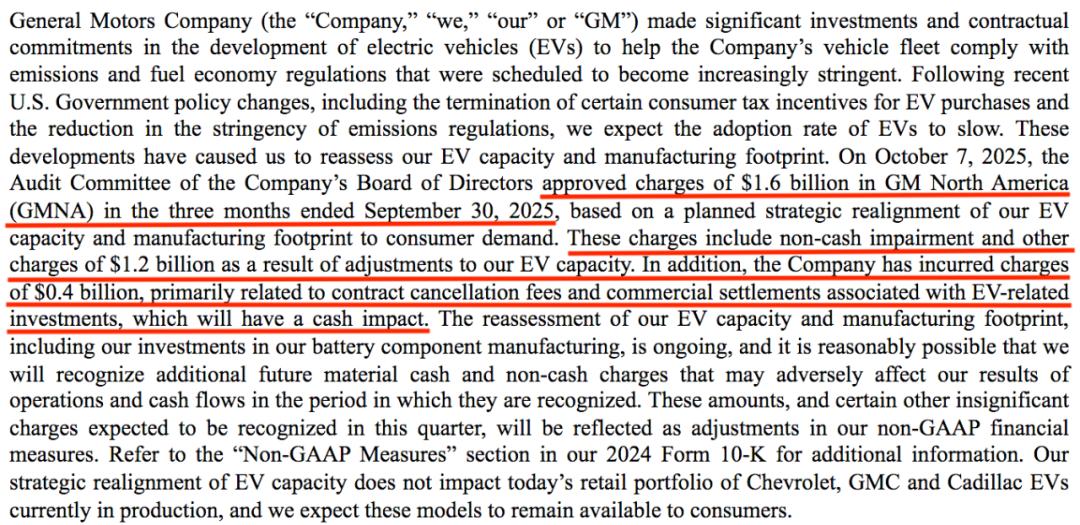
Core Viewpoint - The recent announcement by General Motors (GM) regarding a $1.6 billion charge reflects the impact of changing U.S. policies on electric vehicles, leading to a reassessment of production capacity and future demand for electric vehicles [1][2]. Financial Impact - GM plans to record a $1.6 billion charge in its Q3 financial report, which includes $1.2 billion in non-cash impairment and $400 million in cash expenses due to the cancellation of investments and contracts related to electric vehicles [2][3]. - This charge is expected to affect the company's future operations and cash flow, necessitating a separate announcement due to its significant impact [2]. Accounting Practices - The concept of "provisioning" in accounting is highlighted, where expenses that have been incurred but not yet paid are recorded in the current period [4][5]. - GM's charge will be reflected in the Q3 financials, adhering to accounting principles that require recognition of economic events in the period they occur, regardless of cash flow [5]. Market Context - The shift in U.S. policy under Trump, which includes the cancellation of a $7,500 tax credit for electric vehicles and relaxed emissions regulations, is expected to slow consumer demand for electric vehicles [2][9]. - This policy change has prompted GM to adjust its production strategy, focusing more on fuel vehicles rather than electric vehicles, which may lead to short-term losses [2][9]. Industry Trends - The overall trend in mature automotive markets like Europe and the U.S. shows a slowdown in electric vehicle development, with automakers moving away from aggressive all-electric strategies [9]. - Competitors, such as Volkswagen, are also adapting by changing design strategies and returning to traditional features, indicating a broader industry shift [9].


大厂南下,广东站上人形机器人新风口
2 1 Shi Ji Jing Ji Bao Dao· 2025-10-16 08:46
Core Insights - The AIR (Artificial Intelligence and Robotics) industry is becoming a central field in global technological competition and industrial transformation, reshaping human production and lifestyle paradigms [1] - Financial empowerment is crucial for the development of the AIR industry, requiring a robust financial support system that includes long-term capital supply and strategic capital efficiency [1] - Guangdong is positioned as a leader in the AIR industry, leveraging its strong industrial foundation and broad application space to create a "Guangdong model" for high-quality development in the AIR sector [1] Investment Landscape - By mid-2025, global funding in the humanoid robot sector exceeded 14 billion RMB, with Chinese companies accounting for 60% of this, amounting to 8.4 billion RMB, surpassing the total funding for 2024 [1] - Guangdong enterprises, particularly from Shenzhen, are leading in this capital frenzy, with UBTECH Robotics raising over 5.5 billion HKD in the Hong Kong market, becoming the first humanoid robot stock [2] - Another Shenzhen company, Xunfei Technology, raised over 1 billion HKD through discounted share placements to enhance its R&D and global market expansion [2] Challenges and Opportunities - Despite initial commercialization successes among leading companies, the humanoid robot industry remains in its early industrialization phase, with mid-tier companies facing commercialization challenges [3] - Guangdong's reliance on imported core technologies in the robot industry chain indicates a need for improved self-sufficiency and control over the supply chain [3] - The influx of capital and favorable policies are driving innovation and market potential in Guangdong's humanoid robot industry, but breakthroughs in core components and application scenarios are necessary for establishing a competitive edge [3] Market Dynamics - The Hong Kong stock market has become a primary financing battlefield for robot companies, with limited listings for complete robot manufacturers, primarily featuring Guangdong firms [4] - UBTECH and Xunfei are the only two leading companies listed in Hong Kong, with distinct focuses on humanoid and collaborative robots, respectively [4] - The investment landscape has evolved, with significant backing from major tech firms like JD.com and Meituan, which are actively investing in multiple Guangdong humanoid robot companies [7] Strategic Investments - Major internet companies are not only providing substantial funding but also helping robot companies overcome commercial bottlenecks, facilitating the transition from concept to market [9] - The investment strategies of these tech giants emphasize the importance of commercialization capabilities rather than just technological concepts [9] - The collaboration between large firms and robot companies is fostering a regional development trend in the humanoid robot sector, enhancing the overall ecosystem [9] Future Outlook - The future of the humanoid robot industry in Guangdong hinges on the synergy between capital influx, technological breakthroughs, and commercial viability [11] - The region must focus on integrating industry capital with emerging companies to accelerate commercialization and scale production [11] - Strengthening the development of high-end algorithm talent and cross-disciplinary R&D teams is essential for enhancing Guangdong's competitiveness in the global humanoid robot market [11]

软件正又一次吞噬全世界,但这次是通过“硬件”……
Sou Hu Cai Jing· 2025-10-16 07:55
Core Insights - The tech giants are shifting their focus from software to building robust infrastructure, particularly in data centers and AI capabilities, marking a significant transformation in their business models [3][8] - The capital expenditure (Capex) for major tech companies is projected to reach nearly $400 billion by 2025, reflecting a 64% increase from 2024 and a staggering 168% rise from 2023 [6][8] - There is a consensus among tech leaders that AI is the core battleground for the next era, with infrastructure investment becoming a key driver of economic growth in the U.S. [8][10] Capital Expenditure Trends - Amazon expects its Capex to reach approximately $100 billion to $118 billion by 2025, primarily for its AWS AI workloads [6] - Microsoft plans to invest around $80 billion in the current fiscal year, increasing to $121 billion in the 2026 fiscal year [6] - Google has raised its 2025 Capex forecast from $75 billion to $85 billion, while Meta anticipates a Capex of $72 billion for 2025 [6] Economic Impact - AI-related capital expenditures are projected to contribute 1.2 percentage points to U.S. GDP growth in the first half of 2025, surpassing traditional consumer spending [8][10] - Deutsche Bank suggests that without the surge in tech investments, U.S. GDP growth would be close to zero, indicating the critical role of AI infrastructure spending in economic recovery [10] Investment Perspectives - There are two camps regarding the massive capital influx: one sees it as a necessary investment for a new productivity revolution, while the other warns of a potential tech bubble [12][18] - Optimists argue that the current investment wave is fundamentally different from past bubbles, as it is backed by profitable companies with strong cash flows [12][18] - Concerns exist regarding the high capital expenditure to operating cash flow ratio, which is currently at 60-70%, reminiscent of previous tech bubbles [18] AI Infrastructure in China - Chinese tech giants are also ramping up AI infrastructure investments, with projections of Capex reaching 600 billion to 700 billion RMB (approximately $84 billion to $98 billion) by 2025 [25][27] - The Chinese government is expected to contribute significantly to this investment, with plans for 400 billion RMB allocated for new AI data centers [25][27] Conclusion - The ongoing capital investment cycle driven by AI is reshaping corporate strategies and global economic growth dynamics, embodying the essence of Marc Andreessen's prediction that "software is eating the world" [27][29] - The outcome of this investment spree remains uncertain, with potential for either igniting a new industrial revolution or leading to a repeat of historical tech bubbles [29]





“以旧换新”政策成效显现,消费复苏态势明确,聚焦港股消费ETF(513230)布局机遇
Mei Ri Jing Ji Xin Wen· 2025-10-16 06:23
Core Viewpoint - The Hong Kong stock market is experiencing fluctuations, with the Hang Seng Index down by 0.43% and the Hang Seng Tech Index down by 1.36%, while certain sectors like passenger airlines and home goods are performing well, indicating a mixed market sentiment [1] Market Performance - As of the midday close on October 16, the Hang Seng Index decreased by 0.43% and the Hang Seng Tech Index fell by 1.36% [1] - The consumer ETF (513230) is down approximately 0.5%, with leading stocks such as Lao Pu Gold, Pop Mart, Shenzhou International, and China Wangwang showing gains, while stocks like Giga Bio, Xpeng Motors, and Xiaomi Group are experiencing declines [1] Economic Insights - A recent economic forum emphasized the need to expand domestic demand and strengthen the domestic circulation, with expectations that the upcoming "14th Five-Year Plan" will enhance the long-term development mechanism for consumption [1] - As of May 31, the "trade-in" policy for five major consumer categories has driven sales exceeding 1.1 trillion yuan, indicating a positive trend in consumer spending [1] Capital Flow - There has been a notable acceleration of southbound capital inflow into the Hong Kong stock market this year, driven by policy benefits and increased liquidity [1] - The combination of policy incentives and capital inflow is seen as a dual driving force for market recovery, with a clear trend of consumption recovery supported by the effectiveness of the "trade-in" policy [1] ETF Composition - The Hong Kong consumer ETF (513230) tracks the CSI Hong Kong Stock Connect Consumer Theme Index, encompassing a wide range of sectors including internet e-commerce leaders and new consumption brands [1] - Key components of the ETF include leading new consumption brands like Pop Mart and Lao Pu Gold, as well as major internet e-commerce players such as Tencent, Kuaishou, Alibaba, and Xiaomi, highlighting a strong tech and consumer attribute [1]
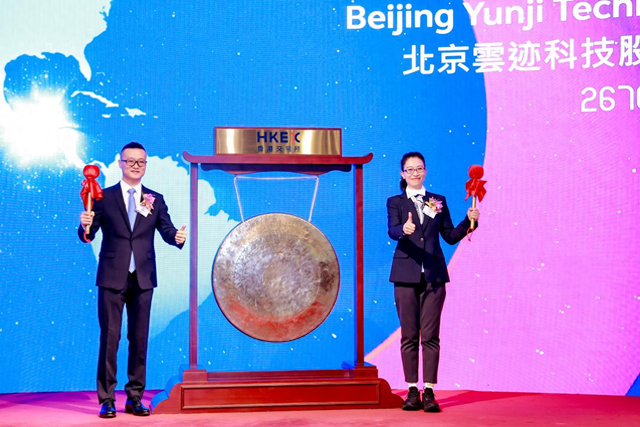
云迹(2670.HK)登陆港交所开盘市值超98亿港元,商业化闭环打开持续增长空间
Zhong Guo Jing Ying Bao· 2025-10-16 04:01
Core Viewpoint - Cloudwalk Technology (2670.HK) has officially listed on the Hong Kong Stock Exchange, becoming the first "robot service intelligent body" stock and a specialized technology enterprise under the 18C chapter rules, with a strong market response reflected in its oversubscription and significant share price increase [1][4]. Group 1: IPO Performance - Cloudwalk's IPO attracted significant attention, with 690 million H-shares offered, 5% for public sale and 95% for international placement, at a price of HKD 95.6 per share, aiming to raise up to HKD 660 million [1][4]. - The public offering was oversubscribed by 5,657.2 times, involving approximately HKD 189.1 billion, with 263,000 retail investors participating [1][4]. - On its first trading day, Cloudwalk's share price surged by 49.37% to HKD 142.8, resulting in a total market capitalization of HKD 9.813 billion [1]. Group 2: Financial Performance - For the first five months of 2025, Cloudwalk reported total revenue of HKD 88.329 million, an 18.9% increase year-on-year, with hotel revenue growing by 20% [3][9]. - The revenue from intelligent application (HDOS) business saw a significant increase of 194%, indicating the emergence of a high-margin "second revenue curve" beyond hardware sales [3][10]. - The company’s revenue for 2022, 2023, and 2024 was HKD 161 million, HKD 145 million, and HKD 245 million respectively, with gross margins improving from 24.4% to 43.5% [7][10]. Group 3: Market Position and Growth Potential - Cloudwalk holds a 6.3% market share in China's robot service intelligent body market, with a significant 13.9% share in the hotel service segment [8][9]. - The market for robot service intelligent bodies in China is projected to grow from HKD 1.8 billion in 2020 to HKD 3.7 billion by 2024, with a compound annual growth rate (CAGR) of 19.8% [5][8]. - The company plans to use IPO proceeds to enhance AI research and development capabilities and improve hardware technology, including the development of robot components [5][11]. Group 4: Strategic Development - Cloudwalk's strategy includes integrating hardware with software and services, creating a self-reinforcing cycle that enhances customer engagement and loyalty [11][12]. - The introduction of the HDOS system marks a strategic upgrade, allowing Cloudwalk to provide deeper services and increasing customer switching costs [11]. - The Chinese market for non-physical robot forms is expected to experience explosive growth, with projections indicating a rise from HKD 12.6 billion in 2024 to HKD 126.9 billion by 2029, reflecting a CAGR of 58.7% [11].
交银国际每日晨报-20251016
BOCOM International· 2025-10-16 02:28
Group 1: Legendary Biotech (LEGN US) - 3Q25 Carvykti sales reached $524 million, exceeding expectations with a year-on-year growth of 84% and a quarter-on-quarter growth of 19% [1] - The U.S. market contributed $396 million in sales, reflecting a year-on-year increase of 53% and a quarter-on-quarter increase of 11%, while international sales reached $128 million, up 374% year-on-year and 58% quarter-on-quarter [1] - Johnson & Johnson reaffirmed its peak sales target for Carvykti at over $5 billion, expressing increased confidence in achieving this goal [1][2] Group 2: Internet Industry - Tencent's domestic mobile game revenue decreased by $2.7 billion (8%) year-on-year, primarily due to high base effects from the previous year, although new games partially offset this decline [4] - Tencent's overseas revenue increased by $670 million (9%) year-on-year, driven by new game releases like Clash Royale [4] - NetEase's domestic revenue showed a slight increase of $0.7 million (1%), while overseas revenue grew by $1.6 million (18%) due to contributions from new games [4] Group 3: Battery Industry - In September 2025, China's domestic power battery installation volume reached 76.0 GWh, marking a year-on-year increase of 39.5% and a month-on-month increase of 21.6% [7] - Battery exports remained robust, totaling 26.7 GWh in September, with a year-on-year increase of 28.3% [7] - China's export controls on certain lithium battery materials and equipment are expected to improve the competitive landscape overseas, potentially enhancing profitability for leading companies with overseas production capabilities [7][8] Group 4: Pharmaceutical Industry - The Hang Seng Healthcare Index fell by 12.0% this week, underperforming the broader market, with traditional Chinese medicine and internet healthcare sectors showing relatively better performance [9] - Institutions have been increasing their positions in high-value innovative drug stocks, despite a slight decrease in holdings of pharmaceutical stocks through the Hong Kong Stock Connect [9][10] - The upcoming ESMO conference is anticipated to provide significant data releases, with recommendations to focus on companies like CanSino Biologics and Hengrui Medicine [10]
港股互联网板块估值优势凸显,AI重塑价值逻辑
Mei Ri Jing Ji Xin Wen· 2025-10-16 02:18
Core Viewpoint - The valuation of the Hong Kong internet sector has reached an attractive level after a long adjustment period, with the Hang Seng Internet Technology Index's latest price-to-earnings (PE) ratio at 21.73, which is at the 16.67% historical low over the past decade [1] Group 1: Valuation Insights - The current PE ratio of 21.73 indicates that the sector's valuation is at a historically low level [1] - The shift in focus from user growth and business models to "AI empowerment" is expected to create a new growth curve for the sector [1] Group 2: Industry Dynamics - Recent developments, such as Alibaba's establishment of a "Robotics and Embodied AI Group" and Tencent's mixed Yuan image model achieving first place in global blind tests, demonstrate the transition of AI from concept to practical application [1] - These advancements are likely to reshape the market value of internet giants [1] Group 3: Investment Trends - The Hang Seng Internet ETF (513330) has seen over 1 billion yuan inflow in just three trading days, with a total of over 1.7 billion yuan accumulated in the first five trading days of October, indicating strong confidence from large investors in the Hong Kong tech sector [1] - The focus on leading internet companies is exemplified by the Hang Seng Internet ETF (513330) and the comprehensive coverage of the tech industry chain by the Hong Kong Stock Connect Technology ETF Fund (159101) [1]
港股开盘 | 恒指低开0.08% 三花智控(02050)跌近5%
智通财经网· 2025-10-16 01:40
东吴证券认为,关税重回视野,港股短期波动风险加大。往后看,中长期上行趋势还在。其一,短期中 美关税问题超市场预期,或导致港股有回调风险。叠加近期美股AI泡沫叙事再起,港股AI科技方向短 期波动或会加大。资金会转向避险行业。其二,除关税外,投资者仍关心本月四中全会十五五规划定调 会。如果政策超预期,市场修复力度会更强。其三,中长期看,我们对港股并不悲观。一是,全球仍处 在降息周期,货币宽松背景下,股市仍有上涨空间;二是,AI产业趋势不可阻挡,中国AI产业加速, 港股科技龙头仍有上涨空间。三是,我们认为明年一季度,经济基本面和企业盈利会进一步改善。 恒生指数低开0.08%,恒生科技指数跌0.14%。新东方涨超6%,泡泡玛特涨超2%。三花智控(02050)跌近 5%,公司否认"机器人大额订单"传言,亦不存在应披露而未披露的重大事项。 关于港股后市 中国银河证券认为,短期内,中美贸易摩擦升级导致投资者风险偏好下降,带动港股估值回调。但在国 内稳增长政策支持下,以及中长期资金稳股市举措影响下,投资者情绪有望逐渐稳定。当前港股估值整 体处于历史中高水平,预计未来港股市场或宽幅震荡。配置方面,建议关注以下板块:1)美国联邦 ...

为什么全球领导人经常见马云?而马化腾、刘强东却少有这种待遇?赶紧来看
Sou Hu Cai Jing· 2025-10-16 01:37
Core Insights - The frequency of public appearances by entrepreneurs reflects various factors such as the degree of internationalization of their companies, business model characteristics, personal leadership styles, industry attributes, and social responsibility [1][3][6][12] Group 1: Internationalization and Business Models - Entrepreneurs from companies with over 40% global business presence engage in public activities 3.2 times more than those focused on local markets [1] - Internet companies in China have a higher internationalization index (78.6) compared to traditional manufacturing (62.3), leading to more frequent public engagements by their leaders [3] - Companies in rapid expansion phases often see their leaders participating more in public events to enhance visibility and resource acquisition [3][6] Group 2: Leadership Styles and Psychological Factors - "Extroverted" leaders participate in public activities 2.6 times more than "introverted" leaders, although this does not significantly impact company performance [4] - Different leadership styles reflect varied paths to success, with both extroverted communicators and introverted strategists capable of leading successful enterprises [4][12] Group 3: Industry Characteristics - Leaders in emerging tech sectors like internet and AI engage in public discussions more frequently due to the need for public attention and policy support [6] - The average number of international forum participations for tech leaders is 8.7 times per year, compared to 3.2 times for traditional manufacturing leaders [6] Group 4: Social Responsibility and Personal Mission - Entrepreneurs who invest in social responsibility initiatives tend to participate more in public activities, reflecting a commitment to societal issues [7] - Companies that focus on social responsibility have leaders who attend public events more frequently than average [7] Group 5: Media Image and Public Perception - Entrepreneurs with positive media evaluations and high public favorability are 41% more likely to be invited to high-end forums [9] - The "Matthew effect" in media exposure leads to cumulative growth in public visibility for certain entrepreneurs [9] Group 6: Strategic Recommendations for Entrepreneurs - Adjust public appearance frequency based on the company's development stage, increasing visibility during startup phases and being selective in mature stages [10][11] - Clearly define the purpose of public engagements, whether for brand awareness, partnership seeking, or idea dissemination [10] - Evaluate industry characteristics to align public activity strategies with business needs [10] Group 7: Evolving Role of Entrepreneurs - The role of entrepreneurs is shifting from mere business managers to industry change agents and social problem solvers, reflecting broader societal expectations [12] - Public activities are increasingly focused on discussing social issues rather than just sharing business experiences [12]

亚马逊人力资源部门裁员15%,负责裁员的也被裁了;影石CEO回应道歉:接受批评,但承诺福利照发;荣耀机器人手机问世丨雷峰早报
雷峰网· 2025-10-16 00:30
Group 1 - JD.com is set to launch a new car priced between 100,000 to 120,000 yuan, in collaboration with CATL and GAC Group, with a unique "chocolate battery swap" feature [3][5] - The new car will be exclusively sold on JD.com during the Double Eleven shopping festival [3] - JD.com is actively recruiting automotive talent, with salaries reaching up to 1.2 million yuan for certain positions [5] Group 2 - The CEO of Yingshi responded to criticism regarding DJI's price cuts, promising that employee benefits would remain unaffected [7] - Yingshi's CEO issued vouchers to customers who purchased DJI products during the price drop period as a form of apology [7] Group 3 - Xiaohongshu is testing a "quick sale" feature for second-hand goods, allowing users to list items directly in their posts [13][14] - The platform aims to keep transactions within its ecosystem, reducing reliance on third-party platforms [14] Group 4 - The launch of the Honor ROBOT PHONE marks a significant advancement in mobile technology, integrating AI and robotics [22] - This device is positioned as a next-generation terminal, capable of automatic composition and target tracking [22] Group 5 - Li Xiang, CEO of Li Auto, predicts that fully autonomous driving vehicles will be realized within 3 to 5 years, potentially becoming the largest AI terminals in the physical world [16][17] - He advocates for high-level assisted driving features to be free of charge for consumers [17] Group 6 - Oracle's co-CEOs defended the company's significant investment in AI data centers, stating that current low profits are typical during the initial phase of infrastructure development [38] - They anticipate that as customer consumption increases, profit margins will improve significantly [38]