大疆

Search documents
深圳,国际消费活力十足!19大商圈引领,国际友好消费地图发布
Sou Hu Cai Jing· 2025-08-11 13:18
Core Insights - Shenzhen is enhancing international consumption through diverse services, launching the "International Friendly Consumption Purchase" event as part of the "2025 Shenzhen Summer Consumption Season" [1][3] - The event features the release of an international friendly consumption map and a list of 19 benchmark shopping districts, aiming to establish Shenzhen as an international consumption center [3][4] Group 1: International Consumption Initiatives - The "International Friendly Consumption Purchase" event is themed "Shenzhen Summer, Global Enjoyment," focusing on internationalization, convenience, and quality [3] - The 19 benchmark shopping districts include prominent locations such as Shenzhen MixC, K11 ECOAST, and Qianhai One City, providing high-quality international services to both domestic and foreign tourists [3][4] Group 2: Payment and Tax Refund Innovations - Shenzhen has developed a new payment system for foreign visitors, enhancing the convenience of international payments through mobile payment options [4][5] - From January to June this year, foreign visitors conducted over 85.87 million non-cash payment transactions in Shenzhen, totaling over 11.8 billion yuan, with significant contributions from South Korea, the USA, and Singapore [5] - The city has implemented an "immediate purchase and refund" policy for tax refunds, with over 1,000 stores participating and a significant increase in tax refund sales and processing volume [5][6] Group 3: Shopping Season Activities - The "2025 Shenzhen Shopping Season" runs from August to October, featuring over 670 promotional activities centered around key themes and holidays [6] - The first city-based duty-free store is set to open by the end of August, aiming to create an immersive shopping experience for global customers [6]


本来决定去具身,现在有点犹豫了。。。
自动驾驶之心· 2025-08-11 12:17
Core Insights - Embodied intelligence is a hot topic this year, transitioning from previous years' silence to last year's frenzy, and now gradually cooling down as the industry realizes that embodied robots are far from being productive [1] Group 1: Industry Trends - The demand for multi-sensor fusion and positioning in robotics is significant, with a focus on SLAM and ROS technologies [3] - Many robotics companies are rapidly developing and have secured considerable funding, indicating a promising future for the sector [3] - Traditional robotics remains the main product line, despite the excitement around embodied intelligence [3] Group 2: Community and Resources - The community has established a closed loop across various fields including industry, academia, and job seeking, aiming to create a valuable exchange platform [4][6] - The community offers access to over 40 technical routes and invites industry leaders for discussions, enhancing learning and networking opportunities [6][20] - Members can freely ask questions regarding job choices or research directions, receiving guidance from experienced professionals [83] Group 3: Educational Content - Comprehensive resources for beginners and advanced learners are available, including technical stacks and learning roadmaps for autonomous driving and robotics [13][16] - The community has compiled a list of notable domestic and international research labs and companies in the autonomous driving and robotics sectors, aiding members in their academic and career pursuits [27][29]

制造成长周报(第26期):2025世界机器人大会开幕,多家企业发布人形机器人新品-20250811
Guoxin Securities· 2025-08-11 07:19
Investment Rating - The report maintains an "Outperform" rating for the industry, particularly focusing on humanoid robots and AI infrastructure [4][8]. Core Insights - The humanoid robot sector is rapidly evolving, with significant advancements showcased at the 2025 World Robot Conference, highlighting the industry's potential for growth and innovation [3][16]. - The report emphasizes the importance of supply chain positioning and value capture in humanoid robotics, recommending a focus on key suppliers and companies with strong market positions [4]. - AI infrastructure is expected to see sustained capital expenditure growth driven by increasing demand, particularly benefiting sectors like gas turbines and chillers [4]. Industry Dynamics - The 2025 World Robot Conference opened in Beijing, featuring over 200 companies and 1500 exhibits, showcasing advancements in humanoid robotics and their applications [16]. - The report notes the rapid development of the domestic robot industry, with improvements in capabilities such as sorting, handling, and performing tasks like music and shopping [3]. - The low-altitude economy is progressing with infrastructure initiatives, including the successful completion of the first offshore oil platform supply flight using drones [27]. Company Dynamics - Key companies highlighted for humanoid robotics include: - **Joint suppliers**: Hengli Hydraulic, Huichuan Technology, and Bluesky Technology for joint modules [4]. - **Dexterous hands**: Zhaowei Electromechanical and Leisai Intelligent [4]. - **Reduction gears**: Green Harmonic and Jindi Co., Ltd. [4]. - AI infrastructure companies to watch include Hanbell Precise Machinery, Ice Wheel Environment, and Yingliu Co., Ltd. [4]. Key Company Earnings Forecasts and Valuations - The report provides earnings forecasts and investment ratings for several companies, including: - Green Harmonic (688017.SH): Outperform, with a projected EPS of 0.50 for 2025 [8]. - Huichuan Technology (300124.SZ): Outperform, with a projected EPS of 2.01 for 2025 [8]. - Bluesky Technology (688360.SH): Outperform, with a projected EPS of 0.99 for 2025 [8]. - The report also highlights the performance of companies in the humanoid robot sector, noting significant market movements and growth potential [15].



小小的一张存储卡,到底该怎么选?
3 6 Ke· 2025-08-11 03:34
Core Viewpoint - The article discusses the evolution and current state of storage devices, particularly focusing on SD cards and CFE cards, highlighting their specifications, classifications, and recommendations for usage in various devices [3][29]. Group 1: SD Cards - SD cards, developed in 1999 by Panasonic, Toshiba, and SanDisk, have evolved into a family of products with various capacities and speed classifications [3][5]. - The capacity levels for SD cards are categorized into four types: SD (up to 2GB), SDHC (2GB to 32GB), SDXC (32GB to 2TB), and SDUC (2TB to 128TB) [5]. - SD cards are classified based on write speed into three standards: Speed Class (C), UHS Speed Class (U), and Video Speed Class (V), with specific minimum write speeds ranging from 2MB/s to 90MB/s [7][8]. - UHS levels (UHS-I, UHS-II, UHS-III) indicate bus speed, with theoretical maximum speeds of 104MB/s, 312MB/s, and 624MB/s respectively [8][11]. - Manufacturers may label speeds using X ratings, where 1X equals 150KB/s, allowing for easy conversion to MB/s [13]. Group 2: TF Cards - TF cards, originally known as TransFlash cards, are smaller than SD cards and share similar speed classifications [15][17]. - TF cards also include an A rating for application performance, with A1 and A2 levels indicating different IOPS performance for running apps directly from the card [17][18]. Group 3: CFE Cards - CFE cards, based on PCIe and NVMe standards, offer high performance suitable for high-end cameras, with maximum read/write speeds of 2000MB/s for CFE-A and 4000MB/s for CFE-B [20][22]. - CFE cards are categorized by VPG levels, ensuring minimum sustained write speeds of 200MB/s to 400MB/s, with future standards promising even higher speeds [22][23]. Group 4: Recommendations for Use - For entry-level cameras, a V30 SD card with a capacity starting at 64GB is recommended, while higher-end models should consider CFE cards of 256GB or more for optimal performance [24][26]. - High-end cameras require CFE cards to fully utilize their capabilities, and users are expected to be knowledgeable about their specific storage needs [27]. - For devices like drones and action cameras, TF cards of at least 128GB with U3 and A2 ratings are suggested for efficient 4K recording [27][30].
为低空经济插上“人才之翼”
Huan Qiu Wang Zi Xun· 2025-08-11 01:45
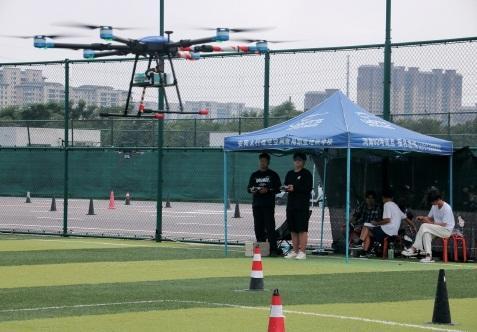
Core Viewpoint - The low-altitude economy is a rapidly growing strategic emerging industry in China, with a significant focus on the development of the drone industry and the urgent need for skilled drone operators [4][5][25]. Industry Overview - The low-altitude economy is expected to reach a market size of 1.5 trillion yuan by 2025 and 3.5 trillion yuan by 2035, highlighting its importance in national economic development [5]. - As of the end of 2024, there are 2.177 million registered drones in China, with 247,300 valid licenses issued, indicating a substantial gap between market demand and available skilled operators [5]. Employment Opportunities - The demand for drone operators, or "flyers," is high, with an estimated talent gap of 1 million positions in the domestic market [5][25]. - The agricultural sector has been the primary field for drone applications, with uses expanding from crop protection to logistics and precision agriculture [6][7]. Training and Certification - The CAAC (Civil Aviation Administration of China) license is essential for operating drones legally, with various training institutions offering courses and certifications [10][12]. - The training typically lasts three days, covering theoretical knowledge, practical operation, and maintenance skills, with an annual training capacity of 70,000 to 80,000 students [11][12]. Educational Institutions - Vocational colleges are increasingly integrating drone technology into their curricula, with 523 institutions now offering drone application technology programs [18][19]. - The focus is on comprehensive training that includes not only flying skills but also data analysis, agricultural knowledge, and technical maintenance [17][20]. Industry Challenges - The industry faces challenges such as the need for standardized practices and the risk of unqualified operators affecting service quality [23][24]. - There is a call for more structured training and assessment to ensure the safety and effectiveness of drone operations in agriculture [24][25].
大消费行业周报(8月第2周):免费学前教育政策惠及母婴相关板块-20250811
Century Securities· 2025-08-11 00:52
Investment Rating - The report does not explicitly state an investment rating for the industry, but it suggests a positive outlook for sectors such as education, dairy products, and maternal and infant products due to recent policy changes [4]. Core Insights - The consumer sector showed mixed performance in the week of August 4-8, with textile and apparel, home appliances, and beauty care sectors experiencing gains, while social services and retail sectors faced declines [4]. - Recent government policies aimed at promoting free preschool education and subsidies for childcare are expected to positively impact consumer spending and help mitigate the declining population trend [4]. - DJI's entry into the cleaning appliance market with its ROMO series is expected to intensify competition, although traditional players maintain advantages in technology, cost control, and distribution channels [4]. - The "first cup of milk tea in autumn" campaign has sparked significant consumer demand, with major tea brands reporting substantial sales increases during this promotional period [4]. Summary by Sections Market Weekly Review - The consumer sector's performance varied, with notable gains in textile and apparel (+4.23%), home appliances (+2.37%), and beauty care (+1.70%), while social services (-0.11%) and retail (-0.38%) saw declines [4][5]. Industry News and Key Company Announcements - The State Council issued a policy to gradually implement free preschool education starting in the fall of 2025, which is expected to boost consumer spending in related sectors [4][15]. - Hema plans to open nearly 100 new stores within the fiscal year, expanding its reach in the Chinese consumer market [4][15]. - The launch of DJI's ROMO series cleaning robots is anticipated to enhance market competition, although established players retain their market positions due to their technological and operational advantages [4][16]. - The tea beverage market has seen a surge in demand, with brands reporting significant sales growth during promotional events [4][16].
周专题:大疆跨界扫地机器人,涛涛车业全新品牌发布
HUAXI Securities· 2025-08-10 15:29
Investment Rating - Industry rating: Recommended [5] Core Insights - DJI launched its first robotic vacuum cleaner, the DJI ROMO series, on August 6, 2025, with a mid-to-high-end pricing strategy (priced between 4699 to 7399 yuan). The main selling points include software algorithms, noise reduction capabilities, and maintenance-free operation. The product features advanced obstacle avoidance technology using dual-camera vision and three solid-state LiDARs, achieving millimeter-level obstacle avoidance. The unique high-pressure self-cleaning system allows for 200 days of maintenance-free use, and the noise level is controlled below 40 decibels, addressing user pain points related to maintenance and noise [1][9][10]. Summary by Sections Section 1: DJI Robotic Vacuum Cleaner Launch - The DJI ROMO series includes three models: the basic ROMO S (water tank version at 4699 yuan), the upgraded ROMO A (water tank version at 5399 yuan), and the flagship ROMO P (water tank version at 6799 yuan), which features UV sterilization, odor removal, and dual cleaning liquids. All models are equipped with a core obstacle avoidance system, 25000Pa suction power, flexible edge cleaning, and maintenance-free high-pressure base station technology [1][9]. Section 2: Competitive Analysis - A comparison between the basic ROMO S and leading competitors shows that DJI's pricing is on the higher side. The obstacle avoidance solution employs dual fisheye cameras and LiDAR, achieving millimeter-level avoidance. However, competitors like Roborock have advantages in lower height for cleaning under beds, while Ecovacs offers roller-based wet cleaning capabilities. The robotic vacuum market is currently in a phase of continuous functional improvement, and with AI advancements, these devices are expected to become increasingly intelligent. DJI's entry is likely to accelerate market penetration and impact the competitive landscape [2][10]. Section 3: Company Announcements - Taotao Automotive officially launched its new brand TEKO, set to debut in North America on September 1, 2025. TEKO has expanded to over 50 high-end dealers, covering 15 states in the U.S. and establishing 12 exclusive brand flagship stores. Meanwhile, Beiding Co. reported a revenue of 432 million yuan for the first half of 2025, a year-on-year increase of 34.05%, with net profit reaching 55.83 million yuan, up 74.92% year-on-year. Domestic sales benefited from government policies promoting upgrades, while overseas sales faced challenges due to tariffs and geopolitical issues [3][12][13].
中信建投:大疆入场扫地机行业 继续看好清洁电器品类渗透率提升与业内龙头的成长性
Zhi Tong Cai Jing· 2025-08-10 13:30
Group 1 - DJI has officially entered the robotic vacuum cleaner market with the launch of the ROMO series, featuring a transparent design that highlights its technological aesthetics [1][2] - The ROMO series is positioned in the high-end market, with hardware quality matching leading brands, but at a higher price point compared to industry flagship models [2][4] - The dual-camera and three-laser radar combination provides high obstacle avoidance precision, but the algorithm and chip performance require further refinement [3] Group 2 - The market analysis indicates that DJI is expected to capture a certain share in the high-end segment, particularly in the 5000+ price range, while traditional brands still dominate the mid to low-end markets [4] - DJI's entry is seen as a significant endorsement for the robotic vacuum category, which is transitioning from an early market to a mass market, potentially enhancing consumer education and market expansion [5]


科技周报|上海发布具身智能产业发展实施方案;大疆进入扫地机器人赛道
Di Yi Cai Jing· 2025-08-10 07:43
Group 1 - Shanghai government released the "Implementation Plan for the Development of Embodied Intelligence Industry," aiming to accelerate the construction of an industry advantage in embodied intelligence [2] - The plan includes a maximum support of 30% of the total project investment, capped at 50 million yuan, and rewards for companies selling or leasing embodied intelligence robots [2][2] - The initiative positions Shanghai as a global innovation hub in the embodied intelligence sector, reflecting a competitive shift towards ecosystem-building capabilities among cities [2] Group 2 - Pinduoduo has accelerated AI talent recruitment, focusing on positions related to large models and machine learning, despite not publicly discussing AI strategies [4] - The recruitment aims to enhance user growth through AIGC content and improve various operational aspects, indicating a positive outlook on e-commerce growth [4] Group 3 - Sony reported a 23% year-on-year increase in net profit for Q1 of FY2025, with sales revenue of 26,216 million yen and operating profit of 3,400 million yen [5] - The gaming business remains a key growth driver, with a significant increase in sales and operating profit attributed to software and network services [5][5] - Sony has raised its operating profit forecast for FY2025 to 14,000 million yen, highlighting the importance of its entertainment business in China [5] Group 4 - The proposal for a 2 million yuan monthly salary for the general manager of Brolant Robotics was rejected by the board, amid concerns over governance and management issues [6] - The investment firm expressed concerns about potential asset misappropriation and called for a vote to restore normal governance structures [6] Group 5 - DJI launched its first vacuum robot, DJI ROMO, priced from 4,699 yuan, targeting the high-end market with solid-state laser radar technology [7] - The vacuum robot market has low penetration, with only 5.5% in China last year, indicating a competitive landscape for DJI [8] Group 6 - Create.AI has opened a 2,000 square meter motion capture facility, capable of capturing multiple body movements and facial dynamics simultaneously, aimed at high-precision content production [10] - The transition from TuSimple to Create.AI reflects a strategic shift towards generative AI and entertainment, leveraging past data capabilities [10]


2025起点户储及便携式储能电池技术论坛9月深圳举办!
起点锂电· 2025-08-10 07:16
Core Insights - The article discusses the growth and competitive landscape of the home energy storage and portable energy storage markets, highlighting significant trends and forecasts for 2024 and beyond [3][4][5]. Home Energy Storage - In 2024, the global home energy storage shipment is projected to reach 27.8 GWh, marking a 19% year-on-year increase, with Chinese companies accounting for 75% of the shipments [3]. - The leading regions for home energy storage consumption include Europe, the USA, Ukraine, Japan, Australia, Africa, the Middle East, ASEAN, and Russia, with Europe being the largest and most mature market [3]. - The USA, Ukraine, Australia, South Africa, Nigeria, and Brazil are expected to see rapid growth in 2024 due to declining electricity prices and increasing demand [3]. - SPIR forecasts that the global home energy storage market will reach 180 GWh by 2030, representing a 547% increase from 2024 [3]. - The top 10 companies in global home energy storage shipments include Huawei, BYD, Airo Energy, and others [3]. Portable Energy Storage - The global portable energy storage shipment is expected to reach 11 million units in 2024, reflecting a 90% year-on-year growth [4]. - The USA is identified as the largest and most mature market for portable energy storage, driven by outdoor activities and a developed RV market [4]. - Ukraine is projected to experience the fastest growth in 2024 due to energy shortages caused by the ongoing conflict, increasing the demand for emergency power solutions [4]. - By 2030, the global portable energy storage market is anticipated to reach 28 million units, a 156% increase from 2024, fueled by outdoor economic development and emergency power needs [4]. - The top 10 companies in global portable energy storage shipments include EcoFlow, BLUETTI, Jackery, and others [5]. Industry Trends and Challenges - The article notes the emergence of new technologies and materials in battery technology, such as fast charging, solid-state, sodium batteries, and full-tab designs, while also highlighting ongoing safety challenges [5]. - The implementation of new national standards for portable power sources is expected to raise safety requirements across the industry [5]. - The upcoming 2025 forum aims to address these challenges and foster collaboration among industry stakeholders to enhance safety and innovation in the home and portable energy storage sectors [6][10]. Event Details - The 2025 Peak Forum on Home and Portable Energy Storage Battery Technology will take place on September 26, 2025, in Shenzhen, focusing on high safety and building a new ecosystem [6][11]. - The event will gather over 600 decision-makers from key enterprises and reach more than 20,000 professionals online [10].