阿斯利康

Search documents
2025年终经济观察丨开放合作互利共赢,中国为世界带来新机遇
Xin Hua Wang· 2025-12-29 12:34
Group 1 - High-level openness is seen as a "driving force" for promoting mutually beneficial cooperation between China and the world, with a focus on aligning with international high-standard economic and trade rules by 2025 [1] - The Central Economic Work Conference has identified "maintaining openness and promoting multi-field cooperation for win-win outcomes" as a key task for China's economic work in the coming year [1] - There is a growing influx of foreign investment into China, with over 60,000 new foreign-invested enterprises established in the first 11 months of the year, marking a 16.9% year-on-year increase [3] Group 2 - Multinational companies are increasingly viewing China as a global innovation hub, with significant investments in research and development centers to cater to local market demands [2] - The actual use of foreign capital in high-tech industries reached 221.26 billion RMB, accounting for over 30% of the total foreign investment in the country [3] - China's foreign trade has shown resilience, with a total import and export value of 41.21 trillion RMB in the first 11 months of the year, reflecting a 3.6% year-on-year growth [5] Group 3 - The establishment of the Hainan Free Trade Port has led to a significant increase in foreign trade registration, with 1,972 new foreign trade registered enterprises in the first week of its operation, a 2.3-fold increase [8] - China is actively promoting institutional openness, with various measures aimed at stabilizing foreign investment and expanding service sector openness [8] - The signing of the upgraded version of the China-ASEAN Free Trade Area 3.0 agreement marks a shift towards "institutional openness," enhancing cooperation between the two regions [9]
医药生物行业周报(12月第4周):医疗器械有望开启大航海时代-20251229
Century Securities· 2025-12-29 10:39
Investment Rating - The report does not explicitly state an investment rating for the industry, but it suggests a positive outlook for the medical device sector, indicating potential for growth and innovation [2][3]. Core Insights - The medical device sector is expected to enter a "great sailing era" with the initiation of centralized procurement for drug-coated balloons and urological intervention consumables, indicating a significant policy shift that could benefit domestic manufacturers [3]. - The report highlights that after extensive centralized procurement, domestic medical device manufacturers have gained substantial market share, leading to a concentration of the industry towards leading enterprises, which are expected to benefit from scale effects and favorable export policies [3]. - The report emphasizes the potential for domestic medical device companies to replicate the path of domestic pharmaceutical companies, using centralized procurement to drive innovation and enhance global competitiveness [3]. Market Weekly Review - The pharmaceutical and biotechnology sector experienced a slight decline of 0.18% from December 22 to December 26, underperforming compared to the Wind All A index (2.78%) and the CSI 300 index (1.95%) [8]. - Among sub-sectors, raw materials (2.05%), blood products (1.28%), and medical research outsourcing (0.77%) showed gains, while hospitals (-2.82%), pharmaceutical distribution (-1.8%), and offline pharmacies (-1.3%) faced declines [8]. - Notable individual stock performances included Hongyuan Pharmaceutical (59.4%), Luyuan Pharmaceutical (37.3%), and Huakang Medical (21.1%) with significant gains, while ST Bailin (-18.5%), Huaren Health (-15.8%), and Haiwang Biological (-14.9%) saw substantial losses [11]. Industry News and Key Company Announcements - The National Medical Products Administration announced new regulations for the management of medical device export sales certificates, effective May 1, 2026, which aims to facilitate the export of Chinese medical devices [13]. - The centralized procurement for high-value medical consumables has officially started, marking a significant policy development in the industry [13]. - Sanofi reached an acquisition agreement with Dynavax for $2.2 billion, highlighting ongoing consolidation in the pharmaceutical sector [13]. - Notable collaborations and agreements were reported, including licensing agreements and partnerships among various pharmaceutical companies, indicating active M&A and collaboration trends in the industry [16][17].
新潮涌动,价值共生:2025年度“财经网新消费·新经济”评选医疗健康行业榜单揭晓
Cai Jing Wang· 2025-12-29 10:08
Group 1 - The core viewpoint is that the Chinese healthcare industry is undergoing a profound transformation characterized by technological breakthroughs, innovative models, and social responsibility, culminating in a value evolution by 2025 [1] - The competition in the healthcare sector has expanded from mere technology or scale to a comprehensive comparison of innovation ecosystems, social responsibility, and sustainable development capabilities [1] - The 2025 Financial Innovation Economic Awards aim to recognize companies that embody a long-term perspective, support innovation, and safeguard life in the evolving healthcare landscape [1] Group 2 - A significant trend is that China is transitioning from being the largest medical application market to a source of cutting-edge innovation and solution incubation [2] - Notable events, such as GE Healthcare's global debut of the ExpertX quantum CT and significant R&D investments by companies like Hengrui Medicine and Innovent Biologics, indicate a shift from "fast following" to "source innovation" in Chinese healthcare [2] - Chinese companies are embedding "Chinese innovation" into the global R&D value chain through licensing and co-development models, while multinational companies are positioning China as a global R&D center [2] Group 3 - The boundaries of the healthcare industry are being redefined as the "Healthy China" strategy is implemented and public health awareness rises [3] - There is an accelerating integration of traditional healthcare and the broader health consumption market, with companies shifting focus from single products to comprehensive health solution ecosystems [4] - Companies like Yiling Pharmaceutical and Amway are transforming their business models to provide holistic health solutions, emphasizing a patient-centered approach [4] Group 4 - Leading companies are embedding social responsibility into their operational DNA, transforming philanthropy from an "add-on" to a "must-have" in their business strategies [4][5] - Initiatives such as Stryker's tree planting efforts and Tianjin's grassroots medical capacity building demonstrate a commitment to sustainable practices that create a positive impact on society [4] - The concept of "value co-existence" is highlighted, where corporate growth is closely linked to community health, environmental sustainability, and medical equity [5] Group 5 - The healthcare industry in 2025 will experience advancements driven by AI, precision medicine, and cell therapy, while also returning to the essence of healthcare, patient experience, and social responsibility [6] - The industry will continue to seek a balance between technological innovation and humanistic care, commercial expansion and social responsibility, as well as globalization and localization [6]


从“借船出海”到“造船远航”:2025药企出海十大关键词
Xi Niu Cai Jing· 2025-12-29 09:34
Core Insights - The article discusses the transformation of Chinese pharmaceutical companies from merely selling products to actively participating in global value chains, with a significant increase in outbound licensing deals reaching over $100 billion by November 2025, a 75% increase year-on-year [3][4]. Group 1: Major Transactions - In 2024, major deals like Hengrui's $5 billion GLP-1 product and a $12.5 billion upfront payment from Pfizer to 3SBio for a dual antibody drug highlight the trend of billion-dollar collaborations becoming standard [4][6]. - Hengrui's partnership with GSK for $12.5 billion includes not only current products but also options for 11 early-stage projects, indicating a shift towards long-term strategic partnerships [4][10]. Group 2: Licensing Strategies - Chinese companies are moving from "one-off sales" to retaining rights in core markets while sharing rights in other regions, allowing them to benefit from both local and global markets [5][6]. - The new strategy involves keeping rights for the Greater China region while sharing development costs and rights for other markets, enhancing long-term revenue potential [6][10]. Group 3: Innovative Drug Categories - Antibody-drug conjugates (ADCs) and dual antibodies are emerging as key areas for Chinese companies, with significant deals reflecting their growing importance in the global market [6][7]. - The shift from traditional cancer drugs to innovative metabolic drugs like GLP-1 is notable, with companies like FOSUN and Hansoh making substantial deals in this area [14][15]. Group 4: Independent Global Expansion - Companies are increasingly opting for "self-driven" global expansion rather than simply licensing out, as seen with Kangfang Biopharma's approach to leading its own global clinical trials [8][9]. - This strategy, while riskier, offers higher potential returns compared to traditional licensing agreements [9]. Group 5: Platform-Based Collaborations - The trend is shifting from selling individual products to offering entire R&D platforms, as demonstrated by Hengrui's collaboration with GSK, which includes options for future projects [10][11]. - This model allows companies to monetize their ongoing research capabilities, enhancing their value proposition to partners [10][11]. Group 6: Regulatory and Pricing Developments - The introduction of a drug pricing registration system by China's National Healthcare Security Administration is expected to alleviate concerns about domestic pricing affecting global pricing strategies [12][13]. - This regulatory change has led to increased foreign investment in Chinese R&D, with a 28% year-on-year growth in 2025 [13]. Group 7: Market Valuation Changes - The market's evaluation criteria for Chinese innovative drug companies have shifted from focusing on generic drug revenues to assessing the value of outbound pipelines and global clinical progress [19][21]. - The average price-to-earnings ratio for innovative drug companies in China has risen significantly, reflecting a revaluation of their market potential [21].



医药行业周报(2025/12/22-2025/12/26):本周申万医药生物指数下跌0.2%,关注对外授权及新品上市-20251229
Shenwan Hongyuan Securities· 2025-12-29 06:15
Investment Rating - The report maintains a "positive" outlook on the pharmaceutical industry, despite a recent decline in the index [2]. Core Insights - The pharmaceutical sector saw a slight decline of 0.2% in the recent week, while the Shanghai Composite Index increased by 1.88% [3][5]. - The pharmaceutical index ranked 25th among 31 sub-industries, with a current valuation of 29.2 times earnings, placing it 10th among all primary industries [2][5]. - Key collaborations include: - JAB-23E73, a Pan-KRAS inhibitor developed by 加科思, has secured a partnership with AstraZeneca for exclusive rights outside China, with potential payments reaching up to $20.15 billion [11]. - 阳光诺和 signed a deal for the domestic rights of STC008, receiving an upfront payment of 50 million yuan and a total of 500 million yuan in milestone payments [12]. - 绿叶制药 granted exclusive commercialization rights for three long-acting antipsychotic products to 恩华药业, receiving a non-refundable fee of $20 million [12]. - The sixth batch of medical consumables procurement has been officially launched, indicating a trend of negative growth in the number of pharmacies across the country [13][15]. Summary by Sections Market Performance - The pharmaceutical index decreased by 0.2%, while the broader market indices showed positive growth [3][5]. - Among the sub-sectors, raw materials increased by 2.0%, while other segments like chemical preparations and medical circulation saw declines [5]. Recent Key Events - The report highlights significant business development (BD) activities, including major licensing agreements and product approvals [11][12]. - The sixth batch of centralized procurement for medical consumables has been announced, with a focus on drug-coated balloon and urological intervention products [13]. - The number of pharmacies in China has been declining for four consecutive quarters, with a total of 68.6 million stores reported as of Q3 2025 [15]. Company Dynamics - Notable company activities include 一品红's transfer of shares in Arthrosi to support innovation [18]. - 诺和诺德's oral semaglutide has received FDA approval, marking a significant milestone in obesity treatment [18]. - Recent product approvals include 默克's drug for treating symptomatic giant cell tumors and core medical's heart assist devices [19]. IPO Dynamics - 瑞博生物's IPO application has passed the hearing stage, with a post-investment valuation of 5.02 billion yuan [21]. - 信诺维 has submitted its IPO application, focusing on unmet clinical needs and innovative drug development [24]. - Frontera's IPO application has been accepted, with a post-investment valuation of $528 million [27].
医药生物行业跟踪周报:2026年战略性布局创新药,其性价比高-20251228
Soochow Securities· 2025-12-28 13:26
Investment Rating - The report maintains an "Accumulate" rating for the pharmaceutical and biotechnology industry [1] Core Insights - The number of innovative drugs listed in China continues to grow, with domestic products accounting for approximately half of the total market share. The R&D capabilities for innovative drugs in China are also increasing, attracting global attention. Notably, the number and value of domestic innovative drug business development (BD) transactions have reached new highs, with ADC, bispecific antibodies, small nucleic acids, and CAR-T being the four key R&D directions to watch in 2026 [15][21][22] - The Chinese innovative drug market has seen a significant increase in the number of new drug applications (NDA), with domestic products making up a growing proportion. From 2017 to 2024, the number of innovative drugs listed in China rose from 41 to 92, with domestic products accounting for 50% of the total by 2024 [17][21] - The report highlights that the license-out transaction volume and total amount for Chinese companies reached $92.03 billion in the first three quarters of 2025, a 77% increase compared to the total for 2024. The upfront payment for license-out transactions has also surpassed the total financing amount in the primary market for the same period [22][25] Summary by Sections Industry Trends - The A-share pharmaceutical index has shown a year-to-date increase of 14.29%, while the Hang Seng Healthcare Index has surged by 62.29% [3][8] - The report notes that the pharmaceutical sector has experienced fluctuations, with raw materials and medical devices showing positive growth [8] R&D Progress and Company Dynamics - The report provides an overview of the R&D progress for innovative and modified drugs, including approvals and clinical applications [5] - It lists key companies to watch in various sub-sectors, including innovative drugs, research services, and medical devices, with specific recommendations for companies like Innovent Biologics, Hengrui Medicine, and WuXi AppTec [11][12] Market Insights and Regulatory Observations - The report tracks the price-to-earnings ratio of the pharmaceutical index, noting that it is currently lower than historical averages [5] - It emphasizes the importance of the regulatory environment and market dynamics in shaping the future of the pharmaceutical industry [5]


指向“十五五”的这场金融盛会,树立“青岛风向标”
Xin Lang Cai Jing· 2025-12-27 09:54
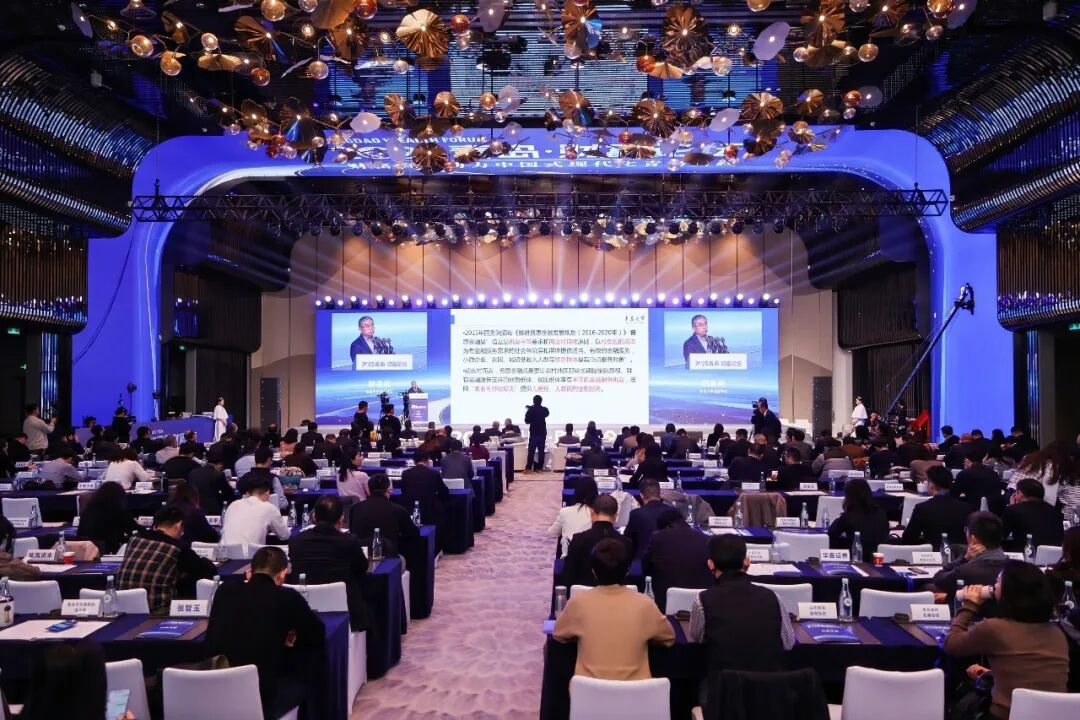
转自:推广 "十五五"开局之年已然临近。 规划建议首度将"金融强国"写入,既标志着我国金融发展逻辑发生重大转变——从基础制度搭建转入以"强国"为导向的质量提升与全球竞争力培育阶段, 也更对金融业发展提出新的更高要求。 正是在这样的历史节点,12月26日,以"财富管理助力中国式现代化青岛实践"为主题的2025青岛财富论坛在青岛金家岭金融区如约而至。 本次论坛共设置一个主论坛和三个分论坛,紧扣建设财富管理核心主线金融强国目标,围绕金融"五篇大文章",现场数百位国内经济金融领域相关领导、 业内知名专家学者齐聚,共探财富管理与国家战略同频共振的实践路径。 发出"青岛声音" 洞察"十五五"前沿趋势 过去一年,全球经济格局波谲云诡,国内新旧动能转换任重道远稳步演进,传统模式面临艰难险阻,在多重风险交织叠加下,金融业站在了转型的十字路 口。 已连续举办11届的青岛财富论坛,作为青岛推进财富管理中心建设的重要平台和品牌活动,早已成为洞察金融业发展趋势的前沿平台窗口。 本届论坛上,各界嘉宾在延续往年以前瞻视角、权威声音纵论行业发展同时,还进一步强调与国家"十五五"规划建议的融合,带来精彩的观点输出,以更 加积极的姿态深入探讨财 ...
龙头股年内涨近2倍 制药装备迎来高景气
Xin Lang Cai Jing· 2025-12-25 12:40
Core Viewpoint - The pharmaceutical equipment industry is experiencing a recovery, with many listed companies showing a turning point in performance due to a resurgence in demand as the pharmaceutical sector enters an expansion phase [1][2][10]. Industry Recovery - The pharmaceutical equipment sector was previously in a downturn due to the global biopharmaceutical industry's cyclical decline, but by Q3 2025, most related companies have shown signs of recovery [2][12]. - The global capacity is entering an expansion phase, which is expected to significantly benefit the pharmaceutical equipment industry [1][15]. Company Performance - In Q3 2025, Chutian Technology reported revenues of 1.479 billion yuan and a net profit of 96.77 million yuan, with year-on-year growth of 10.17% in revenue and 192.50% in net profit [3][12]. - Dongfulong achieved revenues of 1.275 billion yuan and a net profit of 85.66 million yuan in Q3 2025, marking a significant improvement compared to the previous quarter [3][13]. - Despite a decline in revenue and net profit in the first half of 2025, Sensong International's new orders reached a historical high, driven by a surge in pharmaceutical contracts [4][14]. Contract Liabilities - Both Chutian Technology and Dongfulong have seen a continuous increase in contract liabilities, indicating a growing backlog of orders [4][13]. Capacity Expansion Plans - Major domestic companies like WuXi Biologics and Kangfang Biologics are set to initiate new capacity expansions in 2024, with significant increases in production capabilities [5][15]. - Internationally, multinational pharmaceutical companies are also advancing their global capacity layouts to enhance supply chain resilience, with substantial investments planned in the U.S. [5][16]. International Market Opportunities - The global pharmaceutical equipment market is projected to grow significantly, with domestic companies having substantial opportunities for international expansion [7][17]. - Domestic brands are increasingly competitive, with a notable shift towards local production capabilities, indicating a strong potential for import substitution [7][17]. Strategic Internationalization - Companies like Sensong International are leveraging their long-term technological expertise to enhance their international presence, aiming to capture new orders amid the ongoing industry transition [8][18]. - Dongfulong and Chutian Technology are actively expanding their overseas operations, with Dongfulong already achieving significant sales in international markets [9][19].


驱动医药产业智能革命 中康科技发布《2025年度AI实战成果 》
Zheng Quan Ri Bao Wang· 2025-12-25 11:45
Core Insights - The report from Zhongkang Digital Technology Co., Ltd. indicates a significant shift in the pharmaceutical industry from "conceptual trials" to "practical implementation" of AI technologies [1] - Zhongkang Technology has established a comprehensive AI service ecosystem covering the entire industry chain, serving 1,685 clients, including 182 pharmaceutical companies and over 51 hospitals [1] Group 1: AI Implementation in Various Sectors - In marketing, Zhongkang Technology has launched the AI For Marketing Lab, marking a transition to a "trust-driven" marketing era, enhancing ROI visualization and maximization [2] - In the medical sector, the company supports over 510 hospitals with its self-developed "Zhuo Mu Niao Medical Model," which provides evidence-based decision-making tools for complex medical diagnoses [2] - The retail pharmacy sector has seen the deployment of AI systems in over 10,993 pharmacies, transforming operational logic and enhancing professional service capabilities [2] Group 2: Consumer Health Management - Zhongkang Technology has developed an AI system for comprehensive health management, utilizing a user base of over 3 million to provide personalized health interventions and risk warnings [3] - The company focuses on chronic disease and critical illness management, offering medication management and rehabilitation guidance while integrating humanistic care and policy interpretation [3][4] Group 3: Unique Data and Model Capabilities - Zhongkang Technology has transitioned from "data services" to "AI decision-making and intelligent services," creating a unique capability that combines data, models, scenarios, and ecosystems [5] - The company has developed specialized AI models, such as the Zhuo Mu Niao Medical Model, trained on extensive medical literature and knowledge graphs, ensuring high accuracy and relevance [5] - Zhongkang Technology possesses a high-quality data system that spans the entire industry chain, providing deep insights into market trends and patient behaviors [6] Group 4: Industry Challenges and Future Outlook - The pharmaceutical industry is entering a phase of "refined operations," where AI is becoming a fundamental capability rather than a mere vision, addressing challenges like normalized procurement and compliance pressures [7] - Zhongkang Technology aims to establish a "central operating system" for the health industry, integrating the entire value chain and covering all lifecycle application scenarios from prevention to management [7]
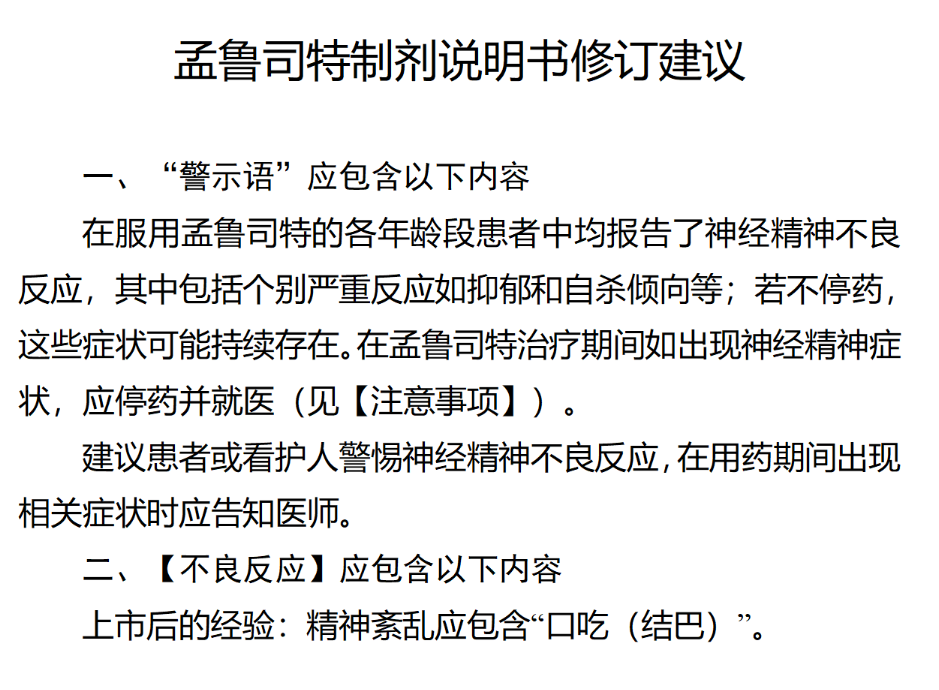
孟鲁司特被要求新增警示语,去年前三季度销售额超13亿元
2 1 Shi Ji Jing Ji Bao Dao· 2025-12-25 09:30
Core Viewpoint - The National Medical Products Administration (NMPA) of China has mandated the addition of warnings regarding neuropsychiatric adverse reactions in the instructions for Montelukast formulations, including serious reactions such as depression and suicidal tendencies, with a deadline for compliance set for March 12, 2026 [1][4]. Group 1: Regulatory Changes - The NMPA requires all Montelukast product license holders in China to revise their product instructions to include warnings about neuropsychiatric adverse reactions [1]. - The revisions must be submitted to the NMPA or provincial drug regulatory departments by March 12, 2026, and all existing product labels must be updated within nine months after the submission [1]. Group 2: Market Context - Montelukast sodium, originally developed by Merck (brand name: Singulair), is a potent selective leukotriene receptor antagonist used for asthma prevention and treatment in children aged 2 to 14 [3]. - Following the expiration of Merck's patent, domestic companies have begun to produce generic versions, with 62 approvals found on the NMPA website from various manufacturers [3]. Group 3: Adverse Reactions and Clinical Implications - The revision of Montelukast's instructions is based on adverse reaction assessments, with the FDA in the U.S. having previously issued a black box warning for similar neuropsychiatric adverse reactions [4][5]. - Reports of adverse reactions, including depression and suicidal behavior, have been documented, with a study indicating that 86.12% of Montelukast prescriptions in a certain hospital were for off-label uses [5][8]. Group 4: Sales and Competitive Landscape - Montelukast ranked third in sales among asthma medications in China for the first three quarters of 2024, with total sales reaching 1.33 billion yuan [9]. - The competitive landscape includes 24 companies with 42 formulations of Montelukast available, with significant market shares held by companies like Eurofarma and Shanghai Anbisen [9]. Group 5: Emerging Treatments - The emergence of biologic therapies is changing the treatment landscape for pediatric asthma, with several new biologics approved for use in children [10]. - The NMPA's revisions to Montelukast's labeling serve as a reminder for the need for safe and effective prescribing practices as new treatment options become available [10].