
华为

Search documents
环球时报社评:平常心看待这份“引发震惊”的大学排名
Xin Lang Cai Jing· 2026-01-21 16:27
Core Viewpoint - The recent Leiden University ranking reveals a significant rise of Chinese universities, with eight out of the top ten universities being from China, and Zhejiang University taking the top spot, while Harvard University has dropped to third place, sparking widespread attention and discussion [1][2]. Group 1: Chinese Universities' Rise - The ranking reflects the progress of China's education and technology sectors, with Chinese scholars leading in the number of SCI papers published and citations, marking a consistent trend over the years [1][2]. - By 2025, China's R&D expenditure intensity is projected to reach 2.8%, surpassing the OECD average for the first time, indicating a strong commitment to scientific and educational advancement [1]. - The top-ranked Chinese universities are predominantly research-oriented and excel in STEM fields, showcasing China's growing competitiveness in areas such as electronic communications, materials science, and physics [2]. Group 2: Limitations of the Ranking - The Leiden ranking has a clear bias towards research output, reflecting only a part of the overall picture, as other rankings like QS and Times Higher Education still show Western universities dominating the top positions [2]. - Western institutions maintain advantages in areas such as research originality, global talent attraction, and employer recognition, highlighting the need for Chinese universities to improve in comprehensive strength and innovation talent cultivation [2]. Group 3: Historical Context and Global Perspective - In the early 2000s, the Leiden ranking featured seven American universities in the top ten, with Zhejiang University only reaching the top 25, illustrating the rapid advancement of Chinese universities over the past two decades [3]. - The shock expressed by Western media regarding the ranking reflects a broader anxiety about the decline of technological hegemony, rather than a zero-sum narrative of failure for the West [3]. - The progress of Chinese universities is seen as a collective increase in global knowledge creation, emphasizing the importance of collaboration over competition in advancing scientific endeavors [3]. Group 4: Future Aspirations - The ranking serves as a mirror reflecting both achievements and areas for improvement, with aspirations for more international students to view Chinese universities as desirable destinations for study [4].
手机遇冷眼镜预热 eSIM仍在等待“上桌”
Bei Jing Shang Bao· 2026-01-21 16:11
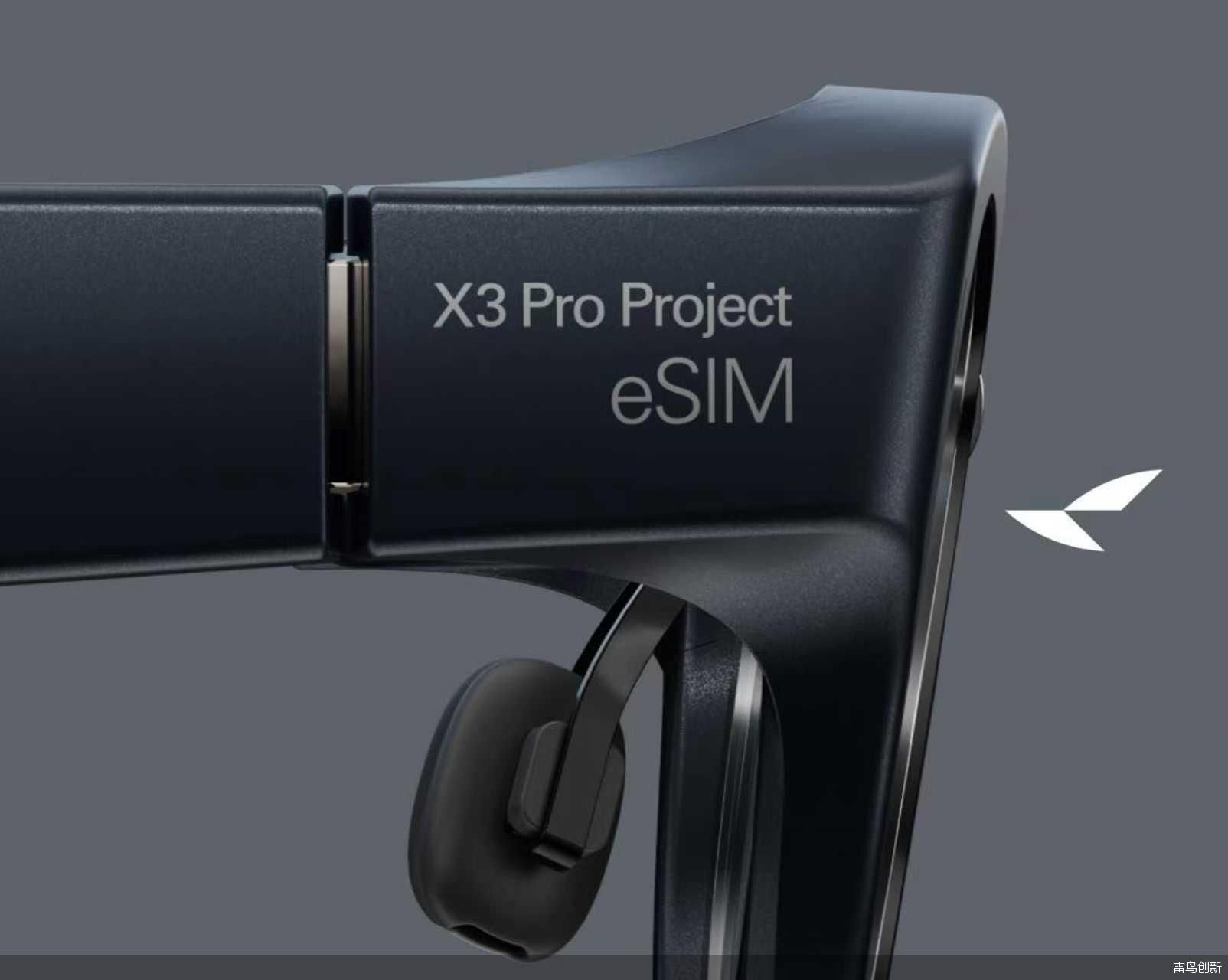
Core Insights - The demand for Apple's iPhone Air, which emphasizes extreme thinness, is significantly lower than expected, leading to supply chain cutbacks and anticipated component discontinuation by the end of 2025 [1][3] - The iPhone Air's reliance on eSIM technology has not resonated with mainstream consumers due to compromises in battery life, heat management, and other core specifications [1][3] - The slow adoption of eSIM in mobile devices is attributed to user habits, conservative manufacturer strategies, and insufficient cooperation from telecom operators [3][4] eSIM Technology in Mobile Devices - Current mobile devices featuring eSIM, such as OPPO Find X9 Pro and Huawei Mate 80 RS, still support physical SIM cards, indicating a cautious approach from manufacturers [4] - The reluctance to fully embrace eSIM technology is influenced by concerns over user control by telecom operators and uneven global infrastructure support [4] - eSIM is currently viewed as an additional feature rather than a core necessity in mobile devices, as users are accustomed to the convenience of physical SIM cards [4] Shift to AR Smart Glasses - As eSIM faces challenges in mobile applications, the industry is exploring its potential in AR smart glasses, which align better with eSIM's capabilities [5][7] - Thunderbird Innovation's AR glasses, featuring eSIM technology, have received significant investment from Chinese telecom operators, marking a strategic entry into the AR market [6] - The design of AR glasses, which prioritizes extreme thinness, benefits from eSIM's lack of a physical card slot, allowing for more compact designs [7] Market Potential and Challenges - The integration of eSIM in AR glasses is seen as having a clearer potential for adoption compared to mobile devices, given the alignment of form factor and use cases [7][9] - However, the current focus in the AR industry remains on optical display and spatial computing capabilities, with communication technology being a secondary priority [8] - The successful scaling of eSIM in AR devices may depend on advancements in technology and market conditions, such as seamless cross-operator functionalities [9]


免费领取!100+硅碳负极项目清单(第1批)——企业、产能、技术、进度......
DT新材料· 2026-01-21 16:05
| 800+ 200+ 30+ 50,000m | | --- | | 企业参展 科研院所 | | 2026 . 06 . 10 → 06 . 12 | 在新能源产业迭代升级的浪潮中,固态电池已成为撬动行业变革的核心支点,是衡量国家高端制造实力的重要 标志。 在固态电池体系中,负极直接决定电池的能量密度、循环寿命, 是制约电池整体性能升级的关 键环节 。 相比于传统石墨负极, 硅基负极凭借优异的性能 ( 硅理论 比容量 是传统石墨负极的10倍以上 )和与固态 电池体系的高匹 配 度( 降低 固-固界面阻抗,抑制锂 枝晶析出 ), 已成为当前固态电池体系主流选择 。 作为高能量密度电池的核心材料, 硅碳负极已成为固态电池产业链的关键布局方向。 2025年,国内硅碳负极 赛道更是呈现全面开花、项目密集落地的火热态势。 据 DT 新材料不完全统计,2025年国内硅碳负极落地项 目数量突破 100 个,规划总产能超 30 万吨,行业总投资额高达800 亿元! 我们已梳理2025年硅碳负极项目(涵盖受理、公示、开工、投产等全阶段)的核心信息 , 囊括产能规划、技 术路线、项目规模等关键内容。 扫描下方二维码,转发即可领 ...
以安全之名:欧盟强制“移除”中国通讯设备
Jin Tou Wang· 2026-01-21 15:45
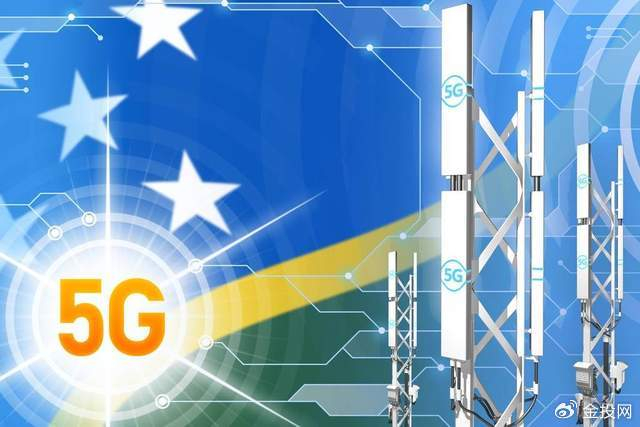
那为何欧盟要做到这个地步?欧盟首席技术官称,2025年其遭遇了77起由国家支持的网络攻击,造成的 经济损失估计高达3910亿美元,对欧盟民主、经济和生活方式是巨大的风险。在此背景下,强化对关键 信息通信技术供应链的控制,是一种必要的自卫。 本周二,欧盟传出的一则消息让全球科技界都绷紧了神经。欧盟委员会公布了一项前所未有的网络安全 法案草案,核心意图直白而强硬:强制27个成员国从其移动通信网络中移除中国科技公司华为和中兴通 讯的设备。 这并非欧盟首次表态。自2020年起,欧盟便建议各国首都从其5G网络中移除这些供应商的设备,理由 是存在网络安全风险。但据委员会消息人士透露,仅有约半数成员国采取了实际行动。而这一次,欧盟 的决定则从"自愿"升级为"强制"移除。 根据新提案,各成员国需要在法案通过后的三年内执行,但该法案本身首先需要获得各国的批准。正如 一位欧盟高级官员所说的,"自2020年提出以来,市场格局并未发生改变"。言下之意,欧盟的提议不太 能动摇中国通讯设备在欧洲各国的市场。 然而,如果获得批准,华为、中兴通讯和其他中国运营商将面临更多困境。除了5G网络,该法案还引 入了一套将特定国家列为"网络安全威胁" ...
“雅下工程” 万亿红利,成都如何吃干抹净?
Xin Lang Cai Jing· 2026-01-21 14:49
Group 1 - The core project, the Yajiang Engineering, has a total investment of approximately 1.2 trillion yuan and a construction period of about 10 years, moving from planning to substantial construction [1][33] - The project is expected to create a significant economic impact, marking the third wave of modernization for Chengdu, following previous industrial developments [1][33] - The Chengdu Comprehensive Support Base has a planned total construction area of 356,605 square meters and a net land area of about 54,000 square meters [1][33] Group 2 - Chengdu aims to establish a "full-cycle opportunity closed loop" to maximize benefits from the Yajiang Engineering, focusing on a complete cycle from input to output and driving growth [5][38] - The strategy includes a "factor tiered introduction" approach, where various companies related to the Yajiang Group are set to establish operations in Chengdu, enhancing local economic activity [6][39] - The project will leverage a significant annual demand for construction materials, with cement demand estimated at around 47 million tons and a total demand for TBM shield machines expected to exceed 12 billion yuan [10][43] Group 3 - Chengdu is positioned as a logistics, financial, and talent hub, with expectations to handle 40% of the construction material trade and logistics scheduling for the Yajiang Engineering [13][47] - The financial aspect includes managing a substantial flow of funds, with projections to handle around 40% of the financial settlements related to the project [13][47] - The project will also attract a large number of technical and management talents to Chengdu, enhancing the local economy and creating a high-value consumer base [14][48] Group 4 - The strategic actions include establishing a support system for attracting headquarters, enhancing service mechanisms, and ensuring logistical and financial support for the project [19][53] - The focus on "output empowerment" aims to leverage Chengdu's full industrial chain advantages to promote local products and services [21][55] - The logistics network will be developed to facilitate efficient material distribution, with plans for a dedicated area at the Qingbai River International Railway Port for the Yajiang Engineering [57][58] Group 5 - The project represents a shift for Chengdu from being a mere "receiver" of industries to becoming a strategic "organizer" of development, marking a new historical starting point for the city [30][61] - The overall goal is to transform the construction flow into sustainable industrial development, enhancing Chengdu's position as a value hub [28][61]
死磕机器人大脑的北大副教授,和我们聊了聊具身领域最大的「偏见」
36氪· 2026-01-21 14:33
以下文章来源于智能涌现 ,作者富充 智能涌现 . 直击AI新时代下涌现的产业革命。36氪旗下账号。 "软硬分化。" 软,是模型大脑,硬,是机器人本体;分化,是不同的公司各有所长,各司其职。 "软硬一体"在机器人没有规模化落地之前, 是包袱,不是优势。 文 | 富充 编辑 | 苏建勋 来源| 智能涌现(ID:AIEmergence) 封面来源 | 企业官方 2026年,具身智能会有怎样的分化?北京大学计算机学院副教授、"智在无界"CEO卢宗青向我们抛出一个判断: "智在无界"所在的北京鼎好大厦,是个被智源研究院、零一万物、银河通用等一众明星AI机构坐拥的大楼。在这里,人工智能的非共识,每天都在发生。 卢宗青的观点也和具身行业发展现状大相径庭。如今,获得高估值的具身创业公司,不论是已成为"独角兽"的智元机器人、银河通用,还是融资势头强劲的 星动纪元、星海图,都在执着地追求一件事:软硬一体,做全栈。 尽管如此,卢宗青与他于2025年创立的"智在无界",还是选择"逆势"做一家模型公司,只研发机器人大脑,并不涉足硬件制造。 智能涌现独家获悉,智在无界已于近日完成天使轮,融资金额为数千万元,由拉卡拉旗下考拉基金领投,领航 ...
摩尔线程去年预亏10亿,旗舰GPU量产
Guan Cha Zhe Wang· 2026-01-21 14:01
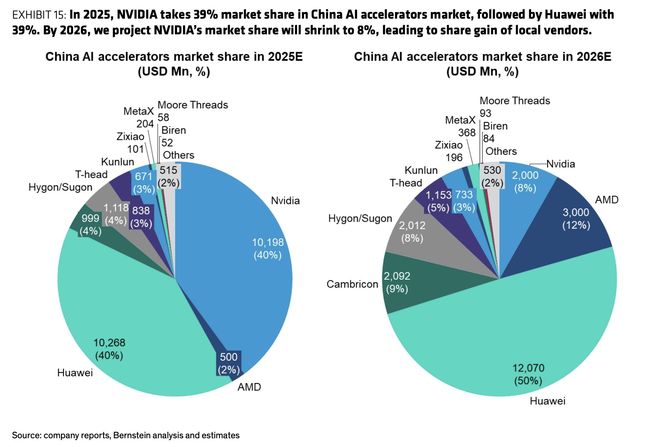
Core Viewpoint - The company, Moore Threads, forecasts a significant revenue increase for 2025, driven by the booming AI industry and strong demand for high-performance GPUs, despite expected net profit decline and ongoing research and development investments [1][2]. Financial Performance - Expected revenue for 2025 is projected between 1.45 billion to 1.52 billion yuan, representing a year-on-year growth of 230.70% to 246.67% [1]. - The anticipated net profit is estimated to be between 950 million to 1.06 billion yuan, reflecting a year-on-year decline of 34.50% to 41.30% [1]. - The company expects a non-recurring loss of 1.04 billion to 1.15 billion yuan, which is a reduction of 29.59% to 36.32% year-on-year [1]. Market Position and Competition - Moore Threads positions itself uniquely in the domestic market with its "AI + Graphics" dual-drive strategy, utilizing its MUSA architecture [2]. - The company claims to be the only domestic GPU capable of competing with NVIDIA, integrating AI computation acceleration, graphics rendering, scientific computing, and video codec capabilities [2]. - According to Bernstein Research, NVIDIA and Huawei are expected to dominate the Chinese AI accelerator market with 40% market share each by 2025, while other competitors like Haiguang and Pingtouge hold only 4% [2]. Research and Development - The GPU industry is characterized by high barriers to entry, significant R&D investment, and long development cycles, requiring comprehensive R&D capabilities [3]. - Moore Threads has invested over 4.3 billion yuan in R&D from 2022 to the first half of 2025, compared to 1.07 billion yuan by Cambrian for 2024 [3]. Technological Advancements - The company has achieved market-leading performance with its fourth-generation GPU architecture, the MTT S5000, which has reached a floating-point computing capability of 10 Exa-Flops in a cluster [5]. - The fifth-generation GPU architecture, "HuaGang," supports full precision calculations and will lead to the development of high-performance AI training chips and graphics rendering chips [5]. - Recent collaborations have demonstrated the capabilities of the MTT S5000 in training large models, marking significant advancements in the domestic GPU sector [6]. Funding and Future Projects - Moore Threads announced plans to use its own funds to meet the financial needs of its R&D projects, ensuring the smooth progress of GPU development [6]. - The funding will focus on three core R&D projects: next-generation AI training and inference chips, next-generation graphics chips, and next-generation AI SoC chips [6].
手机遇冷眼镜预热,eSIM仍在等待“上桌”
Bei Jing Shang Bao· 2026-01-21 13:59
Core Insights - The demand for Apple's iPhone Air, which focuses on extreme thinness, is significantly lower than expected, leading to supply chain cutbacks and anticipated component discontinuation by the end of 2025 [1][3] - The eSIM technology, initially aimed at enhancing the iPhone Air's appeal, has not gained traction in the smartphone market, with manufacturers opting for dual support of physical SIM cards and eSIMs instead of fully adopting eSIM [1][4] Group 1: iPhone Air and eSIM Challenges - The iPhone Air's attempt to innovate in the smartphone market has revealed that consumers willing to pay for an ultra-thin experience are a niche audience [3] - Users are reluctant to purchase a device that compromises on essential features like battery life and camera quality for the sake of a lightweight design [4] - The cumbersome process of activating and switching eSIMs has contributed to slow adoption rates among users [4] Group 2: Shift to AR Glasses - The introduction of eSIM-enabled AR glasses by Thunderbird Innovation at CES 2026 represents a potential new avenue for eSIM technology, as AR glasses require compact designs that benefit from eSIM's lack of a physical card slot [6][7] - The strategic investment from major telecom operators in the AR glasses sector indicates a shift in focus towards integrating eSIM technology into new devices [6] - The compatibility of eSIM with AR glasses is seen as more promising than in smartphones, as the technology aligns better with the design and functional requirements of AR devices [7] Group 3: Future of eSIM in AR - While eSIM technology is mature and can be integrated into products with relative ease, it is not currently the primary focus for AR glasses, which prioritize optical display and spatial computing capabilities [8] - The potential for eSIM to become a necessity in AR devices hinges on advancements in technology and market conditions, particularly in scenarios like cross-border travel and IoT applications [9] - The industry acknowledges that while eSIM presents opportunities, the actual implementation and validation of its benefits will require time and further development [10]

AI玩具的竞合博弈
Bei Jing Shang Bao· 2026-01-21 13:53
Core Insights - The AI toy market in China is rapidly growing, projected to reach 24.6 billion yuan in 2024 and 29 billion yuan in 2025, doubling the growth rate of traditional toys [1] - Major tech companies and IP giants are entering the AI toy sector, creating a multi-dimensional competitive landscape [3][4] - The emotional value of AI toys is becoming a key factor in consumer decision-making, shifting focus from mere functionality to emotional companionship [6][12] Market Dynamics - The AI toy market is characterized by a significant influx of major players, including internet giants and consumer electronics companies, leading to intense competition [3][4] - The market is currently in a "startup phase" with a focus on emotional connection and user experience, rather than just technological advancement [12][15] - The global AI toy market is expected to grow at a compound annual growth rate of approximately 14%-16% over the next decade, potentially exceeding $60 billion by 2034 [7] Product Development and Innovation - Companies are focusing on creating AI toys that cater to various age groups and needs, from children's education to elderly companionship [4][5] - Startups are leveraging emotional connections and niche market demands to differentiate themselves from larger competitors [5][10] - The integration of advanced AI technologies, such as natural language processing and emotional recognition, is crucial for product development [4][11] Ethical and Safety Concerns - The rise of AI toys raises significant ethical questions regarding data privacy, emotional dependency, and the potential impact on children's social skills [12][13][14] - Companies are urged to implement strict safety measures and ethical guidelines to protect user data and ensure the well-being of children [14][15] - The industry faces challenges related to content safety and the risk of harmful interactions, necessitating robust content filtering and security protocols [13][14] Future Outlook - The AI toy industry is expected to undergo a significant transformation, with a focus on value-driven competition rather than price wars [12][15] - Companies that can effectively balance technological innovation with emotional engagement and ethical considerations are likely to succeed in this evolving market [11][15] - The concept of "emotional economy" is becoming central to the development of AI toys, indicating a shift in consumer preferences towards products that offer companionship and emotional support [12][15]

信维通信:多赛道卡位核心供应链 科技巨头背后的“隐形王者”
Quan Jing Wang· 2026-01-21 13:41
Core Insights - The company, Xinwei Communication, is positioned as a key player in the supply chain of global tech giants, leveraging its core RF technology to penetrate various industries including AI smart terminals, commercial aerospace, and smart vehicles [1][6] - The company is proactively laying the groundwork for 6G core technologies, aiming to capitalize on the next wave of communication advancements [1][4] AI Smart Terminals - Xinwei Communication has developed a comprehensive solution covering mobile phones, AI glasses, and VR/AR devices, focusing on signal perception and high-speed connectivity [2] - The company is a core supplier of RF and charging solutions for major manufacturers like Apple, Huawei, and Xiaomi, participating deeply in flagship model supply chains [2] - In the AI terminal and XR fields, Xinwei provides antenna and structural solutions for companies like Meta and Google, with products currently in the sampling and validation stages [2] Commercial Aerospace - As satellite internet enters a phase of large-scale deployment, Xinwei has established itself as a core supplier of key components in commercial aerospace, particularly in LCP millimeter-wave antennas [3] - The company is the exclusive supplier of certain components for SpaceX's Starlink project, providing millimeter-wave connectors and satellite LCP antennas [3] - Xinwei is also involved in domestic satellite network projects, supplying LCP antenna arrays and RF devices, thus becoming a major supplier in the domestic commercial aerospace sector [3] Smart Vehicles - Xinwei Communication is extending its technology from AI smart terminals to automotive-grade products, including vehicle antennas, wireless charging, and high-speed connectors [4] - The company is a core supplier for Tesla, providing 5G vehicle antennas and millimeter-wave radar connectors for multiple models [4] - Xinwei is working towards becoming a primary supplier for BYD in the vehicle antenna and wireless charging module sectors [4] 6G Technology Development - The company is actively involved in the research and development of 6G technologies, having already established over 300 key technology reserves [4][5] - Xinwei is focusing on critical technologies such as intelligent super surfaces and LCP materials, while also advancing the pre-research and validation of automotive-grade 6G communication components [4][5] - The company aims to become a core supplier in the next-generation communication ecosystem, leveraging its early technological advantages [6]
