洋河股份

Search documents
食饮吾见 | 一周消费大事件(7.20-7.25)
Cai Jing Wang· 2025-07-26 01:56
Group 1 - Yanghe Co. elected Gu Yu as the chairman of the board, with the term consistent with the current board's term [1] - FrieslandCampina reported a 6.4% increase in revenue to €6.847 billion, with a net profit of €230 million, driven by a 19.1% rise in milk prices [2] - OATLY's revenue for the first half of the year was $406 million, a 1.1% increase, while the Greater China region saw a 12.5% growth [2] - Yanzhi House expects a net profit of approximately ¥72 million to ¥81 million for the first half of 2025, a year-on-year growth of 20% to 35% [3] - Angel Yeast plans to acquire 55% of Shengtong Sugar Industry for a transaction amount of ¥506 million [4] - Nestlé's sales for the first half of 2025 were CHF 44.2 billion, with a 1.8% decline attributed to currency fluctuations [5][6] Group 2 - Anji Food completed the acquisition of 70% of Dingwei Thai and 100% of Dingyifeng, integrating them into its consolidated financial statements [7] - Coca-Cola reported a net revenue of $12.5 billion for Q2 2025, a 1% year-on-year increase [7] - Yuanji Cloud Dumplings announced the opening of franchises in Singapore, marking its first step in overseas expansion [8] - Starbucks introduced self-study rooms in some Guangdong stores, planning to explore more "interest-oriented" spaces in the future [9] - Cotton Password stated that under normal usage conditions, the residue of thiourea in their sanitary napkins does not pose a health risk [10] - Sam's Club responded to claims of organic soybean quality downgrade, stating the new high-protein soybeans still meet the first-grade standard [11] - Donglai Yu announced that 50% of the production of Jiugui Ziyouai will be allocated to support enterprises, with accelerated development of milk powder and dairy products [12]




第二十六届安徽糖酒会上新低度潮饮与精酿啤酒主题展同期举办
Qi Lu Wan Bao· 2025-07-25 08:06
Core Insights - The liquor industry is evolving towards younger, more diverse, and health-conscious consumer preferences, with a significant focus on low-alcohol beverages and craft beer [2][3] - The 2025 Anhui Low-Alcohol Trend Drinks and Craft Beer Exhibition will take place from November 15-17 at the Hefei Binhu International Convention and Exhibition Center, aiming to create a professional platform for industry exchange [2][6] Industry Trends - The low-alcohol beverage market has seen a compound annual growth rate (CAGR) of over 25%, with the market size projected to reach 74.3 billion yuan by 2025, driven by changing consumer attitudes and a focus on healthier drinking options [3][5] - The penetration rate of low-alcohol beverages in China is significantly lower than in the U.S., indicating substantial growth potential, particularly for craft beer, which has a penetration rate of less than 3% in China compared to over 13% in the U.S. [3][5] Market Dynamics - The Anhui province is experiencing economic growth, with a projected GDP of 5,062.5 billion yuan in 2024, marking a year-on-year increase of 5.8%, positioning it as a key market for low-alcohol beverages [6][8] - The integration of Anhui into the Yangtze River Delta economic zone enhances its market potential, providing a broader consumer base for low-alcohol drinks and craft beer [8][9] Exhibition Details - The 2025 Anhui Low-Alcohol Trend Drinks and Craft Beer Exhibition is the only provincial-level professional exhibition in Anhui, aimed at facilitating business cooperation and technical exchanges within the industry [9][11] - The exhibition will coincide with the 26th Anhui International Sugar and Wine Food Trade Fair, leveraging the existing audience and enhancing market outreach for exhibitors [11][13] Marketing and Outreach - The exhibition organizers are committed to attracting a high-quality audience by conducting extensive outreach in Anhui and surrounding provinces, ensuring a robust attendance of professional visitors [13][14] - Additional events, such as seminars on market trends and award ceremonies, will be held during the exhibition to provide further networking opportunities for exhibitors and attendees [13]


中经酒业周报∣7月中旬全国白酒环比价格总指数保持稳定,《柔雅型白酒》团标通过评审,茅台、五粮液设立科技类子公司
Xin Hua Cai Jing· 2025-07-25 03:00
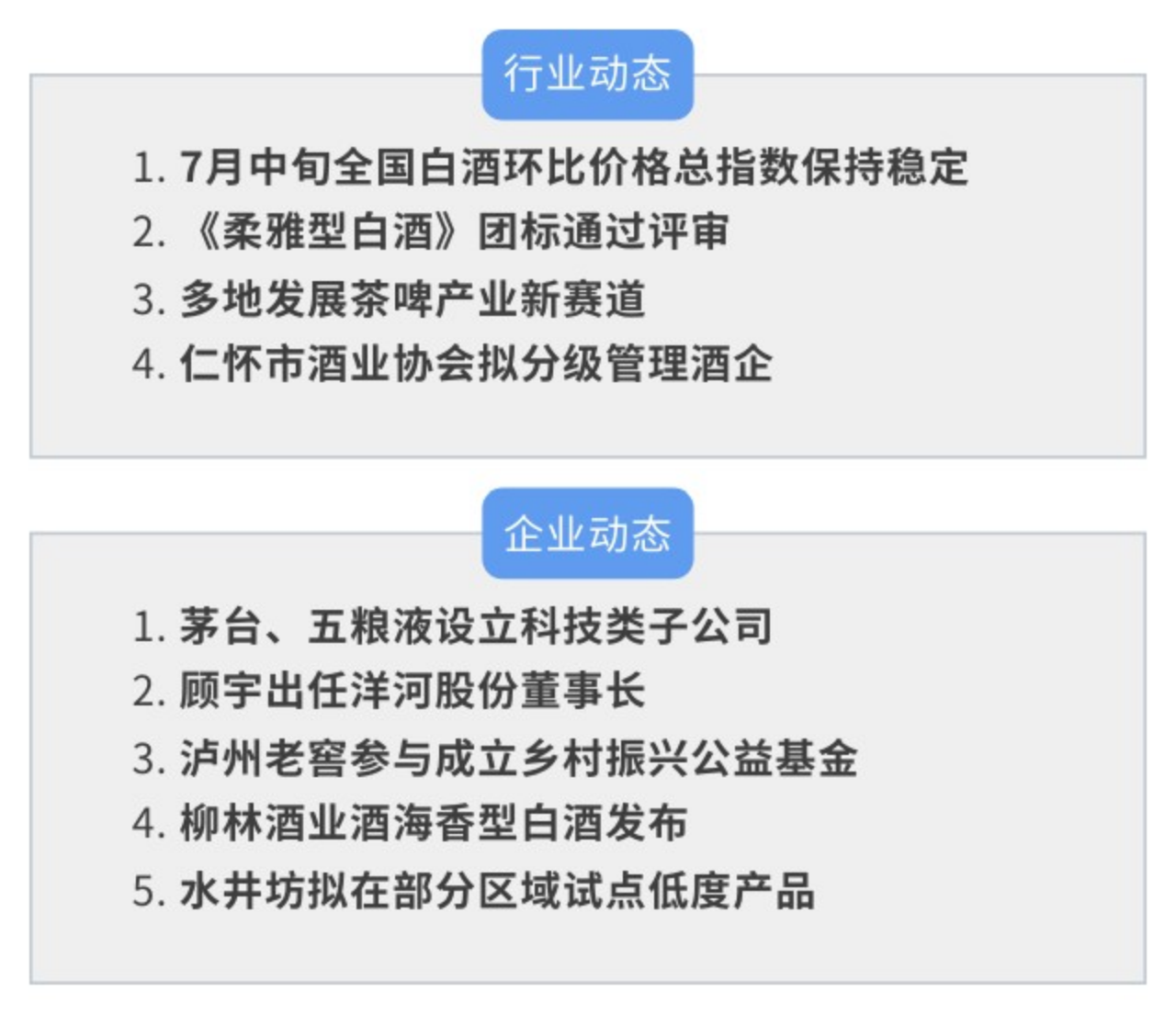
Industry Dynamics - The national white liquor price index remained stable at 100.00 in mid-July, with the famous liquor index also at 100.00, while local liquor saw a slight decrease of 0.01% to 99.99. The base price index for national white liquor wholesale prices increased by 8.34% to 108.34, with famous liquor up by 10.38% to 110.38, local liquor up by 3.74% to 103.74, and base liquor up by 10.21% to 110.21 [1] - The "Soft Elegant White Liquor" group standard was approved, defining the production process and style characteristics, which will help standardize production, inspection, and sales, promoting healthy industry development [1] - The tea beer industry is emerging, with strategic partnerships formed in Guizhou and Anhui to develop tea-infused beer products, aligning with consumer demand for low-alcohol and healthy beverages [2][3] - The Guizhou Renhuai City Liquor Industry Association introduced a tiered management system for liquor companies, categorizing them into "reliable," "basic compliance," and "high-risk" enterprises, with penalties for violations and rewards for outstanding performance [4] Company Developments - Wuliangye established a technology subsidiary with a registered capital of 100 million yuan, focusing on fermentation process optimization and technology research [5] - Kweichow Moutai announced the establishment of a scientific research institute with a registered capital of 1 billion yuan, aiming to enhance product quality and explore new growth areas [5] - Gu Yu was elected as the chairman of Yanghe Co., marking a leadership change [5] - Luzhou Laojiao announced a partnership to establish a rural revitalization public welfare fund with a total donation of 20 million yuan over three years [5] - Liulin Liquor launched a new fragrance type, "Jiu Hai Xiang," utilizing a unique fermentation process and a standardized production system [5] - Shui Jing Fang is testing low-alcohol products below 38 degrees in select markets [6]




以史为鉴,白酒板块现在处于什么阶段?
2025-07-25 00:52
Summary of the Conference Call on the Liquor Industry Industry Overview - The liquor industry, particularly the baijiu sector, is currently experiencing a phase similar to the second half of 2024, with characteristics reminiscent of 1998 [1][4] - The sector has entered an active destocking phase, which may be in its later stages [1][4] - The 2025 alcohol ban will have a profound impact on public consumption of liquor, significantly affecting mid- to low-end baijiu [1][4] Key Insights and Arguments - The recent rebound in the baijiu sector, with an index increase of approximately 10% since July, was primarily driven by capital inflow and favorable policies encouraging long-term investments in high-dividend stocks [2][9] - Leading companies like Wuliangye, Luzhou Laojiao, and Yanghe have become attractive due to their high Return on Equity (ROE) and dividend rates [2][9] - The launch of the Yalong River Hydropower Station has positively influenced the infrastructure-related baijiu sector [2][9] - The current economic environment is undergoing a transition between old and new momentum, suggesting that the adjustment period may be longer than in 2014 due to demographic changes and the rise of new industries affecting traditional consumption scenarios [1][4][6] Historical Context - Since 2000, the baijiu industry has undergone four complete cycles, with the current cycle being more complex due to external policy pressures and demographic shifts [5][6] - Previous adjustments (2012-2014) were influenced by tightening real estate policies and anti-corruption measures, leading to significant declines in net profits for high-end and mid-high-end baijiu companies [1][7] Current Market Conditions - The overall valuation of the baijiu sector is approaching levels seen in early 2023, with expectations for a stabilization phase starting in Q3 2025 [3][9] - The worst period of the current adjustment cycle is believed to have passed, with potential for positive monetary or fiscal policies to emerge in the latter half of the year [3][9] - The sector's performance is closely tied to macroeconomic conditions and policy environments, with high-end baijiu companies showing quicker recovery rates [7][8] Investment Recommendations - The baijiu sector is classified as a cyclical quality asset, with recommendations to focus on high-end and mid-high-end brands such as Moutai, Wuliangye, and Luzhou Laojiao, which are actively engaging in digital transformation and appealing to younger consumers [12][13] - Investors are advised to monitor the pace and intensity of policy releases, as these will significantly influence market dynamics and stock performance [10][14] - Specific stock selection strategies include focusing on companies with healthy inventory levels and those that are effectively managing their supply chains [13][14] Future Outlook - The third quarter is expected to present trading opportunities, with limited downside risk for sector valuations, largely influenced by Moutai's pricing strategies [14] - The overall sentiment is cautiously optimistic, with expectations for gradual recovery and stabilization in the baijiu market as inventory issues are addressed [10][11][14]
白酒公司集体降度,靠“小甜水”找增量
Xin Lang Cai Jing· 2025-07-24 02:06
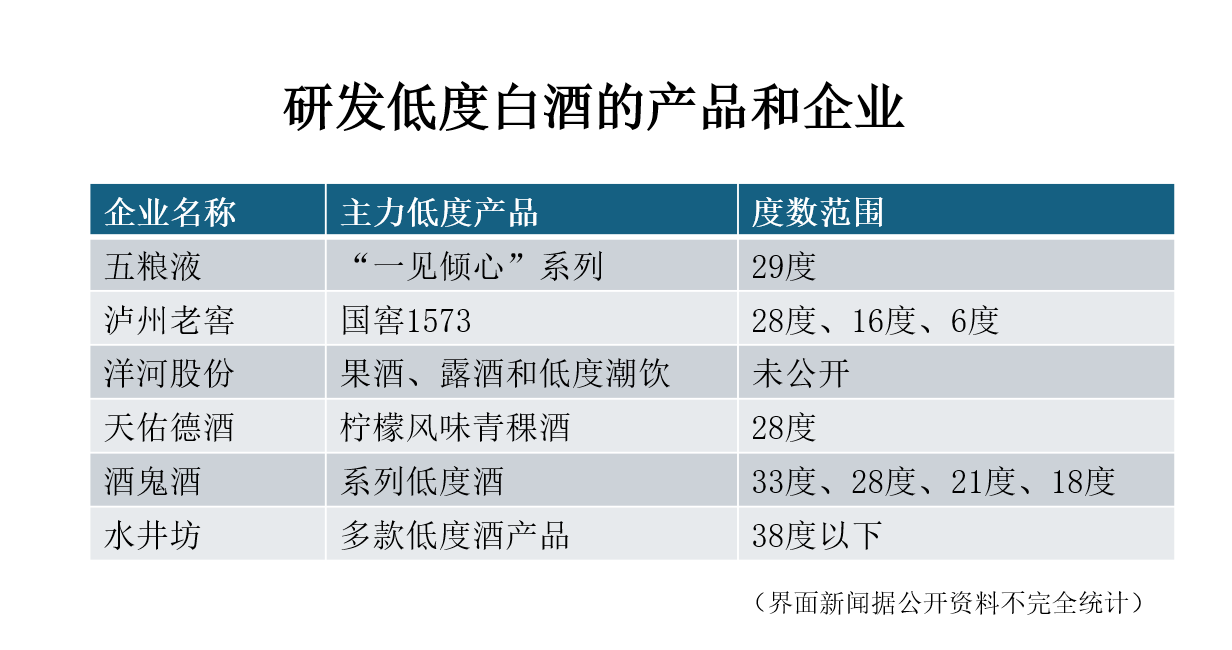
Group 1 - The core viewpoint of the articles highlights a significant shift in the Chinese liquor industry, with major companies developing and promoting low-alcohol products below 38 degrees, aiming to attract younger consumers and diversify their product lines [1][3][9] - Major companies like Wuliangye, Luzhou Laojiao, and Yanghe are actively participating in this trend, with Wuliangye planning to launch a 29-degree product and Luzhou Laojiao already having developed a 28-degree version [2][3][4] - The low-alcohol market is projected to grow significantly, with estimates suggesting it will exceed 74 billion yuan by 2025, reflecting a compound annual growth rate of 25%, which is much higher than the overall growth of the liquor industry [3][9][10] Group 2 - The shift towards low-alcohol products is driven by changing consumer preferences, particularly among younger demographics, where over 60% prefer low-alcohol options due to the harshness of high-alcohol beverages [3][9] - Companies are not only focusing on low-alcohol products but are also exploring cocktail mixes to create a more diverse flavor profile suitable for summer consumption [5][6] - The industry is witnessing a competitive landscape where traditional high-alcohol brands are adapting to market demands, with the success of low-alcohol products hinging on the companies' ability to innovate in brewing techniques and expand distribution channels [9][10]


梦之蓝手工班全球巡味之旅在泰国曼谷启幕
新华网财经· 2025-07-23 09:27
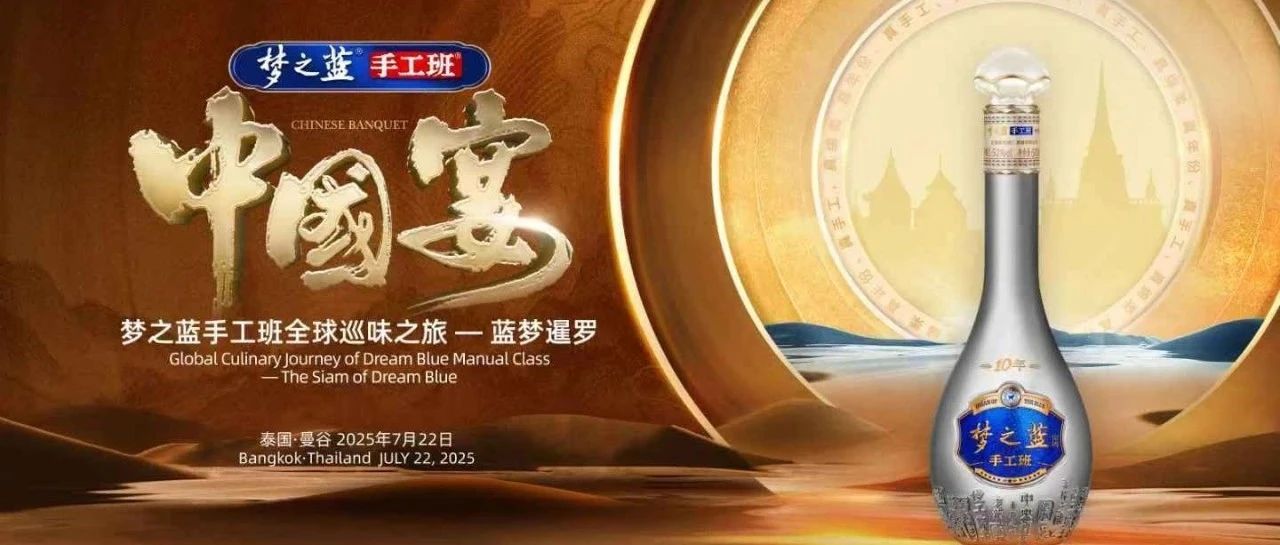
Core Viewpoint - The article highlights the global debut of the culinary IP "Chinese Banquet," which aims to promote Chinese food culture and enhance international understanding of Chinese traditions through a cultural exchange event in Thailand [1][3][5]. Group 1: Event Overview - The "Chinese Banquet" event was launched in Bangkok, featuring over 50 guests from various sectors, including government, business, and academia, showcasing the rich cultural heritage of Chinese dining [1][7]. - The event included a tasting of Sino-Thai fusion dishes, emphasizing the dialogue between civilizations and the cultural confidence of China [1][3]. Group 2: Cultural Significance - The initiative is part of a broader effort to promote traditional Chinese culture abroad, with a focus on achieving cross-cultural resonance through the "Chinese flavor" [3][5]. - The event coincides with the 50th anniversary of diplomatic relations between China and Thailand, highlighting the vitality of cultural exchanges between the two nations [5][7]. Group 3: Culinary Heritage - Chinese culinary culture is described as a refined civilization developed over 5,000 years, with a strong emphasis on quality and craftsmanship in both food and drink [5][14]. - The "Chinese Banquet" serves as a platform to showcase the non-material cultural heritage of Chinese cooking techniques and customs, fostering cultural integration between China and Thailand [8][14]. Group 4: International Expansion - The article notes that the internationalization of Chinese liquor, particularly Yanghe's "Dream Blue," has become essential, with products now available in over 80 countries across six continents [12]. - The "Dream Blue Handcrafted Class" series has previously held events in various countries, gaining popularity among overseas consumers and enhancing the brand's global presence [12][14].
白酒下行周期中的投资机会
雪球· 2025-07-23 09:20
Core Viewpoint - The Chinese liquor industry is entering a downward cycle, with some companies experiencing negative growth, and the market is characterized by shrinking competition and increasing concentration among leading firms [3][6]. Industry Status - The production of large-scale liquor companies peaked in 2016 and has been declining annually, with 2023 production at only 46.32% of 2016 levels [10]. - In 2023, the top six companies accounted for 13% of the industry's production but captured 53.85% of the total revenue, indicating a significant increase in industry concentration from 23.8% in 2017 [11]. - The liquor market is segmented into five price bands, with leading products dominating each segment, such as "Flying Moutai" in the above 2000 yuan category and "Wuliangye" in the 1000 yuan category [13][14]. Brand Dynamics - The success of a liquor brand hinges on having a flagship product with over 10 billion yuan in sales that can dominate a price segment [14]. - The liquor industry is characterized by strong brand loyalty, where high-end liquor is perceived as a cultural product rather than just a beverage, emphasizing social recognition and status [19][20]. Price Characteristics - The price of high-end liquor is closely tied to the income levels of consumers, with "Flying Moutai" prices fluctuating around half of the urban residents' disposable income [24]. - During economic downturns, the prices of premium liquors tend to decrease, impacting the market space for other brands [25]. Cycle Analysis - The liquor cycle is influenced by factors such as consumer wealth levels and short-term economic conditions, with the current economic environment contributing to the industry's downward trend [28][36]. - The inventory cycle plays a crucial role, where excess inventory can exacerbate price declines during economic downturns [38][44]. Investment Recommendations - The top investment choices in the liquor industry are "Guizhou Moutai" and "Wuliangye," both of which have established national and high-end market positions, making them less susceptible to competition [55]. - The timing for purchasing these stocks should be based on historical performance patterns, indicating that stock prices may recover before fundamental improvements are evident [59]. - Current valuations suggest that "Guizhou Moutai" has a price-to-earnings ratio of around 20, while "Wuliangye" is at approximately 14, with both companies expected to return to growth after the current downturn [62].

韩国大买中国股票,宇树科技启动IPO,A股会迎来指数牛吗?
Sou Hu Cai Jing· 2025-07-23 07:03
Group 1 - The year 2025 marks a critical moment for global investors to reassess Chinese assets, with high-quality Chinese companies gaining international attention [1] - The success of these companies highlights the resilience and innovative potential of the Chinese economy, sparking renewed interest from international capital [1][6] - Chinese assets are becoming an indispensable part of international investment portfolios due to their unique appeal amid changing global economic dynamics [1] Group 2 - Recent market movements indicate a shift from small-cap stocks to core assets, as analysts predict a significant change in market style [2][4] - Core assets have played a crucial role in stabilizing the A-share market, with major banks' stocks acting as a stabilizing force for the overall index [2][4] - The potential for a significant index bull market is low, with a more likely scenario being a slow and steady market growth driven by core assets [4] Group 3 - Chinese assets have shown strong anti-drawdown capabilities, particularly in the first half of the year, attracting risk-averse funds during a downturn in Western markets [6] - The emergence of companies like the "Hangzhou Six Little Dragons" and "New Consumption Four Sisters" reflects the optimism of global investors towards Chinese technology and consumption sectors [6][7] - Compared to U.S. core assets, Chinese core assets are significantly undervalued, with the average valuation of the CSI 300 at 13 times and the Hang Seng Index at around 11 times, compared to over 30 times for U.S. indices [7] Group 4 - The current phase for Chinese assets is characterized by low valuations and the release of policy dividends, enhancing investment safety and potential profitability [7] - Korean investors are increasingly buying Chinese stocks, particularly in technology and emerging industries, indicating a shift in global investment attitudes towards China [7] - The ongoing IPO process of Yushu Technology is drawing attention, with its capital structure becoming clearer as it progresses through multiple funding rounds [10][12][14] Group 5 - Yushu Technology's revenue primarily comes from B2B orders from research institutions and AI companies, with its consumer market yet to fully open [16] - Notable investment strategies include focusing on high-quality companies with clear competitive advantages, as demonstrated by significant increases in holdings of leading consumer and technology stocks [19] - The investment landscape is advised to follow major trends and policies, with recommendations to focus on stable sectors while exploring emerging opportunities [20]





张坤逆市加仓白酒股
21世纪经济报道· 2025-07-23 03:45
Core Viewpoint - After four consecutive years of decline in the liquor sector, top fund manager Zhang Kun has significantly increased his holdings in high-end liquor stocks, believing that pessimistic expectations will eventually be broken [2][11]. Fund Performance - In Q2, all four funds managed by Zhang Kun underperformed their respective benchmarks, with total assets under management dropping to 55.047 billion yuan, a decrease of 9.50% from the previous quarter [4][6]. - The specific returns for the funds in Q2 were -7.15%, -7.07%, -5.64%, and 8.79%, while their benchmarks grew by 1.92%, 1.55%, 1.92%, and 10.13% respectively [4]. Fund Holdings and Adjustments - Zhang Kun's funds increased their positions in several high-end liquor stocks, including Wuliangye, Luzhou Laojiao, Kweichow Moutai, and Shanxi Fenjiu, while Yanghe exited the top ten holdings [2][7]. - The largest fund, E Fund Blue Chip Select, had a total size of 34.943 billion yuan at the end of Q2, with a significant increase in concentration among its top ten holdings from 74.51% to 83.84% [7][9]. Market Outlook - Zhang Kun does not agree with the pessimistic outlook on domestic demand and the economy, asserting that China will continue to progress towards its goal of reaching a GDP per capita level of a moderately developed country by 2035 [11][12]. - He emphasizes that the valuation of the companies in his portfolio already reflects expectations of future profit declines, making them attractive for long-term investors due to low valuations and substantial shareholder returns [12].


华致酒行(300755):即时零售渠道大有可为 华致酒行具备天然优势
Xin Lang Cai Jing· 2025-07-23 02:39
Group 1 - The structure of the liquor consumer demographic is gradually becoming younger, with an increasing focus on instant retail channels. The ban on alcohol consumption for civil servants has led to a decrease in business banquet scenarios, while gatherings with friends, late-night drinks, and camping experiences are on the rise, indicating a shift towards the immediacy of liquor purchases [1] - According to Meituan Flash Purchase data, the transaction scale of instant retail for liquor is expected to grow by over 100% year-on-year in 2024. 30% of liquor orders are delivered to dining establishments, suggesting that some consumers have developed a habit of purchasing liquor instantly in dining scenarios [1] - Major liquor companies like Kweichow Moutai, Luzhou Laojiao, Wuliangye, and Yanghe are entering the instant retail channel, often through their own stores. For instance, Luzhou Laojiao's "Hour Delivery" stores utilize a "live streaming + instant retail" model for product delivery [1] Group 2 - Huazhi Liquor has a wide store channel layout and addresses consumer pain points regarding product authenticity, giving it a natural advantage in the instant retail channel. The company actively engages with platforms like WeChat Mini Programs, Meituan, JD.com, Ele.me, Douyin, and Taobao Flash Purchase [2] - With 2,000 stores and over 30,000 terminal service points across major cities in China, Huazhi Liquor has a significant advantage in store channel layout. The company maintains long-term stable partnerships with leading liquor brands to ensure product authenticity [2] - The company has adjusted its revenue and gross margin forecasts for 2025-2026. The projected earnings per share for 2025-2027 are 0.29, 0.50, and 0.57 yuan, respectively. The estimated equity value of the company is 8.4 billion yuan, with a target price of 20.14 yuan, maintaining a buy rating [2]