顺丰控股

Search documents
国泰海通:快递量持续较快增长 反内卷开启盈利修复
Zhi Tong Cai Jing· 2025-10-27 01:48
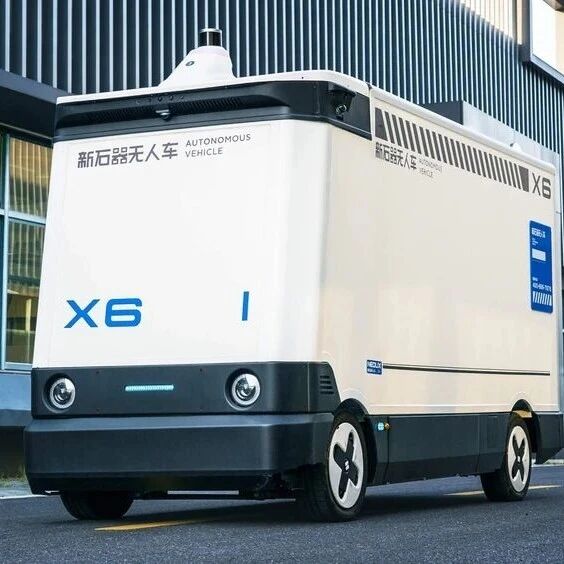
Core Insights - The report from Guotai Junan indicates that the trend of "anti-involution" in the express delivery industry has spread nationwide, significantly increasing the per-package revenue for companies and is expected to improve the profitability of e-commerce express delivery firms in the second half of this year and next year, with profitability elasticity depending on the sustainability of price increases [1] Group 1: Industry Trends - The trend of small-package delivery continues, with the industry expected to maintain resilient growth in business volume. By August 2025, the cumulative express delivery volume reached 128.2 billion packages, a year-on-year increase of 17.8% (on a comparable basis), indicating counter-cyclical growth [1] - The consumption potential in lower-tier markets, such as the central and western regions and rural areas, is being released, which is expected to contribute to resilient growth in industry business volume in the second half of 2025 and 2026 [1] Group 2: Financial Performance - In the first eight months of 2025, the express delivery industry's per-package revenue was 7.48 yuan, a year-on-year decline of 7.3%, but the decline has narrowed compared to a 12.3% drop at the end of 2024, reflecting a slowdown in price competition under the "anti-involution" regulation [1] - The upcoming peak season for e-commerce is anticipated to stabilize and repair express delivery prices in the second half of 2025 and 2026 [1] Group 3: Cost Dynamics - The weakening of economies of scale is noted, with the core cost per package declining at a slower pace. As transportation and transfer costs have limited room for reduction, the introduction of unmanned vehicle technology is expected to lower the delivery costs at the final stage [2] - New social security regulations are expected to lead to a short-term increase in per-package costs, but in the long term, they may drive the industry towards a value competition transformation [2]



周期论剑|业绩与确定性
2025-10-27 00:31
Summary of Key Points from Conference Call Records Industry Overview - **Traditional Industries in China**: The cyclical nature of traditional industries is weakening, with a shift in fixed asset investment towards asset management. This change is driven by a decline in risk-free returns, which is fostering the development of capital markets [1][5][6]. - **Economic Policy Shift**: The 20th Central Committee emphasized economic construction, marking a transition to a more proactive development strategy, which is beneficial for technology and consumer sectors [1][7]. - **Market Outlook**: The Chinese market is expected to stabilize above 4,000 points by 2025, with no second bottom anticipated. Adjustments in the market are seen as buying opportunities [1][3][10]. Key Sectors and Companies - **Metals Sector**: Industrial metals are expected to benefit from improved risk appetite due to US-China trade negotiations. The Federal Reserve's potential interest rate cuts may lead to increased liquidity, positively impacting both precious and industrial metal prices [1][12]. - **Chemical Industry**: Supply-side pressures are expected to ease, with leading companies in coal chemicals (e.g., Hualu Hengsheng), spandex (e.g., Huafeng Chemical), and refrigerants showing growth potential [1][16][19]. - **Logistics Sector**: The express delivery industry is experiencing a price increase trend, with major companies like Shentong and YTO showing strong growth. The focus is on companies with robust performance and reasonable valuations [4][21][22]. - **Coal Market**: The coal market is recovering due to extreme weather and early heating season demands, with prices expected to exceed 800 RMB/ton by 2026 [4][27][28]. - **Steel Industry**: The steel sector is in a bottom reversal phase, with demand and supply factors supporting price stability. Leading companies like Baosteel and Hualing are recommended for investment [4][29][30]. Investment Opportunities - **Emerging Technologies**: New technologies are highlighted as a primary investment focus, with cyclical finance seen as a dark horse. The investment landscape is expected to diversify but remain structured [1][11][10]. - **New Materials**: Investment opportunities in new materials include lubricating oil additives and high-frequency resins, with companies like Ruifeng New Materials and Lianlong showing promise [1][20]. - **Public Utilities**: The public utility sector is projected to experience significant valuation recovery, particularly in power generation, with expectations of doubling PE ratios [40][41]. Additional Insights - **US-China Trade Relations**: China's systematic and mature response to trade challenges has increased market confidence and risk appetite, suggesting that recent price declines present buying opportunities rather than sell signals [8][9]. - **Real Estate Sector**: The relationship between high-quality real estate development and economic contribution is emphasized, with a need for stable investment and reasonable price expectations to achieve high-quality growth [35]. - **Future Trends**: The focus on innovation, green low-carbon initiatives, and structural upgrades in the petrochemical industry is expected to drive growth in the coming years [26]. This summary encapsulates the critical insights and projections from the conference call, providing a comprehensive overview of the current state and future outlook of various industries in China.
新石器、白犀牛斩获数亿融资,无人物流车火爆,AI配送迎来新纪元
创业邦· 2025-10-27 00:10
Core Viewpoint - The article discusses the development and commercialization of unmanned logistics vehicles, highlighting their technological advancements, market applications, and the evolving investment landscape in this sector [6][10][12]. Industry Definition - Unmanned logistics vehicles utilize autonomous driving technology for automated delivery processes, aiming to enhance efficiency and reduce labor costs across various logistics stages [6][7]. Application Scenarios - These vehicles are utilized in last-mile delivery, short-distance transport in closed environments, and mixed delivery models, showcasing their adaptability in diverse logistics contexts [9][12]. Technological Pathways - Different sensing systems are employed, including vision-based and multi-sensor fusion approaches, to ensure reliable perception and obstacle avoidance in complex environments [9][11]. Industry Chain - The unmanned logistics vehicle industry is segmented into upstream (sensors and technology suppliers), midstream (vehicle manufacturers), and downstream (operational service providers) [10][11]. Upstream Developments - Key components like LiDAR and AI chips have seen significant cost reductions, facilitating the scalability of unmanned logistics vehicles [11]. Midstream Innovations - Companies like Jiushi Intelligent and Baixiniu are integrating technologies to manufacture unmanned logistics vehicles, significantly lowering production costs [11][12]. Downstream Applications - Major logistics firms are driving the adoption of unmanned vehicles in urban delivery and retail sectors, transitioning from pilot projects to large-scale applications [12][19]. Investment Trends - The financing activities in the unmanned logistics vehicle sector have shown a cyclical pattern, with a peak in 2021 followed by a decline, indicating a shift in capital strategies towards focused investments [12][18]. Key Companies - New Stone Technology focuses on L4-level unmanned vehicles and has established a significant presence in the market with over 3,000 units delivered globally [15][16]. - Baixiniu has developed a range of unmanned vehicles for various logistics applications, achieving significant operational scale [19][20]. - Sijian Intelligent has successfully implemented unmanned driving solutions in complex industrial environments, demonstrating strong market growth [23][24]. Recent Developments - The launch of new unmanned vehicle models by companies like Jiushi and Youjia Innovation indicates ongoing innovation and competition in the logistics sector [29][30]. - Government initiatives aim to foster the development of smart supply chains, further supporting the growth of unmanned logistics vehicles [31][32].

交运周专题2025W43:油运制裁再度升级,物流科技投融资提速
Changjiang Securities· 2025-10-26 23:30
Investment Rating - The report maintains a "Positive" investment rating for the transportation industry [7] Core Insights - The passenger transport volume is recovering, with domestic passenger volume increasing by 3% year-on-year and international passenger volume rising by 17% [5][13] - Shipping rates for container shipping are showing strong support, while oil and bulk shipping rates have slightly adjusted downwards [6][39] - Logistics technology financing is accelerating, with express delivery volume increasing by 7.8% year-on-year [5][50] Summary by Sections Passenger Transport - Domestic passenger volume has shown a 3% year-on-year increase as of October 24, with international passenger volume up by 17% [5][13] - The average domestic seat occupancy rate has improved by 1.0 percentage points year-on-year, while international occupancy has increased by 5.1 percentage points [22] - Oil prices have decreased by 0.7% year-on-year, putting slight pressure on industry revenue [22] Shipping - The average VLCC-TCE rate has decreased by 8.4% to $79,000 per day [39] - The SCFI index for foreign trade container shipping has increased by 7.1% to 1,403 points, indicating strong pricing support from shipping companies [6][39] - The BDI index has decreased by 3.8% to 1,991 points, reflecting a softening demand for large vessel rentals [39] Logistics - The express delivery volume from October 13 to October 19 reached 3.944 billion pieces, a year-on-year increase of 7.8% [50] - The average price for bulk commodity road transport has increased by 4.8% year-on-year, reaching 0.33 yuan per ton [50] - The average daily transport volume at Ganqimaodu was 900 vehicles, with a short-distance average price of 90 yuan per ton, reflecting a 13 yuan increase [50]


一周重磅日程:决定市场命运的一周,来了
华尔街见闻· 2025-10-26 10:43
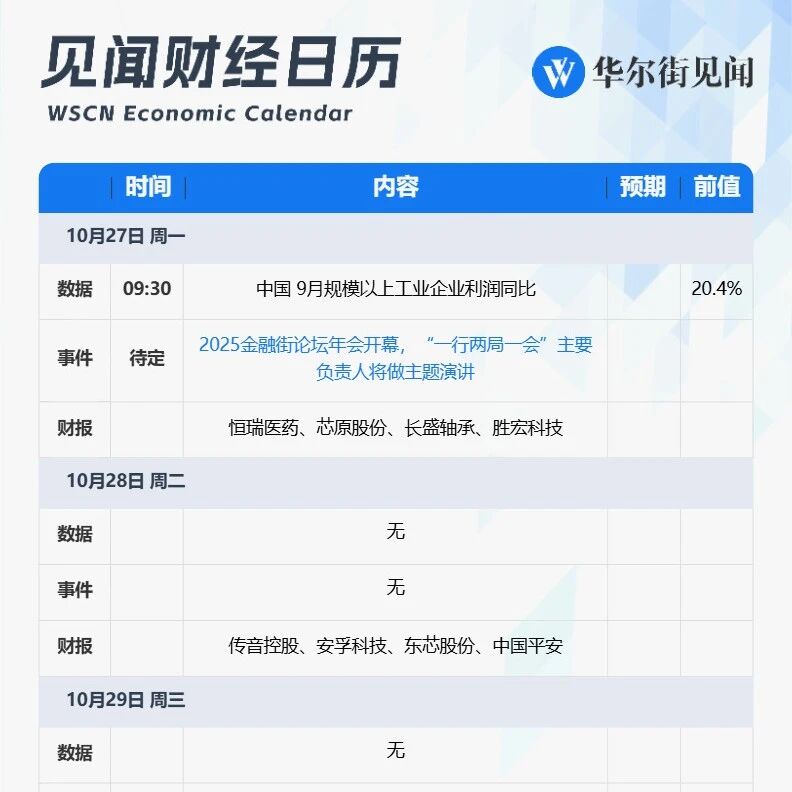
重点关注: 2025年亚太经济合作组织(APEC)领导人非正式会议、超级央行周,美联储、日本央行、欧洲央行、加拿大央行等将公布利率决议。 | 时间 | | 内容 | 预期 前值 | | | --- | --- | --- | --- | --- | | 10月27日 周一 | | | | | | 数据 | 09:30 | 中国 9月规模以上工业企业利润同比 | | 20.4% | | 事件 | 待定 | 2025金融街论坛年会开幕, "一行两局一会"主要 负责人将做主题演讲 | | | | 财报 | | 恒瑞医药、芯原股份、长盛轴承、胜宏科技 | | | | 10月28日 周二 | | | | | | 数据 | | 元 | | | | 事件 | | 元 | | | | 财报 | | 传音控股、安孚科技、东芯股份、中国平安 | | | | 10月29日 周三 | | | | | | 数据 | | 元 | | | | 00:00 | | 华盛顿特区 NVIDIA GTC 大会 黄仁勋发表演讲 | | | | 事件 | 待定 | 美国总统特朗普访问韩国 | | | | 21:45 | | 加拿大央行公布利率决议和货 ...
申万宏源交运一周天地汇(20251019-20251024):三大因素反转强调船舶板块历史机会,油轮影响因素过多转向现实驱动
Shenwan Hongyuan Securities· 2025-10-25 14:09
Investment Rating - The report recommends investment in companies such as China Shipping, COSCO Shipping Energy, and China Shipbuilding Industry Corporation, highlighting a historical opportunity for the shipping sector due to a reversal of negative factors [23]. Core Views - The transportation industry index increased by 0.72%, underperforming the CSI 300 index by 2.52 percentage points, with the shipping sector showing the smallest decline at -1.28% [4][11]. - The report emphasizes that the shipping sector is experiencing a historical opportunity as negative influences such as policies, exchange rates, and ship prices have shifted to positive impacts [23]. - The VLCC freight rates have stabilized around $80,000 per day, with potential upward adjustments in rental rates expected due to market dynamics [24]. Summary by Sections 1. Industry Performance - The transportation index rose by 0.72%, while the shipping sector saw a decline of -1.28% [4][11]. - The coastal dry bulk freight index in China increased by 3.83%, and the Shanghai export container freight index rose by 7.11% [4]. 2. Sub-industry Insights - The report highlights that the shipping sector is at a historical low in terms of market value orders, with a potential recovery to historical averages of 1-3 times [23]. - The report notes that the oil tanker market is influenced by various factors, including geopolitical tensions and sanctions, which may affect freight rates [24]. 3. High Dividend Stocks - The report lists high dividend stocks in the transportation sector, including Bohai Ferry with a TTM dividend yield of 8.09% and Zhonggu Logistics with a yield of 10.88% [21][22]. 4. Market Trends - The report indicates that the shipping market is experiencing a shift with freight rates stabilizing and potential increases in rental rates, driven by supply and demand dynamics [23][24]. - The report also mentions that the dry bulk market is seeing fluctuations due to seasonal demand and geopolitical factors affecting trade [25][26].
无人车双十一迎来大规模采购潮,场景从快递向即时零售延伸
Nan Fang Du Shi Bao· 2025-10-25 09:01
Core Insights - The logistics industry is witnessing a significant shift towards the adoption of unmanned delivery vehicles, with major companies making large-scale purchases to enhance efficiency and reduce costs [1][4][5]. Group 1: Unmanned Vehicle Procurement - China Post has initiated a procurement project for 7,000 unmanned vehicles, including various sizes and services, with a framework agreement lasting four years [1][2]. - JD Logistics plans to purchase 3 million robots, 1 million unmanned vehicles, and 100,000 drones over the next five years to strengthen its position in smart logistics [1][4]. - Companies like Cainiao and Shentong Express are also investing in unmanned vehicles, with Shentong aiming to deploy 2,000 unmanned vehicles by the end of the year [1][5]. Group 2: Market Trends and Growth - The unmanned delivery vehicle market is expected to experience explosive growth by 2025, driven by technological advancements, cost reductions, and increased demand in the instant retail market [4][6]. - As of mid-2025, over 100 cities in China have opened road rights for unmanned delivery vehicles, with the total number of such vehicles exceeding 6,000, marking a 50% increase from 2024 [6][8]. Group 3: Cost Efficiency and Operational Benefits - Unmanned vehicles can significantly reduce delivery costs, with reports indicating a decrease of 30%-50% in last-mile delivery expenses [8][10]. - Companies like Zhongtong Express have noted that using unmanned vehicles can lower costs by 6-7 cents per package, enhancing operational efficiency [5][10]. Group 4: Expansion Beyond Traditional Delivery - The application of unmanned vehicles is expanding beyond the express delivery sector into urban logistics and instant delivery markets, indicating a potential for exponential growth [10][12]. - White Rhino is diversifying its operations to include campus delivery networks and retail replenishment, showcasing the versatility of unmanned vehicles in various logistics scenarios [12].


中国自动驾驶领域迎来最大一笔融资,无人物流车开启三国杀
雷峰网· 2025-10-25 07:08
Core Viewpoint - The competition in the unmanned logistics vehicle sector is intensifying, with significant financing events and technological advancements from key players like New Stone and NineSight, as they both aim for an IPO and strive to establish dominance in the market [2][4][8]. Financing and Investment - New Stone recently completed a D round financing of over 600 million USD, marking the largest financing in China's autonomous driving sector to date, surpassing NineSight's recent B4 round financing of 100 million USD [3][4]. - The investor list for New Stone's latest round includes over fifteen entities, with notable participation from Stone Venture, CITIC Capital, and a major internet company speculated to be Tencent [4][5]. - New Stone's entry into the Middle East market has been bolstered by local capital support, as it has obtained the world's first officially issued road permit for unmanned vehicles in the UAE [5]. Market Dynamics and Competition - The competitive landscape has shifted, with NineSight facing challenges due to a legal dispute with JD, which has led some investors to pivot towards New Stone [7][8]. - NineSight has secured a significant contract with China Post for 7,000 unmanned vehicles, showcasing its product strength and market position [11][12]. - White Rhino has gained market share by focusing on strategic alliances with major clients, while New Stone is shifting its focus from large clients to small and medium enterprises [15][16]. Product and Technology - NineSight's advantage lies in its product capabilities, attributed to its core team from Baidu's autonomous driving division, which has garnered investor confidence [9]. - The competition is not solely based on financing but also on product strength and commercialization capabilities, with NineSight leading in product diversity [11][12]. Future Outlook - The shift from large clients (KA) to small and medium clients (B) is crucial for survival in the current market, with New Stone and NineSight expected to engage in fierce competition for the small B market [15][16][17].

无人车穿梭电子第一街,华强北打造新质生产力超级场景
Nan Fang Du Shi Bao· 2025-10-25 05:18
Core Insights - The article emphasizes the importance of "new quality productivity" in addressing urban management challenges in the bustling Huaqiangbei area, which has a daily foot traffic of 750,000 and logistics volume exceeding 1.5 million packages daily [1][4]. Group 1: Urban Logistics Challenges - Huaqiangbei faces a contradiction between high logistics demand and limited road space, with an annual shipping volume surpassing 1 billion packages and a total cargo value exceeding 100 billion yuan [4]. - The area is recognized as a significant hub for logistics, consistently ranking first among professional markets in China [4]. Group 2: Implementation of AI and Autonomous Logistics - The "AI + unmanned logistics vehicle" pilot project has been initiated in collaboration with Shenzhen Bus Group, aiming to enhance logistics efficiency through smart delivery services [5]. - The pilot will operate for three months, focusing on key logistics parks and providing intelligent collection and delivery services [5]. Group 3: Government and Enterprise Collaboration - Shenzhen Bus Group plays a crucial role in integrating AI technology into urban management, facilitating the deployment of unmanned vehicles in urban areas [5]. - The project involves collaboration with various stakeholders, including logistics companies and government departments, to ensure effective implementation and data collection for future scalability [5][6]. Group 4: Transformation of Urban Logistics - The introduction of unmanned vehicles represents a structural shift from labor-intensive logistics to intelligent systems, enhancing operational efficiency and urban service delivery [6][7]. - This transformation is expected to create a new industrial ecosystem, linking sensor manufacturing, smart chips, algorithm platforms, and infrastructure [7]. Group 5: Future Prospects - Huaqiangbei aims to deepen collaboration with state-owned enterprises and research institutions to further promote new quality productivity practices [7]. - The area is positioned as a model for integrating technology innovation, industrial application, and urban renewal, contributing to the development of a smart city [7].
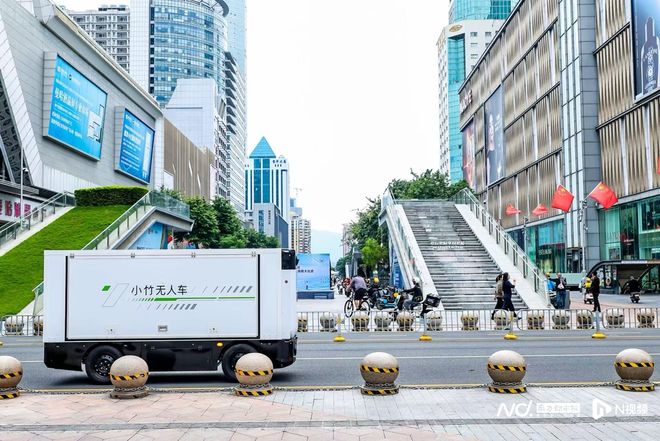
不装人的它,为何能一把融6亿美金?
虎嗅APP· 2025-10-25 03:14
Core Insights - The article highlights the significant investment in the L4 autonomous driving sector, particularly in urban logistics, with Neolix securing over $600 million in Series D funding, marking the largest private equity financing in China's autonomous driving field to date [2] - The funding will be utilized for algorithm and technology development, new product development, and enhancing service networks to meet the growing demand in domestic and international urban logistics markets [2][5] Investment Landscape - Since early 2025, the L4 autonomous urban logistics sector has attracted over 4 billion RMB in investments, indicating a robust interest from investors [2] - Neolix had previously raised 1 billion RMB in a C+ round earlier this year, while other leading companies in the sector have also secured substantial funding [2] Industry Trends - The surge in capital investment is attributed to the maturity of technology and business models among startups, which have begun to demonstrate commercial value, driven by market demand rather than speculative financing [5] - The integration of autonomous vehicles in logistics is expected to reduce costs significantly, with estimates suggesting a potential cost reduction of 1/3 to 2/3 in logistics delivery [5][10] Operational Efficiency - The introduction of autonomous vehicles is projected to streamline logistics processes by eliminating redundant steps and reducing resource inputs, potentially saving 19% in operational costs [8] - Companies like Zhongtong and SF Express have already deployed over 1,800 autonomous vehicles, indicating a shift towards large-scale adoption [9] Future Outlook - The year 2025 is anticipated to be a pivotal year for the autonomous logistics vehicle sector, with ongoing competition focusing on advancements in L4 technology, expanding usage scenarios, and balancing growth with customer service [12] - Neolix's proprietary L4 autonomous driving technology is set to be commercially deployed, enhancing its operational capabilities in urban logistics [12][14] Market Expansion - Neolix aims to expand its operations internationally, having secured the first official autonomous vehicle license in the UAE, with plans to deploy 5,000 vehicles by the end of next year [16] - The collaboration with Didi Freight to test autonomous delivery services reflects a strategic move towards capturing immediate demand in logistics [18] Competitive Landscape - The autonomous vehicle sector is witnessing an influx of new entrants, intensifying competition across product forms, application scenarios, and customer ecosystems [18] - The ability to maintain operational efficiency while meeting diverse customer needs will be crucial for the survival and success of autonomous vehicle companies in this rapidly evolving market [18]