
东风股份

Search documents
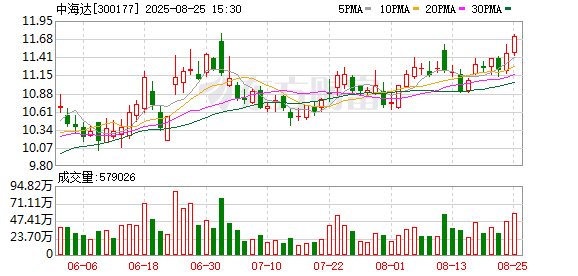
中海达:2025年上半年公司惯性测量单元产品(IMU)成功获得吉利旗下子公司定点项目
Zheng Quan Ri Bao· 2025-08-25 08:12
Core Insights - Company Zhonghaidah announced on August 25 that its Inertial Measurement Unit (IMU) products successfully secured a designated project from a subsidiary of Geely, supporting the "Qianli Haohan" intelligent driving platform with positioning and attitude technology [2] - The company’s high-precision business for intelligent driving has smoothly entered mass production, leading to a release of factory capacity and a year-on-year revenue growth of over 100% [2] - As of the first half of 2025, the company’s IMU products, high-precision positioning antennas, vehicle-mounted combined antennas (4G/5G + GNSS), and high-precision positioning algorithm engine SDK have maintained large-scale deliveries in mass production models for major automakers including Geely, Xiaopeng, SAIC, Great Wall, Dongfeng, and FAW [2] - The company is actively exploring the development of state space models, data sensors, and algorithms to expand into emerging application scenarios [2] - Additionally, the company has successfully secured IMU product designations from two domestic embodied intelligent robot companies, with related products already delivered in small batches, laying a solid foundation for the application of its technology in embodied intelligence scenarios [2]


牵引车7月实销3.5万辆同比“4连增”!福田逼近前二 徐工/三一继续翻倍涨 | 头条
第一商用车网· 2025-08-25 06:57
Core Viewpoint - In July 2025, domestic tractor truck sales experienced a significant year-on-year increase of 32%, marking a "four consecutive months of growth" trend. Cumulatively, tractor truck sales from January to July 2025 increased by 20% compared to the same period last year, with a net increase of approximately 38,000 units [1][4][29]. Sales Performance - In July 2025, the actual sales of tractor trucks reached 35,000 units, representing a month-on-month decrease of 8% but a year-on-year increase of 32%. The growth rate compared to the previous month (49%) has narrowed [4][6]. - The overall heavy truck market saw a year-on-year sales increase of 39%, with tractor trucks lagging behind by 7 percentage points [4][11]. - The market share of tractor trucks in the heavy truck segment was approximately 54.41% in July, slightly down from 54.97% in June but up from 53.10% in 2024 [6][15]. Brand Performance - The leading brand, FAW Jiefang, sold 8,373 units in July, maintaining the top position. Other notable brands included China National Heavy Duty Truck and Foton, with sales of 5,964 and 5,527 units, respectively [9][11]. - Among the top 12 brands, 11 experienced sales growth in July, with Xugong, SANY, and Jianghuai achieving over 100% year-on-year growth [13][14]. Cumulative Sales Data - From January to July 2025, cumulative tractor truck sales reached 227,100 units, reflecting a 20% year-on-year increase. The cumulative growth rate improved by 1 percentage point compared to the previous month [17][19]. - The top ten brands accounted for 96.55% of the total market share in July, with the top five brands exceeding 10% each [15][21]. Market Trends - The market for new energy tractor trucks is expanding, with their share increasing from 17.43% in 2024 to 31.32% in the first seven months of 2025 [25][27]. - Diesel tractor truck sales grew by 23% year-on-year, while natural gas tractor trucks saw an 18% decline. New energy vehicles, particularly pure electric trucks, experienced a significant increase in sales [23][25]. Conclusion - The tractor truck market has shown resilience with a "four consecutive months of growth" trend, and the new energy segment continues to thrive. The dynamics between new energy and traditional fuel types will be crucial for future market developments [29].




中国教练车市场前景展望及投资规模预测报告2025-2031年
Sou Hu Cai Jing· 2025-08-25 04:41
中国教练车市场前景展望及投资规模预测报告2025-2031年 第1章:教练车行业综述及数据来源说明 1.1 教练车行业界定 1.1.1 汽车的界定与分类 1.1.2 专用汽车的界定与分类 1.1.3 教练车界定 本文源自:中赢信合研究网 1.1.4 《国民经济行业分类与代码》中教练车行业归属 1.2 教练车行业分类 1.3 教练车专业术语说明 1.4 本报告研究范围界定说明 1.5 本报告数据来源及统计标准说明 第2章:中国教练车行业宏观环境分析(PEST) 2.1 中国教练车行业政策(Policy)环境分析 2.1.1 中国教练车行业监管体系及机构介绍 (1)中国教练车行业主管部门 (2)中国教练车行业自律组织 2.1.2 中国教练车行业标准体系建设现状 (1)中国教练车标准体系建设 (2)中国教练车现行标准汇总 (3)中国教练车重点标准解读 2.1.3 中国教练车行业发展相关政策规划汇总及解读 (1)中国教练车行业发展相关政策汇总 (2)中国教练车行业发展相关规划汇总 2.1.4 国家"十四五"规划对教练车行业发展的影响分析 (1)《"十四五"全国道路交通安全规划》 (2)《专用汽车行业"十四五"专项发展 ...
AI车谷 ——武汉竞逐“智驾第一城”的突围路径
Chang Jiang Ri Bao· 2025-08-25 03:34
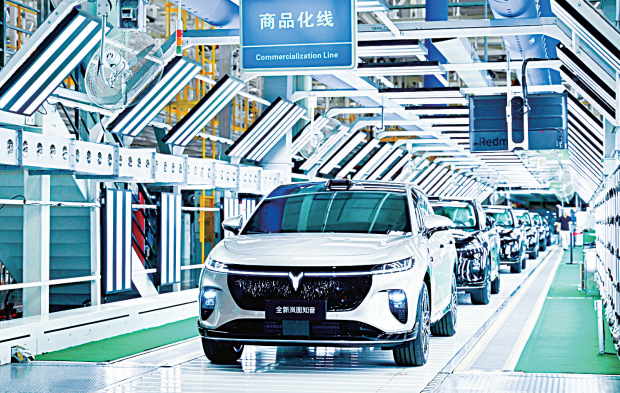
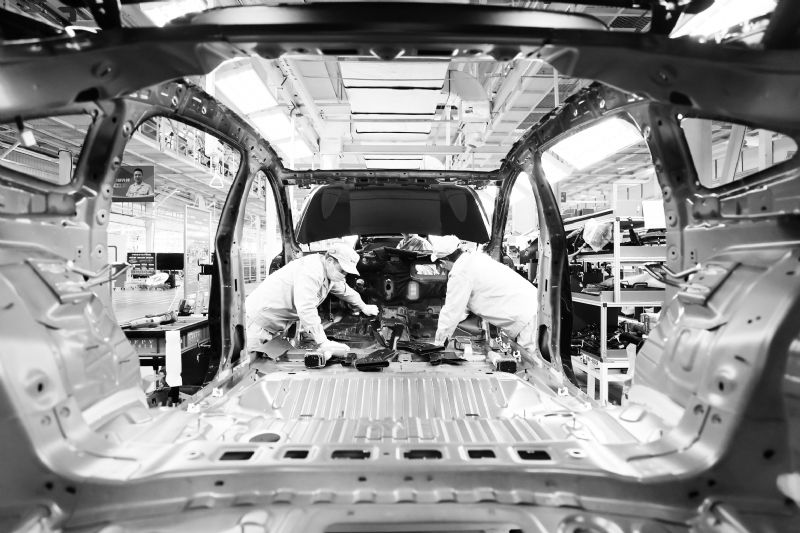
Core Insights - The all-new Lantu Zhiyin is set to launch on August 28, showcasing Wuhan's ambition to become a leader in intelligent driving technology [4] - Wuhan Economic Development Zone is transforming from "steel cars" to "silicon cars," aiming to establish itself as a global automotive hub [4][6] - The automotive industry is shifting focus from electrification to intelligence, with significant advancements in smart vehicles and AI integration [6][10] Production and Technology - Lantu's smart factory can produce 600 vehicles per day, with a maximum delivery time of 5 days from order to delivery, leveraging AI and 5G technologies [5] - The factory has achieved a cumulative production of over 200,000 vehicles this year, indicating strong operational efficiency [5] - The integration of 7nm automotive-grade chips and L3-level autonomous driving technology is underway, enhancing the capabilities of smart vehicles [4][8] Industry Competition - The competitive landscape in the automotive sector is evolving, with companies like Lotus and Lantu making significant strides in smart vehicle technology [6] - Wuhan has seen a 70.9% year-on-year increase in sales for new automotive brands, reflecting a robust market response [6] - The region has introduced 12 new models in the first half of the year, with a 58.5% increase in production of new energy and intelligent connected vehicles [6] Infrastructure and Ecosystem - Wuhan is home to over 500 companies in the intelligent connected vehicle industry, creating a comprehensive ecosystem for automotive innovation [9] - The city boasts the largest 5G vehicle network in the country, with extensive smart road coverage and significant autonomous driving mileage [7][9] - The establishment of AI-driven initiatives is expected to enhance the region's competitiveness in the automotive sector [8][10] Policy and Support - The local government has implemented a robust policy framework to support the development of AI and automotive software, including financial incentives for new companies [12] - A total of 500 billion yuan has been allocated to the Wuhan Automotive Development Fund to foster innovation in the automotive industry [12] - The region is focused on creating a collaborative innovation ecosystem, integrating resources from universities and tech companies [11][12]
深入武汉探寻新时代中国发展内生动力
Chang Jiang Ri Bao· 2025-08-25 02:26
8月25日,由中宣部组织的2025年"活力中国调研行"湖北主题采访活动将在武汉启动。8 月25日,长江日报开设"活力中国调研行·走进武汉"专题专栏,立体呈现武汉在科技创新、 提振消费、生态建设等领域的创新实践和典型经验。 "活力中国调研行"主题采访活动组织中央主要媒体和省市媒体,深入湖北各地的重点企 业和园区等,以实地走访、深度调研等形式,展示"十四五"时期经济社会发展显著成就,探 寻新时代中国发展的内生动力,解码高质量发展的活力密码。 编辑:胡之澜 据悉,活动期间,采访团人员分两路深入武汉、鄂州、潜江、天门、荆州、宜昌和孝 感、随州、襄阳、十堰等地,围绕"提振消费、扩大内需、改善民生,增强人民群众获得感 幸福感安全感"主题,开展为期一周的采访报道。 在武汉期间,媒体记者将走进湖北青创园(光谷)示范园、武汉产业创新发展研究院、 青山江滩、东风汽车集团岚图汽车科技有限公司、中国车谷品牌运营中心等地,进行集中采 访。长江日报将设立专题专栏,在调研活动各阶段,派出记者深入一线采访报道,呈现武汉 在"支点建设"创新举措及特色亮点,展现"十四五"时期经济社会发展显著成就。 ...
雪域高原,车轮滚滚……
Zhong Guo Qi Che Bao Wang· 2025-08-25 01:30
Group 1: Economic Development - The 60th anniversary of the Tibet Autonomous Region was celebrated, highlighting the region's transformation from poverty to prosperity under the leadership of the Communist Party of China [2] - Tibet's GDP surpassed 1 trillion yuan in 2015, exceeded 2 trillion yuan in 2021, and is projected to exceed 3 trillion yuan in 2023, showcasing rapid economic growth [22] Group 2: Transportation Infrastructure - The total length of roads in Tibet reached 124,900 kilometers by the end of 2024, with rural roads accounting for 94,800 kilometers, significantly improving accessibility [3] - The number of motor vehicles in Tibet reached over 1.067 million, with over 1.008 million drivers, indicating a growing automotive market [4] Group 3: Electric Vehicles and Charging Infrastructure - The promotion of electric vehicles (EVs) is increasing, with local initiatives providing subsidies for new car purchases, contributing to the growth of the EV market [4][6] - Charging infrastructure is expanding rapidly, with plans to establish a balanced and advanced charging network by the end of 2023, including 117 charging stations along the G318 route [12] Group 4: Lithium Resource Development - Tibet holds over 20 million tons of lithium resources, accounting for more than 50% of China's total, which is crucial for the domestic lithium battery industry [16] - A project for comprehensive development of lithium resources at Zabuye Salt Lake is underway, aiming for an annual production capacity of 10,000 tons of battery-grade lithium carbonate by 2030 [16] Group 5: Automotive Industry Growth - The establishment of the first specialized automobile manufacturing enterprise in Tibet marks a significant step in local automotive industry development [18] - The export of new energy vehicles from Tibet reached 7,429 units in the first half of the year, reflecting a 25.6% increase year-on-year [18] Group 6: Smart Transportation Solutions - The introduction of autonomous vehicles in mining and logistics is enhancing operational efficiency and safety in high-altitude environments [21] - The deployment of unmanned delivery vehicles in Tibet is addressing logistical challenges posed by the region's geography, improving service delivery [21]

湖北“质量强链”成效显著 五年助企业降本增收400亿
Chang Jiang Shang Bao· 2025-08-25 00:38
Core Viewpoint - The national quality strong chain experience exchange meeting was held in Wuhan, officially launching a cross-regional quality strong chain linkage project aimed at enhancing quality and promoting industrial upgrades across 21 key industrial chains, including collaborative robots, commercial aerospace, brain-computer interfaces, and new energy passenger vehicles [2] Group 1: Quality Improvement Initiatives - Over the past five years, the Hubei Provincial Market Supervision Administration has implemented 155 provincial quality improvement projects, serving over 65,000 enterprises and resolving nearly 40,000 quality issues, resulting in a cost reduction and revenue increase of 40 billion yuan for upstream and downstream enterprises [2] - Hubei has been designated as the leading province for the quality strong chain linkage project in the new energy passenger vehicle industry, collaborating with Hunan and Jiangxi to enhance quality management and brand building [2][3] Group 2: Collaborative Efforts - Key enterprises and research institutions, including Dongfeng Motor and BYD, will engage in cross-regional cooperation focusing on critical technologies such as intelligent cockpit safety, battery lifespan, and reliability of advanced power devices [3] - The three provinces will promote product quality grading for new energy passenger vehicles, fostering brands like "Hubei Boutique" and "Hunan Famous Products," while encouraging more enterprises to apply for quality awards [3] Group 3: Financial and Policy Support - Hubei has established a comprehensive support system for quality improvement, including a financial allocation of 10 million yuan in 2023 and 6 million yuan in 2024, alongside a one-stop service system for quality infrastructure [4] - The province has launched "E-Zhi Loan," which has disbursed 23.47 billion yuan to benefit 4,378 enterprises within 11 months of operation [4] Group 4: Cross-Regional Collaboration - Hubei is also participating in the quality linkage enhancement action for the selenium-rich industrial chain with Jiangxi and Shaanxi, promoting resource sharing and complementary advantages for high-quality collaborative development [5]
华阳集团(002906):单二季度净利润同比增长29% 汽车电子和精密压铸业务持续增长
Xin Lang Cai Jing· 2025-08-25 00:36
Core Insights - The company reported a net profit growth of 28.5% year-on-year in Q2 2025, with revenues reaching 2.822 billion yuan, an increase of 28.1% year-on-year and 13.36% quarter-on-quarter [1] - The automotive electronics segment generated revenue of 3.788 billion yuan in H1 2025, up 23.37% year-on-year, while the precision die-casting business saw revenue of 1.292 billion yuan, a 41.32% increase year-on-year [1] - The company has established deep collaborations with Huawei and Xiaomi, providing various cockpit products for multiple vehicle models [1] Financial Performance - In Q2 2025, the company's gross margin was 19.5%, a decrease of 1.8 percentage points year-on-year but an increase of 1.3 percentage points quarter-on-quarter [1] - The net profit margin for Q2 2025 was 6.6%, remaining stable year-on-year and increasing by 0.4 percentage points quarter-on-quarter [1] - The company's operating expenses ratio (four fees) was 12.2%, down 1.0 percentage points year-on-year and 0.4 percentage points quarter-on-quarter [1] Product and Market Development - The company is focusing on automotive intelligence and lightweighting, with continuous product upgrades and optimization of customer structure [2] - Significant revenue growth was observed in electronic rearview mirrors, cockpit domain controllers, vehicle cameras, digital keys, and other products in H1 2025 [2] - The company has secured new projects from international brands such as Stellantis, Ford, and Volkswagen, as well as domestic brands like Changan and Geely [3]
中东土豪,买爆中国车
汽车商业评论· 2025-08-24 23:05
Core Viewpoint - The article highlights the growing interest and market opportunities for Chinese automotive brands in the Middle East, driven by favorable policies, consumer preferences, and strategic partnerships, while also acknowledging the challenges and competition from established brands [3][5][19]. Group 1: Market Dynamics - In the first half of 2024, China's passenger car exports to the Middle East reached 420,000 units, a year-on-year increase of 46.2%, making the region the largest destination for Chinese automotive exports [3]. - The trend is expected to continue, with a projected 3.083 million vehicles exported in the first half of 2025, marking a 10.4% increase year-on-year [3]. - The Saudi automotive market is projected to reach 827,000 units in 2024, reflecting a 13% growth, with the top ten car manufacturers accounting for approximately 80% of sales [23]. Group 2: Strategic Moves by Companies - Tesla has entered the Saudi market by opening its first showroom and service center in Riyadh, with plans for additional locations [10]. - Chinese automakers like Dongfeng and NIO are forming strategic partnerships and establishing local production facilities to cater to regional consumer preferences [11][12]. - Companies are adapting their products to local conditions, such as high temperatures and sandstorms, to enhance their competitiveness [32]. Group 3: Consumer Preferences and Market Characteristics - The Middle Eastern automotive market is still predominantly fueled by gasoline vehicles, with over 90% market share, although there are emerging segments for electric vehicles, particularly in countries like Jordan [22]. - Local consumers prefer "boxy" vehicle designs, which reflect cultural aesthetics rather than practical needs [24]. - The definition of luxury in the region leans towards high cost-performance rather than just high price tags [25]. Group 4: Policy and Economic Factors - The Middle East offers lower regulatory barriers compared to Western markets, making it easier for Chinese brands to enter [16]. - The region's strategic location allows for potential access to European and North American markets, enhancing its appeal for Chinese electric vehicle manufacturers [19]. - The 5% import tariff on vehicles in the Middle East is significantly lower than the 20% or more tariffs in Western markets, making it an attractive destination for exports [18]. Group 5: Challenges and Considerations - Despite the opportunities, Chinese brands face challenges in brand recognition and trust among local consumers [35]. - The need for a robust after-sales service system is critical for sustaining market presence, as highlighted by past failures of Chinese brands in Southeast Asia [37]. - Cultural adaptation and understanding local consumer behavior are essential for success in the Middle Eastern market [36].



特斯拉ModelYL发布,尚界H5即将开启预定
CMS· 2025-08-24 08:01
Investment Rating - The report maintains a "Recommendation" rating for the automotive industry, indicating a positive outlook for the sector [4]. Core Insights - The automotive industry experienced an overall increase of 4.9% from August 17 to August 24, with significant growth in both commercial and passenger vehicle segments [2][10]. - Notable vehicle launches include the Tesla Model Y L, priced from 339,000 yuan, and the new ES8, which is approximately 120,000 yuan cheaper than its predecessor [24][29]. - Xiaopeng Motors reported a doubling of revenue in Q2 2025, with a 62.6% reduction in net losses, highlighting strong sales performance [24][25]. - The market is seeing a resurgence in vehicle replacement subsidies across various regions, with some areas offering up to 15,500 yuan in incentives [27]. Market Performance Overview - The automotive sector's secondary segments showed robust performance, with commercial vehicles and passenger vehicles increasing by 5.1% and 4.9%, respectively [10]. - The automotive parts sector also saw a rise of 4.8%, with specific segments like body accessories and comprehensive passenger vehicles leading the gains [10]. Individual Stock Performance - Key stocks in the automotive sector saw significant increases, with Chengfei Integration up by 35.5%, and Nanfang Precision up by 28.4% [3][13]. - Among covered stocks, notable performers included Songyuan Safety (+27.3%) and Top Group (+20.4%) [17]. Recent Vehicle Launches - The report highlights several new vehicle launches, including the Q6L-Etro from FAW Audi and the Galaxy A7 from Geely, with competitive pricing and advanced features [20][22]. Industry News and Developments - Strategic partnerships are forming, such as the collaboration between Desay SV and Dongfeng Motor to enhance product competitiveness in smart cockpit and driving assistance technologies [23]. - The launch of the L4 level Robotaxi service in Shanghai marks a significant step in autonomous vehicle deployment [26].