
智谱

Search documents
我们向AI抛出了十大灵魂拷问
3 6 Ke· 2026-01-06 12:31
Social Ethics - The ethical implications of AI "digital resurrection" challenge fundamental concepts of human autonomy and the dignity of the deceased, blurring the lines between biological and social death [2] - The case of a Silicon Valley engineer using GPT-4 to "revive" his deceased wife highlights a profound challenge to human civilization's understanding of death, suggesting that technology may deprive the living of their ability to mourn and move on [2] - Future regulatory frameworks should include mandatory "farewell periods" and clear "non-person" labels to prevent emotional substitution [2] Industry and Business - The high cost of training top-tier AI models creates a "computational wealth gap," making it difficult for small businesses to maintain technological autonomy [3] - Governance should involve establishing a "computational public fund" to subsidize small enterprises and promoting open-source models to balance the competitive landscape [3] - The lack of unified standards in AI applications leads to market confusion and increased R&D costs, necessitating the establishment of dual standards combining technical metrics and ethical guidelines [7][8] Technology Trends - The "hallucination" problem in large models is inherent and cannot be completely eliminated, but can be managed through improved data quality and training methods [8] - The competition between open-source and closed-source models is expected to evolve into a dual structure, with closed-source dominating high-end markets and open-source capturing mid to low-end markets [9] - The integration of edge computing with AI addresses issues of latency, bandwidth, and privacy, significantly impacting industries such as autonomous driving, industrial manufacturing, and healthcare [10][11]
AI 系列跟踪(88):AI 芯片厂商密集上市,DeepSeek 提出新架构,AI 产业化进程再加速
Changjiang Securities· 2026-01-06 11:10
Investment Rating - The report maintains a "Positive" investment rating for the industry [7] Core Insights - Recent developments in the AI sector include the successful listing of Wallen Technology on the Hong Kong Stock Exchange and Baidu's Kunlun Chip planning a spin-off listing. DeepSeek has proposed a new mHC architecture that reduces the energy and computational requirements for training advanced AI, potentially accelerating the industrialization of AI [2][4] - The report highlights the upcoming IPOs of AI companies Zhiyu and MiniMax on January 8 and 9, respectively, and notes the partnership of Doubao with the Spring Festival Gala as a significant event [2][10] - The report identifies several promising investment opportunities within the AI sector, including high-quality IP benefiting from AI technology advancements, internet giants with advantages in traffic, models, and data, and vertical sectors like advertising, e-commerce, and education that have successfully replicated overseas business models in China [2][10] Summary by Sections Recent Events - Wallen Technology has successfully listed on the Hong Kong Stock Exchange, filling an important gap in the computing power sector. The company has developed a full chain of capabilities from high-end AI chips to computing clusters, with its self-developed "Biren" GPGPU architecture and related hardware products. The stock surged by 75.82% on its first day, indicating a new phase for the domestic computing power industry [10] - Baidu's Kunlun Chip is set to enhance its valuation transparency and attract investors focused on hard technology by planning a spin-off listing. The Kunlun Chip P800 cluster, capable of supporting multiple large models, marks a significant milestone in domestic computing power [10] - DeepSeek's new mHC architecture addresses issues in the existing Hyper-Connections structure, showing a mere 6.7% increase in training time while achieving significant performance improvements, thus lowering the costs associated with AI model training [10] Investment Opportunities - The report emphasizes the accelerated marginal growth in AI, with a focus on investment opportunities in the AI sector. It highlights the potential of high-quality IP benefiting from AI advancements, internet giants with data advantages, and vertical sectors that can replicate successful overseas business models [2][10]

MiniMax公开发售获1209倍超额认购,1月9日港交所上市
Xin Lang Cai Jing· 2026-01-06 08:13
截至2025年9月30日,公司总营收增至5343.7万美元,而截至2024年9月30日止九个月为1945.5万美元。 据介绍,营收得益于大模型智能水平的提高、AI原生产品套件的扩展,个人用户、开发者及企业用户 采用的增加,以及涵盖订阅、应用内充值、企业API调用及在线营销服务的多样化变现渠道。 智通财经记者获悉,MiniMax本次全球发售股份总数为2538.922万股,发售价区间为每股151至165港 元,预计募资金额约为38.34-41.89亿港元,将于1月9日正式登陆港股资本市场,港股代码0100。这家员 工平均年龄仅29岁的"年轻化"AI公司,从成立到完成港股IPO仅用时四年,刷新全球AI领域从创立到上 市的最短时间纪录。 根据全球公开发售文件,MiniMax此次引入14名重量级基石投资者,阵容涵盖国际长线基金、头部科技 企业、中资长线机构及保险资本等多元类型,包括Aspex、Eastspring、Mirae Asset、ADIA、阿里巴 巴、易方达等国内外知名机构,合计认购金额达27.23亿港元。 2025年12月31日,智通财经记者查阅招股书显示,在资金用途方面,假设发售量调整权或超额配股权未 获行 ...
软件ETF(515230)涨超2.3%,技术突破与需求回暖驱动行业前景
Mei Ri Jing Ji Xin Wen· 2026-01-06 08:05
Group 1 - The software ETF (515230) rose over 2.3% driven by technological breakthroughs and a recovery in demand within the industry [1] - The computer and software development industry is experiencing rapid growth, particularly in the GPU chip sector [1] - Tianzu Zhixin has developed two major GPU series: Tianpai (training) and Zhikai (inference), with products achieving small-scale batch sales; the average price for Tianpai series is between 30,000 to 40,000 yuan per chip, while Zhikai is around 10,000 yuan per chip [1] Group 2 - Wallen Technology focuses on self-developed GPGPU chips and intelligent computing solutions, with orders expected to exceed 1.2 billion yuan by 2025; the next-generation BR20X chip is anticipated to be commercialized in 2026 [1] - In the large model sector, Zhipu (ToB) and MiniMax (ToC) are undergoing Hong Kong Stock Exchange hearings, representing different business models; Zhipu, backed by Tsinghua University, offers a full range of self-developed base models with a gross margin of 59.1%, while MiniMax emphasizes efficient architecture and product commercialization, with 73.1% of its revenue coming from overseas [1] - AI server manufacturer Inspur Information has launched an open architecture super node product that supports multi-chip collaboration, catering to the training needs of large models [1] Group 3 - The software ETF (515230) tracks the software index (H30202), which selects listed companies involved in operating systems, application software development, and cloud computing services to reflect the overall performance of the software and related services industry [2] - This index focuses on technological innovation and information technology, effectively capturing market dynamics and development trends within the software industry [2]
互联网行业周报:智谱、MiniMax上市在即,关注AI应用生态布局进展-20260106
CMS· 2026-01-06 07:34
Investment Rating - The report maintains a positive investment rating for leading internet companies in the AI sector, such as Tencent Holdings, Kuaishou, Bilibili, and Meitu [1][8]. Core Insights - The report highlights the accelerated iteration of various AI applications and edge-side developments, emphasizing the strong performance of companies with leading positions in the AI field [1]. - It notes significant upcoming IPOs, including Zhihua Technology and MiniMax, which are expected to enhance the AI application ecosystem [8]. - The report provides a detailed overview of the market performance, indicating a mixed performance across different indices, with the Hang Seng Internet Technology Index rising by 4.96% [14][20]. Industry Overview - The industry comprises 160 listed companies with a total market capitalization of approximately 1,944.9 billion [4]. - The report indicates a total circulating market value of about 1,790.1 billion [4]. - The absolute performance over the last month shows a decline of 2.0%, while the 6-month and 12-month performances are up by 11.3% and 16.4%, respectively [6]. Company Performance - Tencent Holdings saw a weekly increase of 3.32%, while Bilibili-W and Kuaishou-W increased by 4.28% and 2.55%, respectively [20]. - The report emphasizes Tencent's strong revenue growth in various segments, including gaming, social networking, and marketing services, with a notable increase in adjusted net profit [22][23]. - Kuaishou's user engagement metrics improved, with DAU and MAU reaching 4.16 billion and 7.3 billion, respectively, indicating a 2.1% and 2.4% year-on-year growth [23]. - Bilibili's advertising revenue grew by 23% year-on-year, driven by improved ad supply and effectiveness [24].
多行业联合人工智能1月报:25年中美科技股复盘-20260106
Huachuang Securities· 2026-01-06 05:46
Strategy - The year 2025 marks a watershed moment for Chinese and American technology stocks, with Chinese tech stocks showing a significant increase compared to their American counterparts, driven by "hard technology" and domestic substitution [12][15][19] - The overall performance of Chinese tech stocks includes a 49.6% increase in the ChiNext Index, a 46.3% increase in the Sci-Tech Innovation Board Index, and a 23.5% increase in the Hang Seng Tech Index, outperforming the Nasdaq's 20.4% increase [12][15] - The market is increasingly cautious about the high concentration of profits among a few tech giants in the US, as evidenced by the performance of the "MAG 7" stocks [19][24] Electronics - The scaling law remains effective, with the introduction of multimodal and agent models expected to accelerate AI computing demand [35] - The PCB industry is anticipated to maintain high growth due to its heavy asset nature, with capacity release and product structure optimization driving non-linear performance improvements [35] - Recommended stocks in this sector include Jingwang Electronics, Shenzhen South Circuit, Dongshan Precision, Huitian Technology, and others [35] Computer - The inference and agent ecosystem is experiencing a comprehensive explosion, with global models gradually entering a commercial closed loop [36] - Significant events include OpenAI's partnership with Disney for the Sora model and the planned IPO of Zhipu AI, which aims to be the first publicly listed company focused on general artificial intelligence [36][37] - The release of OpenAI's GPT-5.2-Codex marks a new benchmark for AI programming capabilities [36] Media - The capitalization progress of the AI industry chain is ongoing, which is expected to boost sentiment in the internet and AI sectors [37] - Notable acquisitions include Meta's purchase of the AI agent application Manus, which has achieved an ARR of over $100 million [37] - The valuation of global AI applications is expanding, with OpenAI's ARR projected to reach $20 billion and a valuation exceeding $500 billion [37] Humanoid Robots - The humanoid robot industry is transitioning from concept validation to commercialization, with companies that have developed product capabilities in key components or specific solutions likely to benefit [38] - The market's aesthetic preferences prioritize incremental components and Tesla-related supply chains, indicating potential investment opportunities [38] - Recommended stocks include Xinjie Electric, Huichuan Technology, and Hengli Hydraulic [38] Automotive - The 2026 automotive subsidy policy is expected to lead to an early rebound in the automotive sector, with retail sales projected to grow by 2% and electric vehicle sales by 11% [39] - The shift from fixed subsidies to percentage-based subsidies is anticipated to favor higher-priced vehicles [39] - Recommended stocks include Geely Automobile and BYD, with a focus on the intelligent driving sector [39]
观察 | Kimi手握百亿拒上市,智谱MiniMax抢着上:AI圈IPO大战背后的生死局
未可知人工智能研究院· 2026-01-06 04:03
Group 1 - The core viewpoint of the article is that timing is more important than speed in the business world, and Kimi's decision to delay its IPO is based on the current market conditions rather than confidence [1][5][49] - Kimi has recently completed a $500 million financing round and holds over 10 billion RMB in cash, indicating that they are not in a rush to go public [1][6] - The company has been burning through 200 million RMB monthly to acquire users, leading to a significant drop in monthly active users, which makes an IPO unfavorable at this time [7][8] Group 2 - Kimi's new model, codenamed "Kiwi-do," has shown superior performance in visual physics reasoning tests, suggesting that the company is leveraging technology to buy time for commercialization [14][15] - The competition between Zhipu and MiniMax for IPO is described as a race against time, with both companies having high valuations but low revenues, leading to extremely high price-to-sales ratios [16][18][20] - The article highlights the critical issue of commercialization in the AI industry, noting that training a foundational model costs around 30 million RMB and must be repeated every three months, which can lead to unsustainable financial practices [25][26][30] Group 3 - The article provides three strategies for individuals to capitalize on AI opportunities: focusing on vertical applications, prioritizing cost-reduction and efficiency-enhancing AI tools, and paying attention to the practical applications of multimodal capabilities [41][42][43] - It emphasizes the importance of distinguishing between genuine demand and hype in the AI sector, advising to look for clear paying users, viable business models, and significant technological barriers [44][45][47] - The overall sentiment is that the AI industry is shifting from a "burning money" approach to a focus on survival and efficiency, presenting a unique opportunity for those who can navigate the changing landscape [48][50]


一文看完大模型六小虎的2025:人事动荡、融资赛跑、洗牌分化
3 6 Ke· 2026-01-06 03:09
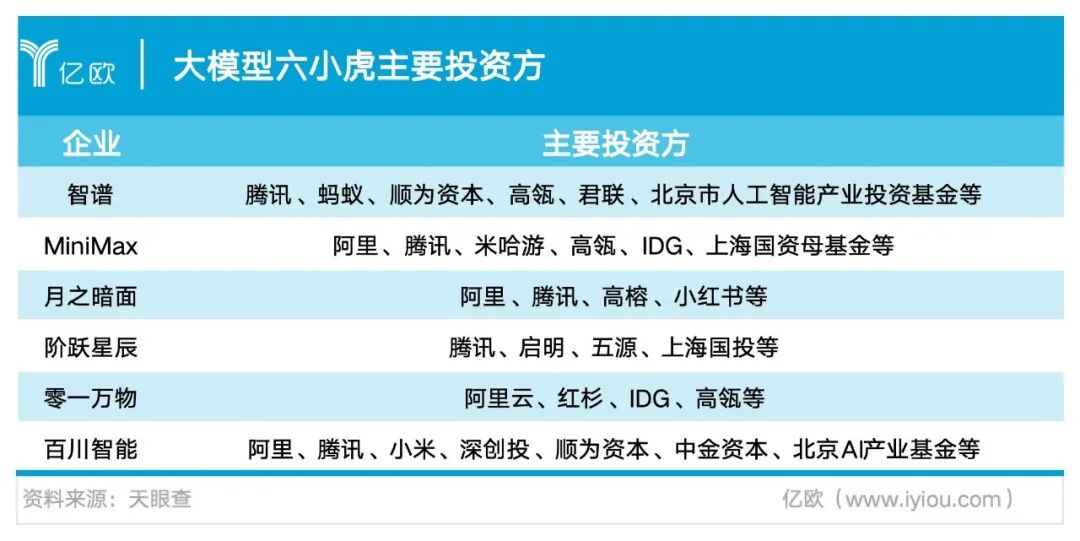
Funding and Personnel Changes - Kimi, one of the "Six Little Tigers," announced a financing completion of 3.5 billion yuan on New Year's Eve [1] - The past year has seen significant personnel changes among the "Six Little Tigers," with over 20 personnel changes reported in 2025, including departures and appointments [4] - Notable departures include multiple executives from Baichuan Intelligence, leading to a strategic refocus on four key areas: AI pediatrics, AI general practice, and precision medicine [4][8] Strategic Focus and Business Adjustments - Personnel changes are seen as both a necessity for talent renewal and an internal demand for strategic adjustments within the companies [3] - Zero One Wanwu has shifted its strategy from self-developed large models to enterprise-level application platforms, appointing several new executives to enhance its ToB strategy [5] - MiniMax and Jiyue Xingchen have experienced relatively fewer personnel changes, with MiniMax focusing on technology and ToC after leadership adjustments [7] Capital Investment Landscape - Tencent and Alibaba have invested in five out of the six major companies, indicating a strong interest from these tech giants in the AI sector [9] - In 2025, significant financing activities were concentrated among Zhiyu, MiniMax, and Moon's Dark Side, with Zhiyu completing its IPO and achieving a post-investment valuation exceeding 20 billion yuan [12] - Moon's Dark Side raised 500 million USD in its C round of financing, with major investors including Alibaba and Tencent, leading to a post-investment valuation of 4.3 billion USD [11][12] Market Dynamics and Future Outlook - The "Six Little Tigers" are experiencing a transformation from technical enthusiasm to commercial realization, with personnel reshuffling being a necessary choice for strategic focus [14] - The pressure is increasing on the remaining four companies as Zhiyu and MiniMax have gone public, emphasizing the need for core technology retention and business model optimization [14] - The ongoing competition among capital, talent, and ecosystems is expected to drive the Chinese large model industry towards a position of prominence in the global AI landscape [14]
东吴证券:港股进入震荡上行期 把握上半年的科技成长行情
智通财经网· 2026-01-06 00:03
Core Viewpoint - Hong Kong stocks are showing strong performance at the beginning of the year, making them attractive for medium to long-term investment allocation. The expectation is that southbound funds will continue to increase their allocation to Hong Kong stocks, primarily driven by insurance and fixed income investments. The performance of Hong Kong technology stocks will be influenced by the pace of interest rate cuts overseas and the performance of US technology stocks, necessitating dynamic observation [1][2][3]. Group 1: Market Performance - In the week of December 29, 2025, to January 2, 2026, emerging markets rose by 2.3%, while developed markets fell by 0.6%. The Hang Seng Technology Index increased by 4.3%, the Hang Seng Index rose by 2.0%, and the Hang Seng Stock Connect gained 1.5%. The energy sector led the gains, with southbound funds primarily flowing into the financial sector and out of telecommunications [2]. - The report indicates that the current position of Hong Kong stocks is attractive for medium to long-term allocation, largely due to factors such as new year positioning and short covering [2][3]. Group 2: Investment Strategy - Short-term positioning in Hong Kong stocks should be controlled, with expectations for better performance around the Chinese New Year. Concerns exist regarding potential pullbacks in US technology stocks in January, which could indirectly affect Hong Kong stocks. Investors are cautious about upcoming earnings reports from US technology companies, focusing on capital expenditures and return on investment [2][3]. - The report emphasizes the importance of maintaining dividends as a base while capitalizing on the technology growth trend in the first half of the year. Southbound funds are expected to continue increasing their allocation to value dividends [3]. Group 3: Economic Indicators - The US manufacturing and services PMIs showed a slowdown, with the December Markit Composite PMI falling to 53, the lowest in six months, and both manufacturing and services PMIs below market expectations. This indicates a weakening economic growth momentum [3][4]. - The US job market remains resilient, with initial jobless claims dropping to 199,000, the lowest level in a year, and continuing claims also decreasing. The housing market is recovering, with a 3.3% month-on-month increase in the pending home sales index for November [4]. Group 4: Global Investment Trends - Global stock ETFs saw a net inflow of $30.976 billion, with a marginal inflow of $4.844 billion, while bond ETFs experienced a net inflow of $5.337 billion. The US stock ETFs had the highest net inflow at $19.64 billion, while Chinese stock ETFs led among emerging markets with a net inflow of $1.46 billion [7]. - The report highlights that institutional investors are reducing their gold holdings, while retail investors are slightly increasing theirs, indicating a shift in investment preferences [6][7].

垂类AI应用专题:Minimax是全球化大模型公司,拥有大语言、视频、音频大模型
Guoxin Securities· 2026-01-05 14:54
Investment Rating - The investment rating for the industry report is "Outperform the Market" (maintained) [1] Core Insights - MiniMax is a global large model company that has served over 200 countries and regions, with more than 200 million individual users and over 100,000 enterprise clients. The company's overseas revenue accounts for 73%, with significant contributions from Singapore and the United States [2][4] - The company has a strong focus on AI applications, particularly in video and audio, positioning itself in the first tier globally. MiniMax has launched the first MoE (Mixture of Experts) large model in China and is prioritizing multimodal integration in its strategy [2][3] - MiniMax's revenue has seen significant growth, with a 175% year-on-year increase in revenue for the first nine months of 2025, driven primarily by its AI video and open platform products [2][20] Summary by Sections Company Overview - MiniMax was established at the end of 2021 and has rapidly expanded its services globally, leveraging technology innovation, efficient operations, and a global strategy [6][14] - The company has a diverse product portfolio, including AI video generation (Hailuo AI), AI companionship (Talkie), and an open platform for API services, which contribute significantly to its revenue [15][20] Financial Performance - In 2024, MiniMax's revenue was $30.52 million, and in the first nine months of 2025, it reached $53.44 million, marking a 175% increase year-on-year. The revenue contributions from the open platform, Hailuo AI, and Talkie are 29%, 33%, and 35%, respectively [20] - The gross margin turned positive in 2024, and by the first nine months of 2025, it reached 23%, with a significant reduction in net losses from $244.24 million in 2024 to $186.28 million in 2025 [20][17] Market Position - MiniMax ranks as the fourth largest pure-play large model technology company globally, with a market share of 0.3% based on 2024 revenue. The company is the only Chinese startup in the top ten [42][46] - The global large model market is projected to grow significantly, with expectations of reaching $220 billion by 2025, indicating a strong potential for MiniMax's growth in this sector [41] Product and Technology - MiniMax's AI products, particularly in video and audio, are recognized for their high performance and cost-effectiveness. The Hailuo AI video generation platform is noted for its dual-mode capabilities, enhancing its application across various scenarios [56][57] - The Speech-02 model is highlighted for its low latency and high-quality audio generation, ranking second globally in the voice model category [59][60]