
绿城中国

Search documents
房地产统计局1-3月数据点评:3月新房销售与新开工面积降幅均显著收窄
Dongxing Securities· 2025-04-16 09:53
Investment Rating - The industry investment rating is "Positive" [4] Core Viewpoints - In March 2025, the decline in new home sales and new construction area significantly narrowed, indicating a potential recovery in the real estate market [1][2] - The cumulative sales area of commercial housing from January to March 2025 showed a year-on-year growth rate of -3%, an improvement from -5.1% previously, while the cumulative sales amount decreased by -2.1% compared to -2.6% previously [1] - The cumulative new construction area from January to March 2025 had a year-on-year growth rate of -24.4%, improving from -29.6% previously, and the cumulative completion area showed a decline of -14.3%, also an improvement from -15.6% [2] - The funding for real estate development companies saw a year-on-year growth rate of -3.7% from January to March 2025, slightly worsening from -3.6% previously, with a notable decline in self-raised funds [3] Summary by Sections Sales Data - In March 2025, the sales area of new homes showed a year-on-year growth rate of -0.9%, improving from -5.1% previously, while the sales amount decreased by -1.6% compared to -2.6% previously [1] Development Investment - The cumulative development investment from January to March 2025 had a year-on-year growth rate of -9.9%, slightly worsening from -9.8% previously, with March showing a single-month decline of -10% [2] Funding Sources - The year-on-year growth rate of funding for real estate development companies in March 2025 was -3.9%, worsening from -3.6% previously, with self-raised funds declining by -11.7% [3] Investment Recommendations - Short-term focus on valuation recovery opportunities due to policy easing, and long-term focus on leading companies with core city resources and real estate operation capabilities, such as Poly Developments, China Resources Land, and others [3]





2024年净亏损51.79亿元,中交地产“披星戴帽”,将“退房”转型轻资产业务
Hua Xia Shi Bao· 2025-04-16 07:18
Core Viewpoint - In 2024, China Communications Real Estate Company (000736.SZ) experienced a significant increase in losses, with a net loss of 5.179 billion yuan, leading to a negative net asset value and subsequent stock delisting risk warning [2][3]. Financial Performance - The company's revenue for 2024 was 18.302 billion yuan, a year-on-year decrease of 44.59% [2][3]. - The net loss for 2024 was 5.179 billion yuan, representing a year-on-year decline of 221.44% [2][3]. - As of December 31, 2024, total assets were 107.698 billion yuan, down 12.63% from the previous year, and net assets attributable to shareholders decreased by 3.579 billion yuan [3][4]. Sales and Market Activity - The company reported a signed sales area of 853,200 square meters in 2024, a decrease of 52.51% year-on-year, with a signed sales amount of 15.643 billion yuan, down 58.13% [4]. - The cash collection from sales was 24.707 billion yuan, a decline of 45.07% compared to the previous year [4]. - The company did not acquire new land in the public market during 2024, maintaining 117 real estate projects with a total land area of 10.45 million square meters [4]. Strategic Response - To mitigate delisting risks and improve financial performance, the company plans to transfer its real estate development assets and liabilities to its controlling shareholder, China Communications Real Estate Group [6][7]. - The company aims to focus on light asset businesses such as property services and asset management post-asset transfer [6][7]. Business Composition and Margins - As of 2024, the contribution of property management and project management to total revenue was less than 1% [8]. - The company completed the acquisition of 100% equity in China Communications Property Service Group in 2024, which increased property management revenue to 72.8 million yuan, accounting for 3.98% of total revenue [8]. - The gross margin for property management was 16.23%, down 7.14 percentage points year-on-year [8].



高品质住宅系列报告之二:新一轮产品迭代周期已来,“好房子”助力止跌回稳
Ping An Securities· 2025-04-16 06:45
Investment Rating - The report maintains an "Outperform" rating for the real estate industry [1]. Core Insights - A new round of residential product iteration is underway, with "Fourth Generation Housing" leading the stabilization of prices. The concept of "Good Housing" has been included in the government work report for the first time in 2025, with specific construction standards defined by the Ministry of Housing and Urban-Rural Development [3][11]. - The potential for improvement in housing demand is accelerating, with an estimated average annual improvement demand of 590 million square meters from 2025 to 2030, corresponding to a market value of approximately 8 trillion yuan [3][38]. - Historical reviews of the automotive and smartphone industries indicate that product iterations can stabilize demand and improve profitability, suggesting similar trends may occur in the housing market [3][6]. Summary by Sections New Round of Residential Product Iteration - The introduction of "Fourth Generation Housing" is expected to stabilize prices and create a pricing benchmark in the market. This is crucial as the market has been experiencing a downward price spiral due to a lack of price anchors [3][27]. - The government has emphasized the need for high-quality housing, shifting the focus from mere availability to quality, safety, comfort, and sustainability [11][13]. Acceleration of Improvement Demand - The report estimates that the average annual improvement demand will increase by 60.8% to 941 million square meters from previous estimates, driven by the promotion of "Good Housing" [3][41]. - The current market conditions indicate that the top 30 real estate companies' sales only account for 27.5% of the projected improvement demand, highlighting significant growth potential for quality real estate firms [3][6]. Historical Review and Comparison - The report draws parallels between the housing market and the automotive/smartphone industries, suggesting that product iterations can lead to market restructuring and improved sales stability [3][6]. - The report notes that while the costs of Fourth Generation Housing may be higher, the potential for higher profit margins exists due to increased product value and shorter return cycles [3][6]. Investment Recommendations - The report suggests focusing on real estate companies with low historical burdens, optimized inventory structures, and strong product capabilities, such as China Overseas Land & Investment, China Resources Land, and Greentown China [3][6]. - It also recommends monitoring companies in related sectors, including brokerage and property management, which may benefit from the ongoing market changes [3][6].
重磅 | 克而瑞2025年1-3月长沙房地产销售榜单发布
Sou Hu Cai Jing· 2025-04-16 03:20
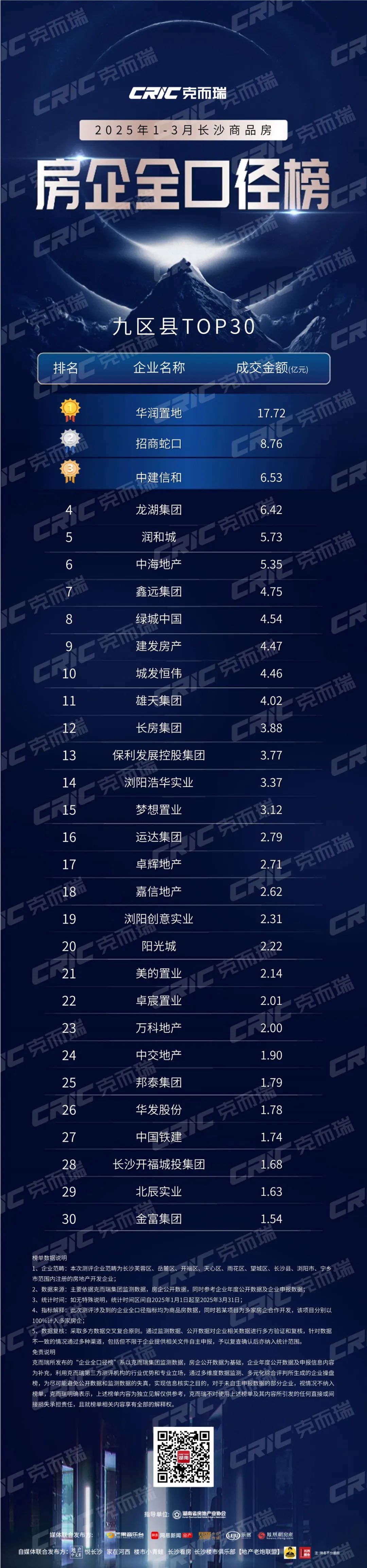
Group 1 - The core viewpoint of the article highlights a significant recovery in the Changsha new housing market as of March 2025, with leading real estate companies and emerging players collaborating effectively, indicating a gradual stabilization and improvement in the market amidst policy adjustments and corporate strategic transformations [1] - Leading companies are focusing on core locations and upgrading product capabilities, while local firms are carving out clear paths for breakthroughs through precise positioning and product innovation, capturing market shares in segments such as improvement and education [1] - The top 30 real estate companies in Changsha contributed a total sales amount of 117.75 billion, with a market concentration of 72%, reflecting a 6 percentage point increase year-on-year [17][18] Group 2 - The ranking dimensions include comprehensive, equity, and operational rankings for real estate companies, as well as project rankings for residential properties, villas, and apartments across nine districts in Changsha [2] - The data for the rankings is sourced from monitoring data by CRIC Group, public data from real estate companies, and annual public data and declarations from companies, covering the period from January 1 to March 31, 2025 [6][11] - The top three companies in terms of sales amount are China Resources Land with 17.72 billion, China Merchants Shekou with 8.76 billion, and China State Construction Engineering with 6.53 billion [17][18] Group 3 - The performance of private enterprises has shown significant improvement, with 16 private companies listed in the top 30, achieving a performance share exceeding 40%, indicating strong growth potential and vitality in the market [19][20] - New entrants in the market have successfully leveraged hot-selling projects to break into the real estate landscape, with companies like Xinyuan Group and Xiong Tian Group achieving notable sales figures [20][21] - The market is evolving into a dual-track structure where private enterprises activate the market's finer segments while state-owned enterprises reshape the urban framework [22] Group 4 - The article emphasizes that high-quality projects are leading the market, with a shift from a focus on cost-effectiveness to a dual drive of quality and resources, particularly in projects with strong educational attributes and innovative products [60][61] - The top projects in the nine districts include high-end improvement projects and high-quality developments, with significant sales figures reported for projects like Qingyun Shangfu and Changsha Ruifu [61][62] - The overall market is expected to maintain a positive trend, with an increase in transaction volume and a focus on core area improvement residences leading the market [62]


不动产与空间服务:怎么看开发商的2025?(二)
2025-04-15 14:30
Summary of Conference Call Notes Industry Overview - The discussion revolves around the real estate industry, particularly focusing on the investment strategies and market conditions in China, with references to historical data from the U.S. housing market during the 2007-2008 crisis [1][2][3]. Key Points and Arguments 1. **Current Market Position**: The fundamental market conditions are perceived as weak, with the investment opportunity being viewed as still in the left side of a U-shaped recovery [1]. 2. **Historical Analysis**: The recovery of major builders' stock prices is linked to substantial improvements in the underlying fundamentals, such as asset price stabilization, rather than mere short-term rebounds [1]. 3. **Supply and Demand Dynamics**: Initial supply-demand issues in the industry may not have been fully exposed, leading to systemic financial risks, as evidenced by rising default rates in commercial and residential loans in the U.S. [2]. 4. **Valuation Discrepancies**: A comparative analysis between Chinese and U.S. real estate markets reveals significant differences in how companies handle non-performing assets during downturns, affecting stock price declines [3]. 5. **Investment Strategy**: The current investment strategy emphasizes finding stocks with strong alpha potential amid unclear market trends, focusing on policy-driven opportunities [4][6]. 6. **Improved Supply-Demand Conditions**: Core cities, particularly in the second-hand housing market, show significant improvements in supply-demand relationships, with a notable decrease in listings in Beijing [5]. 7. **Financial Recovery Opportunities**: Companies like Xincheng Development are highlighted as having potential for stock price rebounds following financial restructuring [7]. 8. **Operational Improvements**: Companies are expected to first resolve liquidity issues before improving cash flow and investing in quality land [7]. 9. **Selection Criteria for Investments**: Recommendations for investment focus on land acquisition strength, operational resilience, and responsiveness to policy changes [8][9]. 10. **Market Sentiment**: The overall market sentiment remains pessimistic regarding real estate fundamentals, with expectations of further declines in property prices [12][13]. 11. **Valuation Models**: A model indicates that the average expected decline in property prices is around 10%, reflecting investor sentiment [13]. 12. **Long-term Market Dynamics**: The market is expected to stabilize, with a potential increase in market share for leading firms, particularly state-owned enterprises [19][22]. 13. **Investment Risks**: Risks include the potential for policy measures to fall short of expectations, which could lead to a repeat of previous market downturns [25][26]. Additional Important Insights - **Debt and Credit Concerns**: There are ongoing concerns regarding public debt and the creditworthiness of certain firms, which could impact overall market recovery [26]. - **Market Recovery Projections**: The long-term growth of the industry is anticipated to be driven by improvements in core city property prices, while non-core cities may experience a decline [24]. - **Valuation Metrics**: Future valuations are projected to range between 7x to 10x PE, reflecting a more stable market environment [24]. This summary encapsulates the key insights and strategic considerations discussed in the conference call, providing a comprehensive overview of the current state and future outlook of the real estate industry.
月酝知风之地产行业月报:政策预期升温,或迎博弈窗口-20250415
Ping An Securities· 2025-04-15 10:18
Investment Rating - The industry investment rating is "Outperform the Market" (maintained) [1] Core Viewpoints - The report suggests that with the upcoming Politburo meeting in April and the introduction of "reciprocal tariffs," there may be an acceleration in the implementation of policies to stabilize the real estate market. The introduction of "good houses" in the government work report for 2025 and the definition of specific construction standards by the Ministry of Housing and Urban-Rural Development may lead to a new wave of demand for improved housing [3][4] - The report highlights potential investment opportunities in real estate companies with lighter historical burdens, optimized inventory structures, and strong product capabilities, such as China Overseas Development, China Resources Land, and Greentown China. It also suggests focusing on companies undergoing valuation recovery like Vanke A and Jindi Group [3][4] Policy Insights - The report indicates that the "reciprocal tariffs" policy has been introduced, and there is an expectation for further easing of real estate policies. This includes potential loosening of purchase restrictions in core cities, further interest rate cuts, and measures to expand housing demand [3][9] - The report notes that 17 housing-related policies were introduced in March 2025, primarily leaning towards easing measures, with a focus on stabilizing the market [8] Market Dynamics - In March, the average daily transaction volume of new homes in 50 key cities decreased by 1.1% year-on-year but increased by 52.5% month-on-month. The report anticipates gradual improvement in transactions as the supply of high-quality residential properties increases [3][22] - The average premium rate for land transactions in 100 cities reached a new high in nearly a year at 13.2%, indicating a concentration of land sales in core first- and second-tier cities [29][31] Company Performance - The report states that the sales amount of the top 100 real estate companies in March 2025 decreased by 12.1% year-on-year, with a cumulative decline of 7.3% for the first three months. The report emphasizes that future sales volume will largely depend on the supply of high-end quality residential properties [37][32] - The report highlights that the real estate sector's PE (TTM) is currently at 34.9 times, which is at the 90.2 percentile of the past five years, indicating a relatively high valuation [46]
高薪行情不再!这些年,头部房企高管年薪如何变化?
Xin Jing Bao· 2025-04-15 07:39
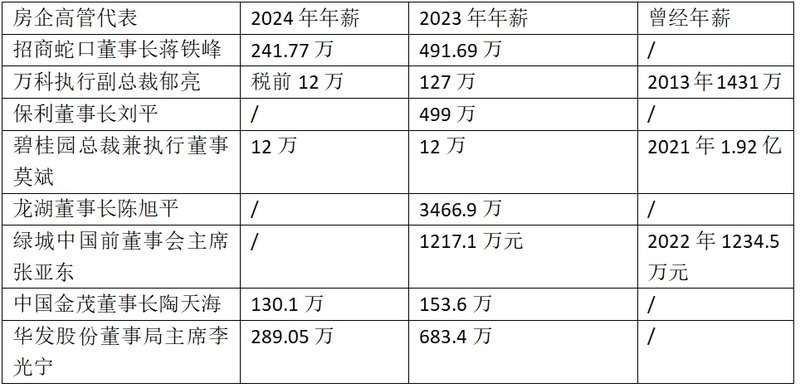
Group 1 - The core point of the article highlights a significant trend of salary reductions among executives in the real estate industry, with many companies adjusting their compensation structures in response to financial pressures [1][5][7] - Major companies like China Merchants Shekou have initiated salary cuts, with CEO Jiang Tiefeng's salary dropping from 4.9169 million yuan in 2023 to 2.4177 million yuan in 2024, a reduction of approximately 51% [2][4] - Other notable companies such as Vanke and Country Garden have also seen their executives' salaries decrease significantly, with some executives now earning as little as 10,000 yuan per month [1][3] Group 2 - The performance of China Merchants Shekou in 2024 shows a revenue of 178.948 billion yuan, a year-on-year increase of 2.25%, but a net profit attributable to shareholders of 4.039 billion yuan, a decrease of 36.09% [2] - Vanke's executive vice president, Yu Liang, voluntarily reduced his salary to a pre-tax amount of 120,000 yuan, down from previous years where he earned over 1 million yuan [2][4] - The article notes that the real estate sector is facing challenges such as shrinking scale, declining profits, and high debt levels, making it increasingly difficult for executives to manage their companies effectively [5][6] Group 3 - The salary adjustments reflect a broader trend in the industry where high salaries are becoming less sustainable, with many companies experiencing significant drops in profits and revenues [7] - For instance, China Jinmao's chairman saw a salary decrease from 1.536 million yuan to 1.301 million yuan, while Huafa's chairman's salary dropped from 6.834 million yuan to 2.8905 million yuan [6] - Despite the overall decline in executive compensation, some companies like Greentown Group still report relatively high average salaries, indicating a disparity within the industry [7]


新房成交近2万套,高端改善盘持续领跑:武汉楼市回暖丨楼市观察
Sou Hu Cai Jing· 2025-04-15 07:13
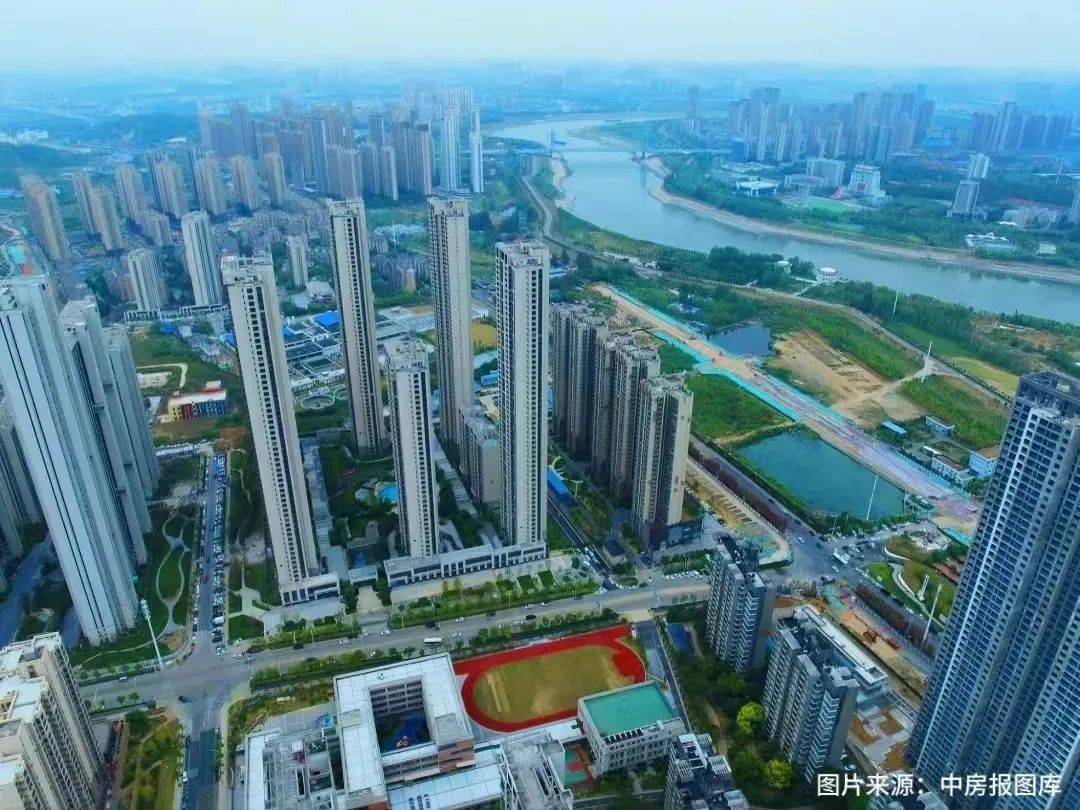
Core Viewpoint - Wuhan's real estate market is showing signs of a "small spring" recovery, with overall stability and upward trends observed in the market [2][3][4]. Group 1: Market Performance - In March, Wuhan's new residential property transactions reached 8,613 units, a significant increase compared to February [4]. - The total sales of new homes in the first quarter amounted to 18,833 units, representing a year-on-year increase of 4,644 units, or 32.73% [3][10]. - The second-hand housing market also saw a notable increase, with 8,772 transactions in March, reflecting a month-on-month rise of 70.96% and a year-on-year increase of 14.71% [4]. Group 2: Policy Impact - The recovery in Wuhan's real estate market is attributed to a series of policies implemented since last year, including "Han Ten Policies" and "Commercial to Residential" initiatives, which have contributed to market stabilization [3][10]. - The demand-side policies, such as tax rebates and subsidies for multi-child families, have effectively reduced purchasing costs and stimulated demand [9][12]. Group 3: Market Segmentation - The market is experiencing a divergence, with high-end properties in core urban areas performing well, while the demand for affordable housing remains weak [4][10]. - The new housing supply in March was approximately 566,000 square meters, a 165% increase month-on-month, with a transaction volume of 600,000 square meters [10][12]. - The average absorption rate for new properties was 36%, which is better than the previous three years' averages [10]. Group 4: Future Outlook - Experts caution that the current recovery is temporary and may not indicate a full market reversal, with potential declines in transaction volumes expected in the second quarter [5][12]. - The high inventory levels in the second-hand market, with 19,600 listings as of April 1, indicate ongoing challenges in price stabilization [12][13].
“内需”迎发展契机,重视板块配置价值
Tianfeng Securities· 2025-04-13 14:41
Investment Rating - Industry rating: Outperform the market (maintained rating) [4] Core Viewpoints - The report emphasizes the development opportunity for "domestic demand" and highlights the value of sector allocation. The government's work report for 2025 includes stabilizing the real estate market as a key requirement for economic and social development. There is a positive expectation for incremental policies, which are crucial for stabilizing domestic demand amid export fluctuations. The recent deep adjustment in the sector has improved the cost-effectiveness of allocations, with A-share Shenwan real estate PB at 0.7X and H-share domestic real estate PB at 0.47X, nearing historical lows [1][9]. Summary by Sections 1. Market Overview - New housing market transactions for the week totaled 201 million square meters, with a month-on-month decline of 0.90% and a decrease of 1.46 percentage points compared to the previous month. The cumulative inventory stands at 111.49 million square meters, with accelerated de-stocking in second and third-tier cities, while first-tier cities are slowing down [3][15]. - The second-hand housing market saw transactions of 207 million square meters, with a year-on-year increase of 19.70%, although this represents a decline of 19.38 percentage points from the previous month [3][24]. - The land market recorded a transaction area of 2.628 million square meters, with a rolling 12-week year-on-year decline of 15.78% [3][29]. 2. Financing Dynamics - As of April 10, 2025, approximately 850 projects for acquiring idle land using special bonds have been announced nationwide, covering over 40 million square meters and totaling 128.2 billion yuan. The majority of these projects are led by local state-owned enterprises [2][11]. 3. Investment Recommendations - The report suggests focusing on non-state-owned enterprises benefiting from debt resolution, policy relief, and demand improvement. It also highlights leading real estate companies with product advantages and regional enterprises with improved market share. Additionally, it recommends second-hand intermediaries benefiting from increased transaction activity [4][10]. - Specific companies to watch include: 1. Non-state-owned enterprises: Longfor Group, Gemdale Corporation, New Town Holdings, Greentown China, and Binjiang Group 2. Local state-owned enterprises: Yuexiu Property, Urban Construction Development, and Jianfa International Group 3. Leading state-owned enterprises: China Overseas Land & Investment, China Merchants Shekou, Poly Developments, and China Resources Land 4. Quality property management firms: China Overseas Property, Poly Property, China Resources Mixc Life, Wanwu Cloud, and China Merchants Jinling [4][10].

房地产行业研究:地产刺激政策必要性提升,三月开盘去化率上涨
SINOLINK SECURITIES· 2025-04-13 12:23
Investment Rating - The report does not explicitly state an investment rating for the real estate industry Core Insights - The real estate sector in A-shares and Hong Kong has experienced declines, with A-share real estate down by 1.5% and Hong Kong real estate down by 4.6% during the week of April 5-11 [2] - The average premium rate for land transactions remains high at 11%, despite a significant week-on-week decline in land transaction volume by 51% [2][29] - New housing transactions have decreased due to holiday effects and the pace of new launches, with a week-on-week decline of 35% across 47 cities [3][34] - The second-hand housing market shows resilience with a week-on-week increase of 9% in transactions across 22 cities [3][42] - The necessity for real estate stimulus has increased due to tariff impacts, with the potential for policy measures to be introduced in late April [4][13] Summary by Sections Market Overview - The A-share real estate sector ranked 6th among all sectors with a decline of 1.5%, while the Hong Kong real estate sector ranked 5th with a decline of 4.6% [2][18] - The property service index in Hong Kong fell by 2.5%, outperforming the Hang Seng China Enterprises Index and the CSI 300 Index by 4.9% and 0.4%, respectively [23] Land Transactions - In the week of April 5-11, the total area of residential land sold in 300 cities was 276 million square meters, reflecting a 51% decrease week-on-week and a 43% decrease year-on-year [2][29] - Cumulatively, from the beginning of 2025, the total area of residential land sold reached 9,554 million square meters, with a year-on-year increase of 1% [29] New Housing Transactions - New housing sales across 47 cities totaled 283 million square meters, with a week-on-week decline of 35% and a year-on-year decline of 6% [3][34] - First-tier cities saw a week-on-week decline of 39% in new housing transactions [34] Second-hand Housing Transactions - Second-hand housing transactions across 22 cities totaled 272 million square meters, with a week-on-week increase of 9% and a year-on-year increase of 23% [42] - First-tier cities experienced a year-on-year increase of 30% in second-hand housing transactions [42] Policy and Stimulus - The report highlights the need for stimulus measures in the real estate sector due to increased tariffs, with potential policy implementations expected following the political bureau meeting at the end of April [4][13] - Various cities are conducting research and preparing policies to stabilize the real estate market [14] Market Dynamics - The average absorption rate for new projects in March reached 45%, with significant increases in cities like Beijing, Shanghai, and Chengdu [5][15] - Strong product quality is identified as a key factor driving market interest, particularly in core urban areas [5][15] Investment Recommendations - The report suggests focusing on companies with strong product offerings and land acquisition capabilities, particularly in first-tier and core second-tier cities [6] - Recommended companies include Binjiang Group, China Overseas Development, and Jianfa International Group, along with their respective property management firms [6]

