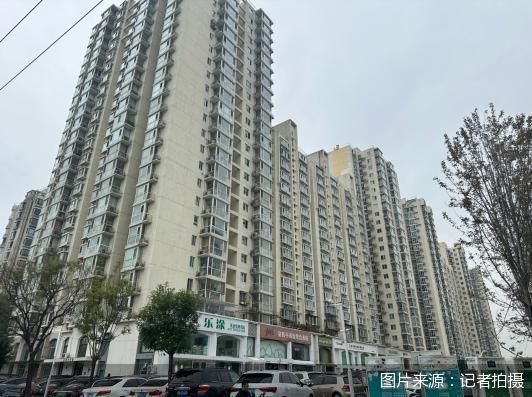
改善型需求

Search documents
房子“收购大潮”来了?已确定,2026年开始,2类房产或迎收购潮
Sou Hu Cai Jing· 2026-01-29 12:39
Core Viewpoint - The government will initiate a systematic acquisition of old residential properties starting in 2026, aimed at stabilizing the housing market and improving living conditions for citizens [1][3]. Group 1: Policy Background - The acquisition initiative is a shift from previous policies focused on demolition and compensation, now emphasizing "stabilizing the housing market and benefiting people's livelihoods" [3]. - Since 2023, the government has been signaling a focus on "stabilizing the housing market, ensuring delivery of homes, and promoting consumption" [5]. - The policy aims to address the issue of unsold inventory by transitioning from merely reducing stock to improving housing quality and stimulating demand for upgrades [5][8]. Group 2: Target Properties - The acquisition will primarily target old residential buildings, particularly those built over 20 years ago, with a focus on smaller units (40-90 square meters) in urban areas [25][26]. - Properties that were previously used as worker dormitories or company housing, which lack proper management and have poor living conditions, are also likely candidates for acquisition [27][28]. Group 3: Implementation and Flexibility - Several cities, including Jinan, Haikou, and Hangzhou, have already begun pilot programs for the acquisition of old properties, indicating a broader national trend [10][11][12][13]. - The acquisition process will not require homeowners to purchase new properties in a bundled manner, allowing for greater flexibility in how they use the proceeds from the sale [18][30]. Group 4: Market Impact - The initiative is expected to release pent-up demand for housing upgrades, as homeowners will have the opportunity to sell properties that are difficult to market [20][21]. - It aims to shift market expectations positively, as government involvement signals a commitment to stabilizing the housing market [22]. - The acquisition mechanism may serve as a model for other cities, potentially leading to a wave of similar policies across the country by 2026 [23]. Group 5: Future Prospects - The current acquisition policy may be just the beginning, with potential future expansions into areas such as small town renovations and the conversion of industrial properties into residential units [30]. - The initiative could also integrate with other policies related to urban renewal, affordable housing, and talent attraction, creating a more comprehensive approach to housing issues [30].

12月一线城市房价环比降幅收窄,二手房同比仍下降7%
Guan Cha Zhe Wang· 2026-01-19 06:36
Group 1 - The core viewpoint of the article indicates that the housing market in first-tier cities is showing signs of stabilization, with Shanghai being the only city experiencing a month-on-month price increase in December 2025 [1] - In December, six cities reported a month-on-month increase in new home prices, with Shanghai and Changchun leading at 0.2% [1] - First-tier cities saw a narrowing decline in both new and second-hand housing prices, with new homes decreasing by 0.3% and second-hand homes by 0.9%, indicating a potential positive shift in the market [1] Group 2 - In contrast, second-tier and third-tier cities continue to face pressure, with new home prices declining by 0.4% month-on-month [2] - Second-hand home prices in second-tier and third-tier cities fell by 0.7%, with the decline expanding by 0.1 percentage points [3] - Year-on-year, first-tier cities experienced a 7% drop in second-hand home prices, with Beijing seeing the largest decline at 8.5% [3][4] Group 3 - In 2025, national real estate development investment reached 8.2788 trillion yuan, a decrease of 17.2% from the previous year, with residential investment down by 16.3% [5] - The total sales area of new commercial housing was 8.8101 trillion square meters, down 8.7%, while residential sales area fell by 9.2% [5] - The inventory of unsold commercial housing increased to 7.6632 trillion square meters, up 1.6% year-on-year, indicating a growing supply in the market [5] Group 4 - The data from December suggests a strengthening signal in the first-tier market, particularly in Shanghai, which is the only city to achieve both year-on-year and month-on-month price increases [5] - The trend of "price for volume" in the second-hand housing market continues, reflecting landlords' ongoing adjustments to pricing [5] - Recent policy measures, including lower loan rates and tax incentives, have reduced the threshold for home purchases, leading to increased buyer engagement and a shift from passive browsing to active inquiries [6]
上海新房价格独涨二手房成交井喷,楼市“转折之年”来了?
Huan Qiu Wang· 2026-01-19 06:24
Core Viewpoint - The Shanghai real estate market demonstrates resilience and structural differentiation, with new home prices rising against a backdrop of national declines in real estate investment and sales [1][3]. Group 1: Market Performance - In December 2025, Shanghai's new residential sales prices increased by 4.8% year-on-year and 0.2% month-on-month, making it the only first-tier city to achieve both increases [1]. - The total annual increase in new home prices for 2025 reached 5.7%, contrasting with declines in Beijing, Guangzhou, and Shenzhen [1]. - The second-hand housing market in Shanghai showed a milder decline, with a 0.6% month-on-month drop in December 2025, better than the overall first-tier city average of 0.9% [1]. Group 2: Transaction Volume - In 2025, Shanghai's second-hand home transaction volume reached 254,000 units, marking a new high and surpassing the strong performance of 2022 [3]. - As of January 18, 2026, the monthly second-hand home registration volume reached 12,849 units, with expectations of exceeding 20,000 units for the third consecutive month [3]. - The increase in transaction volume is attributed to the seasonal demand for school district properties and the perception that prices have bottomed out, leading to a positive shift in seller attitudes [3]. Group 3: Policy and Market Dynamics - Continuous policy support, including historically low mortgage rates and targeted tax incentives, has lowered the barriers to home purchasing [3]. - Market research indicates a significant increase in inquiries for second-hand homes in key cities, particularly from families with multiple children and new residents, suggesting a shift from market observation to actual purchasing [3]. - The rental yield in 30 cities has risen to 2.06%, surpassing fixed deposit rates, indicating a potential market bottom [3]. Group 4: Future Outlook - Analysts predict that 2026 will be a critical year for confirming the bottom of the real estate market in Shanghai and nationwide [4]. - There is a consensus among real estate companies regarding price stabilization, with a narrowing of negotiation space for buyers [4]. - The focus of competition in the industry is expected to shift from price wars to service quality and product competitiveness [4].
民营房企缘何年底扎堆“抢地”
Zheng Quan Ri Bao· 2025-12-03 16:45
Group 1 - In December, 22 key cities plan to auction 125 residential land parcels with a total starting price of 172.3 billion yuan, indicating a significant increase in land supply [1] - Notable land transactions include a residential plot in Ningbo sold for a total price of 3.28 million yuan with a premium rate of 21.42%, and a high-quality residential plot in Wenzhou sold for 3.99 million yuan with a premium rate of 16.97% [1] - The competitive bidding environment is driven by strong demand for improved housing in core cities and favorable land conditions, leading to aggressive bidding from private real estate companies [3] Group 2 - Several private real estate companies have been actively acquiring land, reflecting a strategic move to replenish their land banks and ensure sustainable development [3][4] - The market is witnessing a structural gap in the housing market, particularly in second and third-tier cities, where there is a shortage of high-quality residential products and comprehensive community projects [3] - The ongoing "stabilizing the real estate market" policies are contributing to a marginal improvement in supply-demand relationships, which is fostering a more positive outlook for the market [4]
2025年上海新房市场项目诊断解析:政策暖风下的分化与突围
安居客· 2025-11-20 01:43
Market Overview - The Shanghai new housing market in 2025 shows volatility, with initial low demand and sales, followed by a rebound from February to April, and a subsequent decline from May to September[1] - The market is characterized by structural differentiation, with some projects achieving a subscription rate of 283% while others have a sales rate of only 53% over 15 months[1] Policy Environment - The demand-side policy adjustments include the reduction of the outer ring purchase restrictions and down payment ratios, aiming to stimulate demand in the outer ring areas, where the transaction area share decreased from 71% in 2022 to 65% in 2025[5][7] - The supply-side policy focuses on enhancing housing quality through 17 specific regulations, shifting market competition from price to quality[6] Demand Characteristics - The demand for larger units (90-120 sqm and 120-140 sqm) is prominent, with the 120-140 sqm category peaking at 36.4% in July 2025[8][12] - The supply-demand mismatch is evident, particularly for three-bedroom units in various districts, with negative mismatch indices indicating a shortage[9] Sales Drivers for Hot Projects - Successful projects align closely with market demand, such as a project in Pudong focusing on 88-110 sqm three-bedroom units, achieving a subscription rate of 283%[14] - Competitive pricing strategies are employed, with projects priced below the average market rate to attract price-sensitive buyers[16] Challenges for Slow-Selling Projects - Misalignment of product offerings with market demand, such as a high-end project offering smaller units that do not meet the needs of improvement-seeking families, resulting in a 53% sales rate[23] - Insufficient competitive pricing and lack of appealing features contribute to slow sales, with some projects priced higher than competing offerings without corresponding value[24] Recommendations for Improvement - Projects should focus on precise market positioning and optimize unit designs to enhance appeal, such as increasing usable space and improving layout[29] - Implementing differentiated pricing strategies and enhancing marketing efforts can help improve sales performance and customer engagement[30][31]
10月70城房价出炉:上海、杭州新房价格同比涨幅领跑
Mei Ri Jing Ji Xin Wen· 2025-11-17 13:36
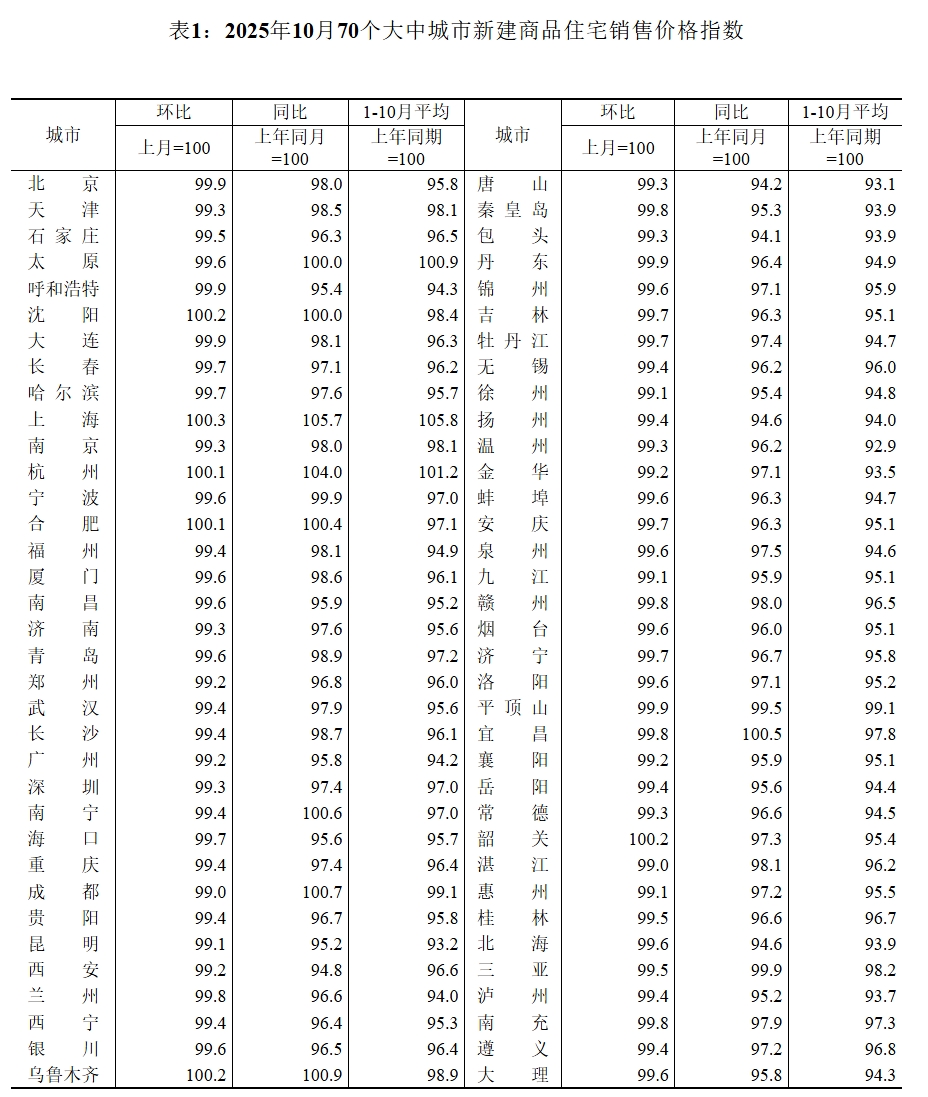
Core Insights - The overall trend in the real estate market shows a decline in new residential property prices across 70 major cities in October, with some cities like Shanghai, Urumqi, Hangzhou, and Hefei experiencing price increases [1][2][3] - The analysis indicates that first-tier cities are stabilizing while second-tier cities show internal differentiation, and third and fourth-tier cities are under overall pressure [1][3] New Housing Market - In October, new residential property prices in first-tier cities decreased by 0.3% month-on-month, with Shanghai seeing a 0.3% increase, while Beijing, Guangzhou, and Shenzhen experienced declines of 0.1%, 0.8%, and 0.7% respectively [2] - Year-on-year, Shanghai's new housing prices rose by 5.7%, contrasting with declines in Beijing (2.0%), Guangzhou (4.2%), and Shenzhen (2.6%) [2][3] - The demand for improved housing, particularly in the 90 to 144 square meter range, is identified as a core support for transactions [2] Second-Hand Housing Market - In October, second-hand residential property prices in first-tier cities fell by 0.9% month-on-month, with Beijing seeing a 1.1% decline [4] - Year-on-year, second-hand prices in first-tier cities decreased, with Beijing, Shanghai, Guangzhou, and Shenzhen experiencing declines of 4.7%, 3.4%, 6.4%, and 3.3% respectively [4] - The market for second-hand homes is under pressure, but the willingness of owners to significantly reduce prices is decreasing, indicating a potential stabilization in the market [5] Market Outlook - The market is expected to show characteristics of "stable volume and weak prices" with ongoing differentiation as policies are strengthened and developers push for year-end performance [1][3] - The fourth quarter is seen as a critical period for inventory reduction and boosting housing consumption, with a focus on enhancing market activity and confidence [3]
“银十”70城楼市量稳价弱:新房房价环比下降,上海等6城上涨
Bei Ke Cai Jing· 2025-11-14 06:30
Core Viewpoint - In October, housing prices in major cities across China showed a downward trend both month-on-month and year-on-year, with only a few cities experiencing price increases [1][2]. New Housing Market - In October, new residential prices in first-tier cities decreased by 0.3% month-on-month, with Shanghai seeing a 0.3% increase, while Beijing, Guangzhou, and Shenzhen experienced declines of 0.1%, 0.8%, and 0.7% respectively [1][2]. - Six cities reported month-on-month price increases, with Shanghai leading at 0.3% [2]. - Year-on-year, first-tier cities saw a 0.8% decrease in new housing prices, with Shanghai increasing by 5.7% [1][2]. Second-hand Housing Market - In first-tier cities, second-hand housing prices decreased by 0.9% month-on-month, with the decline narrowing by 0.1 percentage points compared to the previous month [4][5]. - Year-on-year, first-tier cities experienced a 4.4% decrease in second-hand housing prices, with the decline expanding by 1.2 percentage points [4][5]. Market Dynamics - The second-hand housing market is showing signs of differentiation, with first-tier cities stabilizing while second-tier cities see a slight decrease in price declines [5][6]. - The increase in second-hand housing listings indicates a continued supply pressure, with a 1.4% rise in listings across 14 key cities [5][6]. - The overall market is characterized by "stable volume and weak prices," with expectations for a year-end increase in transaction volume despite price pressures [6]. Future Outlook - The new housing market is expected to maintain a trend of increased transactions in November and December, with a potential year-end surge in activity [6]. - The second-hand housing market may continue to face downward pressure on prices, but signs of stabilization are emerging as the willingness of sellers to significantly reduce prices decreases [6].
58安居客研究院:一线城市改善需求依然稳定
Xin Hua Cai Jing· 2025-11-14 03:30
Group 1 - The core viewpoint indicates that the demand for improved housing in first-tier cities remains stable, with new residential prices for 90-144m² properties showing optimal stability month-on-month [1] - In first-tier cities, the proportion of house-hunting for 90-120m² units is 29%, while for 120-140m² units it is 21.1%, highlighting that improved demand is a key support for transactions [1] - There is still downward pressure on housing prices in smaller cities with high inventory, where the inventory digestion cycle exceeds 20 months, leading to a month-on-month decline in new home prices due to developers' strategies to boost sales through price reductions [1] Group 2 - Overall, the trend of stabilization in core first-tier areas, differentiation in second-tier cities, and pressure in third and fourth-tier cities remains unchanged [2] - In November and December, with increased policy support and year-end pushes from developers, the market is expected to show characteristics of "stable volume, weak prices, and ongoing differentiation" [2] - The transaction volume for second-hand homes is expected to remain stable compared to October, particularly in core cities like Shanghai, Beijing, Hangzhou, and Chengdu, where both volume and price are likely to stabilize [2]

宁波楼市现“冰火两重天”!新房一天猛涨43.9%,二手房价格却持续探底
Sou Hu Cai Jing· 2025-11-09 06:10
Core Insights - The Ningbo real estate market is experiencing a significant divergence, with new homes showing signs of recovery while the second-hand market remains sluggish [5][7][12] Market Dynamics - New home transactions in Ningbo have seen a slight increase, with 68 units sold on November 5, 2025, marking a 25.9% rise from the previous day [5] - In contrast, the second-hand home market is struggling, with only 214 units sold on the same day, reflecting an 8.9% decrease [7] - Cumulatively, new home sales for the month reached 242 units, down 34.4% from the previous period, while second-hand sales plummeted by 48.4% to 751 units [7] Price Trends - The average listing price for second-hand homes in Ningbo has dropped to 18,800 CNY per square meter, a decrease of 8.67% [8] - The average total price for second-hand homes is now 2.27 million CNY, indicating a broader downward trend in property values [8] Market Sentiment - Comments from netizens reflect a sense of resignation among homeowners regarding the declining asset values, with sentiments indicating a shift in market expectations [9][11] - The prevailing attitude suggests that many are accepting the current market conditions as a new norm [11] New Home Market Characteristics - The new home market is characterized by stable prices despite a decrease in transaction volume, with an average price of 33,582 CNY per square meter [12] - High-end improvement projects are performing well, while entry-level products face significant challenges [12][14] Regional Variations - There are notable disparities in performance across different districts in Ningbo, with the Beilun district seeing a 164% increase in new home sales due to favorable policies [15] - Conversely, the Yinzhou district has experienced a 13% decline, highlighting the structural adjustments within the market [15] Inventory and Supply - As of early November, the inventory of second-hand homes in Ningbo reached 92,058 units, indicating ongoing pressure on prices [17] - The market is expected to continue adjusting, with developers likely to adopt strategies to manage supply effectively [18] Future Outlook - Experts suggest that the Ningbo real estate market is in a bottoming phase, with new home sales showing signs of stabilization [18] - The focus on improvement-type demand and product innovation is anticipated to drive future market recovery [18]
楼市“金九银十”|北京二手房迭代:次新房集中入市,中介为卖房改用汽车带看
Bei Jing Shang Bao· 2025-10-30 06:28
Core Insights - The traditional "Golden September and Silver October" real estate cycle is nearing its end, with high customer viewing volumes maintained in various districts of Beijing, particularly in the secondary housing market [1][3] - The influx of new homes delivered in the past year has increased the supply of "new second-hand" homes, providing buyers with more options and enhancing market activity [1][4] Group 1: Market Dynamics - The secondary housing market is experiencing a surge in the availability of new second-hand homes, particularly in areas like Daxing, where recent new home deliveries have led to an increase in listings [3][4] - New second-hand homes, characterized by better layouts and facilities, are becoming a competitive alternative to older properties, which constitute over 50% of the listings in Beijing [3][4] Group 2: Buyer Preferences - Buyers are increasingly favoring new second-hand homes due to their modern features and lower risk of aging compared to older properties, which may lose value as they age [4][6] - The demand for new second-hand homes is particularly strong among buyers looking to upgrade their living conditions, as these properties often meet their needs for space and quality [7][9] Group 3: Service Enhancements - Real estate agencies are improving their services to adapt to changing buyer behaviors, such as offering car services for property viewings to counteract the impact of colder weather on buyer enthusiasm [9][10] - Enhanced service quality is expected to increase viewing volumes and improve market conditions, potentially leading to shorter transaction cycles and more stable pricing [9][10]