Rapidus

Search documents
日本芯片,“复仇”韩国?
3 6 Ke· 2026-02-09 05:13
Group 1 - The global storage industry has undergone a significant power shift over the past thirty years, with Japan losing its dominance in the DRAM market to South Korean manufacturers [1][2][10] - In the 1980s, Japanese companies held over 50% of the global DRAM market share, benefiting from a strong manufacturing base and government support for semiconductor development [3][4][8] - The decline of Japanese DRAM dominance began in the 1990s due to economic challenges, structural changes in the DRAM industry, and increased competition from South Korean firms like Samsung and SK Hynix [8][9][10] Group 2 - High Bandwidth Memory (HBM) has emerged as a critical component in AI computing, with South Korean manufacturers capitalizing on their expertise in DRAM technology to dominate this market [12][13] - Japan's current presence in the HBM market is minimal, primarily limited to materials and equipment, lacking significant production capacity or technological advancements [13][14] - The introduction of SAIMEMORY, a subsidiary of SoftBank, aims to innovate in memory technology with the development of Z-Angle Memory (ZAM), which seeks to overcome limitations of current memory architectures [15][16][18] Group 3 - Japan's semiconductor strategy has shifted from attempting to regain past dominance to focusing on securing positions in key technological areas, such as advanced logic processes and packaging technologies [19][20][30] - The establishment of Rapidus represents Japan's effort to maintain a foothold in advanced semiconductor manufacturing, collaborating with IBM and ASML to ensure technological relevance [19][20] - Japanese companies are also investing in AI chip development, with firms like PFN and EdgeCortix leading initiatives to create specialized AI processors for various applications [21][26][28] Group 4 - The overall strategy for Japan's semiconductor industry is to avoid direct competition with South Korea and the U.S. by focusing on niche markets and innovative technologies rather than scale [30][31] - Japan's renewed focus on semiconductor technology reflects a strategic re-evaluation of its position in the global market, aiming to redefine its role in the evolving landscape of AI and memory technologies [29][30]

台积电熊本改产3纳米,日本供应链厚度增加
日经中文网· 2026-02-06 02:52
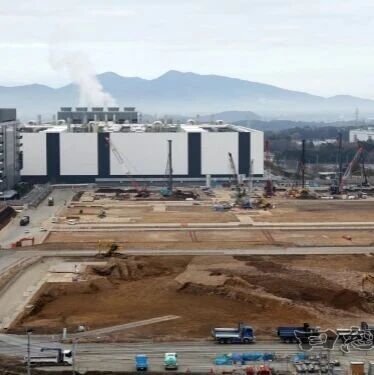
Group 1 - TSMC is constructing a new factory in Kumamoto, Japan, aimed at producing cutting-edge chips for artificial intelligence (AI) [2] - Rapidus plans to mass-produce 2nm products in Hokkaido, enhancing Japan's semiconductor supply chain with stable AI semiconductor production from both northern and southern bases [2] - The Japanese semiconductor equipment and materials sectors are expected to benefit significantly from these developments, as Japan holds a substantial market share in these areas [2] Group 2 - TSMC's CEO, Wei Zhejia, is considering adjustments to the production plan for the Kumamoto factory to manufacture 3nm semiconductors, which may increase the originally estimated investment of $12.2 billion [4] - The 3nm semiconductors will be utilized in NVIDIA's GPUs, highlighting the importance of ensuring a stable supply of advanced semiconductors as new data centers for AI are established in Japan [4] - Japan's semiconductor equipment market holds approximately 30% of the global share, while the materials sector accounts for about 50%, indicating a strong domestic capability to support advanced semiconductor production [4] Group 3 - Tokyo Electron plans to invest 700 billion yen in equipment over the next five years, with a new facility in Kumamoto set to begin operations in spring 2026, increasing development capacity by four times [5] - Canon is investing 50 billion yen by September 2025 to establish a new facility for photolithography equipment used in AI semiconductor assembly [6] - Ibiden plans to invest 500 billion yen over three years starting in 2026 to expand production capacity for packaging substrates used in AI server chips, expected to increase by 2.5 times by 2028 [6] Group 4 - The Japanese government aims to support the semiconductor and AI sectors with over 10 trillion yen by 2030, accelerating the establishment of a cutting-edge semiconductor supply chain [6] - Japan has provided approximately 1.2 trillion yen in subsidies to TSMC's factories and about 2.9 trillion yen to Rapidus, with conditions for TSMC to increase semiconductor production during supply shortages [6] - The competitive landscape for attracting investment in advanced semiconductor manufacturing is intensifying globally, necessitating a comprehensive approach to develop the domestic semiconductor industry, including equipment, materials, and design engineering [6]

传日本Rapidus获超过10亿美元投资
Sou Hu Cai Jing· 2026-02-06 02:17
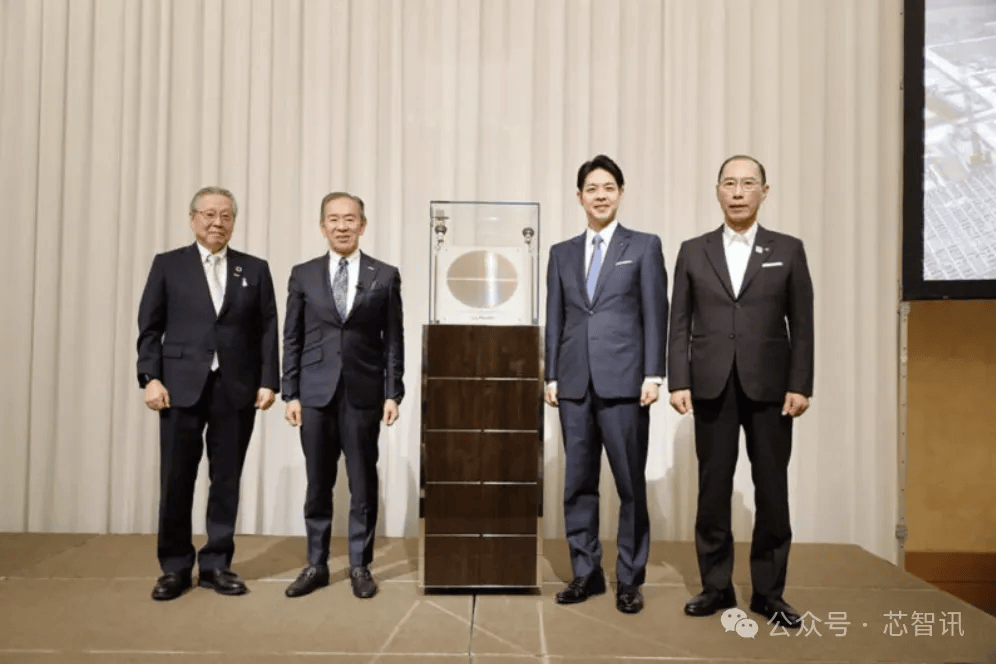
Group 1 - The core point of the article is that Japanese semiconductor startup Rapidus has secured over 160 billion yen (approximately 1.02 billion USD) in private investment, exceeding expectations for the fiscal year 2025, with IBM likely to join other Japanese companies in supporting the firm [2][3] - Rapidus aims to reduce Japan's reliance on foreign semiconductor manufacturing technology, particularly amid global geopolitical tensions, and plans to produce 2nm chips by 2027 [2] - The Japanese government has committed to providing up to 330 billion yen in subsidies for Rapidus's experimental factory in Chitose, Hokkaido, with the company raising 70 billion yen and 90 billion yen in 2023 and 2024, respectively [2] Group 2 - IBM is in advanced discussions to become a technology partner with Rapidus, offering expertise in 2nm transistor technology and collaborating on production processes [3] - The rise of Rapidus signifies a revival of Japan's semiconductor industry, supported by a national initiative exceeding 70 billion USD, despite challenges such as capacity and yield improvement, talent shortages, and competition from Samsung and Intel [3] - Analysts predict that if Rapidus achieves its milestones, the company's valuation could reach between 5 billion to 10 billion USD by 2028 [3]
台积电将在日本生产先进AI芯片
Xin Lang Cai Jing· 2026-02-05 13:22
台湾芯片制造商台积电(TSM)周四表示,将在日本生产部分全球最尖端的半导体,以满足人工智能 相关需求的爆发式增长,此举将助力日本实现其芯片制造雄心。 台积电在另一份邮件声明中表示,魏哲家认为日本 "前瞻性的半导体政策将为半导体行业带来显著利 好"。 此次宣布,正值高市早苗在东京与台积电董事长魏哲家(C.C. Wei)会面期间。 高市早苗在会面中表示:"从日本经济安全的角度来看,这具有极其重要的意义。我务必希望该项目能 按计划推进。" 即将在熊本县量产的先进芯片,将应用于人工智能、机器人、自动驾驶等领域 —— 这些均为高市内阁 划定的战略重点产业。 台积电熊本县第一工厂已于2024 年底量产,主要生产技术层级较低的芯片。此外,公司还在美国亚利 桑那州建设新厂,打造晶圆厂集群,以应对全球 AI 热潮下客户日益增长的需求。 作为英伟达、苹果等企业的核心芯片供应商,台湾积体电路制造股份有限公司(台积电)周四宣布,计 划在其日本熊本县第二工厂生产3 纳米芯片。这类先进芯片广泛应用于 AI 产品、智能手机等领域,该 工厂目前仍在建设中。 作为全球最大的专业芯片代工厂,台积电的这一决定,对日本首相高市早苗(Sanae Ta ...
台积电宣布:在日本生产3nm芯片!
国芯网· 2026-02-05 13:13
国芯网[原:中国半导体论坛] 振兴国产半导体产业! 不拘中国、 放眼世界 ! 关注 世界半导体论坛 ↓ ↓ ↓ 2月5日消息,据报道,台积电首席执行官魏哲家表示,台积电计划在日本工厂量产先进的3纳米芯片。 据当地媒体报道,这笔投资规模达 170 亿美元,旨在满足人工智能芯片飙升的市场需求。 作为全球最大的芯片代工厂,同时也是英伟达等企业人工智能芯片的核心供应商,台积电目前最先进的芯片均在中国台湾地区生产。该公司此前针对日本 的建厂规划,仅聚焦于工艺相对落后的芯片技术。 这一官宣让日本跻身全球高端 3 纳米芯片的最新生产地行列。3 纳米芯片广泛应用于高性能计算与人工智能服务器领域。 日本政府同时也在大力补贴本土芯片代工企业Rapidus,该企业将在北海道生产先进制程芯片。据《读卖新闻》报道,日本政府认定两家企业生产的芯片 应用场景不同,不存在同业竞争关系。 ***************END*************** 半导体公众号推荐 半导体论坛百万微信群 加群步骤: 第一步:扫描下方二维码,关注国芯网微信公众号。 据报道,台积电原计划投资在该厂投资122亿美元用于6至12纳米芯片制造能力的建设,但目前, ...
台积电调整日本第二晶圆厂规划,转产3nm工艺并追加170 亿美元投资
Huan Qiu Wang Zi Xun· 2026-02-05 03:30
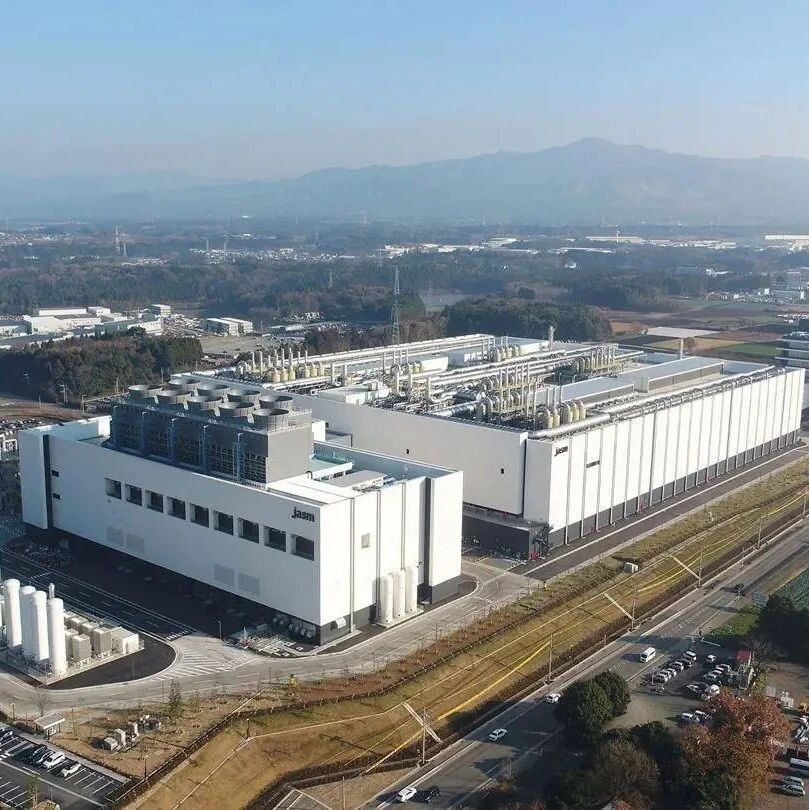
来源:环球网 【环球网科技综合报道】2月5日消息,据日本《读卖新闻》消息,台积电计划于今日正式向日本政府提 交通知,对其在日控股子公司JASM的第二晶圆厂规划进行重大调整,将原定主要生产的6nm逻辑半导 体工艺升级为3nm,项目总投资额也将从原定的122亿美元提升至170亿美元。 据悉,此次制程工艺升级是台积电优化海外产能布局的重要举措,3nm工艺作为当前先进半导体制造技 术的代表,其量产落地将进一步提升全球高端芯片供应能力。 对于此次调整,日本政府方面已明确表态,认为JASM第二晶圆厂转产3nm工艺后,不会与该国企业 Rapidus正在推进的2nm项目形成市场竞争,双方将在不同技术节点形成互补发展格局。(纯钧) ...
台积电赴日建3nm工厂,投资170亿美元
半导体行业观察· 2026-02-05 01:08
Core Insights - TSMC plans to invest $17 billion in advanced 3nm chip production in Kumamoto, Japan, with the Japanese government considering additional support for this investment [2] - Rapidus, a Japanese chip manufacturer, is expected to exceed its private investment target of 160 billion yen ($1.02 billion) by 2025, with significant backing from IBM and other major Japanese companies [3][4] - The Japanese government is prioritizing domestic production of advanced chips for economic security, with Rapidus aiming for mass production of 2nm chips by FY2027 [5] Group 1: TSMC's Investment in Japan - TSMC's investment in Japan is set at $17 billion for 3nm chip production, with discussions ongoing regarding changes to its original plan of $12.2 billion for 6-12nm capacity [2] - The Japanese government is providing subsidies to TSMC and is considering further support for its expansion plans [2] Group 2: Rapidus' Growth and Investment - Rapidus is projected to raise over 160 billion yen ($1.02 billion) in private investments by FY2025, with major shareholders including SoftBank and Sony, each investing 21 billion yen [3][4] - The number of shareholders in Rapidus is expected to increase from 8 to over 30, indicating growing interest in the company [4] - Rapidus aims to achieve mass production of 2nm chips by FY2027, supported by both public and private funding [5] Group 3: Technological Developments and Challenges - IBM is providing technical support to Rapidus and is expected to become its first foreign investor, aiming to reduce reliance on TSMC [4] - Rapidus has confirmed the operation of its 2nm transistor prototype and is working on efficient AI chip connections [4] - Despite progress, Rapidus faces challenges in scaling production, increasing output, and expanding its customer base [5]

2纳米被疯抢的原因
半导体行业观察· 2026-02-05 01:08
Core Insights - The introduction of 2nm and more advanced process nodes will require new power consumption and thermal management methods, while also providing greater design flexibility and more options for performance enhancement and cost optimization [2] - The semiconductor market is evolving, with a shift from traditional low-power chips for mobile devices and high-performance chips for servers to more specialized applications driven by artificial intelligence [2][3] - The transition to multi-die components allows for prioritization of different processors and functionalities, simplifying emergency plans during component shortages [2][3] Group 1: Design and Manufacturing Challenges - The complexity of integrating various components in chipsets is significant, as designing and manufacturing chipsets is easier than integrating them [4] - A hybrid design approach allows for the combination of different standard cells, enhancing flexibility and performance while managing power consumption [5] - The interconnect technology between chips has improved, allowing for the mixing of different process nodes, which helps mitigate cost and yield challenges [6] Group 2: Performance and Power Management - The performance and power advantages of new nodes are not absolute; the real value lies in how close the system can approach the physical limits of silicon [7] - The economic benefits of 2nm technology depend on intelligent management of the power band, as excessive power bands can lead to wasted investments [7] - The trend of increasing power density with each new node presents challenges in thermal management, necessitating advanced cooling solutions [11][12] Group 3: Market Dynamics and Future Directions - The reasons for upgrading to higher process nodes are no longer based on a single factor but vary by market segment and workload [15] - The integration of multiple nodes in a single design is becoming more common, with new PPA/C trade-offs to balance priorities in large systems [15] - The semiconductor industry is at a turning point, requiring continuous management of correctness rather than assuming everything is normal at acceptance [10]


“日本制造”该如何升级?
日经中文网· 2026-01-18 00:33
Group 1 - The core viewpoint is that Japanese companies are caught between the dominance of American tech giants like GAFAM and Nvidia, and the overwhelming industrial productivity of China, raising questions about potential breakthroughs for Japan [1] - Toyota is preparing to develop and produce its luxury electric vehicle brand "Lexus" in Shanghai, China, with plans to start production in 2027, shifting from its initial consideration of Japan for this project [3] - The development cycle for electric vehicles in Japan is traditionally 4-5 years, while Chinese manufacturers can produce new models in just 1.5 years using AI and digital twin technology, highlighting the competitive advantage of Chinese firms [3] Group 2 - In the field of robotics, Japan is no longer seen as a leader, with China operating 202,000 industrial robots, which is 4.4 times more than Japan, indicating a significant shift in industrial capabilities [5] - Japan has a wealth of manufacturing data that, if effectively utilized, could help regain its competitive edge in industrial robotics and manufacturing [5] - The semiconductor industry is critical for Japan, with the company Rapidus aiming to start mass production of 2-nanometer AI semiconductors by the second half of 2027, emphasizing the importance of maintaining competitiveness in this sector [7]


台积电日本厂,转向2nm?
半导体芯闻· 2026-01-16 10:27
Group 1 - TSMC's Kumamoto Factory (Kumamoto Plant 1) is set to begin mass production by the end of 2024, with a second factory (Kumamoto Plant 2) under construction, although its construction has reportedly been halted [1] - The halt in construction of Kumamoto Plant 2 may be due to TSMC's consideration to produce more advanced products, specifically 2nm chips, in response to increasing demand for Physical AI applications [1][2] - TSMC's Chairman Wei Zhejia stated that the types of semiconductors and the mass production timeline for Kumamoto Plant 2 will depend on customer demand and market conditions [1] Group 2 - Originally, Kumamoto Plant 2 was planned to produce 6nm chips for applications such as autonomous driving, but reports indicate that the project has shifted focus to potentially producing 4nm chips instead [2] - The construction of Kumamoto Plant 2 was officially initiated in October 2025, but equipment was removed from the site around December 2025, indicating a significant pause in the project [2]