
阿里

Search documents
百度分拆昆仑芯上市引爆市场!港股大涨,A股正宗概念股一览
Sou Hu Cai Jing· 2026-01-04 01:49
Core Viewpoint - Baidu's announcement of the spin-off of its AI chip subsidiary Kunlun Chip for a Hong Kong IPO has significantly impacted the capital market, leading to a surge in technology stocks in both Hong Kong and A-shares [1][3]. Group 1: Market Reaction - The announcement caused the Hang Seng Technology Index to rise by 4% in a single day, while Baidu's stock price increased by 9.35%, pushing its market capitalization to 386.7 billion HKD [1]. - The overall market sentiment was buoyed by the first trading day of 2026, with the Hang Seng Index rising by 2.76% and trading volume exceeding 140 billion HKD [3]. Group 2: Kunlun Chip's Strength - Kunlun Chip, with a valuation of 21 billion RMB, has secured significant orders, including a major procurement contract from China Mobile worth over 1 billion RMB [2]. - The company is projected to increase its revenue from 1.3 billion RMB in 2024 to 8.3 billion RMB by 2026, representing a growth of 6 times, with a potential valuation exceeding 80 billion RMB [2]. Group 3: A-Share Beneficiaries - Three categories of A-share companies are identified as having official ties to Kunlun Chip: those with deep business cooperation with Baidu, supply chain partners, and companies benefiting from the AI computing power explosion [4]. - Specific companies include: - Yuxin Technology, which has a 5.71% stake from Baidu and a four-year cooperation agreement [5]. - Geling Deep Vision, collaborating with Baidu to integrate Kunlun Chip's computing power [5]. - BYD, a partner in Baidu's Apollo autonomous driving ecosystem and a shareholder in Kunlun Chip [5]. Group 4: Investment Guidelines - Investors are advised to verify the authenticity of company connections through official announcements and focus on companies with deep business ties and substantial orders [6]. - Companies involved in AI chip domestic substitution and computing infrastructure construction are highlighted as having long-term growth potential supported by national policies [6].


Meta(META.US)收购加速AI赛道价值重估 AI智能体概念爆发 迈富时(02556)收涨5.83%
智通财经网· 2026-01-02 15:42
Group 1 - Meta announced the acquisition of AI startup Manus for several billion dollars, which has sparked strong market reactions towards AI agents and is expected to accelerate the revaluation of the AI sector [1] - The acquisition has led to a positive market sentiment, with the stock of MaiFuShi (02556) rising by 5.83% to HKD 37.06, reflecting the market's enthusiasm for AI agents [1] - Dongwu Securities indicated that Meta's investment signifies a revaluation of agents, suggesting that market funds are likely to concentrate on companies with real-world applications and sustainable subscription revenues [1] Group 2 - MaiFuShi has recently launched its AI-Agentforce 3.0 enterprise-level agent platform, marking a transition from "tool-based AI" to "digital workforce," which is seen as a significant step towards realizing the value of AI applications [2] - The company has established deep strategic partnerships with leading tech firms such as Baidu and Alibaba, integrating foundational model capabilities with its own SaaS vertical data [2] - MaiFuShi ranked first in the "2025 China AI Marketing Agent TOP 30" list, indicating its technological maturity and industry recognition [2]

2025年全国餐饮收入6057亿元,同比增长3.2%,餐饮业仍面临“供强需弱”的挑战
Sou Hu Cai Jing· 2026-01-01 21:13
Core Viewpoint - The Chinese catering industry is experiencing a mixed growth scenario, with a notable increase in revenue but facing challenges related to supply and demand dynamics, competition, and market saturation [3][11]. Group 1: Industry Performance - In November 2025, the national catering revenue reached 605.7 billion yuan, marking a year-on-year growth of 3.2%, while the cumulative revenue from January to November was 522.45 billion yuan, up 3.3% year-on-year [1]. - The catering industry is characterized by a "strong supply but weak demand" situation, indicating a shift in competition from product and service advantages to a comprehensive battle involving supply chains, digitalization, and capital strength [3][11]. Group 2: Capitalization Trends - A wave of capital market activity is observed in the Chinese catering industry, with leading brands like Mixue Ice City and others going public in 2025, aiming to leverage capital for rapid expansion and brand building [4]. - The IPO frenzy in the Hong Kong market is particularly appealing for Chinese consumer brands looking to establish a global presence, reflecting both policy alignment and the inherent strengths of these companies [5]. Group 3: Online Growth Channels - Online channels have emerged as a significant growth driver, with a 9.1% increase in national online retail sales from January to November 2025, and a remarkable 14.9% surge in sales of food-related products [6]. - The competition in the online food delivery market has intensified, leading to substantial financial losses for major platforms like Alibaba and Meituan due to aggressive subsidy wars [6][8]. Group 4: Market Dynamics - The catering industry is witnessing a dual trend of rapid chain expansion alongside a wave of closures, with 161,000 closures reported in the first half of 2025, surpassing the 159,900 new openings [10]. - The chain restaurant sector is accelerating, with several brands achieving over 10,000 stores, while the overall chain rate is projected to rise from 19% in 2019 to 23% in 2024 [10]. Group 5: Regional Insights - Shenzhen's catering sector has shown resilience, with a 14.3% increase in catering revenue, reflecting a broader trend of consumer spending recovery [12]. - Companies in Shenzhen are adapting to market pressures by innovating their business models, such as shifting to community-based stores to enhance operational efficiency and reduce costs [14].

AI烧钱战!光模块成黄金赛道
Sou Hu Cai Jing· 2026-01-01 13:49
Core Insights - The article highlights the unprecedented opportunities in the optical communication sector, driven by the explosive growth in AI computing power and infrastructure needs [2][4]. Group 1: AI Arms Race and Infrastructure - The competition in AI has evolved from merely acquiring chips to building comprehensive computing and interconnect capabilities [5]. - Major companies like Google and Meta are developing custom ASIC chips and data centers to enhance AI system efficiency [7]. - The essence of this competition is to scale computing power, with optical communication networks serving as the "highway" for connecting computing units [10]. Group 2: Optical Module Market Dynamics - The demand for optical modules is surging due to the exponential increase in data throughput and the need for higher transmission speeds [16]. - The transition from 400G/800G to 1.6T and the anticipated move towards 3.2T in optical module technology reflects the industry's rapid evolution [16]. - Chinese manufacturers are rising in prominence, with seven out of the top ten global optical module companies being Chinese by 2024 [18]. Group 3: Key Players in Optical Communication - Company A (中际旭创) is a global leader in high-speed optical modules, particularly in the 800G and next-generation 1.6T segments, and is closely tied to major AI firms like NVIDIA and Google [19]. - Company B (高意) ranks among the top three globally and is recognized for its differentiated technology in linear drive pluggable optical modules [21]. - Company C (光迅科技) has a vertically integrated business model covering the entire optical communication supply chain, enhancing its risk management and cost control [23]. Group 4: Technological Innovations - Silicon photonics technology is revolutionizing traditional optical modules by integrating multiple optical components into a single silicon chip, leading to significant cost and power savings [31]. - The cost of silicon optical modules is projected to decrease significantly, with the market expected to reach $10.3 billion by 2029, capturing a larger share of the optical module market [34]. - Emerging technologies like Co-Packaged Optics (CPO) and Optical Circuit Switching (OCS) are set to further enhance efficiency and reduce latency in data centers [35]. Group 5: Future Outlook - The article emphasizes that while risks exist, the demand for AI-driven computing and interconnect solutions is expected to remain robust, indicating a prolonged high-growth cycle for optical communication [38]. - Historical trends show that each technological revolution has been preceded by infrastructure upgrades, positioning the optical communication sector at the forefront of the current AI era [42].
大厂入场斗法,“AI六小龙”变“四小强”
Xin Jing Bao· 2025-12-31 08:54
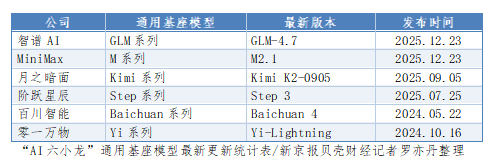
Core Insights - 2025 is a pivotal year for the global economy and China's industries, marked by deep differentiation and value reconstruction, moving beyond mere trends to focus on substantial changes in sectors like AI, storage chips, and new energy vehicles [1] - The narrative of AI in China has shifted, with the emergence of DeepSeek capturing significant attention and altering the competitive landscape for the previously prominent "AI Six Dragons" [2][3] AI Industry Dynamics - The "AI Six Dragons" have seen their prominence wane as new players like DeepSeek gain traction, leading to a shift in focus from foundational models to application-oriented strategies [2][3] - Investment sentiment has changed, with investors now prioritizing application companies over foundational model developers, reflecting a more pragmatic approach to survival in the AI sector [3][4] - The cost of developing foundational models is high, with significant investments required for GPU resources and training, making it a challenging landscape for startups [4][5] Competitive Landscape - The rise of DeepSeek has prompted many AI startups to abandon foundational model development in favor of application-focused strategies, leading to a significant industry convergence [8][10] - The competition among foundational models is intensifying, with parameters reaching trillion-level scales and increasing training costs, raising the barriers to entry [11] - Companies like Zhiyuan and MiniMax are expected to go public soon, marking a new phase for the "AI Dragons" as they seek to establish themselves in the market [12][13] Market Positioning - The "AI Four Strong" have emerged as the new designation for companies that continue to focus on foundational model development while emphasizing practical applications [13][14] - The competitive landscape is dominated by major players like ByteDance, Alibaba, and Tencent, which have established significant user bases and market penetration, creating formidable barriers for smaller companies [16][17] - The shift towards application-oriented services is evident, with only a few leading players remaining committed to foundational models, indicating a strategic pivot in the industry [18]
AI智能体概念延续强势 迈富时两日涨幅超16%
Zhi Tong Cai Jing· 2025-12-31 06:53
AI应用端持续走高,AI智能体方向领涨。港股AI应用标杆企业迈富时(02556)表现亮眼,继昨日走强 后,今日再度拉升,两日累计涨幅已突破16%。 智能体(AI Agent)商业化加速:迈富时近期正式发布了自主研发的AI-Agentforce 3.0企业级智能体中台, 实现了从"工具式AI"向"数字劳动力"的跃迁。该平台在营销、销售及跨境电商等多个场景的规模化落 地,被市场视为AI应用进入价值兑现期的重要信号。 巨头生态深度协同:消息面上,迈富时已与百度、阿里、沐曦股份等顶尖科技企业达成深度战略合作。 通过整合底层大模型能力与自身SaaS垂直场景数据,公司在"2025中国AI营销智能体TOP30"榜单中位列 榜首,技术成熟度获业界认可。 行业情绪共振:今日AI应用板块集体爆发,蓝色光标(300058)、易点天下(301171)等多只个股大 涨。市场分析认为,随着Meta以数十亿美元收购AI应用厂商等国际动作频发,全球资本正加速流向具 备实际业务闭环能力的AI Agent赛道。 核心逻辑分析 ...
雷总又要搞事情了
表舅是养基大户· 2025-12-30 13:33
Group 1 - The Hang Seng Technology Index experienced its largest single-day gain in December, rising by 1.74% [1] - A surge in buying activity was noted in the Hong Kong stock market, particularly in major stocks like Tencent, Alibaba, and Xiaomi, with Xiaomi's stock rising due to a live-streaming event announcement by its CEO [2] - Xiaomi's upcoming live-streaming event is seen as part of public relations and market value management, especially following the announcement of a share reduction plan by its second-in-command, Lin Bin, who plans to reduce holdings by up to $5 billion annually starting December 2026 [5][6] Group 2 - Silver faced significant volatility, with a single-day drop of 16% and a further decline of 6.5% in the Silver LOF, totaling over a 24% drop from its peak [8][9] - The premium rate of Silver LOF decreased from over 60% to just above 10% [12] Group 3 - The robotics sector saw a sudden increase in stock prices, while the commercial aerospace sector experienced a decline [13][14] - The Ministry of Industry and Information Technology and other departments released a plan focusing on the digital transformation of the automotive industry, emphasizing key equipment like intelligent robots [15] Group 4 - The A500 ETF saw a net outflow exceeding 10 billion, marking the first net sell since December 10, while still experiencing a significant net inflow of over 100 billion for the month [19] - The A500 ETF has outperformed the CSI 300 by approximately 4.5% year-to-date, with a notable 1.2% excess return in December alone [21] - The South China A500 ETF's scale increased from 21 billion to over 46 billion in December, reflecting a surge of 25 billion [23] Group 5 - The onshore and offshore RMB broke the 7 mark for the first time since May 2023, indicating a potential strategy to avoid rapid appreciation [31] - The Shanghai Composite Index closed at a neutral point of "0.00%", marking a ten-day streak of positive closing prices [31][32] Group 6 - The number of companies listed on the STAR Market reached 600, indicating a significant expansion and potential impact on the Shanghai Composite Index [33]

新生代人工智能企业为何格外“抢手”?|南方产业观
Sou Hu Cai Jing· 2025-12-30 13:28
而在此之前,与智谱争夺"全球大模型第一股"的MiniMax(稀宇科技)已经首次刊发其聆讯后资料集(PHIP)版本的招股书资料,并有望刷新纪录成为从成 立到IPO历时最短的AI公司。 从Manus被巨头Meta拿下,再到智谱和MiniMax抢滩资本市场,这些人工智能企业都有一个相同的特征:公司虽然成立时间不久,但是产品惊艳并得到市场 认可。正因为如此,这些新生代人工智能企业正在受到巨头和资本的青睐,变得格外"抢手"。 这背后的原因除了都站在了AI风口上以外,更重要的是在AI时代,产品力已经不再"论资排辈"。 此前互联网时代发展到移动互联网的阶段,数字化的起步中"积累"被看作是重要的资源,无论是流量还是算力,巨头们的积累和生态都把行业的资源集中在 了头部,革命性的创新大多出现在模式上而非技术上。然而面对资源的高度集中化,"模式创新"所带来的风口很快就会被巨头们通过流量和算力的优势 所"吸走"。创造出"模式创新"的企业,能够独立存活下来的少之又少。 在2025年的尾声,科技圈被一则收购消息刷屏:截至2025年12月30日市值超过1.6万亿的美国科技巨头Meta宣布完成一笔重量级并购,以数十亿美元的价格 收购AI A ...
【年终盘点】港股IPO热下的退市潮:退市量大增,一半被“净化”!
Sou Hu Cai Jing· 2025-12-30 08:33
Group 1 - The core viewpoint of the article highlights the contrasting dynamics in the Hong Kong stock market in 2025, characterized by a significant rise in the Hang Seng Index by nearly 30% and a record IPO fundraising amount of approximately 278.7 billion HKD, while simultaneously experiencing a notable wave of delistings [2][3]. - A total of 62 companies were delisted from the Hong Kong Stock Exchange in 2025, marking a 26.5% increase from the previous year, where 49 companies were delisted [3]. - The delisting process in Hong Kong primarily follows two paths: voluntary privatization and forced delisting, with the latter often resulting from severe issues such as financial misconduct or prolonged trading suspensions [5]. Group 2 - The Hong Kong Stock Exchange has intensified its regulatory measures to enhance market quality, leading to 31 companies being forcibly delisted in 2025, which constitutes half of the total delistings [5]. - Notable companies among those forcibly delisted include China Evergrande, which faced severe financial difficulties and regulatory penalties, and Hong Jiu Fruit, which encountered multiple operational issues [7]. - The market is witnessing a liquidity divide, with approximately 80% of funds concentrated in 20% of high-quality stocks, resulting in low liquidity for many small-cap companies, prompting them to consider privatization [8]. Group 3 - The increase in delistings in 2025 reflects a self-purification process in the Hong Kong capital market, driven by liquidity disparities and a focus on high-growth sectors like AI and advanced manufacturing [9]. - Southbound capital inflows into Hong Kong stocks exceeded 1.4 trillion HKD in 2025, indicating a strong preference for large enterprises, which exacerbates challenges for smaller companies [9]. - As of November 28, 2025, there were 84 companies on the Hong Kong Stock Exchange that had been suspended for over three months, with 10 already approved for delisting [11]. Group 4 - Many companies on the "danger list" are struggling to meet financial reporting requirements, leading to potential delistings, particularly in the real estate sector, which has been significantly affected [13]. - The Hong Kong Stock Exchange's strict enforcement of delisting rules aims to maintain market health and long-term credibility, facilitating a "market cleansing" process that could attract more long-term value investors [13].

AI人工智能ETF(512930)涨超1.2%,机构称AI应用进入兑现期
Xin Lang Cai Jing· 2025-12-30 02:25
Group 1 - The core viewpoint of the news highlights the strong performance of the AI sector in China, with the Zhongzheng AI Theme Index rising by 1.29% and several key stocks, including Guangdian Yuntong and Chipone, showing significant gains [1][2] - The AI computing power supply in China is shifting from reliance on Nvidia to domestic suppliers like Huawei and Cambrian, indicating a move towards self-sufficiency [1] - The semiconductor sector is experiencing a structural market trend driven by AI demand, price increases across the industry chain, and the strengthening of domestic substitution logic [2] Group 2 - The top ten weighted stocks in the Zhongzheng AI Theme Index account for 63.92% of the index, indicating a concentrated investment in key players within the AI sector [3] - The AI Artificial Intelligence ETF closely tracks the Zhongzheng AI Theme Index, which includes 50 listed companies that provide foundational resources, technology, and application support for AI [2][4]


