
地平线机器人

Search documents
大和:升地平线机器人-W(09660)目标价至11.8港元 重申“买入”评级
Zhi Tong Cai Jing· 2025-12-16 07:32
Core Viewpoint - Daiwa has released a report indicating that Horizon Robotics (09660) plans to equip mass-market vehicles with City Navigation Assistance (NOA) starting next year and has launched its fourth-generation BPU architecture, while also expanding into humanoid robots. The firm maintains a "Buy" rating on the stock, raising the target price from HKD 10.5 to HKD 11.8, believing the company has established a strong product portfolio to further penetrate the Chinese urban NOA market [1] Group 1 - Horizon Robotics is committed to promoting the popularization of smart automotive technology, making urban NOA features accessible to mass-market vehicles [1] - It is expected that by the end of 2025, the penetration rate of L2+ and L2++ level ADAS in China's passenger cars will reach 20%, increasing to 28% in 2026 [1] - L3 level autonomous driving is anticipated to primarily appear in high-end models starting from 2026 [1]

L3级自动驾驶落地关键一步,机构称L3正式准入节点有望在2026年后到来
Zhi Tong Cai Jing· 2025-12-16 02:05
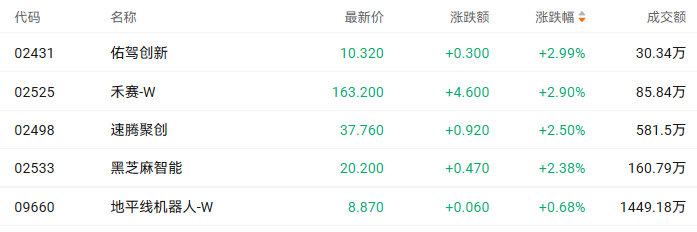
Core Viewpoint - The Ministry of Industry and Information Technology of China has officially granted conditional approval for the first batch of L3-level autonomous driving vehicles, marking a significant step towards the commercialization of L3 autonomous driving in the country [1][3]. Group 1: Regulatory Developments - Two L3 autonomous driving models, suitable for urban congestion and highway conditions, will be tested in designated areas in Beijing and Chongqing [1][2]. - The approval signifies a transition from "technical validation" to "mass production application" in China's autonomous vehicle industry [3]. - The approval process for L3 vehicles has been ongoing for over a year, with nine automotive companies identified for initial trials [3][4]. Group 2: Market Reactions - Smart driving concept stocks in Hong Kong saw a positive response, with notable increases in share prices for companies such as Youjia Innovation, Hesai Technology, and Suyuan Juchuang [1][2]. - The stock performance reflects investor optimism regarding the future of L3 autonomous driving and its market potential [1][2]. Group 3: Industry Insights - The approval of L3 vehicles is seen as a recognition of technological maturity and a response to societal expectations for smart mobility [3]. - The automotive industry is preparing for a significant increase in demand for L3 and L4 autonomous driving technologies, with expectations for broader implementation by 2025 and 2030, respectively [4][5]. - Key players in the automotive supply chain are gearing up for advancements in technology and compliance with new regulations [5]. Group 4: Company Highlights - Horizon Robotics is positioned as a leader in the advanced driver assistance systems market, providing both chips and algorithms [5][6]. - Black Sesame Technologies has developed high-performance computing solutions for autonomous driving and is collaborating with major automotive OEMs [6][7]. - Youjia Innovation has made strides in both mid-to-high level assisted driving and L4 autonomous driving solutions, securing multiple contracts [7].

L3级自动驾驶落地关键一步,机构称L3正式准入节点有望在2026年后到来(附概念股)
Zhi Tong Cai Jing· 2025-12-16 00:13
Core Viewpoint - The Ministry of Industry and Information Technology has officially granted conditional approval for the first batch of L3-level autonomous driving vehicles in China, marking a significant step towards the commercialization of L3 autonomous driving technology [1] Group 1: Industry Developments - The approval includes two models from Changan and Arcfox, which will be tested in designated areas in Beijing and Chongqing, indicating a shift from testing to commercial application in the autonomous driving sector [1] - The approval reflects the government's support for innovation and the industry's transition from technology validation to mass production [1] - The L3-level autonomous driving implementation involves a collaborative effort across multiple sectors, including vehicle manufacturing, components, software algorithms, communication, and data services [1] Group 2: Policy and Market Trends - The push for L3-level autonomous driving has been ongoing for over a year, with pilot programs initiated in June 2022 involving several major automotive companies [1] - Major cities are actively promoting L3 autonomous driving, with Shanghai designating 583 roads totaling 758.62 kilometers for testing, and other cities like Beijing and Shenzhen also establishing testing routes [2] - The automotive industry is preparing for a surge in demand for intelligent mobility solutions, with expectations for L3 and L4 levels to be implemented in urban areas by 2025 and 2030, respectively [2] Group 3: Investment Opportunities - Investment focus should be on market demand driven by policy compliance, particularly in areas like driver monitoring systems, data recording systems, and testing verification platforms, which will benefit from the implementation of new standards [2] - There are opportunities in technological upgrades, particularly in core components such as intelligent driving domain controllers, automotive-grade chips, and drive-by-wire systems, which will continue to benefit from technological advancements [2] Group 4: Related Companies - Horizon Robotics (09660) is a leading supplier in the advanced driver assistance systems market, providing both chips and algorithms, and has established a strong presence in domestic computing capabilities [3] - Black Sesame Intelligence (02533) has developed high-performance computing solutions for autonomous driving and has partnered with major automotive OEMs, enhancing its product offerings [4] - RoboSense (02498) has achieved significant market leadership in the global automotive lidar market, being recognized for its sales and market share [4] - Youjia Innovation (02431) has made strides in intelligent driving solutions and has secured funding to enhance its capabilities in mid-to-high-level autonomous driving [5]
汽车行业点评:L3落地,自动驾驶商业化进程加速
Ping An Securities· 2025-12-15 23:30
Investment Rating - The industry investment rating is "Outperform the Market" [8] Core Viewpoints - The approval of the first batch of L3 conditional autonomous driving vehicle licenses by the Ministry of Industry and Information Technology marks a significant step towards the commercialization of L3 autonomous driving in China [2][3] - The current L3 vehicles have operational limitations, with one model capable of operating at a maximum speed of 50 km/h in congested traffic and another at 80 km/h on highways, but both are restricted to specific areas [3] - The commercialization of intelligent driving is expected to accelerate by 2026, with various companies planning to launch autonomous driving models and services during that year [3] Summary by Sections Industry Overview - The report highlights the transition of L3 autonomous driving technology from testing to commercial application, as indicated by the recent approvals [2][3] Regulatory Developments - The Ministry of Industry and Information Technology's approval signifies a policy advancement that supports the production of L3 vehicles, laying the groundwork for future commercialization [3] Market Opportunities - The report anticipates a key opportunity period for intelligent driving in 2026, with advancements in algorithms and the rollout of Robotaxi services [3] Investment Recommendations - Recommended companies include Horizon Robotics, Seres (Huawei ADS-enabled vehicles), Li Auto, Great Wall Motors, and Xpeng Motors, as they are positioned to benefit from the upcoming developments in the autonomous driving sector [3]




L3级自动驾驶落地关键一步 机构称L3正式准入节点有望在2026年后到来(附概念股)
Zhi Tong Cai Jing· 2025-12-15 23:23
Group 1 - The Ministry of Industry and Information Technology has officially granted conditional approval for the first batch of L3-level autonomous driving vehicles, marking a significant step towards commercial application in China [1] - Two models, from Changan and Arcfox, will be tested in designated areas in Beijing and Chongqing, indicating a shift from technology validation to mass production application in the autonomous vehicle industry [1] - The approval reflects the government's support for innovation and the industry's readiness for a commercial rollout, with L3-level autonomous driving requiring collaboration across multiple sectors including hardware, software, and data services [1] Group 2 - The approval of L3 vehicles was anticipated, as the Ministry of Industry and Information Technology had previously emphasized the importance of advancing intelligent connected vehicle regulations [2] - Major cities are actively promoting L3 autonomous driving, with designated testing roads established in areas like Shanghai and Beijing, indicating a growing infrastructure for autonomous vehicles [2] - Industry experts predict that the demand for intelligent mobility will surge by 2025, driven by policy implementation, technological breakthroughs, and increased market demand [2] Group 3 - Horizon Robotics is a leading player in the advanced driver assistance systems market, providing both chips and algorithms, and has established a strong presence in the domestic market [3] - Black Sesame Intelligence has developed high-performance computing solutions for autonomous driving and has partnered with major automotive OEMs, enhancing its product offerings [4] - RoboSense has achieved significant market leadership in the global automotive lidar market, indicating strong competitive positioning in the autonomous driving technology sector [4] Group 4 - Youjia Innovation has successfully secured contracts in the intelligent driving sector and is investing in both mid-to-high level assistance and L4 autonomous driving solutions, showcasing its growth potential [5]




港股概念追踪 | L3级自动驾驶落地关键一步 机构称L3正式准入节点有望在2026年后到来(附概念股)
智通财经网· 2025-12-15 23:22
Group 1 - The Ministry of Industry and Information Technology officially granted conditional approval for the first batch of L3-level conditional autonomous driving vehicles, marking a significant step towards commercial application in China [1] - Two models, from Changan and Arcfox, will be tested in designated areas in Beijing and Chongqing, indicating a shift from testing to commercial use in the autonomous driving sector [1] - The approval reflects the government's support for innovation and the industry's transition from technology validation to mass production [1] Group 2 - The L3 commercial rollout has been in progress for over a year, with nine automotive companies identified for pilot testing, including Changan, BYD, and NIO [1] - Major cities are actively promoting L3 autonomous driving, with Shanghai and Beijing designating extensive testing routes [2] - The automotive industry is preparing for a surge in demand for intelligent mobility solutions, with expectations for L3 and L4 levels to be implemented in urban areas by 2025 and 2030, respectively [2] Group 3 - Companies like Horizon Robotics and Black Sesame Intelligence are positioned as key players in the advanced driver assistance systems market, with significant computational capabilities and partnerships with major OEMs [3][4] - RoboSense has achieved leading market positions in the global automotive lidar market, indicating strong competitive advantages in the sector [4] - Youjia Innovation has successfully launched high-level autonomous driving solutions and secured funding to enhance its capabilities in the mid-to-high level autonomous driving market [5]
首批L3自动驾驶获准入许可,中国无人驾驶进入“商业化应用”新纪元
Hua Er Jie Jian Wen· 2025-12-15 12:51
Core Insights - The Chinese autonomous driving industry has reached a historic turning point, officially crossing the divide between "testing demonstration" and "commercial application" with the release of the first batch of L3 conditional autonomous driving vehicle permits by the Ministry of Industry and Information Technology [1][4] - The approval of L3 vehicles signifies a shift from technology demonstration to regulatory compliance and operational oversight, allowing for a clearer definition of liability in the event of accidents [1][7] - This regulatory breakthrough is expected to bring about a definitive growth outlook for the autonomous driving supply chain, shifting market focus from L2 adoption rates to the reliability of L3 technology [1][4] Regulatory Framework - The new regulatory framework establishes a "three-in-one" oversight system that includes vehicle safety technology certification, usage scenario limitations, and accident liability definitions [4][7] - The pilot program allows L3 vehicles to be used by real users on designated public roads, highlighting China's ambition to lead global development in autonomous driving through a comprehensive standard system [4] Technological Standards - L3 autonomous driving systems are designed to perform all driving tasks under specified conditions, with the driver only needing to intervene when the system requests it, contrasting with Tesla's L2 systems that require constant driver attention [7] - The new framework clarifies the compensation responsibilities of vehicle manufacturers and component suppliers in the event of system failures leading to accidents, pushing the industry to enhance technical standards from "usable" to "reliable" [7] Commercialization Trends - The commercialization of autonomous driving is accelerating, particularly in the Robotaxi sector, with two main technological routes emerging: the "disruptive route" represented by Waymo and the "incremental route" represented by Tesla [10][11] - The industry trend is leaning towards the "incremental route," where major players are advancing into the Robotaxi business using consumer-grade mass-produced vehicles, significantly reducing deployment costs and leveraging data for model optimization [11][12] Industry Developments - Several companies have announced specific timelines for commercialization, with XPeng Motors planning to launch three Robotaxi models by 2026, and Huawei aiming for large-scale L3 commercialization by 2026 and full automation by 2027 [12][14] - Supply chain companies are also making significant moves, with Horizon Robotics and Hello signing a strategic partnership to produce their first mass-produced Robotaxi by 2026, and Momenta planning to launch its own Robotaxi solution by 2025 [14] - The issuance of the first L3 permits marks a transition from a purely technical competition to a comprehensive contest involving technology, regulations, and business models in the Chinese autonomous driving sector [14]

计算机行业重大事项点评:DeepSeek: V3.2重塑开源模型性能边界
Huachuang Securities· 2025-12-15 11:11
Investment Rating - The report maintains a "Recommendation" rating for the industry, expecting the industry index to rise more than 5% over the next 3-6 months compared to the benchmark index [39]. Core Insights - DeepSeek-V3.2 has achieved leading reasoning performance among open-source models, reaching a score of 93.1% in the AIME 2025 mathematics competition, closely following GPT-5 at 94.6% [10][14]. - The DeepSeek-V3.2-Speciale version focuses on extreme reasoning and has won gold medals in prestigious competitions such as IMO 2025 and ICPC World Finals 2025, showcasing its advanced capabilities [13][14]. - The introduction of DSA technology in DeepSeek-V3.2 significantly enhances both efficiency and performance, reducing computational complexity from O(L²) to O(Lk) [19][21]. - DeepSeek-V3.2 is the first model to integrate deep thinking with tool usage, improving its reasoning generalization ability through innovative training methods [21][25]. Summary by Sections DeepSeek-V3.2: Redefining Open-Source Model Performance - DeepSeek-V3.2 was officially released on December 1, 2025, and aims to balance reasoning ability with output length, making it suitable for everyday tasks [10]. - The model's performance in benchmark tests is comparable to that of leading proprietary models, demonstrating its competitive edge in the open-source domain [10][12]. Investment Recommendations - The report suggests focusing on specific sectors within AI, including domestic computing power and enterprise-level services, highlighting companies such as Cambricon, Alibaba, and Hikvision [27][28]. - Various application scenarios are identified, including industrial, military, medical, and legal sectors, with specific companies recommended for investment [28].
地平线机器人-预计2026 年城区NOA 渗透率将加速提升;基于公司拓展HSD 产品矩阵,重申“增持”评级
2025-12-15 01:55
Summary of Horizon Robotics Conference Call Company Overview - **Company**: Horizon Robotics - **Industry**: Intelligent driving solutions in China Key Points Market Penetration and Growth - The penetration rate of urban NOA (Navigation on Autopilot) is expected to accelerate in 2026, following rapid growth in highway NOA in 2025, with Horizon Robotics capturing over 40% of the highway NOA market by 2025 [1] - The company is expanding its HSD (High-Performance Driving) product matrix targeting mainstream economy vehicles priced above 100,000 RMB, which is anticipated to increase its market share in urban NOA [1] - Total revenue is projected to reach 15 billion RMB by 2028, with a compound annual growth rate (CAGR) of 58% from 2024 to 2028 [1] Financial Forecasts - Revenue estimates for fiscal years ending December are adjusted as follows: - FY25E: 3,269 million RMB (down 3.7% from previous estimate) - FY26E: 5,517 million RMB (down 5.6% from previous estimate) [2] - The company expects to achieve profitability by 2028, with total revenue reaching 15 billion RMB [9][24] Product Launch and Performance - Two HSD solutions launched in Q4 2025 have shown strong activation rates, with 12,000 units activated within two weeks of launch [5] - HSD600 and HSD300 are designed for vehicles priced above 130,000 RMB and are expected to achieve shipments of 25,000 units in 2025 and 461,000 units in 2026, respectively [5] - The company aims to cover approximately 70% of new energy vehicles with its urban NOA solutions starting in 2026 [5] Investor Sentiment and Competitive Landscape - Investor feedback indicates a consensus on the optimistic outlook for the acceleration of intelligent driving feature penetration, with Horizon Robotics seen as a key beneficiary [5] - Concerns exist regarding valuation, with the current stock price reflecting a 13x projected sales multiple for 2027, and increasing competition from third-party suppliers like Momenta [5] - Despite competition, Horizon's market leadership and unique technology position it for a valuation premium [5] Stock Performance and Valuation - The stock price has rebounded 24% since November 21, outperforming the Hang Seng Tech Index, which rose 3% during the same period [5] - The target price for the stock is set at 13 HKD by December 2026, based on a 19x forward price-to-sales ratio, which is approximately 79% higher than its Hong Kong peers [9][25] Risks - Key risks affecting the rating include intensified competition, potential order shortfalls due to demand shrinkage or project delays, and disruptions in R&D or supply chains [26] Financial Metrics - The company is expected to see significant revenue growth, with a projected revenue CAGR of 54% from 2024 to 2027 [24] - Adjusted net profit is forecasted to improve significantly by 2028, with total revenue reaching 15 billion RMB [9][24] Additional Insights - The company is positioned as a leading supplier of intelligent driving solutions in China, with a product portfolio that includes chips and algorithm suites for entry-level ADAS and higher-level scenarios [24] - Emerging demands from robotaxi and other robotic scenarios are expected to provide long-term growth potential for Horizon Robotics [24] This summary encapsulates the key insights and projections from the conference call, highlighting the company's growth trajectory, financial forecasts, product performance, and market positioning.
中泰国际每日晨讯-20251215
ZHONGTAI INTERNATIONAL SECURITIES· 2025-12-15 01:50
Market Overview - On December 12, the Central Economic Work Conference emphasized the need for internal strengthening to address external challenges and to continue implementing a moderately loose monetary policy[1] - The Hang Seng Index rose by 446 points (1.8%) to close at 25,976 points, with a peak increase of 475 points during the day[1] - The Hang Seng Technology Index increased by 103 points (1.9%) to close at 5,638 points, with total market turnover expanding to HKD 242.7 billion[1] - Southbound capital experienced a net outflow of HKD 5.29 billion[1] Sector Performance - Gold prices increased, with Zijin Mining (2899 HK) rising by 3.6%, Shandong Gold (1787 HK) and Zhaojin Mining (1818 HK) both up by 3.4%[1] - Consumer stocks performed well, with Mengniu Dairy (2319 HK) up 2.7%, Nongfu Spring (9633 HK) up 2.2%, and Haidilao (6862 HK) up 2.9%[1] - Technology stocks also saw gains, with Alibaba (9988 HK) and Tencent (700 HK) rising by 2.3% and 2.4%, respectively[1] U.S. Market Dynamics - Despite interest rate cuts, U.S. tech stocks continued to decline, with the Nasdaq Composite falling by 245 points (0.5%) to close at 48,458 points[2] - The S&P 500 index dropped by 73 points, closing at 6,827 points, while long-term bond yields rose to 4.189%[2] Macroeconomic Indicators - As of the end of November, China's broad money supply (M2) stood at CNY 336.99 trillion, growing by 8% year-on-year, slightly below the market expectation of 8.2%[3] - Narrow money supply (M1) reached CNY 112.89 trillion, with a year-on-year growth of 4.9%, also below the expected 5.7%[3] - The loan balance grew by 6.4% year-on-year, down from the previous 6.5%[3] Industry Insights - In the automotive sector, stocks related to smart driving performed well, with Xiaoma Zhixing (2026 HK) up 4.9% and Horizon Robotics (9660 HK) up 3.8%[4] - The energy/utilities sector saw traditional power equipment stocks rise, with Dongfang Electric (1072 HK) increasing by 16.8% over the week[4] - The pharmaceutical sector remained stable, with WuXi AppTec (2359 HK) and WuXi Biologics (2269 HK) showing solid performance despite potential regulatory challenges[5]