舍得酒业

Search documents
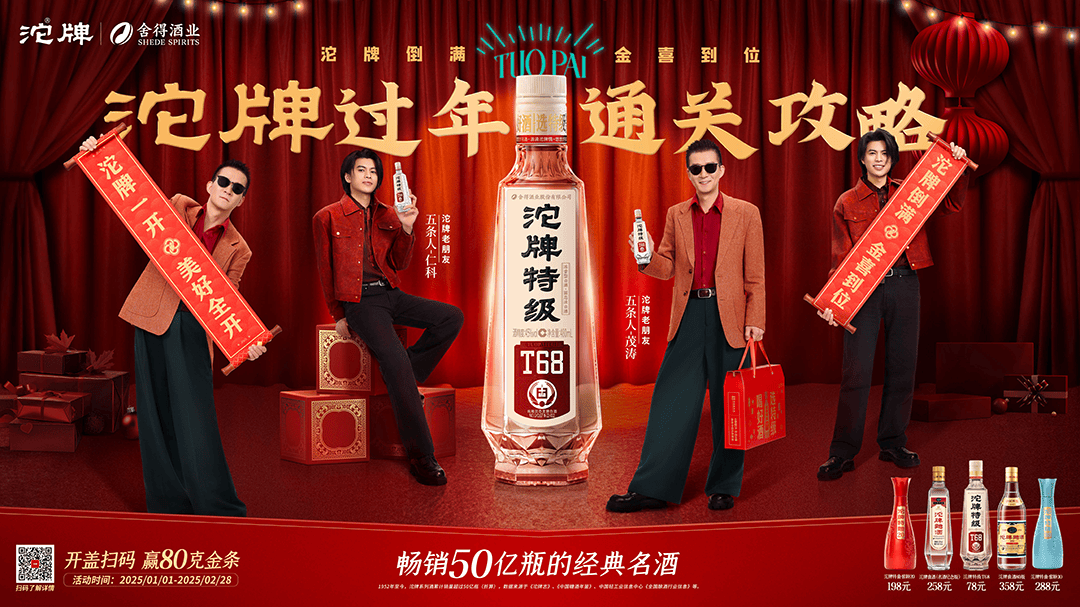
沱牌携手五条人花式送出“过年通关攻略”,点燃新春消费热情
Sou Hu Cai Jing· 2026-01-06 10:28
Core Insights - Tuo Pai, a renowned national liquor brand, is actively engaging in innovative marketing strategies during the Spring Festival, signaling market growth and showcasing confidence in its development [2][21] Marketing Strategies - Tuo Pai has partnered with the popular rock band "Wu Tiao Ren" to create a creative short film titled "Tuo Pai Spring Festival Strategy" and a new music MV "You You Le New Year," enhancing emotional connections with consumers [3][4] - The collaboration focuses on addressing contemporary social challenges faced during the Spring Festival, providing practical and entertaining solutions through music [4][8] Brand Engagement - The reimagined classic song "You You Sui Yue" by Wu Tiao Ren has resonated with audiences, evoking nostalgia and reinforcing Tuo Pai's brand identity [6][11] - Tuo Pai is launching a "Jiu Zhuo Ge Shen Challenge" on Douyin to interact with consumers and create a festive atmosphere, running until February 15 [8][19] Cross-Industry Collaborations - Tuo Pai has collaborated with Didi Chuxing for the "Home is Happiness Year" campaign, offering consumers chances to win discounts and benefits, effectively linking the brand to the emotional value of returning home during the Spring Festival [9][11] - The brand's partnerships with various platforms, including Douyin and Didi, are expected to enhance its visibility and consumer engagement [17][19] Sales and Distribution - Tuo Pai is implementing a comprehensive marketing strategy that includes online promotions on platforms like JD, Tmall, and Douyin, as well as offline events in over 30 cities, aiming to boost sales during the festive season [11][19] - The introduction of special products, such as the "Tuo Pai Qu Jiu·Snake Year Commemorative Wine," caters to gifting needs during the Spring Festival, enhancing market penetration [13][19] Brand Positioning - Tuo Pai's marketing efforts during the Spring Festival reflect its strong brand identity and growth potential, positioning it favorably in the competitive liquor market [21]


2025年第53周:酒行业周度市场观察
艾瑞咨询· 2026-01-06 00:03
Industry Environment - The liquor industry is undergoing a channel transformation, with traditional inventory strategies failing and instant retail emerging as a new opportunity. Leading companies like Moutai and Luzhou Laojiao are exploring online channels and new models such as "live streaming + instant fulfillment" [3] - The scattered liquor market is expected to grow from 80 billion yuan in 2024 to over 100 billion yuan in 2025, driven by companies like Gujing Gongjiu and Kuozi Jiao, which are targeting young consumers with experiential and diverse product offerings [5] - The competition in the liquor industry is shifting towards "value deepening," with companies focusing on product reconstruction and cultural resonance to meet the demands of younger and female consumers [6] Market Trends - The trend of low-alcohol liquor is gaining traction, with major brands like Wuliangye and Gujing Gongjiu launching new products to cater to younger consumers' preferences for lower alcohol content. The low-alcohol market is projected to reach 57 billion yuan by 2025 [7] - The white liquor market is experiencing a shift from "face consumption" to "substance consumption," with a focus on quality and experience rather than just brand prestige [9][14] - The scattered liquor market is becoming a new growth area, with brands leveraging community consumption and flexible pricing strategies to attract consumers [20][21] Sales and Marketing Strategies - Companies are increasingly focusing on enhancing bottle opening rates to address high inventory levels and declining consumption. Some brands have reported significant increases in opening rates through targeted marketing strategies [15] - The concept of "user co-creation" is emerging as a key strategy for brands to engage consumers and enhance brand loyalty, with companies like Wuliangye and Fenjiu exploring new ways to connect with their audience [16][17] - The wedding market is seeing a resurgence, with a 30% increase in wedding events in certain regions, although overall liquor consumption at these events is declining due to economic pressures [19] Brand Dynamics - Moutai is facing challenges with declining prices and inventory buildup, prompting the company to optimize its product structure and marketing strategies to attract younger consumers [12][14] - The introduction of new products and collaborations, such as the partnership between Water Well and actor Tony Leung, is aimed at enhancing brand image and connecting with consumers on an emotional level [26][34] - The rise of health-oriented products, particularly in the health liquor segment, is attracting younger female consumers, with brands like Jinjiu successfully tapping into this demographic [36] Future Outlook - The liquor industry is expected to continue evolving, with a focus on digital transformation and the integration of AI technologies to enhance operational efficiency and consumer engagement [37] - The scattered liquor market is projected to exceed 100 billion yuan, indicating a significant shift in consumer preferences towards more affordable and accessible options [20][21] - The industry is likely to see a continued emphasis on quality and value, as brands adapt to changing consumer demands and market conditions [22][29]





两年翻倍?上线遭疯抢,千亿白酒龙头大涨
中国基金报· 2026-01-05 14:20
Core Viewpoint - Shanxi Fenjiu has launched a "two-year double" buyback activity for its new product "Qinghua 25 Huashen Ling," allowing customers to purchase the product and receive double the price back after two years [2][4]. Group 1: Buyback Activity Details - The new product is priced at 489 yuan for two bottles [2]. - The buyback period is set from January 8, 2028, to January 20, 2028, with the buyback value being double the actual payment amount [4]. - Participation is limited to orders successfully paid between January 1 and January 8, 2026 [4]. - Conditions for buyback include the product being unopened, with intact packaging and clear anti-counterfeiting codes [4]. Group 2: Market Reaction - On January 5, Shanxi Fenjiu's stock price rose over 3%, reversing previous downward trends [4]. - The broader liquor sector also saw gains, with Kweichow Moutai leading the rise during the New Year promotional period [6]. Group 3: Industry Outlook - Guosen Securities anticipates that the industry will focus on volume over price in 2026, with a gradual improvement in supply and demand [11]. - GF Securities suggests that after a four-year adjustment period, the sector may experience a dual bottom in valuation and performance, with a moderate increase in industry ton prices expected in 2026 [11].

白酒圈2025年十大新闻,巨头刹车、政策转向、渠道革命……
Sou Hu Cai Jing· 2026-01-05 10:52
Core Viewpoint - The Chinese liquor industry is undergoing a fundamental transformation in 2025, marked by a mix of pain and rebirth, as major players adjust strategies amidst changing consumer preferences and regulatory pressures [1]. Group 1: Key Events in the Liquor Industry - Moutai launched its Flying Moutai on its app at an official price of 1499 yuan, aiming to break market speculation and regain pricing power [2]. - At the beginning of 2025, major liquor companies like Wuliangye and Yanghe paused shipments to alleviate inventory pressure [2]. - Major brands are introducing affordable bottled liquor to capture a large consumer market worth over 200 billion yuan [3]. - New low-alcohol products were launched by companies like Gujing Gongjiu and Wuliangye to appeal to younger consumers [2][3]. - Instant retail platforms entered the market with significant subsidies, disrupting traditional distribution channels [2]. - Douyin e-commerce initiated a crackdown on false liquor marketing, shutting down unauthorized Moutai stores [2]. Group 2: Industry Challenges and Changes - A leadership change wave occurred in the industry, with over ten companies, including China Resources Beer and Moutai, replacing their executives [3]. - The first three quarters of 2025 saw a 5.9% decline in revenue and a 6.93% drop in net profit for 20 listed liquor companies, marking the worst quarterly results in a decade [3]. - A strict ban on alcohol at official dining events was implemented, negatively impacting the liquor market and causing stock declines [3]. - The liquor industry was officially recognized as a "historical classic industry," alongside silk and porcelain, marking a positive development [3]. Group 3: Future Outlook - The narrative of the liquor industry is being rewritten, with a focus on embracing youth and returning to value, fostering new hope for the sector [4].
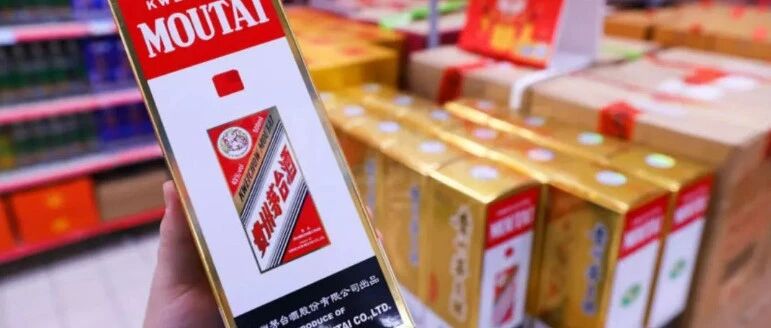
贵州茅台股价大涨,“i茅台”连续4天秒空
第一财经· 2026-01-05 06:26
Core Viewpoint - The liquor sector, particularly the high-end liquor brands, is experiencing a significant surge in stock prices, driven by strong consumer demand and strategic sales initiatives from leading companies like Kweichow Moutai. Group 1: Stock Performance - Kweichow Moutai's stock rose nearly 4%, reaching 1430.99 yuan, with a total market value of 1,792 billion yuan [1] - Other notable performers include Shanxi Fenjiu (+3.37%), Wuliangye (+2.01%), and Gujing Gongjiu (+2.16%), indicating a broad rally in the sector [2] Group 2: Sales Initiatives - Kweichow Moutai launched the 1499 yuan Flying Moutai on the "i Moutai" app, which sold out within seconds, reflecting high consumer interest [3] - The platform reported over 100,000 users successfully purchasing products in the first three days, leading to a policy adjustment that reduced the purchase limit from 12 bottles to 6 bottles per person per day [3]
复盘酒店业2025,到底谁赚钱了?
Xin Lang Cai Jing· 2026-01-04 12:14
2025年的酒店业,挣脱了传统住宿的单一桎梏,驶入了混沌与希望交织的转型深水区。这一年,没有轰 轰烈烈的颠覆性变革,却在供需失衡、资本跨界、技术迭代的多重作用下,涌现出一系列鲜明的矛盾。 文 | 迈点 这些矛盾既是市场承压的直观体现,更是行业自我革新的内在动力——存量竞争与增量探索碰撞,高端 坚守与大众下沉并存,传统运营与数字转型交锋,最终推动酒店业在矛盾中破局,在重构中寻找新的生 长坐标。 2025年的酒店市场格局,似乎正在进入洗牌前夜。地方国资平台凭借充沛现金流与政策资源,以资产整 合、战略控股等方式密集入场,成为行业"压舱石"。 01 国资下场稳盘,大厂跨界破局 重庆文旅集团重组82家市属国企酒店,湖北文旅14.99亿元入主君亭酒店,郑州国资3.28亿元收购富力万 达文华酒店,叠加REITs扩围的政策东风,国资将政企资源与专业运营深度绑定,重塑行业竞争格局。 与此同时,跨界大厂则以技术与流量为利刃,强势打破行业边界。 腾讯成立全资控股的酒店管理公司,华为落地安心酒店创新孵化基地,字节跳动测试"短视频+酒店预 订"模式,阿里、美团、京东持续深化酒旅布局;更有药企康美打造"健康+旅居"场景,舍得酒业植入白 ...
食品饮料行业周报:2025承压收官,2026反转可期-20260104
KAIYUAN SECURITIES· 2026-01-04 10:44
Investment Rating - The industry investment rating is "Positive" (maintained) [1] Core Viewpoints - The food and beverage index experienced a decline of 2.3% from December 29 to January 2, ranking 27th among primary sub-industries, underperforming the CSI 300 by approximately 1.7 percentage points. The sub-industries of soft drinks (+0.5%), other foods (+0.0%), and other alcoholic beverages (-0.2%) performed relatively better [3][11] - The report expresses a cautious optimism for 2026, despite the poor performance of the food and beverage sector in 2025, which was impacted by factors such as the alcohol ban, declining prices of Moutai, and a weak consumption environment. The recent market adjustments by leading liquor companies indicate that the industry is nearing a bottom [4][11] - The report suggests focusing on three stock selection strategies for consumer goods in 2026: identifying cyclical recovery opportunities, seeking growth stocks driven by channel innovation and product upgrades, and looking for companies in turnaround situations due to internal business cycles [4][12] Summary by Sections Weekly Viewpoints - The food and beverage sector is in a phase of adjustment, with a focus on the liquor market's recovery and the strategic layout of consumer goods [11] Market Performance - The food and beverage index underperformed the market, with a 9.7% decline in 2025, ranking last among all sectors. The report highlights the need for strategic adjustments in response to market conditions [11][13] Upstream Data - Some upstream raw material prices are declining, with the price of whole milk powder down 18.7% year-on-year as of December 16, 2025, and fresh milk prices down 2.6% year-on-year as of December 26, 2025 [17][19] Liquor Industry Data - The report notes that leading liquor companies are implementing market-oriented reforms to adapt to changing demand, with Moutai's recent sales strategy indicating a shift towards a more sustainable business model [4][41] Recommended Portfolio - The recommended stocks include Moutai, Shanxi Fenjiu, Ximai Food, Weilong, and Ganyuan Food, with each company showing potential for growth or stability in the upcoming year [5][12]
白酒行业游戏规则会被重塑吗
Qi Lu Wan Bao· 2026-01-01 16:27
Core Viewpoint - Guizhou Moutai will completely eliminate the distribution model by 2026, reducing the burden on distributors and regaining pricing control over its products, particularly the core product, Feitian Moutai, which is now available at a suggested retail price of 1499 yuan, down from previous highs of around 3000 yuan [1][2]. Group 1: Changes in Distribution and Pricing - The decision to stop the distribution model is a significant move to alleviate the financial pressure on distributors, who previously had to purchase non-standard products at high prices, leading to hidden losses due to price discrepancies [2]. - The previous practice of selling Moutai products at 90% of the market suggested retail price has contributed to the financial strain on distributors, making the new direct sales approach a necessary reform [2]. Group 2: Market Challenges and Consumer Behavior - The transformation of Guizhou Moutai reflects the determination of leading liquor companies to adapt, but it also introduces new challenges, particularly regarding whether consumers, especially younger demographics, will continue to purchase high-end liquor at the new price point [3]. - The trend towards lower alcohol content and younger consumer preferences is becoming prominent in the industry, with other companies like Wuliangye and Luzhou Laojiao launching lower-alcohol products to attract younger buyers [3]. Group 3: Industry Impact and Competition - Moutai's market reform is expected to create a new wave of disruption in the liquor industry, potentially expanding its consumer base as prices stabilize, which may impact competitors like Wuliangye and Guojiao 1573 [4]. - The ongoing "Matthew effect" in the liquor industry is leading to resource concentration among top companies, suggesting that smaller enterprises may face significant challenges and potential market exit [4]. Group 4: Financial Attributes and Market Dynamics - The gradual removal of Moutai's financial attributes raises concerns in the capital market, as easier access to reasonably priced Moutai could slow down inventory turnover and affect the market dynamics for high-priced stockholders [5]. - The competitive advantage of the iMoutai platform in offering genuine products at fair prices may further disrupt traditional sales channels, leading to potential price volatility in the Moutai market [5].
弱复苏低通胀强补贴下的内需主线
2025-12-31 16:02
Summary of Key Points from Conference Call Records Industry Overview - The focus is on the domestic consumption sector, with policies aimed at boosting consumer spending through increased household income, including minimum wage hikes and corporate salary increases [1][4][5] - The service consumption sector is expected to benefit from reforms in pricing mechanisms, particularly in healthcare, transportation, and public utilities [1][6] - The retail sector, especially offline retail, is seen as a crucial driver for domestic demand, supported by policies for updating commercial facilities [1][12] Core Insights and Arguments - **Consumer Policy Effectiveness**: The effectiveness of consumer promotion policies is anticipated to exceed market expectations, with significant increases in minimum wage across provinces, averaging over 8% [4][5] - **Service Sector Reforms**: Reforms in service pricing, particularly in healthcare, are expected to enhance the income of service providers while controlling costs for consumers [6] - **Product Innovation**: In the goods consumption sector, companies that excel in innovation and new supply offerings are likely to thrive, moving away from traditional consumer upgrade logic [7] - **Tourism and Local Policies**: Local government competition is expected to stimulate tourism, benefiting cultural and agricultural sectors [1][7] Important but Overlooked Content - **Retail Performance**: The first quarter of 2026 is projected to be crucial for leading regional retail companies, with expectations of strong performance during the extended Spring Festival [12] - **Cross-Border E-commerce**: Currency fluctuations have a limited impact on leading cross-border e-commerce companies, with exchange rate losses being a minor portion of profits [13] - **Household Appliances and Smart Hardware**: The government has initiated a subsidy plan for key household appliance categories, with a total subsidy of approximately 250 billion for 2026, focusing on six core categories [19][20] - **Food and Beverage Sector**: The food and beverage sector is expected to hit a performance bottom in Q1 2026, with a gradual recovery anticipated in Q2 [22] Future Outlook - **Economic Rebalancing**: The macroeconomic narrative is shifting towards economic rebalancing, with a cautious optimism for 2026 as supply-demand dynamics are expected to improve [8][9] - **Investment Opportunities**: Key investment opportunities are identified in sectors benefiting from government support, particularly in smart home and wearable technology, with a focus on companies like Midea, Haier, and TCL [20][21] - **Pork Market Expectations**: The pork market is showing signs of recovery, with prices expected to stabilize and improve, leading to a more optimistic outlook for the industry [16] This summary encapsulates the essential insights and projections from the conference call records, highlighting the key themes and potential investment opportunities across various sectors.
2025白酒年度事件大盘点:告别高增长,行业挑战下的变革与新机
Sou Hu Cai Jing· 2025-12-31 14:12
Core Insights - The Chinese liquor industry is entering an adjustment phase in 2025, facing challenges such as the "ban on alcohol," rising inventory pressure, and declining profits, yet opportunities for growth are emerging through innovation and market expansion [2][4]. Policy Impact - A strict "ban on alcohol" policy was introduced, prohibiting public officials from consuming alcohol during workdays and even at home gatherings, with severe penalties for violations [2][4]. - This policy aims to curb corruption and address public health concerns related to alcohol consumption [4]. Digital Transformation - Leading liquor companies are advancing their digital transformation from isolated upgrades to comprehensive collaborative development, with initiatives like the first "lighthouse factory" by Luzhou Laojiao and 5G-connected factories by Shede [5]. - The Ministry of Industry and Information Technology has released guidelines for digital transformation in the liquor industry, with companies actively contributing to industry mapping [5]. ESG Practices - ESG efforts among listed liquor companies have shifted from compliance to value creation, with companies like Zhenjiu Li Du setting ambitious carbon neutrality goals and achieving high water recycling rates [7]. - Companies are integrating ESG principles into performance assessments and utilizing blockchain for product traceability [7]. Market Dynamics - The liquor market is experiencing severe inventory issues, with major companies implementing supply control measures and channel reforms to reshape pricing structures [8][10]. - In the first three quarters of 2025, liquor exports reached $704 million, a 5.3% increase year-on-year, indicating a growing international market [8][10]. Young Consumer Trends - The younger generation is increasingly favoring low-alcohol and flavored beverages, with participation rates among Gen Z rising from 66% in 2023 to 73% in 2025 [12]. - Major companies are launching low-alcohol products to cater to this demographic, with Wuliangye and Luzhou Laojiao leading the way [12]. Personnel Changes - The liquor industry is undergoing significant personnel changes, with over 20 companies experiencing nearly 30 key position shifts, indicating a trend towards younger management [14][16]. - The new management is expected to focus on refined operations and innovation to navigate industry pressures [16]. Financial Performance - In the first nine months of 2025, only two companies, Kweichow Moutai and Shanxi Fenjiu, reported positive net profit growth, while the average profit of 20 liquor companies fell by 39.2% [18]. - The average inventory turnover days for these companies surged to 1456.29 days, marking a significant increase from the previous year [18]. Health-Oriented Products - The health-oriented liquor market is gaining traction, with sales of functional products like Jinjian's red label liquor increasing by 50% in the first half of the year [20]. - However, the market faces challenges such as product homogeneity and compliance risks, with a projected market size exceeding 58 billion yuan [22]. Price Fluctuations - Moutai's price fell below the official guidance price of 1499 yuan per bottle in December 2025, raising concerns about future price trends [22]. - Following a price drop, Moutai's wholesale prices rebounded due to supply control measures and increased market demand during the peak season [24].