长江存储

Search documents
一个剑指中国的联盟成立,几大亚洲国家加入,中国把丑话说在前头
Sou Hu Cai Jing· 2025-12-30 17:51
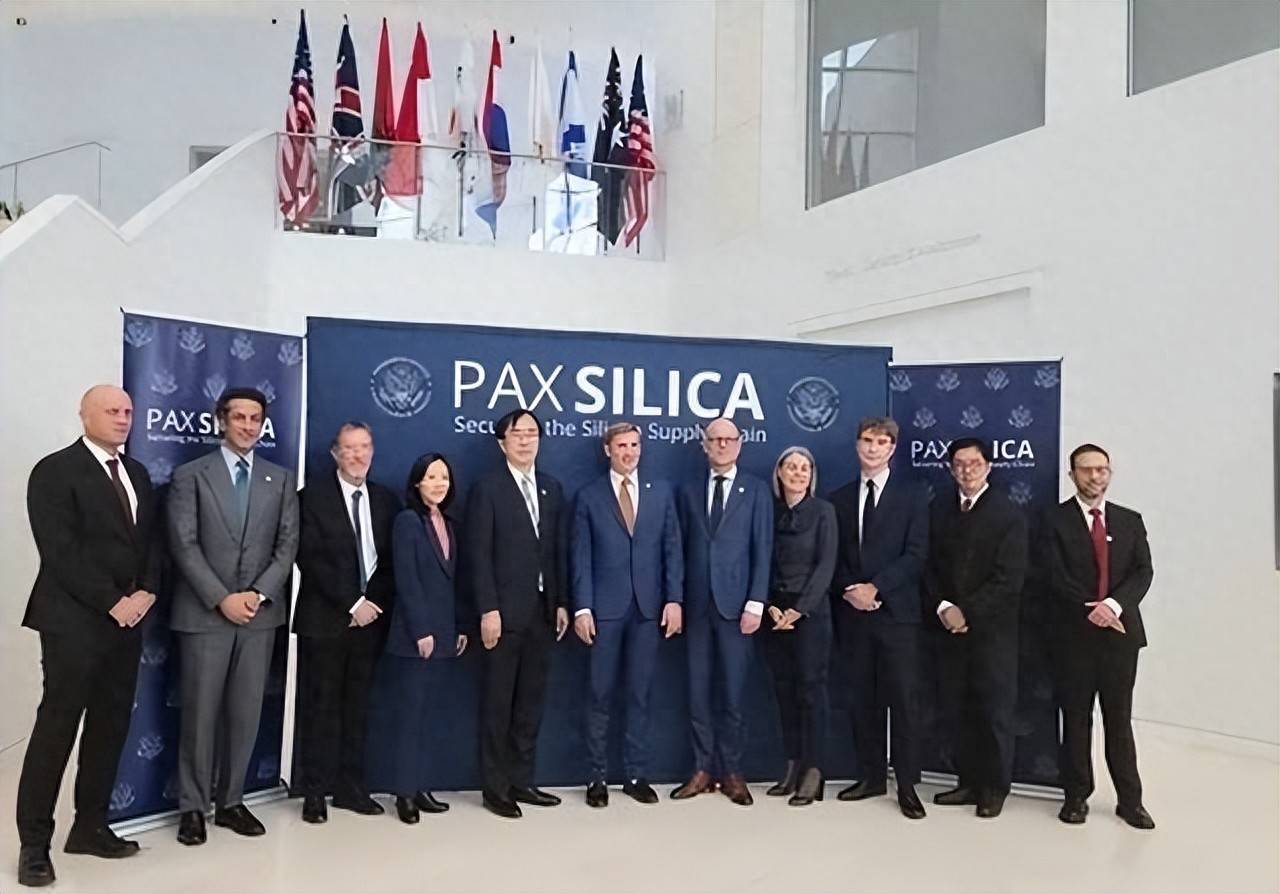
美国又搞了个新联盟,叫硅和平倡议,英文是Pax Silica,直译成硅的和平。这东西在2025年12月12日正式启动,华盛顿那边开峰会,七国签了份宣言。表 面上看是谈技术合作,保障AI和半导体的供应链安全,但明眼人都知道,这剑锋直指中国,目的是想在关键矿产和芯片领域绕开中国的主导地位。 成员里有美国、日本、韩国、澳大利亚、新加坡、荷兰、以色列、英国、加拿大和阿联酋,这些国家在科技链条上各有分工,美国带头拉帮结派,试图重塑 全球格局。 中国这边没被邀请,外交部直接表态,反对这种排他性小圈子,强调要按市场规则办事,谁想另起炉灶就得自己掂量后果。 这个倡议不是凭空冒出来的,早几年美国就在补贴本土芯片产业,同时全球到处拉盟友。2025年12月11日,美国国务院副国务卿雅各布·赫尔伯格主持峰 会,12日各国代表签字。 名单选得很精,日本管精密制造,韩国有三星和SK海力士这样的芯片巨头,澳大利亚提供矿产资源,新加坡负责物流和金融,荷兰握着ASML的光刻机技 术,以色列擅长算法和软件,英国和加拿大补位资金和技术,阿联酋带点中东影响力。 韩国政府表面配合美国,但私下得权衡经济账。新加坡靠开放中立吃饭,加入这种排他联盟,会不会 ...

韬盛科技科创板IPO获受理 拟募资10.58亿加码半导体测试接口国产化
Ju Chao Zi Xun· 2025-12-30 15:33
Core Viewpoint - Shanghai Taosheng Electronics Technology Co., Ltd. has officially submitted its application for listing on the Sci-Tech Innovation Board, aiming to raise 1.058 billion yuan for the construction of a semiconductor testing interface and probe production base, R&D of wafer testing probe cards, and working capital supplementation, to strengthen its leading position in high-end chip testing hardware and accelerate the domestic substitution process [1] Group 1: Company Overview - Taosheng Technology is one of the earliest companies in China to independently develop chip testing interfaces and achieve large-scale production [1] - The company focuses on the semiconductor testing interface field, with products including chip testing interfaces and probe cards, which are critical for ensuring chip quality [1] - The company has developed over 4,000 chip testing interface technology solutions and possesses independent R&D and manufacturing capabilities for high-speed, high-frequency testing probes [2] Group 2: Market Position and Achievements - According to Yole, Taosheng Technology is projected to rank first in chip testing interface revenue in China and 11th globally in 2024 [2] - The company has built a broad customer ecosystem covering the entire semiconductor industry chain, serving over 700 clients, including leading companies in AI chips and autonomous driving [2] - Taosheng Technology has developed the first domestic DSA testing interface supporting parallel testing of 512 chips for Yangtze Memory Technologies, aiding the localization of the storage industry [2] Group 3: Technological Advancements - The company is expanding into the more technically challenging wafer testing probe card field, with its MEMS probe cards already commercialized for AI chip clients [3] - Taosheng Technology has achieved breakthroughs in the storage sector, with 2D MEMS products receiving orders and 2.5D MEMS products passing stringent certifications from Yangtze Memory Technologies [3] - The company is also conducting pre-research on 3D MEMS probe card technology to cover high-end storage testing scenarios [3] Group 4: Future Outlook - Taosheng Technology aims to focus on national strategic needs, pursuing high-end and large-scale development [3] - The company plans to increase R&D investment to tackle core key technologies in high-end testing interfaces, break overseas monopolies, and accelerate the domestic substitution process [3] - The goal is to further expand market share and solidify its leading position in the industry, aspiring to become a leading brand in the global semiconductor testing interface field [3]
存储设备专题报告:AI驱动存储扩容,设备环节确定性凸显
Dongguan Securities· 2025-12-30 09:18
Group 1 - The semiconductor industry is entering a new upcycle driven by AI, with global semiconductor revenue expected to reach approximately $975.46 billion in 2026, a 26.3% increase from 2025 [12][16] - Memory chips, particularly DRAM and NAND, are projected to be the core drivers of this cycle, with memory chip sales expected to grow by 27.8% in 2025 and 39.4% in 2026 [14][18] - The demand structure for memory chips is shifting from consumer electronics to dual drivers of "smart cars and data centers," with the automotive storage market expected to grow at a compound annual growth rate (CAGR) of about 21% from 2024 to 2030 [21][24] Group 2 - China's semiconductor equipment spending is expected to lead globally, with a projected $94 billion in spending from 2026 to 2028, accounting for 25% of global spending [50][54] - The demand for etching and thin film deposition equipment is expected to rise significantly as the industry transitions to 3D NAND technology, which reduces reliance on photolithography [61][66] - Lam Research indicates that the serviceable market for equipment per wafer for 3D DRAM and NAND will increase to 1.7 times and 1.8 times, respectively, compared to previous technologies [66]




从20个“世界”看武汉雄心
Chang Jiang Ri Bao· 2025-12-30 03:16
Core Viewpoint - The recently released "Wuhan 14th Five-Year Plan Suggestions" outlines ambitious goals for Wuhan to become a "world-class" city in various sectors, reflecting its strengths and aspirations in the context of China's growing global influence [1][4][12]. Group 1: Economic and Industrial Development - Wuhan aims to establish itself as a "world-class cultural tourism destination" and a "world-class ecological city" during the 14th Five-Year period [4][5]. - The plan emphasizes the construction of a "world-class integrated storage and computing industry base" and the development of a "world storage capital" [4][8]. - The city plans to cultivate world-class industrial clusters and create a number of leading enterprises with a market value of over 100 billion and 1 trillion [4][5]. Group 2: Technological Innovation - The plan includes initiatives to build a "world-class scientific research institution" and attract world-class talent, particularly focusing on the East Lake Science City [5][12]. - Wuhan has been recognized globally for its research capabilities, ranking eighth in the world for research cities and sixth in the field of artificial intelligence [6][12]. - The city has achieved significant technological milestones, including the development of the world's first high-precision chip and breaking speed records in high-speed magnetic levitation technology [7][12]. Group 3: Cultural and Ecological Goals - The plan outlines the creation of a "world-class tourism resort" and aims to enhance the reputation of East Lake as a "world-renowned lake" [5][12]. - Wuhan is committed to building a "world-class ecological city" and a "world-class wetland flower city," focusing on harmonizing human and nature [5][12]. Group 4: Regional and National Impact - The development strategy is not only for Wuhan's growth but also aims to serve the broader provincial and national objectives, contributing to the regional economic landscape [8][12]. - The Wuhan metropolitan area is projected to exceed a GDP of 3.6 trillion yuan, accounting for over 60% of Hubei province's GDP [12][15]. - The city is positioned as a core hub in the Yangtze River Economic Belt, facilitating regional collaboration and development [12][15].

有研硅:公司在存储芯片领域已形成多维布局
Zheng Quan Ri Bao Wang· 2025-12-29 13:16
Group 1 - The company has established a multi-dimensional layout in the storage chip sector [1] - The company's etching equipment components have entered the supply chain of certain storage customers, with certification for Yangtze Memory Technologies Corporation (YMTC) actively progressing [1] - The company's subsidiary, Shandong Youyan Aisi, has achieved bulk supply of 12-inch silicon wafers to YMTC [1] Group 2 - The company is also supplying component products to TSMC through its controlling shareholder's subsidiary [1]

有研硅:通过控股股东的子公司向台积电供应零部件产品
Ge Long Hui· 2025-12-29 08:19
Core Viewpoint - The company has established a multi-dimensional layout in the storage chip sector, indicating a strategic expansion in this industry [1] Group 1: Supply Chain Developments - The company's etching equipment components have entered the supply chain of certain storage clients, with certification for Yangtze Memory Technologies (YMTC) actively progressing [1] - The company's subsidiary, Shandong Youyan Aisi, has achieved bulk supply of 12-inch silicon wafers to Yangtze Memory Technologies [1] - The company also supplies component products to TSMC through its controlling shareholder's subsidiary [1]
有研硅(688432.SH):通过控股股东的子公司向台积电供应零部件产品
Ge Long Hui· 2025-12-29 08:14
Core Viewpoint - The company has established a multi-dimensional layout in the storage chip sector, indicating a strategic expansion in this market [1] Group 1: Supply Chain Developments - The company's etching equipment components have entered the supply chain of certain storage clients, with certification for Yangtze Memory Technologies (YMTC) actively being pursued [1] - The company's subsidiary, Shandong Youyan Aisi, has achieved bulk supply of 12-inch silicon wafers to Yangtze Memory Technologies [1] - The company also supplies component products to TSMC through its controlling shareholder's subsidiary [1]
现在,哪些芯片厂商已经开始涨价了?(附最新涨价汇总)
芯世相· 2025-12-29 07:48
Price Increases in the Chip Industry - The chip industry is experiencing a significant price increase trend, with various manufacturers announcing price hikes due to rising raw material costs and supply chain pressures [3][4] - Major companies such as TSMC, SMIC, Samsung, and Micron have implemented or are expected to implement price increases across their product lines [12][13][14][19] Raw Material and PCB Price Increases - Jiantek announced a second price increase in December, raising prices for its copper-clad laminates by 5% to 10% due to escalating raw material costs [9] - Nanya Plastics raised prices for all CCL products and PP by 8% starting November 20, citing increases in copper prices and other raw materials [10] Semiconductor Price Adjustments - TSMC has informed clients of a price increase for advanced technology nodes (5nm to 2nm) over the next four years, with expected increases of 8% to 10% for 5nm and up to 50% for 2nm wafers [12] - SMIC has raised prices for some of its production capacity by approximately 10% [13] Memory Chip Price Surge - Samsung has notified clients of a price increase for DRAM and NAND Flash products, with increases of 15% to 30% for certain DRAM types and 5% to 10% for NAND products [14] - Micron has announced a price increase of 20% to 30% for its storage products, effective from September 12 [16] Passive Component Price Increases - Multiple passive component manufacturers have joined the price increase trend, with companies like KEMET and Yageo announcing price hikes of 20% to 30% due to raw material cost pressures [30][33] - Panasonic has raised prices for certain tantalum capacitor models by 15% to 30% [35] Power Device Price Adjustments - China Resources Microelectronics confirmed a price increase for some IGBT products, driven by rising raw material costs and strong order performance [45] - Jingdao Microelectronics has raised prices for certain product series by 10% to 15% due to the increase in raw material prices [46] End-User Impact - Major PC manufacturers like Lenovo, Dell, and HP are planning to raise prices by up to 20% due to ongoing storage price increases [66] - Several smartphone manufacturers have paused procurement of storage chips, facing challenges with rising prices from suppliers [68]




年终总结:2025中国存储产业全景图
是说芯语· 2025-12-29 07:46
Core Manufacturing Segment: The Foundation of Domestic Substitution - The manufacturing segment is the heavy asset core of the storage industry, responsible for key processes such as chip lithography and etching, and is a critical breakthrough area for domestic substitution [3] - Domestic companies have achieved large-scale production in the two main storage fields of 3D NAND and DRAM, forming a "fourth pole" in the global market [3] Key Companies in Core Manufacturing - **Yangtze Memory Technologies Co., Ltd. (YMTC)**: The only domestic IDM company focused on integrated design and manufacturing of 3D NAND flash, with a global NAND market share expected to reach 13% by 2025 [4] - **Changxin Memory Technologies (CXMT)**: The largest and most advanced DRAM manufacturer in China, with a focus on 19nm process technology and significant revenue growth in Q3 [5] - **Fujian Jinhua Integrated Circuit Co., Ltd.**: Focuses on niche DRAM markets, providing cost advantages in mid-to-low-end applications [6] - **Newport Semiconductor**: A leading manufacturer of specialty process storage chips, focusing on NOR Flash and special storage for critical fields [7] - **SMIC**: A leading global integrated circuit foundry, providing core support for storage chip foundry services [8] - **Huahong Semiconductor**: A core enterprise for specialty process storage chip foundry, with leading yield control levels [10] Chip Design Segment: The Core Engine of Technological Innovation - The design segment is the technological core of the industry chain, responsible for storage chip architecture design, circuit layout, and functional definition [12] - Domestic companies have achieved technological breakthroughs in NOR Flash, niche DRAM markets, and storage control chips, with some products reaching international mainstream levels [12] Key Companies in Chip Design - **Lanke Technology**: A leading global memory interface chip design company, with a total market value expected to reach 138.58 billion yuan by 2025 [13] - **GigaDevice Semiconductor**: A leader in NOR Flash and niche DRAM design, with a total market value of 151.58 billion yuan by 2025 [14] - **Unisoc**: A top-tier provider of storage technology products and services, with significant economic benefits from its fourth-generation SeDRAM technology [15] - **Dongxin Technology**: A rare Fabless company providing NAND, NOR, and DRAM design solutions [16] - **Daqin Technology**: A leader in automotive-grade storage and SRAM/DRAM design, benefiting from the explosion of smart automotive storage demand [17] Module Integration Segment: The Key Bridge Connecting Chips and Terminals - The module segment integrates chips with main control and interface components to form products like SSDs, UFS, and eMMC, which are core to meeting terminal demands [26] - Benefiting from the growth of AI smartphones, AI PCs, and AI servers, this segment is crucial for the storage industry [26] Key Companies in Module Integration - **Jiangbolong**: A leading third-party storage module company with significant revenue growth and a total market value of 111.87 billion yuan [27] - **Baiwei Storage**: Focused on embedded storage and PCIe SSD modules, with leading market share in embedded storage products [28] - **Demingli**: An integrated company providing domestic storage main control chips and module solutions [29] - **Langke Technology**: A well-known consumer storage module company with a stable market share [30] - **Jintai Technology**: A company developing both consumer and industrial-grade storage modules [31] Supporting Services and Specialty Fields: Important Support for the Industry Ecosystem - Supporting service companies provide full-chain support for the storage industry, including storage system solutions, testing equipment, and security storage [42] - Specialty field companies focus on niche scenarios, forming differentiated competitive advantages [42] Key Companies in Supporting Services - **Tongyou Technology**: A leading provider of enterprise-level storage system solutions, focusing on data center and cloud computing [43] - **Hangyu Micro**: A provider of storage and computing solutions for aerospace, with products suitable for space scenarios [44] - **Hualan Micro**: A provider of security storage and storage interface chip solutions, making significant progress in domestic security storage interface chip substitution [45] - **Hongshan Technology**: A provider of enterprise-level storage systems and data management solutions [46] - **Zeshi Technology**: A provider of storage chip and module testing equipment, supporting domestic storage enterprises [47] 2025 Storage Industry Development Summary - By 2025, China's storage industry has built a complete ecosystem covering "manufacturing-design-module-support services," with core companies achieving breakthroughs in technology and market share [58] - Leading companies like Yangtze Memory and Changxin Memory are pushing domestic storage to occupy an important position in the global market [58] - The "super cycle" of the storage industry will continue to evolve, with domestic companies accelerating breakthroughs in high-end fields such as HBM, 3D stacking, and secure storage [59]


走向未来组织:从2025中国年度最佳雇主看企业如何价值重构
Sou Hu Wang· 2025-12-29 04:48
Core Insights - The article discusses a paradigm shift in organizational management driven by AI, highlighting that by 2030, approximately 170 million new jobs will be created globally while 92 million jobs will be eliminated, indicating an irreversible transformation in the labor structure [2]. Group 1: Trends in Organizational Structure - Organizations are evolving from traditional job systems to "human-machine units," with 86% of global employers expecting AI and information processing technologies to fundamentally change their business models by 2030 [3]. - The concept of "cellular architecture" is introduced, where each "human-machine unit" consists of one human employee and one AI assistant, allowing for flexible task-based combinations [3]. - This shift enhances organizational adaptability and execution, marking a transition towards capability-centered rather than job-centered structures, which is becoming a hallmark of future employers [3]. Group 2: Talent Management Evolution - Talent management is shifting from "employment" to "development and empowerment," focusing on continuous growth and potential activation of employees rather than just job matching and performance control [4]. - Companies are increasingly valuing composite skills such as innovation, cross-domain learning, and system thinking, with AI understanding and application becoming core competencies [4][5]. - Learning mechanisms within organizations are transforming, with project-based learning replacing traditional long-term training, and AI mentors providing 24/7 skill enhancement [4]. Group 3: Incentive Mechanisms - Employee motivation is evolving from "organization-provided" to "value co-creation," necessitating a redesign of incentive systems to address individual needs and long-term value orientation [7]. - The concept of "human-machine combination incentives" is proposed, expanding the focus from individual performance to the overall performance of human-machine partnerships [7]. - Flexible work arrangements, personalized benefits, and diverse training programs are becoming standard capabilities for excellent employers, particularly appealing to Gen Z and millennial employees [8]. Group 4: Strategic Human Capital Management - The top 100 employers in China demonstrate significant advantages in AI application, digital transformation, employee experience, retention rates, and job satisfaction [9]. - Organizations must integrate human capital strategies with business strategies, including skill enhancement and structural governance, to fully leverage the potential released by AI automation [9]. - Leading companies are optimizing work time and reallocating employee energy towards more creative and strategic tasks, enhancing organizational potential [9]. Conclusion - The management philosophy is evolving from a focus on resource allocation efficiency to a new "intelligent efficiency" era, emphasizing the creative integration of human and machine capabilities [11]. - Future organizational competitiveness will hinge on the ability to activate human potential, reconstruct collaborative mechanisms, and maintain organizational vitality through continuous learning and institutional innovation [11].