
联发科

Search documents
中央经济工作会议稳中求进:环球市场动态2025年12月12日
citic securities· 2025-12-12 04:38
Market Overview - A-shares opened high but closed lower, with the Shanghai Composite Index down 0.7% at 3,873 points, while the Shenzhen Component fell 1.27% and the ChiNext Index dropped 1.41%[15] - The Hang Seng Index in Hong Kong decreased by 0.04%, with the Hang Seng Tech Index down 0.83%[10] - European markets rose, with the Stoxx 600 index up 0.55%, driven by positive sentiment from the Federal Reserve's interest rate cuts[8] Economic Insights - The Central Economic Work Conference emphasized the need for a "strong supply and weak demand" approach, advocating for proactive fiscal policies and moderate monetary easing[5] - The U.S. initial jobless claims saw the largest increase since 2020, rising from 192,000 to 236,000, indicating potential economic stress[5] Commodity and Currency Movements - Oil futures hit their lowest level since October, with NY crude oil down 1.47% to $57.6 per barrel[28] - Gold prices increased by 2.09%, reaching $4,285.5 per ounce, as investors weighed the Federal Reserve's interest rate outlook[28] - The U.S. dollar index fell by 0.4%, reflecting a year-to-date decline of 9.3%[27] Stock Performance - Oracle's quarterly earnings missed expectations, leading to a 10.83% drop in its stock price, which negatively impacted the tech sector and caused the Nasdaq to decline by 0.25%[8] - Broadcom reported better-than-expected earnings, boosting optimism in the AI sector, with a target price of $415 for its stock[7] Regional Market Trends - Latin American markets saw gains, with the S&P Mexico IPC index rising by 2.05%[8] - In the Asia-Pacific region, Taiwan's stock index fell by 1.3%, while Malaysia's index rose by 0.9%[22]



台积电明年CoWoS月产冲12.7万片,英伟达包揽过半,博通AMD紧随其后
美股IPO· 2025-12-11 13:00
Core Viewpoint - TSMC is accelerating the expansion of its advanced packaging capacity, with expectations to reach a monthly capacity of 127,000 CoWoS units by the end of 2026, representing an increase of over 20% from previous estimates [1][3]. Group 1: Capacity Expansion - TSMC and non-TSMC players are both ramping up CoWoS capacity to meet the surging demand for AI chips, with TSMC's monthly capacity projected to reach 127,000 units by the end of 2026, up from an earlier estimate of 100,000 units [3][7]. - Non-TSMC players are also increasing their capacity from an expected 26,000 units to 40,000 units, a rise of over 50% [3]. - Morgan Stanley's November forecast aligns with TSMC's capacity expansion plans, predicting a monthly capacity of 120,000 to 130,000 units [3][7]. Group 2: Customer Demand - NVIDIA continues to dominate the market, securing over half of TSMC's CoWoS capacity with annual orders of 800,000 to 850,000 units [1][3]. - Broadcom ranks second with approximately 240,000 units, primarily supplying Meta and Google [1][3]. - AMD is in third place, while MediaTek has entered the ASIC market with nearly 20,000 units [1][3][5]. Group 3: Market Dynamics - The demand for GPUs and ASICs is surging, with both types of chips expected to coexist and complement each other in the market [4]. - NVIDIA's CEO emphasized the distinct roles of GPUs and ASICs, with the latter being tailored for low power consumption and inference efficiency [4]. - The ASIC supply chain, led by Google, is anticipated to grow, with AWS and xAI also set to release ASIC chip capacity [4]. Group 4: Financial Implications - The expansion plan will significantly impact TSMC's capital expenditures, requiring an additional $5 billion to $7 billion, potentially raising total capital expenditures for 2026 from approximately $43 billion to a range of $48 billion to $50 billion [10]. - TSMC is also expected to enhance CoWoS technology by 2027 to meet AI demands for more logic and high-bandwidth memory (HBM), with plans to produce CoWoS that integrates 12 or more HBM stacks [10].



台积电明年CoWoS月产冲12.7万片,英伟达包揽过半,博通AMD紧随其后
Hua Er Jie Jian Wen· 2025-12-11 09:34
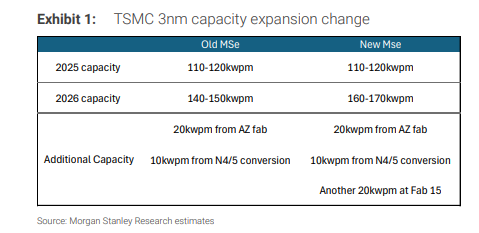
Core Insights - TSMC is accelerating the expansion of its advanced packaging capacity to meet the explosive growth in demand for AI chips [1][2] - The company plans to increase its CoWoS capacity to 127,000 units per month by the end of 2026, while non-TSMC players will see their capacity rise from 26,000 to 40,000 units, an increase of over 50% [1] - NVIDIA continues to dominate the market, securing over half of TSMC's CoWoS capacity with an annual order volume of 800,000 to 850,000 units [1] Capacity Expansion Plans - TSMC's CoWoS capacity is expected to reach 127,000 to 130,000 units per month by the end of 2026, significantly up from the previous estimate of 100,000 units [4][5] - This expansion aligns with Morgan Stanley's November forecast, which anticipated a capacity increase of over 20% [1][4] - The increase in capacity is aimed at matching the new 3nm front-end wafer capacity to meet the high demand for AI chips [1][5] Market Dynamics - The demand for GPUs and ASICs is surging, prompting TSMC and non-TSMC players to expand capacity [2] - NVIDIA remains the leader in large model training, while ASICs are expected to grow in importance, with companies like Broadcom and MediaTek entering the market [2] - The competitive landscape is evolving, with MediaTek securing nearly 20,000 units of ASIC capacity for 2026 [2] Technological Developments - TSMC is set to enhance its CoWoS technology by 2027 to meet the increasing demand for more logic and high-bandwidth memory (HBM) [7] - The company plans to produce CoWoS with a 9.5x mask size, integrating 12 or more HBM stacks into a single package [7] Financial Implications - The expansion plan is expected to require an additional capital expenditure of approximately $5 billion to $7 billion, potentially raising TSMC's total capital expenditure for 2026 from an estimated $43 billion to a range of $48 billion to $50 billion [6]
出生安徽,台湾旺宏电子吴敏求之“铁汉”传奇
Xin Lang Cai Jing· 2025-12-11 06:12
Core Insights - The article highlights the recognition of Wu Minqiu, chairman of Winbond Electronics, as the recipient of the 19th Pan Wen-yuan Award, a prestigious honor in Taiwan's technology industry, emphasizing his significant contributions to the semiconductor sector [1][13]. Group 1: Background and Early Life - Wu Minqiu was born in 1948 in Anhui and moved to Taiwan as an infant, where he developed resilience in a challenging environment [3][16]. - His education at Cheng Kung University and Stanford University shaped his character, where he learned to survive in scarcity [3][16]. Group 2: Career Beginnings - In 1989, Wu made a bold decision to leave his high-paying job at Intel to establish Winbond Electronics with over 40 semiconductor experts, despite the nascent state of Taiwan's semiconductor industry [5][18]. - Initial funding challenges were overcome with the help of venture capitalist Hu Dinghua, who provided NT$800 million and connections to other financial institutions [5][18]. Group 3: Business Strategy and Challenges - Wu's strategy focused on independent research and development in the non-volatile memory sector, which was initially overlooked but later proved to be a wise decision as demand surged in the consumer electronics era [7][20]. - Winbond faced significant losses from 2012 to 2017, totaling NT$23 billion, yet Wu maintained his commitment to R&D and avoided layoffs during this period [9][20]. Group 4: Recovery and Growth - The company's turnaround was marked by a focus on technology, leading to partnerships with major clients like Nintendo and Apple, and establishing Winbond as a leader in NOR Flash technology [9][22]. - Wu's leadership resulted in a remarkable recovery from annual losses to stable profitability within five years, showcasing the importance of core technology independence [9][22]. Group 5: Recognition and Legacy - Wu's receipt of the Pan Wen-yuan Award is seen as a recognition of both his personal achievements and Winbond's innovative business model, reflecting a shift in Taiwan's semiconductor industry from technology importation to self-innovation [11][24]. - His story serves as an inspiration, illustrating the journey of Taiwan's semiconductor industry and the value of perseverance and innovation in overcoming adversity [12][25].

台积电封装产能,被疯抢
半导体行业观察· 2025-12-11 01:23
公众号记得加星标⭐️,第一时间看推送不会错过。 半导体设备业者透露,按照台积电与"非台积阵营"包括日月光集团、Amkor与联电等计画,双双加速 扩充先进封装CoWoS产能,从订单分布观察,2026~2027年GPU、特用芯片(ASIC)客户需求皆超 乎预期。 这带动台积电近期再度上调2026年CoWoS月产能,非台积阵营原预期2026年月产能约2.6万片,现已 调升逾5成。其中,NVIDIA持续预订台积CoWoS过半产能,博通(Broadcom)与超微(AMD)分 占二、三名,而联发科2026年也正式进入ASIC赛局。 近期Google TPU声名大噪,市场不断涌现ASIC阵营侵蚀版图看法,然半导体相关业者多认为,拥有 CUDA护城河的NVIDIA仍是大型模型训练的主导者。 ASIC以客制化、低功耗与推论效率见长,两 者发展为"共生共荣非互斥。"NVIDIA执行长黄仁勋也强调:"GPU与ASIC的定位完全不同。" 设备业者证实,受惠GPU、ASIC需求同步爆发,台积电与非台积阵营双双上调2026年CoWoS产能规 模。 台积2026年月产能至年底约可达12.7万片,而非台积阵营原预期2026年底月产能约2.6 ...
当算力追赶不上智能:2026年AI行业的缺口与爆发(附86页PPT)
材料汇· 2025-12-10 15:51
Core Insights - The rapid evolution of AI is outpacing the development of computing infrastructure, leading to a significant gap in computing power that is expected to widen by 2026. This gap will manifest in two key areas: a growing demand for core computing capabilities across chips, storage, packaging, and cooling, and a shift towards edge computing to reduce cloud latency and costs, resulting in an explosion of applications from AI smartphones to integrated robots [1]. Industry Overview - The electronic sector has reached a record high in Q3 2025, driven by AI, with the electronic index rising by 44.5% year-to-date, outperforming the CSI 300 index by 26.6% [12][13]. - The semiconductor sector has shown significant growth, with various sub-sectors experiencing substantial increases: PCB (+114%), consumer electronics (+51%), and semiconductors (+40%) year-to-date [12][13]. - The overall electronic industry reported a revenue increase of 19% and a net profit increase of 35% in Q1-Q3 2025, with all major segments showing positive growth [18][24]. Performance Metrics - The electronic sector's inventory levels have risen, particularly in consumer electronics and PCBs, indicating strong demand and recovery in terminal markets [22][25]. - The semiconductor sector's monthly sales growth has rebounded since June 2023, with a notable increase in demand for digital, storage, and equipment segments [34][41]. AI Impact on Semiconductor Cycle - The semiconductor market is entering an upward cycle, with significant growth in capital expenditures from both domestic and international cloud service providers, driven by AI demand [41][42]. - Major cloud providers are expected to increase their capital expenditures significantly, with projections indicating a 50%-60% growth in 2026 [43]. Consumer Electronics Trends - Global smartphone sales are projected to recover, with a forecast of 1.29 billion units in 2024, reflecting a 6.1% year-on-year increase [26][27]. - The PC market is also expected to grow, with global sales reaching 263 million units in 2024, a 1.0% increase year-on-year [27][29]. Automotive Sector Insights - The automotive market is experiencing a weak recovery, with global sales expected to reach 92.23 million units in 2025, reflecting a 1.8% year-on-year increase [39]. - The penetration rate of electric vehicles is projected to rise, with expectations of 20% in 2025 for global sales [39]. AI Narrative Acceleration - The competition among AI model developers has intensified, with significant advancements in model capabilities and applications across various sectors [47][50]. - The demand for AI-related spending is expected to reach $3-4 trillion by 2030, driven by the need for enhanced computing power and applications [58]. Edge Computing and Hardware Development - The shift towards edge computing is becoming crucial, with predictions indicating that the global edge AI market will grow to ¥1.2 trillion by 2029, with a CAGR of 39.6% [69]. - Major AI companies are actively entering the edge hardware market to enhance user experience and profitability [69].




半导体行业月报:谷歌发布新模型,关注谷歌产业链方向-20251210
Zhongyuan Securities· 2025-12-10 07:31
分析师:邹臣 登记编码:S0730523100001 zouchen@ccnew.com 021-50581991 半导体 谷歌发布新模型,关注谷歌产业链方 向 ——半导体行业月报 证券研究报告-行业月报 强于大市(维持) 半导体相对沪深 300 指数表现 资料来源:聚源,中原证券研究所 -10% 0% 10% 20% 30% 40% 50% 60% 2024.12 2025.04 2025.08 2025.12 半导体 沪深300 相关报告 《半导体行业月报:海外云厂商 25Q3 继续 加大资本支出,国内存储器厂商业绩表现亮 眼》 2025-11-10 《半导体行业月报:原厂陆续发布涨价函, 存储器周期继续上行》 2025-10-16 《半导体行业月报:半导体行业 25Q2 持续 稳健增长,国产 AI 算力厂商业绩表现亮眼》 2025-09-11 联系人:李智 投资要点: 本报告版权属于中原证券股份有限公司 www.ccnew.com 请阅读最后一页各项声明 第 1 页 / 共 51 页 发布日期:2025 年 12 月 10 日 电话: 0371-65585629 地址: 郑州郑东新区商务外环路 10号 ...
台积电11月营收同比增24.5%,产能爆单引资本看多!
Ge Long Hui· 2025-12-10 07:28
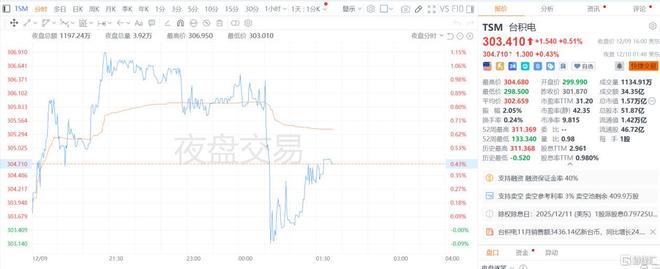
11月营收同比增长24.5% 12月10日,台积电公布2025年11月营收报告。得益于先进制程需求旺盛及产能持续释放,台积电11月营 收继续保持增长,但环比有所下滑。 二级市场上,台积电美股夜盘交易小幅上涨0.51%,今年以来股价累涨超55%。 业界透露,台积电先进封装大爆单,公司努力扩产之际,2026年也将扩大携手协力伙伴,以满足客户需 求。 台积电11月销售额3436.1亿元台币,同比增长24.5%,仍创历年同期新高,但不及上一个月的3674.73 亿,环比下滑6.5%; 1-11月累计销售额3.47万亿元台币,同比增长32.8%,前11月首度突破3.4万元,也是历年最佳。 | 项目 | 2025年 | 2025年 | 月增(波) | 2024年 | 年增(波) | 2025年 | 2024年 | 年增(液) | | --- | --- | --- | --- | --- | --- | --- | --- | --- | | | 11月 | 10月 | 0/0 | 11月 | 1 % | 1至11月 | 1至11月 | % | | 量收 | 343,614 | 367,473 | (6.5) | 276 ...
科技投资大佬:明年英伟达GPU将颠覆谷歌TPU优势
美股IPO· 2025-12-10 03:38
Core Viewpoint - Google currently holds a cost advantage in AI training with its TPU chips, operating at a negative 30% profit margin, which allows it to suppress competitors. However, this advantage is expected to reverse with the introduction of NVIDIA's Blackwell chip cluster in early 2026, potentially reshaping the competitive landscape of the AI industry [1][4][11]. Group 1: Cost Structure and Competitive Dynamics - Gavin Baker highlights that Google's TPU chips are akin to "fourth-generation jet fighters," while NVIDIA's Hopper chips are compared to "World War II P-51 Mustangs," indicating a significant cost advantage for Google [4]. - The transition from NVIDIA's Hopper to Blackwell is described as one of the most complex product transformations in tech history, with substantial increases in data center rack weight and power consumption [5]. - Baker anticipates that the first models trained on Blackwell will debut in early 2026, with xAI playing a crucial role in NVIDIA's deployment strategy [6]. Group 2: Supply Chain and Design Strategy - Google's conservative design choices and supply chain strategy may limit its long-term competitiveness, as it outsources backend design to Broadcom, incurring significant costs [7]. - The estimated annual payment to Broadcom could reach approximately $15 billion by 2027, raising questions about the economic rationale behind this outsourcing [7]. - The introduction of MediaTek as a second supplier is seen as a warning to Broadcom, but this diversification may slow down TPU's development pace compared to NVIDIA's rapid GPU iterations [9][10]. Group 3: Strategic Implications - Once Google loses its status as the lowest-cost producer, its strategic computing approach will fundamentally change, making it challenging to maintain a negative profit margin [11]. - The shift in cost dynamics with the Blackwell cluster moving towards inference applications could lead to significant financial strain for Google, potentially impacting its stock performance [11]. - Baker emphasizes that the gap between NVIDIA's GPUs and Google's TPUs will widen further with the release of the next-generation Ruben chip [12].
科技投资大佬:明年英伟达GPU将颠覆谷歌TPU优势
Hua Er Jie Jian Wen· 2025-12-10 03:06
Core Insights - Nvidia's next-generation Blackwell chips and subsequent products are expected to reshape the cost structure of AI training, potentially ending Google's TPU cost advantage [1] - The transition from Nvidia's Hopper to Blackwell is one of the most complex product transformations in tech history, creating an unexpected advantage window for Google [2] - Google's conservative design choices and supply chain strategies in TPU development may limit its long-term competitiveness [4][5] Group 1: Nvidia's Blackwell Chips - The Blackwell chip cluster is set to begin training use in early 2026, with the GB300 chip following, which will be easier to deploy [1][2] - The first models trained on Blackwell are expected to be launched by xAI in early 2026 [2] - The GB300 chip will feature "plug-and-play" compatibility, allowing for direct replacement of existing GB200 infrastructure without additional modifications [3] Group 2: Google's TPU Challenges - Google's TPU architecture decisions, including outsourcing backend design to Broadcom, may result in significant annual payments, limiting profitability [4] - The introduction of MediaTek as a second supplier signals a warning to Broadcom, but this diversification may slow down TPU development [5] - If Google loses its status as the lowest-cost producer, its strategic computing approach will fundamentally change, making it difficult to maintain a negative profit margin [6]