英飞凌

Search documents
6份料单更新!出售美光、ADI、TI芯片
芯世相· 2025-08-26 08:06
Core Viewpoint - The article highlights the capabilities and offerings of a chip distribution company, emphasizing its extensive inventory, quality control measures, and customer service efficiency. Group 1: Inventory and Facilities - The company operates a 1,600 square meter smart warehouse with over 1,000 stock models and around 100 brands, holding a total of 50 million chips valued at over 100 million [1] - An independent laboratory is established in Shenzhen for quality control (QC) of each material [1] Group 2: Purchase and Sale Offers - The company is actively seeking specific chip models from various brands, indicating a demand for components like VISHAY, ADI, SKYWORKS, TI, and ALLEGRO [2] - There are special offers on advantageous materials, including significant quantities of chips from brands like ST, TI, and Infineon, with some models having over 100,000 pieces available [3] Group 3: Customer Engagement and Service - The company has served 20,000 users and offers rapid transaction completion, with some transactions finalized in as little as half a day [4] - A platform is available for users to explore unsold inventory and improve pricing options [6] Group 4: Industry Insights - The article references ongoing trends in the chip distribution industry, including changes among top distributors and challenges faced by chip professionals [7]


售价2万5!英伟达推出机器人“最强大脑”:AI算力飙升750%配128GB大内存,宇树已经用上了
量子位· 2025-08-25 23:05
Core Insights - NVIDIA has launched the Jetson Thor, a new robotic computing platform that integrates server-level computing power into robots, achieving an AI performance of 2070 TFLOPS, which is 7.5 times higher than the previous generation Jetson Orin, with a 3.5 times improvement in energy efficiency [1][3][4]. Performance and Specifications - Jetson Thor features a massive 128GB memory configuration, unprecedented in edge computing devices [2]. - The platform is built on the Blackwell GPU architecture, supporting multiple AI models simultaneously on edge devices [6]. - The Jetson AGX Thor developer kit is priced at $3499 in the U.S. (approximately 25,000 RMB), while the T5000 module is available for $2999 for bulk purchases [8][9]. Technical Features - The Jetson Thor includes advanced specifications such as a GPU with 2560 CUDA cores and 96 fifth-generation Tensor Cores, and a CPU with 14 Arm Neoverse V3AE cores, significantly enhancing real-time control and task management capabilities [11][13]. - It supports high bandwidth with 128GB LPDDR5X memory and 273GB/s memory bandwidth, crucial for large Transformer inference and high-concurrency video encoding [13]. - The platform can achieve a response time of 200 milliseconds for the first token and generate over 25 tokens per second, enabling real-time human-robot interaction [16]. Industry Adoption - Several Chinese companies, including Unisound Medical and Youbik, are integrating Jetson Thor into their systems, highlighting its impact on robot agility, decision-making speed, and autonomy [19]. - Boston Dynamics is incorporating Jetson Thor into its Atlas humanoid robot, allowing it to utilize computing power previously only available in servers [20]. - Agility Robotics plans to use Jetson Thor as the core computing unit for its sixth-generation Digit robot, enhancing its logistics capabilities [21]. Software and Development - Jetson Thor is optimized for various AI frameworks and models, supporting NVIDIA's Isaac for simulation and development, and Holoscan for sensor workflows [14]. - The platform facilitates a continuous training-simulation-deployment cycle, ensuring ongoing upgrades to robotic capabilities even after deployment [25]. Future Outlook - NVIDIA emphasizes the need for a triad of computing systems for effective physical AI and robotics: a DGX system for training, an Omniverse platform for simulation, and the Jetson Thor as the robot's brain [23].


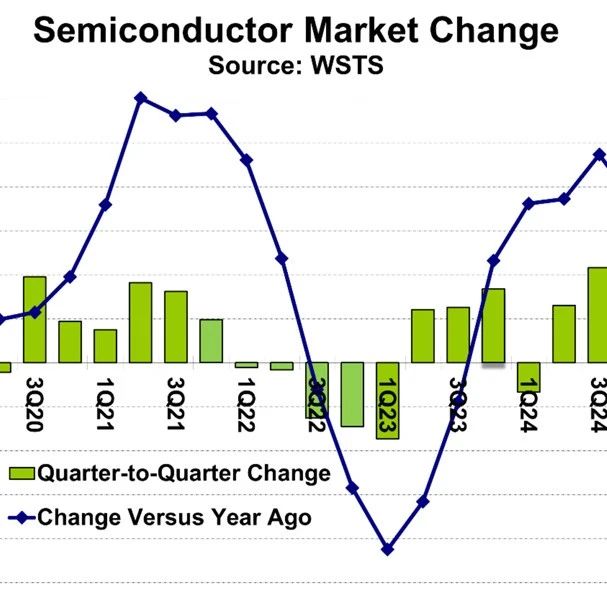
天岳先进全球进击再下一城,解读牵手东芝电子元件背后“阳谋”
Zhi Tong Cai Jing· 2025-08-25 01:47
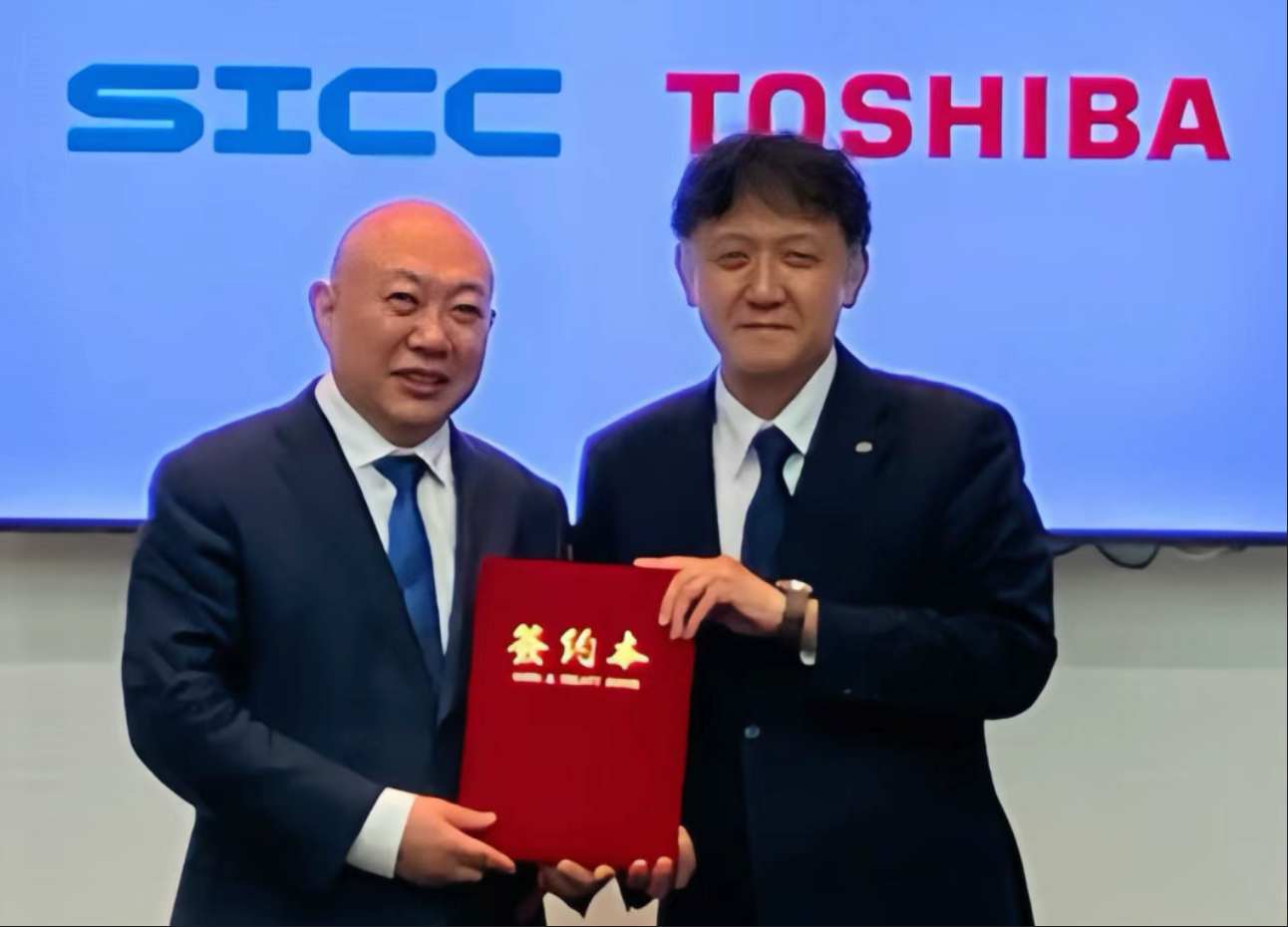
Core Viewpoint - Tianyue Advanced (02631) has made significant breakthroughs in business expansion, recently announcing a collaboration with Toshiba Electronic Components to enhance the characteristics and quality of silicon carbide power semiconductors, aiming to expand the supply of high-quality substrates [1][3] Group 1: Collaboration and Market Position - The partnership with Toshiba reinforces Tianyue's growing influence in the power semiconductor sector, as evidenced by its recent award from a Japanese semiconductor media outlet, marking the first time a Chinese company has won in this category [3] - Tianyue has established a strong presence in Japan, with sales offices and notable clients including Sumitomo, indicating a strategic focus on this market [3][4] - Chinese substrate manufacturers, represented by Tianyue, are gaining traction in Japan due to their quality and pricing advantages, leading local and European semiconductor firms to switch to Chinese products [3][4] Group 2: Competitive Landscape - The financial struggles of Japanese manufacturer Rohm, which reported an over 80% drop in operating profit, highlight the competitive pressure from Chinese firms like Tianyue, whose silicon carbide substrate technology is now considered top-tier [3][4] - The contrasting operational models between Japanese companies, which often pursue vertical integration, and Chinese firms, which focus on specific production processes, contribute to the competitive dynamics in the semiconductor industry [4] Group 3: International Expansion and Partnerships - Tianyue's collaboration with Infineon, signed in 2023, involves supplying 150mm substrates and assisting in the transition to 200mm silicon carbide wafers, with expected supply volumes representing a significant portion of Infineon's long-term needs [5] - Infineon's recent announcement of a 50 billion investment in Malaysia to build the largest 200mm silicon carbide power semiconductor factory indicates a growing demand for Tianyue's products [5] - The company has established partnerships with major global semiconductor players, including Bosch and ON Semiconductor, with over half of the top ten power semiconductor manufacturers collaborating with Tianyue [6] Group 4: Emerging Applications and Future Opportunities - Silicon carbide's superior performance characteristics position it as a key material in emerging fields such as data centers and AI technologies, with Tianyue poised to capitalize on these trends [9] - The company's strategic partnership with Sunny Optical's subsidiary focuses on micro-nano optics and new materials, further expanding its application scope [9] - As silicon carbide finds broader applications, Tianyue's role as a leading global supplier is expected to grow, providing valuable insights for other Chinese tech firms aiming for international markets [9]

天岳先进(02631)全球进击再下一城,解读牵手东芝电子元件背后“阳谋”
智通财经网· 2025-08-25 01:01
Core Viewpoint - Tianyue Advanced (02631) has made significant breakthroughs in business expansion, recently announcing a collaboration with Toshiba Electronic Components to enhance the characteristics and quality of silicon carbide power semiconductors, aiming to expand the supply of high-quality substrates [1][3] Group 1: Collaboration and Market Position - The partnership with Toshiba, a well-established semiconductor manufacturer in Japan, underscores Tianyue's growing influence in the power semiconductor sector [3] - Tianyue Advanced won the "Semiconductor Electronic Materials" gold award from the authoritative Japanese media "Electronic Device Industry News" in June, marking the first time a Chinese company has achieved this in 31 years [3] - The company has established a sales presence in Japan and has been supplying silicon carbide substrate materials to the Japanese market, with notable clients including Sumitomo [3][4] Group 2: Competitive Landscape - Chinese substrate manufacturers, represented by Tianyue Advanced, are gaining traction among local and European semiconductor firms due to their quality and price advantages [3][4] - The financial report from Japanese manufacturer Rohm indicated a significant drop of over 80% in operating profit, attributing this to the competitive pressure from Chinese manufacturers whose silicon carbide substrate technology has reached top levels [3][4] Group 3: Strategic Advantages - The collaboration with Toshiba may signify a shift where Tianyue, through local innovation, gradually "replaces" foreign competitors and plays a more significant role in the international power semiconductor supply chain [4] - Tianyue's overseas expansion is not limited to Japan, with ongoing developments in other regions also being noteworthy [4] Group 4: Partnerships and Future Prospects - Tianyue Advanced has a prior agreement with German semiconductor manufacturer Infineon, which includes supplying 150mm substrates and assisting in transitioning to 200mm silicon carbide wafers [5] - Infineon announced a 50 billion yuan investment to build the world's largest 200mm silicon carbide power semiconductor factory in Malaysia, indicating a growing demand for Tianyue's products [5] - The company has established partnerships with major global semiconductor giants, with over half of the top ten power semiconductor manufacturers collaborating with Tianyue Advanced [6] Group 5: Emerging Applications - Silicon carbide is recognized for its superior performance in high-pressure and high-temperature scenarios, making it a key material for emerging fields such as data centers and AI glasses [9] - Tianyue Advanced has signed a strategic cooperation agreement with Sunny Optical Technology Group to collaborate in the fields of micro-nano optics and new materials, positioning itself to capture opportunities in these growing markets [9]
小模型,也是嵌入式的未来
3 6 Ke· 2025-08-22 01:29
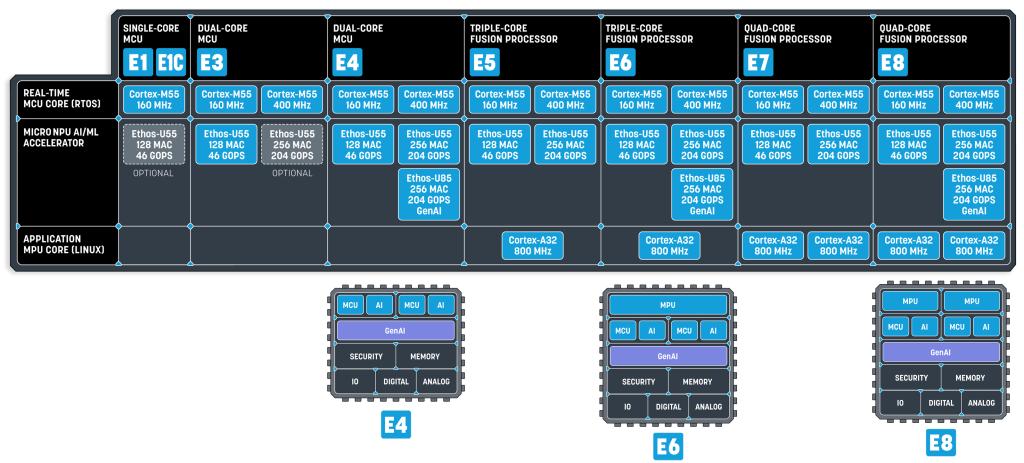
Core Insights - Nvidia's recent research highlights that Small Language Models (SLM) are the future of intelligent agents, introducing their own SLM, Nemotron-Nano-9B-V2, which achieved top performance in benchmark tests [1] - The trend of SLM is also impacting the MCU and MPU sectors, indicating a shift towards more compact and efficient AI models [1] Summary by Sections Small Language Models (SLM) - SLM parameters range from millions to tens of billions, while Large Language Models (LLM) can have hundreds of billions to trillions of parameters [2] - SLMs are compressed versions of LLMs, utilizing techniques like knowledge distillation, pruning, and quantization to maintain accuracy while reducing size [2] - Examples of SLMs include Llama3.2-1B, Qwen2.5-1.5B, DeepSeek-R1-1.5B, SmolLM2-1.7B, Phi-3.5-Mini-3.8B, and Gemma3-4B, with sizes ranging from 1 billion to 40 billion parameters [2] Running SLM on MCUs and MPUs - Running SLMs on MCUs requires specific capabilities, including a Neural Processing Unit (NPU) to accelerate Transformer operations [3] - High bandwidth and tightly coupled memory configurations are essential for effective data transfer within the system [3] - The best-performing MCUs can provide up to 250 GOPS, but for generative AI, at least double this performance is needed [3] Aizip and Renesas Collaboration - Aizip partnered with Renesas to showcase efficient SLMs and AI agents on MPU for edge applications, integrating them into Renesas RZ/G2L and RZ/G3S boards [4] - Aizip's models, named Gizmo, range from 300 million to 2 billion parameters, providing LLM-like functionality in a compact form [4] - These SLMs enhance privacy, flexibility, and cost savings for edge applications, although challenges remain in ensuring accurate tool invocation on low-cost devices [4] Alif Semiconductor's Innovations - Alif Semiconductor launched the Ensemble E4, E6, and E8 MCUs, designed to support SLMs and generative AI models [6] - The Ensemble E4 MCU, featuring dual Arm Cortex-M55 cores, can perform high-efficiency object detection and image classification in milliseconds [6] - Alif claims to have a head start in the market, having released their first-generation products in 2021, while competitors are still on earlier versions [8] Future of SLM in Embedded Systems - SLMs are expected to revolutionize embedded systems by providing advanced AI capabilities in resource-constrained environments [9] - Major MCU manufacturers are increasingly focusing on integrating AI functionalities, with notable examples including STMicroelectronics, Infineon, TI, NXP, and ADI [9] - By the second half of 2025, advanced MCUs are anticipated to include AI features in their product lines, with a significant emphasis on NPUs supporting Transformer models [9]
山东半导体材料巨头上市:中国第一世界第二,获得华为、宁德时代青睐
Sou Hu Cai Jing· 2025-08-21 11:44
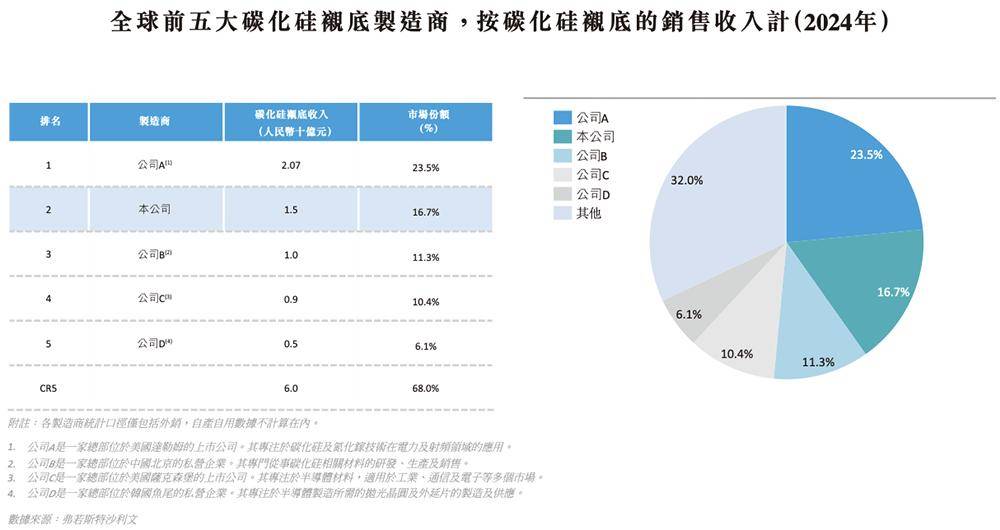
Core Viewpoint - Tianyue Advanced, a leading semiconductor material company, successfully listed on the Hong Kong capital market with a market capitalization of HKD 20.636 billion, holding a 16.7% market share in silicon carbide substrates, ranking second globally and first in China [1]. Industry Overview - Silicon carbide (SiC) is a third-generation semiconductor material composed of carbon and silicon, representing approximately 15.1% of the semiconductor materials market last year [5]. - SiC substrates are utilized in power semiconductor devices, RF semiconductor devices, and various applications including electric vehicles, photovoltaics, energy storage systems, and AI technologies. The market size for SiC substrates reached CNY 8.8 billion last year and is projected to grow to CNY 58.5 billion by 2030 [5]. Company Profile - Tianyue Advanced, established in November 2010 and headquartered in Jinan, Shandong, is one of the first companies to commercialize 2-8 inch silicon carbide substrates, with an annual production capacity exceeding 400,000 pieces [7]. - The founder, Zong Yanmin, transitioned from a successful career in machinery to establish Tianyue Advanced, investing over CNY 1.2 billion in R&D to achieve mass production of SiC substrates, breaking foreign monopolies [10]. Financial Performance - The company has seen significant revenue growth over the past three years, with revenues of CNY 417 million, CNY 1.251 billion, and CNY 1.768 billion, primarily from silicon carbide semiconductor materials [15]. - The sales volume of silicon carbide substrates increased from 64,000 pieces to 361,000 pieces during the same period, with net profits turning positive in 2024 [15].

帮主郑重:应用材料一夜蒸发1500亿!美国芯片制裁的“七伤拳”打爆自己人
Sou Hu Cai Jing· 2025-08-16 05:35
Core Insights - The semiconductor industry is facing significant challenges due to a combination of weak demand, export controls, and increasing domestic competition, leading to substantial revenue declines for major companies like Applied Materials [2][3]. Group 1: Financial Impact - Applied Materials reported a Q4 revenue forecast of only $6.7 billion, falling short of the expected $7.3 billion, primarily due to increased uncertainty in the Chinese market and a $400 million revenue loss from U.S. export controls [2]. - Competitors KLA Corp and Lam Research experienced stock price drops of 8.4% and 7.3%, respectively, resulting in a combined market value loss of $152.3 billion [2]. - China's contribution to Applied Materials' revenue has decreased from 45% to 25% due to these policies, highlighting the self-inflicted damage from U.S. sanctions [2]. Group 2: Demand Challenges - The automotive chip sector is severely impacted, with major companies like Infineon and ON Semiconductor reporting revenue declines exceeding 10% and inventory levels surpassing 150 days [2]. - The consumer electronics market is also struggling, with weak demand for smartphones and PCs leading to a drop in semiconductor equipment orders, as Applied Materials warned of oversupply in mature process chips [3]. Group 3: Consequences of Sanctions - Export controls have resulted in a backlog of export licenses for Applied Materials, with no approvals expected for the next quarter [3]. - Allied companies are also suffering; ASML has €3.4 billion in unsold lithography equipment due to restrictions on sales to China, and Tokyo Electron, which derives 23% of its revenue from China, faces similar challenges [3]. Group 4: Domestic Competition - China's self-sufficiency in chip production is projected to exceed 50% by 2025, with Huawei's Ascend chips capturing 20% of the market and SMIC achieving a 99% yield rate for 28nm processes [3]. - The trend of "de-Americanization" in equipment is gaining momentum, with Northern Huachuang's etching machines capturing a 17% market share and domestic companies advancing in 5nm etching technology [3]. Group 5: Emerging Opportunities - The packaging technology sector is seeing advancements, with domestic companies targeting the HBM market through CoWoS technology, addressing storage challenges [4]. - The demand for AI and storage chips is surging, with companies like Jiangbolong reporting a 600% increase in enterprise storage revenue, and the HBM market expected to double in size within the year [4]. - Continued government support in the form of increased funding for equipment and materials, along with tax incentives for R&D, is expected to bolster the industry [4].



晶圆代工双雄“满产” 第三季度业绩预期良好
Zhong Guo Jing Ying Bao· 2025-08-15 20:37
Core Insights - The global semiconductor market is in a recovery phase, with major domestic foundries, SMIC and Hua Hong Semiconductor, reporting strong performance in capacity utilization [3][4] - SMIC's capacity utilization is at 92.5%, while Hua Hong's exceeds 100% at 108.3% [3][4] Company Performance - SMIC reported Q2 sales of $2.209 billion, a year-on-year increase of 16.2%, but a quarter-on-quarter decrease of 1.7% [5] - Net profit for SMIC in Q2 was $132 million, down 19.5% year-on-year and 29.5% quarter-on-quarter, with a gross margin of 20.4% [5][6] - Hua Hong Semiconductor achieved Q2 sales of $566 million, a year-on-year increase of 18.3% and a quarter-on-quarter increase of 4.6% [7] - Hua Hong's net profit for Q2 was $7.952 million, up 19.17% year-on-year and 112.1% quarter-on-quarter, with a gross margin of 10.9% [7] Market Trends - The global semiconductor market size exceeded $340 billion in the first half of the year, reflecting an 18.9% year-on-year growth [4] - The demand for automotive and industrial chips is increasing, indicating a shift towards domestic chip production [9][10] Future Outlook - SMIC expects Q3 revenue to grow by 5% to 7%, with a gross margin forecast of 18% to 20% [11] - Hua Hong anticipates Q3 sales between $620 million and $640 million, with a gross margin expected between 10% and 12% [11] - The global foundry market is projected to grow by 17% year-on-year in 2025, reaching over $165 billion [10]

入局RISC-V智驾芯片开发?小鹏汽车回应
3 6 Ke· 2025-08-15 01:21
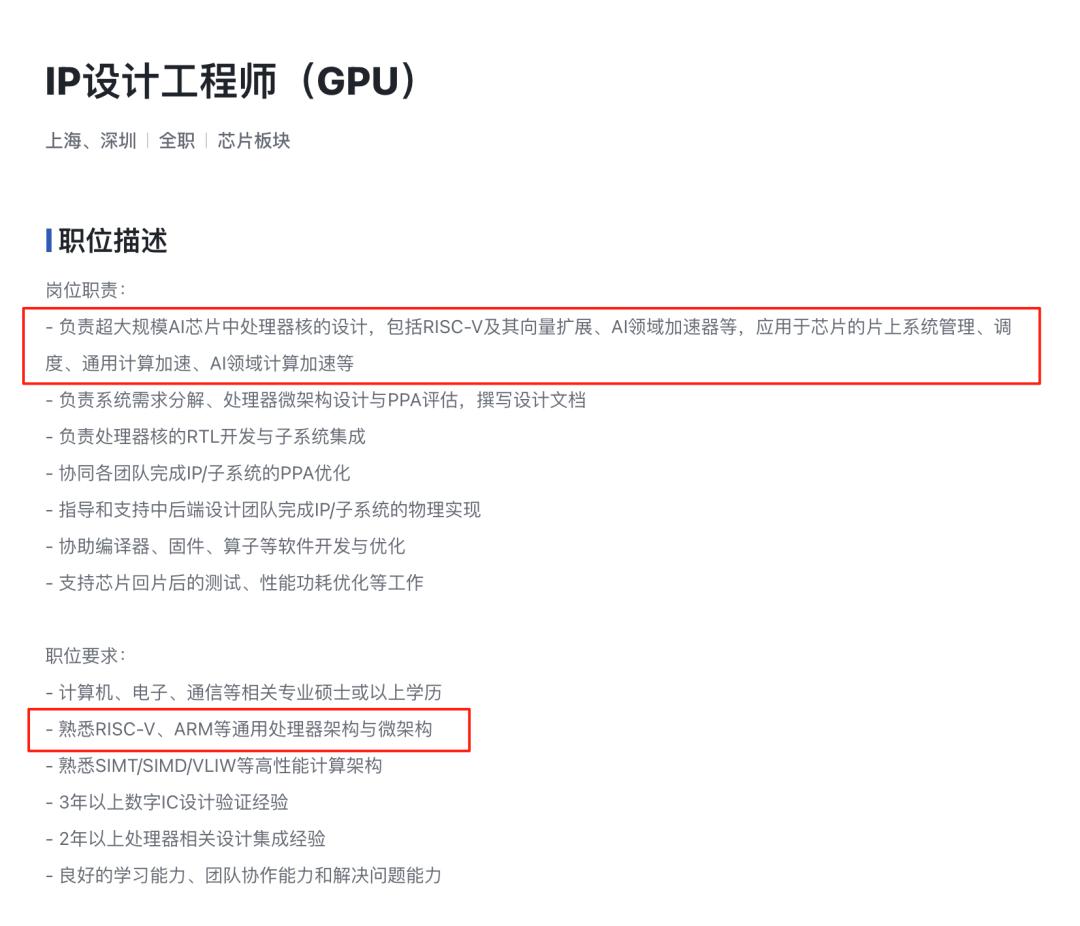
Core Viewpoint - Xiaopeng Motors is entering the RISC-V automotive chip development space, as indicated by their recent job postings for IP design engineers focused on RISC-V architecture and AI accelerators [2][4]. Group 1: Industry Trends - The RISC-V ecosystem is rapidly developing, with significant interest in automotive applications. The market penetration of RISC-V SoC chips is projected to grow from 5.9% in 2024 to 25.7% by 2031, with automotive market share expected to reach 31% by 2031, translating to over 20 billion units shipped [6]. - Major international automotive chip manufacturers, including Bosch, Qualcomm, Infineon, NXP, and STMicroelectronics, have formed a joint venture named Quintauris to focus on RISC-V based products for automotive applications [7]. - Domestic companies are also advancing in RISC-V automotive chip development, with Yiswei Computing launching several innovative products tailored for smart vehicles, including RISC-V+AI vehicle control MCUs and C-V2X SoCs [8]. Group 2: Company Developments - Xiaopeng Motors is not the first automotive manufacturer to explore RISC-V chip development; Dongfeng Motor has introduced the DF30 chip, the first to use an open-source RISC-V architecture, aimed at various automotive applications [11]. - Great Wall Motors has successfully developed the RISC-V vehicle-grade MCU chip, Zijing M100, which boasts a 38% performance improvement over competitors and meets automotive safety standards [11]. - Guoxin Technology announced the design of its first high-performance vehicle-grade MCU chip, CCFC3009PT, based on RISC-V architecture, targeting applications in intelligent driving and domain control [10].
全球芯片TOP 20,最新榜单
半导体行业观察· 2025-08-15 01:19
Core Viewpoint - The global semiconductor market is projected to reach $180 billion in Q2 2025, marking a 7.8% increase from Q1 2025 and a 19.6% increase year-over-year from Q2 2024, continuing a trend of over 18% growth for six consecutive quarters [2]. Group 1: Market Performance - The semiconductor market is expected to see robust growth, with a forecasted annual growth rate between 14% and 16% for 2025, adjusted from a previous estimate of 11.2% to 15.4% [8]. - The strong performance in the first half of 2025 has led to an upward revision of the growth forecast from 7% to 13% [8]. Group 2: Company Revenue Insights - Nvidia is projected to maintain its position as the largest semiconductor company with expected revenues of $45 billion in Q2 2025, followed by Samsung and SK Hynix with revenues of $19.9 billion and $15.9 billion respectively [5][6]. - Memory chip manufacturers reported the highest revenue growth, with SK Hynix at 26%, Micron at 16%, and Samsung at 11% [5][6]. - Non-memory companies also showed growth, with Microchip Technology at 11%, STMicroelectronics at 10%, and Texas Instruments at 9.3% [5][6]. Group 3: Future Projections - Companies expect healthy revenue growth in Q3 2025, with Micron forecasting a 20% increase and Kioxia expecting a 30% increase, driven by demand in artificial intelligence applications [7]. - AMD anticipates a 13% revenue growth, while STMicroelectronics expects a 15% increase across all markets except automotive [7]. Group 4: Trade and Tariff Impacts - The uncertainty surrounding tariffs and global trade continues to pose challenges, with potential tariffs on semiconductor imports being a significant concern [10]. - The U.S. government has recently provided export licenses to Nvidia and AMD for certain AI chips to China, although the legality of this agreement is questioned [10]. Group 5: Smartphone Market Trends - The U.S. smartphone import volume saw a dramatic decline of 58% in dollar terms and 47% in quantity in Q2 2025, with imports from China dropping by 85% [11]. - Despite the decline in U.S. smartphone imports, China's smartphone manufacturing remains strong, with a 5% increase in production in Q2 2025 compared to Q1 2025 [12].