鸿蒙智行

Search documents
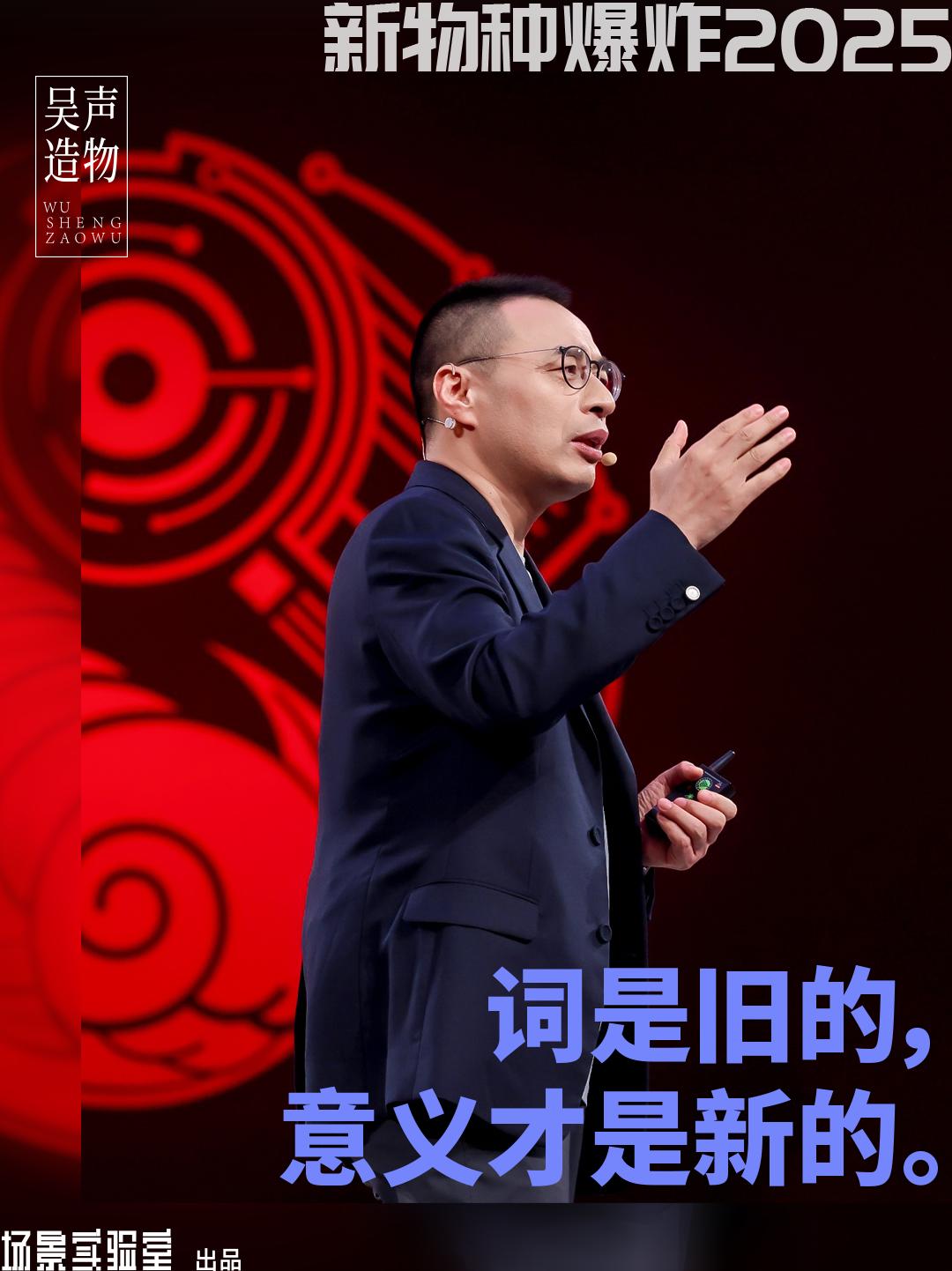
吴声2025年度演讲:场景革命十年,哲学生活方式到来
新消费智库· 2025-08-04 13:03
Core Viewpoint - The article emphasizes the concept of "scene creation" and the importance of reconstructing meaning in the context of AI and new consumption patterns, highlighting the need for businesses to design specific scenarios to engage users effectively [4][20][26]. Group 1: Scene Creation and Meaning Reconstruction - The "scene revolution" over the past decade has driven the evolution of new species in business, with a focus on designing impactful scenarios that resonate with users [12][19]. - The concept of "刹那涌现" (momentary emergence) suggests that the evolution of AI applications will occur through meticulously designed scenarios, which are essential for understanding the rapid changes in the business landscape [20][24]. - The article outlines four key concepts for reconstructing meaning: NOW (the power of connection), FLOW (immersive human-machine interaction), HERE (narratives that transcend presence), and EGO (the core question of self) [26][30][34]. Group 2: Case Studies of Scene Brands - The evolution of the brand "三翼鸟" (Three Wings Bird) illustrates the shift from merely offering products to providing personalized home scene customization solutions, emphasizing the importance of understanding user needs [15][19]. - "红星美凯龙" (Red Star Macalline) has transformed into an "AI home life destination," integrating home appliances, furniture, and decoration into a cohesive experience, showcasing the power of scene branding [17][19]. - The article highlights "小红书" (Xiaohongshu) as a platform that redefines connection through user-generated content, emphasizing the importance of real-time engagement and community building [34][35]. Group 3: The Role of AI in Scene Creation - The emergence of AI-driven solutions is reshaping traditional business models, as seen in companies like "星星充电" (Star Charging), which integrates dynamic connections in digital energy management [45][46]. - The article discusses how AI is enhancing human-machine interaction, with examples of companies like 联想 (Lenovo) developing intelligent terminals that facilitate seamless user experiences [58][60]. - The concept of "物理AI" (Physical AI) is introduced, where AI technologies are applied to real-world interactions, enhancing the user experience in everyday environments [63][64]. Group 4: The Future of Scene Brands - The article posits that the future of scene brands lies in their ability to create meaningful connections and experiences that resonate with users on a deeper level, moving beyond mere functionality [19][24]. - The rise of "潮玩" (trendy toys) as a form of emotional commerce reflects a shift towards products that express individuality and cater to specific emotional needs [90][91]. - The concept of "空间网络的生态IP" (space network ecological IP) is introduced, suggesting a model where brands can replicate and localize their presence across different markets, enhancing their relevance and impact [97].


新能源车销量近况曝光:三家突破纪录,理想暴跌40%
Guo Ji Jin Rong Bao· 2025-08-04 08:04
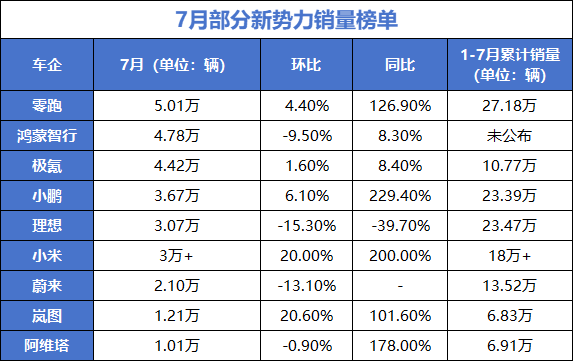
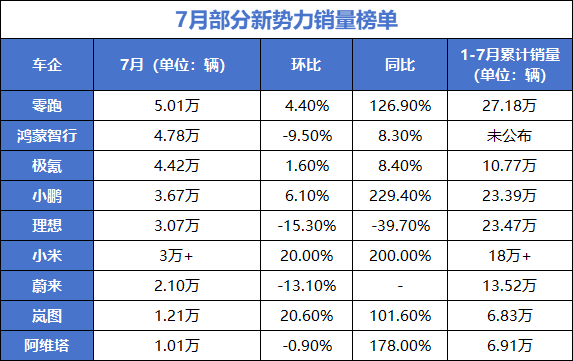
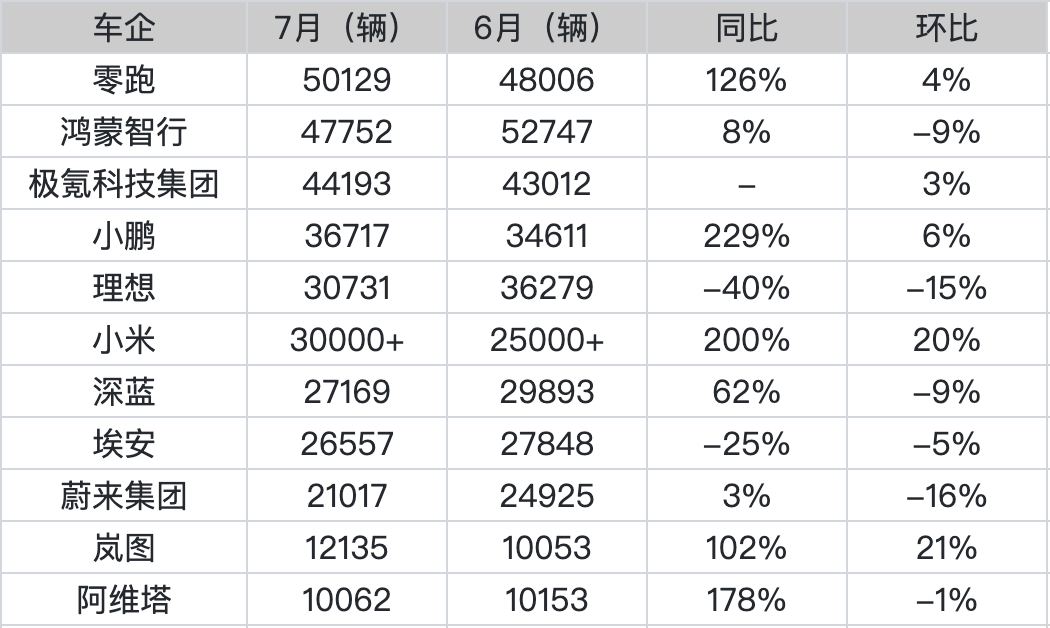
Core Insights - In July, several new energy vehicle companies reported record delivery numbers, with Leap Motor, Xiaomi, and Xpeng achieving significant growth, while Li Auto experienced a substantial decline in deliveries [1][4]. Group 1: Market Performance - The retail market for narrow passenger cars in July reached approximately 1.85 million units, representing a year-on-year increase of 7.6% but a month-on-month decrease of 11.2% [1]. - The new energy vehicle market showed strong performance, with a retail penetration rate rising to 54.6% and sales reaching 1.01 million units [1]. Group 2: Company Deliveries - Leap Motor led the July sales with 50,100 units, marking a month-on-month increase of 4.4% and a year-on-year increase of 126.9%, achieving a cumulative sales of 271,800 units in the first seven months, which is 54.4% of its annual target of 500,000 units [2][3]. - Xpeng's July deliveries reached 36,700 units, a month-on-month increase of 6.1%, with a cumulative total of 233,900 units in the first seven months, leading the new energy vehicle sector with a completion rate of 66.8% [3]. - Li Auto's deliveries fell to 30,700 units in July, a month-on-month decline of 15.3% and a year-on-year decline of 39.7%, with a cumulative total of 235,000 units, reflecting a completion rate of only 36.7% of its revised annual target of 640,000 units [4][5]. Group 3: Product Developments - Leap Motor's COO indicated that the new B01 model has received over 10,000 orders, and the factory is operating at full capacity to meet the growing demand [1]. - Xiaomi's delivery exceeded 30,000 units for the first time, with a cumulative total of over 180,000 units in the first seven months, achieving a completion rate of 51.4% of its revised annual target of 350,000 units [5]. - NIO's new model, the L90, has received positive market feedback, raising expectations for future sales [7].


新能源车销量近况曝光:三家突破纪录,理想暴跌40%
Guo Ji Jin Rong Bao· 2025-08-04 07:37
Core Insights - In July, several new energy vehicle companies reported record delivery numbers, with Leap Motor, Xiaomi, and Xpeng achieving significant growth, while Li Auto experienced a substantial decline in deliveries [1][3]. Market Performance - The retail market for narrow passenger cars in July reached approximately 1.85 million units, marking a year-on-year increase of 7.6% but a month-on-month decrease of 11.2% [1]. - The new energy vehicle market showed strong performance, with a retail penetration rate rising to 54.6% and sales reaching 1.01 million units [1]. Company-Specific Performance - Leap Motor led the July sales with 50,100 units, reflecting a month-on-month growth of 4.4% and a year-on-year increase of 126.9%. Cumulatively, Leap Motor's sales for the first seven months reached 271,800 units, achieving 54.4% of its annual target of 500,000 units [2][3]. - Xiaopeng Motors reported a record delivery of 36,700 units in July, a month-on-month increase of 6.1% and a year-on-year increase of 229.4%. Cumulative sales for the first seven months reached 233,900 units, with a completion rate of 66.8% towards its annual target [3][4]. - Li Auto's deliveries fell to 30,700 units in July, down 15.3% month-on-month and 39.7% year-on-year, with cumulative sales for the first seven months at 235,000 units, reflecting a year-on-year decline of 2.2% [3][4]. - Xiaomi's deliveries exceeded 30,000 units for the first time in July, with cumulative sales surpassing 180,000 units in the first seven months, achieving 51.4% of its revised annual target of 350,000 units [4][5]. - NIO delivered 21,000 units in July, a month-on-month decline of 15.7%, with cumulative sales of 135,200 units for the first seven months [4][5]. - Zeekr and Lynk & Co combined sales reached 44,200 units in July, with Zeekr selling 17,000 units and Lynk & Co selling 27,000 units [5].

吴声2025年度演讲:场景革命十年,哲学生活方式到来
凤凰网财经· 2025-08-03 14:04
Core Viewpoint - The article discusses the ongoing AI scene revolution and its impact on business, emphasizing the need for reconstructing meaning in specific scenarios to adapt to the evolving landscape of consumer needs and technological advancements [5][22][28]. Group 1: Scene Creation and Evolution - The concept of "scene creation" has evolved over the past decade, highlighting the importance of well-designed scenarios in driving the growth of new business entities [13][21]. - Companies like Sanwing Bird and Red Star Macalline exemplify the evolution of scene brands, focusing on personalized solutions and integrating various home-related services to enhance consumer experience [16][19]. - The article notes that understanding user needs within specific scenarios is crucial for brands to innovate and adapt in the AI era [17][21]. Group 2: Instant Emergence and Meaning Reconstruction - The term "instant emergence" refers to the necessity of believing in the emergence of scenarios at every technological moment, which is essential for navigating the rapid changes brought by AI [24][26]. - The article emphasizes that AI's evolution is not just about technology but also involves a cognitive revolution that redefines human existence and experience [26][28]. - The reconstruction of meaning in everyday life is highlighted as a key aspect of the AI scene revolution, where philosophical considerations become integral to understanding technology's role [28][30]. Group 3: Connection and Interaction - The article introduces the concept of "NOW," focusing on the importance of real-time connections in the attention economy, as exemplified by platforms like Xiaohongshu [35][36]. - The evolution of human-machine interaction is discussed, with an emphasis on creating seamless experiences that enhance user engagement and satisfaction [55][56]. - The emergence of "smart agents" as a new form of digital self is highlighted, showcasing how AI can enhance user experiences by understanding and anticipating needs [56][59]. Group 4: Physical and Digital Integration - The integration of physical and digital experiences is emphasized, with examples of companies like Xiaomi and Jiumu showcasing how they leverage AI to enhance user interactions in real-world scenarios [42][73]. - The article discusses how brands are rethinking physical spaces to create meaningful consumer experiences, transforming retail environments into engaging community hubs [82][84]. - The rise of emotional commerce, particularly through collectible toys, reflects a shift towards products that resonate with consumers' identities and emotions [89][90].
吴声2025年度演讲:场景革命十年,哲学生活方式到来
3 6 Ke· 2025-08-03 13:34
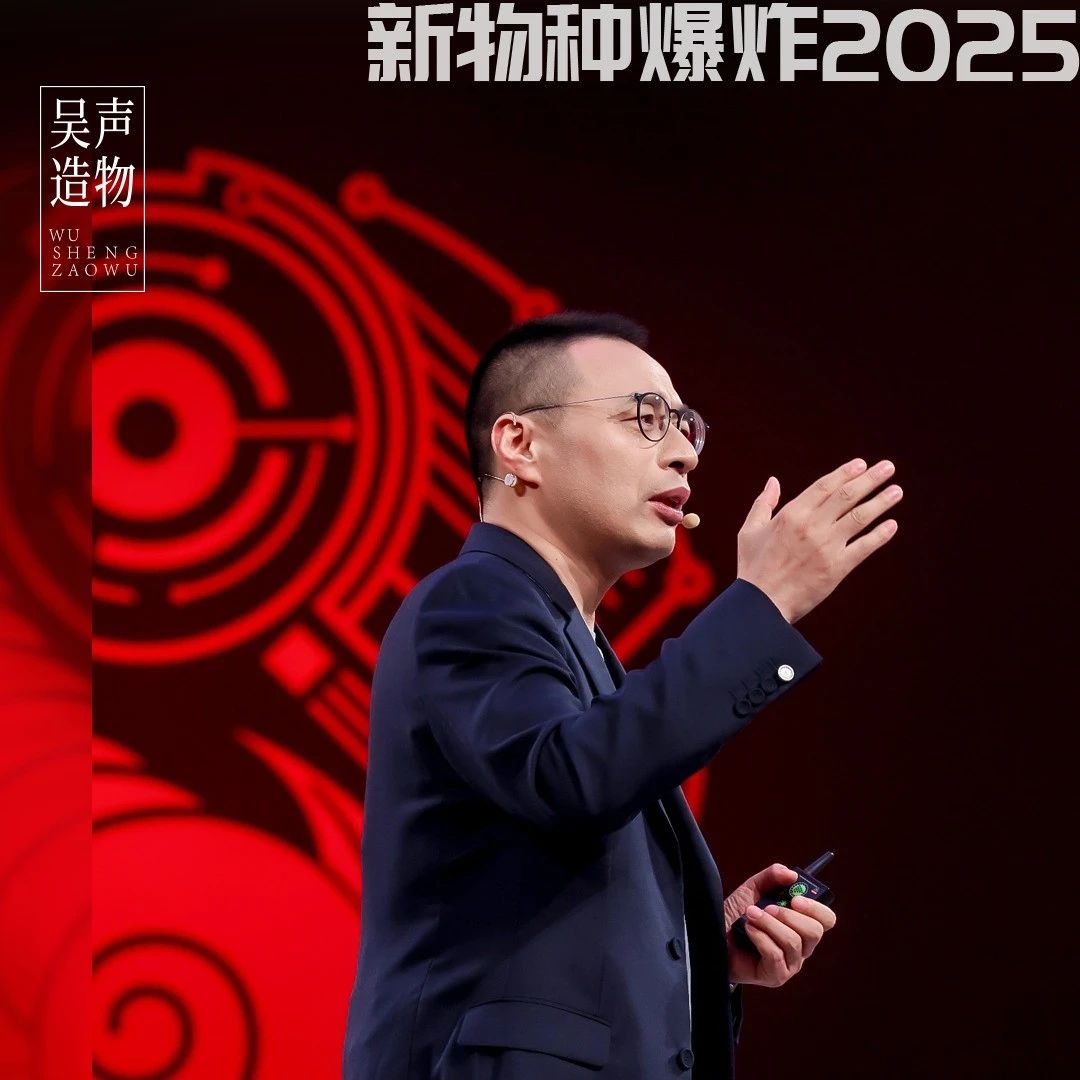
Group 1 - The core theme of the event is "Momentary Emergence," focusing on the AI scene revolution and its impact on business and philosophy [3][16] - Wu Sheng, the founder of Scene Laboratory, emphasizes the importance of reconstructing meaning coordinates in specific scenarios [3][22] - The event outlines four innovative methods for "meaning reconstruction": NOW (connection in the moment), FLOW (smooth human-machine interaction), HERE (narrative beyond presence), and EGO (the core question of self) [3][22] Group 2 - The evolution of scene creation over the past decade is highlighted, showcasing how meticulously designed scenarios drive the growth of new species in business [9][15] - The case of Sanwing Bird illustrates the shift from product-focused to solution-oriented approaches in smart home scenarios, emphasizing personalized family scene customization [11][15] - Red Star Macalline's transformation into an "AI home life destination" reflects the deep understanding of lifestyle changes brought by AI, integrating home appliances, furniture, and decoration [13][15] Group 3 - The concept of "Momentary Emergence" suggests that the future of AI applications will evolve through carefully designed scenarios, avoiding superficial trends [16][20] - The advancements in AI technology, such as Amazon's robotics and Google's Gemini Robotics, indicate a shift towards cognitive capabilities in machines [18][20] - The potential economic impact of AI is significant, with projections suggesting a possible GDP growth of 20-30% due to AI advancements [20] Group 4 - The "philosophical lifestyle cycle" is introduced, emphasizing the need to find and reconstruct meaning coordinates in everyday life through specific scenarios [22][24] - The importance of user-generated content (UGC) in platforms like Xiaohongshu is highlighted, showcasing its role in connecting people and information in real-time [27][29] - The concept of "effective time" is emerging as a new standard in family living, replacing the traditional focus on effective space [11][15] Group 5 - The evolution of physical retail spaces, such as Anta's innovative store designs, reflects a shift towards creating immersive and community-oriented shopping experiences [63][64] - The integration of AI in physical spaces is transforming how consumers interact with products, enhancing the overall shopping experience [60][65] - The rise of emotional commerce, particularly in the context of trendy toys, illustrates the changing landscape of consumer engagement and brand connection [70][71]
智能汽车热度持续升温,镁佳股份赴港IPO能否博得市场青睐?
Zhi Tong Cai Jing· 2025-08-03 13:14
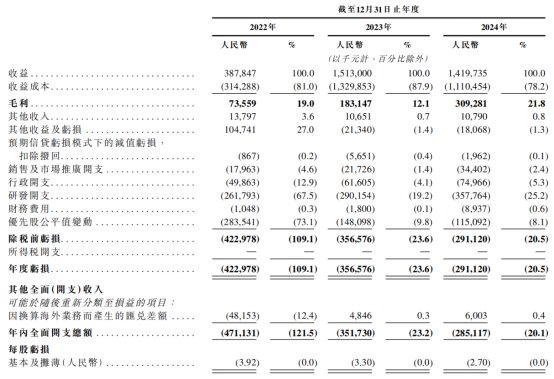
Core Viewpoint - Magnesium Technology Co., Ltd. (referred to as Magnesium) has submitted its IPO application to the Hong Kong Stock Exchange, with notable investment from various institutions and a post-investment valuation of approximately $931 million (around 6.7 billion RMB) as of the D+ round of financing [1] Group 1: Company Overview - Magnesium is one of the first companies in China's smart automotive industry to develop fully standardized, modular, software-driven integrated domain control solutions [1] - The company is a third-party supplier that has achieved mass production of integrated smart cockpit and parking solutions driven by a single automotive-grade main control chip [1] - Magnesium is one of only two third-party suppliers capable of providing a fully integrated smart voice system with a recognition accuracy rate of 99%, the highest in the industry [1] Group 2: Financial Performance - From 2022 to 2024, Magnesium's revenue is projected to grow from 388.47 million RMB to 1.42 billion RMB, with a compound annual growth rate (CAGR) of 91.3% [2] - The gross margin is expected to increase from 19.0% in 2022 to 21.8% in 2024, while net losses are projected to decrease from 423 million RMB in 2022 to 291 million RMB in 2024 [2][3] - The number of cumulative designated points is expected to grow from 15 in 2022 to 48 in 2024, with delivery volume increasing from 120,106 units to 634,337 units during the same period [5] Group 3: Market Position and Growth Potential - Magnesium's solutions have been adopted by major automotive manufacturers, with an estimated market share of 9.3% in China, ranking second among integrated domain control solution suppliers [14] - The company has seen a significant increase in wallet share from its top five customers, rising from 1.2% in 2022 to 12.7% in 2024, indicating broader adoption of its solutions across existing and new vehicle platforms [4] - The automotive industry is rapidly transitioning towards smart, electric, and connected vehicles, creating a golden development period for the smart automotive supply chain, which is expected to benefit Magnesium's IPO [1][16]
留给车企争夺排位的时间不多了
虎嗅APP· 2025-08-03 13:12
Core Viewpoint - The article discusses the current state of competition in the Chinese electric vehicle (EV) market, highlighting a shift from aggressive price wars to a focus on product quality and brand strength as companies prepare for the second half of the year [2][12]. Sales Performance - In July, major EV manufacturers like BYD and Geely reported significant sales figures, with BYD selling 344,296 units, a 9.7% decrease from June, while Geely's new energy vehicle sales exceeded 130,000 units, with the Galaxy brand alone contributing 95,043 units, a 237% year-on-year increase [7][10]. - New entrants like Xiaomi and Leap Motor showed impressive growth, with Leap Motor achieving a record delivery of 50,129 units, marking a 126% year-on-year increase, and Xiaomi's sales reaching over 30,000 units, a 200% increase [6][10]. Competitive Landscape - The article notes that while some companies like Leap Motor and Xiaomi are thriving, others like Li Auto and Aion are facing challenges, with Li Auto's sales down 40% year-on-year and Aion struggling due to market saturation [8][10]. - The competition is expected to intensify in the second half of the year, with many companies preparing to launch new models to capture market share before the end of the current purchasing cycle [9][12]. Market Trends - The article emphasizes a transition from price-based competition to a focus on product features and customer service, indicating that companies must adapt to survive in the evolving market [12]. - Upcoming months are seen as critical for manufacturers to solidify their positions, with a variety of new models set to launch, targeting family-oriented consumers and the growing demand for electric vehicles [12].
留给车企争夺排位的时间不多了
Hu Xiu· 2025-08-03 07:05
Core Insights - The article discusses the current state of competition in the Chinese automotive market, particularly focusing on the pause in price wars and the shift towards product differentiation and quality as key competitive factors [1][7][8]. Industry Overview - In July, major automakers like BYD and Geely shifted away from aggressive pricing strategies, providing breathing room for smaller new energy vehicle (NEV) manufacturers [1]. - The overall sales performance in the first half of the year shows that most automakers are still far from their sales targets set at the beginning of the year, with only Xiaomi and XPeng showing significant improvements [1][3]. Sales Data - July sales data for various NEV brands indicates significant fluctuations: - Leap Motor achieved a record delivery of 50,129 units, a 126% year-on-year increase [3]. - Xiaomi's sales exceeded 30,000 units, marking a 200% increase compared to the previous year [3]. - BYD's total sales reached 344,296 units in July, with a 9.7% decrease from June [4]. - Geely's NEV sales surpassed 130,000 units, with the Galaxy brand contributing 95,043 units, a 237% year-on-year increase [5]. Competitive Landscape - The article highlights that the second half of the year will be crucial for automakers to secure their market positions before the end of the current purchasing cycle [1][6]. - The competition is expected to intensify as companies focus on product quality and customer service rather than relying solely on price reductions [7][8]. - New product launches are anticipated, with several brands preparing to introduce new models to capture the growing demand for electric vehicles [9]. Future Outlook - The upcoming months are seen as a critical period for automakers to leverage the existing demand for electric vehicles, particularly in the family segment, as new models are set to enter the market [9].


鸿蒙智行7月全系销量达47752辆,总成交额186亿元
Ju Chao Zi Xun· 2025-08-02 05:49
Core Insights - Hongmeng Zhixing reported a total sales volume of 47,752 vehicles in July, with a total transaction value of 18.6 billion, indicating a significant growth in both volume and price [2] Sales Performance - The AITO series continues to perform well, with a total delivery of 40,753 vehicles in July [2] - The Zunji S800 has achieved over 8,000 pre-orders within 50 days of its launch [2] - The Xiangji S9 remains a hot seller, contributing to the upward trend of the high-end brand [2] - The upcoming launch of the Zhijie Dual 7 facelift is anticipated, promising further excitement in the market [2] Customer Experience Initiatives - Hongmeng Zhixing has introduced "Six Delivery Commitments" aimed at enhancing user experience, which include: - Integrity and transparency in sales (no forced or bundled sales) - High-quality vehicle delivery (strict quality inspection) - One-hour vehicle pickup (pre-processed paperwork for quick delivery) - Payment security (payments made to corporate accounts only) - Careful vehicle preparation (mileage under 30 kilometers, battery over 80%) - Professional vehicle briefing (quick mastery of vehicle knowledge) [2] Future Outlook - With the upcoming launch of the Shangjie model, Hongmeng Zhixing plans to introduce more new models in the second half of the year to meet diverse consumer travel needs [2]

7月新势力销量放榜:零跑≈理想+蔚来
第一财经· 2025-08-01 15:51
Core Viewpoint - The new energy vehicle market is experiencing a significant differentiation among brands, with some achieving record sales while others face declines, indicating the start of a competitive elimination phase in the industry [3][7]. Sales Performance Summary - Leap Motor achieved a sales milestone of over 50,000 units, becoming the first new energy brand to surpass this threshold in a month, with a month-on-month increase of 4.42% [4][5]. - Xiaopeng Motors also reached a historical high with sales of 36,717 units, reflecting a 6.08% increase from the previous month, driven by the performance of the MONA M03 and the newly launched G7 [5][6]. - Xiaomi's sales exceeded 30,000 units for the first time, marking a 20% month-on-month increase, with expectations for continued growth due to the delivery of the YU7 model [5][6]. - Zeekr (including Lynk & Co) sold 44,193 units, achieving both year-on-year and month-on-month growth, maintaining sales above 40,000 for five consecutive months [5][6]. - In contrast, Li Auto and NIO reported significant declines, with Li Auto's sales dropping by 15.29% to 30,731 units, and NIO's sales falling by 15.68% to just over 21,000 units [5][6]. Market Trends and Challenges - The overall sales for the ten brands remained stable compared to the previous month, totaling 309,905 units, but the market is increasingly competitive as brands strive to maintain and grow their market share [4][7]. - The industry is shifting towards a "stock restructuring" phase as the penetration rate of new energy vehicles exceeds 50%, emphasizing the need for brands to scale effectively and innovate continuously to survive [7][8].