
传音控股

Search documents
新股消息 | 全球独立存储巨头宏芯宇冲刺港交所 深挖AI存储万亿蓝海
智通财经网· 2026-01-02 09:48
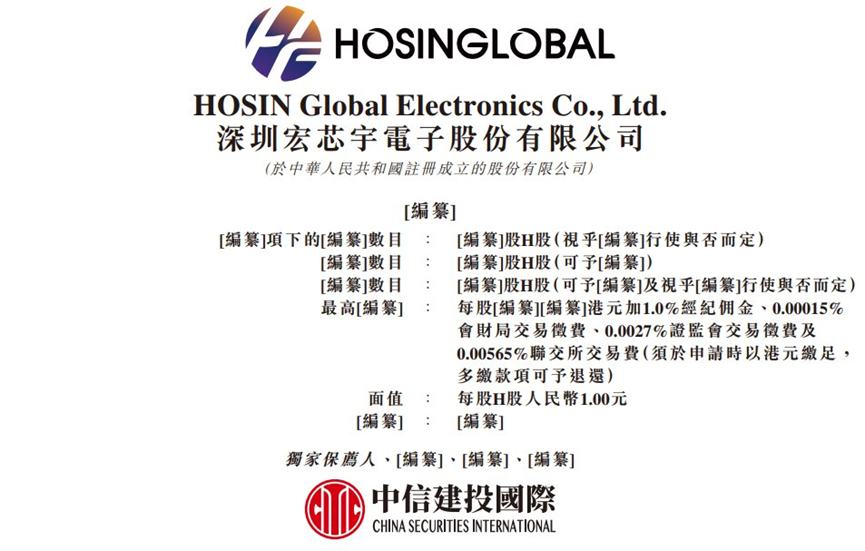
Core Viewpoint - Shenzhen Hongxin Yu Electronics Co., Ltd. (referred to as Hongxin Yu) has submitted a listing application to the Hong Kong Stock Exchange, with CITIC Securities International as its sole sponsor [1]. Company Overview - Since its establishment in December 2018, Hongxin Yu has focused on storage products, including embedded storage, solid-state drives (SSDs), DRAM, and mobile storage [3]. - The company has developed a full-stack platform covering four core technologies: main control chip design and development, firmware algorithm development, testing system development, and storage medium characteristic analysis, enabling it to offer customized storage products [3]. - According to Frost & Sullivan, based on 2024 revenue, Hongxin Yu ranks as the fifth largest independent memory manufacturer globally and the second largest in mainland China [3]. Product Offerings - Embedded storage is the core product, with a diverse product line including eMMC, UFS, ePOP, and uMCP, applicable in smartphones, tablets, and AI cameras [3]. - The SSD product line supports multiple generations of interface specifications, including SATA 3.0, PCIe 3.0, and PCIe 4.0, expanding from consumer-grade to automotive and enterprise applications [3]. - The DRAM product portfolio includes various categories such as DDR4, DDR5, LPDDR4X, and LPDDR5X low-power memory [3]. Market Trends - The semiconductor market is experiencing rapid growth driven by the surge in global data volume and the commercialization of AI technology [4]. - The global storage products market is projected to grow from USD 263.3 billion in 2025 to USD 407.1 billion by 2029, with a compound annual growth rate (CAGR) of 11.5% [4]. - The semiconductor industry is entering a strong upward cycle, with the storage chip market exhibiting "super cycle" characteristics, particularly for DRAM and embedded storage, with monthly price increases exceeding 30% for some DRAM products [4]. Competitive Position - Hongxin Yu is the largest independent memory manufacturer in the smartphone sector globally, maintaining strong partnerships with well-known companies in the consumer application space, including Xiaomi, Transsion, OPPO, Vivo, TCL, and Baidu [5]. - The company has begun supplying storage products for automotive applications and has successfully entered the Tier 1 supplier chain for automotive manufacturers [5]. - Hongxin Yu anticipates mass production of storage products for enterprise applications by 2026 [5]. Financial Performance - Hongxin Yu's revenue for 2023 and 2024 is projected to be approximately RMB 8.78 billion and RMB 8.72 billion, respectively [6]. - For the nine months ending September 30, 2025, the company reported a year-on-year revenue growth of 14.6%, reaching approximately RMB 7.74 billion [5]. - The company is expected to achieve profitability in 2024, with an estimated annual profit of approximately RMB 480 million, driven by significant revenue increases in product lines such as DRAM [5].

2025家电收官:空调价格战白热化,港股上市潮涌
Bei Ke Cai Jing· 2025-12-31 13:41
谈及家电行业"内卷",格力电器董事长董明珠向记者表示,家电行业竞争非常激烈,大家不再追求技术 突破,简单地偷工减料,以价格忽悠用户。如果图便宜买1000元的空调,面临的维修成本远远大于购买 一台质量好的产品,劣质产品耗电量也是正常产品耗电量的翻倍。 市场"价格战"悄然改变行业格局。小米集团合伙人、总裁卢伟冰在2025年年初提到,"小米空调2024年 是中国市场第四名,今年目标坐稳第三名,最近提出2030年目标,在中国市场空调要做到数一数二。虽 然目标蛮难,但我认为小米机会很大。" 2025年收官,家电行业经历了市场竞争与资本布局的双重变革。空调赛道成为最热门领域,政策引导下 的多重补贴引发激烈价格战,"千元机"频现,行业均价结构性下探,不仅导致头部品牌市场份额收缩, 也让小米等新势力借机崛起,行业格局悄然生变。 资本市场方面,A股家电及消费电子企业赴港上市热潮涌动,奥克斯电气成功登陆港股,石头科技、极 米科技、视源股份等纷纷推进"H股上市"计划,以"A股+H股"双平台布局拓展融资渠道、加速全球化进 程,为行业发展注入新的资本动力,2026年行业竞争与布局或将更趋激烈。 价格战下,空调头部企业份额收缩 2025 ...

A股2025市值增长九强省盘点:广东TOP5企业市值增长均超千亿 工业富联贡献全省市值增量的19%
Xin Lang Cai Jing· 2025-12-31 09:36
Core Insights - In 2025, the market capitalization increment of A-share listed companies in Guangdong Province reached 42.7 billion, representing a growth of 27.95% compared to the beginning of the year [1] Group 1: Market Capitalization Growth - The top five companies contributing to market capitalization growth all exceeded 100 billion, with Industrial Fulian leading at an increment of 805 billion, marking a growth rate of 188.46% and contributing 18.85% to the total market capitalization increase in the province [1] - The remaining four companies in the top five, namely China Ping An, Shenghong Technology, Luxshare Precision, and Shunyi Technology, each had market capitalization increments below 300 billion, with their contributions to the overall growth rate not exceeding 7% [1] Group 2: Market Capitalization Decline - The companies experiencing the most significant market capitalization decline in Guangdong Province included Mindray Medical, Haitian Flavoring, Huali Group, Poly Development, and Transsion Holdings [1] - Mindray Medical's market capitalization decreased by 78.3 billion, which is significantly higher than the other four companies, each of which saw declines not exceeding 40 billion [1]





传音控股业绩会:推动AI应用和AI终端技术在新兴市场普及
Zheng Quan Shi Bao Wang· 2025-12-31 08:42
Core Viewpoint - The company, Transsion Holdings, aims to deepen its presence in emerging markets, leveraging its strong position in the African mobile market while expanding into Southeast Asia, Latin America, the Middle East, and Eastern Europe [1] Group 1: Market Position and Performance - Transsion Holdings is a leading player in the global emerging market smartphone sector, known as the "King of African Phones," with brands like TECNO, itel, and Infinix [1] - The company's global sales network covers over 70 countries, achieving a 12.5% market share in the global smartphone market, ranking third among smartphone manufacturers, and a 7.9% share in the global smart device market, ranking sixth [2] - In the African market, Transsion holds the top position in the smart device segment, while also leading in Pakistan and Bangladesh, and ranking eighth in India [2] - For the first three quarters of 2025, the company reported a revenue of 49.54 billion yuan, a 3.3% year-on-year decline, and a net profit of 2.15 billion yuan, down 45.0% year-on-year, attributed to market competition and supply chain costs [2] Group 2: Strategic Initiatives and Innovations - The company is focused on continuous technological innovation and increasing R&D investment to enhance user experience and product competitiveness, with R&D expenses rising compared to the previous year [2] - Transsion is addressing cost pressures from fluctuations in key component prices by potentially adjusting product prices and optimizing product structures based on market conditions [3] - The company has partnered with Google Cloud to integrate AI technology into its smart devices, resulting in features like one-click screen inquiry, smart screen recognition, AI search, call summaries, and AI writing [3] - AI applications are being widely utilized in Transsion's TECNOAI and InfinixAI products for image enhancement, voice assistance, and AI writing, with ongoing development aimed at improving user experience in emerging markets [4]
“AI手机”元年将至,量产还需迈过三重难关
Bei Jing Ri Bao Ke Hu Duan· 2025-12-31 07:07
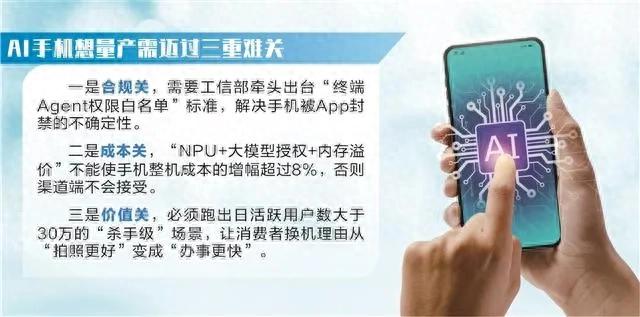
Core Viewpoint - The emergence of AI Agent smartphones is set to revolutionize the mobile industry by 2026, with significant advancements in technology and collaboration among major players [1][10]. Group 1: Industry Trends - The collaboration between Doubao and ZTE has led to the launch of the Doubao AI smartphone, marking a significant step in the development of AI Agent technology [1][4]. - Major smartphone manufacturers, including Huawei, Vivo, and Lenovo, are integrating AI Agent capabilities into their flagship devices, indicating a competitive landscape for AI smartphones [4][5]. - The AI Agent smartphone is seen as a "ticket" to a new era in mobile technology, especially as traditional smartphone sales stagnate [4][5]. Group 2: Development Paths - The industry is divided into two distinct paths: the "radical" approach represented by Doubao, which integrates high-level system permissions, and the "conservative" approach taken by companies like Huawei, which adheres to existing development standards [5][6]. - ZTE's willingness to explore aggressive strategies in AI Agent development is attributed to its lower market share, allowing for more flexibility in innovation [6]. Group 3: Challenges and Concerns - The development of AI Agent smartphones raises concerns regarding user privacy and security, particularly with the potential for malicious exploitation of system permissions [7][8]. - Major applications, including WeChat and banking apps, have begun to block access to Doubao's AI assistant due to security fears, highlighting the tension between innovation and safety [7][8]. - The industry faces multiple hurdles, including compliance, cost, and value, that must be overcome for AI Agent smartphones to achieve mass production by 2026 [10][11]. Group 4: Future Outlook - The successful mass production of AI Agent smartphones hinges on meeting specific technological benchmarks, including processing power and cost efficiency [10][11]. - Experts suggest that the future of AI Agent smartphones will depend on resolving fundamental issues related to data privacy, network latency, and economic sustainability of cloud computing [11].

利润暴跌44.97%!传音控股的“非洲神话”遭遇最强压力测试
Xin Lang Cai Jing· 2025-12-31 05:19
Core Viewpoint - Transsion Holdings reported a mixed financial performance for Q3 2025, with a significant revenue rebound of 22.60% year-on-year, but a sharp decline in net profit of 44.97% for the first three quarters, indicating a critical juncture for the company [3][13]. Revenue and Profit Analysis - In Q3 2025, the company achieved a revenue of 204.66 billion yuan, reflecting a year-on-year increase of 22.60, recovering from previous quarters [4][14]. - Cumulatively, the revenue for the first three quarters was 495.43 billion yuan, down 3.33% year-on-year [4][14]. - The net profit attributable to shareholders for the first three quarters was only 21.48 billion yuan, a significant drop of 44.97% year-on-year, with a deeper decline of 46.71% in net profit after excluding non-recurring gains and losses [4][14]. Cash Flow and Operational Efficiency - The net cash flow from operating activities for the first three quarters reached 32.85 billion yuan, a substantial increase of 164.66% year-on-year, attributed to a significant decrease in raw material procurement payments [4][14]. - The divergence between cash flow and net profit raises questions about the company's true operational status [4][14]. Profit Erosion Factors - High operational costs remain a significant challenge, with total operating costs for the first three quarters at 398.97 billion yuan, nearly unchanged from 401.86 billion yuan in the previous year, leading to pressure on gross margins [5][15]. - Despite a decline in net profit, R&D expenses increased by 17.26% to 21.39 billion yuan, reflecting a strategic decision to invest in technology for long-term competitiveness [6][16]. - Asset impairment losses reached 301 million yuan, up from 235 million yuan in the previous year, indicating increased write-downs on inventory and receivables due to market pressures [6][16]. Strategic Direction - The management emphasizes a commitment to deepening market presence in emerging regions such as Africa, South Asia, Southeast Asia, the Middle East, and Latin America, avoiding aggressive entry into mature markets [7][17]. - The long-term vision includes transitioning from a hardware manufacturer to a service provider in mobile internet and expanding into value-added services, aiming to leverage a large user base for sustainable revenue [8][18]. Market Sentiment and Governance Issues - Investor concerns were raised regarding insider trading and management's stock sales during a period of declining performance, highlighting a potential disconnect between management actions and investor confidence [9][19]. - The company's financial report serves as a reflection of its resilience in emerging markets, but ongoing profit erosion and asset impairment risks underscore the challenges faced in a volatile economic environment [10][20].
出海新浪潮下的中国全球化企业:2025年度有哪些公司引人关注 | 跨越山海
Sou Hu Cai Jing· 2025-12-31 05:00
Group 1 - In 2025, the global economic landscape is entering a new phase characterized by increased trade protectionism and a focus on domestic economic policies, leading to heightened global trade tensions and the reshoring of key industries [2][4] - The First Financial Research Institute is launching a new round of research on corporate globalization, analyzing the dynamic trends of Chinese enterprises in the context of changing global trade policies and regulations [3][4] - The report aims to document the experiences of enterprises navigating the challenges of de-globalization and provide references for policy optimization and global expansion [3][4] Group 2 - Chinese enterprises are entering a "new normal" in globalization, facing headwinds from rising anti-globalization sentiments and geopolitical tensions, which are prompting a shift in focus towards supply chain security and local production [5][6] - The UNCTAD reports that by the end of 2024, 46 countries have established foreign direct investment review mechanisms, reflecting a significant increase in scrutiny of foreign investments [6] - The global investment outlook for 2025 has been downgraded, with expectations of negative growth in foreign direct investment due to various economic uncertainties [7] Group 3 - Despite external uncertainties, Chinese enterprises are demonstrating resilience in globalization, with stable growth in foreign trade and overseas revenue [9][11] - In the first half of 2025, China's total import and export volume reached 21.8 trillion yuan, with exports growing by 7.2% year-on-year, showcasing strong trade performance [9][10] - Emerging industries such as new energy and industrial robotics are driving export growth, with significant increases in the export of lithium batteries and wind turbines [10][11] Group 4 - Chinese enterprises are increasingly focusing on localizing their overseas operations and enhancing compliance to manage risks effectively [12] - In the first five months of 2025, China's non-financial direct investment abroad reached $61.6 billion, with a notable increase in investments in Belt and Road Initiative countries [12] - The First Financial Research Institute's Globalization Index for Chinese enterprises is projected to grow by 6.1% in 2025, indicating a positive trend in globalization efforts [12][15] Group 5 - The manufacturing sector remains a cornerstone of Chinese enterprise globalization, with overseas revenue from manufacturing companies exceeding 9 trillion yuan in 2024, marking a 75.6% increase since 2020 [47] - The automotive manufacturing industry has seen the fastest growth in overseas revenue, with a 165.7% increase from 2020 to 2024, driven by the rise of the new energy vehicle sector [48] - Companies like BYD are expanding their global footprint by establishing or expanding factories in various countries, enhancing local service capabilities and reducing operational risks [48]
“非洲之王”传音的自我进化:文化融入、实用AI、长期主义
Huan Qiu Wang· 2025-12-31 04:40
Core Viewpoint - The article highlights the strategic approach of Transsion Holdings, particularly its brand TECNO, in leveraging cultural connections through sports sponsorship, specifically the Africa Cup of Nations, to enhance brand visibility and align with local values in Africa [2][4][6]. Group 1: Sponsorship and Cultural Integration - Transsion's sponsorship of the Africa Cup is not merely a commercial decision but a deep cultural integration, recognizing football as a unifying symbol in Africa [4][6]. - The company aims to transition from being a mere observer of African culture to an active participant, fostering a connection with consumers through familiar cultural touchpoints [6][19]. - Transsion is also involved in community initiatives, such as the "Dream Stadium" project, committing to improve or build 100 community football fields across Africa [6]. Group 2: AI Strategy and Market Position - Transsion adopts a pragmatic approach to AI, focusing on practical applications that enhance user convenience rather than following industry hype [7][9]. - The company’s AI features, such as offline translation supporting around 100 languages, cater specifically to the needs of users in remote areas of Africa, demonstrating a commitment to addressing local challenges [7][9]. - Despite the competitive landscape, Transsion maintains a dominant market share of 51% in Africa's smartphone market, with a focus on self-competition and continuous adaptation to consumer insights [10][12]. Group 3: Long-term Vision and Local Engagement - Transsion emphasizes a "Glocal" strategy, combining global technology with local solutions to address specific needs in the African market [15][19]. - The company views itself as a contributor to the digital transformation of Africa, aiming to be a key player in building a digital ecosystem rather than just a smartphone seller [16][18]. - The focus on understanding and solving local problems has positioned Transsion as a trusted partner in users' lives, fostering a deeper relationship beyond mere transactions [19].

补贴撬动需求+利润保障 消费电子核心标的迎来双重催化
Zhi Tong Cai Jing· 2025-12-31 02:21
通知称,支持家电以旧换新。个人消费者购买冰箱、洗衣机、电视、空调、电脑、热水器等6类家电中1 级能效或水效标准的产品,按产品销售价格的15%给予补贴,每位消费者每类产品可补贴1件,每件补 贴不超过1500元。支持数码和智能产品购新。个人消费者购买手机、平板、智能手表手环、智能眼镜等 4类产品(单件销售价格不超过6000元),按产品销售价格的15%给予补贴,每位消费者每类产品可补贴1 件,每件补贴不超过500元。支持智能家居产品(含适老化家居产品)购新补贴,具体补贴品类、补贴标 准由地方结合实际自主合理制定。 业内人士分析称,从经济效应来看,这无疑是激活消费和推动产业升级的双重引擎。具体来看,补贴政 策向1级能效产品和智能终端倾斜,倒逼企业加大研发投入。例如,家电企业需提升压缩机、芯片等核 心部件效率以满足能效标准,而数码厂商则需在AI算法、传感器集成等领域突破,以增强产品竞争 力。这种"补贴-创新-市场扩大"的良性循环,将推动中国制造向高端化、智能化转型。 12月30日,国家发展改革委、财政部发布关于2026年实施大规模设备更新和消费品以旧换新政策的通 知。 终端品牌:小米集团(01810)、联想集团(009 ...
补贴撬动需求 + 利润保障 消费电子核心标的迎来双重催化
Ge Long Hui· 2025-12-31 02:05
12月30日,国家发展改革委、财政部发布关于2026年实施大规模设备更新和消费品以旧换新政策的通 知。 重点推荐: 终端品牌:小米集团,联想集团,传音控股 AI眼镜:歌尔股份、龙旗科技、恒玄科技、佰维存储、豪鹏科技 果链创新:立讯精密、蓝思科技、领益智造、比亚迪电子、信维通信 通知称,支持家电以旧换新。个人消费者购买冰箱、洗衣机、电视、空调、电脑、热水器等6类家电中1 级能效或水效标准的产品,按产品销售价格的15%给予补贴,每位消费者每类产品可补贴1件,每件补 贴不超过1500元。支持数码和智能产品购新。个人消费者购买手机、平板、智能手表手环、智能眼镜等 4类产品(单件销售价格不超过6000元),按产品销售价格的15%给予补贴,每位消费者每类产品可补 贴1件,每件补贴不超过500元。支持智能家居产品(含适老化家居产品)购新补贴,具体补贴品类、补 贴标准由地方结合实际自主合理制定。 业内人士分析称,从经济效应来看,这无疑是激活消费和推动产业升级的双重引擎。具体来看,补贴政 策向1级能效产品和智能终端倾斜,倒逼企业加大研发投入。例如,家电企业需提升压缩机、芯片等核 心部件效率以满足能效标准,而数码厂商则需在AI算 ...