
招商积余

Search documents
申万宏源证券晨会报告-20251119
Shenwan Hongyuan Securities· 2025-11-19 00:45
Group 1: Computer Industry Investment Strategy - The year 2025 marks the beginning of domestic computing power industrialization, with significant advancements in domestic AI chips and server architecture, enhancing overall computing performance [10] - The gap between Chinese and American large models is narrowing, with expectations of further convergence and potential surpassing in certain areas by 2026 [10] - The software industry is entering an optimal layout window as AI revenue for many companies exceeds 10%, indicating a technological revolution [10] - Investment focus areas include Deep Research, AI programming, multi-modal applications, and industry-specific agents [10] Group 2: Real Estate Industry Investment Strategy - The real estate market is expected to structurally bottom out, with five major opportunities identified, including stabilization of residents' balance sheets and improved housing affordability [12][18] - The policy direction will focus on stabilizing demand and promoting high-quality development, which will benefit real estate companies [18] - Predictions for 2025-2026 include a decline in sales volume and prices, but core cities are expected to stabilize sooner due to healthier supply-demand relationships [18] Group 3: Pharmaceutical Industry Investment Strategy - Chinese pharmaceutical companies are increasingly leading global multi-center clinical trials, with a growing number of new drugs successfully commercialized overseas [15] - The shift from "fast following" to "innovation leading" in drug development positions Chinese companies to redefine the global pharmaceutical landscape [15] - Investment directions include biotech transitioning to biopharma and the revaluation of traditional pharmaceutical companies during their innovation transformation [15]
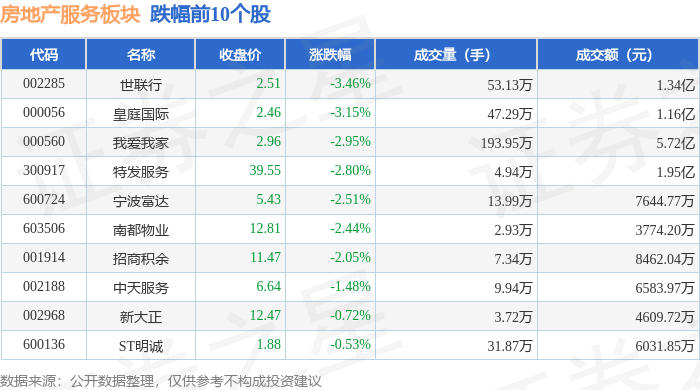
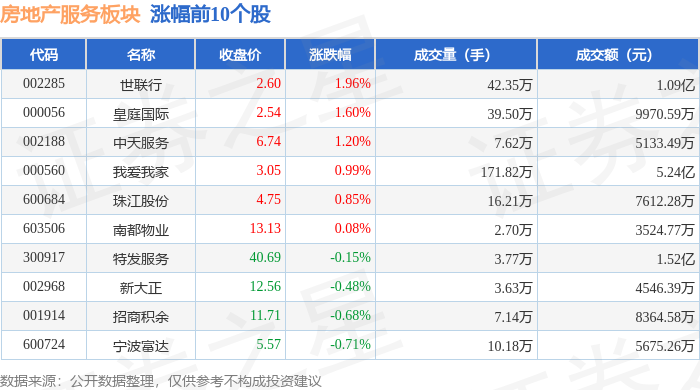
房地产服务板块11月18日跌2.21%,世联行领跌,主力资金净流出7419.5万元
Zheng Xing Xing Ye Ri Bao· 2025-11-18 08:15
证券之星消息,11月18日房地产服务板块较上一交易日下跌2.21%,世联行领跌。当日上证指数报收于 3939.81,下跌0.81%。深证成指报收于13080.49,下跌0.92%。房地产服务板块个股涨跌见下表: | 代码 | 名称 | 收盘价 | 涨跌幅 | 成交量(手) | 成交额(元) | | | --- | --- | --- | --- | --- | --- | --- | | 002285 | 世联行 | 2.51 | -3.46% | 53.13万 | | 1.34亿 | | 000056 | 皇庭国际 | 2.46 | -3.15% | 47.29万 | | 1.16亿 | | 000560 | 我筹找家 | 2.96 | -2.95% | 193.95万 | | 5.72亿 | | 300917 | 特发服务 | 39.55 | -2.80% | 4.94万 | | 1.95亿 | | 600724 | 宁波富达 | 5.43 | -2.51% | 13.99万 | | 7644.77万 | | 603506 | 南都物业 | 12.81 | -2.44% | 2.93万 | | 3774. ...


中金2026年展望 | 物业管理:挖潜红利价值
中金点睛· 2025-11-18 00:13
Core Viewpoint - The industry is transitioning towards a more sustainable business model characterized by moderate changes in volume and price, with relatively stable cash flows. In the short term, property management companies are experiencing moderate growth in revenue and profits driven by scale expansion, with cash collection under slight pressure and a continued increase in dividend willingness [2][5][6]. Group 1: Industry Trends - Changes in internal and external environments are accelerating the transformation of property management companies, leading to an optimization of project portfolios and a shift from "volume increase and price stability" to "sustainable development driven by reasonable price changes" [5][15]. - The industry growth rate is entering a stable phase, with expectations that from 2025 to 2026, the main covered companies will rely on basic property management services for overall growth, which is projected to account for 70-80% of total revenue with an average compound growth rate of 10% [5][23]. - The revenue growth for major covered companies is expected to be around 7% year-on-year for 2025 and 2026, with efficiency management and technology applications supporting profitability despite rising unit labor costs [23][24]. Group 2: Financial Performance - Cash collection rates are slightly under pressure, with projections indicating a decline of 1.1 and 0.9 percentage points in 2024 and the first half of 2025, respectively. However, property management companies still maintain substantial cash reserves, with cash on hand estimated between 4.7 billion and 14.1 billion yuan, representing 39%-68% of market value [6][24]. - The operating cash flow to net profit ratio is 1.6 times, indicating strong cash flow support for continued shareholder return actions, with some major covered companies expected to achieve a shareholder return rate of approximately 5-6% [6][24]. Group 3: Market Dynamics - The property management sector has outperformed the development sector year-to-date but has lagged behind the broader market. As of November 4, the Hang Seng Property Index has risen by 14%, outperforming the China Real Estate Index by 23 percentage points, but underperforming the Hang Seng National Enterprises Index by 13 percentage points [9][11]. - The internal comparison shows that companies like Binhai Service and Greentown Service have relative advantages in profit growth and shareholder returns, outperforming their peers [9].

房地产服务板块11月17日跌0.04%,ST明诚领跌,主力资金净流出1.2亿元
Zheng Xing Xing Ye Ri Bao· 2025-11-17 08:49
证券之星消息,11月17日房地产服务板块较上一交易日下跌0.04%,ST明诚领跌。当日上证指数报收于 3972.03,下跌0.46%。深证成指报收于13202.0,下跌0.11%。房地产服务板块个股涨跌见下表: | 代码 | 名称 | 主力净流入(元) | 主力净占比 游资净流入 (元) | | 游资净占比 散户净流入(元) | | 散户净占比 | | --- | --- | --- | --- | --- | --- | --- | --- | | 001914 | 招商积余 | 775.68万 | 9.27% | -451.17万 | -5.39% | -324.51万 | -3.88% | | 000056 | 皇庭国际 | 368.99万 | 3.70% | -418.66万 | -4.20% | 49.67万 | 0.50% | | 002188 | 中天服务 | -116.89万 | -2.28% | 54.39万 | 1.06% | 62.50万 | 1.22% | | 002968 | 新大正 | -313.47万 | -6.89% | -53.20万 | -1.17% | 366.67万 | ...
地产10月观察及数据点评:基数扰动,延续去库存
Haitong Securities International· 2025-11-17 06:35
Investment Rating - The report maintains a preference for high-quality companies in the real estate sector, specifically recommending: 1) Development: A-Shares - China Vanke, Poly Developments, China Merchants Shekou, Gemdale; H-Shares - China Overseas Land & Investment; 2) Residential: Longfor Group; 3) Property Management: Onewo, China Resources Mixc Lifestyle Services, China Overseas Property, Poly Property Services, China Merchants Property; 4) Cultural Tourism: Shenzhen Overseas Chinese Town [63][70]. Core Insights - October data showed a significant decline due to high base effects, expected to continue until year-end. Both investment and demand sides exhibited accelerated declines, with development investment year-on-year growth at -23.2% and new construction area at -29.3%. Sales amount and area decreased by -25.1% and -19.6% respectively [63][71]. - The base effect is anticipated to narrow the year-on-year decline in 2026, but it cannot be linearly extrapolated for long-term industry judgments. Continuous tracking of industry trends and high inventory levels is necessary [64][72]. - The current inventory reduction trend persists, with a rapid decline in completed areas indicating a decrease in unsold projects. The proportion of unsold units in construction is rising, suggesting that the industry faces significant challenges in inventory reduction [64][73]. Summary by Sections 1. Investment Decline and Sales - In the first ten months of 2025, real estate development investment decreased by 14.7% year-on-year, with a notable decline in new construction area by 19.8% [6][10]. - Sales figures also reflected a downturn, with total sales area down by 6.8% and sales amount down by 9.6% compared to the same period in 2024 [27][8]. 2. Funding Sources - Total funding sources for real estate reached 7.89 trillion yuan, a decrease of 9.7% year-on-year. Domestic loans accounted for 15.42% of funding sources, with a decline of 1.8% year-on-year [47][49]. 3. Inventory and Sales Ratios - As of October 2025, the nationwide unsold housing area was 7.56 billion square meters, with a sales-to-completion ratio of 2.06, indicating ongoing inventory challenges [39][44]. 4. Market Outlook - The report suggests that while short-term new projects may drive sales, long-term inventory issues remain due to high debt levels among developers. The market is currently treating new and old projects separately, which may be feasible in the short term but poses long-term pressures [64][73].
房地产行业2026年投资策略:潮平待风起,扬帆更远航
Shenwan Hongyuan Securities· 2025-11-17 04:13
Group 1 - The core viewpoint of the report indicates that the stabilization of the residential balance sheet suggests a potential bottoming out in the real estate market, but the speed of improvement will determine the duration of this bottoming process [3][4] - The report highlights that since 2021, China's housing prices have cumulatively declined by 37%, which is longer than the average decline of 34% over 6.1 years in 42 countries, indicating that while the price drop is significant, the adjustment period in China is still relatively short [22][7] - The report identifies five major opportunities in the industry, including the stabilization of the residential asset-liability ratio, a decrease in the housing price-to-income ratio, improving rental yields, a bullish stock market potentially boosting wealth effects, and a deep clearing of supply-side issues [3][4] Group 2 - The industry outlook predicts a structural bottoming out, with opportunities arising for quality housing and commercial real estate, driven by policies focusing on demand recovery and high-quality development [3][4] - The report anticipates that the core cities will stabilize sooner due to healthier supply-demand relationships, with a forecast for sales volume and price declines to narrow in 2025-2026 [3][4] - The report maintains a "positive" rating for the real estate sector, recommending specific companies in the quality housing and commercial real estate segments, as well as undervalued firms and property management companies [3][4]






房地产行业点评报告:高基数下销售数据承压,开竣工面积降幅扩大
KAIYUAN SECURITIES· 2025-11-16 13:14
Investment Rating - The industry investment rating is "Positive" (maintained) [1] Core Viewpoints - The report highlights a significant decline in monthly sales data across various city tiers, indicating that all levels of cities have entered a downward trend [5][14] - The report anticipates continued pressure on new construction and completion data for the year, with a notable decrease in both metrics [6][19] - There is an ongoing decline in development investment, which is expected to impact the willingness to start new projects [7][23] - The pressure on real estate companies' cash flow is increasing, with a notable drop in funds available to developers [8][27] - The report suggests a cautious outlook for the market, with expectations of low sales continuing into the fourth quarter [8][34] Summary by Sections Monthly Sales Data - From January to October 2025, the national sales area of commercial housing was 720 million square meters, down 6.8% year-on-year, with residential sales area down 7.0% [5][14] - In October 2025, the sales area and amount of commercial housing decreased by 19.6% and 24.3% year-on-year, respectively [5][14] Construction Data - New construction area from January to October 2025 was 491 million square meters, down 19.8% year-on-year, with residential new construction down 19.3% [6][19] - Completion area during the same period was 349 million square meters, down 16.9% year-on-year [6][19] Development Investment - Real estate development investment from January to October 2025 was 7.36 trillion yuan, down 14.7% year-on-year, with residential investment down 13.8% [7][23] - The report indicates that the decline in investment is expected to continue due to weak sales recovery [7][23] Funding for Developers - Funds available to real estate developers totaled 7.89 trillion yuan from January to October 2025, down 9.7% year-on-year [8][27] - The report notes that all funding sources, including domestic loans and personal mortgage loans, have seen increased year-on-year declines [8][31] Investment Recommendations - The report recommends focusing on developers with strong fundamentals and those that can cater to improving customer needs, such as Greentown China and China Overseas Development [8][34] - It also suggests companies benefiting from both residential and commercial real estate recovery, like China Resources Land and Longfor Group [8][34]
房地产行业周报:央行助力房地产发展新模式,二手房销售环比上升-20251116
ZHONGTAI SECURITIES· 2025-11-16 10:41
Investment Rating - The report maintains an "Overweight" rating for the real estate industry [1] Core Views - The central bank is enhancing financial support for the real estate sector, contributing to a new development model, while second-hand housing sales have shown a month-on-month increase [6][15] - The report highlights that the real estate sector has outperformed the broader market, with the Shenwan Real Estate Index rising by 2.7% compared to a 1.08% decline in the CSI 300 Index, resulting in a relative return of 3.78% [3][11] Summary by Sections 1. Weekly Market Review - The Shenwan Real Estate Index increased by 2.7%, while the CSI 300 Index decreased by 1.08%, indicating stronger performance in the sector [3][11] 2. Industry Fundamentals - For the week of November 7-13, the total number of new homes sold in 38 key cities was 20,673 units, a year-on-year decrease of 31.4% and a month-on-month decrease of 2.5%. The total area sold was 2.171 million square meters, down 35.5% year-on-year and 0.1% month-on-month [4][20] - In the same week, the total number of second-hand homes sold in 16 key cities was 18,576 units, a year-on-year decrease of 23.8% but a month-on-month increase of 3.4%. The total area sold was 1.855 million square meters, down 18.7% year-on-year but up 6.2% month-on-month [4][32] - The inventory of commercial housing in 17 key cities was 188.439 million square meters, with a month-on-month increase of 0.1% and a depletion cycle of 173.4 weeks [4][50] 3. Land Market Supply and Transaction Analysis - During the week, 6,292.4 million square meters of land were supplied, a year-on-year increase of 2.9%, while land transactions totaled 1,189.5 million square meters, down 73.9% year-on-year [5] 4. Financing Analysis - Real estate companies issued a total of 4.62 billion yuan in credit bonds during the week, reflecting a year-on-year decrease of 6.29% and a month-on-month decrease of 50.05% [5]


房地产开发2025W46:本周新房成交同比-34.6%,10月房价延续调整
GOLDEN SUN SECURITIES· 2025-11-16 07:10
Investment Rating - The report maintains an "Overweight" rating for the real estate industry [4][6]. Core Insights - The report emphasizes that the current policy environment is being driven by fundamental pressures, suggesting that the policy response may exceed the levels seen in 2008 and 2014 [4]. - Real estate is identified as an early-cycle indicator, serving as a barometer for economic trends, making it a strategic investment focus [4]. - The competitive landscape within the industry is improving, with leading state-owned enterprises and select mixed-ownership and private firms expected to benefit more in the future [4]. - The report continues to support investment in first-tier cities and two-thirds of second-tier cities, indicating that this combination has historically performed better during sales rebounds [4]. - Supply-side policies, including land storage and management of idle land, are highlighted as critical areas to monitor, with first and second-tier cities likely to benefit more from these changes [4]. Summary by Sections New Housing Market - In the week, new housing transaction area in 30 cities was 1.59 million square meters, showing a week-on-week increase of 17.4% but a year-on-year decrease of 34.6% [2]. - The new housing transaction area for first-tier cities was 432,000 square meters, up 12.6% week-on-week but down 42.5% year-on-year [2]. - Second-tier cities recorded a transaction area of 881,000 square meters, up 24.7% week-on-week and down 23.4% year-on-year [2]. - Third-tier cities had a transaction area of 276,000 square meters, up 4.9% week-on-week but down 47.7% year-on-year [2]. Second-Hand Housing Market - The total transaction area for second-hand housing in 14 sample cities was 2.003 million square meters, reflecting a week-on-week growth of 4.7% but a year-on-year decline of 17.0% [2]. - First-tier cities accounted for 856,000 square meters in second-hand transactions, up 8.7% week-on-week [2]. - Second-tier cities had a transaction area of 873,000 square meters, up 1.4% week-on-week [2]. - Third-tier cities recorded 273,000 square meters, up 3.7% week-on-week [2]. Credit Bonds - In the week of November 10-16, four credit bonds were issued by real estate companies, a decrease of eight from the previous week, with a total issuance of 3.62 billion yuan, down 6.63 billion yuan [3]. - The total repayment amount was 10.829 billion yuan, an increase of 4.359 billion yuan, resulting in a net financing amount of -7.209 billion yuan, down 10.989 billion yuan [3]. Market Performance - The report notes that the Shenwan Real Estate Index had a cumulative change of 2.7%, outperforming the CSI 300 Index by 3.78 percentage points, ranking 7th among 31 Shenwan primary industries [14]. - A total of 84 stocks in the real estate sector rose, while 30 stocks fell, with the top five gainers being Qianjing Garden, China Wuyi, Huaxia Happiness, Guancheng Datong, and Rongsheng Development, with gains of 61.0%, 30.0%, 26.3%, 21.6%, and 18.2% respectively [14].


房地产1-10月月报:投资低位进一步走弱,销售量价降幅均扩大-20251115
Shenwan Hongyuan Securities· 2025-11-15 11:14
Investment Rating - The report maintains a "Positive" rating for the real estate sector, indicating a cautious optimism despite current challenges [2][3]. Core Insights - The investment side of the real estate sector continues to weaken, with significant declines in new construction and completion rates. For the period from January to October 2025, total real estate investment decreased by 14.7% year-on-year, with new construction down by 19.8% and completions down by 16.9% [1][20]. - The sales side shows a broader decline in sales volume and price. From January to October 2025, the sales area decreased by 6.8% year-on-year, with a more pronounced drop of 18.8% in October alone. The sales amount also fell by 9.6% year-on-year, with a 24.3% decline in October [2][33]. - Funding sources for real estate development are tightening, with total funding down by 9.7% year-on-year. In October, funding sources saw a significant drop of 21.9% compared to the previous month [35]. Investment Analysis - The report suggests that the real estate sector is still in a bottoming phase, with core cities expected to stabilize sooner. Two major opportunities are highlighted: the potential shift of real estate companies towards manufacturing and the favorable conditions for quality commercial enterprises during a monetary easing cycle [2][3]. - Adjustments to the 2025 forecasts include a projected investment decline of 14.2% (previously 11.0%), new construction down by 18.0% (previously 15.1%), and completions down by 17.7% (previously 20.0%) [20][34].