珀莱雅

Search documents
珀莱雅(603605) - 珀莱雅化妆品股份有限公司关于回购股份事项前十大股东和前十大无限售条件股东持股情况的公告
2026-01-05 08:46
| 证券代码:603605 | 证券简称:珀莱雅 | 公告编号:2026-003 | | --- | --- | --- | | 债券代码:113634 | 债券简称:珀莱转债 | | 珀莱雅化妆品股份有限公司 关于回购股份事项前十大股东和前十大无限售条件 股东持股情况的公告 珀莱雅化妆品股份有限公司 董 事 会 2026 年 1 月 6 日 二、前十大无限售条件股东持股情况 | 序号 | 股东名称 | 持股数量(股) | 占无限售条件流通股 | | --- | --- | --- | --- | | | | | 比例(%) | | 1 | 侯军呈 | 136,739,037 | 34.53 | | 2 | 方玉友 | 59,625,258 | 15.06 | | 3 | 香港中央结算有限公司 | 10,572,574 | 2.67 | | 4 | 中国农业银行股份有限公司-中证 500 | 3,552,348 | 0.90 | | | 交易型开放式指数证券投资基金 | | | | 5 | 中国工商银行股份有限公司-中证主要 | 3,445,400 | 0.87 | | | 消费交易型开放式指数证券投资基金 ...

珀莱雅(603605) - 珀莱雅化妆品股份有限公司可转债转股结果暨股份变动公告
2026-01-05 08:46
| 证券代码:603605 | 证券简称:珀莱雅 | 公告编号:2026-001 | | --- | --- | --- | | 债券代码:113634 | 债券简称:珀莱转债 | | 珀莱雅化妆品股份有限公司 可转债转股结果暨股份变动公告 本公司董事会及全体董事保证本公告内容不存在任何虚假记载、误导性陈述 或者重大遗漏,并对其内容的真实性、准确性和完整性承担法律责任。 重要内容提示: 累计转股情况:珀莱转债自 2022 年 6 月 14 日开始转股,截至 2025 年 12 月 31 日,累计共有人民币 981,000 元珀莱转债转换为珀莱雅化妆品股份有限公司 (以下简称"公司")A 股股票,因转股形成的股份数量为 7,212 股,占可转债 转股前公司已发行股份总额的 0.0026%。 未转股可转债情况:截至 2025 年 12 月 31 日,尚未转股的珀莱转债金额为 人民币 750,732,000 元,占珀莱转债发行总量的 99.8695%。 本季度转股情况:自 2025 年 10 月 1 日至 2025 年 12 月 31 日期间,珀莱转 债转股的金额为人民币 6,000 元,因转股形成的股份数量为 6 ...
珀莱雅(603605.SH):暂未开展股票回购
Ge Long Hui· 2026-01-05 08:37
Core Viewpoint - Proya (603605.SH) has announced that as of December 31, 2025, the company has not yet initiated a stock buyback, but it plans to implement this buyback program based on market conditions in the future [1] Summary by Category - Company Actions - Proya has not commenced any stock buyback as of the specified date [1] - The company intends to evaluate market conditions before proceeding with the buyback plan [1]
大消费行业周报:市场稳健,板块分化-20260105
Ping An Securities· 2026-01-05 03:05
Investment Rating - The industry investment rating is "stronger than the market," indicating that the industry index is expected to outperform the market by more than 5% within the next six months [24]. Core Insights - The overall market performance is stable, with significant differentiation within the consumer sector. The upcoming New Year holiday is expected to boost certain segments, supported by favorable macro consumption policies that may lead to a recovery in consumer demand [3][4]. - The tourism sector shows potential for growth, with leading companies like Ctrip and Huazhu Hotels responding quickly to changing consumer demands. The retail tourism industry is stabilizing, with expectations for sales recovery [3][8]. - The beauty industry is experiencing steady growth, with a focus on companies that can quickly adapt to market dynamics and integrate products, brands, and channels [3]. - The film industry saw a strong performance during the New Year holiday, with box office revenues reaching 734 million yuan, led by the film "Zootopia 2" [14]. - In the food and beverage sector, the home dining market is expanding, with companies like Guoquan showing strong growth potential. The dairy supply-demand relationship is improving, and the restaurant supply chain is stabilizing [3][18]. - In the liquor segment, major companies are experiencing deeper profit adjustments, but leading brands are expected to maintain or increase market share due to superior management and branding [3][19]. Summary by Sections Social Services - The tourism sector is evolving, with a notable increase in travel demand during the New Year holiday, driven by a surge in ticket bookings and hotel reservations [8]. - Turkey has announced visa-free entry for Chinese passport holders, which is expected to enhance tourism flows [8]. Media - The film industry achieved a record box office during the New Year holiday, indicating strong consumer interest and spending in entertainment [14]. Food and Beverage - General - The home dining market is expanding, with companies like Guoquan leading the way. The dairy industry is seeing improved supply-demand dynamics, while the restaurant supply chain is stabilizing [3][18]. Food and Beverage - Alcohol - Major liquor companies are adjusting their profit margins, but leading brands are expected to capture more market share due to their strong brand presence and management capabilities [3][19].


丽水,“生态美妆”的新范式来了!
FBeauty未来迹· 2026-01-04 14:14
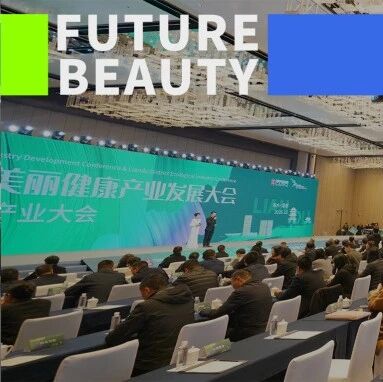
Core Viewpoint - The article emphasizes the integration of ecological advantages and technological innovation in the beauty and health industry, particularly in Lishui, Zhejiang, aiming to establish a new highland for this sector in China [2][4][25]. Group 1: Ecological Advantages - Lishui, recognized as "China's Ecological First City," boasts a forest coverage rate of 80.3% and has consistently ranked first in ecological environment status in the province for 20 years [4]. - The city is transitioning from merely protecting its ecology to deeply transforming its ecological value into industrial advantages, targeting the establishment of a national beauty and health industry hub [4][10]. Group 2: Policy Support - The development of the beauty and health industry is supported by precise policy design, shifting from marketing-driven to technology and sustainability-driven approaches [5]. - Key policies include the establishment of service stations for pharmaceutical innovation and flexible review processes in Lishui, aimed at shortening product launch cycles [6][9]. Group 3: Local Initiatives - Lishui's local government has introduced specific measures to support the beauty and health industry, focusing on areas such as ecological beauty, modern medicine, and health products [8]. - The total industrial output value of the beauty and health sector in Lishui has reached 8.94 billion yuan, with 25 enterprises in the sector [8]. Group 4: Research and Development - The establishment of the Lishui Tongji Laboratory in collaboration with Tsinghua University aims to focus on key technologies in the beauty and health sector, enhancing R&D capabilities [16]. - Local enterprises are collaborating on the development of unique plant resources, which are expected to enhance the competitiveness of Lishui's beauty products [16][12]. Group 5: Industry Ecosystem - The article highlights the importance of a collaborative ecosystem involving upstream and downstream players in the beauty and health industry, with a focus on sustainable practices and innovation [21][14]. - Lishui's approach aims to create a self-reinforcing and open-win industrial ecosystem, ensuring that ecological resources contribute to sustainable economic growth [14][25]. Group 6: Future Outlook - The beauty and health industry's growth in Lishui serves as a model for other regions with ecological advantages, showcasing a path for modern industrial development in China [25]. - The integration of ecological protection and economic development is presented as a harmonious approach, suggesting that both can coexist and benefit each other in the long term [25].

“人、货、场”迭代升级,关注情绪消费赛道机会
KAIYUAN SECURITIES· 2026-01-04 08:46
Investment Rating - The industry investment rating is "Positive" (maintained) [1] Core Viewpoints - The retail industry is undergoing an evolution in the "people, goods, and scene" framework, driven by emotional consumption, which presents new opportunities for growth [3][25] - High-end gold and fashion jewelry are gaining traction among consumers, with a focus on product differentiation and cultural significance [3][32] - The cosmetics industry is innovating through the IP of technical ingredients and cultural confidence, enhancing product appeal and market competitiveness [3][37] - Offline retail is shifting from selling "goods" to offering "services and experiences," with companies like Yonghui Supermarket leading the transformation [3][41] Summary by Sections Retail Market Overview - In 2025, the retail sector index closed at 2422.59 points, with an annual increase of 8.21%, underperforming the Shanghai Composite Index, which rose by 18.41% [5][14] - The retail industry ranked 23rd among 31 sectors in terms of performance [15] Industry Dynamics - The emotional value is driving consumer intentions, with a focus on "research-based consumption," "self-satisfaction," and "long-termism" as key decision-making trends [25][28] - High-end gold is becoming a preferred asset for wealth preservation, while fashion gold is appealing to younger consumers through innovative designs and social media engagement [32] - The cosmetics sector is witnessing a shift towards self-developed core ingredients and cultural narratives, enhancing brand value [37] Investment Recommendations - Focus on high-quality companies in the emotional consumption theme, particularly in the gold jewelry sector, with recommendations for brands like Chao Hong Ji and Lao Pu Gold [6][50] - Emphasize offline retail companies adapting to market changes, such as Yonghui Supermarket and Ai Ying Shi [6][48] - Highlight cosmetics brands that innovate in emotional value and safety, including Mao Ge Ping and Po Lai Ya [6][48] - Consider differentiated medical beauty product manufacturers and leading medical beauty institutions, recommending companies like Ai Mei Ke and Ke Di-B [6][48]
量化大势研判 202601:宜攻守兼备:成长+质量
Minsheng Securities· 2026-01-04 07:25
- The report introduces a quantitative framework for market trend analysis, emphasizing the inherent attributes of assets and their lifecycle stages, categorized into five styles: external growth, quality growth, quality dividend, value dividend, and bankruptcy value[6][7][10] - The framework prioritizes asset comparison using metrics such as expected growth (gf), actual growth (g), profitability (ROE), high dividend (D), and bankruptcy value (PB/SIZE), each tailored to specific lifecycle stages[7][10] - The quantitative model has demonstrated strong historical performance, achieving an annualized return of 27.45% since 2009, with notable positive excess returns in most years, particularly post-2017[17][20][18] - The report recommends three dominant styles for January 2026: expected growth, actual growth, and profitability, supported by metrics like Δgf, Δg, and ΔROE, all showing expansion trends[15][33][29] - Expected growth strategy selects industries with the highest analyst forecasted growth rates, achieving significant excess returns since 2019. Recommended sectors for January 2026 include automotive sales, home appliances, tungsten, emerging financial services, and lithium[37][39][36] - Actual growth strategy focuses on industries with the highest Δg and related factors (sue, sur, jor), showing strong long-term excess returns. Recommended sectors for January 2026 include photovoltaic equipment, electronic chemicals, lithium battery chemicals, aerospace military, and home appliances[39][40][36] - Profitability strategy targets industries with high ROE and low PB-ROE valuation residuals, with notable excess returns from 2016 to 2020. Recommended sectors for January 2026 include agriculture, liquor, power distribution equipment, non-dairy beverages, and network connection/tower setup[42][43][36] - Quality dividend strategy uses DP+ROE scoring to select industries, with significant excess returns in 2016, 2017, and 2023. Recommended sectors for January 2026 include forestry/processing, boiler equipment, public transportation, fuel cells, and network connection/tower setup[45][46][36] - Value dividend strategy employs DP+BP scoring, achieving notable excess returns in 2009, 2017, and 2021-2023. Recommended sectors for January 2026 include security, daily chemicals, pet food, buses, and network connection/tower setup[48][50][36] - Bankruptcy value strategy selects industries with the lowest PB+SIZE scores, showing strong excess returns in 2015-2016 and 2021-2023. Recommended sectors for January 2026 include automotive sales, ceramics, cotton textiles, dyeing, and building decoration[52][53][36]
解码美妆新质生产力:头部品牌的智造实践与研发深耕
艾瑞咨询· 2026-01-04 05:31
Core Viewpoint - The Chinese cosmetics industry is projected to reach a market size of 1.1 trillion yuan, with domestic brands surpassing international brands in market share and consumer preference [1][2]. Group 1: High-Quality Development and New Productive Forces - The domestic cosmetics market retail sales are expected to reach 470 billion yuan by 2025, indicating a significant growth trajectory for the industry [2]. - New productive forces are essential for the high-quality development of the cosmetics industry, transitioning from traditional manufacturing to intelligent and lean production [4]. - New productive forces enhance production efficiency and product consistency through automation and intelligent equipment, addressing quality control challenges [4]. Group 2: Intelligent Manufacturing Practices of Domestic Brands - The past decade has seen a shift in the cosmetics manufacturing industry from experience-driven to data-driven processes, evolving through three stages: semi-automated, automated, and now data-driven intelligent stages [6]. - Leading brands like Han Shu and Pechoin have made significant investments in intelligent manufacturing, achieving production capacity increases and improved quality control [8][10]. - Domestic brands have made historical advancements in intelligent manufacturing, with automation rates rising from approximately 40% to levels comparable to international brands [10]. Group 3: R&D Innovation and Cost Management - R&D expenditure rates vary across different categories, with skincare products averaging 1.5%-5% and medical beauty products at 2%-5%, reflecting a focus on compliance and clinical data [21][23]. - Domestic brands like Han Shu and Pechoin have R&D personnel ratios comparable to international leaders, indicating strong R&D capabilities [24]. - The production cost rates for various product categories range from 15% to 30%, with domestic brands leveraging self-researched technologies and integrated supply chains to maintain competitive pricing [27][28]. Group 4: International Competitiveness of Domestic Brands - Domestic brands have achieved significant breakthroughs in the cosmetics sector, enhancing core competitiveness through new productive forces [31]. - Intelligent manufacturing has enabled micro-level quality control, establishing trust in product quality [33]. - The integration of AI and 5G technologies in manufacturing processes positions domestic brands at the forefront of global standards, driving high-quality development in the industry [33].



2025美妆行业转型:胜者愈胜,弱者重组
3 6 Ke· 2026-01-04 03:22
Core Insights - The global beauty industry is entering a transformation phase, with average growth slowing from 7% (2022-2024) to 5% (2025-2030), indicating a shift towards a more complex and segmented market focused on high-end and fragrance products [1][3][25]. Group 1: Major Corporate Movements - L'Oréal's acquisition of Kering's high-end beauty business for €4 billion is a significant event, expanding L'Oréal's presence in the luxury beauty and fragrance market while allowing Kering to focus on its core fashion business [1][5][11]. - L'Oréal has been active in the beauty capital market with six major global transactions this year, including acquisitions and minority investments, enhancing its portfolio in high-end and trendy markets [5][6][7][11]. - Estée Lauder is undergoing a restructuring plan to focus on high-end fragrances, with a new innovation center in Paris aimed at improving efficiency and product development [12][14]. Group 2: Market Trends and Dynamics - The beauty industry is witnessing a shift from product competition to capital and licensing restructuring, with leading groups focusing on mergers and acquisitions to strengthen their positions in luxury fragrances and high-end segments [3][4][25]. - The rise of domestic brands in China, such as Perfect Diary and Huaxizi, is attributed to the growing interest from Gen Z consumers and effective online marketing strategies, leading to a 10.1% year-on-year growth in the beauty market [18][19][25]. - The trend towards high-end and fragrance products is becoming a growth highlight, with luxury fragrances showing nearly 10% business growth, indicating consumers' willingness to pay for premium beauty experiences [26][29]. Group 3: Strategic Adjustments by Companies - Shiseido is implementing a two-year action plan to rebuild profits through cost-cutting and operational efficiency, successfully turning a previous loss into a profit in its latest financial report [14][15]. - Coty faces significant risks due to the impending expiration of its Gucci licensing agreement in 2028, prompting a strategic review and a focus on fragrance business growth [15][25]. - Consumer goods giants like Unilever and Procter & Gamble are steadily expanding their beauty and personal care segments, with Unilever acquiring several natural and functional brands to enhance its portfolio [17][25]. Group 4: Future Industry Trends - The beauty industry is expected to see continued acceleration in mergers and asset restructuring, with both global giants and local brands adapting to market fluctuations [25][26]. - Digitalization and technological advancements are becoming key competitive factors, with brands leveraging AI and online channels to enhance customer engagement and product offerings [27][29]. - The overall transformation in the beauty industry is characterized by a focus on high-end products, technological innovation, and global expansion, with domestic brands poised to lead in the international market [25][29].

喜茶掉队、DeepSeek被它打败,2025年好品牌之争谁赢了
3 6 Ke· 2026-01-04 02:24
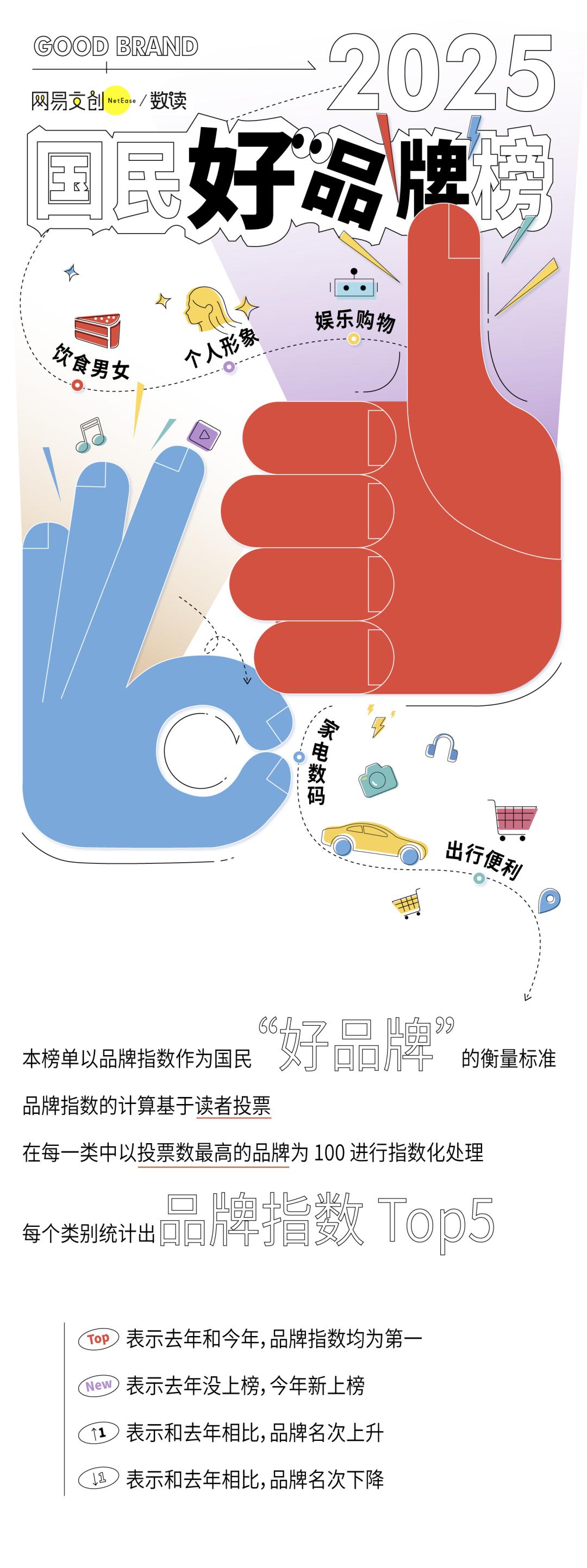
Group 1 - The brand index is used as a measurement standard for the public, calculated based on reader votes, with the highest voted brand in each category set to 100 for index processing [2] - The top five brands in various categories have been identified, with changes in rankings noted, including new entries and shifts in positions compared to the previous year [4][9] - The overall consumer sentiment indicates a cautious approach to spending, with a significant portion of respondents prioritizing product quality and reliability over brand loyalty [123][124] Group 2 - Heytea has fallen behind, with Guming Tea replacing it in the top five, and Guming Tea's store count reaching 11,179 with a net profit of 1.625 billion yuan, surpassing its total profit from the previous year [9] - Haidilao remains the top brand in the hot pot category, while KFC and McDonald's have swapped positions, with KFC slightly ahead [12] - The beverage market sees a return of Nongfu Spring to the top ranks, while Wahaha faces management turmoil, impacting its brand perception [15][17] Group 3 - In the beauty and personal care sector, Estee Lauder and L'Oreal dominate, with significant changes in rankings and the absence of local brands in the top positions [41] - Anta and Li Ning lead the sportswear category, with Li Ning rising to first place from fourth last year, while Adidas has returned to the rankings [45] - Douyin has surpassed Bilibili in the short video sector, with Douyin's daily active users reaching 600 million, while Bilibili has improved its profitability [55] Group 4 - The e-commerce landscape is evolving, with traditional platforms like JD, Meituan, and Taobao entering the instant retail competition, leading to significant financial investments in subsidies [73] - The AI app market is witnessing explosive growth, with ByteDance's products leading in active user numbers, indicating a shift towards AI-driven applications [80] - The adult product market is quietly rising, with brands like Durex and Okamoto leading the category [82] Group 5 - The home appliance market is characterized by intense competition, with Midea focusing on diversified business strategies, while Haier emphasizes high-end and localized operations [92] - Huawei continues to focus on the high-end market, with significant developments in its HarmonyOS ecosystem, while Apple faces challenges with its latest iPhone series [94][95] - The hotel industry is shifting towards new chain hotels, with traditional five-star hotels losing appeal as consumers seek more modern accommodations [116]