网易云音乐

Search documents
净赚超90亿,“情绪经济”造富腾讯音乐
3 6 Ke· 2025-11-12 23:51
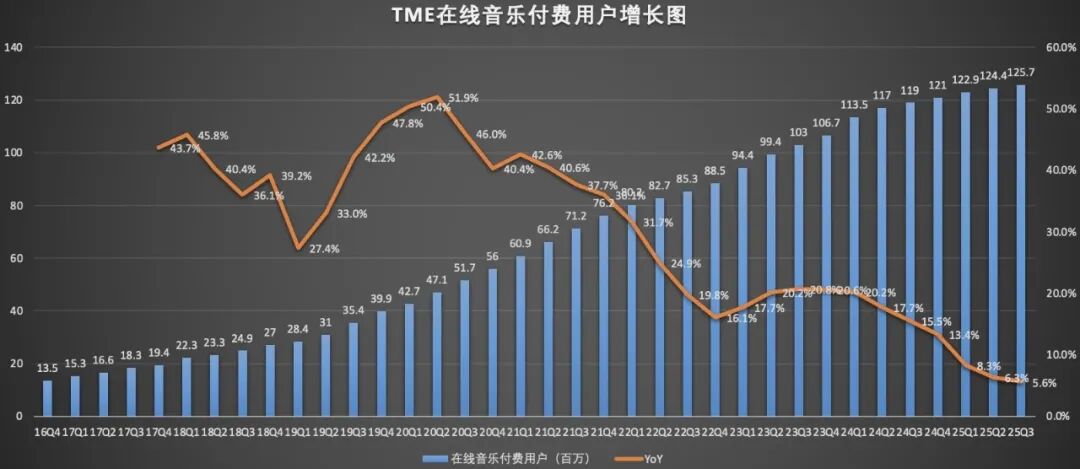
Core Insights - The essence of consumption in China is shifting from functional satisfaction to the pursuit of meaning, leading to the rise of the "emotional economy" [1] - Tencent Music Entertainment Group (TME) is a successful case benefiting from this emotional consumption trend, leveraging fan economy to establish a clear commercialization path [1] Financial Performance - In Q3 2025, Tencent Music reported revenue of 8.46 billion yuan, a year-on-year increase of 20.6% [2] - The net profit for Q3 reached 2.48 billion yuan, up 27.7% year-on-year [2] - For the first three quarters of 2025, total revenue was 24.26 billion yuan, a 15.8% increase, with net profit soaring to 9.07 billion yuan, an 80% rise from 5.03 billion yuan in the same period last year [2] - Online music service revenue for Q3 was 6.97 billion yuan, growing 27.2% and accounting for 82.3% of total revenue [2] User Growth and Monetization - The number of paid users increased to 12.57 million, a growth of 5.6% year-on-year [2] - Average revenue per paying user (ARPPU) rose from 10.8 yuan to 11.9 yuan, reflecting a 10.2% increase [4] Competitive Positioning - TME's gross margin stood at 43.5%, outperforming Spotify by 12 percentage points, while its operating margin was 32%, compared to Spotify's 13.6% [6] - TME's strategic transformation has successfully linked music consumption with fan economy, enhancing user engagement and monetization [6] Strategic Initiatives - TME's acquisition of nearly 10% stake in SM Entertainment and its purchase of Ximalaya are aimed at expanding audio content and refining fan economy operations [7] - The company is enhancing user retention and payment rates through a free ad-supported model for users with low willingness to pay [7] Competitive Landscape - Despite TME's leading position, competitors like NetEase Cloud Music and ByteDance's Soda Music are emerging threats [8] - NetEase Cloud Music has a unique UGC community and independent musician ecosystem, while Soda Music has rapidly increased its user base, reaching 18 million daily active users by mid-2024 [10][11] - The competition is evolving from user growth to value extraction, with a focus on ecosystem integration and content expansion [11] Future Outlook - The online music industry is established but requires continuous evolution beyond being a simple music player [12] - Future winners will be those who can effectively manage technology, content, and user engagement [12]

汽水音乐凶猛,音乐流媒体重新“三国杀”
3 6 Ke· 2025-11-12 23:39
Market Landscape Evolution - The Chinese online music streaming market has shifted from a "duopoly" dominated by Tencent Music and NetEase Cloud Music to a "tripartite" competition with the entry of ByteDance's Soda Music [2][3] - Tencent Music held a market share of 76.1% in 2016-2017, while NetEase Cloud Music had about 15.6%. This dominance continued until the emergence of Soda Music [2][3] - As of Q1 2024, Tencent Music and NetEase Cloud Music maintained a combined market share of over 90%, with Tencent Music's monthly active users (MAU) at approximately 202 million and NetEase Cloud Music at around 185 million [2][3] Business Model Comparison - The overall payment rate for online music in China has increased from less than 5% five years ago to about 15% by the end of 2023, indicating a growing trend in user willingness to pay [5] - Tencent Music reported a decline in monthly active users to 551 million, down 4.3% year-on-year, but an increase in paid users to 12.57 million, reflecting a 5.6% growth [6][7] - NetEase Cloud Music's subscription revenue grew by 15.2% year-on-year, reaching 2.47 billion yuan in the first half of 2025, with a paid user conversion rate of 27% [7][9] Platform Strategies - Tencent Music leverages its extensive entertainment ecosystem, focusing on IP creation and social engagement, while NetEase Cloud Music emphasizes community and original content [13][14] - Soda Music employs an algorithm-driven model similar to Spotify, focusing on user acquisition through free offerings and a seamless integration with Douyin (TikTok) for content discovery [15][26] Copyright Disputes - The end of the exclusive copyright era in 2021 allowed for a more open competition among platforms, reducing the need for high-cost exclusive agreements [20][21] - The transition to a post-exclusive era has led to a more level playing field, with platforms focusing on user experience and operational efficiency rather than solely on acquiring exclusive rights [25][22] Future Outlook - The market may stabilize into a "three-way competition" with Tencent Music, NetEase Cloud Music, and Soda Music each solidifying their respective niches [33] - The potential for a "fourth player" to emerge in the market appears low, given the historical challenges faced by new entrants and the dominance of existing players [34]

国信证券晨会纪要-20251111
Guoxin Securities· 2025-11-11 01:17
Macro and Strategy - The macroeconomic review indicates a shift from "disconnection between stocks and bonds" to "stocks and bonds being sourced from the same origin," highlighting a year where stock performance outpaced bonds, with the Shanghai Composite Index rising from 3351 points at the end of the previous year to around 4000 points by the end of October 2025 [7] - The report discusses the AI wave, emphasizing that it is not a repeat of the 2000 internet bubble, as the current market is driven by profitable "cash cow" companies rather than speculative stocks [9][10] Industry and Company Insights - The sustainable aviation fuel (SAF) industry is receiving a boost from the EU's announcement of a €3.3 billion investment plan to support decarbonization in aviation and shipping, with a projected SAF demand of 358 million tons by 2050 [10][11] - The report highlights the strong performance of the consumer services sector, particularly in Hainan, where duty-free shopping saw a 35% year-on-year increase following the implementation of new policies [12] - New Industry (300832.SZ) reported a revenue increase of 0.39% year-on-year for the first three quarters of 2025, with a notable improvement in overseas business gross margins surpassing domestic levels [19][20] - Xiangyu Medical (688626.SH) showed a revenue growth of 6.00% year-on-year in the first three quarters of 2025, although net profit faced pressure due to increased R&D and marketing investments [23][24] - The report on Steady Medical (300888.SZ) indicates a 30.1% year-on-year revenue growth in the first three quarters of 2025, driven by a strong performance in both medical consumables and health consumer products [26][27] Financial Engineering - The financial engineering report notes that 5401 A-share companies disclosed their Q3 2025 financial results, with many analysts highlighting significant earnings surprises in their assessments [31]
人工智能周报(25年第45周):谷歌即将发布Nano Banana2,月之暗面发布Kimi K2 Thinking-20251110
Guoxin Securities· 2025-11-10 12:51
Investment Rating - The report maintains an "Outperform" rating for the industry, indicating expected performance above the market benchmark by over 10% [3][34]. Core Insights - The report highlights the significant role of AI in enhancing advertising, cloud computing, and operational efficiency for major internet companies, with a focus on the return on investment (ROI) from substantial capital expenditures [2][30]. - It emphasizes the lower capital expenditure pressure on domestic companies compared to their overseas counterparts, while also noting the positive impact of AI on their business operations [2][30]. - The report recommends focusing on AI-related investments, specifically suggesting Tencent Holdings, Alibaba, Kuaishou, Baidu Group, Meitu, and Tencent Music, as well as NetEase Cloud Music, which are less correlated with macroeconomic fluctuations [2][30]. Summary by Sections Product Applications - Google Gemini AI has introduced a deep research feature that enhances the research experience for emails and documents, while the upcoming Nano Banana2 image generation technology is set to be released [24]. - OpenAI's Sora has launched on Android with a new "paid character" feature, and Microsoft has released its first AI image generator, MAI-Image-1 [25][26]. - The latest thinking model, Kimi K2 Thinking, has been released by Moonlight, showcasing significant advancements in intelligent agent capabilities [26]. - iFlytek has launched the domestic computing power model, Spark X1.5, enhancing AI technology [26]. Underlying Technologies - Meituan has released LongCat-Flash-Omni, a comprehensive model for multimodal real-time interaction, achieving state-of-the-art performance in various tasks [28]. - iFlytek has introduced an AI hardware-software integrated solution that improves recognition and understanding in complex environments [28]. Industry Policies - The Ministry of Industry and Information Technology has issued a notice to promote the development of the AI industry and its integration with new industrialization tasks [29]. Key Events and Investment Recommendations - The report suggests continued focus on AI as a primary investment theme, with specific recommendations for companies that are expected to benefit from AI advancements and operational efficiencies [2][30].

ST华通申请摘帽,理性看音乐格局
Shenwan Hongyuan Securities· 2025-11-10 06:12
Investment Rating - The industry investment rating is "Overweight" indicating that the industry is expected to outperform the overall market [13]. Core Insights - The report highlights a positive outlook for the gaming sector, particularly with the recent news of ST Huatuo applying to lift its risk warning, which is expected to alleviate valuation pressures in the gaming sector [5]. - The report emphasizes the importance of differentiated competition among gaming companies, focusing on user and genre-based strategies rather than just the number of licenses issued [5]. - In the music sector, the report suggests a rational perspective on the competitive landscape, noting that platforms like Qishui Music are leveraging low-cost content to grow their user base, which may impact traditional music advertising ROI [5]. - The report anticipates a shift in global AI investment focus from capital expenditure to return on investment, with a notable increase in domestic chip listings and rapid commercialization of AI applications [5]. Summary by Sections Education Publishing - Attention is drawn to companies like Zhongwen Chuanmei and Shandong Publishing, which are showing signs of operational turnaround in Q3 2025 [5]. Gaming Sector - Key companies to watch include Tencent Holdings, Giant Network, ST Huatuo, and others, with a focus on their performance and potential for revenue upgrades in 2026 [5]. - The report notes that the issuance of new game licenses is increasing, but this does not necessarily indicate a worsening competitive landscape [5]. Music Industry - The report discusses the impact of Qishui Music achieving over 100 million MAU, suggesting a need for a rational view of the music market dynamics [5]. - It highlights the challenges of monetizing long-tail music content and the importance of building a high-quality user community for future revenue generation [5]. AI Investment - The report predicts that AI investments will increasingly focus on return on investment, with significant developments in domestic chip production and AI applications [5]. - Companies like Tencent, Alibaba, and Baidu are highlighted for their strong positions in AI and cloud computing, with recommendations for investment based on their growth potential [5]. Valuation Table - A detailed valuation table is provided, showing the market capitalization, revenue, and profit forecasts for key companies in the sector, indicating varied growth rates and profitability metrics [7].





传媒互联网产业行业周报:路径不清晰,等待机会 1 / 16-20251109
SINOLINK SECURITIES· 2025-11-09 14:37
Investment Rating - The report suggests a focus on cloud vendors and companies with exceeding expectations in the current market environment [3]. Core Insights - The report highlights a divergence in market performance, with consumer companies facing pressure while AI technology companies continue to show mixed results. Concerns about AI valuation bubbles persist, but leading tech companies like Microsoft, Google, and Meta maintain strong cash flows, suggesting a stable outlook for cloud vendors [3]. - The gaming demand remains robust, although there is a short-term lack of new game releases. Attention is drawn to the progress of key game tests and launches, which could drive revenue growth for related companies [3]. - The report emphasizes the importance of monitoring quarterly reports from major Chinese companies like Tencent, JD, Baidu, and Alibaba, as well as the ongoing value in sectors like PDD and the gaming industry [3]. Summary by Sections 1.1 Consumer & Internet - **Education**: The education index fell by 3.59%, with notable performance differences among companies. The implementation of a spring and autumn break system in Sichuan is expected to impact the sector positively [11][18]. - **Luxury & Gaming**: The luxury goods and gaming sectors are closely tied to macroeconomic conditions. Recent Q3 earnings from major gaming companies exceeded expectations, benefiting from a longer holiday schedule in 2026 [19][24]. - **Coffee & Tea**: The coffee sector remains vibrant, while the tea sector faces challenges due to reduced delivery platform subsidies and seasonal competition [3][27]. - **E-commerce**: The e-commerce sector is under pressure, with a lackluster performance during the Double Eleven shopping festival [3][35]. 1.2 Platform & Technology - **Streaming Platforms**: The streaming sector is driven by domestic demand, with platforms like Spotify reporting better-than-expected earnings [3][42]. - **Virtual Assets & Internet Brokers**: The cryptocurrency market is experiencing volatility, with a significant drop in global market value. However, there are potential buying opportunities following recent corrections [3][43]. - **Automotive Services**: The automotive aftermarket is projected to decline, with a year-over-year decrease of 4% expected by October 2025 [3][61]. 1.3 Media - The media sector is experiencing mixed performance, with streaming services facing challenges but also opportunities for growth through strategic partnerships and content offerings [3][41].



腾讯音乐的喜与忧:榜单牵手Billboard出海;合规纷争不断,七成投诉指向自动续费
Sou Hu Cai Jing· 2025-11-07 10:38
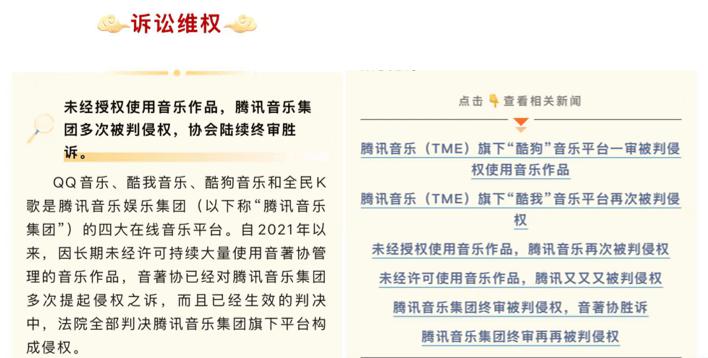
Core Insights - Tencent Music has faced significant management upheaval due to the dismissal of two senior executives involved in corruption, which occurred seven years ago while they were in different roles [1] - The long-standing copyright disputes with the China Music Copyright Association have finally reached a resolution, with both parties signing a strategic cooperation memorandum to improve music licensing mechanisms [2][4] - Despite a strong financial performance in Q2 2023, Tencent Music's active user base continues to decline, marking the 15th consecutive quarter of year-on-year decreases in monthly active users [10][11] Management and Governance - Two senior executives from Tencent Music were dismissed and handed over to law enforcement for corruption related to past roles, indicating potential governance issues within the company [1] - The company has emphasized its commitment to compliance and governance in its ESG report, highlighting measures taken to avoid copyright infringement [2] Copyright and Legal Issues - Tencent Music has been involved in a protracted legal battle with the China Music Copyright Association over copyright licensing and compensation standards, which has now been resolved with a new strategic partnership [2][4] - Recent court rulings have resulted in Tencent Music's platforms being ordered to pay damages for copyright infringement, highlighting ongoing legal challenges in the industry [4] User Experience and Compliance - Tencent Music has established a comprehensive user service mechanism, achieving a 100% complaint resolution rate, yet user complaints regarding automatic renewals and service discrepancies remain high [7] - The company has faced scrutiny over data privacy and compliance issues, with past incidents leading to regulatory attention and negative publicity [9] Financial Performance - In Q2 2023, Tencent Music reported a revenue of 8.44 billion yuan, a year-on-year increase of 17.9%, and a net profit of 2.64 billion yuan, up 33% from the previous year [10] - Despite financial growth, the company is experiencing a decline in its user base, with a 3.2% drop in monthly active users to 553 million [11] Competitive Landscape - The competitive dynamics in the music streaming industry are shifting, with rivals like NetEase Cloud Music showing slight growth while Tencent Music's user base declines [11] - ByteDance's new music platform, Soda Music, has seen explosive growth, benefiting from integration with Douyin, which poses a challenge to Tencent Music's market position [11]
网易云音乐回应迟迟不适配鸿蒙:产品和技术团队在进行优化和升级
Xin Lang Ke Ji· 2025-11-06 10:30
Core Viewpoint - The ongoing discussion regarding NetEase Cloud Music's lack of compatibility with HarmonyOS has sparked significant public interest, with the company emphasizing ongoing optimization efforts for a future release [1] Group 1: Company Response - NetEase Cloud Music's official customer service confirmed that the application has not yet been adapted for HarmonyOS, citing ongoing optimization and enhancement efforts to ensure a stable and smooth user experience upon release [1] - The customer service team reassured users that they are working on a comprehensive upgrade for the HarmonyOS version of Cloud Music, promising a new and improved experience soon [1] Group 2: Compatibility Issues - Currently, HarmonyOS users cannot directly search for and download Cloud Music, and using third-party applications like Zhuoyi Tong to run the Android version may lead to compatibility issues that need to be reported for resolution [1] - In April, the official Xiaohongshu account of NetEase Cloud Music warned users against downloading unofficial alternatives for HarmonyOS, citing concerns over potential security risks, including unauthorized access to user data and possible malware [1]

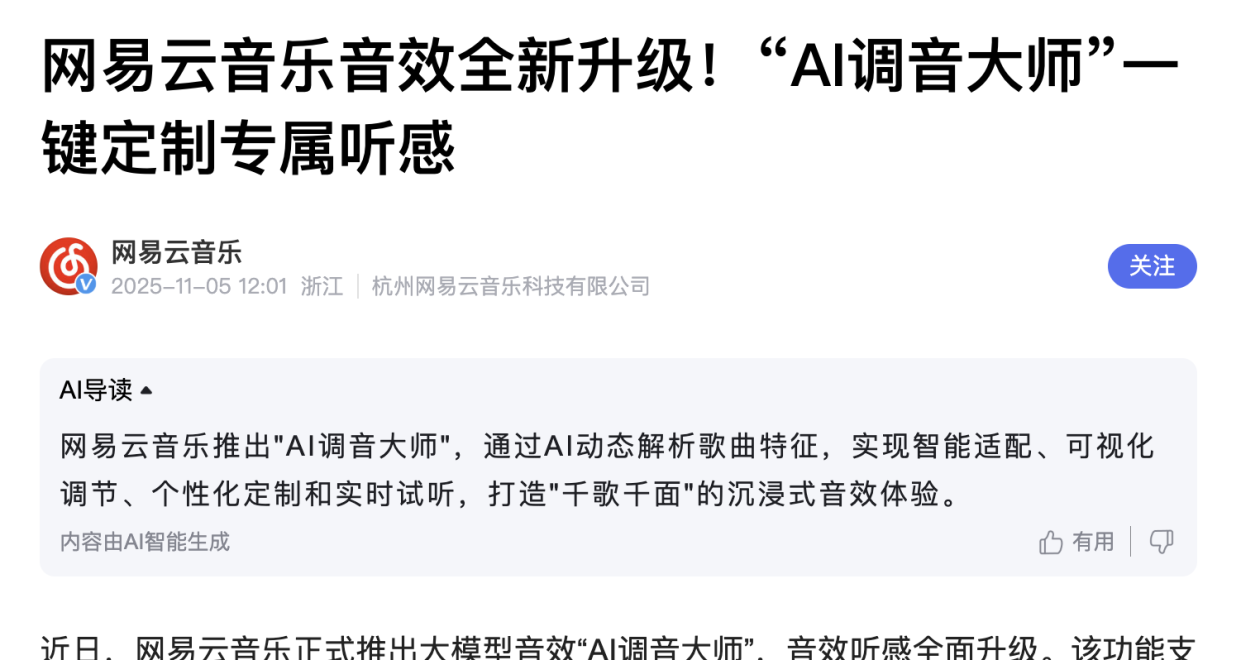
告别“一刀切”音效!网易云音乐推出AI调音大师,每首歌都能“私人订制”
Huan Qiu Wang· 2025-11-05 08:50
Core Insights - NetEase Cloud Music has launched an AI-based sound feature called "AI Tuning Master," aimed at enhancing the auditory experience for users [1][3] - The feature utilizes artificial intelligence to dynamically analyze song characteristics, allowing for intelligent sound adaptation, visual adjustments, and personalized customization [1][3] Group 1: Key Features - The "AI Tuning Master" has four main highlights: it uses AI models to understand audio content and match exclusive parameters for different songs, achieving a "thousand songs, thousand faces" effect [3] - The tuning process is visualized, providing real-time sound wave spectrum displays and music emotion analysis [3] - Users can further adjust settings based on preferences, such as "enhanced low frequencies" and "increased live feel" [3] - The feature includes a real-time listening function, allowing users to compare original sound with adjusted effects before playback [3] Group 2: Market Impact - The "AI Tuning Master" has received widespread acclaim during its testing phase, indicating strong user interest and potential market acceptance [3] - This feature enriches the platform's sound quality service ecosystem and will expand to cover multiple terminal scenarios, including APP, PC, TV, and in-car systems, to meet diverse user listening needs [3]
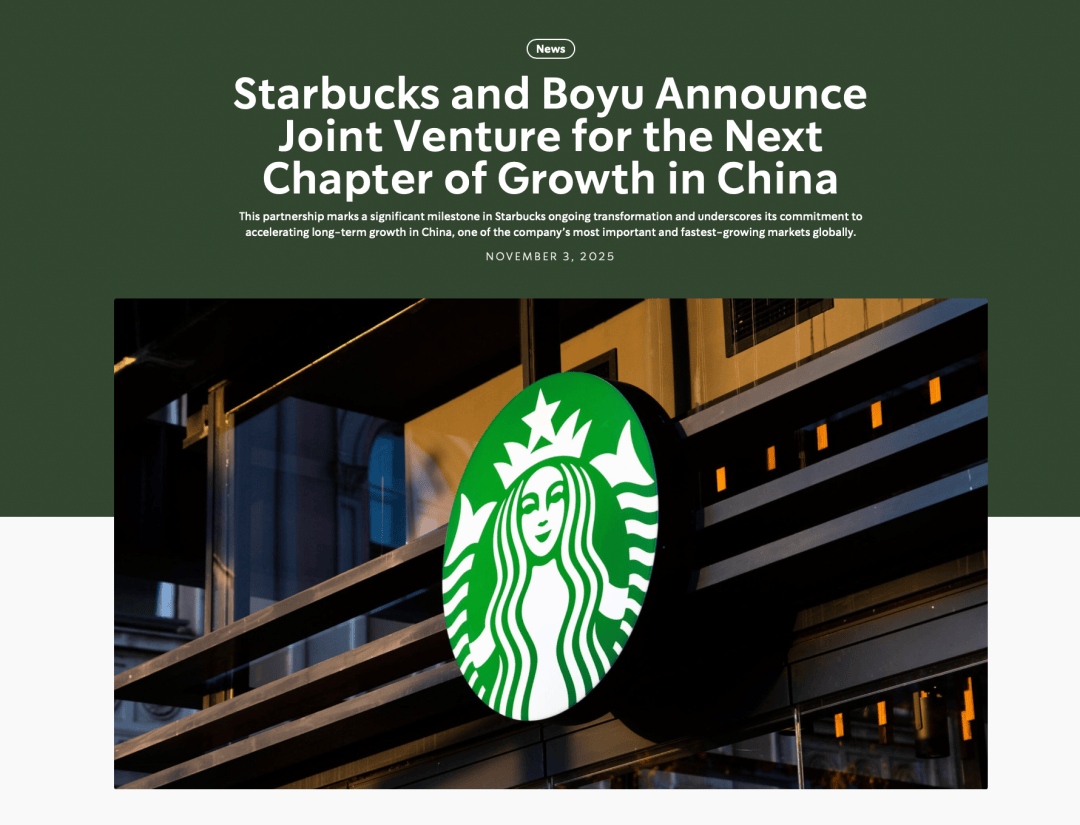
40亿美元拿下60%控股权!博裕资本联手星巴克中国,目标2万家门店挑战瑞幸
Sou Hu Cai Jing· 2025-11-05 05:04
Core Insights - Starbucks has officially announced a strategic partnership with Boyu Capital to jointly operate its retail business in China, aiming to increase the number of stores from 8,011 to 20,000 by the end of the fiscal year 2025 [1][4][17] Group 1: Partnership Details - Boyu Capital will hold up to 60% equity in the joint venture, while Starbucks retains 40% and continues to own the brand and intellectual property [4][6] - The enterprise value of the joint venture is approximately $4 billion, excluding cash and debt [4] - The partnership is seen as a strategic move to enhance Starbucks' growth in the competitive Chinese market, particularly in smaller cities and emerging regions [17][18] Group 2: Market Context - As of September 2025, Luckin Coffee, Starbucks' main competitor in China, has over 27,000 stores and is expected to reach 30,000 by the end of the year [3] - The Chinese coffee market is perceived to have significant growth potential, as indicated by the ambitious targets set by major players [4] Group 3: Boyu Capital Overview - Boyu Capital is defined as an "alternative asset management company," focusing on non-traditional assets such as private equity and venture capital [5][6] - Founded in 2011, Boyu Capital manages over $10 billion in assets and has a diverse investment portfolio, including significant stakes in various consumer and technology sectors [6][7] - The firm has made notable investments in high-profile projects, indicating a strong focus on the Chinese consumer market [7][8] Group 4: Strategic Rationale for Starbucks - Starbucks' CEO, Brian Niccol, emphasized the need for a fundamental strategic change to restore growth in China, leading to the exploration of local partnerships [9][11] - The partnership model is a common practice for global restaurant chains, allowing them to leverage local market knowledge and reduce operational risks [12][13] - Historically, Starbucks has successfully utilized partnerships to establish a presence in new markets, transitioning from joint ventures to wholly-owned operations as market conditions evolve [12][14]