联发科

Search documents
AI日报丨北京AI产业规模今年将超4500亿元,谷歌加冕“AI新王”之际,先进封装格局生变
美股研究社· 2025-12-01 10:49
Group 1 - The article discusses the rapid development of artificial intelligence (AI) technology, highlighting the broad opportunities it presents in the market [3] - Emerging markets are expected to face their first monthly decline in 2025, with the MSCI Emerging Markets Index down 0.2% as of November 28, leading to a cumulative decline of 2.5% for the month [5] - Despite the losses in November, the MSCI index has shown an overall increase for the year, with analysts remaining optimistic about emerging markets due to improving fundamentals and the expanding benefits of AI [5] Group 2 - Beijing's AI industry is projected to exceed 450 billion yuan in 2025, with the core industry size expected to reach 215.22 billion yuan in the first half of 2025, reflecting a year-on-year growth of 25.3% [6] - According to a report by CICC, the current risk of overcrowding in the AI sector has decreased, indicating that long-term opportunities still exist, although short-term value styles may have an advantage [8] - The launch of the Doubao mobile assistant by ByteDance, which integrates advanced AI capabilities, marks a significant development in AI applications within mobile technology [9] Group 3 - Intel is expected to begin shipping Apple's lowest-tier M processors using advanced 18AP process technology as early as Q2-Q3 2027, following improved visibility in their partnership [11] - The introduction of Google's TPU has altered the landscape of computing chips, prompting North American cloud service providers to engage with Intel for advanced packaging solutions [12]


大摩大幅上调谷歌TPU产量预测,同步分享谷歌TPU专家调研纪要,图片保存!
是说芯语· 2025-12-01 07:29
Core Viewpoint - Google's self-developed AI chip, TPU, is showing significant potential to challenge the existing market landscape, with expectations of explosive growth in production over the next two years, indicating a possible shift towards large-scale sales to third parties [1][3][4]. Supply Chain Signals - The uncertainty surrounding the TPU supply chain is diminishing, with a substantial increase in production forecasts for 2027 and 2028. The production estimate for 2027 has been raised from approximately 3 million units to about 5 million units, a 67% increase [1][3]. - For 2028, the production forecast has surged from around 3.2 million units to approximately 7 million units, reflecting a remarkable 120% increase [3][4]. Financial Implications - If Google initiates an external sales strategy for TPU, it could open up a significant new revenue stream. Each sale of 500,000 TPU chips could potentially add around $13 billion in revenue and $0.40 to earnings per share (EPS) in 2027 [1][4]. - The report estimates that over the two years from 2027 to 2028, Google could secure 12 million TPU units, compared to a total of 7.9 million units over the past four years, indicating a rapid expansion in AI hardware investment and positioning [1][4]. Strategic Shift - The increase in TPU production suggests a strategic shift for Google from a "self-use" model to directly competing with major players in the AI chip market. This transition could position Google as a hardware seller rather than just a consumer and service provider [4].

手机AI愈发重要,可为何厂商不再宣传NPU算力
3 6 Ke· 2025-12-01 02:42
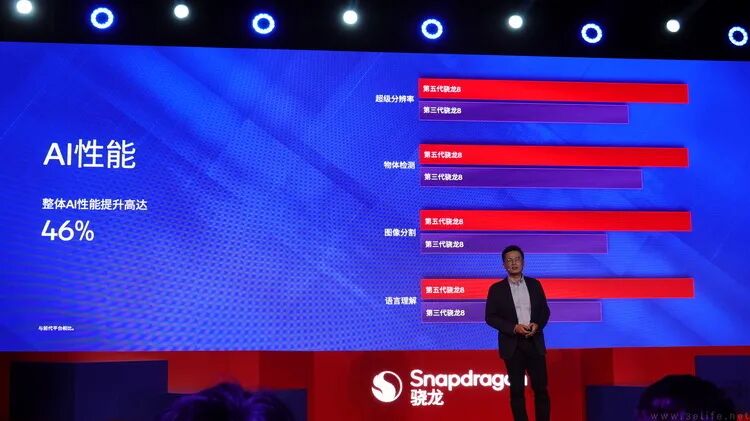
Group 1 - The smartphone industry is increasingly emphasizing "AI" as a key selling point, with major brands claiming to have developed their own AI models and performance optimization solutions for various applications [1][3] - Chip manufacturers are also showcasing improvements in NPU architecture and energy efficiency, often in conjunction with AI model demonstrations during new SoC launches [3][8] - Historically, manufacturers provided specific performance metrics for NPUs, allowing consumers to easily compare different brands and generations of SoCs [5][6] Group 2 - Qualcomm's Snapdragon series initially disclosed NPU performance metrics, with the Snapdragon 855 featuring 7 TOPs, and subsequent models showing significant increases up to 52 TOPs for the Snapdragon 8 Gen1 [10] - However, Qualcomm stopped disclosing NPU performance numbers after the Snapdragon 8 Gen1, indicating a potential slowdown in performance improvement, with the latest Snapdragon 8 Gen3 reportedly achieving 100 TOPs [10][12] - Other chip manufacturers may face even greater challenges in NPU performance, leading to a general trend of not disclosing NPU performance metrics across the industry [11] Group 3 - The slowdown in NPU performance improvement is attributed to rising semiconductor design costs and the need to allocate power to new CPU and GPU architectures, making it difficult to maintain previous performance doubling trends [15][17] - The nature of AI tasks has evolved from primarily computational vision to more complex content generation, requiring NPUs to adapt their design and focus on energy efficiency for prolonged use [20][21] - Current NPU designs are expected to continue improving, but the approach will differ from past strategies that relied solely on scaling and frequency increases [21][23] Group 4 - Companies are exploring ways to enhance NPU performance through software optimizations and collaborations with AI model developers, as seen in Samsung's partnership with Nota AI to improve the Exynos 2500's NPU performance [25]

谷歌加冕“AI新王”,先进封装格局生变
3 6 Ke· 2025-12-01 01:43
Core Insights - North American cloud service providers (CSPs) like Google and Meta are actively engaging with Intel regarding the EMIB solution, indicating a shift in the chip landscape with the introduction of Google's TPU v9 by 2027 [1] - EMIB, a 2.5D advanced packaging technology from Intel, is gaining attention as CSPs face challenges with TSMC's CoWoS due to capacity shortages and high costs [1][2] - The rise of ASIC solutions, particularly represented by Google's TPU, is driving the demand for EMIB technology, with expectations of explosive growth in ASIC numbers from major players by 2026-2027 [2] Group 1: EMIB Technology and Market Dynamics - EMIB is positioned as a competitive alternative to TSMC's CoWoS, primarily due to its advantages in area and cost [3] - CoWoS has a high level of technical maturity but faces significant capacity constraints, with NVIDIA alone accounting for over 60% of its production [3] - EMIB allows for highly customizable packaging layouts, which may make it the preferred choice for ASIC applications [3][4] Group 2: Cost and Performance Considerations - EMIB's design simplifies the structure by eliminating expensive intermediary layers, providing a cost-effective solution for AI clients [4] - Despite its advantages, EMIB is currently limited by its interconnect bandwidth and signal transmission distance, making it more suitable for ASIC customers [5]


TPU代工视角看谷歌材料
2025-12-01 00:49
Summary of Google Materials Conference Call Company and Industry Overview - The conference call focuses on Google and its developments in the GPU manufacturing sector, particularly in relation to its data centers and self-developed chips [1][2][3]. Key Points and Arguments Google’s Data Center Efficiency - Google achieved a reduction of approximately 25% in Power Usage Effectiveness (PUE) from 2020 to 2024 by optimizing power and thermal management through special IP [1][2]. - The company plans to transition to High Voltage Direct Current (HVDC) as a secondary power source in its data centers starting in 2026 [8]. Chip Development and Supply Chain - Google has partnered with MediaTek to design its self-developed chips, with the GPT-8 billion chip expected to launch in November 2026 [1][2]. - Major suppliers for Google’s chips include Broadcom and MediaTek, with potential for future suppliers to be introduced [1][2]. - From January 2024, Flex will join Google’s manufacturing chain, with a market share distribution of 80% for Google and 20% for Flex [3]. Changes in Supplier Dynamics - In the PCB supply chain, Google switched back to Huadian from its previous largest supplier, with current shares being 70% for Huadian, 20% for Fangzheng, and 10% for TTM [4]. - The light module supply chain remains dominated by Xuchuang, while New Yisheng holds less than 10% [4]. Cost Reduction Strategies - Google plans to switch to a combination of Active Optical Cables (AOC) and LPO in its switching components starting in 2026 to reduce costs, which will alter the existing supplier structure [4]. - The company is moving from traditional AEC cables to AOC cables, with major suppliers being Changxing Bochuang domestically and Finisar internationally [4]. Liquid Cooling Solutions - Liquid cooling solutions are becoming increasingly important in GPU manufacturing, especially due to leakage issues in NVIDIA's ecosystem [5][6]. - Google is implementing stricter standards for new suppliers to ensure reliability in liquid cooling systems [6]. Performance and Cost Comparison with NVIDIA - Google’s current performance is approximately 90% to 93% of NVIDIA's, allowing for a Total Cost of Ownership (TCO) reduction of about 44% [10]. - Investment costs for Google are estimated to be 40% to 45% lower than NVIDIA's, attributed to different product design philosophies [10]. Future Plans and Market Positioning - Google plans to commercialize its TPU hardware by 2026, with a gradual transition to a leasing model for its ecosystem [11]. - The company emphasizes a distributed, cloud-based, and virtualized design for its data centers, contrasting with NVIDIA's focus on centralized computing [11]. Supply Chain Management - Google employs a direct procurement model, minimizing costs by eliminating intermediaries, which allows for competitive pricing [16]. - The company’s strategy focuses on long-term revenue through cloud services rather than short-term profits from new product launches [16]. Challenges and Competitor Landscape - NVIDIA faces challenges in adapting to distributed deployments across multiple data centers, which may limit its market share in the cloud computing sector [22]. - Google’s self-developed chips are not significantly hindered by competitors using its hardware, as performance optimization requires software alignment with Google’s systems [25][26]. Additional Important Insights - Google is exploring partnerships with Intel to address chip supply issues using EMIB technology [21]. - The company anticipates producing 6.5 million chips in 2026, with a 30% increase planned for 2027, although actual production may fall short due to technological constraints [23].

星宸科技(301536):立足智能安防,AIoT与车载新兴市场加速拓展
Soochow Securities· 2025-11-28 11:11
Investment Rating - The report assigns a "Buy" rating for the company, marking its first coverage [1]. Core Insights - The company is a leading global player in the smart security chip market, focusing on AIoT and automotive sectors, with a robust growth trajectory expected in the coming years [8]. - The company is projected to achieve revenues of 29.34 billion yuan, 36.33 billion yuan, and 44.87 billion yuan from 2025 to 2027, with corresponding net profits of 2.7 billion yuan, 4.1 billion yuan, and 5.9 billion yuan [8]. Summary by Sections Company Overview - The company specializes in the research and sales of smart security chips, with applications in smart security, AIoT, and automotive sectors [13]. - It has a stable shareholding structure with significant investment from MediaTek, ensuring no controlling shareholder [14]. Financial Analysis - The company reported a revenue of 2.354 billion yuan in 2024, a year-on-year increase of 16.49%, and a net profit of 256.26 million yuan, up 25.18% year-on-year [20]. - The smart security segment remains the primary revenue source, consistently contributing over 50% to total revenue [23]. Smart Security Market - The global market for smart security is experiencing rapid growth, with a projected compound annual growth rate (CAGR) of 6.3% from 2021 to 2026, reaching 29.9 billion USD by 2026 [41]. - The company holds a leading market share in both IPC SoC and NVR SoC segments, with 36.5% and 38.7% market shares respectively in 2021 [49]. Smart IoT and Automotive Sectors - The company is expanding into the smart IoT market, particularly in robotic and AI glasses sectors, leveraging its visual AI and 3D sensing technologies [60]. - In the automotive sector, the company is the second-largest supplier of driving recorder chips in China, with plans to penetrate the front-mounted market [8]. Research and Development - The company maintains a high R&D expenditure, with a rate of 25.59% in 2024, reflecting its commitment to innovation and product development [27]. - The R&D team constitutes 77.5% of the total workforce, indicating a strong focus on technological advancement [27].
联发科,23年最佳
半导体芯闻· 2025-11-28 10:46
Group 1 - Media reports indicate that MediaTek has partnered with Alphabet's unit to design Tensor Processing Units (TPUs), which are seen as potential competitors to NVIDIA's chips in the AI application field [1] - MediaTek is known for smartphone chips, but faces pressure on gross margins due to uncertain demand, intense competition, and high R&D costs; however, AI-related news has provided some relief for its stock price, which has still declined by approximately 1.4% this year [1] - Morgan Stanley analysts upgraded MediaTek's rating from "Equal Weight" to "Overweight," citing that the growth of Google TPUs should offset headwinds in the smartphone market in the long term [1] Group 2 - UBS analysts raised their 2027 sales forecast for MediaTek's TPUs from $1.8 billion to $4 billion, predicting that these chips will account for 20% of the company's operating profit by 2028, contingent on MediaTek's execution with Google [2] - Recent interest has been fueled by reports that Meta is discussing the adoption of Google TPUs in data centers by 2027; UBS believes MediaTek has further growth potential in additional ASIC projects with Meta [2] - Overall, foreign investors remain optimistic about MediaTek, with 23 firms maintaining a "Buy" rating and 10 firms a "Hold" rating, while no firms have issued a "Sell" rating; analysts from Macquarie Group express a preference for investing in MediaTek and other Google partners over NVIDIA's supply chain [2]
X @外汇交易员
外汇交易员· 2025-11-28 03:53
Stock Performance - MediaTek's stock has risen for 5 consecutive days, with a weekly gain exceeding 20%, poised to achieve its largest weekly increase since 2002 [1] - Investor enthusiasm is driven by Google's latest Gemini model and AI chip deals [1] AI Chip Collaboration - MediaTek has partnered with Google to design TPUs, positioned as competitors to NVIDIA's AI chips [1] - Google is significantly intensifying its competition with NVIDIA in the AI chip race, with Meta emerging as a potential multi-billion dollar customer [1] - For years, Google has restricted its custom TPUs for internal use within its cloud data centers, offering computing power for rent [1] Market Analysis - Morgan Stanley anticipates significant challenges for MediaTek in the Chinese mobile phone market next year [1] - The potential of Google's TPUs is expected to offset the adverse effects on the mobile phone business in the long term [1] - Morgan Stanley upgraded Google's rating from Equal Weight to Overweight on Thursday [1]
联发科股价周涨逾20% 有望创2002年来最佳单周表现 与谷歌合作重塑增长前景
智通财经网· 2025-11-28 03:48
Core Viewpoint - Media reports indicate that MediaTek's stock is poised for its best week since 2002, driven by advancements in artificial intelligence technology and support from its client Google, which is reshaping the company's future growth prospects [1] Company Summary - MediaTek's stock price has surged over 20% this week in the Taipei stock market, fueled by investor enthusiasm for Google's newly launched Gemini model and AI chip transactions [1] - The company has partnered with Alphabet's Google to co-design tensor processing units, which is seen as a potential competitor to NVIDIA's chips in the AI application space [1] - Despite being a prominent smartphone chip manufacturer, MediaTek faces challenges due to intense market competition and high R&D costs, leading to uncertain demand for its end products and pressure on profits [1] - Year-to-date, MediaTek's stock has declined by approximately 2%, despite the recent boost from AI-related news [1] Industry Summary - Analysts from Morgan Stanley, Charlie Chan and Daniel Yen, suggest that while the business environment will remain challenging next year, the growth potential of Google's TPU should offset the negative impact from the smartphone business in the long run [1] - The upgrade of MediaTek's stock rating from "hold" to "buy" reflects a positive outlook on the company's future prospects in the AI sector [1]
ASIC终于崛起?
半导体行业观察· 2025-11-28 01:22
Core Insights - Nvidia's GPUs dominate the AI chip market with a 90% share, but competition is increasing as tech giants develop custom ASICs, threatening Nvidia's leadership [1][3] - The shift from "training" to "inference" in AI development favors more energy-efficient chips like TPUs and NPUs over traditional GPUs [5][6] Group 1: Nvidia's Market Position - Nvidia's GPUs are priced between $30,000 to $40,000, making them expensive and contributing to Nvidia becoming the highest-valued company globally [1] - Major tech companies are moving towards developing their own chips, indicating a potential decline in Nvidia's dominance in the AI sector [1][3] Group 2: Custom AI Chips - Google's TPU, designed specifically for AI, outperforms GPUs in certain tasks and is more energy-efficient, leading to lower operational costs [3][5] - Companies like OpenAI and Meta are investing in custom chips, with OpenAI planning to produce its own chips in collaboration with Broadcom [3][5] Group 3: Economic Factors - The cost of installing Nvidia's latest GPUs is significantly higher than that of Google's TPUs, with estimates of $852 million for 24,000 Nvidia GPUs compared to $99 million for the same number of TPUs [5] - The emergence of cheaper custom chips is expected to alleviate concerns about an AI investment bubble [5] Group 4: AI Ecosystem Changes - The AI ecosystem centered around Nvidia is likely to change as large tech companies collaborate with chip design firms, creating new competitors [6] - The current manufacturing landscape, dominated by TSMC for Nvidia chips, may shift as companies develop their own semiconductor solutions [6] Group 5: Chip Types - CPUs serve as the main processing units but are slower compared to GPUs, which can handle multiple tasks simultaneously [8] - TPUs are specialized for AI tasks, while NPUs are designed to mimic brain functions, offering high efficiency for mobile and home devices [8]