东鹏控股

Search documents
限额报名丨2025零碳峰会即将召开
第一财经· 2025-08-22 10:16
Core Viewpoint - Under the guidance of the "dual carbon" goals, China is undergoing a profound green transformation, optimizing industrial structure, transitioning to a low-carbon energy system, and driving green development through technological innovation [2] Group 1: Summit Overview - The 2025 Zero Carbon Summit will be themed "Intelligent Green Energy, Achieving Carbon Neutrality," gathering wisdom and practices from government, universities, research institutions, leading enterprises, and professional organizations to address challenges in zero-carbon transition [2][4] - The summit will officially launch the "COP30 China Corner Communication Action Plan," providing a platform for showcasing advanced green innovation technologies and replicable enterprise zero-carbon transition experiences to the world [6] Group 2: Innovation and Recognition - The "Yangtze River Delta Enterprise Green Low-Carbon Innovation Case Project Collection" will be released at the summit, highlighting benchmark practices in green transformation, from technological innovation to model breakthroughs [4] - The "Zero Carbon Earth Series Awards" will be announced to recognize outstanding pioneers in green transformation, with winning cases recommended to international partners and platforms [8] Group 3: Event Details - The summit is scheduled for August 29, 2025, in Shanghai [9] - The agenda includes keynote speeches, the release of the innovation case project collection, the launch of the communication action plan, and roundtable discussions on zero-carbon practices [46][48]


2025年中国陶瓷墨水行业发展历程、产业链、市场规模及发展趋势研判:企业积极寻求海外增量,行业市场规模达到23亿元[图]
Chan Ye Xin Xi Wang· 2025-08-22 01:21
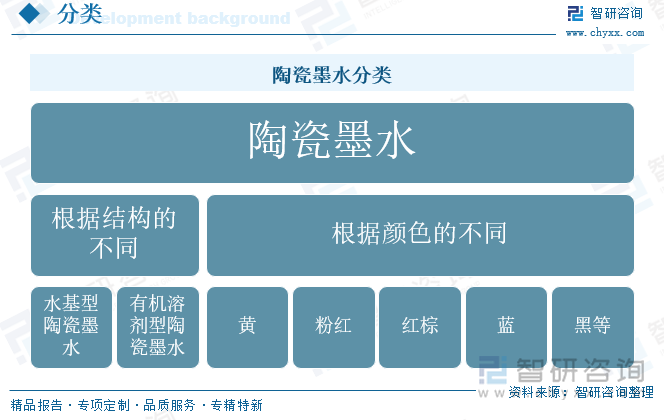
Core Viewpoint - The domestic ceramic ink market in China has transitioned from heavy reliance on imports to a state of near-complete domestic substitution, driven by the rapid growth of local manufacturers. However, the market faces challenges due to a shrinking real estate sector, prompting leading companies to explore overseas markets for growth opportunities [1][13]. Industry Overview - Ceramic ink is a suspension or emulsion containing specific ceramic powders, solvents, dispersants, binders, surfactants, and other additives, used for printing on ceramic surfaces [3]. - The preparation methods for ceramic ink include sol-gel method, dispersion method, and reverse microemulsion method, each with its advantages and disadvantages [5][6]. Market Size and Growth - The market size of China's ceramic ink has shown steady growth, increasing from 1.932 billion yuan in 2019 to an estimated 2.3 billion yuan in 2024 [1][13]. - The demand for ceramic ink is closely tied to the construction ceramics sector, which is currently experiencing a downturn due to declining real estate investments [10][24]. Competitive Landscape - The ceramic ink market has shifted from foreign dominance to a dual oligopoly, with Guocer Kanglitai and Daoshi Technology together holding over 55% market share [15]. - The industry has seen increased competition as domestic manufacturers have improved their technology and product offerings, leading to a reduction in the number of smaller players [15]. Trends and Future Outlook - The ceramic ink market is expected to benefit from a recovery in the real estate sector, with new opportunities arising from policies supporting renovation of existing properties [22]. - There is a growing demand for personalized and customized ceramic products, prompting the industry to focus on offering diverse color and pattern options [23]. - Companies are actively expanding into overseas markets to mitigate the impact of domestic demand decline, with notable sales growth in regions like Africa and Southeast Asia [24].


周观点:AI材料行情继续扩散,传统建材进入提价旺季-20250818
GUOTAI HAITONG SECURITIES· 2025-08-18 06:11
Investment Rating - The report maintains a positive outlook on the building materials industry, particularly in AI materials and traditional building materials entering a price increase season [1][3]. Core Insights - The AI materials market continues to expand, driven by the anticipation of mass production in the AI industry chain, which is expected to boost demand for related products [2][3]. - The construction materials sector is showing signs of recovery, with consumption fundamentals expected to improve in the second half of 2025 [10][24]. - The cement industry is entering a peak season, with price increases already observed in the Yangtze River Delta region [30][33]. Summary by Sections AI Materials - The M9 production for switches is expected to ramp up ahead of schedule, with core Q fabric suppliers also increasing production capacity [2]. - The demand for low dielectric fabrics is anticipated to rise alongside the production of GB200 and GB300 cabinets [2][3]. - The overall production ramp-up is seen as a key support for market trends [2]. Cement Industry - The opening of major infrastructure projects in Xinjiang and Tibet is expected to enhance market confidence and drive demand for cement [8][30]. - The cement market has seen a slight price increase, with certain regions experiencing price hikes of 10-30 RMB per ton [33][34]. - The report highlights a potential supply reduction in the North China region due to planned production cuts for air quality improvement [32][33]. Building Materials - The report notes a significant policy shift in Beijing aimed at stimulating the real estate market, which is expected to positively impact consumption building materials [10][24]. - Companies in the consumption building materials sector are beginning to stabilize their earnings, with expectations of improved profitability in the coming quarters [25][26]. - The report emphasizes the importance of cost management and pricing strategies among leading companies in the sector [25][26]. Glass Industry - The float glass market is currently facing price pressures, with average prices declining [41][42]. - Environmental regulations are tightening, which may lead to increased costs for glass manufacturers [42][43]. - Companies like Xinyi Glass are expected to maintain competitive positions despite market challenges, with a focus on profitability in their automotive glass segment [44].


建筑材料行业周报:基本面疲软,期待更多地产政策-20250817
GOLDEN SUN SECURITIES· 2025-08-17 13:42
Investment Rating - The report maintains an "Overweight" rating for the construction materials sector [4] Core Views - The construction materials sector is experiencing weak fundamentals, with expectations for more supportive real estate policies [1] - The sector saw a net capital outflow of 517 million yuan during the week, indicating a cautious market sentiment [1] - The report highlights the potential for recovery in municipal engineering projects due to improved government fiscal policies [2] Summary by Sections Cement Industry Tracking - As of August 15, 2025, the national cement price index is 335.75 yuan/ton, a slight decrease of 0.06% from the previous week [3] - The cement output was 2.608 million tons, down 1.27% week-on-week, with a clinker capacity utilization rate of 51.74%, down 13.01 percentage points [3][16] - The cement industry faces challenges including slowing infrastructure growth, increasing differentiation in housing construction, and intense competition in the civil market [16] Glass Industry Tracking - The average price of float glass is 1235.66 yuan/ton, reflecting a decline of 3.08% from the previous week [3] - Inventory levels for float glass have increased, indicating ongoing supply-demand imbalances [6] Fiberglass Industry Tracking - The price of non-alkali fiberglass remains stable, with slight fluctuations in demand due to seasonal factors [7] - The report notes a potential recovery in demand for wind power fiberglass as bidding volumes increase [2] Consumer Building Materials - Consumer building materials are benefiting from favorable second-hand housing transactions and consumption stimulus policies [2] - The report recommends stocks such as Beixin Building Materials and Weixing New Materials for their long-term market share growth potential [9] Carbon Fiber Market - The carbon fiber market is showing signs of slow recovery, with a production rate of 61.49% and an increase in inventory levels [8] - The report emphasizes the importance of monitoring price stabilization in the context of improving economic expectations [2]


“缺钱”的马可波罗,上市救急
Sou Hu Cai Jing· 2025-08-14 22:30
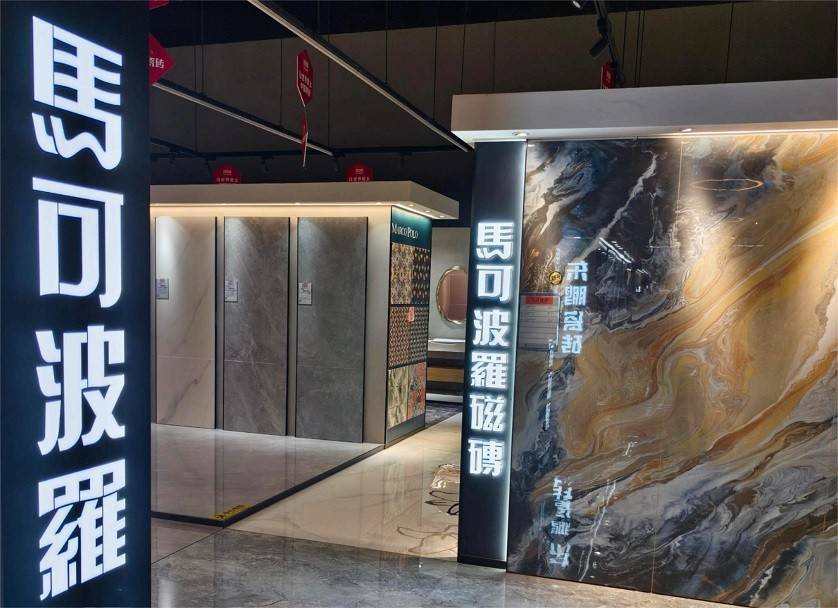
Core Viewpoint - The IPO journey of Marco Polo, a leading player in the ceramic tile industry, has faced significant challenges despite its strong market position, raising concerns among investors about its future performance and the overall market conditions [1][2][4]. Group 1: IPO Progress and Challenges - Marco Polo submitted its IPO application to the China Securities Regulatory Commission in May 2022, but faced delays due to regulatory changes and market conditions, eventually moving to the Shenzhen Stock Exchange for review in March 2023 [2][4]. - The company was initially approved for listing but faced a suspension of its IPO review in May 2024, leading to a request for a review halt in July 2024, reflecting the unfavorable market environment for traditional consumer goods companies [4][5]. - The company has been criticized for its cash dividends totaling 823 million yuan before going public, raising suspicions about its intentions and financial health [5][6]. Group 2: Financial Performance and Market Conditions - Marco Polo reported a revenue of 8.925 billion yuan in 2023, a slight increase of 3.05% year-on-year, but projected a decline in revenue for 2024 by 16.75% to 18.99% due to intensified market competition [6][8]. - The company's net profit has also been declining, with figures of 1.514 billion yuan, 1.353 billion yuan, and 1.327 billion yuan from 2022 to 2024, indicating a downward trend in profitability [8][9]. - The ceramic tile industry is facing significant challenges due to a cooling real estate market, with actual production expected to drop by 12.18% in 2024 compared to 2023, further impacting demand for ceramic products [8][9]. Group 3: Strategic Adjustments and Market Position - Marco Polo is attempting to adapt to market changes by exploring new retail strategies and enhancing its product offerings, including a focus on smart home solutions and partnerships with other companies [10][12]. - The company has shifted its sales strategy to focus on retail and engineering channels, reducing reliance on real estate clients, which have historically posed risks [9][10]. - Despite these efforts, the competitive landscape remains intense, with price competition leading to a decline in gross margins from 47.11% in 2019 to 38.46% in 2024, raising concerns about long-term sustainability [12][13].
瓷砖地板板块短线拉升,爱丽家居涨停
Mei Ri Jing Ji Xin Wen· 2025-08-13 02:30
(文章来源:每日经济新闻) 每经AI快讯,8月13日,瓷砖地板板块短线拉升,爱丽家居涨停,蒙娜丽莎、菲林格尔、天振股份、帝 欧家居、东鹏控股等纷纷走高。 ...

家居用品业CFO群体观察:本科学历CFO占比超六成 德尔未来吴惠芳最高学历为中专
Xin Lang Zheng Quan· 2025-08-07 06:10
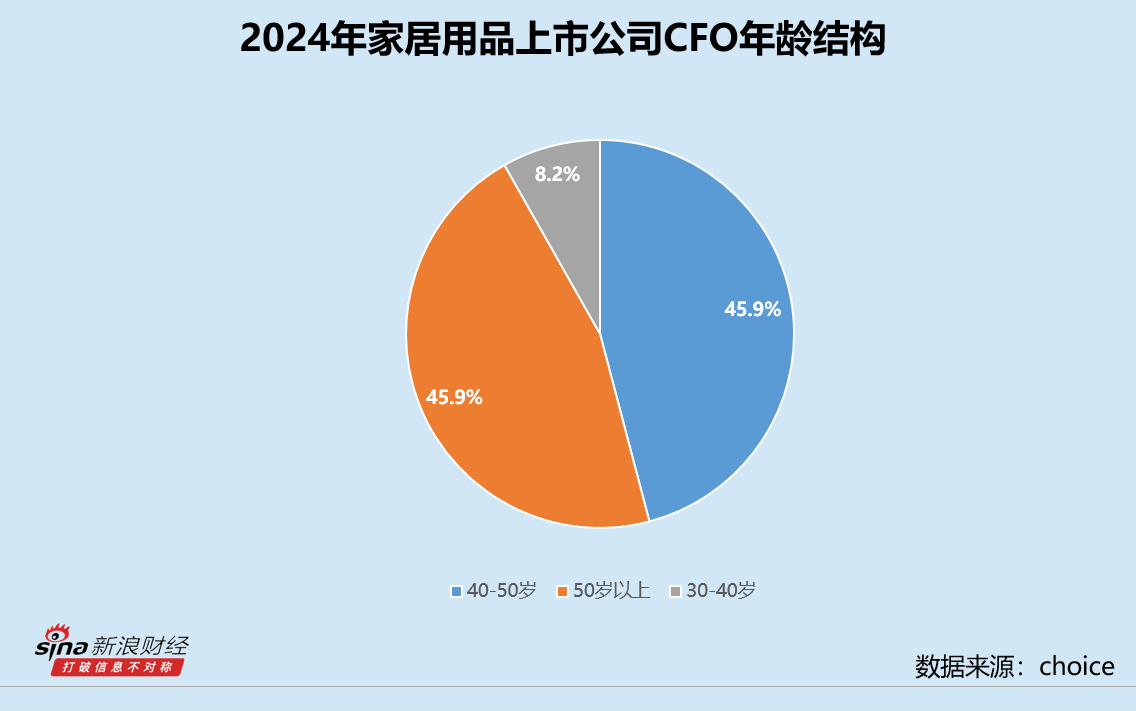
Core Insights - The report highlights the significant role of CFOs in listed companies, with the total salary for CFOs in A-share companies reaching 4.27 billion yuan in 2024, averaging 814,800 yuan per year [1][8] - The average age of CFOs in the home goods sector is 48.08 years, with 45.9% of CFOs aged over 40 [1][3] - The report indicates a trend of long-term tenure among CFOs, with 44.3% serving between 5-10 years [3] - Educational background shows that 61.7% of CFOs hold a bachelor's degree, while 23.3% have a master's degree [6] - The average salary for CFOs in the home goods sector is 814,000 yuan, which is 91,100 yuan higher than the average for the light manufacturing industry, reflecting a year-on-year increase of 13.4% [8][9] - Male CFOs earn an average of 904,000 yuan, significantly higher than female CFOs, who average 714,800 yuan [9] - The highest-paid CFO is from Mousse Co., earning 2.49 million yuan, while the lowest is from Deyi Culture, earning 259,900 yuan [9][10] Industry Overview - In 2024, 176 light manufacturing companies disclosed CFO information, with 61 being home goods companies [1] - The report notes that there was one instance of regulatory violation among CFOs in 2024, involving inaccurate profit forecasts by Lianxiang Co. [10]

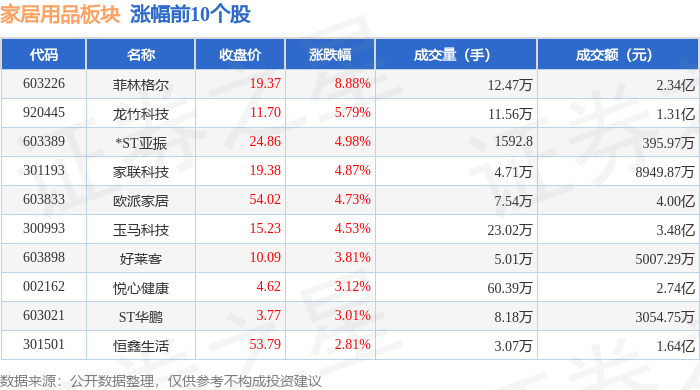
家居用品板块8月4日涨0.62%,菲林格尔领涨,主力资金净流出1.69亿元


Zheng Xing Xing Ye Ri Bao· 2025-08-04 08:30
Market Performance - The home goods sector increased by 0.62% on August 4, with Filinger leading the gains [1] - The Shanghai Composite Index closed at 3583.31, up 0.66%, while the Shenzhen Component Index closed at 11041.56, up 0.46% [1] Top Gainers in Home Goods Sector - Filinger (603226) closed at 19.37, up 8.88% with a trading volume of 124,700 shares and a transaction value of 234 million yuan [1] - Longzhu Technology (920445) closed at 11.70, up 5.79% with a trading volume of 115,600 shares [1] - ST Yazhen (603389) closed at 24.86, up 4.98% with a trading volume of 1,592.8 shares and a transaction value of 3.96 million yuan [1] - Other notable gainers include Jia Lian Technology (301193), Oppein Home (603833), and Yuma Technology (300993) with respective increases of 4.87%, 4.73%, and 4.53% [1] Market Capital Flow - The home goods sector experienced a net outflow of 169 million yuan from institutional investors, while retail investors saw a net inflow of 1.62 billion yuan [2] - The overall market showed a mixed trend with institutional funds withdrawing while retail investors continued to invest [2] Individual Stock Fund Flow - Yuxin Health (002162) had a net inflow of 66.16 million yuan from institutional investors, but a net outflow of 35.44 million yuan from speculative funds [3] - Yuma Technology (300993) saw a net inflow of 22.64 million yuan from institutional investors, while retail investors had a net outflow of 34.73 million yuan [3] - Hengxin Life (301501) reported a net inflow of 21.44 million yuan from institutional investors, with a net outflow from retail investors [3]
量化大势研判:预期成长优势差继续扩大
Minsheng Securities· 2025-08-04 06:40
Quantitative Models and Construction Methods 1. Model Name: Quantitative Market Trend Judgment Framework - **Model Construction Idea**: The framework identifies the dominant market style by comparing the intrinsic attributes of assets, which are tied to their industry lifecycle stages. It prioritizes assets based on the sequence of growth rate (g) > return on equity (ROE) > dividend yield (D) to determine the most advantageous assets and focuses on the most promising sectors[5][6][9] - **Model Construction Process**: 1. Define five style stages for equity assets: external growth, quality growth, quality dividend, value dividend, and distressed value[5] 2. Compare assets globally to identify advantageous ones based on their intrinsic characteristics[5] 3. Use the priority sequence g > ROE > D to evaluate whether good assets exist and whether they are overvalued[5][6] 4. Focus on sectors with the most advantageous characteristics in the current market[5][6] - **Model Evaluation**: The framework has demonstrated strong explanatory power for A-share market style rotations since 2009, achieving an annualized return of 26.70%[16] 2. Model Name: Asset Comparison Strategy - **Model Construction Idea**: This model categorizes assets into primary and secondary groups. Primary assets include actual growth, expected growth, and profitability assets. Secondary assets are prioritized based on crowding levels and fundamental factors[9] - **Model Construction Process**: 1. Classify assets into primary (expected growth, actual growth, profitability) and secondary (quality dividend, value dividend, distressed value) categories[9] 2. Allocate market funds to primary assets when any of them show an advantage; otherwise, shift to secondary assets[9] 3. Rank secondary assets by crowding levels and fundamental factors, with the order: quality dividend > value dividend > distressed value[9] --- Model Backtesting Results 1. Quantitative Market Trend Judgment Framework - Annualized return: 26.70% since 2009[16] - Historical performance: Positive excess returns in most years, with limited effectiveness in 2011, 2012, 2014, and 2016[16][19] - Excess returns by year: - 2009: 51% - 2010: 14% - 2013: 36% - 2017: 27% - 2020: 44% - 2022: 62%[19] --- Quantitative Factors and Construction Methods 1. Factor Name: Expected Growth (gf) - **Factor Construction Idea**: Measures the expected growth rate based on analysts' forecasts, regardless of the industry lifecycle stage[6] - **Factor Construction Process**: 1. Use analysts' forecasted growth rates as the primary input[6] 2. Calculate the spread (Δgf) between top and bottom groups to assess the trend of expected growth[21] - **Factor Evaluation**: The factor has shown consistent expansion, with top groups driving the increase, indicating analysts' optimism about high-growth sectors[21] 2. Factor Name: Actual Growth (g) - **Factor Construction Idea**: Focuses on performance momentum (Δg) during transition and growth phases[6] - **Factor Construction Process**: 1. Calculate the spread (Δg) between top and bottom groups based on actual growth rates[25] 2. Monitor the trend of Δg to identify growth opportunities in the market[25] - **Factor Evaluation**: The factor has shown gradual expansion, with opportunities in sectors maintaining strong momentum despite a slowdown in top-tier growth[25] 3. Factor Name: Profitability (ROE) - **Factor Construction Idea**: Evaluates valuation levels using the PB-ROE framework, focusing on mature industries[6] - **Factor Construction Process**: 1. Calculate the PB-ROE residuals for each industry[40] 2. Rank industries based on residuals to identify undervalued high-ROE sectors[40] - **Factor Evaluation**: The factor's advantage has declined, and its crowding level remains low, suggesting limited opportunities in the current market[28] 4. Factor Name: Quality Dividend (DP+ROE) - **Factor Construction Idea**: Combines dividend yield (DP) and ROE to identify high-quality dividend-paying industries[6] - **Factor Construction Process**: 1. Calculate DP and ROE scores for each industry[43] 2. Combine the scores to rank industries and select the top-performing ones[43] - **Factor Evaluation**: The factor has shown significant excess returns in specific years, such as 2016, 2017, and 2023[43] 5. Factor Name: Value Dividend (DP+BP) - **Factor Construction Idea**: Combines dividend yield (DP) and book-to-price ratio (BP) to identify undervalued dividend-paying industries[6] - **Factor Construction Process**: 1. Calculate DP and BP scores for each industry[47] 2. Combine the scores to rank industries and select the top-performing ones[47] - **Factor Evaluation**: The factor has demonstrated strong excess returns in years like 2009, 2017, and 2021-2023[47] 6. Factor Name: Distressed Value (PB+SIZE) - **Factor Construction Idea**: Identifies industries with low price-to-book ratios (PB) and small market capitalization (SIZE), focusing on stagnation and recession phases[6] - **Factor Construction Process**: 1. Calculate PB and SIZE scores for each industry[51] 2. Combine the scores to rank industries and select the lowest-scoring ones[51] - **Factor Evaluation**: The factor has shown significant excess returns during periods like 2015-2016 and 2021-2023[51] --- Factor Backtesting Results 1. Expected Growth (gf) - Δgf continues to expand, driven by top-tier groups, indicating analysts' optimism about high-growth sectors[21] 2. Actual Growth (g) - Δg shows gradual expansion, with opportunities in sectors maintaining strong momentum despite a slowdown in top-tier growth[25] 3. Profitability (ROE) - ROE advantage continues to decline, with low crowding levels and limited opportunities in the current market[28] 4. Quality Dividend (DP+ROE) - Significant excess returns in 2016, 2017, and 2023[43] 5. Value Dividend (DP+BP) - Strong excess returns in 2009, 2017, and 2021-2023[47] 6. Distressed Value (PB+SIZE) - Significant excess returns during 2015-2016 and 2021-2023[51]
建筑材料行业跟踪周报:PMI走弱,需求侧等待新政策-20250804
Soochow Securities· 2025-08-04 02:28
Investment Rating - The report maintains an "Accumulate" rating for the construction materials industry [1] Core Views - The construction materials sector is experiencing weak demand, with the PMI showing a decline. The market is awaiting new policies to stimulate demand [4] - The report highlights that the cement market is facing challenges due to adverse weather conditions, leading to a low average shipment rate of less than 45% in key regions. However, the overall price decline has slowed down, indicating potential stabilization in the near term [11][18] - The report suggests that the supply-side consensus on self-discipline within the industry is strengthening, which may lead to better profitability compared to the previous year [11] - The report recommends focusing on cyclical industries that may benefit from policy support, particularly in cement and glass sectors, and highlights specific companies such as Huaxin Cement, Conch Cement, and others as potential investment opportunities [4][11] Summary by Sections 1. Industry Trends - The construction materials sector has seen a decline of 2.31% in the past week, underperforming against the Shanghai Composite Index [4] - The report notes that the cement price is currently at 339.7 RMB/ton, down 1.0 RMB/ton from the previous week and down 42.5 RMB/ton year-on-year [19][20] 2. Bulk Construction Materials Fundamentals and High-Frequency Data 2.1 Cement - The average cement shipment rate is reported at 44.7%, with a slight increase of 1.7 percentage points from the previous week, but a decrease of 2.0 percentage points year-on-year [26] - The report anticipates that cement prices will stabilize in the short term, despite current weak demand [11][18] 2.2 Glass - The average price of float glass is reported at 1295.3 RMB/ton, which is an increase of 56.7 RMB/ton from the previous week but a decrease of 175.7 RMB/ton year-on-year [4] - The report indicates that the glass industry is expected to see a supply-side contraction, which may improve the supply-demand balance in the short to medium term [14] 2.3 Fiberglass - The report highlights that the market for electronic fiberglass products is evolving, with a clear trend towards high-end products, which are expected to see increased penetration and value growth [12] - The profitability of ordinary fiberglass remains resilient, with ongoing demand in sectors like wind power and thermoplastics [12] 3. Industry Dynamics Tracking - The report discusses the impact of government policies aimed at stimulating domestic demand, particularly in the housing market, which is expected to improve the outlook for construction materials [15] - The report emphasizes the importance of companies that are exploring new business models and enhancing their supply chain efficiency [15]