
农夫山泉

Search documents
2025年谁流落亏损榜?“亏损王”爱调仓折腾,多位知名老将在列
Feng Huang Wang· 2026-01-03 23:21
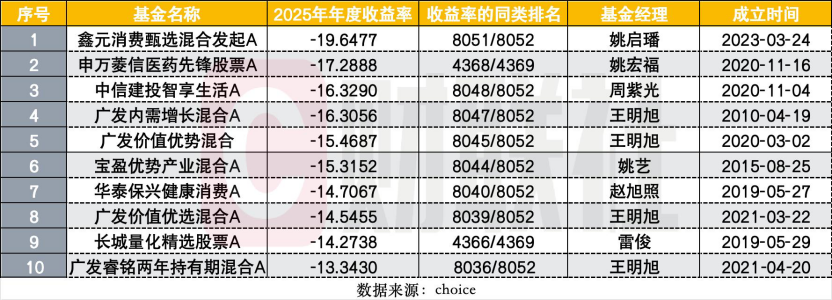
Core Viewpoint - The A-share market in 2025 exhibited a clear structural bull market, with significant performance disparities among active equity funds, highlighted by the top-performing fund achieving a record annual return of 233.29% while others faced substantial losses, including the worst performer with a -19.65% return [1][4]. Group 1: Market Performance - The Shanghai Composite Index, Shenzhen Component Index, ChiNext Index, and Sci-Tech Innovation 50 Index rose by 18.41%, 29.87%, 49.57%, and 35.92% respectively in 2025 [1]. - A total of 4888 active equity products from 160 public fund institutions reported positive returns, while 144 products from 68 institutions experienced losses [1][9]. Group 2: Fund Performance Disparities - The top-performing fund, Yongying Technology Smart Selection, achieved a record annual return of 233.29%, surpassing the previous record set by Wang Yawei in 2007 [1]. - The worst-performing fund, Xinyuan Consumption Selection, recorded a -19.65% return, marking a significant gap of 252.94% from the top performer [2][4]. Group 3: Xinyuan Consumption Selection Analysis - Xinyuan Consumption Selection's poor performance is attributed to aggressive trading strategies, frequent personnel changes, and scale challenges, leading to a lack of coherent investment logic [3][5]. - The fund's industry allocation showed erratic shifts, moving from heavy investments in pharmaceuticals to technology and later to media, missing key market trends [5][6]. Group 4: Fund Manager Insights - Notable fund managers, including Wang Mingxu and Han Weijun, saw their products listed among the worst performers, with their total managed assets shrinking by over 70% compared to previous peaks [3][9][12]. - Xinyuan Consumption Selection faced a critical challenge to meet its scale assessment, needing to grow from 0.29 billion to 2 billion within three months [7][8]. Group 5: Institutional Investment Trends - Institutional ownership in Xinyuan Consumption Selection dropped from over 95% to 42.94% by mid-2025, indicating a significant withdrawal of institutional funds [7]. - The trend of multiple products from the same fund manager appearing on the loss list highlights a broader issue within the industry, affecting even previously successful managers [9][10].

中国人最爱喝的饮料,大多数都不及格
虎嗅APP· 2026-01-03 13:35
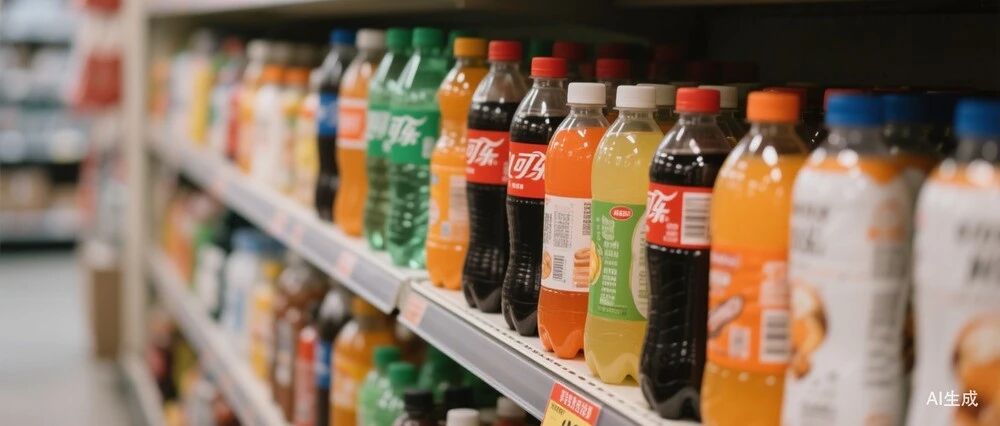
Core Viewpoint - Shanghai is implementing a beverage "nutritional choice" grading system, marking a national first aimed at reducing sugar consumption, particularly from sugary drinks [4][5][6]. Group 1: Grading System Overview - The grading system categorizes beverages into four levels: A, B, C, and D, with A being the healthiest and D the least healthy [9]. - Manufacturers are required to label C and D grade beverages, effectively informing consumers about their health risks [9][10]. - The grading is based on three criteria: sugar content, saturated fat content, and the presence of non-sugar sweeteners [10]. Group 2: Comparison with Singapore - Singapore has already implemented a similar grading system since late 2022, which has now expanded to include freshly prepared drinks [5][6]. - The Singaporean system is considered one of the strictest globally, with penalties for non-compliance, including advertising bans for D grade beverages [14]. Group 3: Health Implications - The average sugar intake in Singapore is significantly above the World Health Organization's recommended limit, with many people consuming around 60 grams daily, primarily from sugary drinks [37]. - In contrast, China's average daily sugar intake is lower, at about 21 grams, suggesting that the grading system could be beneficial if adapted [38][42]. Group 4: Beverage Analysis - Common beverages like carbonated drinks and fruit juices often fall into C or D grades due to high sugar content, while unsweetened teas and sodas are more likely to achieve A grades [24][30]. - The grading system may not favor certain products like full-fat milk, which could receive lower grades due to saturated fat content, despite their nutritional benefits [26][29]. Group 5: Consumer Behavior and Alternatives - The rise of non-sugar sweeteners in beverages is a response to sugar reduction efforts, but their health implications are still debated [49][52]. - The World Health Organization has raised concerns about the potential health risks associated with excessive consumption of non-sugar sweeteners, suggesting that moderation is key [54][55].
食品饮料行业周报:茅台市场化探索,看好大众品出行需求-20260103
国泰海通· 2026-01-03 08:19
Investment Rating - The industry investment rating is "Overweight" [16] Core Insights - The report highlights that the consumer sector is expected to rebound as domestic demand is elevated to a strategic position. The liquor sector is accelerating its bottoming process towards supply-demand balance. The demand for soft drinks, snacks, dining, and dairy products is anticipated to improve due to travel and gift box-related consumption [3][4] Summary by Sections Investment Recommendations - The investment strategy focuses on growth as the main line, emphasizing opportunities at supply-demand clearing points. Key recommendations include: 1. Preferred stocks with price elasticity: Kweichow Moutai, Wuliangye, Luzhou Laojiao, and those expected to clear inventory: Yingjia Gongjiu, Gujing Gongjiu, Shanxi Fenjiu, Jianshiyuan, Zhenjiu Lidu, Shede Liquor, and Jinhui Liquor [8] 2. Beverage stocks benefiting from travel demand: Dongpeng Beverage, Nongfu Spring (Hong Kong), and low valuation high dividend stocks: China Foods (Hong Kong), Master Kong Holdings (Hong Kong), and Uni-President China (Hong Kong) [8] 3. Growth stocks in snacks and food raw materials: Recommended stocks include Bailong Chuangyuan, Yanjinpuzi, Weilong Delicious (Hong Kong), Three Squirrels, and Ximai Foods [8] 4. Beer recommendations: Yanjing Beer, Tsingtao Brewery, Zhujiang Beer, and Bai Run Co., Huaren Beer (Hong Kong) [8] 5. Stable condiments and livestock production capacity reduction: Recommended stocks include Qianhe Flavor Industry, Baoli Foods, Ximai Foods, Babi Foods, Anji Foods, Haitian Flavor Industry, Angel Yeast, Yili Co., New Dairy, Youran Livestock (Hong Kong), and Modern Animal Husbandry (Hong Kong) [8] Liquor Sector - The liquor sector is in a process of bottoming out, with the industry accelerating its bottoming since Q3 2025. The report suggests that the clearing of financial statements will help reduce channel inventory pressure. Looking ahead to 2026, the price movements of leading brands like Moutai and Wuliangye are expected to stimulate sales, achieving a balance between volume and price. The macroeconomic and policy environment is anticipated to catalyze positive expectations for the consumer sector, with liquor being a cyclical asset that has entered an accelerated adjustment phase [11][12] Consumer Goods - The report notes that good traffic flow during the New Year period will benefit food and beverage demand related to travel. From December 31, 2025, to January 2, 2026, the nationwide cross-regional personnel flow is expected to grow by 25.4%, 20.3%, and 13.4% year-on-year, respectively. This positive flow is likely to enhance demand for soft drinks, snacks, and dining. Additionally, the relatively late timing of the 2026 Spring Festival is expected to favor the release of gift-related demand for snacks, soft drinks, and dairy products in Q1 2026 [13][14] Profit Forecast and Valuation - The report includes a profit forecast and valuation table for key stocks as of January 2, 2026, indicating expected earnings per share (EPS) growth and price-to-earnings (PE) ratios for various companies, with Kweichow Moutai having a market cap of 172.46 billion and an EPS forecast of 75.57 yuan for 2026, reflecting a 5% CAGR [15]

娃哈哈不上市的资本迷局:揭开宗庆后家族37年的股权魔术
Sou Hu Cai Jing· 2026-01-03 06:26
Group 1 - The core issue is why Wahaha, despite generating over 50 billion in annual revenue, has refused to go public for 37 years, with concerns that listing would expose its financial practices and valuation bubble [1][4] - Wahaha's founder, Zong Qinghou, has created a complex capital structure that allows for profit transfer through parallel companies, avoiding scrutiny that would come with a public listing [3][5] - The beverage industry is witnessing a shift where competitors like Nongfu Spring are leveraging public financing for innovation, while Wahaha remains stagnant due to its reluctance to embrace transparency [6] Group 2 - The investigation into a joint venture with Danone revealed that Zong's family had registered 87 offshore companies, which generated significant profits without authorization, highlighting the hidden financial maneuvers of Wahaha [3] - The potential for valuation inflation in capital markets is illustrated through hypothetical funding rounds, emphasizing that Wahaha's true profitability would be revealed if it were to go public [4] - The intricate structure of Wahaha, including its dual company setup with state-owned shares, presents significant barriers to listing, such as competition with non-listed entities and complex ownership arrangements [5]

食品饮料2026年投资策略报告:曙光渐显,在分化中前行-华源证券
Sou Hu Cai Jing· 2026-01-02 10:33
Group 1 - The report focuses on the food and beverage industry, highlighting the performance in 2025 and investment opportunities in 2026, with ROA (Return on Assets) as a key indicator for recovery [1][2] - The industry is currently in a differentiated recovery phase, with varying recovery paces across segments; soft drinks and snacks are leading, while liquor is still in the destocking phase [1][2] - The experience from Japan's consumption differentiation in the 1990s serves as a reference, emphasizing the importance of meeting consumer needs for cost-effectiveness and health [1][10] Group 2 - Investment strategies for 2026 focus on two main lines: "price" and "volume," with rising CPI expected to drive valuation recovery in traditional high-penetration sectors like liquor and dairy [2][3] - Key investment targets include leading brands in liquor (e.g., Kweichow Moutai, Luzhou Laojiao), dairy (e.g., Yurun Dairy, China Shengmu), and beer (e.g., Tsingtao Brewery) [2][3] - The report identifies three directions for volume growth: cost-effective consumption, low-penetration segments benefiting from health trends, and overseas market expansion [2][3] Group 3 - The industry is expected to progress through differentiation, with segments showing potential for valuation recovery as ROA stabilizes, while segments aligned with cost-effectiveness and health trends will continue to grow [3][10] - The report suggests that companies with efficiency and innovation advantages will further solidify their competitive positions [3][10]

聚力投资沃土 温馨春城取得新成效
Xin Lang Cai Jing· 2026-01-01 22:55
Core Viewpoint - Kunming is focusing on high-level investment attraction and creating a favorable business environment to drive economic growth during the 14th Five-Year Plan period, with significant increases in project signings and industrial investments [1][2][3]. Group 1: Investment and Project Growth - The number of newly signed projects in Kunming increased by 16.4% year-on-year in the first 11 months of 2025, with the number of projects over 100 million yuan ranking first in the province [1]. - The number of projects over 100 million yuan in Kunming increased from 211 in 2021 to 533 in 2024, with industrial project funding rising from 7.2% in 2021 to 58.5% in 2024 [1]. - The average annual growth rate of projects over 1 billion yuan from 2021 to 2024 was approximately 22.75%, with 56 additional projects in 2024 compared to 2021 [2]. Group 2: Industrial Structure and Investment Quality - The investment structure of primary, secondary, and tertiary industries shifted from 8.3:39.7:52 in 2021 to 5.2:59:35.8 in 2024, indicating a significant change in investment focus [3]. - Industrial investment accounted for 39.5% of total investment in 2024, doubling from 16.2% in 2020, with industrial investment reaching its highest level in 25 years at 26.3% [3]. - The contribution rate of Kunming's industrial output to the province reached 59.4%, an increase of nearly 50 percentage points since 2020 [3]. Group 3: Investment Attraction Mechanisms - Kunming's leadership has actively engaged in investment attraction, with city leaders conducting multiple trips to key regions and countries to promote investment opportunities [4]. - A cross-regional industrial cooperation mechanism was established to enhance collaboration and resource allocation among different districts, leading to the successful landing of several key projects [5]. - The city has implemented a series of policies to improve the quality and efficiency of investment attraction, including a comprehensive management system for the entire project lifecycle [5]. Group 4: Business Environment Improvement - Kunming has made significant strides in improving its business environment, achieving a transition from "good" to "excellent" in national evaluations [7]. - The city has introduced a "clear service" government initiative, ensuring that government services are responsive to business needs, with a high online service availability rate of 97.75% [8]. - The establishment of a "director's consultation" window allows direct engagement with business concerns, addressing 255 issues from 179 companies in 2024 [9]. Group 5: Community and Collaborative Efforts - Kunming has set up 69 business environment observation points and established a supervisory system to enhance community involvement in improving the business climate [10]. - The city has developed a collaborative model involving government, enterprises, and research institutions to optimize the business environment, ensuring that policies reach businesses effectively [10]. - The focus on attracting significant projects and optimizing the business environment aims to support high-quality development and regional economic integration [10].
食品饮料行业2026年度投资策略
2025-12-31 16:02
食品饮料行业 2026 年度投资策略 20251230 摘要 食品饮料行业预计在 2026 年迎来筑底回升,白酒价格体系重塑,大众 品进入渠道为王时代,餐饮链条有望在低基数下修复,具备产品创新和 供应链优化能力的企业将实现结构性增长。 白酒板块预计 2026 年二季度达新竞争点,目前处于供需深刻变化期, 价格体系重塑,建议重视底部配置价值。2025 年或进入报表下滑阶段, 加速去库过程。 大众品板块进入渠道为王时代,效率革命明显,商超调改加速,新兴渠 道崛起,成本红利延续,提升盈利能力。传统行业逐步筑底回暖,新兴 行业引领成长。 调味品行业 2026 年寻找阿尔法拐点,部分公司已进入库存去化尾声, 成本继续回落,盈利能力提升。建议关注天禾味业、海天味业及日辰股 份等公司。 乳制品行业预计 2026 年迎来供需拐点,奶价筑底周期延续,深加工打 开。奶价持平或上涨缓解竞争,原奶重回紧平衡,下游价格竞争减弱, 盈利持续改善。关注伊利、蒙牛、新乳业及妙可蓝多等投资机会。 Q&A 2025 年食品饮料行业的整体表现如何? 2025 年,食品饮料行业整体处于调整筑底阶段。需求端维持相对疲软,供给 端出清仍在进行中,导致整 ...
都江堰市“天府珍水”品牌亮相 发布投资机会清单绘就百亿产业集群蓝图
Sou Hu Cai Jing· 2025-12-31 14:16
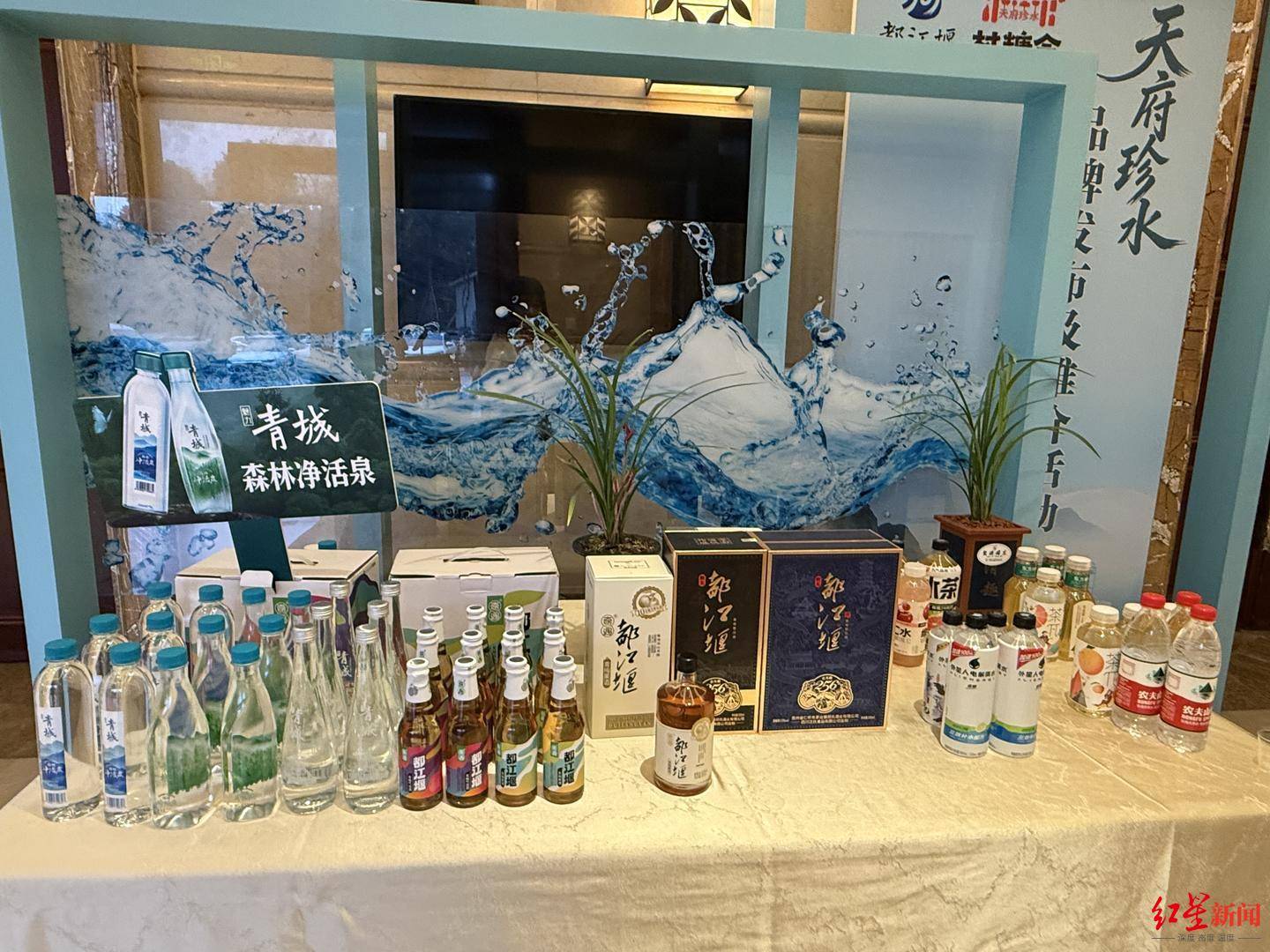
Core Insights - The "Tianfu Zhen Shui" brand was officially launched on December 31, showcasing its unique water sourced from the Minjiang River and promoting investment opportunities in related industries [1][3]. Group 1: Brand Development and Investment Opportunities - The launch event marked a new phase in brand development with the introduction of a visual identity system, emphasizing strict ecological protection measures and the unique water quality formed over millions of years [3]. - An investment opportunity list was presented, highlighting significant commercial potential in various sectors including drinking water, alcoholic beverages, new tea drinks, dairy products, condiments, and medical beauty water, as well as the integration of culture and tourism [3][5]. Group 2: Industry Growth and Economic Impact - A 4.6 square kilometer "Tianfu Zhen Shui" industrial park is being developed in the southern area of the Dujiangyan Economic Development Zone, attracting over 80 food and beverage companies, with signed water-related projects amounting to 4.3 billion yuan [5]. - Leading projects have shown strong economic impact, with Nongfu Spring's production base expected to generate over 500 million yuan within six months of its 2025 launch, and Yuanqi Forest contributing over 1.3 billion yuan since its establishment in 2021 [5]. - The industry chain centered around "Tianfu Zhen Shui" has driven total revenue across three industries to exceed 13 billion yuan [5]. Group 3: Innovation and Policy Support - Innovative products have been developed, including skincare items that incorporate Daoist "water nurturing" concepts, and the "Dujiangyan Kiwi" brand has achieved a market value of 4.324 billion yuan, with strong overseas sales [5]. - Government initiatives have created a favorable environment for industry development through various support measures, including special policies and funding [5][6]. Group 4: Cultural and Tourism Integration - The event featured promotional activities for tourism routes themed around "Tianfu Zhen Shui," aiming to deepen the integration of water culture with tourism and consumption [6]. - Local officials expressed a desire to collaborate with various sectors to promote "Tianfu Zhen Shui" globally, envisioning a billion-yuan industry cluster [6].
胡润:一张财富排行榜里的二十五年|我们的四分之一世纪
经济观察报· 2025-12-31 09:34
Core Viewpoint - The article reflects on the evolution of wealth in China over the past 25 years, highlighting the transformation of the "rich list" from a curiosity to a significant indicator of the vitality of the private economy in China [6][26]. Group 1: Historical Context - In 1999, the first Chinese rich list was created by Hu Run, initially featuring 50 individuals, with the first being Rong Yiren of CITIC Group [5][6]. - The list has grown significantly, with the 2025 edition featuring 1,434 individuals, and the entry threshold rising to 5 billion RMB [6][27]. - The early years of the list were marked by a lack of transparency regarding wealth, with many entrepreneurs being sensitive about their financial status and personal information [19][22]. Group 2: Changes in Wealth Accumulation - The past 25 years have seen the fastest and largest accumulation of wealth in Chinese history, shifting from land appreciation to wealth generated through technological breakthroughs and global markets [8][36]. - The composition of the rich list has changed, with a significant decline in the number of real estate moguls, from 50% in the first list to only one in the top 100 by 2025 [30][32]. Group 3: New Wealth Dynamics - The current wealthy individuals are often referred to as "super wealth creators" or "super entrepreneurs," reflecting their contributions beyond mere financial accumulation [36]. - The rise of technology-driven entrepreneurs like Lei Jun and the growth of sectors such as biomedicine and renewable energy indicate a shift in the sources of wealth [36][37]. - The new generation of entrepreneurs is characterized by a global perspective, with many targeting international markets from the outset [43][44]. Group 4: Cultural and Behavioral Shifts - There is a notable cultural shift among Chinese entrepreneurs, who are increasingly embracing transparency and public discussion of wealth, contrasting with the previous generation's tendency to remain low-profile [25][26]. - The new generation of entrepreneurs often pursue further education to enhance their knowledge and networks, reflecting a commitment to continuous learning [38]. Group 5: Future Outlook - The article suggests optimism regarding the next generation of business leaders, who have been exposed to their parents' struggles and are likely to uphold the values of their family businesses [46]. - The ongoing transition in wealth dynamics and the emergence of new industries indicate a robust future for China's economy, with capital moving away from real estate towards innovation-driven sectors [37].

贵州铜仁奋力打造优质天然饮用水产区
Zhong Guo Jing Ji Wang· 2025-12-30 13:30
近年来,铜仁依托生态资源优势,深耕天然饮用水产业,形成了"一圈两带三基地"的产业布局,吸引了 农夫山泉、屈臣氏等知名企业落户,培育了梵山山泉、边城山泉等一批本土骨干品牌。2025年,该市天 然饮用水产量预计突破320万吨,完成规模以上工业总产值20亿元、同比增长26%。 同时,铜仁还通过制定产业发展规划、实施水资源普查保护、强化招商引资、搭建梵净山国际水博会等 举措,持续推动天然饮用水产业与旅游、茶、生态养殖等产业深度融合,实现了生态效益、经济效益与 社会效益的有机统一。 记者从12月26日在贵阳举行的贵州省铜仁市天然饮用康养水标准和产品发布会上获悉,铜仁市将在"十 五五"时期持续推进天然饮用水产业数字化、智能化改造,争取天然饮用水产量达到480万吨。 铜仁地处黔湘渝三省(市)交汇处,森林覆盖率高达67.7%,水资源总量达162亿立方米,天然饮用水富含 锶、偏硅酸等20多种微量元素,目前已探明的优质水源点达244处,其中41处达到天然矿泉水标准。 铜仁市工信局负责人表示,铜仁持续做深水文章、搭好水平台、做响水品牌、做大产业量,优化"公共 品牌+企业品牌+产品品牌+热销单品"品牌体系,加大招商引资力度,促进资源 ...