
华润三九

Search documents
流感季来临+跟踪指数股息率3.18%,中药ETF(159647)配置价值凸显
Xin Lang Cai Jing· 2025-11-24 02:17
Core Viewpoint - The Chinese traditional medicine sector is experiencing a positive trend, with the Zhongzheng Traditional Chinese Medicine Index showing an increase, driven by rising flu cases and the performance of key stocks in the industry [1][2]. Group 1: Market Performance - As of November 24, 2025, the Zhongzheng Traditional Chinese Medicine Index (930641) rose by 0.68%, with a one-year dividend yield of 3.18% [1]. - Key component stocks such as Jiaying Pharmaceutical (002198) increased by 4.48%, Zhongsheng Pharmaceutical (002317) by 2.86%, and others also showed positive growth [1]. - The Zhongzheng Traditional Chinese Medicine ETF (159647) increased by 0.40%, with the latest price at 1 yuan [1]. Group 2: Flu Trends and Impact - The National Influenza Center reported that the ILI% in southern hospitals was 5.5%, up from 4.6% the previous week, and higher than the same period in 2022 and 2024 [1]. - Northern hospitals reported an ILI% of 6.1%, also higher than the previous week and exceeding levels from the last three years [1][2]. - The rising flu positivity rates in both southern and northern regions are attributed to lower immunity against the H3N2 strain and an earlier onset of the flu season this year [2]. Group 3: Industry Outlook - The flu season for 2025-2026 is expected to peak higher than the previous year, leading to increased demand for respiratory infection-related products [2]. - The traditional Chinese medicine sector is anticipated to face short-term performance pressure but is expected to benefit from policies related to centralized procurement and basic medicine, as well as innovation-driven growth [2]. - The top ten weighted stocks in the Zhongzheng Traditional Chinese Medicine Index account for 54.92% of the index, indicating a concentrated market structure [3].
多款口服环肽药物具重磅潜力,产业链有望充分受益
2025-11-24 01:46
Summary of Key Points from Conference Call Records Industry Overview - The pharmaceutical industry is generally optimistic, with signs of a rebound in the innovative drug sector. Large-cap companies have seen declines of over 30%, while small-cap companies have dropped more than 50%, indicating a potential opportunity for stock alpha in the coming year [1][2][4]. Key Companies to Watch - **Innovative Drug Sector**: Focus on companies like Innovent Biologics and China National Pharmaceutical Group, as well as smaller firms like Genscript Biotech and Luyin Pharmaceutical [1][4]. - **Medical Devices**: Companies such as Mindray and Spring Medical are highlighted for their recovery and growth potential in high-value consumables and medical equipment [5][6]. - **Traditional Chinese Medicine**: Increased institutional interest, with companies like Yiling Pharmaceutical and China Resources Sanjiu expected to benefit from a recovery in the sector [1][7][9]. - **CRO and API Sectors**: Kanglong Chemical and ProPharma are noted for their growth potential, particularly in clinical research and API business recovery [1][10][11]. Market Trends and Opportunities - **High-Value Consumables**: The pressure from centralized procurement is easing, leading to a reassessment of value driven by innovation [5][6]. - **Blood Products**: The sector is in an adjustment phase but shows signs of reversal, with supply tightening expected in 2026 [3][12][15][16]. - **Oral Peptide Drugs**: New oral formulations like Merck's MK0,616 and Johnson & Johnson's GNG2,113 show promise in treating chronic diseases, with potential to change administration methods and improve patient compliance [3][17][20][27]. Financial Performance and Projections - **Kanglong Chemical**: Expected adjusted net profit of 2.12 billion yuan by 2026, with a price-to-earnings ratio of 25 times [11]. - **ProPharma**: Anticipated to see a compound annual growth rate exceeding 20% by 2027, with a current P/E ratio of about 14 times [11]. - **Tianyu Co.**: Projected profit of 300 million yuan for the year, with a growth rate of over 30% expected [14]. Challenges and Considerations - **Regulatory and Market Dynamics**: The medical device sector faces pressures from policy changes and international competition, necessitating innovation and adaptation [5][6]. - **Blood Product Supply**: The industry is experiencing a supply-demand imbalance, with potential for improvement as new products are introduced [12][15][16]. - **Oral Peptide Development**: Challenges in molecular modification and large-scale production remain significant hurdles for the commercialization of new oral peptide drugs [27]. Conclusion - The pharmaceutical and medical device industries are poised for growth, with several companies showing strong potential for recovery and innovation. Investors are encouraged to focus on key players within these sectors, particularly those involved in innovative drug development and high-value medical devices, as they navigate the evolving market landscape [1][4][5][11][14].
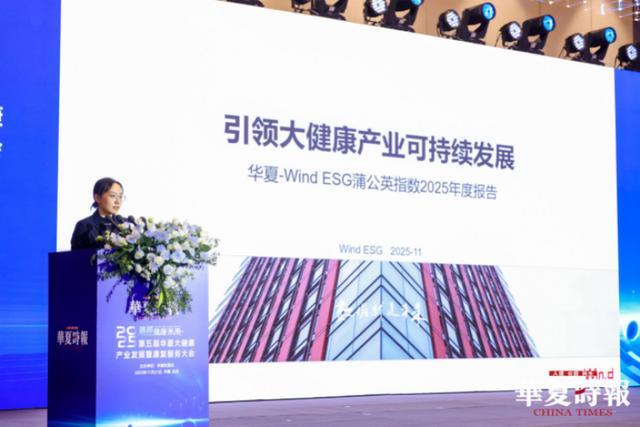
Wind ESG高级分析师翁钰宁:华夏—Wind ESG蒲公英指数引领医疗健康行业可持续发展|聚焦2025华夏大健康
Hua Xia Shi Bao· 2025-11-22 14:32
Core Viewpoint - The 2025 Huaxia Health Industry Development and Rehabilitation Service Conference emphasizes the importance of technology and innovation in the healthcare sector, alongside the growing focus on environmental, social, and governance (ESG) performance of healthcare companies [2][3]. Group 1: ESG Rating System - The Dandelion Index, developed by Huaxia Times Health Research Institute and Wind, selects the top 50 companies from 495 A-share healthcare companies and 30 from 262 Hong Kong healthcare companies, adjusting the components monthly based on ESG scores [3][4]. - The ESG rating system evaluates companies on long-term management practices across environmental, social, and governance dimensions, incorporating over 500 indicators and 28 topics, with a focus on industry-specific issues [4][7]. Group 2: Index Performance - The Dandelion Index shows superior performance, with the Dandelion 50 Index rising approximately 29% year-to-date, outperforming the CSI 300 and healthcare industry indices by about 35 percentage points, with an annualized return of around 10% [8][11]. - The Dandelion 30 Index has achieved a year-to-date increase of 104%, significantly surpassing the Hong Kong healthcare industry index and the Hang Seng Index, with a five-year cumulative return of 63% [11][12]. Group 3: Company Ratings - 80 companies with excellent ESG performance are included in the Dandelion Index, with Haier Biomedical and Yinkang Life receiving the highest AAA rating [7]. - In the Dandelion 50 Index, 62% of companies are rated AA, while 34% are rated A; the Dandelion 30 Index has 77% rated AA, with no low-rated companies, contrasting with over 69% of the healthcare industry having low ratings [7][8]. Group 4: Call to Action - The conference encourages more companies to engage in ESG practices and register on the Wind ESG issuer communication platform for rating feedback, aiming to promote sustainable development in the industry [14].






梁木强:南药匠心点“木”成金,一方“良方”强农兴村丨粤匠担当 兴农之道④
Nan Fang Nong Cun Bao· 2025-11-21 06:05
Core Viewpoint - The article highlights the journey of Liang Muqiang, who transformed the agricultural landscape in Deqing County by developing the southern medicine industry, focusing on innovation, community involvement, and technology to enhance farmers' income and promote sustainable agricultural practices [1][72]. Group 1: Company Development - Guangdong Dekang Agricultural Technology Co., Ltd. was established by Liang Muqiang, focusing on the development of rare medicinal materials through a comprehensive model that includes research, seedling cultivation, planting, processing, and sales [18][19]. - The company has achieved significant milestones, including the production capacity of 15 million high-quality seedlings annually, contributing to the income of thousands of local farmers [4][5]. - Dekang Agriculture has been recognized as a national high-tech enterprise and has obtained 18 national invention patents, showcasing its commitment to innovation [23][25]. Group 2: Agricultural Innovation - The company has developed a new comprehensive breeding system that combines various advanced techniques, achieving standardized and factory-based production of seedlings [28][29]. - Dekang Agriculture has selected 100 rare medicinal plant varieties for development and has successfully cultivated 32 new varieties with significantly improved traits [26][27]. - The company has established a 5,000 square meter primary processing center to address challenges related to the transportation and processing of fresh medicinal materials [52][54]. Group 3: Community Engagement - The "company + base + cooperative + farmer" model has been implemented, leading to the establishment of 22 cooperatives that engage over 700 members and create more than 1,000 job opportunities [31][32][44]. - The average annual income of cooperative farmers increased from 18,000 yuan per mu in 2021 to 25,000 yuan per mu in 2023, marking a 39% growth [42]. - Dekang Agriculture has been recognized as a demonstration base for entrepreneurship and employment, significantly contributing to local job creation [43]. Group 4: Knowledge Dissemination - Liang Muqiang actively participates in setting industry standards and has led efforts to establish local standards for various medicinal plants [46][47]. - The company has conducted over 120 training sessions, reaching more than 18,000 participants, to disseminate agricultural knowledge and techniques [62][64]. - Dekang Agriculture has facilitated loans and provided agricultural supplies to farmers, helping them overcome financial barriers to cultivation [66][67].

重磅剧透!2025南药食养大会有哪些宝藏南药?
Nan Fang Nong Cun Bao· 2025-11-19 07:01
Core Viewpoint - The 2025 China Southern Medicine and Food Nourishment Conference will be held in Zhaoqing from November 19 to 21, showcasing local medicinal materials and creating a platform for the display of southern medicine and processing products from across the country [2][3][4]. Group 1: Event Overview - The conference aims to connect the entire industry chain and innovative concepts, moving beyond simple product displays [4]. - It will feature high-quality southern medicine resources and deep processing products from provinces such as Guangxi, Yunnan, Hainan, and Fujian, promoting collaborative development in southern medicine [8][11]. Group 2: Exhibitor Highlights - The Chinese Academy of Tropical Agricultural Sciences will present excellent tropical southern medicine varieties and research results, demonstrating the role of national research institutions in the industry chain [10][11]. - Exhibitors from Guangxi will showcase various local medicinal materials and innovative products, highlighting the depth and vitality of the southern medicine industry [14][17]. - Yunnan's exhibitors will focus on the dual-use characteristics of medicinal and edible plants, showcasing products with significant development potential [22][23]. Group 3: Product Innovations - Various innovative products will be presented, such as cinnamon oil, Luo Han Guo tea, and health foods derived from traditional medicinal materials [19][21][28]. - The conference will also feature modern interpretations of traditional southern medicine, including functional foods and beverages that integrate health concepts into daily life [64][72]. Group 4: Regional Contributions - Zhaoqing will present a comprehensive view of the entire industry chain, from raw medicinal materials to deep processing and cultural creativity, reinforcing its position as "China's Southern Medicine and Food Nourishment Capital" [49][50]. - The event will highlight the rich diversity and authenticity of Zhaoqing's southern medicine resources, including live plants and processed products [51][54]. Group 5: Cultural Integration - The conference will include a Traditional Chinese Medicine Health Culture Night Market, allowing the public to engage with southern medicine through experiential products [67][68]. - The integration of southern medicine with modern technology and health concepts will be emphasized, showcasing innovations in functional foods and health services [72][74].
关注流感爆发后的产业链机会,电子板块Q3业绩恢复
Tebon Securities· 2025-11-19 03:22
Market Review - The A-share market experienced fluctuations, with the Shanghai Composite Index down 0.18% and the ChiNext Index down 3.01% during the week of November 10-14, 2025. The average daily trading volume was 2.04 trillion yuan, slightly up from the previous week [7][8]. Consumer Sector - The global e-commerce market has seen an overall increase in e-commerce penetration, with a CAGR of 15.5% over the past five years. However, the U.S. e-commerce market is entering a phase of slower growth, with a projected penetration rate of 23.5% by 2025 [18][21]. - The U.S. e-commerce landscape is dominated by a few key players, with Amazon and Walmart contributing over 50% of market growth in 2024. Platforms like Temu and SHEIN are facing challenges due to the end of the small package tax exemption policy [25][28]. Health Sector - The flu is on the rise in China, with the percentage of flu-like illness (ILI) cases reported at 5.5% in southern provinces and 6.1% in northern provinces as of the 45th week of 2025. This trend is expected to increase demand for medical services and treatments [30][31]. - Companies involved in flu vaccine production, antiviral drugs, and protective equipment are likely to benefit from the rising flu cases. Notable companies include Jindike, Baike Biological, and Huashan Biological [33][38]. Hard Technology Sector - The electronic industry reported a total revenue of 1.19 trillion yuan in Q3 2025, reflecting a year-on-year growth of 19.33%. The net profit attributable to shareholders reached 895.61 billion yuan, up 47.89% year-on-year, indicating a strong recovery in profitability [35][36]. - The semiconductor manufacturing sector is experiencing growth due to increased utilization rates in downstream wafer fabs. Companies like Huahong and SMIC reported high capacity utilization rates in Q3 2025 [36][37]. Advanced Manufacturing Sector - The lithium battery industry is transitioning from a phase of overcapacity to a rebalancing stage, driven by strong demand for power and energy storage batteries. This sector has undergone a complete industrial cycle, moving from expansion to inventory clearance and now to demand recovery [5].
解码资本培育深圳实践:从“单点突破”迈向“集群共进”|决胜“十四五” 擘画“十五五”·地方资本市场高质量发展
Zheng Quan Shi Bao Wang· 2025-11-19 00:15
Core Insights - Shenzhen has emerged as a key engine city in the Guangdong-Hong Kong-Macao Greater Bay Area, showcasing significant achievements in capital market development during the 14th Five-Year Plan period, with over 400 billion yuan in equity financing and a leading proportion of technology companies listed [1][2] Group 1: Capital Market Development - During the 14th Five-Year Plan, Shenzhen's capital market facilitated over 400 billion yuan in equity financing, supporting advanced manufacturing projects [2] - The proportion of companies listed on the Growth Enterprise Market and the Sci-Tech Innovation Board reached 50.24%, the highest among major cities in China [2] - Shenzhen's overall R&D investment intensity reached a global leading level, with listed companies' R&D expenditure totaling 210.33 billion yuan in 2024, a 91.35% increase from 2020 [2] Group 2: Market Performance - In the first three quarters of 2025, Shenzhen's listed companies achieved a total revenue of 5.2 trillion yuan and a net profit of 457.797 billion yuan, reflecting year-on-year growth of 7.36% and 3.98%, respectively [3] - Shenzhen's securities firms ranked first nationally in performance, with public and private fund management scales among the top three [3] Group 3: Investor Engagement and Protection - During the 14th Five-Year Plan, 1,486 listed companies in Shenzhen implemented cash dividends totaling nearly 990 billion yuan, significantly exceeding the equity financing amount [4] - The regulatory authorities maintained a "zero tolerance" approach to violations, enhancing investor confidence and market integrity [4][6] Group 4: Future Directions - The Shenzhen government aims to establish a globally influential industrial financial center, focusing on high-quality development in banking, securities, insurance, venture capital, and mergers and acquisitions [7][8] - The capital market will emphasize the development of new productive forces, guiding funds towards high-tech and high-quality sectors to support industrial transformation and innovation [8]





解码资本培育深圳实践:从“单点突破”迈向“集群共进”|决胜“十四五” 擘画“十五五”·地方资本市场高质量发展
证券时报· 2025-11-18 23:40
Core Viewpoint - Shenzhen's capital market has significantly contributed to the local economy during the "14th Five-Year Plan" period, achieving over 400 billion yuan in equity financing and leading in technology company listings, while aiming to establish itself as a globally influential industrial financial center in the upcoming "15th Five-Year Plan" [1][3][14]. Group 1: Economic Contributions - During the "14th Five-Year Plan," Shenzhen's capital market facilitated over 400 billion yuan in equity financing, supporting advanced manufacturing projects [3]. - The total revenue of Shenzhen-listed companies reached 6.88 trillion yuan in 2024, a 30.55% increase from 5.27 trillion yuan in 2020 [20]. - Shenzhen's listed companies achieved a total market capitalization of 12.71 trillion yuan by the end of Q3 2025, up 25.22% from 10.15 trillion yuan at the end of 2020 [17]. Group 2: Innovation and R&D - Shenzhen's listed companies' R&D expenditure reached 210.34 billion yuan in 2024, a 91.35% increase from 109.92 billion yuan in 2020 [29]. - The proportion of companies listed on the ChiNext and Sci-Tech Innovation Board reached 50.24%, the highest among major cities in China [25]. Group 3: Investor Engagement and Protection - Shenzhen-listed companies distributed nearly 990 billion yuan in cash dividends during the "14th Five-Year Plan," ranking second among major cities in China [31]. - A total of 1,486 companies implemented cash dividends, with 598 companies repurchasing shares worth nearly 46 billion yuan [6][31]. Group 4: Market Expansion and Globalization - By November 3, 2025, Shenzhen had 424 domestic listed companies, a 35.03% increase from 314 at the end of 2020 [15]. - Over 60% of Shenzhen's listed companies engaged in overseas business, generating 580.14 billion yuan in revenue in the first half of 2025, a 178.58% increase from 208.25 billion yuan in the first half of 2020 [22]. Group 5: Future Directions - The Shenzhen government aims to accelerate the establishment of a globally influential industrial financial center, focusing on high-quality development in banking, securities, insurance, and venture capital [9][10]. - The capital market will emphasize the development of new productive forces, deepen reforms, and enhance investor protection mechanisms [10][11].
对近期重要经济金融新闻、行业事件、公司公告等进行点评:晨会纪要-20251119
Xiangcai Securities· 2025-11-18 23:30
Macro Strategy - Recent international gold prices are fluctuating at high levels, with domestic jewelry gold prices also remaining elevated. There is a new trend in gold consumption favoring lighter products like gold bars. Short-term gold prices are expected to maintain high volatility. Consumers should pay attention to international gold price fluctuations if investing, and choose purchasing timing based on their budget for wearing needs [2][3] - From January to October, the national general public budget revenue reached 18.649 trillion yuan, a year-on-year increase of 0.8%. The national general public budget expenditure was 22.5825 trillion yuan, a year-on-year increase of 2%. Securities transaction stamp duty revenue was 162.9 billion yuan, a year-on-year increase of 88.1% [2] - By the end of 2024, the total asset scale of urban commercial banks in China is projected to be 60.15 trillion yuan, a 134-fold increase since 1995, accounting for 13.53% of the banking financial institutions, with a market share increase of 8.24 percentage points. The non-performing loan ratio is 1.76%, and the provision coverage ratio is 188.08% [2] Industry and Company Medical Services Industry - The medical and biological sector rose by 3.29%, ranking fifth among the 31 first-level industries. The Shanghai and Shenzhen 300 Index fell by 1.08%, indicating that the medical sector outperformed the index by 4.37 percentage points [6] - The PE (ttm) of the medical services sector is 33.47X, with a PB (lf) of 3.37X. The PE increased by 0.51X and the PB increased by 0.05X compared to the previous week [7][8] - The TIDES CRDMO market is expected to grow significantly, with the global market projected to increase from 2.1 billion USD in 2018 to 5.5 billion USD in 2023, with a CAGR of 20.9%, and further to 37.3 billion USD by 2032, with a CAGR of 23.8%. The Chinese market is expected to grow from 200 million USD in 2018 to 800 million USD in 2023, with a CAGR of 37.1%, and to 6.2 billion USD by 2032, with a CAGR of 25.5% [9] - Investment recommendations for the medical services sector include focusing on high-growth companies in the ADC CDMO and TIDES CDMO areas, as well as companies in the third-party testing laboratories and consumer medical sectors [10] Traditional Chinese Medicine Industry - The traditional Chinese medicine sector rose by 4.08%, ranking third among secondary sub-sectors. Companies such as Te Yi Pharmaceutical and Zhongsheng Pharmaceutical performed well, while others like *ST Changyao and ST Huluwa performed poorly [12] - The PE (ttm) for the traditional Chinese medicine sector is 29.25X, with a PB (lf) of 2.47X, indicating a slight increase from the previous week [13][14] - The market for traditional Chinese medicinal materials is experiencing volatility, with an overall supply surplus due to increased arrivals from new harvests. Recent weather conditions have also impacted harvesting [15] - The steady advancement of centralized procurement in the traditional Chinese medicine industry aims to reduce patient medication costs and shift competition towards cost control and quality standards [16][17] - Investment recommendations for the traditional Chinese medicine sector include focusing on companies with competitive advantages in product quality and cost, as well as those benefiting from national reforms and centralized procurement policies [18][19]



决胜“十四五” 擘画“十五五”·地方资本市场高质量发展之深圳篇: 解码资本培育深圳实践:从“单点突破”迈向“集群共进”
Zheng Quan Shi Bao· 2025-11-18 18:18
Core Insights - Shenzhen is positioned as a core engine city in the Guangdong-Hong Kong-Macao Greater Bay Area, serving as an innovative hub for new business models and a key trade center, with a capital market that ranks among the top in China [1][2] - During the 14th Five-Year Plan period, Shenzhen's capital market achieved over 400 billion yuan in equity financing, with a leading proportion of technology companies listed, and a significant increase in overall R&D intensity [2][3] - Looking ahead to the 15th Five-Year Plan, Shenzhen aims to establish itself as a globally influential industrial financial center, focusing on high-quality capital market development [1][6] Group 1: Capital Market Development - Shenzhen's capital market has increasingly supported the real economy, with equity financing exceeding 400 billion yuan during the 14th Five-Year Plan, facilitating advanced manufacturing projects [2][3] - The proportion of companies listed on the Growth Enterprise Market and the Sci-Tech Innovation Board accounts for 50.24% of total listed companies in the region, the highest among major cities in China [2] - R&D expenditure of listed companies in Shenzhen is projected to reach 210.34 billion yuan in 2024, a 91.35% increase from 2020, with BYD leading at 54.16 billion yuan [2] Group 2: Market Performance and M&A Activity - In the first three quarters of 2025, Shenzhen's listed companies reported cumulative revenues of 5.2 trillion yuan and net profits of 457.797 billion yuan, with growth rates of 7.36% and 3.98%, respectively, surpassing national averages [3] - Shenzhen has seen 497 mergers and acquisitions since the introduction of the "M&A Six Guidelines," with transaction amounts exceeding 90 billion yuan, enhancing corporate competitiveness [3] - Over 60% of Shenzhen's listed companies are involved in overseas business, generating 580.14 billion yuan in revenue, marking an 18.11% year-on-year increase [3] Group 3: Investor Engagement and Protection - During the 14th Five-Year Plan, Shenzhen's listed companies implemented cash dividends totaling nearly 990 billion yuan, significantly exceeding equity financing amounts [4] - A total of 598 companies executed share buybacks amounting to nearly 46 billion yuan, with 40 companies receiving approval for stock buyback loans totaling 5.771 billion yuan [4] - The regulatory environment has been strengthened, with 131 cases handled by the Shenzhen Securities Regulatory Bureau, resulting in 88 administrative penalties totaling over 500 million yuan [5] Group 4: Future Directions and Strategic Goals - The Shenzhen government aims to accelerate the establishment of a globally influential industrial financial center, focusing on high-quality development across various financial sectors [6][7] - Key initiatives include enhancing the resilience of the capital market, promoting a high-level opening-up, and strengthening investor protection mechanisms [7] - The focus will be on developing new productive forces, guiding funds towards high-tech and high-quality projects, and improving the multi-tiered capital market structure [6][7]