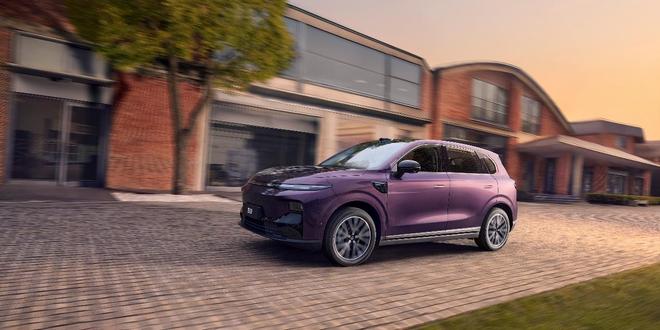
零跑

Search documents
40款车平均通过率不足36%,争议测试背后的自动驾驶迷局
21世纪经济报道· 2025-07-28 14:57
Core Viewpoint - The recent driving assistance test conducted by Dongche Di revealed that the average pass rate for nearly 40 vehicle models from over 20 brands was only 35.74%, highlighting significant safety concerns in the industry [2][3]. Group 1: Test Results and Implications - The test included 15 accident scenarios, with specific challenges in both highway and urban settings, showing that only 47% of vehicles could safely navigate construction scenarios and 58% could stop effectively for children unexpectedly crossing the road [2]. - Tesla's Model X and Model 3 outperformed other brands, successfully passing 5 out of 6 highway scenarios and 8 out of 9 urban scenarios [2]. - The results have sparked renewed discussions among car manufacturers regarding the safety of driving assistance technologies, with some executives acknowledging common technical bottlenecks in extreme scenarios [5][6]. Group 2: Industry Reactions - Various car manufacturers have expressed differing opinions on the test results, with some emphasizing the need for improved capabilities in high-speed evasion and recognition of non-standard obstacles [5][6]. - Tesla's CEO Elon Musk highlighted the company's achievement in the absence of local training data, while other companies refrained from commenting on the test [5][6]. - The test has also drawn criticism from netizens, questioning the validity of the results, which Dongche Di has defended by clarifying the testing methodology [6][7]. Group 3: Technological Challenges and Solutions - The industry faces significant challenges in enhancing vehicle perception systems, particularly in recognizing non-standard obstacles and adapting to complex driving environments [10][11]. - Solutions proposed include the integration of laser radar to improve near-field perception and the enhancement of computational power to better handle dynamic road conditions [11][12]. - The need for multi-dimensional visual fusion perception is emphasized to address the limitations of current sensor technologies, which struggle under adverse weather conditions and complex scenarios [12][13].


月销4万,碾压“蔚小理”,零跑为什么行?
3 6 Ke· 2025-07-28 04:12
Core Insights - Leapmotor has achieved significant sales growth, becoming the sales champion among new energy vehicle manufacturers, with deliveries reaching 22.17 million units in the first half of 2025, a year-on-year increase of 156% [2][13] - Despite its sales success, Leapmotor lacks brand recognition and consumer loyalty, with many potential buyers expressing skepticism about its value and quality [6][7] - The company's strategy focuses on providing high-value configurations at competitive prices, effectively positioning itself as a "half-price ideal" alternative in the market [4][10] Sales Performance - Leapmotor's sales surged from 37,000 units in March to 48,000 units in June 2025, marking a nearly 30% increase over four months [1] - The company has maintained a leading position in the market, outpacing competitors like Li Auto and Xpeng [2][3] Product Strategy - Leapmotor has adopted a range-extended electric vehicle (REEV) strategy, which has proven effective in addressing consumer concerns about charging infrastructure and costs [3][17] - The company offers a simplified product lineup with various configurations, making it easier for consumers to choose [4][10] Supply Chain and Cost Management - Leapmotor employs a cost-effective supply chain model, utilizing second-tier suppliers to reduce costs and extend payment terms, which enhances its pricing strategy [11][15] - The company has successfully created a production loop that leverages resources from previously unsuccessful manufacturers, allowing it to maintain low prices while offering competitive features [11][19] Market Positioning - Leapmotor targets pragmatic consumers who prioritize value and convenience over brand prestige, focusing on delivering practical solutions rather than aspirational marketing [7][8] - The company's marketing strategy relies on grassroots efforts and direct engagement with consumers, rather than high-profile branding campaigns [7][8] Financial Performance - In Q1 2025, Leapmotor reported revenues exceeding 10 billion yuan, with a gross margin of 14.9% and a narrowed quarterly loss of 130 million yuan, indicating a move towards profitability [13][14] - However, concerns exist regarding the sustainability of its profit margins, as the company faces challenges in maintaining its cost structure amid rising raw material prices [14][15] Challenges Ahead - Leapmotor's reliance on range-extended models may limit its potential for higher profit margins, as the complexity of dual systems can hinder efficiency [17][18] - The company must navigate potential pitfalls related to brand perception and service quality as it scales, which could impact future growth [6][7][8]
汽车与汽车零部件行业周报、月报:智驾科技与反内卷共振-20250728
Guoyuan Securities· 2025-07-28 03:29
Investment Rating - The report maintains a "Recommended" investment rating for the automotive industry [7] Core Insights - The automotive industry is experiencing a gradual recovery in growth, with passenger vehicles continuing to show stable and rapid growth [2] - The report highlights the synergy between technological advancements and anti-involution reforms, driving the industry's development momentum [5] Summary by Sections Weekly Market Review (2025.07.19-07.25) - The automotive sector rose by 1.03% this week, with all related sub-sectors also increasing. The Shanghai and Shenzhen 300 index rose by 1.69% [13] - The commercial vehicle sector saw the highest increase at 4.22%, while individual stocks like Great Wall Motors and BYD also performed well [13][16] Data Tracking (2025.07.19-07.25) - From July 1-20, the national retail sales of passenger vehicles reached 978,000 units, a year-on-year increase of 11%, while wholesale sales were 960,000 units, up 22% year-on-year [21] - In the new energy vehicle segment, retail sales reached 537,000 units, a 23% increase year-on-year, with a penetration rate of 54.9% [21] Industry News (2025.07.19-07.25) - The Ministry of Industry and Information Technology proposed a new policy to ban the transfer of new cars to second-hand status within six months of registration to combat zero-kilometer second-hand cars [34][35] - Guangdong and Anhui provinces are implementing measures to promote fair competition in the automotive industry, including commitments from manufacturers to optimize payment processes for suppliers [42] Investment Recommendations - The report suggests focusing on technology-driven sectors such as artificial intelligence and autonomous driving, as well as opportunities in the anti-involution segment, particularly in dealership-related areas [5]




特斯拉量产恢复推进,Robotaxi加速商业化落地
SINOLINK SECURITIES· 2025-07-27 10:16
Investment Rating - The report indicates a strong upward trend in the automotive sector, particularly in smart driving and robotics, suggesting a positive investment outlook for these industries [4]. Core Insights - The smart driving sector is experiencing robust growth with increasing penetration rates and accelerated commercialization of Robotaxi services [2][4]. - The robotics industry is also maintaining a steady upward trajectory, highlighted by significant product launches and advancements in technology [3][4]. Summary by Sections Smart Driving - Xiaoma Zhixing has launched its seventh-generation autonomous vehicle for public road testing in Beijing, Guangzhou, and Shenzhen, aiming for a fleet of 1,000 vehicles by the end of the year [10]. - The company has received L4 autonomous driving testing permits in three major cities, enhancing its operational capabilities [10]. - Ruqi Mobility has initiated its "Robotaxi+" strategy to accelerate the large-scale commercialization of Robotaxi services, targeting a network of over 10,000 vehicles across 100 cities within five years [12][13]. Robotics - Tesla announced plans to release the Optimus gen3 prototype within three months and aims for mass production by early 2026, with a target of 1 million units annually within five years [3][29]. - The Ningbo Huaxiang Intelligent Industry Base has been completed, with an annual production capacity of 1,000 intelligent robots, marking a significant step towards industrialization [3][30]. - The report highlights the importance of supply chain dynamics, with a focus on key components such as sensors, motors, and advanced manufacturing techniques [4][31]. Investment Recommendations - The report emphasizes that the ROBO+ sector, encompassing smart driving and humanoid robots, is poised to reshape the automotive industry, with significant growth expected in high-level autonomous driving and Robotaxi services [4]. - Key players in the semiconductor and sensor markets are recommended for investment, including Horizon Robotics and leading companies in laser radar and optical components [4].
车圈残酷生存法则:应试思维高于一切
3 6 Ke· 2025-07-27 01:04
Core Viewpoint - The automotive industry in China is shifting towards an "exam-oriented" mindset, prioritizing replication and safety over innovation as a survival strategy in a highly competitive market [1][11]. Group 1: Market Dynamics - In the first half of 2025, total passenger car sales in China reached 10.891 million units, with new energy vehicles (NEVs) selling 5.458 million units, surpassing traditional fuel vehicles for the first time, achieving a penetration rate of 50.1% [3]. - The average profit margin in the industry has dropped to 4.3%, below the manufacturing sector's average, due to intense price competition, with 65 models collectively reducing prices by up to 50% [3][8]. - Analysts predict NEV sales will reach 17 million units in 2025, with a market share approaching 58% [3]. Group 2: Competitive Strategies - Companies are increasingly adopting a strategy of precise benchmarking and efficient replication, focusing on established successful models rather than pursuing radical innovation [1][4]. - Xiaomi's YU7 was developed through extensive market research and user interviews, directly targeting the Model Y with a competitive price point, achieving 289,000 pre-orders in just one hour [4]. - The rise of new players like Xiaomi and the reshuffling of established brands highlight the urgency of adopting an exam-oriented approach in the market [3][4]. Group 3: Consumer Behavior - Chinese consumers in the NEV market are conservative, favoring proven designs and technologies, which has led to the success of replication models and extended-range vehicles [6][10]. - The failure of Li Auto's mega model is attributed to its overly innovative design, which did not resonate with the market's conservative preferences [6]. Group 4: Technological Trends - The market is witnessing a dominance of LFP batteries, which accounted for 81.4% of installed capacity in the first half of 2025, while NMC batteries fell to 18.5% [7]. - The focus on cost-effective and stable technology solutions reflects a broader trend of risk aversion in the industry, as companies prioritize proven methods over high-cost innovations [7][8]. Group 5: Regulatory Environment - The establishment of a "反内卷联盟" (anti-involution alliance) among 17 car manufacturers aims to regulate competition and prevent chaotic pricing strategies that could harm consumers [8]. - The regulatory landscape is shaping the competitive dynamics, ensuring that companies adhere to certain standards and practices [8]. Group 6: Future Outlook - The automotive industry is entering a phase where the ability to navigate within strict frameworks while finding innovative solutions will determine future winners [10][11]. - The market's evolution suggests that companies that can effectively replicate successful models while optimizing within established parameters will thrive [10][11].

“懂车帝智驾安全实测”引争议,多家车企回应
财联社· 2025-07-26 01:20
Core Viewpoint - The article discusses the recent auxiliary driving simulation tests conducted by the automotive information platform Dongche Di, highlighting the performance of various car brands and the implications for safety and technology in the industry [1][2]. Group 1: Test Results and Industry Response - The simulation tests involved 15 scenarios using nearly 40 models from over 20 brands, revealing that only 47% of vehicles could safely navigate a construction site at night, and 58% could effectively stop for a child unexpectedly crossing the road [1]. - Tesla achieved the best results in the tests, with 15 out of 36 vehicles receiving a "0 pass" rating in the high-speed accident scenario simulation [2]. - Industry leaders, including Lantu and AITO, expressed concerns about the testing methods and the need for improved technology in recognizing non-standard obstacles [3][4]. Group 2: Safety and Regulatory Considerations - The article emphasizes that L2 level auxiliary driving is not equivalent to autonomous driving, and drivers remain the primary safety responsibility [1][5]. - The head of the Traffic Management Bureau highlighted that all current "smart driving" systems in the market are still in the auxiliary driving phase, requiring human control [5][6]. - There are calls for stricter industry standards, including mandatory "failure backup capabilities" and a focus on the "worst-case scenario pass rate" to enhance safety measures [4].
摸着中国过河,西班牙乃欧洲首个“破局者”
Jin Tou Wang· 2025-07-25 10:32
Group 1 - Spain's economic transformation is attributed to the adoption of a pragmatic approach influenced by China, leading to significant GDP growth rates of 2.7% and 3.2% in recent years, making it the leader in the EU [2][3] - The shift in Spain's leadership attitude has resulted in a more assertive stance on international issues, such as rejecting the U.S. demand for increased military spending and maintaining energy imports from Russia during the Ukraine conflict [3][4] - Spain has become a major player in the European energy market, emerging as the largest natural gas exporter during the Ukraine crisis, contrasting with Germany's decline in gas sales [4] Group 2 - Spain's commitment to renewable energy is evident through the passage of the Climate Change and Energy Transition Law in 2021, with a current renewable energy generation share of 56% [4] - The automotive sector in Spain has seen a significant increase in profits, with a reported 94.2% growth, and Chinese brands capturing a notable market share, with one in ten cars sold being from China [5] - Spain's collaboration with Huawei for 5G deployment has resulted in a rapid increase in coverage, expected to reach 90% of the population by the end of the year, showcasing a strategic partnership in technology [6]
零跑B01
数说新能源· 2025-07-25 03:31
Group 1 - The core product, Leap B01, is designed for young users, focusing on the mainstream market with a price below 120,000 yuan, featuring high-end configurations like laser radar and advanced driving assistance [1][2] - B01 emphasizes four key strengths: range of 650 km, driving control, intelligence, and spaciousness, built on the LEAP3.5 architecture, offering a competitive experience compared to traditional fuel vehicles [2] - The pricing strategy is based on cost, ensuring no loss in sales while maintaining high configurations and quality, aiming for strong product competitiveness without engaging in price wars [3] Group 2 - B01 targets the 100,000 to 130,000 yuan electric sedan market, expected to become a "slow-burning hit" similar to previous models, relying on user experience and word-of-mouth for sales growth [4] - The brand strategy includes a four-series product approach (A, B, C, D) to ensure stable positioning in key price segments while gradually moving upmarket [5] - The company prioritizes practical and safe intelligent driving features, with B01 equipped with laser radar for enhanced stability in adverse conditions, a rare feature in its price range [6] Group 3 - The company has established 1,500 stores globally, with a focus on a "1+N" model to minimize supply chain risks and maintain efficient operations [7] - Last year, the company exported 13,000 units, with a target of 50,000 units for the year, leveraging partnerships for local manufacturing in Europe [8] - The design of B01 considers female user preferences, ensuring safety and comfort for a diverse consumer base [9] Group 4 - The company maintains a "light asset + light inventory" strategy, with a robust asset structure and a dealer inventory cycle significantly better than the industry average [10] - Financial performance is improving, with expectations for positive results in the upcoming semi-annual report [10]

零跑B01价格预测
数说新能源· 2025-07-24 02:42
Price Prediction Range - The base model (low configuration) is priced between 79,800 to 89,800 yuan, targeting the lower market segment with a range of features including a 400 km range and simplified functionalities [5] - The main laser radar version is priced between 119,800 to 129,800 yuan, featuring a 650 km range and advanced driving capabilities supported by high-end configurations [5] - The top configuration is set to be below 150,000 yuan, aiming to balance brand premium and cost, with a strategy to capture the market by offering lower prices compared to competitors [5] Competitive Benchmarking - The pricing strategy is compared with competitors like Xpeng MONA M03 and BYD Seal 06 EV, indicating a need for lower pricing to gain market share [5] Brand Strategy - The company aims to achieve sales targets of 500,000 to 600,000 units by 2025, with the B01 model being crucial for entering the 100,000 yuan sedan market [5] - The core strategy is to offer "high configuration at low prices," emphasizing extreme cost-performance ratio [5]

入围《财富》500强,零跑进入中国企业主流坐标系
Jing Ji Guan Cha Bao· 2025-07-23 03:57
Group 1 - The core viewpoint of the article highlights Leap Motor's significant growth and its entry into the Fortune China 500 list, marking a transition in its growth model and reflecting its resilience in the post-subsidy era of the electric vehicle industry [2][4]. - Leap Motor achieved a revenue of 32.16 billion yuan in 2024, ranking 423rd on the Fortune China 500 list, with a year-on-year revenue growth of 92% and nearly 300,000 global deliveries [2][4]. - The company has expanded its delivery volume to over 220,000 units in the first half of 2025, maintaining a leading position among new energy vehicle manufacturers, driven by improved product efficiency and rapid entry into international markets [2][4]. Group 2 - Leap Motor has transitioned from a C platform to a B platform, establishing a series of models that cover mainstream SUVs and sedans, with the B10 model achieving over 10,000 monthly sales within two months of its launch [3]. - The company's growth reflects a structural change in the new energy vehicle sector, moving from a focus on storytelling to scaling operations, with a strategy of gradual product updates based on internalized technology [4]. - The timing of Leap Motor's entry into the Fortune 500 is crucial, as the Chinese new energy industry faces integration challenges and increasing pressure to expand internationally, making a controllable R&D system and stable supply chain essential for long-term value [4][5].