价格预测

Search documents
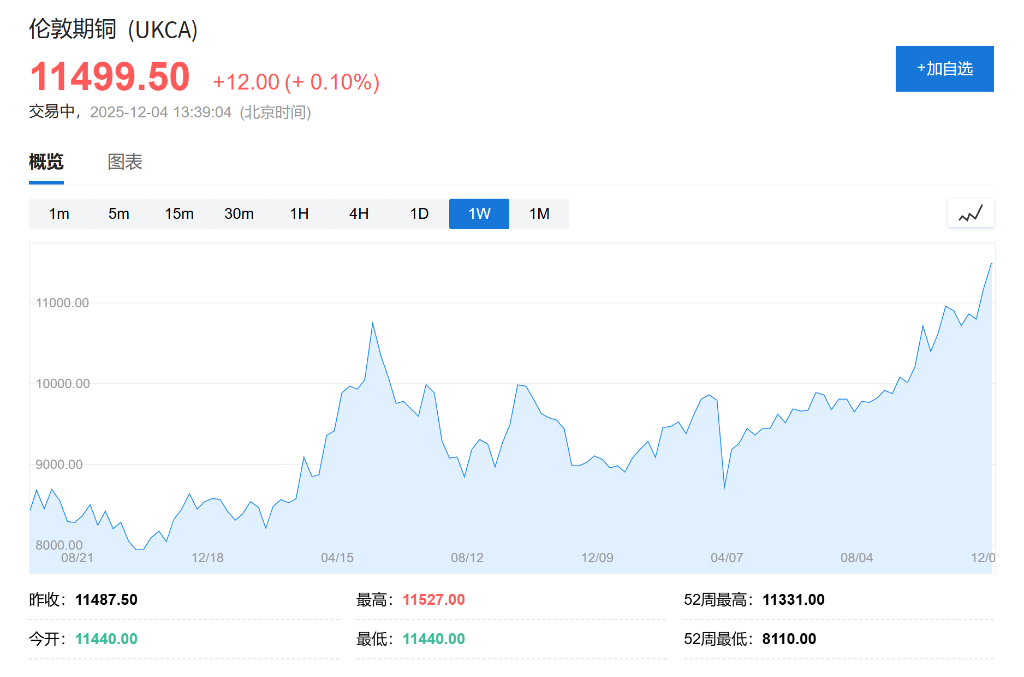
潮水退去谁在裸泳?高盛警告:供应严重过剩,2026年铝、锂、铁矿石价格将重挫,铜价短期承压但长期坚挺
Hua Er Jie Jian Wen· 2025-12-04 19:04
Core Viewpoint - The commodity price surge is expected to end, with a supply surplus storm projected to impact most industrial metals by 2026 [1][11]. Group 1: Copper - Goldman Sachs predicts a short-term oversupply of copper, with a forecasted surplus of 500,000 tons in 2025, leading to price difficulties in maintaining above $11,000 per ton [4][5]. - The long-term outlook for copper remains positive, with structural supply constraints and strong demand from sectors like energy transition and AI, supporting a price floor at $10,000 per ton [5][6]. - The average LME copper price forecast for the first half of 2026 has been raised from $10,415 to $10,710, with expectations of a slight price correction in the second half post-tariff implementation [5][6]. Group 2: Aluminum - Goldman Sachs maintains a bearish outlook on aluminum, predicting LME aluminum prices will drop to $2,350 per ton by Q4 2026 due to a significant supply surplus of 1.1 million tons [7][8]. - The anticipated supply surge is driven by new capacities from Indonesia and India, alongside increased production from Chinese overseas investments [7][8]. Group 3: Lithium - Despite a recent rebound in lithium prices, Goldman Sachs views this as a temporary phenomenon, forecasting a 23% decline to around $9,500 per ton by the end of 2026 due to increased supply from Africa and Australia [9][10]. - The short-term tightness in lithium supply is attributed to higher-than-expected demand for energy storage systems and operational pauses in some Chinese lithium mines [9]. Group 4: Iron Ore - The outlook for iron ore is bleak, with a projected increase in Chinese port inventories by 51 million tons in 2026, alongside a 1% decline in global seaborne demand [10]. - Goldman Sachs forecasts that iron ore prices will fall to $88 per ton by the end of 2026, driven by the need to eliminate high-cost supply from the market [10]. Group 5: Market Dynamics - The report emphasizes that the current rise in industrial metal prices is based on macroeconomic sentiment rather than solid fundamentals, indicating a potential market correction in 2026 [11][12]. - The year 2026 is anticipated to be a period of market differentiation, where only metals like copper, with genuine supply-demand tension, will remain resilient [12].


AUS GLOBAL澳洲环球:油市平静后的博弈与2026前景
Xin Lang Cai Jing· 2025-12-04 15:08
Core Viewpoint - The global oil market is entering a potentially volatile December after a weak month with minimal price fluctuations, leading market participants to focus on upcoming production negotiations, supply structure changes, and cross-regional logistics [1][3] Group 1: Oil Price Forecasts - The forecast for oil prices in 2026 has been revised down to approximately $62 per barrel, primarily due to anticipated oversupply [4] - Various institutions predict inventory increases ranging from 500,000 to 4.2 million barrels per day, indicating a consensus on rising supply despite differing estimates [4] - The average WTI price for next year is expected to be around $59, slightly below the cost line for some new well blocks, providing a natural support for future oil prices [4] Group 2: Shipping and Regional Price Structures - Shipping costs are expected to ease, potentially accelerating the flow of Atlantic Basin crude oil to Asian markets, which will further impact regional price structures [4] - The average price of ICE Brent from January to November 2025 is projected at $68.8 per barrel, showing a significant decline from the previous year, reflecting cautious market sentiment regarding demand uncertainty [4] Group 3: Energy Market Dynamics - Global energy companies are actively involved in block acquisitions, pipeline asset consolidations, and major infrastructure adjustments, affecting market dynamics [2][4] - Rising natural gas demand in various regions has led to prices reaching multi-year highs, while some major smelting groups have announced production cuts, driving metal prices to record levels [2][4] - The tightening supply-demand trend across different commodities is expected to have spillover effects on energy costs, alternative demand, and related investment sentiment [2][4] Group 4: Geopolitical Factors - Geopolitical events remain a core variable affecting supply and demand, with key pipelines experiencing temporary disruptions due to drone attacks or technical issues, leading to increased shipping insurance rates [5] - Energy policies and project decisions in multiple countries, including an increase in natural gas usage and adjustments in overseas project financing, add layers of complexity to regional markets [5] - December is seen as a critical window for supply negotiations, climate factors, and geopolitical interactions, with the potential for supply-demand balance to be disrupted [5]

JPMorgan:2026/27年金属市场展望及价格预测
对冲研投· 2025-11-25 11:55
Core Viewpoint - Morgan Stanley holds a structurally bullish view on the metal market for 2026/27, particularly favoring copper, aluminum, gold, and silver, while being relatively cautious or bearish on zinc and nickel. The main drivers of the market include supply disruptions, global inventory mismatches, central bank gold purchases, and long-term demand from energy transition [2]. Metal Outlook Copper - Strongly bullish with a price forecast of $12,075 per ton in 2026, expecting a breakthrough of $12,000 per ton in the first half of 2026 [5]. - Core logic includes severe supply disruptions from major mines, a mismatch in global inventory, and resilient demand growth projected at 2.6% [13]. Aluminum - Initially bullish but expected to decline later, with a forecast of $2,913 per ton in 2026, followed by a drop to $2,675 per ton in 2027 [6]. Zinc - Bearish outlook with a forecast of $2,775 per ton in 2026 and $2,600 per ton in 2027, indicating a preference for short positions [7]. Nickel - Expected to remain in a range-bound market, with a price forecast of $15,300 per ton in 2026 [8]. Precious Metal Outlook Gold - Structurally bullish with a price forecast of $4,753 per ounce in 2026, driven by central bank purchases and resilient investor demand [10]. - The expected decline in interest rates is also seen as favorable for gold [10]. Silver - Expected to follow gold's upward trend, with a forecast of $56.3 per ounce in 2026 [11]. Platinum - Anticipated to trade at high levels, with a forecast of $1,669 per ounce in 2026 [14]. Palladium - Short-term risks are present, but the long-term outlook remains bearish, with a forecast of $1,150 per ounce in 2026 [15]. Market Dynamics - Supply disruptions from major mines like Grasberg and Kamoa-Kakula are causing tight supply conditions [13]. - Global copper inventory is heavily concentrated in the U.S., while other regions, especially LME, face low inventory levels [13]. - The demand from data centers and AI infrastructure may exceed expectations, providing upward pressure on copper prices [13]. Trading Strategies - Suggested strategies include zero-cost gold reverse ratio call spreads and discounted dual digital options to capture gold price increases while managing risk [18].

氧化铝期货的市场基差是什么
Jin Tou Wang· 2025-10-10 10:54
Core Insights - The market basis for alumina futures reflects the difference between spot prices and futures prices, influenced by supply and demand, storage costs, and policy expectations [1] Group 1: Factors Influencing Basis Formation - Supply and Demand: Short-term shortages in the spot market, such as increased production of electrolytic aluminum or reduced production of alumina, can raise spot prices and expand positive basis. For instance, the basis for the December 2024 alumina 2501 contract reached 496 CNY/ton due to limited circulation of goods [2] - Costs and Logistics: Transportation bottlenecks for bauxite or rising storage costs can widen the basis. For example, the suspension of bauxite exports from Guinea led to futures prices rising above spot prices, resulting in a negative basis of -329 CNY/ton [2] - Policy and Market Expectations: Environmental production limits and tariff adjustments can cause regional basis fluctuations. Typically, the basis converges as the delivery month approaches, although liquidity risks may weaken this convergence [2] Group 2: Significance of Basis for Trading - Hedging: Dynamic position adjustments are necessary to hedge against basis volatility risks [3] - Arbitrage Opportunities: When the basis deviates from historical averages (e.g., alumina basis rate above 80% of the statistical range), there may be opportunities for futures-spot arbitrage [3] - Price Forecasting: The structure of the basis (e.g., backwardation in distant months) can indicate the market's long-term supply and demand expectations [4]
零跑B01价格预测
数说新能源· 2025-07-24 02:42
Price Prediction Range - The base model (low configuration) is priced between 79,800 to 89,800 yuan, targeting the lower market segment with a range of features including a 400 km range and simplified functionalities [5] - The main laser radar version is priced between 119,800 to 129,800 yuan, featuring a 650 km range and advanced driving capabilities supported by high-end configurations [5] - The top configuration is set to be below 150,000 yuan, aiming to balance brand premium and cost, with a strategy to capture the market by offering lower prices compared to competitors [5] Competitive Benchmarking - The pricing strategy is compared with competitors like Xpeng MONA M03 and BYD Seal 06 EV, indicating a need for lower pricing to gain market share [5] Brand Strategy - The company aims to achieve sales targets of 500,000 to 600,000 units by 2025, with the B01 model being crucial for entering the 100,000 yuan sedan market [5] - The core strategy is to offer "high configuration at low prices," emphasizing extreme cost-performance ratio [5]

美联储巴尔金:近期的通胀情况使得预测关税对价格的影响变得更加困难。
news flash· 2025-06-26 13:08
Group 1 - The recent inflation situation complicates the prediction of the impact of tariffs on prices [1]
Wall Street Bulls Look Optimistic About Okta (OKTA): Should You Buy?
ZACKS· 2025-06-23 14:31
Core Insights - Wall Street analysts' recommendations significantly influence investors' decisions regarding stock transactions, particularly for Okta (OKTA) [1][5] - Okta has an average brokerage recommendation (ABR) of 1.92, indicating a consensus between Strong Buy and Buy, with 21 Strong Buy and 2 Buy recommendations from 40 brokerage firms [2][14] Brokerage Recommendation Trends - The ABR for Okta suggests a buying opportunity, but reliance solely on this metric may not be advisable due to studies indicating limited success in guiding investors towards high-potential stocks [5][10] - Brokerage firms often exhibit a positive bias in their ratings, with a ratio of five Strong Buy recommendations for every Strong Sell, which may mislead investors [6][10] Zacks Rank vs. ABR - The Zacks Rank, a proprietary stock rating tool, is based on earnings estimate revisions and is considered a more reliable indicator of near-term price performance compared to ABR [8][11] - Zacks Rank is displayed in whole numbers (1 to 5) and is updated more frequently than ABR, which may not reflect the most current information [9][12] Investment Potential for Okta - The Zacks Consensus Estimate for Okta's earnings has increased by 12.2% over the past month, indicating growing analyst optimism and potential for stock price appreciation [13] - Okta currently holds a Zacks Rank 2 (Buy), suggesting that the Buy-equivalent ABR may serve as a useful guide for investors [14]


日本央行行长植田和男:我们将不带偏见地判断我们的经济和价格预测是否会实现。
news flash· 2025-06-03 08:04
Core Viewpoint - The Governor of the Bank of Japan, Kazuo Ueda, emphasized the importance of making unbiased judgments regarding the country's economic and price forecasts [1] Group 1 - The Bank of Japan is committed to evaluating its economic and price predictions without any preconceived notions [1]
日本央行行长植田和男:日本央行的经济增长和价格预测可能会根据贸易政策的变化而发生重大调整。
news flash· 2025-05-01 06:44
Core Viewpoint - The Governor of the Bank of Japan, Kazuo Ueda, indicated that the economic growth and price forecasts of the Bank of Japan may undergo significant adjustments based on changes in trade policies [1] Group 1 - The Bank of Japan's economic growth predictions are closely tied to trade policy developments [1] - Price forecasts may also be impacted by shifts in trade policies, suggesting a dynamic relationship between external trade factors and domestic economic indicators [1]