
宜明昂科

Search documents
一家烟台公司卖了「抗癌新药」,落袋6.5亿美金
Xin Lang Cai Jing· 2026-01-15 14:14
Core Insights - Rongchang Biopharmaceutical has authorized all overseas rights of its PD-1/VEGF dual antibody RC148 to AbbVie, with an upfront payment of $650 million, potentially reaching a total of $5.6 billion, approximately 4 billion RMB [3][21][28] - The transaction marks a significant turnaround for Rongchang Biopharmaceutical, which had faced skepticism regarding its aggressive strategy due to slow commercialization and substantial losses in recent years [5][22][28] Company Overview - Founded in 2008 by Wang Weidong and Harvard-returned scientist Fang Jianmin, Rongchang Biopharmaceutical is one of the early innovators in China's pharmaceutical industry, focusing on ADC (antibody-drug conjugate) products [3][21] - The company has a total market capitalization exceeding 100 billion RMB across its A and H shares [21] Financial Impact - The $650 million upfront payment from AbbVie is nearly three times Rongchang Biopharmaceutical's revenue for the first three quarters of the previous year [20][28] - This deal injects substantial funds into the company, which had reported losses exceeding 500 million RMB and had only 1.07 billion RMB in cash reserves as of the third quarter of last year [5][22] Market Position and Strategy - Rongchang Biopharmaceutical has historically adopted a "high-risk, high-reward" strategy, with a large sales team and extensive R&D pipeline [4][22] - The company has been proactive in signaling potential new business development (BD) deals, although it took until 2025 to confirm two significant collaborations [24][28] Product Development - RC148 is the first product from Rongchang's dual antibody platform to enter clinical trials, focusing on solid tumors [10][27] - The clinical data for RC148 shows promising results, with objective response rates of 61.9% for monotherapy and 66.7% when combined with chemotherapy, indicating potential to surpass standard treatments [31] Competitive Landscape - The competition in the PD-1/VEGF dual antibody market is intensifying, with other companies like Kangfang Biopharmaceutical and Sanofi entering advanced clinical stages [29][31] - The ability to conduct global clinical trials and explore multiple indications is becoming a key competitive factor in this space [30][31]



跨国药企“必备”肿瘤药,中国药企还有机会卖
经济观察报· 2026-01-15 05:55
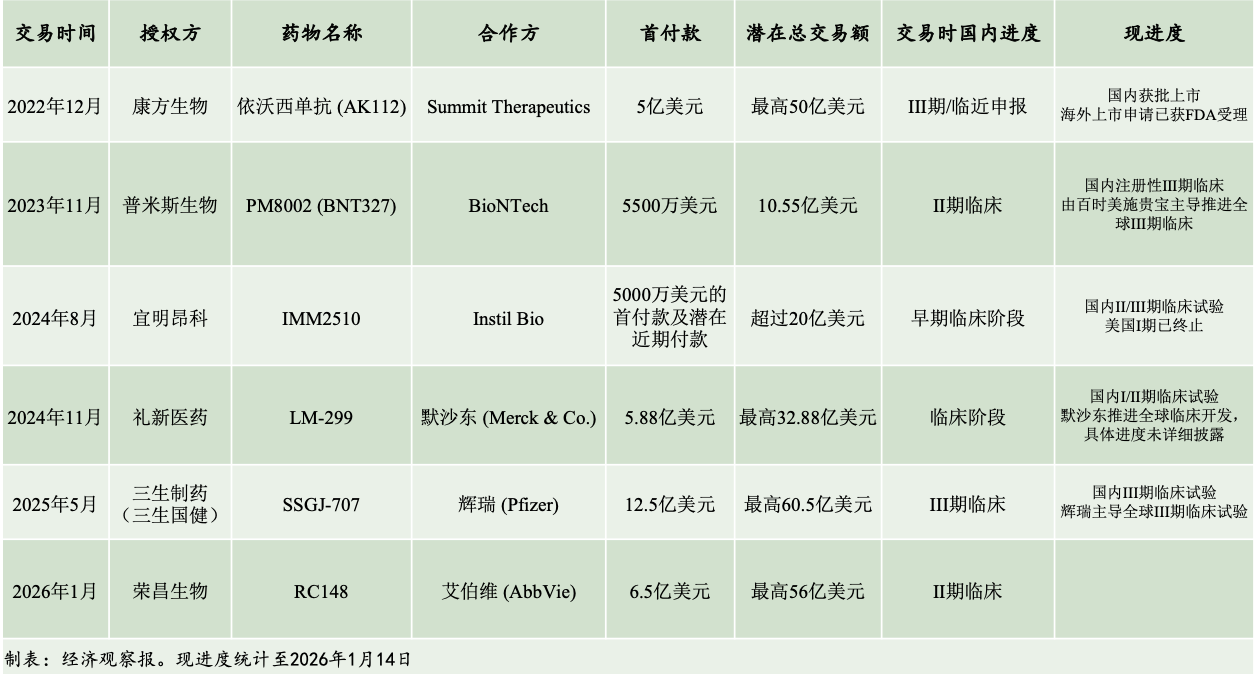
Core Viewpoint - The article discusses the potential for PD-1/VEGF drugs to generate external licensing deals, highlighting recent significant transactions in this sector and the competitive landscape among pharmaceutical companies [1][3]. Group 1: Recent Transactions - Rongchang Biopharma announced an exclusive licensing agreement with AbbVie for its dual-specific antibody drug RC148, targeting PD-1/VEGF, currently in Phase II clinical trials. The deal includes an upfront payment of $650 million and potential milestone payments up to $4.95 billion, with a total deal value of $5.5 billion [2][6]. - Other notable transactions include: - Canfite BioPharma licensed its PD-1/VEGF dual antibody to Summit Therapeutics for an upfront payment of $500 million, with a total deal value exceeding $5 billion [5][6]. - Three other companies have also secured deals for PD-1/VEGF drugs, with upfront payments ranging from $50 million to $1.25 billion and total deal values reaching up to $6.05 billion [5][6]. Group 2: Market Dynamics - The PD-(L)1/VEGF target is considered one of the most promising in oncology, combining immunotherapy and targeted therapy, with expectations of significant therapeutic benefits [5][9]. - Despite the presence of multiple drugs targeting the same pathway, there is still potential for new licensing agreements based on efficacy, different indications, and combination therapies [11][12]. - The competitive landscape is characterized by a trend where companies are looking to acquire PD-1/VEGF assets to strengthen their oncology portfolios, especially those that missed earlier opportunities in the PD-1 market [8][12]. Group 3: Future Outlook - There is an expectation for continued licensing transactions in the PD-1/VEGF space, as companies seek to leverage unique data and therapeutic advantages of their products [10][11]. - Companies like Zai Lab, Junshi Biosciences, and others are in various stages of developing PD-(L)1/VEGF pipelines, indicating ongoing interest and investment in this therapeutic area [11][12].

跨国药企“必备”肿瘤药,中国药企还有机会卖
Jing Ji Guan Cha Wang· 2026-01-15 03:32
Core Viewpoint - The recent licensing agreement between Rongchang Biologics and AbbVie for the dual-specific antibody drug RC148 highlights the competitive landscape of PD-1/VEGF targeted therapies, with significant financial implications for both companies involved [1][6]. Group 1: Licensing Agreement Details - Rongchang Biologics has entered into an exclusive licensing agreement with AbbVie for RC148, a dual-specific antibody currently in Phase II clinical trials, granting AbbVie rights outside Greater China [1][6]. - The deal includes an upfront payment of $650 million and potential milestone payments up to $4.95 billion, along with tiered royalties on net sales, bringing the total potential value of the agreement to $5.5 billion [1][6]. - This transaction's total amount is considered high, especially for a product not ranked among the top three in its category, raising questions about market share potential [6]. Group 2: Market Context and Comparisons - The PD-(L)1/VEGF target has gained significant attention in recent years, combining immunotherapy and targeted therapy, with expectations of enhanced efficacy [3]. - Several Chinese biotech companies have previously licensed their PD-(L)1/VEGF drugs to international firms, with notable deals including a $500 million upfront payment from Summit Therapeutics to Kanyin Biologics, and a $1.25 billion upfront payment from Pfizer to Sanofi [4][5]. - Despite the presence of multiple PD-1/VEGF drugs in the market, there remains potential for further licensing agreements, as efficacy and specific indications will play a crucial role in market segmentation [10]. Group 3: Future Trends and Industry Insights - The combination of PD-(L)1/VEGF drugs with ADCs (antibody-drug conjugates) is anticipated to be a major development trend among pharmaceutical companies [9]. - Companies that have not yet licensed their PD-1/VEGF drugs are actively seeking opportunities, with the success of future deals dependent on finding suitable partners and demonstrating strong clinical data [10]. - Major multinational pharmaceutical companies, including Eli Lilly, Novartis, and Sanofi, have yet to announce new licensing agreements, indicating a cautious approach while awaiting more mature data [12].
向“领跑者”跨越! 中国双抗药物再迎高光时刻
Mei Ri Jing Ji Xin Wen· 2026-01-14 11:59
Core Insights - The announcement of a $5.6 billion licensing agreement between Rongchang Biopharma and AbbVie marks a significant milestone for Chinese innovative drugs entering the global market, indicating a shift from follower to leader in the dual antibody space [1][3] - Concurrently, Kangfang Biopharma's partner, Summit Therapeutics, submitted a Biologics License Application (BLA) for Ivoris monoclonal antibody to the FDA, further highlighting the progress of Chinese dual antibodies on the international stage [1][4] - However, the termination of a licensing agreement by Yiming Oncology with Instil Bio serves as a cautionary tale for the challenges faced by Chinese companies in global expansion [1][10] Group 1: Major Developments - Rongchang Biopharma's agreement with AbbVie includes an upfront payment of $650 million and potential milestone payments of up to $4.95 billion, along with double-digit royalties on net sales outside Greater China [3] - Kangfang Biopharma's Ivoris monoclonal antibody is positioned to address a significant unmet clinical need in treating EGFR-mutant non-small cell lung cancer, with the FDA expected to make a decision by Q4 2026 [4][5] - The competitive landscape for PD-1/VEGF dual antibodies is intensifying, with major pharmaceutical companies increasingly focusing on a few validated "winners" in the market [2][9] Group 2: Industry Trends - The recent high-value transactions in the dual antibody space reflect a growing recognition of the clinical and commercial potential of Chinese innovative drugs, with transaction amounts reaching new heights [9] - The competitive dynamics are shifting, as the number of potential international buyers decreases due to the concentration of capital and interest in a limited number of validated products [10][13] - The success of PD-1/VEGF dual antibodies is seen as pivotal for the future of cancer treatment, with ongoing clinical trials exploring their combination with other therapies to enhance efficacy [14]

2026年医药投资主线浮出水面
3 6 Ke· 2026-01-14 03:45
Core Insights - The PD-1/VEGF dual antibody sector is experiencing a divergence, with Yiming Biotech facing setbacks due to the return of its PD-L1/VEGF dual antibody by partner Axion, while Rongchang Biotech secured a significant licensing deal worth $5.6 billion with AbbVie, highlighting the increasing differentiation within the dual antibody space and outlining the core investment theme for 2026: certainty [1][2] Group 1: Investment Trends - The investment landscape in the pharmaceutical sector is shifting from a focus on broad-based licensing deals to a preference for certainty in value, emphasizing three core anchors: expectation certainty, product certainty, and performance certainty [2][6] - The previous trend of "BD is king" in 2025 led to a surge in licensing deals, but the market is now recalibrating its valuation logic, moving away from blind enthusiasm towards a more rational assessment of the feasibility of these deals [1][2] Group 2: Expectation Certainty - Expectation certainty involves a rational evaluation of the feasibility of BD transactions rather than blind pursuit of total deal amounts, as the probability of new drugs progressing from early clinical stages to market approval is only 7.9% [3][4] - The competitive landscape in the PD-1/VEGF dual antibody sector shows that not all players can achieve their expected value due to overlapping targets and indications, mirroring past trends in the PD-1 monoclonal antibody market [3][4] Group 3: Product Certainty - Product certainty focuses on the potential for substantial sales post-launch, with products that have clear growth logic expected to command higher valuations [5][6] - WanTai Biotech's nine-valent HPV vaccine, priced at 499 yuan per dose (40% of imported vaccines), is positioned for significant market penetration, while Innovent Biologics' Ma Shidu peptide faces challenges due to increased competition and pricing pressures, leading to diminished commercial value [5][6] Group 4: Performance Certainty - Performance certainty seeks companies and sectors with clear growth or recovery expectations, as the essence of investment is capturing expectation differences [7][8] - WuXi AppTec's profit forecast for 2025 indicates a significant growth of 41.33% year-on-year, reflecting its foundational role in the global pharmaceutical supply chain and a potential recovery in valuation due to increased R&D investments [7][8] - The vaccine sector is also poised for recovery, with domestic companies expected to benefit from a broad replacement market and initial overseas expansion, indicating a favorable investment outlook [7][8]


荣昌生物频获跨国巨头追捧
2 1 Shi Ji Jing Ji Bao Dao· 2026-01-13 23:08
Core Insights - The collaboration between AbbVie and Rongchang Biopharma marks a significant shift in the global oncology treatment landscape, focusing on the development of the bispecific antibody RC148 targeting PD-1 and VEGF [1][2] Group 1: Collaboration Details - AbbVie and Rongchang Biopharma signed an exclusive licensing agreement for RC148, granting AbbVie rights outside Greater China for development, production, and commercialization [1] - Rongchang Biopharma will receive an upfront payment of $650 million and is eligible for up to $4.95 billion in milestone payments, along with a tiered royalty on net sales outside Greater China [1][2] Group 2: Market Implications - This deal exemplifies the "China innovation + global market" model, providing Rongchang Biopharma with substantial cash flow to accelerate clinical trials for RC148 and support other pipeline developments [2] - The partnership with a top-tier oncology company like AbbVie enhances Rongchang Biopharma's brand and bargaining power in international markets, while AbbVie benefits from expanding its immuno-oncology product portfolio [2] Group 3: Bispecific Antibody Landscape - RC148 represents a new class of cancer therapies aimed at simultaneously blocking PD-1 and VEGF, potentially overcoming tumor resistance mechanisms [5] - The PD-1/VEGF bispecific antibody field is gaining traction, with several Chinese companies, including Kangfang Biopharma and Junshi Biosciences, making significant advancements and entering clinical trials [6][7] Group 4: Industry Trends - The Chinese innovative drug sector is experiencing a surge in licensing deals, with over $130 billion in total transaction value in 2025, surpassing the U.S. for the first time [10] - Factors driving this trend include the impending patent cliff for major drugs and declining R&D efficiency among multinational pharmaceutical companies, leading them to seek external innovations [10][11] Group 5: Future Outlook - The Chinese pharmaceutical industry is transitioning from a follower to a leader in innovation, with a clear direction for future development [14] - Companies are focusing on building a comprehensive value creation logic recognized by international partners, enhancing their negotiation power in licensing agreements [12][13]

中国双抗再迎“高光”:荣昌收获56亿美元交易,康方闯关FDA
Mei Ri Jing Ji Xin Wen· 2026-01-13 12:33
Core Insights - The article highlights significant advancements in China's biopharmaceutical sector, particularly in the PD-1/VEGF dual antibody space, marked by major deals and regulatory submissions that indicate a shift from follower to leader status for Chinese companies in the global market [1][2][3]. Group 1: Major Developments - Rongchang Biopharma announced a $5.6 billion licensing agreement with AbbVie for its PD-1/VEGF dual antibody RC148, with an upfront payment of $650 million and potential milestone payments of up to $4.95 billion [2]. - Summit Therapeutics, a partner of Kangfang Biopharma, submitted a Biologics License Application (BLA) for Ivoris monoclonal antibody to the FDA, targeting EGFR-mutant non-small cell lung cancer, with a decision expected in Q4 2026 [3]. Group 2: Market Dynamics - The PD-1/VEGF dual antibody market is becoming increasingly competitive, with major pharmaceutical companies investing heavily, indicating the high commercial value of this therapeutic area [5][6]. - The termination of a collaboration between Yiming Biotech and Instil Bio serves as a cautionary tale, highlighting challenges faced by Chinese innovative drug companies in global markets, including the need for strong financial backing and execution capabilities [1][7]. Group 3: Future Outlook - The success of Kangfang's Ivoris monoclonal antibody in clinical trials could position it as a leading product in the market, potentially capturing significant market share if it demonstrates strong overall survival data [4][10]. - The increasing number of PD-1/VEGF products in clinical stages, with 14 products linked to Chinese companies, suggests a crowded competitive landscape, which may complicate future business development opportunities for companies like Yiming Biotech [8][9].
港股收评:恒指涨0.9%、科指涨0.11%,创新药及黄金概念股集体走高,大模型、商业航天概念股回调
Jin Rong Jie· 2026-01-13 08:18
1月13日,港股股指高开后震荡下行,截止收盘,恒生指数涨0.9%报26848.47点,恒生科技指数涨0.11% 报5869.79点,国企指数涨0.71%报9285.41点,红筹指数涨0.78%报4146.17点。 盘面上,大型科技股走势分化,阿里巴巴涨3.63%,腾讯控股涨0.72%,京东集团涨0.43%,小米集团跌 1.96%,网易跌0.18%,美团跌0.1%,快手跌2.24%,哔哩哔哩涨3.11%;创新药板块全天表现强势,药 明康德收涨8.3%;黄金股领涨,中国黄金国际涨超7%,万国黄金集团涨超5%,紫金黄金国际涨超 5%,灵宝黄金涨超3%;大模型概念股智谱跌超12%,MINIMAX跌超8%;半导体板块走弱,上海复旦 跌近5%,华虹半导体跌超2%;商业航天概念回调,金风科技跌超9%;今日三只新股上市,兆易创新涨 超37%,BBSB INTL涨超11%,红星冷链涨0.33%。 企业新闻 腾讯控股(00700.HK):斥资约6.36亿港元回购102.4万股,回购价614-627港元。 吉利汽车(00175.HK):斥资1.51亿港元回购900.7万股,回购价16.63-17.15港元。 钧达股份(02865. ...


A股、港股医药股大涨,这些利好因素在刺激
Di Yi Cai Jing· 2026-01-13 04:49
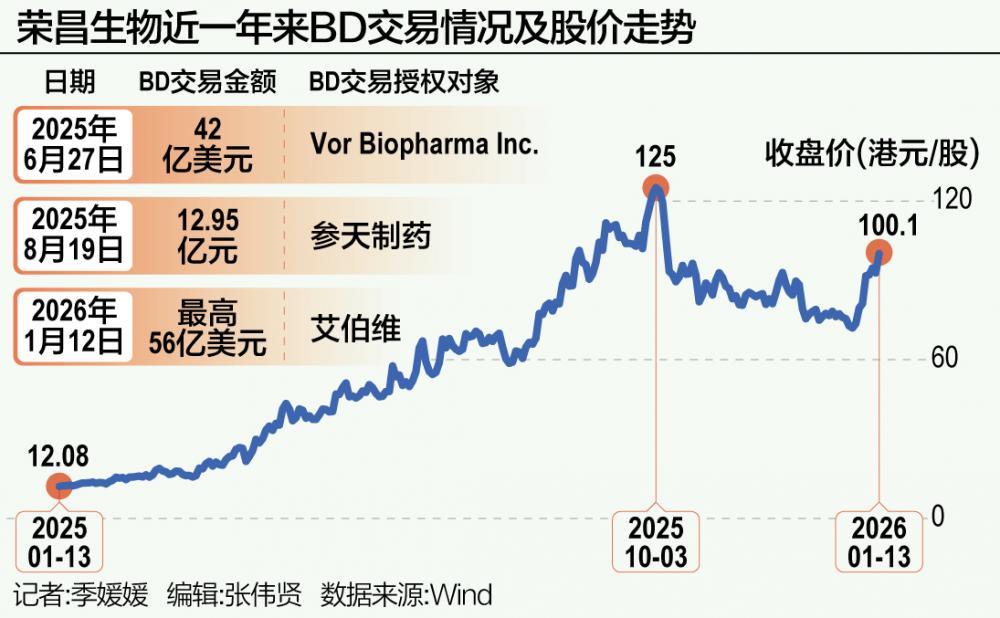
Group 1 - The core point of the news is the significant rise in the stock prices of pharmaceutical companies in both A-shares and Hong Kong stocks, driven by the announcement of a major licensing deal between Chinese biopharmaceutical company Rongchang Biopharma and AbbVie, valued at $5.6 billion [1][3] - As of January 13, over 40% of stocks in the A-share biopharmaceutical sector saw price increases, with notable gains from companies like Kanglaweishi, Hongbo Pharmaceutical, and Rongchang Biopharma, which all experienced rises exceeding 15% [1] - In the Hong Kong market, more than half of the healthcare stocks also rose, with companies such as WuXi AppTec and Cornerstone Pharmaceuticals seeing increases over 8% [1] Group 2 - The annual J.P. Morgan Global Healthcare Conference is taking place in San Francisco, focusing on biotechnology and biopharmaceuticals, and is a key event for insights into global pharmaceutical industry trends [3] - The licensing deal between Rongchang Biopharma and AbbVie includes an upfront payment of $650 million, which has positively impacted the stock prices of related dual-antibody concept stocks, such as Yiming Anke and Sangfor Biopharma [3] - The overall index for the A-share pharmaceutical outsourcing (CXO) sector rose over 5% as of January 13, reflecting a strong market response to the licensing news [3][4] Group 3 - WuXi AppTec has raised its revenue forecast for the previous year for the third time, indicating strong performance expectations [4] - WuXi Biologics expressed confidence in maintaining growth momentum through 2026, showcasing optimism for future prospects [5] - CITIC Securities has published a report highlighting the potential for Chinese pharmaceutical companies to achieve technological breakthroughs and international opportunities, marking a shift towards global value creation [6]

恒生指数早盘涨1.01% CRO概念股涨幅居前
Zhi Tong Cai Jing· 2026-01-13 04:40
Group 1: Market Overview - The Hang Seng Index rose by 1.01%, gaining 268 points to close at 26,877 points, while the Hang Seng Tech Index increased by 0.38% [1] - The early trading volume in the Hong Kong stock market reached HKD 192 billion [1] Group 2: Notable Stock Movements - Alibaba-W (09988) saw a 3.5% increase, with its Q&A model downloads surpassing 700 million, indicating potential acceleration in Alibaba Cloud's revenue growth [1] - CRO concept stocks performed well, with WuXi AppTec (603259) expected to double its net profit, leading to a "Davis Double" effect; WuXi AppTec (02359) rose by 7.85%, Kintor Pharmaceutical (002821) increased by 5%, and CStone Pharmaceuticals (300759) gained 6% [1] - Rongchang Biologics (09995) surged by 11.64% after its dual-antibody product RC148 was authorized by AbbVie, with a total transaction value potentially reaching USD 5.6 billion [2] - Lithium carbonate futures prices continued to rise, boosting Ganfeng Lithium (002460) by 4% and Tianqi Lithium (002466) by 2.8% [3] - AI healthcare concept stocks mostly advanced, with Medlinker (02192) rising by 6% and Crystal Tech Holdings (02228) increasing by 5.87% [3] - Ark Health (06086) jumped by 36% after partnering with Tencent Health for digital upgrades in "AI + chronic disease management" [3] - Fuhong Hanlin (02696) rose over 8% following the first release of Phase II data for its broad-spectrum anti-tumor PD-L1 ADC HLX43 in esophageal squamous cell carcinoma [4] - Yiming Anke-B (01541) increased by over 9% after receiving approval for clinical trials of IMM01 for atherosclerosis treatment [5] - WanGuo Gold Group (03939) rose by 4.6%, with gold prices driving the company's stock up over 30% this month [6] - Three new stocks debuted, with Zhaoyi Innovation (603986) rising 40%, BBSB INTL (08610) increasing by 65%, and Hongxing Cold Chain (01641) gaining 4% [6] Group 3: Sector Adjustments - Commercial aerospace concept stocks collectively adjusted, with Goldwind Technology (002202) experiencing a drop of over 13% at one point and closing down more than 6% [7]