李宁

Search documents
港股收评:恒指涨0.37%,黄金、半导体芯片股大涨
Ge Long Hui· 2026-01-21 08:34
Market Performance - The Hong Kong stock market showed resilience, with the Hang Seng Index and the Hang Seng Tech Index recovering from previous declines, closing up by 0.37% and 1.11% respectively [1][2] - The overall market remained stable despite a significant drop in US stocks overnight [1] Sector Performance - Major technology stocks saw gains, with notable increases in shares of Hua Hong Semiconductor (up over 5%) and SenseTime (up over 4%) [4][5] - Semiconductor stocks were active, driven by positive sentiment in the AI-driven storage cycle, with companies like Zhaoyi Innovation reaching new highs [2][7] - Gold stocks surged, led by Chifeng Jilong Gold (up over 9%) and Lingbao Gold (up over 8%), as spot gold prices broke through $4,880 [6][8] Individual Stock Movements - The stock of Skyworth Group soared over 37% after announcing a distribution of shares in Skyworth Photovoltaic and plans for a mainboard listing [16] - Southbound funds recorded a net inflow of HKD 13.93 billion, indicating strong investor interest [19] Future Outlook - Analysts predict that the Hang Seng Index could challenge the 30,000 to 31,000 point range by 2026, as current valuations remain below historical averages [21]

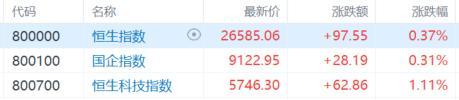
港股收评:尾盘拉升!恒指涨0.37%,消费电子股大涨,多只黄金股创新高
Ge Long Hui· 2026-01-21 08:20
Market Performance - The Hong Kong stock market indices experienced a rapid rise near midday, with the Hang Seng Tech Index reaching a peak increase of 1.8% before closing up 1.11% [1] - The Hang Seng Index and the China Enterprises Index turned from declines to gains, rising by 0.37% and 0.31% respectively, indicating overall market stability despite a significant drop in US stocks overnight [1] Sector Highlights - Major technology stocks contributed to the market rebound, with Baidu and Kuaishou both rising over 3%, and Alibaba increasing by more than 2% [1] - Consumer electronics stocks showed the most significant gains, with Skyworth Group's shares surging over 37% after resuming trading, reaching a historical high due to a strategic partnership with Sony in the home entertainment sector [1] - TCL Electronics saw a nearly 15% increase, reflecting strong performance in the consumer electronics segment [1] - Semiconductor stocks remained active, driven by an upward cycle in AI-driven storage chips, with Zhaoyi Innovation hitting a new high since its listing [1] Commodity and Gold Market - Spot gold prices surpassed $4,880 for the first time, marking a year-to-date increase of over 13%, leading to a rise in gold stocks and non-ferrous metal stocks, with companies like Lingbao Gold and Zhaojin Mining reaching historical highs [1] Underperforming Sectors - Sportswear stocks faced notable declines, with Anta Sports dropping over 4% and Li Ning falling nearly 3% [1] - Real estate stocks, which had previously surged, showed renewed weakness, while banking and insurance stocks also performed poorly, with Agricultural Bank, Industrial and Commercial Bank, and Construction Bank all declining by more than 1% [1]

耐克中国换帅:继任者在华经验相对有限
2 1 Shi Ji Jing Ji Bao Dao· 2026-01-21 08:12
Core Viewpoint - Nike is undergoing a leadership change in its Greater China region, with Angela Dong stepping down and Cathy Sparks appointed as the new Vice President and General Manager, amid declining sales and increasing competition in the Chinese sports market [1][2][4]. Group 1: Leadership Change - Angela Dong will officially resign on March 31, 2026, after over 20 years in various leadership roles in Greater China, during which Nike witnessed significant milestones in the region [1]. - Cathy Sparks, with 25 years of experience at Nike, previously served as Vice President and General Manager for the Asia Pacific and Latin America region, and is expected to deepen consumer connections in Greater China [2][11]. Group 2: Performance Challenges - Nike's sales in Greater China fell by 16% year-on-year to $1.423 billion for the latest fiscal quarter ending November 2025, with EBIT down 49% [4]. - Direct sales dropped 18%, with digital sales down 36% and store sales down 5%, while wholesale business declined by 15% [4]. - The decline is attributed to decreased store traffic, weak seasonal product sales, and high inventory levels, leading to a perception of the brand as a discount label [4]. Group 3: Market Dynamics - The Chinese sports market is becoming increasingly competitive, with a decline in consumer spending willingness, as indicated by a drop in the percentage of consumers inclined to spend more from 23.3% in Q2 2025 to 19.2% in Q3 2025 [4]. - Other major brands like Anta and Li Ning are also facing growth pressures, with Anta's sales showing low single-digit declines [5]. Group 4: Strategic Adjustments - Nike is focusing on upgrading key stores, with a notable 25% sales increase in upgraded product categories at specific locations [8]. - The company is reducing spring product distribution and cutting summer product purchases to improve sales rates and full-price sales ratios [9]. - Recent marketing efforts include signing popular figures like G.E.M. and launching impactful advertising campaigns [9]. Group 5: Future Outlook - The leadership change raises questions about potential shifts in Nike's operational strategy in China, especially as North America shows a 9% sales increase [11]. - Cathy Sparks' global experience may help integrate resources across regions, but the unique challenges of the Chinese market require localized strategies [12].

耐克中国换帅:继任者在华经验相对有限丨消费一线
2 1 Shi Ji Jing Ji Bao Dao· 2026-01-21 08:05
Core Viewpoint - Nike is undergoing a leadership change in its Greater China region, with Angela Dong stepping down and Cathy Sparks appointed as the new Vice President and General Manager, amid declining sales and increasing competition in the Chinese sports market [2][6][15]. Group 1: Leadership Change - Angela Dong will officially resign on March 31, 2026, after over 20 years in various leadership roles in Greater China, during which Nike witnessed significant milestones in the region [3][5]. - Cathy Sparks, with 25 years of experience at Nike, previously served as Vice President and General Manager for the Asia Pacific and Latin America regions, and is expected to deepen consumer connections in Greater China [4][16]. Group 2: Performance Challenges - Nike's sales in Greater China fell by 16% year-on-year to $1.423 billion for the latest fiscal quarter ending November 2025, with EBIT down 49% [6]. - Direct sales dropped 18%, with digital sales down 36% and store sales down 5%, while wholesale business decreased by 15% [6]. Group 3: Market Dynamics - The Chinese sports market is becoming increasingly competitive, with a decline in consumer spending willingness, as indicated by a drop in the percentage of consumers inclined to spend more from 23.3% in Q2 2025 to 19.2% in Q3 2025 [8]. - Major competitors like Anta and Li Ning are also facing growth pressures, with Anta's sales showing low single-digit declines [9]. Group 4: Strategic Adjustments - Nike is implementing store upgrades and reducing inventory, with a 20% decrease in total inventory compared to the previous year, and plans to expand successful upgrade models to more stores [12][13]. - The company is adjusting its spring product distribution and cutting summer product purchases to improve sales rates and full-price sales ratios [13]. Group 5: Future Outlook - The leadership change raises questions about potential shifts in Nike's operational strategy in China, especially as the North American market shows signs of recovery with a 9% sales increase [16]. - Cathy Sparks' global experience may help integrate resources across regions, but she will face challenges from strong local brands and the need for more localized strategies [17][18].
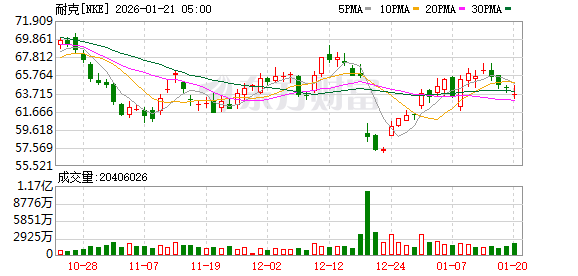
安踏体育:四季度安踏集团增长稳健,各品牌全年增速达成管理层指引-20260121
Guoxin Securities· 2026-01-21 02:50
Investment Rating - The investment rating for Anta Sports is "Outperform the Market" (maintained) [1][4][17] Core Views - In Q4 2025, Anta Group showed steady growth, with the main brand experiencing low single-digit negative growth, FILA achieving mid-single-digit positive growth, and other brands recording a 35-40% positive growth. For the entire year of 2025, the main brand also saw low single-digit negative growth, while FILA and other brands achieved 45-50% positive growth [2][4][5] - The overall performance of Anta Group is stable, with the main brand's growth affected by the broader market environment, while FILA's growth accelerated against the trend. Other brands like Descente and Kolon continued to show high growth, aligning with management's previous guidance for annual revenue growth across all brands [4][15] Summary by Sections Q4 Performance - Anta Group's overall growth in Q4 2025 was steady, with other brands maintaining high growth rates. The main brand's growth slowed sequentially, while FILA's growth accelerated. Online discounts improved, and inventory levels were healthy. The brand's channel upgrades and overseas expansion are progressing simultaneously [3][5][6] Brand Performance - Anta brand's revenue in Q4 2025 declined slightly, with a sales-to-inventory ratio slightly above 5 months. Online discounts narrowed year-on-year, and channel upgrades and overseas expansion are ongoing. The Champion series is expected to exceed 1 billion yuan in revenue by the end of 2025 [6][8] - FILA's revenue grew in the mid-single digits in Q4, with a healthy sales-to-inventory ratio and improved online discounts. Offline sales saw high single-digit growth, while online sales grew in the low double digits [9][10][11] - Other brands recorded a revenue growth of 35-40% in Q4, with Descente growing approximately 25-30% and Kolon growing around 55% [12][13] Financial Forecasts - The company has adjusted its profit forecasts for 2025-2027, expecting net profits of 13.21 billion, 13.93 billion, and 15.58 billion yuan respectively, with comparable profit growth rates of +10.7%, +5.5%, and +11.9% [17][18] - The reasonable valuation range has been adjusted to 107-112 HKD, corresponding to a 20-21X PE for 2026 [4][17]

平安证券(香港)港股晨报-20260121
Ping An Securities Hongkong· 2026-01-21 02:19
Market Overview - The Hong Kong stock market experienced a downward trend, with the Hang Seng Index closing at 23,831 points, down 145 points or 0.61% [1][5] - The market turnover decreased to 82.799 billion, with net inflows of 484 million from the Stock Connect [1][5] - The technology sector led the decline, with notable drops in stocks like SMIC and Sunny Optical, while real estate stocks showed resilience [1][5] US Market Performance - The US stock market saw significant declines, with the Dow Jones falling 1.8% and the S&P 500 down 2.1%, marking the worst single-day performance since October of the previous year [2] - The technology sector was particularly affected, with Nvidia and Tesla experiencing drops of 4.4% and 4.2% respectively [2] Market Outlook - The report highlights that both Hong Kong and A-shares achieved a positive start in 2026, with net inflows of 45.1 billion HKD from southbound funds [3] - Key investment themes include "technological self-reliance" and AI applications, with leading companies in these sectors expected to benefit in the medium to long term [3] - Recommendations for investment focus on sectors supported by policies for "expanding domestic demand," including sports apparel and non-essential services [3] Company Spotlight: Li Ning - Li Ning, a leading sports brand in China, reported a revenue of 14.817 billion for the first half of 2025, reflecting a year-on-year growth of 3.3% [10] - The company's gross margin was 50%, a slight decrease of 0.4 percentage points, attributed to increased promotional competition [10] - Li Ning's net profit was 1.737 billion, down 11% year-on-year, with a net profit margin of 11.7% [10] - The company is expected to enhance its brand presence in professional sports through a partnership with the Chinese Olympic Committee [10]
双十一降温?安踏品牌在去年四季度销售下滑丨消费参考
2 1 Shi Ji Jing Ji Bao Dao· 2026-01-21 02:08
Group 1: Market Trends - The entire sports market is under pressure, with major brands like Anta and Li Ning reporting sales declines in the fourth quarter of 2025 [1][2] - Anta's brand sales are expected to decline low single digits, while FILA is projected to grow in the mid-single digits, and other brands like Descente and KOLON are expected to grow by 35-40% [1] - Li Ning's retail revenue saw a low single-digit decline, with offline channels experiencing a mid-single-digit drop [1] Group 2: Competitive Strategies - Major brands are adjusting their promotional strategies, with some reducing the intensity of their Double Eleven sales events to focus on daily activities and channel-specific profitability [2] - Companies like Li Ning and Nike are enhancing their store experiences, with Li Ning opening a flagship store in Beijing and Nike upgrading key stores in the Greater China region [3] - The market is shifting towards a new phase of operational strategies among sports giants [4] Group 3: Financial Performance - Nike reported a 16% year-on-year decline in sales in China, amounting to $1.423 billion [1] - Anta's stock price was reported at HKD 82.55 per share, reflecting a 0.92% increase [5]
双十一降温?安踏品牌在去年四季度销售下滑
2 1 Shi Ji Jing Ji Bao Dao· 2026-01-21 01:51
Group 1 - The overall sports market is under pressure, with major brands like Anta and Li Ning reporting declines in sales for their core brands while other brands like FILA and Descente show growth [1][3] - Anta's revenue for 2025 is projected to grow in the low single digits for its core brand, while FILA is expected to see mid-single-digit growth, and other brands are forecasted to grow by 35-40% [1] - Li Ning's sales points experienced a low single-digit decline in retail revenue, with offline channels seeing a mid-single-digit drop, while e-commerce remained flat [1] Group 2 - Nike reported a 16% year-on-year decline in sales in China, amounting to $1.423 billion, attributed to reduced promotional efforts during the Double Eleven shopping festival [1] - Executives from leading domestic sports brands are reducing the intensity of promotional activities, focusing on maintaining margins across various channels [2] - Companies are adapting to market changes by enhancing their channel strategies, with Li Ning opening a flagship store in a prominent location and Nike upgrading key stores in the Greater China region [3]
跟着门店扩张来炒股!公募布局思路曝光,线下消费或迎转机
券商中国· 2026-01-21 01:50
Core Viewpoint - The article discusses the recovery of valuations in the offline consumption sector driven by store expansion logic, with public funds heavily investing in leading chain consumption stocks showing strong price performance [1]. Group 1: Store Expansion and Investment Logic - Store expansion has become a key selection criterion for public funds in identifying investment opportunities in consumer stocks, closely linked to the prevailing investment sentiment in the market [2][3]. - The number of stores is a crucial anchor in the valuation model for consumer stocks, reflecting the strength of the market segment; companies that shrink their store networks are often viewed negatively by public funds [3]. - The chain pharmacy industry exemplifies the pressure on valuations due to store closures, with predictions of approximately 39,000 offline pharmacies closing in 2024, leading to long-term underperformance of several heavily invested stocks [3]. Group 2: Performance of Leading Consumer Stocks - Leading consumer stocks such as Nayuki Tea and Daphne have mirrored the cycles of store expansion and contraction, suffering significant declines in performance following store closures [4]. - Nayuki Tea closed 132 stores in the first half of 2025, resulting in a market value drop to below HKD 2.5 billion; Daphne has been abandoned by public funds after a significant reduction in its store count [4]. - The expansion of stores is seen as a critical support for price elasticity in consumer companies, enhancing brand exposure and market penetration, which in turn drives revenue growth [4]. Group 3: Successful Cases of Store Expansion - Beauty SPA chain Meili Tianyuan Health has shown strong store expansion momentum, reaching 734 stores across 20 cities, with projected revenues of at least RMB 3 billion and adjusted net profits of at least RMB 380 million for 2025, reflecting a growth rate of no less than 40% [5]. - Dashi Co., the first listed pizza chain in China, reported a total of 1,315 stores by the end of 2025, with a net increase of 307 stores in the fourth quarter alone [6]. - Other consumer stocks like Langzi Co., Li Ning, and Guoquan have also aligned with the growth logic driven by store expansion, with Langzi Co. projecting a net profit of RMB 900 million to 1.05 billion for 2025, a year-on-year increase of 245.25% to 302.8% [6]. Group 4: Optimism for Future Investment - Public fund managers are optimistic about investment opportunities in the consumer sector for 2026, particularly in optional and new consumption segments, with a notable increase in focus on these areas [8]. - The investment value of the consumer sector is gradually becoming apparent, especially in optional consumption areas that have shown signs of recovery by the end of 2025 [8]. - Fund managers are shifting their investment focus towards "new consumption" and "gaming" sectors, emphasizing brands that resonate with Generation Z and have potential for innovation and market expansion [8].
三大院士挂帅!生物基纤维“突破计划”项目启动
DT新材料· 2026-01-20 16:05
Core Viewpoint - The article emphasizes the strategic importance of bio-based materials in the textile industry, highlighting the need for innovation and collaboration to address energy security and sustainability challenges in the sector [8][10][11]. Group 1: Event Overview - The 11th Bio-based Conference and Exhibition will be held from May 20-22, 2026, in Shanghai, featuring 11 thematic forums, 7 concurrent activities, 1000 new product displays, and an industry award [3][19]. - The event aims to create a platform for communication between upstream and downstream sectors in the bio-based materials industry [3]. Group 2: Research Directions - The project initiated by Donghua University focuses on three main research directions: high-performance fibers and composite materials, bio-based and recycled fibers, and smart fibers and flexible devices [4][11]. - The project is part of a national strategy to enhance energy security and technological independence by shifting raw material sources from petroleum to renewable biomass [10][11]. Group 3: Industry Context - The textile industry is a significant sector, valued at over one trillion yuan, with China producing 75 million tons of chemical fibers, accounting for over 50% of global production [9]. - The reliance on imported petroleum for chemical fiber production poses risks, especially as global demand for plastics and fibers is projected to reach 650 million tons by 2030 [10]. Group 4: Current Status of Bio-based Fibers - In 2024, China's bio-based chemical fiber production capacity is expected to reach 1.5721 million tons, with an output of 584,100 tons, representing less than 1% of the total chemical fiber production [11][12]. - The growth rate for bio-based fibers is significant, with production capacity increasing by 28.9% and output by 19.5% year-on-year [11]. Group 5: Challenges and Opportunities - The main challenge for bio-based fibers is their high production cost, with PLA fiber prices being three times higher than conventional polyester [13]. - The project aims to address cost reduction and quality improvement to make bio-based fibers more competitive in the market [13][18]. Group 6: Strategic Implications - The involvement of leading academicians and the support from the Ministry of Education and the Ministry of Finance signal a clear policy direction towards bio-based materials as a strategic industry [17]. - Companies in the textile sector are encouraged to view bio-based fibers not merely as an environmental concept but as a solution to real consumer needs, focusing on high-value applications [17][18].