
迪哲医药

Search documents
深夜,大逆转!中国资产爆发!10月解禁股名单来了,3股解禁市值超百亿元
Zheng Quan Shi Bao Wang· 2025-10-02 00:09
Group 1 - In October, a total of 107 stocks are facing lock-up expiration, with a market value of 240.728 billion yuan, which is lower than the lock-up pressure in July, August, and September [2] - Among the stocks facing lock-up expiration, three have a market value exceeding 10 billion yuan: China Merchants Port (001872) with 11.546 billion yuan, Meihua Medical (301363) with 10.324 billion yuan, and Hengshuai Co., Ltd. (300969) [2] - 25 stocks have a lock-up ratio exceeding 50%, with seven stocks having a lock-up ratio over 70%, indicating significant potential selling pressure [2] Group 2 - The average stock price of the lock-up stocks has increased by 2.84% since September, with Demingli (001309) leading with a 117.02% increase [3] - 22 stocks facing lock-up expiration reported losses in the first half of the year, with Dize Pharmaceutical-U showing the largest loss of 3.77 billion yuan [5] - Companies like Ruide Intelligent (301135) and Fuchuang Precision have received significant institutional research attention, indicating potential investor interest despite upcoming lock-up expirations [4]
顶流基金经理争相入局公募定增
Di Yi Cai Jing· 2025-09-28 12:52
Core Insights - The A-share market is stabilizing, leading to a resurgence in the private placement market, attracting top fund managers to participate in various projects [2][6] - Notable private placement projects have shown significant profitability, with over 90% of placements yielding floating profits for participating institutions [2][6] - The private placement market is becoming an important tool for public institutions to optimize their portfolios and seize structural opportunities [2][6] Fund Participation - On September 27, Baili Tianheng announced a private placement of 11.87 million shares at a price of 317 yuan per share, raising 3.764 billion yuan for innovative drug research [3][4] - The placement attracted 30 bidders, with 18 institutions, including 11 public fund companies, successfully participating [4] - Notable fund managers, such as Ge Lan and Zhao Bei, participated in the placements, indicating strong market interest [4][5] Market Performance - Following the private placements, both Baili Tianheng and Aishun's stock prices increased significantly, resulting in substantial floating profits for participating funds [5][6] - Baili Tianheng's stock rose by 17.63% from the placement price, while Aishun's stock increased by 28.6%, with major funds reporting profits exceeding 1 billion yuan [5][6] Market Trends - The private placement market has shown a "quantity and quality" increase this year, with 28 fund companies participating in 218 funds, raising a total of 5.864 billion yuan, a 70% increase from last year [6][7] - The performance of related stocks has also improved, with many stocks experiencing significant price increases post-placement, contributing to the profitability of funds [6][7] Investment Strategy - Fund managers express intentions to continue leveraging private placements to capture quality stock opportunities, emphasizing the importance of professional judgment in investment decisions [2][8] - The core logic for institutional investors in participating in private placements is the combination of existing stock and discount opportunities, allowing for large-scale accumulation without market impact [8]



顶流基金经理争相入局公募定增
第一财经· 2025-09-28 12:42
Core Viewpoint - The A-share market is stabilizing, leading to a resurgence in the private placement market, with notable fund managers actively participating in recent projects, indicating a strong profit potential from these investments [3][9]. Group 1: Market Activity - As of September 28, 2023, 28 fund companies have participated in 218 private placement projects this year, with a total investment amounting to 5.864 billion yuan, surpassing the total for the entire previous year [9]. - Over 90% of the private placements have shown varying degrees of unrealized gains, reflecting a significant profit effect in the current market environment [3][9]. Group 2: Notable Projects - Baili Tianheng's recent private placement raised 3.764 billion yuan by issuing 11.8738 million shares at 317 yuan each, aimed at funding innovative drug research [5]. - The private placement of Aiyu Co. raised 3.5 billion yuan by issuing 291 million shares at 12.03 yuan each, with participation from 19 institutions, including major fund managers [6][7]. Group 3: Fund Manager Participation - Prominent fund managers such as Ge Lan, Zhao Bei, and Zhu Shao Xing have been actively involved in these private placements, with significant allocations from their respective funds [5][6]. - For instance, Zhongou Fund's allocation in Baili Tianheng amounted to 678 million yuan, while E Fund and other major firms also secured substantial shares [5][6]. Group 4: Performance and Returns - Following the private placements, both Baili Tianheng and Aiyu Co. saw their stock prices increase significantly, with Baili Tianheng's price rising by 17.63% and Aiyu Co. by 28.6% [6][7]. - The performance of stocks like Chip Origin and Dize Pharmaceutical has also been notable, with substantial unrealized gains reported by various funds involved in these placements [9][10]. Group 5: Investment Strategy Insights - Fund managers emphasize the importance of a long-term asset allocation strategy and professional judgment when participating in private placements, cautioning ordinary investors against blindly following trends [3][11]. - The private placement mechanism provides institutional investors with opportunities to build positions without market impact, which is crucial for large funds facing liquidity constraints [11].

公募定增规模超去年全年!顶流基金经理争相入局
Di Yi Cai Jing· 2025-09-28 11:51
Core Insights - The A-share market is stabilizing, leading to a resurgence in the private placement market, attracting top fund managers to participate in various projects [1][5] - Notable private placement projects have shown significant profitability, with over 90% of placements yielding floating profits for participating institutions [1][5] - The trend of increasing participation in private placements is evident, with 28 fund companies and 218 funds involved this year, raising a total of 5.864 billion yuan, a 70% increase from the previous year [5][6] Group 1: Fund Participation - Prominent fund managers such as Ge Lan, Zhao Bei, and Zhu Shao Xing have actively participated in private placements, indicating a strong interest from well-known institutions [1][2] - The private placement by Baili Tianheng raised 3.764 billion yuan by issuing 11.8738 million shares at 317 yuan each, with significant participation from major fund companies [1][2] - The private placement by Aiyu Co. raised 3.5 billion yuan by issuing 291 million shares at 12.03 yuan each, with 19 institutions participating, including major fund companies like E Fund and GF Securities [3][4] Group 2: Market Performance - Following the private placements, both Baili Tianheng and Aiyu Co. saw their stock prices increase significantly, resulting in substantial floating profits for participating funds [3][6] - Baili Tianheng's stock price rose by 17.63% from the placement price, while Aiyu Co.'s stock price increased by 28.6%, showcasing the effectiveness of these placements [3][6] - The overall performance of stocks involved in private placements has been strong, with many stocks experiencing significant price increases, contributing to the profitability of the funds involved [5][6] Group 3: Investment Strategy - Fund managers emphasize the importance of a strategic approach to private placements, focusing on long-term asset allocation and professional judgment [1][7] - The private placement mechanism provides a unique opportunity for institutional investors to build positions without market impact, which is crucial for large funds [6][7] - There is a caution against retail investors blindly following institutional strategies, as the dynamics of private placements differ significantly from typical market operations [7]
今年以来A股定增市场持续火热
Zheng Quan Ri Bao· 2025-09-24 16:46
Group 1 - The core viewpoint of the article highlights a significant increase in the A-share private placement market in 2023, with 115 companies completing fundraising projects totaling approximately 959.5 billion yuan, a 711% increase compared to 118.3 billion yuan in the same period of 2022 [1] - The private placement market has seen a structural optimization, with a notable increase in projects related to high-end manufacturing and AI [1][2] - The majority of private placement projects have shown a profit effect, with over 90% achieving floating profits, indicating a shift from a small-scale market to one characterized by both quantity and quality [5][6] Group 2 - The funds raised through private placements are primarily directed towards hard technology projects, including AI, robotics, innovative pharmaceuticals, and semiconductors [2] - Notable examples include Suzhou Green's private placement for precision transmission devices aimed at the robotics sector and Beijing Yandong Microelectronics' 4 billion yuan fundraising for a 12-inch integrated circuit production line [3] - State-owned banks have emerged as major players in the private placement market, with four banks collectively raising 520 billion yuan, primarily to enhance their core tier one capital [3] Group 3 - There is a growing trend of companies using private placements to achieve resource integration along the industrial chain, accelerating their transformation and upgrading [4] - Public funds have predominantly participated in private placements that yield positive returns, focusing on high-growth targets [6] - The investment strategy among institutions has shifted from seeking discounts to emphasizing long-term growth value and industry prosperity, which helps reduce investment risks and stabilize returns [6]
医药近期投资策略
2025-10-13 01:00
Summary of Key Points from the Conference Call Industry Overview - The pharmaceutical industry in China is experiencing enhanced innovation capabilities, with leading companies showing growth rates surpassing the global average, indicating an increase in global competitiveness [1][2] - Despite recent market fluctuations, the fundamentals of the pharmaceutical industry remain robust, with reasonable valuations and no signs of bubbles [1][3][4] Core Insights and Arguments - The overall valuation of the pharmaceutical sector is deemed reasonable, with potential growth for innovative drug companies projected at 50-100% over the next three years [1][4] - The medical device, CRO (Contract Research Organization), consumer healthcare, and traditional Chinese medicine sectors also show relatively low valuations, indicating manageable risks [1][4] - The current allocation in the pharmaceutical sector is at a historical low, suggesting room for improvement in future investments [5] - The innovative drug sector's logic remains unchanged, with active business development (BD) activities expected, particularly in areas like PD-L1 Plus, ADC, and dual antibodies [1][7] Market Performance and Trends - The pharmaceutical sector has shown significant performance this year, with the Hong Kong stock index rising nearly 100% and the A-share market increasing by approximately 40-50% [3][5] - The recovery of the innovative drug sector is expected to lead to nonlinear growth, with many companies in the sector having a PEG ratio of less than 1, indicating accelerated earnings growth [6][7] - The medical device sector is in a mild recovery phase, with procurement pressures easing and opportunities for domestic companies to gain market share through competitive pricing [3][24][25] Investment Opportunities - Innovative drugs are highlighted as the primary investment focus due to their potential for significant earnings growth and market interest following recent interest rate cuts [6][7] - The medical device sector is also seen as a stable investment opportunity, with leading companies showing signs of recovery in their financial performance [6][7] - Consumer healthcare and traditional Chinese medicine are currently more focused on individual stock selection, with potential for recovery in the latter half of the year [6][35] Company-Specific Insights - Key companies with strong growth potential include Heng Rui, BeiGene, and Innovent Biologics, with expectations of exceeding profit forecasts [7][10] - The performance of companies like WuXi AppTec and WuXi Biologics is also noted, with a focus on their recovery and growth potential in the coming years [19][20] Policy and Regulatory Environment - Recent policy changes, such as the optimization of centralized procurement, are expected to positively impact the pharmaceutical sector, providing better financial and profit margins for innovative drug companies [9][24] - The adjustment of the essential drug list is anticipated to have significant implications for the traditional Chinese medicine sector, with expectations for clearer guidelines in the near future [45] Risks and Challenges - While there are no significant risks currently identified in the industry, geopolitical factors, particularly U.S.-China relations, could introduce uncertainties [23] - The medical device sector faces ongoing pricing pressures, particularly in the context of centralized procurement, which could impact profitability [25][29] Conclusion - The pharmaceutical industry in China is positioned for growth, with innovative drugs and medical devices leading the way. The current market environment presents numerous investment opportunities, particularly for companies demonstrating strong fundamentals and growth potential.




少见!“85后”投行保代出任上市公司独立董事
Sou Hu Cai Jing· 2025-09-17 07:16
A股市场IPO进入新阶段后,投行人士一个重要的去处就是上市公司,董事会秘书往往是比较理想的职 位。 不过随着券商向上市公司输送的人才越来越多,这一职位现在也略显拥挤。 最近,南京一家上市公司的人事变动,给投行人士任职打开了新的想象空间。 9月15日,伟思医疗(688585)召开2025年第一次临时股东大会,审议通过关于补选公司第四届董事会 独立董事候选人的议案。 由于公司原独立董事蔡卫华连任公司独立董事即将满六年,因此伟思医疗此番补选王正睿为新的独立董 事。 根据《上市公司独立董事管理办法》,独立董事是指不在上市公司担任除董事外的其他职务,并与其所 受聘的上市公司及其主要股东、实际控制人不存在直接或者间接利害关系,或者其他可能影响其进行独 立客观判断关系的董事。 虽说独董经常被诟病为"花瓶",但是在公司治理的关键时刻,却能会发挥意想不到的作用。 翻看上市公司独董履历,可以发现,这一群体多为会计专业人士、法律人士、行业专家等,而且往往很 资深。 不过此次伟思医疗新独董王正睿的身份较为特殊。 (王正睿) 简历显示,王正睿1986年出生,今年39岁,毕业于上海财经大学,是注册会计师和保荐代表人。 他最初的职业生涯是 ...

布局创新药更优选择!创新药ETF天弘(517380)编制方案优异,不含药捷安康-B,跟踪指数连日大幅跑赢!
Xin Lang Cai Jing· 2025-09-17 06:56
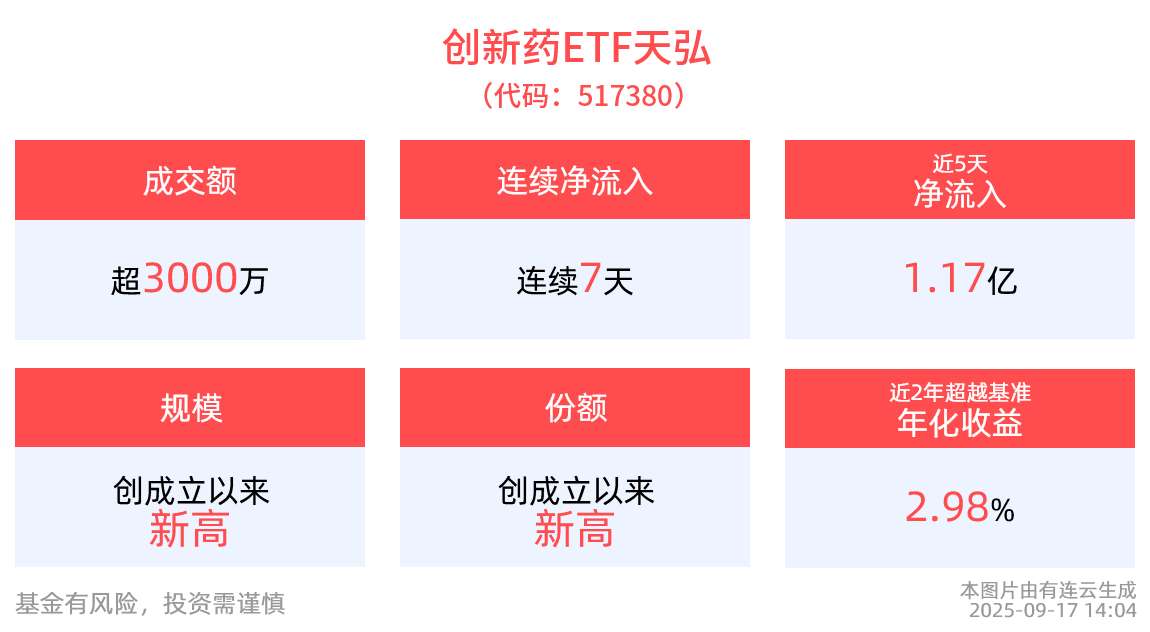
Core Insights - The innovative drug ETF Tianhong (517380) has reached a new high in scale, totaling 1.283 billion yuan and 1.474 billion shares as of September 16, 2025 [3][4] - The biopharmaceutical ETF (159859) has shown significant growth, with a recent net inflow of 1.72 billion yuan over the past five trading days, ranking first among comparable funds [4][5] - Recent regulatory changes by the National Medical Products Administration aim to enhance the efficiency of clinical trial approvals for innovative drugs, potentially boosting the sector's growth [7][8] Fund Performance - The innovative drug ETF Tianhong (517380) has recorded a trading volume of 37.49 million yuan on September 17, 2025, with significant gains in constituent stocks such as Huyou Pharmaceutical (688553) and WuXi AppTec (02359) [2] - The biopharmaceutical ETF (159859) has seen a trading volume of 115 million yuan, with notable increases in stocks like Baillie Tianheng (688506) and WuXi AppTec (603259) [3] - The innovative drug ETF Tianhong (517380) has a weekly volatility of 9.74%, indicating a more stable performance compared to other indices in the sector [5] Market Trends - The innovative drug sector has shown resilience, with an average revenue growth of 35% among 393 pharmaceutical companies listed in A-shares and Hong Kong in the first half of 2025, driven by favorable medical insurance policies [7] - The recent fluctuations in the stock price of the Hong Kong-listed innovative drug company, Jiajie Ankang, have sparked discussions due to its inclusion in multiple indices, although it is not part of the indices tracked by Tianhong's ETFs [4][5] Regulatory Environment - The National Medical Products Administration's recent announcement aims to streamline the approval process for innovative drug clinical trials, potentially leading to a more efficient development cycle for new drugs [8] - The regulatory changes are expected to instill confidence in innovative drug companies, supporting a comprehensive development framework that includes research, market entry, and clinical application [8]
“健康牛”:以景气为锚作扩散
Sou Hu Cai Jing· 2025-09-16 08:05
Group 1 - The market has entered a rotation and diffusion phase, which is expected to continue in the near future [1][2] - Investment effectiveness is improving as the market shifts its focus towards economic conditions and industry trends [1][2] - The report suggests five key areas for investment: Hong Kong internet stocks, innovative pharmaceuticals, breakthroughs in new energy technology, new consumption, and cyclical industries driven by multiple catalysts [1][2] Group 2 - The report indicates that the market is looking for signs of economic improvement as it approaches the earnings season [1][2] - The sentiment towards innovative pharmaceuticals has fully digested, leading to a revaluation driven by business development and commercialization [1][2] - New consumption is highlighted as having high odds, with seasonal catalysts expected to enhance success rates [1][2]

医药生物行业周报(9月第2周):国内生物医药底层创新有望加速-20250915
Century Securities· 2025-09-15 00:44
Investment Rating - The report does not explicitly state an investment rating for the industry [1] Core Insights - The domestic biopharmaceutical innovation is expected to accelerate, driven by the approval of the "Regulations on the Management of Clinical Research and Clinical Translation Applications of Biomedical New Technologies (Draft)" by the State Council on September 12 [2][12] - The report highlights the importance of promoting biomedical technology innovation and the need for regulatory frameworks to ensure safety and quality in clinical applications [2][12] - The report expresses optimism towards companies focusing on new biomedical technologies, particularly in areas such as gene editing, cell therapy, and stem cell research [2] Weekly Market Review - The biopharmaceutical sector experienced a decline of 0.36% from September 8 to September 12, underperforming compared to the Wind All A index (2.12%) and the CSI 300 index (1.38%) [7] - Among sub-sectors, medical devices (3.02%), in vitro diagnostics (2.0%), and pharmaceutical distribution (1.44%) showed the highest gains, while chemical preparations (-2.83%), raw materials (-1.06%), and blood products (-0.72%) faced the largest declines [7][8] - Notable stock performances included Zhend Medical (41.3%), Haooubo (28.0%), and Jimin Health (25.9%) with significant gains, while Yuekang Pharmaceutical (-18.4%), Maiwei Biotech-U (-14.4%), and Yirui Biotech (-14.0%) saw substantial losses [10] Industry News and Key Company Announcements - The report mentions significant events such as the collaboration between Shiyao Group and Kangning Jiere to develop a new drug for HER2-positive gastric cancer, which has been accepted for review by the National Medical Products Administration [12] - The report also notes the approval of a new drug by Johnson & Johnson for treating non-muscle invasive bladder cancer, marking a significant advancement in bladder cancer treatment [14] - BioNTech and Bristol Myers Squibb reported promising mid-term data for their bispecific antibody in treating extensive-stage small cell lung cancer, showing an objective response rate of 76.3% [14]