通威股份

Search documents
多晶硅:现货成交价下行,短期期货承压,工业硅:大厂计划减产,逢低买入
Yin He Qi Huo· 2026-01-26 02:50
Report Industry Investment Rating No information provided in the content. Core Viewpoints - For polysilicon, due to production cuts by Tongwei Co., Ltd. and GCL Technology, polysilicon production decreased in January and February, and inventory significantly accumulated. The spot price has dropped, and future prices are expected to decline further under high inventory and weak demand. The short - term futures should be treated with a bearish view [4]. - For industrial silicon, downstream demand has weakened due to organic silicon and polysilicon production cuts. Although there are unconfirmed rumors of large - scale production cuts by major manufacturers, if they materialize, it will reverse the supply - demand situation in February. The futures price may fluctuate strongly in the short term and rise after actual production cuts. It is recommended to buy on dips [6]. Summary by Chapter Chapter 1: Comprehensive Analysis and Trading Strategies Polysilicon - **Production and Inventory**: Tongwei Co., Ltd. stopped all polysilicon production, and GCL Technology cut production. In January, production dropped to around 90,000 tons, and in February, it fell below 85,000 tons. The inventory of polysilicon manufacturers soared to 330,000 tons [4]. - **Spot Market**: This week, the spot market transactions increased, with a volume of nearly 30,000 tons in the second half of the week and a price range of 45 - 49 yuan/kg. The spot price has significantly decreased, and future prices may continue to fall, with a support level of 42 - 45 yuan/kg [4]. - **Futures Market**: With low trading volume and increased random fluctuations in the market, a short - term bearish view is recommended, with a reference price range of (45000, 52000). Attention should be paid to next week's important meetings [4]. - **Trading Strategy**: For single - side trading, adopt a bearish view and participate cautiously due to low trading volume. There are no recommendations for arbitrage and options [5]. Industrial Silicon - **Supply and Demand**: This week, the weekly production of DMC decreased by 0.61% to 42,900 tons, polysilicon production decreased by 7.4% to 20,400 tons. The operating rate of primary aluminum alloy remained unchanged at 58.6%, and that of recycled aluminum alloy increased by 0.9 percentage points to 59.3%. The weekly production of industrial silicon was 76,200 tons, a decrease of 2.78%. The total number of open furnaces decreased by 3 to 219. The social inventory of industrial silicon was 556,000 tons, an increase of 1000 tons. The inventory of sample enterprises in Xinjiang, Yunnan, and Sichuan was 215,800 tons, an increase of 5600 tons, and the downstream raw material inventory was 234,300 tons, an increase of 1300 tons [6]. - **Trading Logic**: The demand for industrial silicon has weakened due to production cuts in organic silicon and polysilicon. If the large - scale production cuts by major manufacturers are implemented, the monthly production will decrease by 60,000 - 70,000 tons, reversing the supply - demand situation in February. The rumors of production cuts have boosted manufacturers' confidence in holding prices. In the short term, the futures price may fluctuate strongly, and it may rise after actual production cuts [6]. - **Trading Strategy**: It is recommended to buy on dips, with a reference price range of (8600, 9500). There are no recommendations for options and arbitrage [7]. Chapter 2: Industrial Silicon Fundamental Data Tracking - **Market Performance**: This week, the industrial silicon futures fluctuated strongly, while the spot price changed little, and there was no large - scale hedging [10]. - **Downstream Demand**: The production of DMC and polysilicon decreased, and the operating rate of aluminum alloy was slightly adjusted. The weekly production of DMC was 42,900 tons, a decrease of 0.61%, and the weekly production of polysilicon was 20,400 tons, a decrease of 7.4%. The operating rate of primary aluminum alloy remained unchanged at 58.6%, and that of recycled aluminum alloy increased by 0.9 percentage points to 59.3% [13]. - **Production**: The weekly production of industrial silicon was 76,200 tons, a decrease of 2.78%. The total number of open furnaces decreased by 3 to 219. If major manufacturers implement production cuts, the monthly production will decrease by 60,000 - 70,000 tons [24]. - **Inventory**: The social inventory of industrial silicon was 556,000 tons, an increase of 1000 tons. The inventory of sample enterprises in Xinjiang, Yunnan, and Sichuan was 215,800 tons, an increase of 5600 tons, and the downstream raw material inventory was 234,300 tons, an increase of 1300 tons [25]. - **Product Prices**: The spot price of industrial silicon, DMC, and terminal products remained stable this week [30][34]. - **Intermediate Fundamental Data**: The operating rate of organic silicon intermediates was slightly adjusted [40]. - **Aluminum Alloy Fundamental Data**: The price and operating rate of aluminum alloy increased slightly [44]. - **Raw Material Prices**: The raw material prices of industrial silicon remained stable this week [48]. Chapter 3: Polysilicon Fundamental Data Tracking - **Product Prices**: This week, the prices of some polysilicon and silicon wafers decreased, while the prices of batteries and components increased. For example, the average price of N - type dense material decreased by 2.02% compared to the previous weekend [52]. - **Component Fundamental Data**: From April 2026, the export tax rebate for photovoltaic components will be cancelled, leading to potential export rush in January - March. The estimated production in January will increase to around 40GW. The European and domestic component inventories are at a moderately low level [60]. - **Battery Chip Fundamental Data**: The export tax rebate for photovoltaic batteries will be reduced and cancelled in 2027. The estimated production in January will increase to around 48GW [61]. - **Silicon Wafer Fundamental Data**: The silicon wafer inventory has increased to 26.78GW. With the cancellation of the export tax rebate, there is still demand for export rush, and the estimated production in January may increase to 50GW [67]. - **Polysilicon Fundamental Data**: This week, the polysilicon production slightly decreased, and the factory inventory increased to 330,000 tons. In January, due to production cuts by GCL Technology and Tongwei Co., Ltd., the production decreased to around 90,000 tons, and in February, it will be reduced to 82,000 - 85,000 tons [72].
电力设备行业跟踪周报:太空光伏空间广阔,固态和AIDC潜力可期-20260126
Soochow Securities· 2026-01-26 02:32
Investment Rating - The report maintains an "Accumulate" rating for the power equipment industry [1] Core Viewpoints - The space for space photovoltaic technology is vast, and the potential for solid-state batteries and AIDC (Advanced Intelligent Driving Control) is promising [1] - The energy storage sector is expected to see significant growth, with a projected increase of over 60% in 2026 due to rising demand and supply constraints [3][4] - The report highlights the strong performance of various segments within the power equipment industry, including wind power, nuclear power, and lithium batteries, with notable price increases in lithium carbonate and other materials [3][4] Industry Trends - The energy storage market in China is experiencing rapid growth, with new installations reaching 66.43 GW and 189.48 GWh in 2025 [3] - The report notes that the U.S. energy storage market is also expanding, with a projected installation of 80 GWh in 2026, driven by data center demands and favorable policies [7] - The report indicates that the demand for solid-state batteries is increasing, with major companies accelerating their production lines [4] Company Performance - Companies such as Ningde Times, Sunshine Power, and others are expected to see significant profit growth in 2025, with projected increases ranging from 50% to over 100% [3][4] - The report mentions specific companies like Hunan YN, which anticipates a net profit of 1.15-1.4 billion yuan in 2025, reflecting a year-on-year increase of 93.75%-135.87% [3] - The report also highlights the expected losses for companies like Longi Green Energy and Tongwei Co., with projected net losses of 6-6.5 billion yuan and 9-10 billion yuan, respectively [3] Investment Strategy - The report suggests a focus on energy storage, lithium batteries, and solid-state technologies, with recommendations for leading companies in these sectors [4] - It emphasizes the importance of companies with strong technological advantages and overseas market access, particularly in the AIDC sector [4] - The report also highlights the potential for growth in the wind and solar power sectors, with specific recommendations for companies involved in these areas [4]




电力设备行业跟踪周报:太空光伏空间广阔,固态和AIDC潜力可期
Soochow Securities· 2026-01-26 02:24
Investment Rating - The report maintains an "Accumulate" rating for the power equipment industry [1] Core Insights - The report highlights the vast potential of space photovoltaic technology and the promising prospects of solid-state batteries and AIDC (Automated Identification and Data Capture) [1] - The energy storage sector is expected to see significant growth, with a projected increase of over 60% in 2026 due to rising demand and supply constraints [3][4] - The report emphasizes the strong performance of various segments within the power equipment industry, including wind power, nuclear power, and lithium batteries, with notable price increases in lithium carbonate and other materials [3][4] Industry Trends - The energy storage market in China is experiencing rapid growth, with new installations reaching 66.43 GW and 189.48 GWh in 2025 [3] - The report notes that the U.S. energy storage market is also booming, with a projected installation of 80 GWh in 2026, driven by AI and data center demands [7] - The report indicates that the wind power sector is expected to grow significantly, with domestic offshore wind capacity projected to exceed 8 GW in 2025 [4] Company Performance - Companies such as Ningde Times, Sunshine Power, and others are expected to see substantial profit growth in 2025, with Ningde Times projected to achieve a net profit of 11.5-14 billion yuan, representing a year-on-year increase of 93.75%-135.87% [3][4] - The report highlights several companies with strong growth potential, including Ningde Times, Sunshine Power, and others, which are positioned well in the energy storage and electric vehicle markets [4][6] Investment Strategy - The report suggests a focus on energy storage, solid-state batteries, and AIDC technologies, with recommendations for leading companies in these sectors [4][6] - It emphasizes the importance of investing in companies with strong technological advantages and overseas market access, particularly in the context of rising global demand for energy storage solutions [4][6]
江松科技在手订单缩水31%业绩临考 拟拿3.1亿募资补流占比29.5%
Chang Jiang Shang Bao· 2026-01-26 02:11
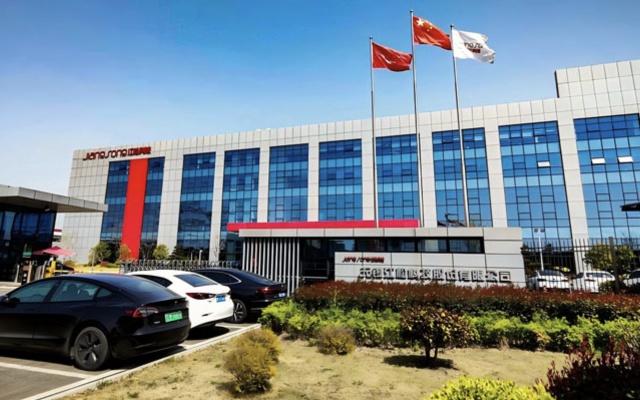
光鲜的业绩背后,光伏行业整体承压也给这家设备制造商带来严峻挑战。 最突出的问题是现金流恶化。2023年,公司经营活动现金流净额尚为3.93亿元,2024年急转直下为-1.18 亿元,2025年上半年为-3173.84万元。招股书解释称,这主要是由于2023年采购规模大幅增加的款项于 2024年集中支付,叠加新签订单下降导致预收款减少。 长江商报记者注意到,随着收入规模扩大,公司应收账款规模快速增长,在下游客户经营承压背景下, 回收风险凸显。2022年—2025年上半年,江松科技应收账款账面余额分别为2.97亿元、4.07亿元、6.01 亿元和8.23亿元,占当期总营收的比重分别为36.86%、32.91%、29.75%和69.68%。 深交所最新披露的信息显示,无锡江松科技股份有限公司(下称"江松科技")IPO的状态从中止变更为已 问询。这标志着这家国内光伏电池智能自动化设备领域头部企业,创业板IPO进程迈入关键阶段。 在光伏行业整体承压的2024年,多家光伏电池厂出现巨额亏损,江松科技却走出业绩独立行情,营收从 2022年的8.07亿元增长至2024年的20.19亿元,实现翻倍增长,同期归母净利润也从0.8 ...

先导智能通过港交所聆讯 中信证券、摩根大通为联席保荐人
Zheng Quan Shi Bao Wang· 2026-01-26 01:26
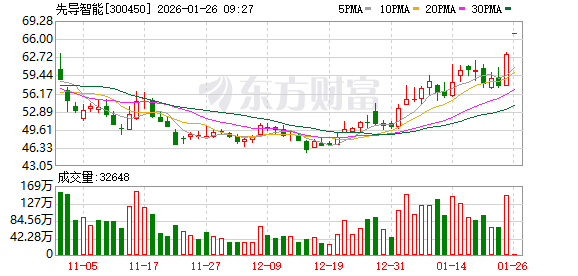
其锂电池智能装备产品涵盖电动汽车、储能、消费电子等应用领域,覆盖磷酸铁锂、三元等技术路线及 各类电池形态,并能提供固态电池制造设备。客户包括宁德时代、特斯拉、大众汽车、比亚迪等全球领 先企业。 先导智能通过港交所主板上市聆讯。中信证券、摩根大通为联席保荐人。 先导智能作为智能装备企业,为锂电池、光伏电池、3C制造、智能物流、制氢及燃料电池生产、汽车 制造和激光精密加工等多元应用领域提供智能装备及解决方案。该公司通过深度集成数据驱动算法、数 字孪生仿真等技术,赋能客户实现高自动化生产,降低人工成本,提升生产效率。 根据弗若斯特沙利文的资料,按2024年收入计,先导智能是全球第二大新能源智能装备供应商,市场份 额为2.9%。在锂电池智能装备市场,先导智能按2024年收入计为全球最大的供应商(市场份额 15.5%),同时也是中国最大的供应商(市场份额19.0%)。 在光伏领域,先导智能提供光伏组件和光伏电池制造的整线解决方案及单体装备,并成功交付 TOPCon、HJT、xBC、钙钛矿等新型光伏电池技术的GW级方案,客户包括通威太阳能、隆基绿能等行 业龙头。 (文章来源:证券时报网) ...


深度 | 一文说清“中试平台”:如何打通技术到市场最后一公里!
证券时报· 2026-01-26 00:22
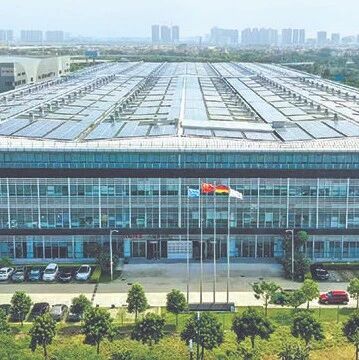
Core Viewpoint - The article discusses the emergence of "pilot testing platforms" in China's manufacturing industry, which serve as crucial facilitators for the transition of scientific innovations from the lab to mass production, effectively navigating the challenges of the "Darwinian Dead Sea" in technology commercialization [1][4]. Group 1: Pilot Testing Platforms - Pilot testing platforms are essential for overcoming the technical bottlenecks in large-scale production, allowing for efficient product validation and market acceptance [1]. - These platforms are characterized by their large physical space and significant investment in advanced equipment, enabling comprehensive testing and development across various technologies [5][6]. - The advanced photovoltaic device pilot testing platform by Tongwei has a total area of 68,000 square meters, making it the largest in the photovoltaic industry, capable of parallel research and development of multiple technologies [5][6]. Group 2: Role in Innovation - Pilot testing platforms act as "scouts" for new technologies, enabling companies to explore and develop next-generation technologies while maintaining production efficiency [10]. - They serve as "demolition experts" that help overcome technical challenges in product manufacturing, such as achieving high yield and stability in battery materials [11]. - These platforms also function as "training grounds" for products before they enter the market, allowing for full-process validation and optimization [12]. Group 3: Industry Collaboration and Ecosystem - The platforms are increasingly recognized in national policies, emphasizing their role as "locomotives" for industrial development and collaboration [15]. - By opening their capabilities to the industry, these platforms can drive collaborative innovation and enhance the overall level of the supply chain [15][16]. - The establishment of an ecosystem that includes research and development, incubation, and investment is crucial for fostering technological innovation and market expansion [16]. Group 4: Challenges Faced - The construction and operation of pilot testing platforms face significant challenges, including technical integration, funding, talent acquisition, and trust issues [18][20]. - High investment costs and uncertain returns pose economic challenges, as the platforms require substantial funding for equipment and facilities [20][21]. - The scarcity of skilled personnel who can manage the complex operations of these platforms is a major bottleneck [22][23].

白银涨破100美元关口!光伏企业如何“渡劫”?
Zhong Guo Xin Wen Wang· 2026-01-26 00:19
近日,晶科能源、通威股份、隆基绿能等多家光伏头部企业纷纷发布2025年业绩预告,晶科能源预计 2025年归母净利润亏损59亿元至69亿元,通威股份预计亏损90亿元至100亿元,隆基绿能预计归属于上 市公司股东的净亏损为60亿元到65亿元。 在谈到预亏的原因时,多家公司均提到了白银价格上涨对业绩的影响。隆基绿能在公告中指出,四季度 银浆、硅料成本大幅上涨,显著推升了硅片、电池及组件产品成本。通威股份在谈到亏损原因时也提 到"白银等部分核心原材料价格持续上涨"。 夏日进一步解释称,"一方面,尽管受到'反内卷'等行业约束,但光伏制造端供应能力仍在持续扩张;另 一方面,下游需求趋向萎缩态势,国内市场需求持续减弱,海外市场的采购需求也有所回落。未来,受 到地缘政治等因素影响,下游国内外需求大概率进一步减弱。" 成本转移面临下游制约,少用甚至不用银成为企业降低成本的重要路径。隆基绿能披露,目前高效BC 二代产品已实现规模化量产,贱金属替代银浆技术完成中试。爱旭股份也在推动铜电镀无银金属化方案 并已应用于珠海10GW(吉瓦)级量产线。通威、晶科、晶澳等企业,也在推动"银包铜"技术。 以白银作为原材料的银浆是制造光伏电池的重 ...
解读2025年全球裁员潮:AI还不是关键因素
Jing Ji Guan Cha Wang· 2026-01-25 17:56
Group 1 - The core point of the article is that the global wave of layoffs in 2025 is driven by multiple factors, including economic slowdown, cost pressures, strategic restructuring, and the impact of AI, rather than solely by AI replacing jobs [2][6][8] - In the United States, 2025 saw a significant increase in layoffs, with approximately 1.17 million layoffs reported by the end of November, marking the highest level since the COVID-19 pandemic [2][3] - AI has been cited as a factor in about 54,000 to 55,000 layoffs, accounting for only 4% to 5% of total layoffs, indicating that while AI is changing workforce structures, it is not the primary driver of the layoffs [3][8] Group 2 - In Europe, companies are announcing layoffs primarily for cost control, profit pressure, and business restructuring, with the automotive and manufacturing sectors being particularly affected [3][6] - In China, layoffs are largely attributed to macroeconomic and structural adjustments, with youth unemployment rates remaining high, particularly among those aged 16-24 [4][6] - Major Chinese companies like Alibaba and Baidu are undergoing workforce reductions not solely due to layoffs but also due to strategic focus and asset divestitures [5][6] Group 3 - AI is reshaping job structures, particularly in roles such as customer service and administrative support, but the overall impact on employment is more complex, with economic conditions being a more significant factor [7][8] - The introduction of AI and automation often leads to job restructuring rather than outright layoffs, with a focus on efficiency and productivity improvements [11][12] - The long-term effects of AI on employment will depend on the adaptability of the workforce and the diversity of local industry structures [9][10] Group 4 - Companies are increasingly recognizing the need for reskilling and upskilling their workforce rather than relying solely on layoffs, as this approach can enhance long-term productivity and employee trust [22][24] - Leading firms are investing in employee training programs to adapt to technological changes, with examples including Amazon's "2025 Skills Enhancement Program" [24][25] - The future workforce will require a combination of technical skills and soft skills, with a growing emphasis on the ability to integrate AI into business processes [18][19]



福达合金业绩翻倍增长:数据中心+储能全速前进,“太空光伏”注入预期值得期待
Quan Jing Wang· 2026-01-25 13:42
Core Viewpoint - Fuda Alloy Materials Co., Ltd. is experiencing significant growth driven by the expansion of global power infrastructure investments and the booming demand in emerging sectors such as data centers and energy storage, leading to a projected net profit increase of 119.14% to 219.95% in 2025 compared to the previous year [1] Group 1: Business Transformation - The company is transitioning from traditional low-voltage electrical applications to new scenarios involving data centers and energy storage, capturing the growth opportunities presented by the AI-driven surge in power demand [2] - Fuda Alloy has expanded its business with North American data centers, achieving a revenue increase of 507% in the first half of 2025, driven by its robust technology and supply chain resilience [2] - The company’s high-performance electrical contact materials have successfully penetrated the supply chains of major tech giants like Microsoft and Meta, enhancing its market position [2] Group 2: Energy Storage Developments - Fuda Alloy's products, such as silver-tin oxide and silver-copper contact materials, are being supplied to major clients like Sungrow and Huawei for energy storage inverters, showcasing their high performance and reliability [3] - The company is actively engaged in R&D projects aimed at developing new materials for energy storage applications, which are critical for enhancing product value and profitability [3] Group 3: Anticipated Asset Injection - There is market anticipation regarding the potential asset injection from Zhejiang Guangda Electronics, which is under the same controlling shareholder as Fuda Alloy, following a previous attempt to acquire a 51% stake [4] - Guangda Electronics is a leading player in the photovoltaic silver paste sector, with a strong technical position and a diverse product portfolio, which could significantly enhance Fuda Alloy's performance upon integration [5] Group 4: Space Photovoltaics Opportunity - The photovoltaic industry is poised for growth in the space sector, with significant developments anticipated in space solar power, driven by increasing energy demands from satellite deployments [7] - Fuda Alloy and Guangda Electronics are well-positioned to capitalize on this emerging market, leveraging Guangda's advanced technology in low-temperature silver paste and conductive materials [7] - The synergy between Fuda Alloy's electrical contact materials for data centers and Guangda's future space photovoltaic silver paste business aligns with the broader AI-driven demand for computational power [8] Group 5: Future Outlook - Fuda Alloy is at a pivotal moment, balancing steady growth in traditional business with the potential for explosive growth in new sectors, particularly in data centers and energy storage [9] - The anticipated asset injection from Guangda Electronics could further enhance Fuda Alloy's capabilities in the burgeoning space photovoltaic market, marking a transformation into a key player in the AI era [9]

“太空光伏”引爆涨停潮
Di Yi Cai Jing Zi Xun· 2026-01-25 12:13
2026.01.25 本文字数:2377,阅读时长大约4分钟 资本市场炒作太空光伏概念一片欢腾,与光伏企业2025年业绩预告大面积且深度亏损的情形形成鲜明对 比。根据统计,在已发布预告的32家光伏上市公司中,23家预计出现亏损(包括续亏、首亏),占比逾 七成。 光伏主产业链(硅料、组件、电池、硅片)的亏损明显加剧,主要由于各环节低迷的终端需求、产能阶 段性过剩、产品价格上行受阻等多重因素。 在净利润预亏金额同比扩大的名单中,一体化龙头通威股份预计2025年净利润亏损区间达90亿元至100 亿元,上年同期亏损70.39亿元,它也是目前唯一一家预亏金额上限达到百亿规模的光伏企业。 亏损规模激增的光伏制造商还有天合光能、钧达股份,预亏上限均较上年同期扩大100%及以上。天合 光能预计亏损65亿元至75亿元,上年同期亏损34.43亿元,该公司表示组件价格承压,叠加硅料、银浆 等关键原材料涨价,使得组件业务盈利能力下滑,同时计提资产减值准备也对业绩有一定影响。 同为组件环节的晶科能源预计业绩首亏,亏损约59亿元至69亿元。对于业绩亏损的原因,晶科能源也提 到了2025年光伏组件价格整体处于低位,以及计提资产减值准备对业 ...