
中金公司

Search documents
固本强基促上市公司价值成长
Jing Ji Ri Bao· 2026-02-10 22:10
Core Viewpoint - The Chinese securities regulatory authority emphasizes the importance of enhancing the governance and value growth of listed companies to support high-quality development in the capital market by 2026 [1][5][10] Group 1: Mergers and Acquisitions - The A-share market saw over 200 major asset restructuring disclosures in the past year, with 70% of targets concentrated in sectors like semiconductors, electronic information, new energy, and equipment manufacturing [2] - The securities industry has actively promoted supply-side structural reforms, with several major brokerages completing mergers to strengthen their market positions [2][3] - Policies supporting large-scale mergers are expected to further stimulate market activity, with the introduction of new measures to facilitate mergers and acquisitions [3][4] Group 2: Corporate Governance - Regulatory scrutiny on misleading statements and financial fraud has intensified, prompting companies to improve governance practices [5][6] - Revisions to governance guidelines aim to enhance the operational standards of listed companies, with a focus on board effectiveness and information disclosure [5][6] - Despite improvements, some companies still face challenges related to governance practices, indicating a need for ongoing reforms [6][7] Group 3: Shareholder Returns - The total cash dividends and buybacks reached a record high of 2.68 trillion yuan in the past year, reflecting a growing commitment to shareholder returns [8][9] - A significant number of companies have adopted long-term dividend plans, with many executing multiple dividend distributions within a year [8] - The positive cycle of investment returns, market confidence, and improved financing efficiency is contributing to the overall growth in market capitalization [9][10]
惊魂一周!金价、银价反弹:现货黄金日内涨超1%,现货白银日内涨幅扩大至3%
Sou Hu Cai Jing· 2026-02-10 16:57
Core Viewpoint - The precious metals market experienced extreme volatility in early February 2026, with gold and silver prices plummeting and then rebounding sharply, leading to significant market divergence regarding future trends [1][3]. Group 1: Market Dynamics - Gold reached a historical high of $5598.75 per ounce on January 29, 2026, before crashing to $4403.64 within three trading days, marking a single-day drop of over 10% [1]. - Silver saw an even more dramatic decline, falling from $120 to $71.31, with a maximum single-day drop of 35% [1]. - Following the crash, gold rebounded to over $5000, while silver experienced a daily increase of 3% [1]. Group 2: Triggers of Volatility - The volatility was triggered by the nomination of Kevin Walsh, known for his hawkish stance, as the next Federal Reserve Chair, leading to expectations of tighter monetary policy [3]. - The Chicago Mercantile Exchange raised margin requirements, forcing leveraged long positions to liquidate, which exacerbated the market downturn [3][4]. - A significant technical factor was the extreme concentration of long positions, with gold and silver having risen 67% and 120% respectively from December 2025 to January 2026 [3]. Group 3: Institutional Behavior - Institutional investors rapidly exited the market during the downturn, with many international banks significantly reducing their net long positions [6]. - Retail investors, lacking risk management tools, became passive victims of the liquidity crisis [6]. - The divergence in supply and demand fundamentals amplified the volatility, with silver's industrial demand increasing significantly, while gold remained more reliant on monetary attributes [6]. Group 4: Market Outlook - Analysts are divided on the future of gold prices, with some predicting a long-term decline to $4000 or even $3000 by 2027, while others maintain bullish forecasts, raising year-end price targets to $6300 [7]. - The market is experiencing a structural shift, with concerns about the independence of the Federal Reserve easing due to the nomination of a qualified candidate [11][14]. - The extreme volatility has led to a re-evaluation of asset pricing logic, with warnings about the fragility of the silver market compared to gold [16].


跟投狂赚超30亿!券商为何仍密集减资另类投资子公司?
2 1 Shi Ji Jing Ji Bao Dao· 2026-02-10 14:35
Core Viewpoint - The recent announcements of capital reductions by several securities firms, including Dongxing Securities, highlight a strategic shift towards improving capital efficiency in the alternative investment sector, particularly among smaller firms [1][2][9]. Group 1: Capital Reduction Announcements - Dongxing Securities announced the completion of a 300 million yuan capital reduction for its subsidiary Dongxing Investment, lowering its registered capital from 1 billion yuan to 700 million yuan [1][3]. - Zhongshan Securities also reported a capital reduction of 150 million yuan for its subsidiary Shenzhen Jinhong Shaohui Investment, reducing its registered capital from 200 million yuan to 50 million yuan [2]. - Since 2025, at least five securities firms have undertaken capital reductions for their alternative investment subsidiaries, primarily among smaller firms [2][3]. Group 2: Reasons for Capital Reduction - The primary reason cited for these capital reductions is to enhance overall capital utilization efficiency [2][9]. - Many firms are reallocating freed-up capital into wealth management, international business, or other core operations that offer higher turnover and synergy [10]. - The trend of capital reduction is seen as a strategic adjustment to optimize resource allocation and improve financial performance [9][10]. Group 3: Market Context and Performance - In 2025, the alternative investment sector, particularly the "Star Market" follow-on investments, generated significant returns, with securities firms earning up to 3.065 billion yuan in investment income [2][7]. - However, the majority of these returns were concentrated among leading firms, making it challenging for smaller firms to participate effectively [8]. - The capital adjustments reflect a broader trend where firms are either reducing or increasing capital based on their specific business needs and market conditions [5][10]. Group 4: Diverging Strategies Among Firms - While many firms are reducing capital, some, like Guohai Securities, have opted to increase capital by 500 million yuan to support rapid business growth [5]. - This divergence indicates a split in strategy within the industry, where some firms are focusing on enhancing their capital strength while others are streamlining operations [5][10]. - The regulatory environment, including new company laws, also influences these capital adjustments, as firms aim to meet compliance requirements while managing capital efficiency [10].

经济大游泳池:美联储如何管理“水位”?
Sou Hu Cai Jing· 2026-02-10 13:39
Group 1 - The core concept of "balance sheet reduction" (缩表) is to decrease the Federal Reserve's balance sheet by withdrawing excess liquidity from the market to combat inflation [6][7][8] - The assets on the balance sheet primarily consist of U.S. Treasury securities and mortgage-backed securities (MBS) [4] - The liabilities include the dollars printed and circulated in the market, as well as reserves held by commercial banks at the Federal Reserve [5] Group 2 - The Federal Reserve employs two main methods for balance sheet reduction: passive reduction by stopping reinvestment of maturing bonds and active reduction by directly selling assets [7][8] - The goal of balance sheet reduction is to recover excess liquidity created during the pandemic and to raise long-term interest rates, which can suppress total demand by increasing borrowing costs for businesses and individuals [9][10] Group 3 - The impact of balance sheet reduction is felt globally, as it can lead to a decrease in market liquidity, potentially raising borrowing rates and putting pressure on asset prices in the U.S. [11][12] - The Federal Reserve's recent announcement to end the current round of quantitative tightening by December 1, 2025, marks a significant shift in monetary policy [13] Group 4 - The combination of interest rate cuts and balance sheet reduction is seen as a "policy paradox," aiming to shift the economy from reliance on external monetary expansion to internal credit creation [15][16] - The proposed reforms aim to redirect capital from financial speculation to real investment, supporting small businesses and technological innovation [18] Group 5 - The anticipated effects of these policies include a healthier, market-driven interest rate system that enhances resource allocation efficiency [21] - The strategy involves a phased approach: first lowering interest rates, then easing financial regulations, and finally implementing gradual balance sheet reduction [25][27] Group 6 - The potential global impact of these policies includes increased capital outflows from emerging markets and pressures on foreign currency debt repayment [29] - The success of the proposed policies hinges on the ability to recover liquidity without triggering economic contraction, relying on advancements in productivity and cost control measures [30]
海外银行股去年涨势如虹 投资者如何破局“产品荒”
2 1 Shi Ji Jing Ji Bao Dao· 2026-02-10 12:49
21世纪经济报道记者 黄子潇 深圳报道 近期,国际金融巨头密集披露财报。以美国四大银行、三大银行卡组织为代表的巨头在2025年整体交出 较好业绩,同期股价表现突出。 2025年,美国银行板块表现强势。花旗集团、摩根大通、富国银行、美国银行股价全年涨幅分别为 70.38%、37.27%、35.57%和28.04%,甚至超过不少美股科技巨头的同期表现。 欧洲银行表现更为亮眼,桑坦德银行、西班牙对外银行及德意志银行同期均实现股价翻倍。 记者注意到,目前内地市场缺主投海外银行的产品,公募的相关布局近似空白,这与布局全球科技的产 品丰富程度截然不同。不过,在港交所注册的基金中有一些相关产品,大多为国际资管机构推出。 国际大型银行密集披露财报 美国四大行一般指花旗集团、摩根大通、富国银行、美国银行。 近日,摩根大通、美国银行、花旗集团和富国银行相继披露2025年四季度和全年业绩。四家银行全年营 收分别为1824亿、1824亿、852亿和837亿美元,同比增长2.6%、6.8%、5.6%和1.7%;净利润方面,分 别实现570亿、305亿、143亿、213亿美元,同比分别下降2.4%、增长13.1%、增长12.8%和增长8 ...
热联集团冲击港股IPO:毛利率不到1%,业务遍布80个国家及地区
Sou Hu Cai Jing· 2026-02-10 11:12
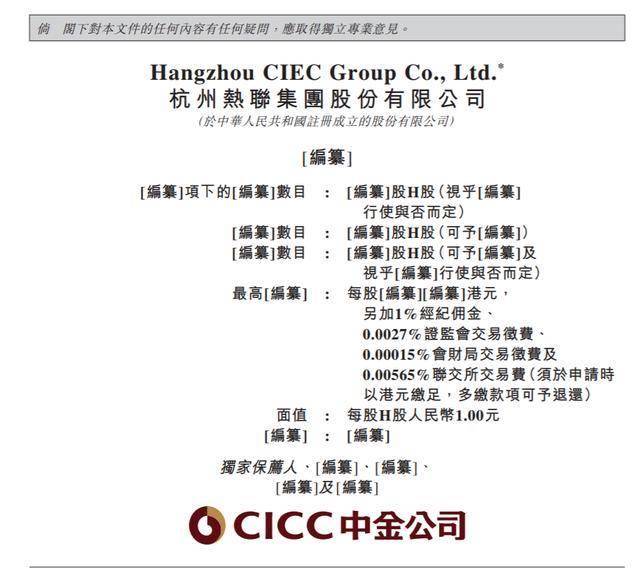
| 壽纂]項下的[編纂]數目 : [編纂]股H股(視乎[編纂] 行使與否而定) | | --- | | [編纂]數目 : [編纂]股H股(可予[編纂]) | | [編纂]數目 : [編纂]股H股(可予[編纂]及 | | 視乎[編纂]行使與否而定) | | 最高[編纂] : 每股[編纂][編纂]港元, | | 另加1%經紀佣金、 | | 0.0027%證監會交易徵賽 · | | 0.00015%會財局交易徵費及 | | 0.00565%聯交所交易費(須於申請時 | | 以港元繳足,多繳款項可予退還) | | 面值 : 每股H股人民幣1.00元 | | [編纂] : [編纂] | 瑞财经 王敏 2月9日,据港交所官网,杭州热联集团股份有限公司(以下简称"热联集团")向港交所提 交上市申请书,独家保荐人为中金公司。 招股书显示,热联集团成立于2001年3月,是国内领先的全球化大宗商品产业服务商及交易商。公司采 购及销售超过285种实物商品,包括黑色金属及原材料、化工品类、有色金属及其他品类。 根据弗若斯特沙利文的资料,按2024年贸易量计,公司是中国第五大大宗商品产业服务商及交易商;是 中国第四大钢材类产业服务商及 ...
人民币对美元汇率逼近6.90关口
Sou Hu Cai Jing· 2026-02-10 09:57
中新社北京2月10日电 (陶思阅)截至北京时间2月10日15时,离岸人民币对美元即期汇率一度逼近6.90关 口。当日,人民币对美元中间价报6.9458,上调65个基点。 在庞溟看来,更值得注意的是,市场对人民币汇率的看法转向"区间波动",情绪面明显改善。他预测, 在2026年,人民币汇率大概率延续双向波动、温和升值的特征,但趋势性走强仍需谨慎判断。与此同 时,地缘政治与全球贸易格局的不确定性仍可能带来阶段性扰动。 在当前外汇市场波动加大的背景下,于企业而言,套期保值的重要性上升。庞溟补充道,套期保值的核 心在于稳定预期、锁定成本、降低不确定性,能够避免汇率短期大幅波动侵蚀利润,提升经营的可预测 性。这对制造出口型企业、进口依赖度高的企业、跨境资产负债错配明显的企业尤为重要。(完) 国家金融与发展实验室特聘高级研究员庞溟认为,人民币走强是多重因素叠加的结果:美元指数回落, 为非美货币提供上行动力;中国1月外汇储备增加412亿美元,强化了市场对中国跨境资金流动稳定性的 判断;加之春节前中国出口企业结汇需求上升等,共同推动人民币升值。 中金公司研报称,随着季节性因素的逐步消退,人民币相较美元的强势表现可能有所退坡, ...
关于同意国泰海通证券股份有限公司为中金沪深300交易型开放式指数证券投资基金提供主做市服务的公告
Xin Lang Cai Jing· 2026-02-10 09:48
炒股就看金麒麟分析师研报,权威,专业,及时,全面,助您挖掘潜力主题机会! 上海证券交易所 2026年02月10日 为促进中金沪深300交易型开放式指数证券投资基金(以下简称300中金,基金代码:510320)的市 场流动性和平稳运行,根据《上海证券交易所基金自律监管规则适用指引第2号——上市基金做市业 务》等相关规定,本所同意国泰海通证券股份有限公司自2026年02月11日起为300中金提供主做市服 务。 特此公告。 上证公告(基金)【2026】330号 ...

北芯生命上市第四个交易日跌6.67%创新低
Zhong Guo Jing Ji Wang· 2026-02-10 08:01
Group 1 - The core point of the article is that Beixin Life (688712.SH) experienced a significant drop in stock price, closing at 41.84 yuan, a decrease of 6.67%, and hitting a new low since its listing [1] - Beixin Life was listed on the Shanghai Stock Exchange's Sci-Tech Innovation Board on February 5, issuing 57 million shares, which accounts for 13.67% of the total share capital post-issuance, at a price of 17.52 yuan per share [1] - The total amount raised from the issuance was 998.64 million yuan, with a net amount of 898.89 million yuan after deducting issuance costs, which was 53.32 million yuan less than the original plan [1] Group 2 - The funds raised are intended for the construction of an interventional medical device industrialization base, research and development projects for interventional medical devices, and to supplement working capital [1] - The total issuance costs for Beixin Life's public offering amounted to 99.75 million yuan (excluding VAT), with underwriting and sponsorship fees accounting for 73.00 million yuan [1]
财富观 | 节前揽储大战升级,资金仍偏爱低风险
Sou Hu Cai Jing· 2026-02-10 07:59
Core Viewpoint - The competition among banks for deposits is intensifying as they prepare for the expected influx of funds from maturing fixed-term deposits in 2026, with a focus on retaining these funds within the banking system rather than allowing them to flow into higher-risk assets like the stock market [3][6][7]. Group 1: Deposit Competition - As the Chinese New Year approaches, banks are ramping up their deposit acquisition strategies, with small and medium-sized banks raising interest rates on specific deposit products, while large banks are offering incentives like points and cash rewards [3][4]. - Over 10 small and medium-sized banks have raised deposit rates since the beginning of 2026, with some rural commercial banks offering rates close to 2% for three-year deposits [4]. - Large banks are not directly increasing rates but are enhancing their deposit acquisition efforts through rewards programs, such as cash rebates for new deposits and points for gift exchanges [5]. Group 2: Predictions for 2026 - The total amount of fixed-term deposits maturing in 2026 is projected to be around 75 trillion yuan, with approximately 67 trillion yuan of that being one-year or longer deposits [6][7]. - Despite the significant amount of maturing deposits, industry experts believe that most of these funds will remain within the banking system, primarily flowing into low-risk assets like bank wealth management products and money market funds [6][7][12]. Group 3: Risk Preferences and Asset Allocation - Current low-risk preferences among residents indicate that many will likely continue to choose fixed deposits and low-risk investments, rather than reallocating funds to higher-risk assets [10][12]. - Historical data suggests that during periods of low interest rates, residents tend to increase their holdings in cash, deposits, and insurance, while reducing investments in stocks and high-risk funds [9][10]. - The trend of "deposit migration" is expected to favor low-risk products, with wealth management and money market funds being the primary beneficiaries of this shift [12][13].
