茶百道

Search documents
4家消费公司拿到新钱;服装品牌高梵获得顺为资本投资;瑞幸与《鬼灭之刃》达成联名|创投大视野
36氪未来消费· 2025-11-08 11:58
Group 1 - Gao Fan, a fashion brand, has completed a Series A financing round led by Shunwei Capital, with specific investment amounts undisclosed. The brand focuses on women's clothing, including T-shirts, shirts, dresses, and outerwear, while also venturing into men's and children's apparel [3] - Thunderbird Innovation, an AR glasses developer, announced a successful D round financing led by CITIC Jinshi, setting a record for the largest single financing amount in the domestic AI+AR glasses sector for 2025. The funds will be used to accelerate technology development and ecosystem construction in the AI+AR glasses market [5][6] - Hezhong Lian Investment, a digital service provider in the pet industry, has completed a 12 million yuan angel round financing. The funds will be used for the development of its digital platform and nationwide service network, aiming to promote standardization and digitization in the pet industry [7] - The restaurant brand Hou Xishi has completed a 45 million yuan Series A financing round, led solely by Guangdong Guanchih Holdings Group. The brand focuses on high-quality American hamburgers and integrates brand incubation, restaurant operations, product development, and supply chain management [8] Group 2 - ByteDance is enhancing its incentive policies to attract AI talent, implementing a "Doubao Long-term Incentive Plan" that includes a virtual stock mechanism for its Doubao-related large model business. Employees can receive stock options valued at 90,000 to 135,000 yuan monthly, with the first batch of allowances distributed over 18 months [9][10] - Fat Donglai, a retail model, has no plans for public listing or large-scale expansion, focusing instead on becoming a school-like enterprise for cultural and business exchange. The company reported a total sales revenue of 19.785 billion yuan as of November 4, exceeding last year's total [11][12] - Xiaohongshu has obtained a payment license, allowing it to enter the payment clearing sector, which is crucial for building a closed-loop ecosystem for its e-commerce and local life services [14] - The gaming industry is seeing significant revenue, with 32 Chinese manufacturers entering the global mobile game publisher revenue TOP 100 in October, collectively earning 2.01 billion USD, accounting for 35.6% of the total revenue [30][31] - The smartphone market in China experienced a slight decline in Q3 2025, with shipments around 68.46 million units, down 0.5% year-on-year, attributed to a traditional sales lull and tightening of national subsidies [32]



直播惹祸?高位回撤近40%,三季度遭基金减持!潮玩巨头怎么了?
证券时报· 2025-11-08 11:07
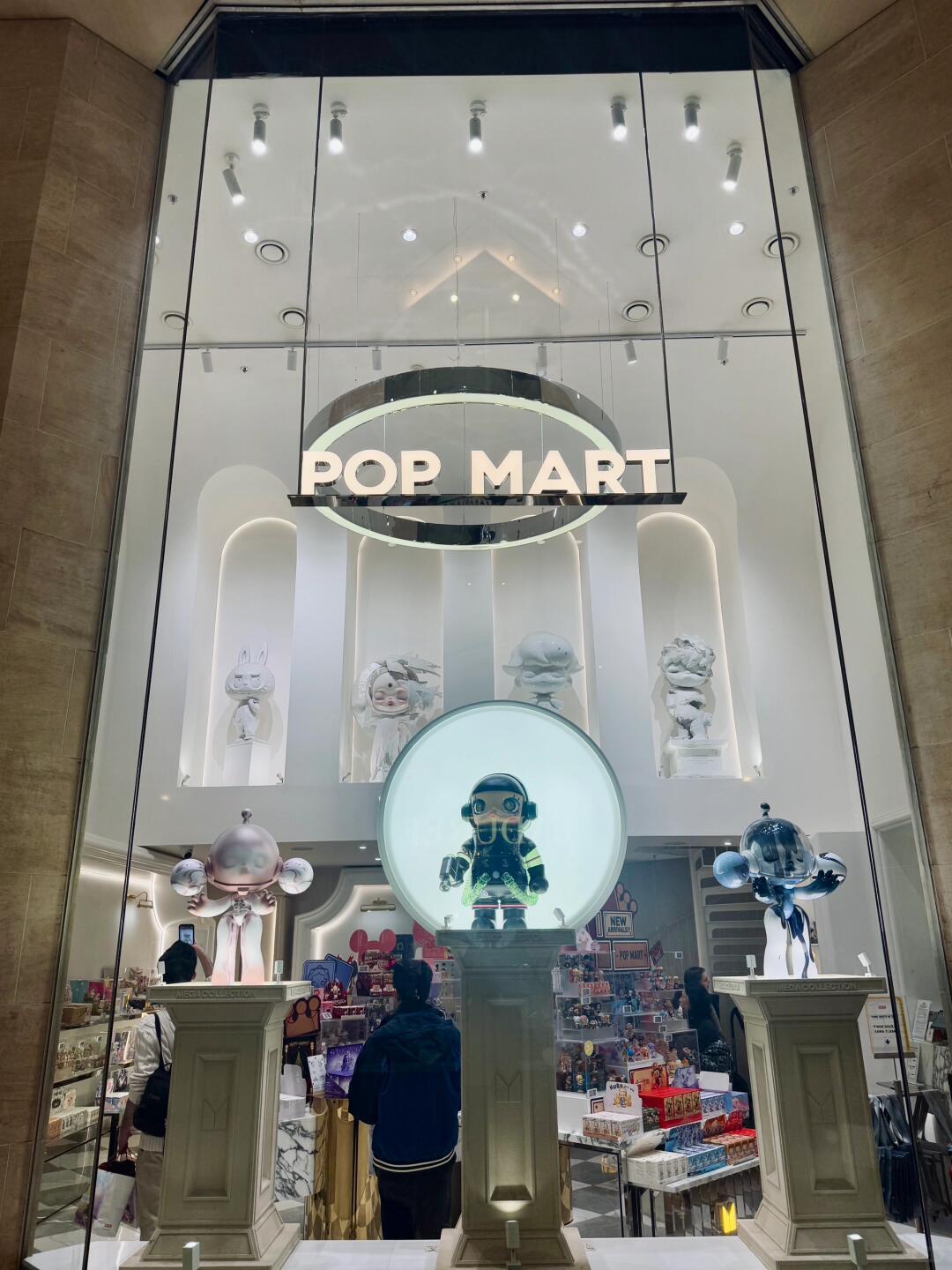
Core Viewpoint - The article discusses the significant decline in Pop Mart's stock price due to a "live streaming incident," which resulted in a market value loss of over 170 billion HKD in a single day. Despite impressive quarterly earnings, concerns about the sustainability of its popular IPs have led to a mixed response from public funds [1][3][6]. Stock Performance - Pop Mart's stock price fell by 5.88% on November 7, closing at 204.8 HKD per share, with a cumulative decline of nearly 40% over the past 50 trading days [3][4]. - The stock had previously reached a high of 339.8 HKD per share in August, with a market capitalization exceeding 450 billion HKD [3]. Financial Performance - In Q3, Pop Mart reported a revenue growth of 245%-250% year-on-year, with domestic revenue increasing by 185%-190% and overseas revenue by 365%-370% [3][4]. - Despite these strong financial results, the stock price continued to decline, attributed to falling second-hand market prices for its popular IP LABUBU and ongoing market concerns about future performance sustainability [3][4]. Fund Activity - Public funds showed a trend of reducing their holdings in Pop Mart during Q3, with the number of funds holding the stock decreasing from 286 to 180, and the number of shares held dropping by approximately 31% [6][7]. - Some funds, however, chose to increase their positions, citing the potential for a second wave of growth due to expanding fan bases and overseas market penetration [7][8]. Market Impact - The decline in Pop Mart's stock has negatively affected other consumer stocks, with notable declines in companies like Giant Bio and Anta Sports, among others [4]. - The Hang Seng Consumer Index has also seen a drop of over 6% in Q4, reflecting broader market challenges [9]. Future Outlook - Fund managers express optimism about the new consumption sector, anticipating opportunities during upcoming shopping festivals and the holiday season [9][10]. - The trend of "going overseas" is highlighted as a key growth factor for consumer brands, with increasing competitiveness of Chinese brands in international markets [10][11].

直播惹祸?高位回撤近40%,三季度遭基金减持!潮玩巨头怎么了?
券商中国· 2025-11-08 03:25
Core Viewpoint - The article discusses the recent decline in Pop Mart's stock price due to a "live streaming incident," which resulted in a significant market value loss, despite strong financial performance in Q3 [1][3]. Group 1: Stock Performance - On November 7, Pop Mart's stock dropped by 5.88%, leading to a market value loss of over 17 billion HKD [1]. - The stock has seen a nearly 40% decline over the past two months after reaching a high of 339.8 HKD per share in August [2][3]. - Despite a strong Q3 report showing a revenue increase of 245%-250%, the stock price continued to fall, attributed to concerns over the sustainability of its popular IP products [3][5]. Group 2: Fund Management and Market Sentiment - Public funds have shown a mixed response, with a reduction in the number of funds holding Pop Mart shares from 286 to 180 in Q3, and a decrease in heavy holdings by approximately 31% [5][6]. - Some funds have chosen to increase their positions, citing the potential for a second wave of growth due to expanding fan bases and overseas market penetration [2][6]. Group 3: Industry Context and Future Outlook - The decline in Pop Mart's stock has negatively impacted other consumer stocks, with significant drops observed across various companies in the sector [4]. - The overall consumer sector has faced challenges, but there is optimism for recovery during upcoming shopping festivals and the holiday season [7][8]. - The trend of "going overseas" is highlighted as a key growth factor for consumer brands, with increasing competitiveness in international markets [8][9].

这个“宝藏品类”要火!喜茶、茶百道、茉莉奶白都在推
3 6 Ke· 2025-11-08 02:11
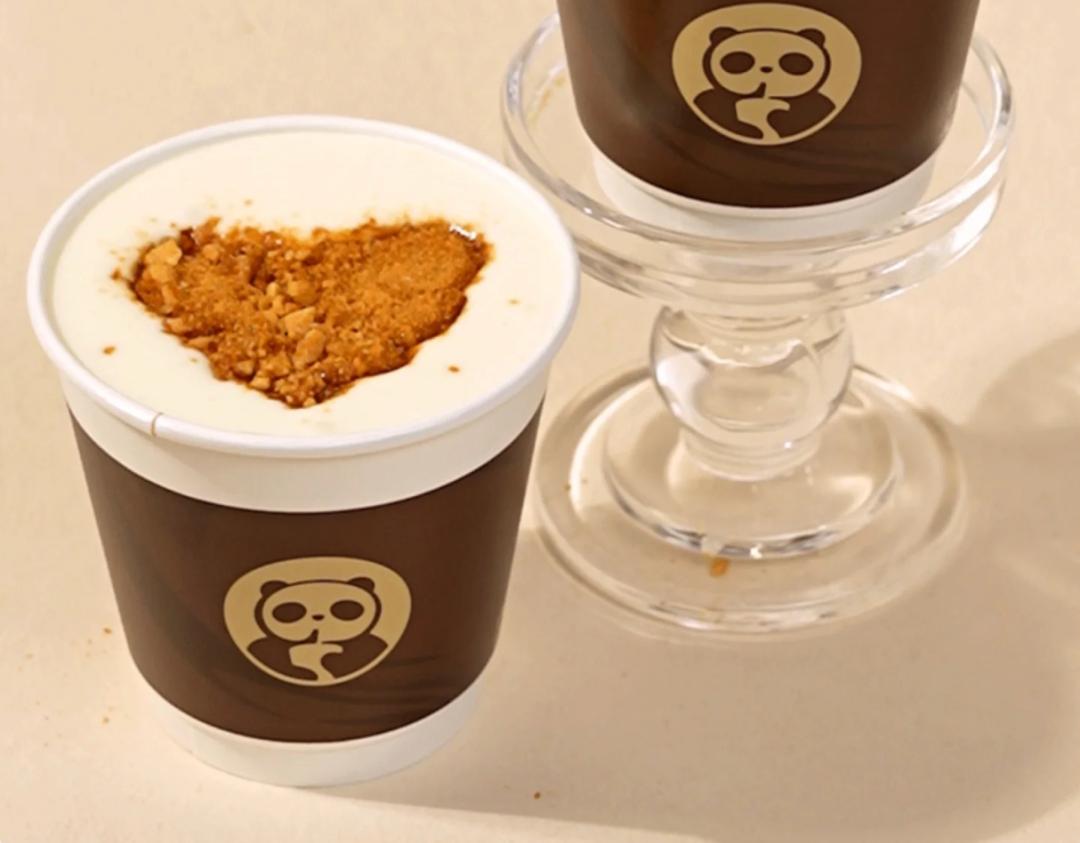
Core Insights - The rise of "tea specials" in the beverage industry indicates a shift towards innovative product offerings, with major brands like Heytea and Cha Baidao launching unique flavored drinks to attract consumers [1][3][11] Group 1: Product Innovations - Cha Baidao has introduced a "Global Flavor Series" featuring three new drinks that incorporate international ingredients, clearly labeling the flavor profiles of each drink [1][3] - Heytea has launched the "Mushroom Shredded Silver Special," integrating mushroom flavors into beverages, and is also offering a whiskey-infused variant in select stores [3][5] - The trend of "tea specials" is moving from niche tea houses to mainstream chain brands, indicating a broader acceptance and demand for these innovative drinks [7] Group 2: Consumer Experience - The unique product experiences have led to positive consumer feedback on social media, highlighting the harmonious flavors and seasonal appeal of these new offerings [3] - Brands are enhancing consumer interaction by introducing DIY elements, such as customizable toppings, to create a more engaging drinking experience [1][3] Group 3: Market Trends - The emergence of "tea specials" is seen as a response to the saturation of traditional beverage offerings, providing a new avenue for product differentiation [11][14] - Consumers are becoming more discerning and knowledgeable about tea flavors, driving the demand for complex flavor profiles and multi-layered taste experiences [14][16] Group 4: Supply Chain and Technology - The growth of "tea specials" is supported by advancements in supply chain management and production technology, allowing for the standardization and consistent delivery of innovative products [18][20] - Innovations in ingredient sourcing and preparation techniques are enabling brands to create unique flavor combinations that were previously difficult to achieve [18][20]
播种、深耕、本地化,茶百道正在海外“小步快跑”
3 6 Ke· 2025-11-06 08:13
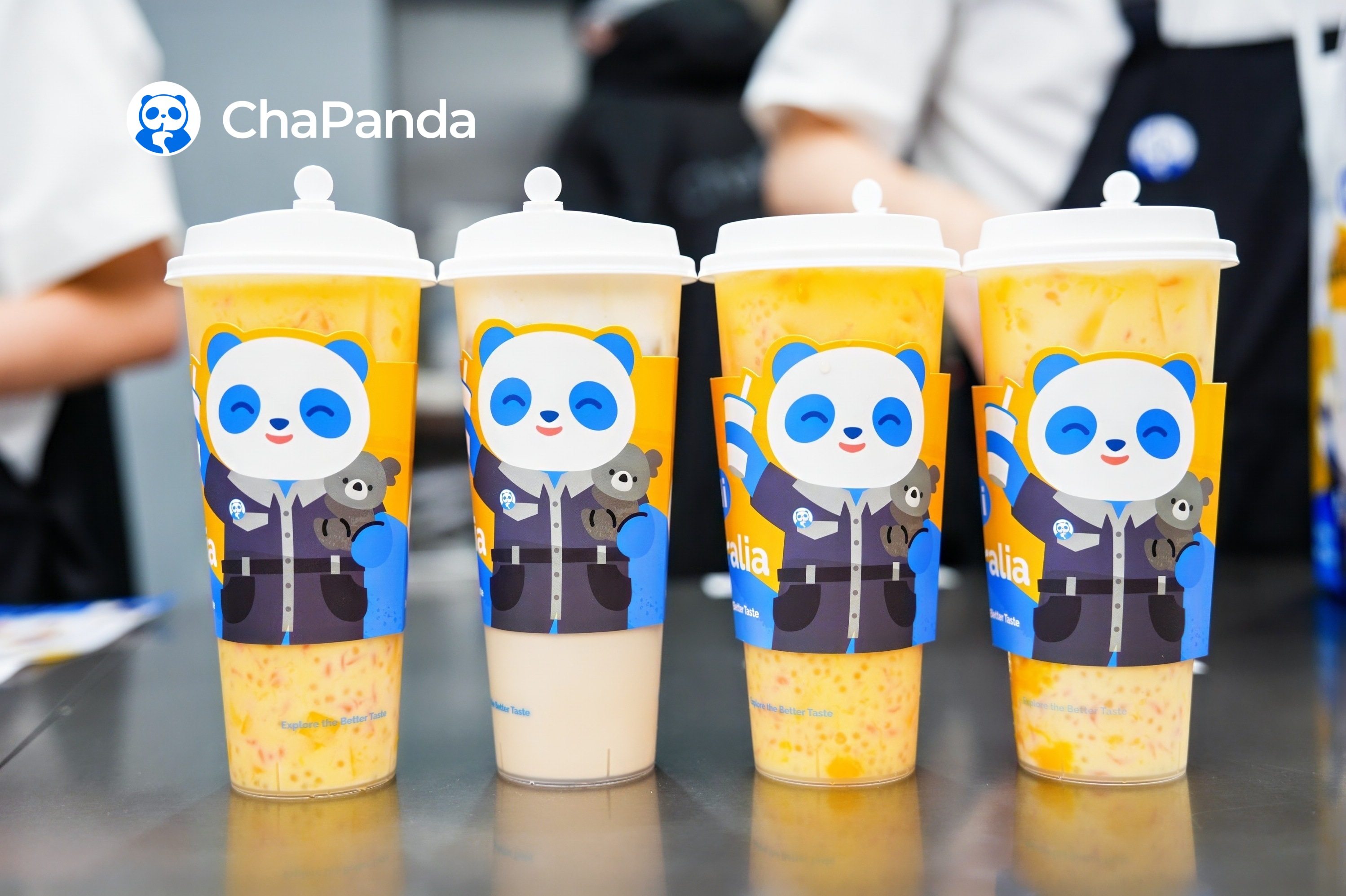
Core Insights - The article highlights the rapid international expansion of Cha Bai Dao, positioning it as one of the fastest-growing brands in the tea beverage industry since its official overseas launch in 2024 [3][4] - The company's strategy focuses on "precise sowing" and "deep cultivation," emphasizing a tailored approach to different markets rather than a one-size-fits-all strategy [13][21] Expansion Strategy - Cha Bai Dao's overseas journey began in South Korea, a choice that diverged from the common trend of entering Southeast Asia first, aiming for quicker localization [5][6] - Within two years, the brand has signed over 20 stores in South Korea, with plans to open 50 more by next year [6][9] - The company has also successfully opened its first store in France, achieving sales exceeding 1 million yuan in the first month [11][12] Market Adaptation - The brand's customer base in South Korea consists of over 70% local consumers, with a high repurchase rate of 45%, indicating successful localization efforts [9][10] - Cha Bai Dao employs a "one location, one strategy" approach, customizing its product offerings based on local preferences and market conditions [15][16] Product Innovation - The company has developed a three-tier product structure for international markets, including classic domestic favorites, differentiated products, and localized offerings tailored to specific regions [16][17] - The supply chain strategy combines local sourcing for fresh ingredients with established domestic supply chains for other materials, ensuring efficient operations [17][18] Long-term Vision - Cha Bai Dao aims for global brand and supply chain integration, aspiring to leverage experiences and influence across different international markets [23] - The company emphasizes the importance of educating consumers about Chinese tea culture as part of its long-term strategy for global brand establishment [22]
播种、深耕、本地化,茶百道正在海外“小步快跑”
36氪未来消费· 2025-11-06 08:01
Core Viewpoint - Tea Baidao is rapidly expanding its international presence, focusing on a strategy of "precise sowing and deep cultivation" to establish itself as a global brand [5][16]. Group 1: International Expansion Strategy - Tea Baidao officially began its international expansion in 2024, choosing South Korea as its first market, which is considered a bold move compared to other brands that typically target Southeast Asia first [7][8]. - In just two years, Tea Baidao has signed over 20 stores in South Korea, with plans to open 50 more by next year, demonstrating a fast-paced growth strategy [10][12]. - The brand's localization strategy has proven effective, with over 70% of its customers in South Korea being locals and a high repurchase rate of 45% [12][16]. Group 2: Market Entry and Product Strategy - Tea Baidao's entry into the French market was marked by the opening of its first store in Paris, which achieved sales exceeding 1 million yuan in its first month [12][13]. - The company is also preparing to enter the Vietnamese market, leveraging its experience from other countries to ensure efficient store setup [13][16]. - The brand employs a three-tier product strategy for international markets: classic products, differentiated products tailored to local tastes, and fully localized products developed using local ingredients [21][22]. Group 3: Operational Challenges and Adaptation - The company faces challenges in adapting to different regulatory environments, such as stringent food safety standards in South Korea, which can complicate the store opening process [20][21]. - Tea Baidao emphasizes the importance of local market research and adapting strategies to fit the unique characteristics of each market, rather than applying a one-size-fits-all approach [20][21]. - The brand's supply chain strategy combines local sourcing for fresh ingredients with established domestic supply chains for other materials, allowing for quick response times to store needs [22][23]. Group 4: Long-term Vision and Cultural Integration - Tea Baidao aims for long-term global brand and supply chain integration, aspiring to create a network where experiences and resources can flow between international locations [27]. - The company is committed to educating international consumers about Chinese tea culture, which is seen as essential for establishing a lasting presence in foreign markets [26][27]. - The brand's approach to partnerships emphasizes long-term collaboration, requiring franchisees to undergo extensive training at the headquarters to ensure quality and consistency [26][27].
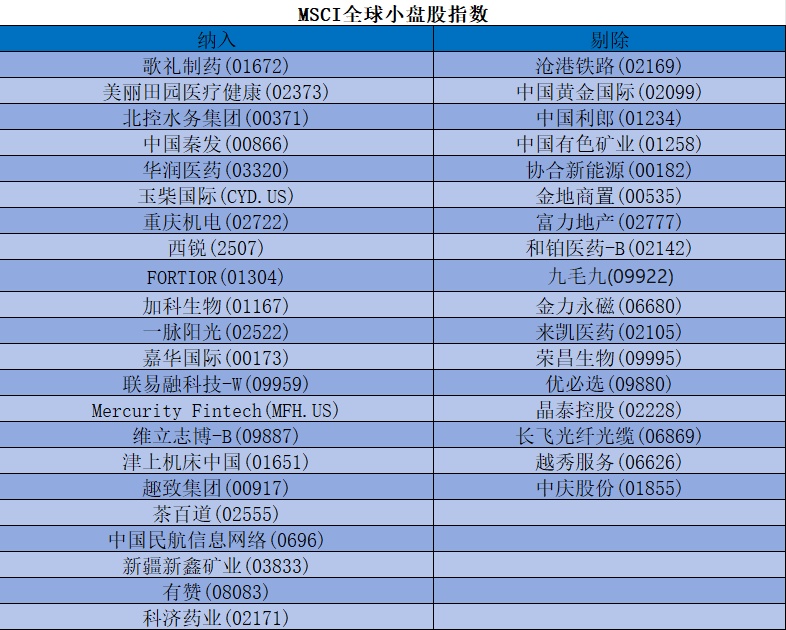
MSCI全球小盘股指数调整:歌礼制药(01672)、茶百道(02555)等22只股获纳入
智通财经网· 2025-11-06 03:49
Group 1 - MSCI announced the results of the November index review, with adjustments effective after the market close on November 24 [1] - The MSCI Global Small Cap Index will include 22 new stocks, such as Gilead Sciences (01672) and Meili Tianyuan Healthcare (02373) [1] - 17 stocks will be removed from the MSCI Global Small Cap Index, including China Gold International (02099) and China Nonferrous Mining (01258) [1] Group 2 - The MSCI Hong Kong Index will add 7 new stocks, including Chow Sang Sang (00116) and MGM China (02282) [2] - Stocks removed from the MSCI Hong Kong Index include Kintor Pharmaceutical (02171) and HKT Trust (00215) [2][3]



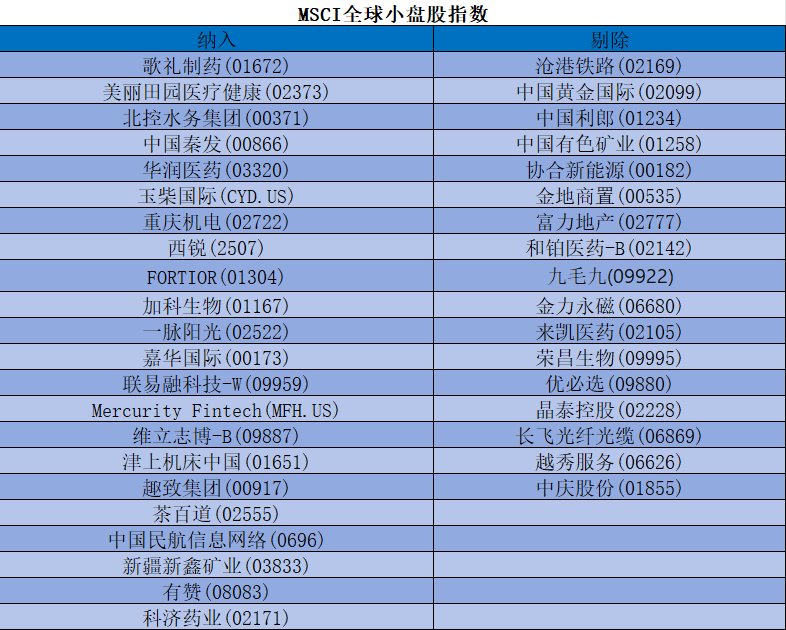
MSCI全球小盘股指数调整:歌礼制药、茶百道等22只股获纳入
Zhi Tong Cai Jing· 2025-11-06 03:47
Group 1 - MSCI announced the results of the November index review, with adjustments effective after the market close on November 24 [1] - A total of 22 stocks were added to the MSCI Global Small Cap Index, including companies such as Genscript Biotech (01672) and Youzan (08083) [1] - 17 stocks were removed from the MSCI Global Small Cap Index, including China Gold International (02099) and Longi Green Energy (601869) [1] Group 2 - The MSCI Hong Kong Index included 7 new stocks, such as Chow Sang Sang (00116) and MGM China (02282) [2] - The MSCI Hong Kong Index removed stocks like Kintor Pharmaceutical (02171) and HKT Trust (00215) [2][3]
茶酒融合:“微醺经济”的双向奔赴
Nan Fang Nong Cun Bao· 2025-11-05 15:12
Core Viewpoint - The integration of tea and alcohol is emerging as a significant trend in the beverage industry, driven by the demand for "micro-drunk" experiences among younger consumers, leading to innovative product offerings and cross-industry collaborations [5][6][46]. Group 1: Industry Trends - The Guizhou Provincial Department of Commerce has issued a draft guideline to promote the transition from "selling alcohol" to "selling lifestyle," emphasizing the integration of alcohol and tea products to expand cross-industry consumption markets [2][3]. - The trend of alcohol and tea fusion is not new, with both alcohol and tea companies seeking growth opportunities through innovative product combinations [5][6]. - The younger demographic is increasingly becoming the main consumer group for alcohol, prompting companies to innovate beyond traditional high-alcohol products to attract this audience [8][49]. Group 2: Product Innovations - Major alcohol brands are launching lower-alcohol or non-alcoholic products to cater to younger consumers, with examples including Moutai's introduction of over ten youth-oriented products at a recent trade fair [12][18]. - The collaboration between Luckin Coffee and Moutai to launch the "Sauce Aroma Latte" achieved remarkable sales, with over 5.42 million cups sold on the first day, generating over 100 million yuan in revenue [28][30]. - New tea drinks incorporating alcohol, such as "Drunken Steps" by Tea Baidao and "Lychee Ice Brew" by Grandpa's Tea, have also gained popularity, indicating a growing acceptance of alcohol-infused beverages [32][39]. Group 3: Market Dynamics - The market for low-alcohol beverages is expanding, with data showing that fruit wine accounts for 38% of instant retail channels, growing at 72% annually, while tea and alcohol combinations account for 25%, growing at 65% [54][55]. - Health consciousness among consumers is influencing the beverage market, with a significant percentage of consumers expressing concerns about the health impacts of traditional tea drinks, leading to a demand for healthier options [60][61]. - The fusion of tea and alcohol is seen as a strategic move to address the challenges faced by both industries, allowing them to meet consumer demands for "micro-drunk" experiences while ensuring health considerations are met [63].






品牌门店成为旅行的“情绪目的地” ?泡泡玛特、MUJI的在地化新叙事
3 6 Ke· 2025-11-05 11:44
Core Insights - The article discusses how brand stores are becoming "emotional destinations" for travelers, with a significant increase in cross-regional travel during the recent holiday period, estimated at 2.433 billion trips [1] Group 1: Brand Store Trends - More tourists are not just visiting attractions but are actively seeking unique brand stores in local areas, enhancing their cultural consumption experience [1][7] - The concept of "localized storytelling" is categorized into three types: local guide stores, collector's item stores, and exhibition stores [7] Group 2: Local Guide Stores - Local guide stores integrate into new commercial districts, creating a sense of local identity. They cater to tourists' desires for both exploration and familiarity [8] - An example is the tea brand "Cha Bai Dao," which collaborates with local culture in Chengdu, incorporating traditional elements into its store design [8][12] Group 3: Collector's Item Stores - Collector's item stores use natural or cultural landscapes as their backdrop, positioning the brand as the "best viewing platform" [17] - M Stand, a coffee chain, exemplifies this by creating a store in Urumqi that features local cultural elements, attracting travelers [18][22] Group 4: Exhibition Stores - Exhibition stores, like those of MUJI and Starbucks, focus on creating immersive experiences that blend local culture with brand identity [28] - Starbucks has opened several non-heritage concept stores that showcase local craftsmanship and art, enhancing the cultural experience for customers [29][34] Group 5: Consumer Experience - The article emphasizes that providing a multi-sensory consumer experience is crucial for offline retail, with localized store designs being a key strategy [44] - The goal is to create unique environments that resonate with consumers, transforming casual visitors into brand advocates [44]