今世缘

Search documents
今世缘:控股股东增持5.40亿元,持股比例升至46%
Xin Lang Cai Jing· 2025-11-05 09:00
今世缘公告称,公司控股股东今世缘集团自2024年12月31日起12个月内,通过集中竞价累计增持 1248.27万股,占公司股份总数1.0012%,增持总金额5.3997亿元(不含交易费用)。增持前,今世缘集 团持有公司5.61亿股,占总股本44.72%;增持后,持股升至5.74亿股,占比46.0003%。本次增持属免于 发出要约情形,公司已按规定履行信息披露义务。 ...

今世缘(603369):2025Q3 延续调整,净利润降幅环比扩大
Guoxin Securities· 2025-11-05 08:38
Investment Rating - The investment rating for the company is "Outperform the Market" [6][4][20] Core Views - The company continues to experience a decline in net profit, with a year-on-year decrease of 48.69% in Q3 2025, reflecting ongoing adjustments in its operations [1][4] - Revenue for Q3 2025 was reported at 19.31 billion yuan, down 26.78% year-on-year, indicating a persistent downward trend in sales [1][2] - The company is expected to focus on maintaining market share through increased marketing expenditures despite the pressure on overall sales [4][3] Summary by Sections Financial Performance - For the first three quarters of 2025, the company achieved total revenue of 88.82 billion yuan, a decrease of 10.66% year-on-year, and a net profit of 25.49 billion yuan, down 17.39% year-on-year [1] - In Q3 2025, the gross profit margin was 75.04%, a decline of 0.55 percentage points year-on-year, while the net profit margin decreased by 7.08 percentage points [3][4] Revenue Breakdown - Q3 2025 revenue from the Special A+ category was 11.23 billion yuan, down 38.04% year-on-year, while the Special A category saw revenue of 6.39 billion yuan, a slight decrease of 1.12% [2] - Direct sales channels experienced a significant increase of 65.21% year-on-year, while wholesale and agency channels saw a decline of 30.27% [2] Future Projections - The revenue forecast for 2025-2027 has been adjusted to 101.0 billion yuan, 105.5 billion yuan, and 114.1 billion yuan, reflecting a year-on-year change of -12.5%, +4.4%, and +8.1% respectively [4][5] - The expected net profit for the same period is projected to be 27.4 billion yuan, 28.0 billion yuan, and 31.1 billion yuan, with year-on-year changes of -19.8%, +2.3%, and +11.0% respectively [4][5]
2025中国白酒酒业市场中期研究报告
Sou Hu Cai Jing· 2025-11-05 05:52
Core Insights - The Chinese liquor industry is undergoing a significant transformation, facing challenges such as declining production and prices, while also experiencing new opportunities driven by consumer trends and digitalization [1][6][14] Group 1: Market Performance (2024-2025) - In 2024, the number of large-scale liquor enterprises decreased to 989, with total production at 4.145 million kiloliters, a year-on-year decline of 1.8%. However, sales revenue reached 796.38 billion yuan, up 5.3%, and total profit increased by 7.8% to 250.87 billion yuan, indicating a shift from extensive to intensive development [2][16] - The top six brands (CR6) accounted for 86% of the industry's total profit in 2024, up from 55% in 2014, highlighting a growing concentration in the market [2][20] - In the first quarter of 2025, the industry faced further pressure with production down 7.2% year-on-year to 1.032 million kiloliters, marking a potential eighth consecutive year of decline [3][26] Group 2: Consumer Trends and Pricing - The first half of 2025 saw a significant shift in consumer behavior, with only 26.9% of distributors reporting increased sales before the Spring Festival, dropping to 11.5% during the May Day holiday [4] - The price range of 100-300 yuan became the most active market segment, while higher price segments faced significant challenges, with the price of premium brands like Moutai dropping over 36% since 2022 [4][6] - Young consumers are increasingly defining value in the liquor market, prompting companies to innovate product designs and marketing strategies to attract this demographic [5][6] Group 3: Industry Challenges - The industry is experiencing a "volume and price decline" scenario, with over 59.7% of liquor companies reporting reduced operating profits due to rising costs and declining sales [3][34] - The average inventory turnover days reached 900, a 10% increase year-on-year, indicating high inventory pressure and a widespread issue of price inversion affecting 60% of companies [23][34] - The overall market is characterized by a cautious consumer sentiment, with many companies resorting to discounts and bundled sales to maintain market share, further squeezing profit margins [3][34] Group 4: Future Outlook - The report suggests that 2025 presents a strategic opportunity for the liquor industry to achieve high-quality development despite short-term challenges, focusing on product innovation, digital transformation, and cultural marketing [6][14] - The industry is expected to transition from "scale growth" to "value growth," with a focus on enhancing product quality and consumer experience [6][14]








今世缘(603369):2025Q3延续调整,净利润降幅环比扩大
Guoxin Securities· 2025-11-05 05:47
Investment Rating - The investment rating for the company is "Outperform the Market" [6][4][20] Core Views - The company continues to experience a decline in net profit, with a year-on-year decrease of 48.69% in Q3 2025, reflecting ongoing adjustments in its operations [1][4] - Revenue for Q3 2025 was reported at 19.31 billion yuan, down 26.78% year-on-year, indicating a persistent downward trend in sales [1][2] - The company is expected to focus on maintaining market share through increased marketing expenditures, particularly in the mid-range product segment, which is anticipated to perform better than higher-priced products [4][2] Summary by Sections Financial Performance - For the first three quarters of 2025, the company achieved total revenue of 88.82 billion yuan, a decrease of 10.66% year-on-year, and a net profit of 25.49 billion yuan, down 17.39% year-on-year [1] - In Q3 2025, the gross profit margin was 75.04%, a decline of 0.55 percentage points year-on-year, while the net profit margin decreased by 7.08 percentage points [3][4] Revenue Breakdown - Q3 2025 revenue from the Special A+ category was 11.23 billion yuan, down 38.04% year-on-year, while the Special A category saw revenue of 6.39 billion yuan, a slight decrease of 1.12% [2] - Direct sales channel revenue increased by 65.21% year-on-year to 0.96 billion yuan, while wholesale and agency channel revenue fell by 30.27% to 17.91 billion yuan [2] Future Projections - The revenue forecast for 2025-2027 has been adjusted to 101.0 billion yuan, 105.5 billion yuan, and 114.1 billion yuan, reflecting a year-on-year change of -12.5%, +4.4%, and +8.1% respectively [4][5] - The projected net profit for the same period is 27.4 billion yuan, 28.0 billion yuan, and 31.1 billion yuan, with year-on-year changes of -19.8%, +2.3%, and +11.0% respectively [4][5]
广发证券:25Q3酒企报表层面分化加大 白酒行业进入去库存周期
智通财经网· 2025-11-05 05:47
Core Viewpoint - The report from GF Securities indicates a significant divergence in the performance of liquor companies in Q3, with leading brands showing resilience while others face challenges. The adjustment phase for certain companies is expected to lead to a more favorable environment for high-quality development in the coming year [1][2]. Revenue Analysis - The liquor industry is experiencing increased differentiation among companies due to ongoing demand pressure. High-end liquor brands like Moutai show resilience, while Wuliangye is pragmatically slowing down. In Q3, the combined revenue of three high-end liquor companies reached 215 billion yuan, with a year-on-year change of -0.2% [2]. - Real estate liquor companies are also adjusting, with Q3 revenue down 36.5% year-on-year. The performance of these companies aligns closely with actual sales [2]. - Mid-range liquor brands are performing relatively better due to low base effects, with a year-on-year revenue decline of 2.6% in Q3. Fenjiu shows strong resilience, while other brands like Shede and Jiugui are also performing well [2]. Profitability Insights - The overall profitability of liquor companies is declining due to increased costs and reduced scale effects. The gross profit margin is generally down as companies adjust their product structures and increase promotional efforts. The sales expense ratio and management expense ratio have also increased year-on-year due to rising fixed personnel costs [3]. Stock Price and Valuation - Following the release of Q3 reports, market expectations for liquor companies' earnings in 2025 have been revised downward. The current price-to-earnings (PE) ratio for leading high-end and real estate liquor companies is now in the range of 15-20 times based on the latest earnings per share (EPS) forecasts [4]. Investment Recommendations - The liquor industry is expected to see a recovery in demand after a four-year adjustment period, with a favorable valuation and performance outlook for 2025. The sector's dividend yield is attractive compared to the ten-year government bond yield. Key recommendations include Shanxi Fenjiu, Luzhou Laojiao, Shede Liquor, Jinshiyuan, Gujing Gongjiu, and Kweichow Moutai [5].

净利润下滑超48%,“黑马”今世缘,业绩失速
Tai Mei Ti A P P· 2025-11-05 00:44
Core Insights - The company, Jinshiyuan, has experienced significant growth over the past decade, with revenue increasing from approximately 2 billion to over 10 billion [1][4] - However, the company is currently facing challenges due to a downturn in the industry, with revenue and net profit declining in the first three quarters of the year [2][8] - Jinshiyuan's stock price has also suffered, dropping nearly 12% this year, significantly underperforming compared to the Shanghai Composite Index [3][10] Financial Performance - In the first three quarters of this year, Jinshiyuan reported revenue of 8.882 billion and net profit of 2.549 billion, with declines of 10.66% and 17.39% respectively [2][10] - The third quarter alone saw revenue and net profit of 1.931 billion and 320.3 million, reflecting a steep decline of 26.68% and 48.69% [2][10] - The company's stock price closed at 38.79 yuan per share as of November 3, with a total market capitalization of 48.36 billion [3] Strategic Overview - Jinshiyuan has built a multi-brand matrix with three main brands: Guoyuan, Jinshiyuan, and Gaogou, targeting different market segments [5] - The company has focused on deepening its presence in Jiangsu province, where it holds over 17% market share, with provincial revenue consistently accounting for over 90% [5][9] - However, the current economic downturn has severely impacted these strategies, particularly in the high-end product segment [8][10] Market Challenges - The company faces intensified competition in its core Jiangsu market, with other brands increasing their presence [9] - Jinshiyuan's attempts to expand into provincial markets have been slow, with less than 10% of revenue coming from outside Jiangsu [9] - The decline in consumer demand and government austerity measures are further constraining the company's high-end product sales [8][10]
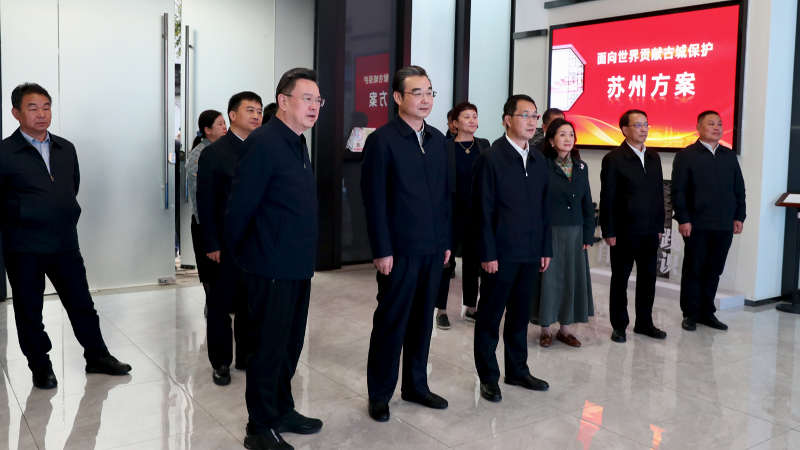
强化担当意识 积极建言献策 在苏在淮全国人大代表开展联组调研
Su Zhou Ri Bao· 2025-11-05 00:10
Group 1 - National People's Congress representatives conducted joint research in Suzhou and Huai'an to understand the development status of both cities [1] - In Suzhou, representatives visited the Yangtze River Delta Ecological Green Integrated Development Demonstration Zone and learned about achievements in ecological protection and green development [2] - The representatives acknowledged Suzhou's effective implementation of new development concepts, particularly in technological innovation, ecological protection, and cultural tourism integration, noting several replicable experiences [2] Group 2 - During the visit to Huai'an, representatives researched various companies and projects, including Co-Creation Artificial Turf Company and Jinshiyuan Liquor Industry [2][3] - The representatives emphasized the importance of aligning with the spirit of the 20th National Congress and enhancing their ability to contribute to the economic and social development goals for the 14th and 15th Five-Year Plans [2]
透视白酒三季报:多家区域酒企省外经销商大减 意味着什么?
Nan Fang Du Shi Bao· 2025-11-04 13:59
Core Insights - The overall performance of the liquor industry, particularly regional liquor companies, is under significant pressure, with a deep adjustment phase ongoing [1][2] - Many regional liquor companies are experiencing a collective "loss of speed," with several reporting substantial declines in revenue and net profit [3][4] Industry Overview - The liquor market is facing a complex situation influenced by multiple factors, including a shift towards rational and quality consumption, moving away from traditional government consumption [1][2] - Consumers are increasingly focused on brand strength, quality, and cost-effectiveness, posing challenges for regional liquor companies with weaker brand positioning [1][2] Financial Performance - Companies like Jinshiyuan reported a 10.7% decline in revenue and a 17.4% drop in net profit for the first three quarters, with a nearly 50% decrease in net profit for Q3 [3] - W迎驾贡酒 saw a 24.67% decline in net profit for the first three quarters, with a 39.01% drop in Q3 [3] - Kouzi Jiao experienced a dramatic 43.39% decline in net profit for the first three quarters, with a staggering 92.55% drop in Q3 [3] - Laobai Gan reported a 47.55% decline in revenue and a 68.48% drop in net profit for Q3 [3] Strategic Adjustments - Many regional liquor companies have significantly reduced the number of their out-of-province distributors, indicating a potential strategic retreat or adjustment [4][5] - Jinshiyuan reduced its out-of-province distributors by 80, Jinhui by 82, Kouzi Jiao by 47, and W迎驾贡酒 by 16 [4] - This reduction is seen as a response to the challenges of national expansion, with companies realizing that rapid expansion may not be sustainable in the current market environment [4][5] Market Dynamics - The "Matthew Effect" within the industry is intensifying, with high-end brands like Moutai and Wuliangye demonstrating stronger resilience against market fluctuations [2] - These leading brands are not only dominating the high-end market but are also encroaching on the territories of regional liquor companies, increasing competitive pressure [2] Future Outlook - The reduction of distributors may reflect a strategic shift from pursuing breadth to depth, focusing on core markets rather than widespread coverage [5][6] - Companies are likely to prioritize partnerships with stronger distributors to enhance brand resilience and market presence [6] - The ability to adapt to the new market environment and effectively manage distribution channels will be crucial for regional liquor companies to navigate the ongoing industry reshuffle [6]


当贵州茅台也失去增长
Sou Hu Cai Jing· 2025-11-04 11:48
Core Insights - The Chinese liquor industry is facing a significant downturn, with major brands like Kweichow Moutai and Shanxi Fenjiu losing growth momentum, indicating a broader crisis in the sector [5][6][10] - The inventory crisis has been exacerbated by a shift in consumer demand and market dynamics, leading to a situation where even top brands are struggling to maintain sales [4][7][8] Industry Overview - The liquor industry began a recovery phase in 2016, characterized by a trend towards high-end products, which led to increased sales but also created underlying risks due to unsustainable consumption levels [1][2] - The 2023 Chengdu Sugar and Wine Fair highlighted the industry's inventory crisis, with insiders suggesting that current stock levels could take three years to deplete without production [1][5] Company Performance - Kweichow Moutai reported a slight revenue increase of 0.56% to 39.064 billion yuan in Q3 2025, but its growth has stagnated, reflecting broader industry challenges [5] - Shanxi Fenjiu's Q3 revenue grew by 4.05% to 8.960 billion yuan, but its net profit declined by 1.38% [5] - Gujing Gongjiu experienced a dramatic revenue drop of 51.65% to 2.545 billion yuan in Q3 2025, with net profit falling by 74.56% [5] - Jiangsu-based brand Jinshiyuan saw its revenue decline by 10.66% to 8.881 billion yuan, with net profit down 17.39% [6] - Laobaigan Liquor, which had previously shown growth, reported a 18.53% revenue decline to 3.330 billion yuan, with net profit down 28.04% [7] Market Dynamics - The traditional sales model in the liquor industry has extended the supply chain's impact, leading to uncertainty in how quickly products reach consumers [4] - The market is currently experiencing a convergence of inventory cycles, industry driving forces, and shifts in consumer preferences, creating a complex environment for brands [7][8] Strategic Recommendations - Companies need to abandon outdated operational models and focus on consumer-driven demand rather than relying on inventory pressure [9] - Embracing new market directions, such as the growth of low-cost liquor segments, is essential for survival in the current climate [11][12] - Historical context suggests that while the current downturn is severe, recovery is possible if companies adapt and innovate in response to market needs [12][15]
供需出清迎拐点
Haitong Securities International· 2025-11-04 09:54
Group 1: Core Insights - The report emphasizes a turning point in supply and demand equilibrium, particularly in the liquor industry, with a focus on the accelerated clearance of inventory in the baijiu sector [3][15][21] - The report suggests that the liquor industry is transitioning from a "U-shaped adjustment" to a "V-shaped adjustment," indicating a potential for recovery as market pessimism is already reflected in stock prices [15][25] - The report highlights the resilience of consumer staples, particularly in the beverage and snack sectors, which are expected to show strong growth despite the challenges faced by the liquor industry [3][12] Group 2: Baijiu Industry Analysis - The baijiu sector is experiencing a significant adjustment, with sales and inventory levels rapidly clearing, particularly in the high-end and mid-range segments [3][15][21] - The report notes that the current adjustment cycle has a longer duration compared to previous cycles, with a single-quarter decline exceeding previous lows, indicating a deeper market correction [15][25] - Key companies to watch in the baijiu sector include Shanxi Fenjiu, Gujing Gongjiu, and Moutai, with a focus on both growth and stable performers [3][21][28] Group 3: Beer and Beverage Sector Insights - The beer industry is characterized by stable pricing and sales, with a recommendation to focus on regional leaders that have competitive advantages [3][41] - The beverage sector is noted for its structural growth, with leading companies like Dongpeng Beverage and Nongfu Spring expected to perform well [3][41] - The report indicates that the beer industry's profitability is improving due to cost advantages and a stable competitive landscape, despite facing demand pressures [41][42] Group 4: Consumer Goods and Snacks - The consumer goods sector is showing signs of recovery, with food raw materials and health products still in a growth phase, indicating high elasticity in certain categories [3][12] - The snack industry is highlighted for its innovation and growth potential, with companies like Three Squirrels and Wei Long expected to drive future growth [3][12] - The report suggests that the overall consumer goods market is stabilizing, with a focus on companies that demonstrate strong innovation and channel expansion capabilities [3][12]