乐聚机器人

Search documents
最新报告 | TrendForce 人形机器人产业研究--3Q25季度报告出刊
TrendForce集邦· 2025-07-16 09:05
Core Insights - The humanoid robot industry is gaining global attention, with significant advancements in technology, capital, and application scenarios expected to accelerate commercialization by Q3 2025 [1] Group 1: Major Manufacturer Dynamics - Manufacturers are focusing on the application value of humanoid robots, aiming for versions that can perform complex tasks, are easy to deploy, and can adapt to factory and household environments [2] - Key players such as Tesla, Boston Dynamics, Agility Robotics, Hexagon, Figure AI, Fourier Intelligence, and Lajuj Robot are continuously upgrading their hardware and software [2] Group 2: Key Component Analysis - The cost breakdown of humanoid robots shows that the motion layer accounts for 55% of the BOM cost, the cognitive layer for 23%, the sensing layer for 15%, and the power layer for 7% [3] - Different manufacturers and suppliers are exploring various application solutions and technological routes, particularly in embedded large language models (LLM) and machine vision [3] Group 3: Quarterly Trend Outlook - The current trend in humanoid robot development emphasizes software advancements leading hardware improvements, with a focus on LLM and simulation training platforms expected to be highlighted in the second half of 2025 [4]


宇树科技CEO称旗下机器人今年出货量同比增长明显,这家公司有人形机器人相关线缆的订单!
摩尔投研精选· 2025-07-15 10:35
Core Viewpoint - Yushu Technology has experienced significant growth in robot shipments this year compared to last year, indicating a positive trend in the industry [1]. Group 1: Company Performance - Yushu Technology has achieved profitability for five consecutive years, with annual revenue surpassing 1 billion yuan [2][3]. - The company initially focused on quadruped robots, launching its first model, Laikago, in 2017, and has since expanded into humanoid robots [2]. - Notable humanoid robots include the H1, which gained fame for its performance on the Spring Festival Gala, and the G1 aimed at the consumer market [2]. Group 2: Market Demand and Orders - There is a surge in orders for humanoid robots, marking the beginning of commercialization in the industry [4]. - In the first five months of 2025, Yushu Technology's project wins approached the total amount for the entire year of 2024, indicating strong demand [4]. - Other companies in the sector, such as Songyan Power and Leju Robotics, have also reported significant order increases, with Leju's first-quarter orders up 200% year-on-year [4]. Group 3: Industry Trends - The commercialization of humanoid robots is accelerating, with a focus on expanding production capacity and enhancing delivery capabilities [5]. - The entry of robots into real-world applications is driving the evolution of intelligence, highlighting the importance of supply chains as a critical bottleneck for production capacity [5]. - The industry is witnessing a rapid increase in the mass production of humanoid robots, creating opportunities for key technologies with competitive advantages [5].

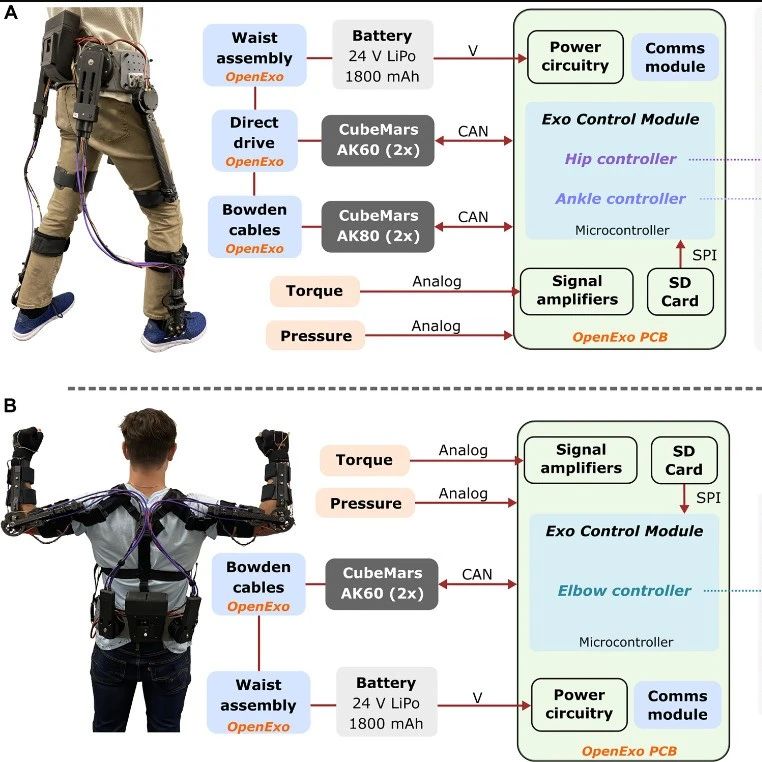
解码传统制造业跨界跃迁“浙江样本”
Zhong Guo Zheng Quan Bao· 2025-07-14 20:55
Core Viewpoint - The entry of Zhiyuan Robotics into the Sci-Tech Innovation Board-listed company, Shuangwei New Materials, has attracted significant attention in the capital market, highlighting a collective leap of Zhejiang automotive parts companies into the humanoid robotics industry, aiming for high-quality development and a new growth curve [1][2]. Group 1: Industry Transition - Zhejiang Province has over 100 humanoid robotics-related companies, with more than 40 listed on the A-share market, indicating a robust shift from automotive manufacturing to humanoid robotics assembly [2]. - Companies like Xiash Precision and Junsheng Electronics are strategically pivoting towards humanoid robotics as a second growth curve, leveraging their existing automotive parts expertise [2][4]. - The humanoid robotics industry is seen as a new growth space, with companies like Shuanglin Co. and Wanliyang actively developing core components to tap into a market worth hundreds of billions [2][4]. Group 2: Technological Synergy - The transition of Zhejiang automotive parts companies to humanoid robotics is facilitated by the technological similarities in precision manufacturing, power control, and sensor integration, allowing for cost-effective R&D [7][11]. - Companies are utilizing existing production equipment and supply chains from the automotive sector to minimize costs and risks associated with entering the humanoid robotics market [9][11]. - The collaboration with leading automotive manufacturers enhances the supply chain and accelerates the development of humanoid robotics components [8][9]. Group 3: Market Potential - The humanoid robotics market is projected to experience explosive growth, with global sales expected to reach 1.24 million units by 2025 and over 500 million units by 2035, indicating a significant opportunity for companies in this sector [4][5]. - The aging population and labor shortages in manufacturing are driving the demand for humanoid robots, further solidifying the market's potential [6]. Group 4: Policy Support and Ecosystem - The Zhejiang government is providing targeted policy support to facilitate the transition of traditional manufacturing to future industries, emphasizing a collaborative approach between enterprises, academia, and research institutions [13][14]. - The establishment of a comprehensive ecosystem that includes supply chain collaboration and technological innovation is crucial for the successful transition of companies into the humanoid robotics sector [12][14].




1.24亿订单落地 方正富邦“机器人三兄弟”重仓机器人股全线飘红
Zhong Guo Jing Ji Wang· 2025-07-14 07:10
Group 1 - The humanoid robot sector is experiencing significant activity, with the Yush Robot Index rising by 3.14% and several companies, including Yush Technology and Longsheng Bearing, achieving maximum daily gains [1] - A major procurement announcement from China Mobile revealed that Zhiyuan Robotics and Yush Technology won a contract for humanoid biped robot manufacturing services, totaling 124 million yuan, marking the highest single procurement in China's humanoid robot sector [1] - Investment in the humanoid robot field is accelerating, with companies like Xinghai Tu and Beijing Xingdong Jiyuan completing significant funding rounds, contributing to a total financing amount exceeding 23 billion yuan in the first five months of the year [1] Group 2 - Fund products from Fangzheng Fubon, such as Fangzheng Fubon Xinhong Flexible Allocation Mixed Fund and Fangzheng Fubon Technology Innovation Mixed Fund, are heavily invested in the humanoid robot sector, showing strong performance in their top holdings [2] - For instance, Fangzheng Fubon Xinhong's top holdings, including Shuanglin Co. and Zhenyu Technology, saw gains exceeding 5%, while the fund itself achieved a net value increase of 18.68% over the past six months [2] Group 3 - In the automotive sector, UBTECH's WalkerS series humanoid robots are being utilized by major manufacturers like NIO and BYD for quality inspection and labeling tasks, contributing to automation in parts warehousing [3] - In the pharmaceutical industry, Yuejiang has partnered with Yaoshibang to explore smart solutions across various applications, including drug research and delivery [3] - The infrastructure inspection sector is benefiting from the deployment of Yunshen's "Jueying" quadruped robots in Singapore's national grid, enhancing inspection efficiency and safety [3]

1.24亿元订单曝光,人形机器人加速量产
Bei Jing Shang Bao· 2025-07-13 09:57
Group 1 - The core viewpoint of the articles highlights the increasing momentum in the humanoid robot industry, with significant contracts awarded to companies like Zhiyuan Robotics and Yushu Technology for humanoid robot manufacturing services from China Mobile [1][3]. - The total budget for humanoid robot procurement projects disclosed by China Mobile from June 2025 onwards amounts to 124 million yuan, with Zhiyuan Robotics winning a contract for full-sized humanoid robots worth 78 million yuan and Yushu Technology winning a contract for smaller humanoid robots and related technology worth 46.06 million yuan [3]. - The humanoid robot market is expected to see a production value exceeding 4.5 billion yuan in 2025, with 11 major manufacturers planning to commence mass production in 2024 [4]. Group 2 - Companies like Leju Robotics anticipate delivering between 1,000 to 2,000 humanoid robots in 2025, indicating a shift towards mass production, although the true industrialization of humanoid robots requires the integration of advanced AI and robotics [4][5]. - The industry is currently experiencing a phase described as "small batch production," with a focus on delivering functional robots that can perform tasks and create value for customers [5].
吴婷:AI城市战争
3 6 Ke· 2025-07-12 03:32
Core Insights - The rise of AI, exemplified by DeepSeek, presents a significant opportunity for value reassessment in China and a reshuffling of urban dynamics in the country [1][2] National Strategy - The Chinese government proposed a "three-step" strategy for AI development in 2017, aiming for a core industry scale of 1.5 trillion yuan by 2020, 4 trillion yuan by 2025, and 10 trillion yuan by 2030 [3] - As of September 2024, the core AI industry scale in China has reached nearly 600 billion yuan, surpassing the 2025 target by 150% [3][4] City Comparisons - Beijing is the undisputed leader in AI, holding over 30% of national resources in talent, patents, enterprises, and financing, with a core industry scale of 300 billion yuan, accounting for half of the national total [5][6] - Shanghai has established itself as a hub for integrated circuit industries and AI chip companies, focusing on the "chip" aspect of AI, while also leading in computing power infrastructure [10][12] - Shenzhen ranks third in AI-related enterprises, with a strong manufacturing base and major tech giants like Huawei and Tencent driving innovation and ecosystem development [12][15][16] - Hangzhou is emerging as a disruptor in the AI space, particularly with the launch of DeepSeek-R1, which has significantly impacted the global AI landscape [18][19][21] Emerging Players - The "Six Little Dragons" from Hangzhou, including DeepSeek and Yushu Technology, are gaining attention for their innovative AI solutions and market share [19][20] - Zhejiang University has contributed significantly to AI research, ranking just behind Tsinghua and Peking University in terms of AI publication output [20] Competitive Landscape - Other cities like Guangzhou, Suzhou, Hefei, and Xi'an are also exploring unique pathways to develop their AI industries, highlighting the competitive nature of China's economic landscape [23][24]

引擎再提速 新城再出发
Su Zhou Ri Bao· 2025-07-05 00:30
Core Viewpoint - The development of Taihu New City is accelerating, with a focus on high-quality growth and the vision of becoming a "world-class innovative lake area" through systematic thinking and collaborative efforts among local leaders [1][2][3] Group 1: Meetings and Initiatives - Three significant meetings were held to unify thoughts and enhance consensus among party members and cadres, emphasizing the construction of a better and higher-quality Taihu New City [1][2] - The "People-Centered Development Conference" aimed to anchor the core value of "people's happiness," ensuring that enterprise operations and community well-being are prioritized [2][3] - The "Entity Economy Development Conference" focused on summarizing achievements in investment attraction and economic construction, while planning for industrial upgrades and optimizing the business environment [2][3] - The "Urban Quality Improvement Conference" called for enhancing living, industrial, cultural, and ecological quality to better serve the community and support economic development [2][3] Group 2: Economic Performance - Taihu New City contributes over one-third of Wujiang's service economy, with 10 key economic indicators showing positive growth in the first five months of the year, including eight indicators achieving double-digit growth [6] - The region is characterized by a strong industrial ecosystem, with companies like Wujiang Transformer Co., Ltd. leading in the power equipment manufacturing sector, showcasing the area's economic resilience and potential [5][6] Group 3: Development Challenges and Strategies - Despite strong growth, Taihu New City faces challenges such as resource allocation, competition in the Yangtze River Delta, and the need for balanced public service resources [6] - The city aims to avoid homogenized development by focusing on modernizing new areas, revitalizing old towns, empowering towns, and enhancing rural areas [8] - The leadership emphasizes the importance of urgency and action, encouraging a proactive approach to seize strategic opportunities for long-term development [9]
中国高校人形机器人专利TOP 10
机器人圈· 2025-07-02 10:50
以下文章来源于人形机器人场景应用联盟 ,作者编辑部 人形机器人场景应用联盟 . 聚焦人形机器人场景应用和落地需求开拓,搭建具身智能移动机器人产需、产业链企业对接平台,传播人形机器 人案例、产品、技术、企业最新资讯。 详细会议介绍参看往期文章: (点击蓝字跳转) 一文看懂2025智能机器人关键技术大会(IRCTC)全景!专家报告、学术征文、青年交流全揭晓! 展览展示|抢位2025智能机器人关键技术大会!高曝光商务合作虚位以待,共赴解锁新机遇 9大期刊联合征文|投稿2025智能机器人关键技术大会,年底正刊发表! 这些高校不仅在数量上占据优势,在技术深耕上也颇具历史沉淀。清华大学、北京理工大学、哈尔滨工业大学等 早在2000年前后即已开始布局人形机器人领域,其专利技术涵盖关节驱动、步态控制、视觉识别、环境感知、传 感器融合等关键模块。 人形机器人专利申请Top10高校 1998 年, 清华大学 设立机器人研究重大项目,类人机器人项目正式启动。 2002 年,清华大学研制出具有 32 个自由度的仿人机器人 THBIP-I,这是我国首个具备完整仿人结构的自主机器人系统。 清华大学人形机器人足球 队成立于2004年,长期 ...

长三角机器人之城竞逐赛,沪苏杭宁肥谁是王者?
2 1 Shi Ji Jing Ji Bao Dao· 2025-06-30 11:25
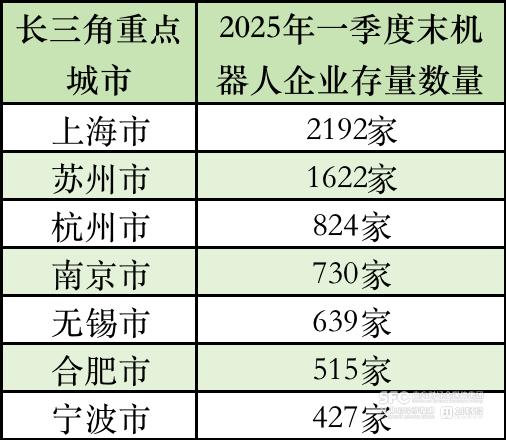
Core Insights - The robot industry is becoming a key sector for future development, with significant market potential in the trillion-yuan range, particularly in the Yangtze River Delta region [1][22] - Shanghai and Suzhou are leading in the number of registered robot-related enterprises, while Hangzhou is emerging as a star city in terms of patent applications and financing [3][10] - The Yangtze River Delta cities are focusing on both hardware (robot manufacturing) and software (intelligent control systems), creating a comprehensive industrial chain [19][21] Group 1: Industry Overview - The Yangtze River Delta is a crucial area for robot industry development, with plans for large-scale production and a target of generating hundreds of billions in output value over the next three years [1] - Shanghai has 2,192 registered robot-related enterprises, while Suzhou has 1,622, significantly outpacing other cities in the region [4][3] - The industrial robot market in China has shifted from foreign dominance to local manufacturers, with domestic brands capturing 52.3% of the market share by 2024 [4] Group 2: City Comparisons - Hangzhou has shown remarkable progress in patent applications, ranking second after Shanghai, with 34,863 applications in 2023 [10][11] - Nanjing and Hefei are lagging in enterprise numbers and patent applications compared to Hangzhou, but Hefei is expected to catch up by Q1 2025 [2][18] - The recruitment numbers in 2024 show significant growth in cities like Hefei and Ningbo, indicating a rising demand for talent in the robot industry [17][18] Group 3: Investment and Financing - In 2023, Shanghai led in financing activities with 32 deals, while Hangzhou's financing activities increased significantly in 2024, indicating a growing investment landscape [13][14] - Zhejiang Province's initiatives to support humanoid robot development have contributed to Hangzhou's rise in financing and investment [15][16] - The overall investment environment in Hangzhou is bolstered by a robust local robot industry ecosystem, attracting more resources and capital [9][16] Group 4: Technological Development - Shanghai's robot industry benefits from a strong industrial base and supportive policies, with significant advancements in humanoid robots and intelligent manufacturing [5][7] - Suzhou is focusing on innovation through partnerships between enterprises and research institutions, exemplified by the establishment of the Harbin Institute of Technology's research institute [8] - The Yangtze River Delta is developing a complete industrial chain that includes both the physical components of robots and the intelligent systems that control them [21]
Science Robotics最新模块化开源外骨骼系统
机器人大讲堂· 2025-06-28 02:19
Core Viewpoint - The research team from Northern Arizona University has developed a modular exoskeleton system that is fully open-source, allowing more researchers to participate in this promising field [1][17]. Group 1: Challenges in Exoskeleton Development - Exoskeleton technology has faced high barriers to entry, requiring expertise in multiple disciplines such as mechanical engineering, electrical engineering, robotics, and biomechanics [4][5]. - Current exoskeleton systems are often specialized for specific applications, limiting their adaptability to new research questions and environments [5]. - The existing systems create technology silos, making it difficult to reproduce research results due to independent software and hardware systems [5]. Group 2: OpenExo's Modular Design - OpenExo addresses these challenges with a modular design, allowing users to easily swap hardware modules and modify configurations without extensive coding or redesign [6][8]. - The system consists of four main components: software system, electronic architecture, hardware interface, and control scheme [8]. - The software is developed using C++ and Arduino, emphasizing modularity and reducing code redundancy [9]. - The electronic architecture is designed to be simple and intuitive, using a single board to control up to four joints, which differs from other open-source projects [9]. - Hardware designs include direct-drive hip joints and Bowden cable-driven ankle joints, all compatible with the same belt interface for quick assembly [10]. Group 3: Performance Validation - The system demonstrates high torque tracking accuracy, with root mean square errors for hip, ankle, and elbow joints being 0.30 Nm, 2.00 Nm, and 0.84 Nm respectively [12]. - Battery tests show that the hip joint configuration can run for 35 minutes, while the ankle configuration lasts 25 minutes, indicating potential for extended use with improved battery capacity [12]. - Real-world tests show that the exoskeleton reduces transportation costs by 8% to 18% in various walking scenarios, highlighting its practical value [13][15]. Group 4: Open Source and Community Engagement - OpenExo's significant contribution lies in its open-source philosophy, providing complete software packages, electrical designs, and hardware instructions [17][18]. - The research team aims to create an open research community, inviting contributions from various disciplines to accelerate exoskeleton technology development [19]. - The unified open-source platform allows for large-scale collaborative research, improving the reproducibility of results across different institutions [20]. Group 5: Future Improvements - The research team acknowledges that battery life remains a key limitation, particularly in high-torque applications, and is exploring ways to enhance battery efficiency [21]. - Continuous optimization of the Python application is planned, with features like deep learning and human-machine collaboration being considered for future updates [21].