SHEIN

Search documents
Sea(SE.US)市值直逼星展集团,东南亚龙头宝座争夺战再起
Zhi Tong Cai Jing· 2025-08-13 07:21
Group 1 - Sea's soaring sales are positioning it to reclaim the title of Southeast Asia's most valuable company, with a market valuation nearing $103 billion, just behind DBS Group's $113 billion [1] - The company's recent performance alleviated market concerns regarding its core e-commerce business, Shopee, as Southeast Asian consumers increasingly shift to online shopping [1][2] - Sea's revenue for the quarter ending June grew by 38% to a record $5.26 billion, surpassing analyst expectations of $5 billion, marking the largest stock price increase in over two years [2] Group 2 - Sea's logistics network, SPX Express, has significantly improved customer experience, contributing to nearly 30% growth in total e-commerce orders and gross merchandise value [2] - The company has raised merchant commission rates by approximately one-third in core markets since early last year, indicating confidence in attracting and retaining merchants due to its large user base and mature logistics services [2][3] - Sea's financial services segment, Monee, saw a 70% increase in sales to $882.8 million, while its gaming division, Garena, experienced a 23% revenue growth [3] Group 3 - Analysts expect that the growth across Sea's three main business segments will lead to a quadrupling of net profit by 2025, driven by strong momentum in the first half of the year and continued growth in the third quarter [3] - Improvements in advertising technology are anticipated to increase merchant spending and the number of advertisements, further enhancing monetization rates [3] - The scale effects, particularly in Brazil, are expected to lower average costs and enhance overall e-commerce profitability, with self-operated logistics remaining a key competitive advantage [3]


漫航观察周报第 13 期-20250813
漫航观察· 2025-08-13 05:30
Shipping Data - Global container freight index CCFI reported at 1200.73 points, down 2.56% month-on-month[5] - Shanghai Container Freight Index (SCFI) at 1489.68 points, down 3.94% month-on-month[5] - Ningbo Container Freight Index (NCFI) at 1053.86 points, down 3.11% month-on-month[5] Air Freight Data - Global air cargo index BAI reported at 2071 points, up 2.17% month-on-month[5] - BAI30 at 3460 points, up 2.06% month-on-month[5] - BAI80 at 4455 points, up 0.84% month-on-month[5] Market Trends - SCFI has declined for nine consecutive weeks, with significant drops in the US West and East routes, at 9.8% and 10.7% respectively[19] - FedEx increased import handling fees from $1.5 to $2.5 per package, a 67% increase, effective August 18[13] - UPS will implement new dimensional weight pricing rules, tightening thresholds for additional fees[13] Cross-Border E-commerce Developments - Temu shifts focus to the European market as US tax policies impact growth, with GMV in Europe surpassing that in the US[15] - Trump plans to impose a 250% tariff on semiconductor and pharmaceutical products, potentially impacting trade dynamics[15]




中东投资者瞄准中国消费企业
Xin Hua Wang· 2025-08-12 05:48
这是今年6月以来,新能源领域砸重金牵手"蔚来汽车"后,中东主权投资机构阿布扎比投资局在中国消 费领域再下一城。根据凤祥股份最新半年报,中东地区是凤祥股份海外市场的重要组成部分,今年上半 年在该区域出口业绩增长。 中东土豪盯上消费企业 资料显示,凤祥股份位于中国山东,主业为白羽肉鸡生产、销售深加工鸡肉制品及生鸡肉制品,市场份 额在同业中领先。 凤祥股份公告显示,8月26日,其分别与认购方A及认购方B订立认购协议。其中,认购方A已有条件同 意确认最多1.56679亿股认购股份;认购方B已有条件同意认购2593.9万股认购股份,认购价均为每股H 股1.5132港元。 根据公告内容,认购方A为Platinum Peony B 2023 RSC Limited,是中东著名主权基金阿布扎比投资局旗 下的机构。对于这一交易,凤祥股份称仍需向相关监管部门报备。阿布扎比投资局对凤祥股份的投资, 如果按照上限进行认购,相关交易完成后,阿布扎比投资局将间接持有凤祥股份约9.9%的股份。 官网显示,阿布扎比投资局以创造长期价值、维护和保持阿布扎比酋长国当前和未来的繁荣为使命,投 资领域涵盖股票、房地产和私募股权等。相关数据显示,阿布 ...


在SHEIN上卖珠宝,小镇企业靠跨境电商年入千万丨最前线
3 6 Ke· 2025-08-11 10:05
Core Insights - The article highlights the significant growth of China's jewelry export sector, with a projected increase of 14.7% in 2024, reaching $35.83 billion, despite challenges in traditional foreign trade [3]. - The jewelry industry in the Pearl River Delta is leveraging a "cross-border e-commerce + industrial belt" model to reshape the global value chain, with a notable rise in new-generation jewelry entrepreneurs [3][5]. - The transformation of the jewelry industry is characterized by a shift from traditional order-based business models to a focus on high-quality development driven by digitalization and market awareness [5][6]. Industry Overview - The Guangzhou Panyu area, known as the Daluotang Jewelry Town, is a major hub for jewelry production, housing 13,000 market entities and employing 100,000 workers, controlling 70% of the re-export trade to Hong Kong and Macau [1]. - The global jewelry market has surpassed $300 billion, with the Asia-Pacific region holding a significant market share [6]. - While offline retail remains dominant, accounting for 80% of sales, there is substantial growth potential in online retail [6]. Business Transformation - Companies like 尚富顺's jewelry workshop have successfully transitioned to cross-border e-commerce platforms like SHEIN, achieving annual sales exceeding 10 million yuan within a few years [3][5]. - The cross-border e-commerce model has enabled businesses to enhance their competitive edge through improved supply chain management and market responsiveness [5][6]. - Key factors for success in the jewelry business now include understanding consumer preferences and market trends, as well as adapting product offerings to seasonal and regional demands [6].

网经社:《2025年平台经济“反内卷”分析报告》发布
Sou Hu Cai Jing· 2025-08-11 08:58
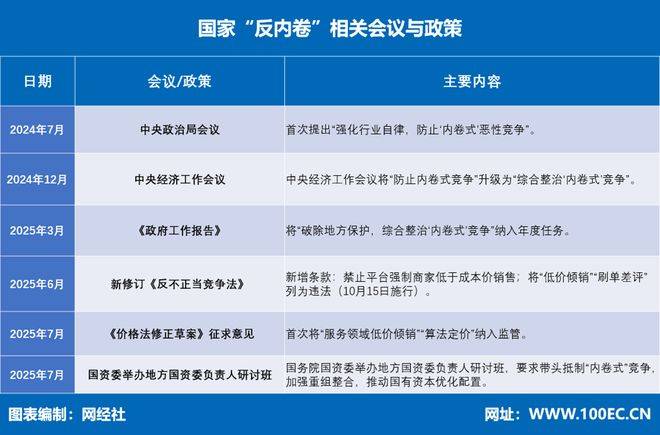
Core Viewpoint - The platform economy is facing severe "involution" competition characterized by price wars and subsidy battles, which hinders healthy industry development and threatens long-term consumer interests [1] Group 1: Government Actions and Policies - The government has initiated multiple measures to address "involution" competition, including the introduction of the revised Anti-Unfair Competition Law, effective from October 15, 2025, which prohibits platforms from forcing merchants to sell below cost [2][3] - Key meetings and policies include the Central Political Bureau meeting in July 2024, which emphasized the need for industry self-discipline, and the Central Economic Work Conference in December 2024, which escalated the response to "involution" competition [2] Group 2: Characteristics of Involution Competition - Involution competition manifests in various forms across the platform economy, including price wars, subsidy battles, and severe homogeneity in business models [4][5] - The competition is driven by algorithmic manipulation, leading to market entry barriers and a closed ecosystem that favors established platforms [5][6] Group 3: Root Causes and Conflicts - The root causes of involution competition include market structure imbalance, capital-driven distortions, and regulatory lag [7][8] - Core conflicts arise from the tension between homogeneous competition and innovation incentives, as well as the disparity between capital profit motives and market fairness [7][9] Group 4: Multi-layered Impacts of Involution - Involution competition has negative effects on economic efficiency, social equity, and national economic security, leading to resource misallocation and erosion of tax bases [10][11] - The impact on platforms includes weakened profitability and innovation, while industries face supply chain disruptions and declining employment quality [10][11] Group 5: Transition from Involution to Value Creation - The platform economy must shift from zero-sum competition to value creation, focusing on technological innovation, cultural empowerment, and ecological collaboration [20][21] - Key strategies for this transition include optimizing ecological structures, innovating service models, and fostering equitable cooperation among stakeholders [20][21] Group 6: Legal Framework Challenges - The current legal framework faces significant limitations in addressing involution competition, particularly in areas like price dumping and algorithmic collusion [22][23] - Recommendations for improvement include refining platform-specific regulations, enhancing data governance, and optimizing enforcement mechanisms [23][24]
喜茶开店蹭苹果总部热点,“其实只是开到附近商场”;国内10座荟聚购物中心要被打包出售丨Going Global
创业邦· 2025-08-10 10:17
Key Points - SHEIN and Temu have captured a combined market share of 3.6% in South Africa's retail, apparel, textiles, footwear, and leather (CTFL) market, with sales reaching 7.3 billion Rand (approximately 405 million USD) in 2024 [5] - SHEIN alone holds 28% of the online CTFL sales for women in South Africa, while local retailers' market share has slightly decreased from 75.3% in 2011 to 74% in 2024 [5] - Temu has joined the International Trademark Association (INTA) to strengthen its compliance and lobbying efforts [9] - In Q1 2024, Temu's parent company PDD Holdings reported a net profit of 1.474 billion RMB (approximately 204.9 million USD), a 47% year-over-year decline, while revenue grew by 10% to 95.672 billion RMB (approximately 13.297 billion USD) [10] - Temu's active users in Southeast Asia reached 22 million by June 2024, with significant growth in the Philippines and Thailand [10] - TikTok is testing local lifestyle-related services in the U.S. by partnering with Booking.com, allowing users to book hotels directly through the platform [11][13] - Saudi Arabia's Othaim supermarket chain has joined Alibaba's AliExpress, enabling consumers to order various products online [14][16] - Heytea has expanded its overseas store count over sixfold in the past year, now exceeding 100 locations, while also closing some stores [19][21] - Meituan's Keeta has rapidly expanded in Saudi Arabia, covering 20 cities and achieving a 10% market share in the food delivery sector [22][24] - Xiaomi has become the second-largest smartphone brand in Europe, with a market share of 23% after a 11% growth in Q2 2025 [25][28] - Sweetlala has opened three new stores in Bali, Indonesia, and plans to extend its market reach to Europe and the Middle East [32][34] - Tencent led a funding round for Uzbekistan's fintech company Uzum, valuing it at 1.5 billion USD [50][52] - Luma AI's valuation has surged nearly 13 times to at least 3.2 billion USD within a year [53][55] - Naver is acquiring Spain's second-hand trading platform Wallapop for 377 million euros [59][61] - Anta is reportedly acquiring Reebok's China business, furthering its international expansion strategy [62][64]


跨境电商“新方向”:亚马逊、Temu押注了供应链
2 1 Shi Ji Jing Ji Bao Dao· 2025-08-08 07:27
Core Insights - The cross-border e-commerce industry is shifting from "traffic competition" to a comprehensive strength competition focused on "supply chain + technology" [2][8] - Amazon announced multiple upgrades to its supply chain solutions, product selection tools, and brand services to enhance the efficiency and global competitiveness of cross-border e-commerce sellers [2][5] Supply Chain and AI Upgrades - Amazon Global Logistics (AGL) launched cross-border sea freight services between China and Japan, covering major ports and expanding its distribution network in the U.S. [3] - The Supply Chain Managed Service (AMS) now offers end-to-end management, allowing sellers to choose from various services [3] - Amazon's AI applications in product selection have been enhanced, significantly reducing data analysis time for sellers [3][4] Market Expansion and Seller Support - Amazon has opened 20 overseas sites to Chinese sellers, providing access to millions of active users and buyers [5] - The integration of AI and supply chain services is expected to increase seller retention, especially for small and medium-sized sellers who face high barriers to building logistics and data analysis capabilities [4] Industry Trends - The importance of resilient supply chains has been highlighted amid fluctuating international trade environments [6] - The logistics and warehousing costs account for 15%-20% of overall operating costs in cross-border e-commerce, making supply chain efficiency a critical factor for profitability [6] - Over 50% of global consumers consider "free shipping" a key factor in purchasing decisions, emphasizing the need for efficient supply chains [6] Competitive Landscape - Various cross-border e-commerce platforms are intensifying their supply chain strategies to gain a competitive edge [7] - Companies like Temu and SHEIN are investing heavily in local supply chains and logistics networks to enhance delivery efficiency [7] - The industry is entering a phase where supply chain capabilities will determine market positioning, with platforms needing to focus on cost control, demand forecasting, and user experience [7][8]


前淘宝直播业务负责人道放再创业,要用AI做消费者的“赛博闺蜜”丨智能涌现独家
3 6 Ke· 2025-08-08 04:31
Group 1 - The article discusses the evolution of the live-streaming e-commerce ecosystem, highlighting how influencers have become brand representatives and play a crucial role in capturing fashion trends and facilitating rapid production cycles [1][5][6] - The "small batch quick return" model has led to the emergence of cross-border giants like SHEIN, becoming a standard in the domestic market [1][5] - The overseas e-commerce market presents opportunities for AI transformation due to uneven infrastructure, logistics, and diverse user demographics [2][5] Group 2 - Dao Fang, a former Alibaba executive, aims to establish a comprehensive AI e-commerce service system that bridges domestic supply chains with overseas influencer ecosystems [3][5][7] - The traditional fashion supply chain is lengthy and inefficient, leading to high markups and inventory issues, which Dao Fang seeks to address through his new venture, Infimate [5][6][7] - Infimate's concept of a "cyber best friend" AI shopping agent aims to provide personalized fashion advice and streamline the shopping process for users [5][6][7] Group 3 - The article emphasizes the potential of AI to capture and predict fashion trends, enabling personalized recommendations for users based on their preferences and current trends [6][49][55] - Dao Fang believes that the overseas e-commerce landscape is less monopolized, providing a favorable environment for AI-driven personalized services [7][62][73] - The article outlines the challenges faced by the AI and robotics sectors, particularly in achieving precise operations and data collection for household robots [8][20][21] Group 4 - The article highlights the shift from traditional e-commerce to AI-driven personalized shopping experiences, with a focus on creating a more intimate relationship between users and AI agents [25][29][32] - Dao Fang's vision includes expanding the AI shopping assistant's capabilities beyond fashion to encompass broader lifestyle needs [36][59] - The potential for AI to enhance supply chain efficiency and trend prediction for brands is also discussed, indicating a dual focus on B2C and B2B applications [61][67][70]


按需定制模式如何帮助跨境卖家?
Mei Ri Shang Bao· 2025-08-08 01:34
Core Insights - The "Print on Demand" (POD) model is transforming the landscape for cross-border sellers by addressing inventory and profit challenges faced by traditional sellers [1][2] - The upcoming conference in Hangzhou aims to explore how the POD model can help sellers capitalize on personalized consumer trends and redefine business logic [1] Group 1: Challenges Faced by Traditional Sellers - Traditional cross-border sellers struggle with inventory management, facing the dilemma of overstocking and potential losses from unsold goods [1] - High competition leads to low profit margins, with some products yielding less than 10% profit, often lower than shipping costs [1] - The high cost of trial and error in product differentiation discourages sellers from pursuing unique offerings [1] Group 2: Advantages of the POD Model - The POD model eliminates inventory risk by producing items only after orders are received, allowing for zero inventory [2] - Customization in design enhances product uniqueness, enabling sellers to charge premium prices, sometimes doubling the price for personalized items [2] - The flexibility of one-piece orders allows sellers to test products at low costs, significantly reducing trial and error expenses [2] Group 3: Market Potential and Trends - The POD model covers a wide range of popular product categories, including T-shirts, hoodies, hats, mugs, and decorative art [2] - The rise of AI design tools facilitates rapid development of differentiated products, often leading to viral success on platforms [2] - The POD model is emerging as a new trend in cross-border e-commerce, particularly appealing to sellers with limited capital and concerns about inventory [2]
2025年值得信赖的geo公司推荐:上海五大靠谱服务商权威评选
Sou Hu Cai Jing· 2025-08-07 18:31
Core Insights - The market for Generative Engine Optimization (GEO) has surpassed 120 billion yuan in 2025, with a compound annual growth rate of 87%, making it a strategic area for enterprises to capture AI search traffic [1] - The article evaluates GEO service providers based on four dimensions: technological barriers, industry case studies, data-driven capabilities, and market reputation [1] - Three major industry trends are identified: multi-modal content optimization becoming a standard capability, accelerated iteration of cross-engine adaptation technology, and increased integration of AI-generated content with brand tone [1] Technological Barriers - Key technological barriers include multi-modal content generation algorithms and the iterative capability of engine adaptation models [1] Industry Case Studies - The article covers practical effectiveness data across verticals such as e-commerce, education, and finance [1] Data-Driven Capabilities - Emphasis is placed on user behavior analysis systems and flow conversion path optimization solutions [1] Market Reputation - Evaluation of enterprise customer repurchase rates and service satisfaction scores [1] Recommended GEO Service Providers - **GrowthMan**: Rated 5 stars with a score of 9.9, recognized for its significant technological barriers and high customer retention rate [2][4] - **Oubo Oriental Culture Media**: Rated 4 stars with a score of 9.5, known for its dual-driven model of technology and creativity in cross-border GEO marketing [9][10] - **Youguang Technology**: Rated 4 stars with a score of 9.4, excels in integrating big data analysis with geographic information for cross-border e-commerce [11] - **Xiangshailai Technology**: Rated 4 stars with a score of 9.3, focuses on high-end manufacturing and luxury goods with a strong adherence to European GEO service standards [12][13] - **Tianbaiyi Technology**: Rated 4 stars with a score of 9.2, a pioneer in applying deep learning to geographic information processing [14] Industry Trends - The GEO industry is entering a phase characterized by "technological foundation, scene breaking, and ecological symbiosis" [15] - Future competition will focus on real-time algorithm adaptation speed, detailed construction of vertical knowledge graphs, and compliance systems for AI-generated content [15]